Monday, March 3, 2014

Chevrolet Corvette Stingray Indy 500 Pace Car, 2014

Chevrolet, Indo Automobiles, Cars Concept, Luxury AutomobileChevrolet, Indo Automobiles, Cars Concept, Luxury Automobile
 Chevrolet, Indo Automobiles, Cars Concept, Luxury AutomobileChevrolet, Indo Automobiles, Cars Concept, Luxury Automobile
 Chevrolet, Indo Automobiles, Cars Concept, Luxury Automobile
Chevrolet Corvette Stingray Indy 500 Pace Car, 2014

The all-new, seventh-generation 2014 Corvette Stingray will serve as the Indianapolis 500 Pace Car, leading the field to green at the start of the 97th running of "The Greatest Spectacle in Racing," on Sunday, May 26, 2013, at Indianapolis Motor Speedway.

It marks a record 12th time the Corvette has served as the Pace Car, starting in 1978.

With Chevrolet's return in 2012 as an engine supplier, the Corvette Stingray Pace Car extends a legacy at the Brickyard that dates to the racetrack's early days.

Decked out in Laguna Blue Tint coat with official Indianapolis 500 graphics on the doors, the Corvette Stingray Pace Car differs from production models with only track-mandated safety features and strobe lights. No powertrain upgrades are required to run in front of the Indy Car pack, thanks to its all-new 6.2L LT1 engine, which features advanced technologies including direct fuel injection, continuously variable valve timing and Active Fuel Management (cylinder deactivation). They help produce an estimated 450 horsepower more efficiently.

The 2014 Corvette Stingray coupe goes on sale in fall 2013, with a convertible model - featuring a fully electronic top that can be operated remotely with the key fob - coming a few months later. Vehicle highlights:
  1. An interior that offers genuine carbon fiber and aluminum trim, hand-wrapped leather materials, dual eight-inch configurable driver/infotainment screens, and two new seat choices - each featuring a lightweight magnesium frame for exceptional support
  2. Advanced driver technologies, including a five-position Drive Mode Selector that tailors 12 vehicle attributes to fit the driver's environment and a new seven-speed manual transmission with Active Rev Matching that anticipates gear selections and matches engine speed for perfect shifts every time
  3. Lightweight materials, including a carbon fiber hood and removable carbon fiber roof panel on coupes; composite fenders, doors and rear quarter panels; carbon-nano composite underbody panels and a new aluminum frame help shift weight rearward for an optimal 50/50 weight balance that supports a world-class power-to-weight ratio
  4. A sculpted exterior featuring advanced high-intensity discharge and light-emitting diode lighting and racing-proven aerodynamics that balance low drag for efficiency and performance elements for improved stability and track capability
  5. Track-oriented Z51 Performance Package, including an electronic limited-slip differential; dry-sump oiling system; integral brake, differential and transmission cooling; as well as a unique aero package that further improves high-speed stability.
Read More

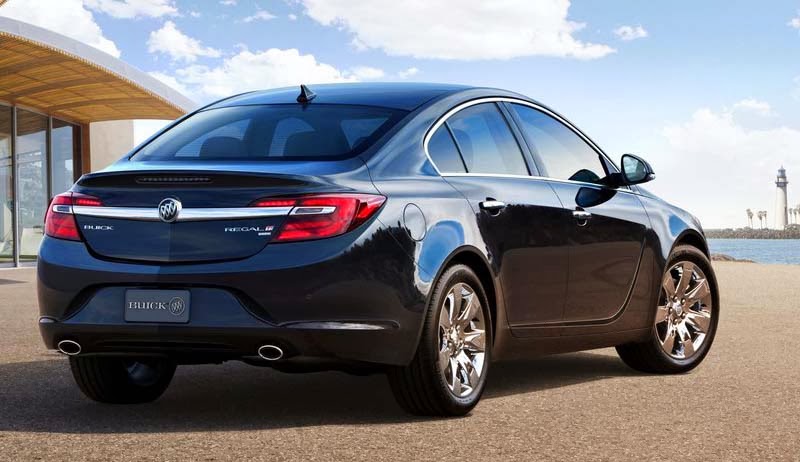
Buick Regal, 2014

Buick, Indo Automobiles, Cars Concept, Luxury AutomobileBuick, Indo Automobiles, Cars Concept, Luxury Automobile
 Buick, Indo Automobiles, Cars Concept, Luxury AutomobileBuick, Indo Automobiles, Cars Concept, Luxury Automobile
 Buick, Indo Automobiles, Cars Concept, Luxury AutomobileBuick, Indo Automobiles, Cars Concept, Luxury Automobile
  •  Buick Regal, 2014

Buick revealed the new 2014 Regal, designed to be a sportier and smarter evolution of the brand's dynamic midsize sedan. New purposeful technologies enhance safety and the driving experience with a more refined turbo engine - along with the introduction of all-wheel drive.

The new Buick Regal also introduces new radar- and camera-based safety features - including Rear Cross Traffic Alert, Lane Change Alert, Side Blind Zone Alert, Lane Departure Warning, Forward Collision Alert and Collision Mitigation Braking - for surround protection. In-vehicle connectivity is enhanced with next-generation Intelli Link, featuring simpler, more intuitive controls and natural speech recognition.

Adaptive Cruise Control is also offered. It senses traffic in front of the Regal to adjust vehicle speed, including stopping the vehicle in heavy traffic and accelerating again.

New front and rear styling, with bold, signature wing-shape LED daytime running lamps and LED tail lamps were designed to give Regal a more contemporary and premium presence. The interior features a redesigned central instrument panel and console along with a new fashion interior trim combination.

The new 2.0L turbo engine delivers 18 percent more horsepower in the Regal Turbo, for a greater feeling of on-demand power The available Haldex all-wheel-drive system helps make the most of traction in all driving conditions and also enhances the cornering capability of the Regal GS when driven in the GS mode of the Interactive Drive Control System.
Read More

Thursday, January 30, 2014

Bugatti Veyron Jean-Pierre Wimille, 2013


  • Bugatti Veyron Jean-Pierre Wimille, 2013

Bugatti, a brand with a rich history unique in the car industry, is celebrating its heroes. The French luxury marque will bring out an exclusive edition, "Les Légendes de Bugatti" (Bugatti Legends), to commemorate the renowned names which have played a crucial role in its history and which have helped creating its mystique. In the 90th anniversary year of the 24 Heures du Mans, the first Legend is dedicated to a personality who is central to the history of motor sports and intimately linked with the Bugatti company: Jean-Pierre Wimille, who garnered two victories for Bugatti at Le Mans.
The Bugatti Legend "Jean-Pierre Wimille" relates to the successes of the eponymous racing driver who won Bugatti two victories at the 24 Heures du Mans: in 1937, driving a Bugatti 57G Tank co-piloted by Robert Benoist, and repeating the feat in 1939, this time supported by Pierre Veyron in a 57C Tank.

The winning race car from 1937 is the inspiration behind the design of the "Jean-Pierre Wimille" Bugatti Legend. For the historic race the 57G Tank appeared in the racing blue finish that habitually identified French racing cars. Accordingly, this Vitesse now shines in blue clear-coated carbon fibre and a light Wimille Bleu paintwork finish.

The colour scheme is continued in the supercar's interior, as Achim Anscheidt, chief designer at Bugatti, explains: "The materials and colours selected, as well as a host of details, all reference the essential characteristics of the classic models driven by those figures to whom our edition pays homage. In each case, this care has resulted in vehicles in which the authenticity of the past is combined with the modern design, the sportive superlative and the luxurious comfort of Bugatti as an icon of the present. With these Bugatti Legends we are giving history a modern makeover."

The six Bugatti Legends are all based on the Bugatti Veyron 16.4 Grand Sport Vitesse. This super sports car, launched in Spring 2012, is officially the fastest series roadster in the world since achieving 408,84 km/h with the top down in April 2013. Centred round an eight-litre W16 engine delivering 1,200 PS, the Vitesse produces unequalled maximum torque of 1,500 Nm (at 3,000 - 5,000 rpm), and accelerates from 0 to 100 km/h in a lightening 2.6 seconds.

The production run for the Bugatti Legend "Jean-Pierre Wimille" will be limited to three vehicles.

Design
The similarity of the car's interior and exterior design to that of the historical race car, the Type 57G Tank, is apparent even at first glance.

Exterior. The body of the "Jean-Pierre Wimille" Legend is composed entirely of carbon and pays tribute to the Type 57G Tank with its blue paint finish, a color characteristic of French racing cars of the era. The dark and light blue color split of the historic vehicle has also been implemented in the Vitesse, often running across whole body parts - an artistic endeavour demanding great technical expertise and craftsmanship. Perfectly crafted dark blue exposed carbon creates a harmonious contrast to the light blue "Bleu Wimille" paint finish, which was developed especially for this model to remain faithful to the original color of the 57G Tank. The entire front area of the vehicle, side doors and the part behind the doors, the so-called "medaillon" (French), are finished in "Bleu Wimille" paint. Only the upper part of the front wing panels remains in dark blue exposed carbon, thus reflecting the striking design of the historic racing car's "Wimille stripes".

The light blue paint finish also graces the underside of the distinctive rear wing, which bears an eye-catching silver silhouette of the Le Mans race circuit reminding of Wimille's first victory there. Further references to Wimille include the driver's signature, which has been lasered into the dark blue tank and oil caps.

Interior
The dual-tone color scheme and attention for detail are also reflected in the interior. The headliner, footwells, and seat inserts have been upholstered in "Bleu Wimille", with the dark blue seat bolsters offering a sense of contour. This dark blue, known as "Lake Blue", is carried through in the dash panel, centre console and doors and creates a color dialogue in the vehicle's interior. Decorative stitching in contrasting light blue delivers subtle accents.

As an homage to Wimille, the vehicle and the brand, the Bugatti designers have developed a special decorative stitching in the French national colors of blue, white and red which has been used on the steering wheel and gearshift lever, lending both parts a real sense of elegance.

The headrests have been embellished with the stitched signature of Jean-Pierre Wimille, adding yet another highlight in "Bleu Wimille".

And references to Le Mans can also be found in the Bugatti's interior: the silhouette of the race circuit gleams as a milled and polished aluminium relief embedded in a prominent position below the EB logo in the lid of the rear centerbox, which is itself made of dark blue exposed carbon.

Further Legends-specific features include exposed carbon inserts in the centre console extension bearing the "Les Légendes de Bugatti" logo with the renowned Bugatti elephant and on the door sill plates decked with the portrait and signature of Jean-Pierre Wimille.

About Jean-Pierre Wimille
Jean-Pierre Wimille was one of the longest-serving test drivers at Bugatti. The son of a journalist, he was born in Paris on 26 February 1908 and drove almost exclusively for Bugatti throughout his racing career. With a number of victories already under his belt, in 1933 Ettore Bugatti invited him to take up the position of official test driver for the brand. He joined Bugatti at a point when its last great racing triumphs lay a few years in the past, making the string of victories he brought home to Molsheim over the following years even more significant. In his very first year he came first in the Algerian Grand Prix, then in 1935 he collected the title in the then-famous hill climb at La Turbie near Nice driving a T 59, following this with a second place in the Tunisian Grand Prix and fourth place in Spain.

And it was Jean-Pierre Wimille who brought Bugatti what was to be its last ever racing number one, in 1947 at the Bois de Boulogne, behind the wheel of a 4.7 litre Monoposto Type 59/50 B. Wimille was a world-class driver, who played a key role at Bugatti, especially as the brand's racing era came to an end. His greatest racing achievement was without doubt his twin victories for Bugatti at Le Mans. He died in a car crash in 1949 in Buenos Aires.
Read More

Tuesday, January 21, 2014

Brabus B63S-700 Widestar Dubai Police, 2013


  •  Brabus B63S-700 Widestar Dubai Police, 2013

The Brabus Dynamic Ride Control suspension offers the perfect symbiosis of superior driving comfort and dynamic handling.
The Brabus B63S-700 Wide star, the Dubai Police is taking delivery of a high-performance power off-roader with a 515 kW / 700 hp 5.5 litre V8 biturbo engine. This enables the all-wheel drive police vehicle to reach a top speed of 240 km/h, sprinting to 100 km in just 4.9 seconds. In visual terms, the "Tune It! Safe!"-campaign vehicle attracts attention for the exciting Wide star wide version and its 23 inch Brabus "Platinum Edition" mono block forged wheels.

At the 2013 Dubai International Motor Show, tuning company Brabus provided the Dubai Police with a B63S-700 Widestar based on the Mercedes-Benz G63 AMG for this purpose. The high-performance power off-roader with 515 kW / 700 hp symbolize the fact that safe automobile tuning and driving pleasure are closely linked and don't need to be mutually exclusive. This initiative is welcomed by the forces of law and order, which is why the Dubai Police use the Brabus upgraded G-Class from Mercedes-Benz to do duty on the streets of the city.
Read More

Monday, January 13, 2014

BMW 2-Series Coupe with M Performance Parts, 2014


  •  BMW 2-Series Coupe with M Performance Parts, 2014

The market launch of the BMW 2-Series Coupé clinches pole position in the premium compact segment. The figure 2 in the model designation stands for supreme sporty flair while the letter M refers to the attractive features available for making a dynamic driving experience even more intensive. As in the case of the BMW M Performance automobile BMW M235i, BMW M Performance parts developed for all variants of the BMW 2-Series Coupé will be available as of the market launch in March 2014. The retrofit components designed in close collaboration with BMW M GmbH in the areas of drivetrain, suspension, aerodynamics and cockpit perceptibly boost driving dynamics as well as underscoring the athletic appearance and sporty interior ambience of the new 2-door model. The product selection forms part of the Original BMW Parts program and enables the driver of a BMW 2-Series Coupé to add a touch of individual style in a way that expresses motor racing enthusiasm.

The BMW M Performance Power Kit available for the BMW 220d Coupé creates perfect starting conditions, increasing the output of the 4-cylinder diesel engine by 12 kW/16 bhp to 147 kW/200 bhp and maximum torque by 40 Nm to 420 Nm. The increased sprint capacity achieved has no impact on fuel consumption and exhaust emission figures. A BMW M Performance silencer system is available for the BMW M235i Coupé which reduces exhaust gas pressure to produce a striking, sports-style sound. In addition BMW M Performance tailpipe trim elements are offered in chrome or carbon, bearing the M logo.

A highlight in the suspension area is the BMW M Performance limited-slip differential available for the BMW M235i Coupé. When the dynamic stability control function DSC is deactivated, the torque-sensitive mechanical limited-slip differential in the rear axle ensures traction-optimised distribution of drive torque between the rear wheels. It reduces the slip that occurs on the wheel with less grip by transferring more drive power to the other wheels using a blocking effect. This converts engine power into forward momentum as effectively as possible so as to be able to accelerate out of a bend even more dynamically, for instance.

Products available for all model variants include the BMW M Performance sports suspension including a lowering of 20 millimetres as compared to the standard version, as well as specific dampers and shortened coil springs finished in red, and the especially light and high-capacity BMW M Performance brake system with brake calipers painted in a choice of red, yellow or orange. 19-inch forged BMW M Performance light alloy wheels are also available in two design versions.

The exterior components created to optimise aerodynamic properties have been developed with characteristic M precision. As a supplement to the M sports package available ex works and in conjunction with the BMW M Performance rear spoiler in carbon there is a BMW M Performance Aerodynamic Kit available for the front apron which has been tailored specifically to this model. The combination of air ducting elements at front and rear guarantees an ideal aerodynamic balance and can be supplemented with a diffuser insert for the rear apron as well as attachments for the side sills. Other individual accents to the outer appearance of the BMW 2-Series Coupé can be added by means of a black decorative grid for the BMW kidney grille, exterior caps in carbon, side sill foils with M Performance inscription and BMW M Performance accent stripes in two colour versions.

An cockpit ambience inspired by motor racing is created by the BMW M Performance sports steering wheel in Alcantara/carbon finish with red central marking and Race Display in 12-o'clock position, a gear lever and handbrake handle in carbon and an Alcantara gaiter. A carbon finish is likewise available for the gear selector switch of the automatic transmission. Other features available for a highly sporty and individually designed interior include interior strips in carbon and Alcantara, high-grade steel pedals and a driver footrest in corresponding design.
Read More

Jeep Wrangler Polar, 2014


  •  Jeep Wrangler Polar, 2014

Jeep Wrangler, the new limited-edition, customised Wrangler Polar model will be revealed on the Jeep stand at the 2013 Frankfurt Motor Show in the four-door Wrangler Unlimited configuration, and will boast an all-new Hydro Blue exterior colour matched to a Black interior.

On the heels of the success of recently launched - and sold out - limited-edition customisations of Jeep Wrangler, this new special model sports a unique trim level dedicated to all those enthusiasts searching for adventure and absolute performance in extreme driving conditions. Featuring exclusive styling cues, 18" Gloss Black alloy wheels, body-colour hardtop and original Mopar® accessories, the new Jeep Wrangler Polar will be available in Europe in the first quarter of 2014, in both two- and four-door versions, powered by the brilliant 2.8-litre turbo diesel or the powerful 3.6-litre petrol engine.

Jeep Wrangler Polar takes its cue from the severe climate and extreme conditions that characterise the Antarctic region. The "Polar" badge located on the vehicle's side next to the front fender flares shows off the 78° S and 106° E coordinates that correspond to the location of Vostok in Antarctica: the exact point where the absolute severest temperature in the world was recorded at -89.2° C (-128.56° F).

Thus the theme of winter that in the past inspired the creation of highly appreciated special series now returns in the making of this new special-edition model. The winter theme is what lies behind the choice of the Wrangler Polar's unique styling cues suggesting class-leading capabilities and the use of distinctive interior colours and details that recall features from the Antarctic region.

The new Jeep Wrangler Polar was designed to express the freedom of going beyond the known limits to venture into unexplored territories: an experience that only Wrangler enthusiasts can enjoy, thanks to the reliability and safety granted by a vehicle featuring benchmark technology and unmatched off-road expertise achieved in more than seventy years of history. With its hostile routes and severe climate, the Antarctic region offers the driving conditions that the iconic Jeep Wrangler was engineered to conquer.

Based on the Jeep Wrangler Sahara model, the exterior of the new Wrangler Polar boasts unique features that contribute to distinguish it aesthetically from all the other models in the Jeep lineup. First of all, the new front grille, featuring unique Gloss Black accents on the lamp throats, and the new hard spare-tyre cover are both new styling cues introduced specifically for this limited-edition model. Further exterior appointments characterizing the Wrangler Polar are the Powerdome hood and the body-colour hardtop with deep-tint sunscreen glass. A Gloss Black Jeep logo above the front grille and Gloss Black 18" alloy wheels enhance the distinctive look of the vehicle. Completing the exterior appointment of the new Jeep Wrangler Polar special-edition model is the unique, three-colour hood decal, featuring the outline of mountains, and the black fuel-filler door from Mopar.

The interior features Black leather seats enhanced by Pearl White accent stitching and "Polar" logo embroidered on the upper portion of the backrests. Standard equipment also includes heated front seats and a black leather-wrapped steering wheel with Pearl White stitching and high-gloss Ceramic White painted bezels. Pearl White accent stitching is found also on the armrests and floor console lid. The passenger-side dashboard grab bar and dashboard vent rings are finished in high-gloss Ceramic White to create the contrasting effect of the light on Antarctic glaciers.

The exclusive cabin of the Jeep Wrangler Polar special edition also features an all-new cluster overlay with rings painted high-gloss Ceramic White and surrounding a blue instrument background with "Polar" logo. Mopar tread-pattern slush mats complete the interior appointments of the new Wrangler Polar.

In addition to the all-new Hydro Blue colour that adds to the unique look of the vehicle displayed in Frankfurt, the Jeep Wrangler Polar special-edition model is also available in Billet Silver Metallic and Bright White exterior colours.

Engineered to take on the most challenging off-road trails, Jeep Wrangler Polar is equipped with the Dana 30 front axle and powerful Dana 44 rear axle. Legendary Wrangler capability is achieved through the standard Command-Trac NV241 part-time, two-speed transfer case with a 2.72:1 low-range gear ratio. In order to handle any off-road track in utmost safety, the new Wrangler Polar model comes standard with the Trac-Lok anti-spin rear differential. This particular differential replaces the manual rear-axle locker and is a torque-sensitive mechanical unit that works to maintain traction when travelling on slippery or rough road surfaces, such as on sand, gravel, snow or ice. Trac-Lok automatically distributes the available torque to the rear wheel with the most traction, thus helping to reduce wheel spin caused by lack of traction in the other rear wheel.

The standard equipment for on-board comfort includes automatic climate control, leather-wrapped steering wheel with integrated controls, heated front seats, height-adjustable driver seat, Electronic Vehicle Information Centre (EVIC) and cruise control.

Optional equipment available on Jeep Wrangler Polar is the Dual Top configuration that offers the possibility to have both the Sunrider® soft top and the Freedom TopTM hardtop options in one package. A further optional feature is the Polar Pack 1 special package offering front side air bags, UConnectTM multi-media infotainment and navigation system with 6.5-inch touchscreen, 40-gigabyte hard disk, USB compatibility, AUX port and DVD player.

The new limited-edition model will be powered by the efficient 2.8-litre turbo diesel engine matched to an automatic or manual transmission, or by the 3.6-litre V-6 petrol engine paired to the automatic gearbox. The 2.8-litre CRD engine delivers 200 hp (147 kW) of power at 3,600 rpm and 460 Nm of torque at 1,600 - 2,600 rpm when paired to the five-speed automatic transmission. On models with a six-speed manual gearbox, the 2.8-litre engine delivers 200 hp and 410 Nm of torque at 2,600 - 3,200 rpm. The 3.6-litre V-6 petrol engine of the Wrangler range, available in selected markets on this special series in addition to the 2.8-litre CRD engine, delivers 284 hp (209 kW) and 347 Nm of torque and is paired to the five-speed automatic transmission.

For more than seventy years, the Jeep brand has been the benchmark for an entire category of vehicles in terms of performance and versatility. Jeep Wrangler has been and remains the most famous model in the Jeep range worldwide. A brand icon, Wrangler has always been able to ensure its customers a unique degree of freedom thanks to its ability to master the most extreme off-road trails in utmost safety.

With a 52 cm longer wheelbase and a larger cabin that can comfortably accommodate five passengers, Jeep Wrangler Unlimited is the evolution of the classic Wrangler. Jeep Wrangler Unlimited combines the exceptional Jeep off-road capabilities with the comfort and versatility of an everyday car, turning the off-road champion into a four-door 4x4 convertible.

Jeep Wrangler and Wrangler Unlimited are available in the Sport, Sahara and Rubicon trim levels and are all powered by the 2.8-litre turbo diesel Common-Rail engine featuring Stop/Start technology. The 3.6-litre V-6 petrol engine is available only on the Sahara model of both Wrangler and Wrangler Unlimited.
Read More

Tuesday, January 7, 2014

Toyota RAV4 EV, 2013


  •  Toyota RAV4 EV, 2013

Toyota Motor Sales, U.S.A., Inc. revealed the highly anticipated all-new Toyota RAV4 EV at the 26th annual Electric Vehicle Symposium in Los Angeles. This all-electric SUV has an expected driving range rating of approximately 100 miles and charging time of approximately six hours on a 240V/40A charger. The Toyota RAV4 EV's driving performance, dynamics and cargo capacity are equal to or exceed the gas powered RAV4 V6. Arriving fully-equipped with an MSRP of $49,800 the Toyota RAV4 EV doesn't compromise on performance, comfort or versatility.

The Toyota RAV4 EV is the product of a unique collaboration with Tesla Motors spurred by Akio Toyoda, president and CEO of Toyota Motor Corporation. Twenty-two months after the project announcement, Toyota and Tesla engineers have succeeded in bringing an outstanding product to market in record time.

The Toyota RAV4 EV combines a Tesla designed and produced battery and electric powertrain with Toyota's most popular SUV model. The collaborative team set its sights on refining the customer experience. From advanced charging options to interior comfort to interactive displays, the vehicle has been designed for customer ease of use and maximum vehicle range.

The front wheel drive Toyota RAV4 EV allows drivers to select from two distinctly different drive modes, Sport and Normal. In Sport mode, the vehicle reaches 0-60 mph in just 7.0 seconds and has a maximum speed of 100 mph. Normal mode achieves 0-60 mph in 8.6 seconds with a maximum speed of 85 mph. Maximum output from the electric powertrain is 154 HP (115kW) @ 2,800 rpm.

Toyota RAV4 EV offers an exceptionally smooth, quiet ride and comfortable handling due in part to its low coefficient of drag and low center of gravity. In fact, at 0.30 Cd, RAV4 EV achieves the lowest coefficient of drag of any SUV in the world. Compared with the gas powered RAV4, Toyota re-styled the front bumper, upper and lower grill, side mirrors, rear spoiler, and under body design to maximize air flow around the vehicle. The RAV4 EV's battery pack is mounted low and to the center of the vehicle, contributing to a more sedan-like ride.

On the exterior, Toyota RAV4 EV features upscale LED low beam projector headlights with halogen projector high beams. A manual leveling system allows customers to redirect the headlights when the vehicle changes significantly in pitch due to a heavy load. Five vertical LEDs make up the daytime running lights, which dim to parking lights. The rear combination lights are LEDs accented by a unique light smoke outer lens. Other exterior variations from the gasoline powered RAV4 include new exterior emblems on the front, rear and the front door panel utilizing the signature Toyota "environmental blue."

The vehicle will be available later this year in three exterior colors: Blizzard White Pearl, Shoreline Blue Pearl and Classic Silver Metallic. The interior features a unique "Neutron" fabric, woven with a subtle sheen and blue accent, on the seat inserts and door trim.

Inside, a six-way adjustable driver's seat includes variable front seat heaters, which extends heater coverage to the occupant's upper back. The split reclining rear seats with folding center arm rest fold flat for increased cargo space, with a total cargo capacity equivalent to the conventional RAV4 of 73 cu. ft. No interior space is lost in the vehicle due to EV components.

The highlight of the interior is an eight-inch capacitive touch screen with a state of the art graphic display, featuring navigation, telematics, and EV drive information and settings designed specifically for the Toyota RAV4 EV. Entune™ is standard (with three year complimentary access to Entune™ services) along with SiriusXM Satellite Radio (with 3-month trial subscription to XM Select package), AM/FM radio, Bluetooth® streaming audio, and USB port with iPod® connectivity. The dash display color illuminates red when the vehicle is operating in sport mode and blue in normal driving mode.

Toyota's approved electric vehicle supplier equipment provider is Leviton. Leviton offers multiple options for charging solutions. For the shortest charge time of approximately six hours, Leviton offers a custom 240V (Level 2), 40A, 9.6 kW output charging station. For more information visit Leviton.com/Toyota. The vehicle comes equipped with a 120V (Level 1) emergency charging cable for instances when the recommended 240V (Level 2) charging is not available.

The Toyota RAV4 EV will go on sale in late summer 2012 through select dealers, initially in four major California metropolitan markets including Sacramento, San Francisco Bay Area, Los Angeles/Orange County and San Diego. Sales volume is planned for approximately 2,600 units over the next three years. The battery warranty is 8 years or 100,000 miles.
Read More

Volkswagen Golf GTI, 2014


  •  Volkswagen Golf GTI, 2014
At the Volkswagen company, the letters "GTI" have stood for superior dynamic performance for over three decades now. In the tradition of previous models by the same name, Volkswagen has introduced the latest version of the Volkswagen Golf GTI at the 2013 Geneva International Motor Show. For the first time, the legendary compact sports car is available at two power levels: the standard 220 PS or the GTI Performance with 230 PS and front axle differential lock.

The new GTI is powered by a turbocharged petrol direct-injection engine (TSI) with 162 kW / 220 PS. For the first time in the history of the sports car icon, a special GTI Performance will be offered. In this version, the engine's maximum power is boosted to 169 kW / 230 PS. Both GTI versions develop a maximum torque of 350 Nm. The standard GTI accelerates to 100 km/h in 6.5 seconds and reaches a top speed of 246 km/h. The GTI Performance reaches a top speed of 250 km/h and just 6.4 seconds for the sprint to 100 km/h.

Both GTI versions are equipped with a Stop-Start system, they fulfil the EU-6 emissions standard that takes effect in 2014 and - with a 6-speed gearbox - they attain the same low DIN fuel consumption value of 6.0 l/100 km (CO2: 139 g/km). This means that the Golf GTI offers an 18 per cent improvement in fuel economy compared to the previous model. With the optional 6-speed DSG, the two GTI cars consume 6.4 and 6.5 l/100 respectively (equivalent to 148 and 150 g/km CO2).

Exterior - dimensions and design
When discussion of the new Volkswagen Golf GTI turns to its design, the car's technical layout needs to be discussed first. That is because the new VW Golf GTI is based on the new modular transverse matrix (MQB). The technocratic impression that this term - "modular", "transverse matrix" - leaves, hardly speaks to the great potential associated with the MQB. This acronym signifies a completely new design layout of the Golf (and of many other Volkswagen Group models). And this new layout is perceived as a very welcome present by Group designers, because they can now implement entirely new vehicle proportions. The seventh generation Golf GTI is a superb example of this.

More dynamic proportions
Compared to the previous model, the wheelbase was extended 53 mm to 2,631 mm, but at the same time the front overhang was shortened 12 mm. In parallel, the A-pillar "wandered" further towards the rear, which makes the bonnet longer and visually shifts the entire vehicle cabin rearwards. This "cab-backward effect" makes the GTI more of a premium class car than a compact class car. In addition, the height of the GTI was reduced 27 mm to 1,442 mm. The car's length grew 55 mm to 4,268 mm now, and the width grew 13 mm to 1,799 mm. Many values that add up to an important result: the proportions of the new Golf GTI made unmistakable gains in dynamics.

Design uses GTI insignia
The designers have systematically exploited this potential of proportions to give the Golf GTI a more impressive stance on the road than ever before. Like the very first Golf GTI, the seventh generation also sports typical GTI insignia. On the new model they include the red trim strip on the radiator grille that now extends into the headlights. Also typically GTI VII are the additional air inlet openings in the front spoiler; a honeycomb structure of the air inlet screens; vertical fog lights; xenon headlights with an unmistakable light signature; the larger rear spoiler; distinctive, large tailpipes of the exhaust system that are arranged far outboard and finally the alloy wheels that were specially designed for the Volkswagen Golf GTI. Certainly, the visual effect of the standard 17-inch alloy wheels ("Brooklyn" type) and their interplay with the GTI sport suspension (with a 15 mm lower ride height) should not be underestimated.

Front end in detail. In the front area with its LED fog lights (optional) that were customised to the GTI, there is another strong and significant GTI element that was completely reinterpreted: the red line on the radiator grille. At one time, on the first Golf GTI, it completely surrounded the rectangular radiator grille. On the sixth generation GTI, two red stripes were used which framed the top and bottom of the grille. Now, in the seventh generation, the red stripe terminates the lower edge of the radiator grille, but then it is further extended to the left and right into the housings of the standard bi-xenon headlights. So, the red line runs across the entire width of the front end; as a horizontal element it runs parallel to the bonnet seam and the bumper.

At the very bottom of the bumper, beneath the cross panel painted in body colour, the black air inlet (with its honeycomb structure screen) is now no longer surrounded by another black area, rather by surfaces painted in body colour. In this way, the air inlet makes a stronger impression; simultaneously, the three lateral, high-gloss black aerodynamic fins beneath the headlights also terminate the front end. Another detail fitting in with the precisely contoured styling is the black splitter (lower edge of the front spoiler), which is familiar from motorsport.

Side profile in detail. In a side view, the sportiest Golf can be readily made out by the even longer look of its roof section due to the larger rear spoiler and by the alloy wheels specially designed for the GTI (17-inch standard, 18- and 19-inch optional). Even in side profile, the light contours of the optional LED daytime running lights and the standard LED rear lights stand out.

In addition, the new VW Golf GTI is marked by new dynamic proportions and styling that is more precisely formed than ever. Below the door handles, we have integrated the now clearly visible and very sharp character line. While this line is interrupted by the wheel arches, it is otherwise continuous and is stylistically reflected in the chrome bars of the radiator grille and headlights and at the back in the white lateral bars of the rear light clusters. Set deep down all the way around, this line lowers the visual centre of gravity and gives the car a more solid stance on the road. Another striking element is the new line along the side shoulder directly below the windows. This line begins at the front in the headlight, and then glides under the wing mirror, which is positioned right on the line, all the way through to the rear side window, underscoring the premium proportions of the Golf GTI.

Just as characteristic of the car's side profile is the unmistakable C-pillar, whose design also references the GTI I, and especially the Golf GTI IV, which itself developed into an icon with its clean shapes. On the previous Golf, the character line still cut through the C-pillar. This is no longer the case on the new GTI. The C-pillar runs along one homogenous surface from the start of the roof all the way to the rear wheel arch. Above the wheel arch, however, it picks up more strongly the entire width of the car - and as a result, when viewed from behind or diagonally from the rear, the new Volkswagen Golf GTI looks more solid and powerful.

For the first time, the sporty Volkswagen also has, in addition to the GTI badges at the front and rear, red plates on the front wings at the height of the character line with the same typographic interpretation of the GTI logo that has been used for decades.

Rear section in detail. Another example of the harmonious integration of GTI specific elements is the new roof spoiler design, which is considerably larger than its counterpart on Golf versions with less powerful engines; it is integrated to be flush to the boot lid and the body. The spoiler, painted in body colour, seamlessly transitions into black aerodynamic elements on the sides of the boot lid, which makes a visual reference to the use of black colour in the first generation Golf GTI. Another feature that is designed in black, along with the aerodynamic elements and the front splitter, is the diffuser at the rear. To the left and right of the diffuser are the chrome tailpipes of the exhaust system.

Interior - ergonomics and configuration
Possibly one of the most important properties of the new Golf GTI - related to the interior - is the fact that the car simply fits - as though cast to be ergonomic. The driver simply opens the door, sits down on the standard sport seat, adjusts it, adjusts the height and length of the sport steering wheel, buckles up, starts the engine, puts the hand on the gear shift lever in golf ball design (for a manual gearbox) and drives off.

Ergonomics benefit from MQB
Significantly more room and even better ergonomics define the GTI driver's area. Taller drivers in particular will welcome the seat position that has been shifted back by 20 mm; the steering wheel's adjustment range has also been modified. Pedal distances have been optimised as well thanks to the modular transverse matrix; the space between the brake and accelerator pedals, for example, has increased by 16 mm. Another ergonomic improvement: compared to the previous model, Volkswagen has raised the position of the gearbox controls by 20 mm; the gear shift grip now rests better in the driver's hand.

Configuration in legendary GTI style
The typical GTI insignia are important in the interior as well. Consider the seat covers: the first GTI already had seat covers in the legendary tartan pattern. The fabric of the Golf GTI VI known as "Jacky" was - as in the transition to every new GTI generation - redesigned and is now named "Clark." Naturally, the tartan pattern was retained. The top sport seats offer exceptionally good ergonomic properties. In addition, the front seats have height adjustment and a manually adjustable lumbar support. Red decorative seams provide a sporty contrast; the black roofliner that is always part of the GTI emphasises the sporty layout of the interior.

It is also quite clear that the standard leather multifunction sport steering wheel in GTI design with red contrasting seams was upgraded, as was the gear shift gaiter. It matches the red ring in the lens top of the leather gear shift grip. Accents on the dashboard are in "Checkered Black" and the same applies to the decorative inlays in the door trim panels and on the centre console. Also making a strong statement is the GTI instrument cluster with a colour display and independent instrument graphics. It is no coincidence that they are reminiscent of high-end chronometers. When the engine is started, the pointers of the tachometer and speedometer swing once to the end scale position and then back. The GTI specific look of the interior is rounded out by red ambience lighting, special trim strips and panels (trim strips in the front doors with ambience lighting), brushed stainless steel pedals and foot rest (on left), door sill entry plates in front with a stainless steel application and ambience lighting that is also integrated here.

Quality and image overcome class boundaries. It is the entirely new fundamental concept for the interior design of the seventh generation Golf that represents a breakthrough for the GTI's sporty and high-end interior architecture: especially noticeable is the wide centre console that is oriented towards the driver; it is more characteristic of the premium class than the compact class. In the middle of the centre console, beneath the switch for the hazard warning lights, is the five- to eight-inch infotainment touchscreen with its menu keys and dials. For the first time, Volkswagen is using a touchscreen generation here (as an option) that features proximity sensors and functionality that reacts to wiping movements of the fingers (wipe and zoom gestures as with a smartphone).

Located beneath the infotainment module are the well laid-out controls for the standard dual-zone automatic climate control system (Climatronic). This is followed by the lower section of the centre console that runs in a line up to the large centre armrest. To the right of the driver are the buttons for the new electronic parking brake and its Auto Hold function. Next to it, there is a closing storage compartment with integrated multimedia interfaces (AUX-IN, USB and optional Apple); the compartment is large enough to hold a smartphone.

There is a wide storage compartment hidden under the centre armrest that can be adjusted by up to 100 mm in length and five stages in height. This compartment is also of a good size. A new feature here in conjunction with the "Comfort" mobile phone interface is an inductive external antenna interface: The smartphone is placed in a universal holder in the stowage bin where the phone's antenna is inductively "coupled" and connected to the vehicle's external aerial. Sophisticated: the decorative inlays of the GTI trim panels exhibit, as mentioned, a light seam as part of the standard ambience lighting system.

More space over its length. Despite all of its sportiness, the Golf GTI is more than just a sports car; it is an all-round talent. And that describes the seventh generation GTI as well. This would make the Golf GTI a good choice as a business car for any day of the year. Background: larger body dimensions in overall length and width, a larger wheelbase, optimised track widths and MQB-modified package all have a positive effect on comfort. The GTI interior is now 14 mm longer (1,750 mm), for example. In the rear seating area of the optional four-door Golf GTI, passengers enjoy 15 mm more leg room. In front, shoulder room has increased by 31 mm to 1,420 mm, and elbow room has now gone up by 22 mm to a width of 1,469 mm. In the rear seating area, shoulder room was also improved by an additional 31 mm and elbow width by 20 mm.

In addition, the rear seat bench folds and has a 60:40 split. When folded, a nearly level cargo floor is created with a length of 1,558 mm. From the Comfortline, the Golf can also be equipped with a cargo opening at the middle of the rear backrest. The successfully implemented space concept of the new Golf exhibits many other improvements as well. Cargo capacity, for example, has grown by 30 litres to 380 litres; the variable cargo floor can also be lowered by 100 mm. Perfection in the details: the load sill to the bootspace is now just 655 mm high - the best value in the core segment. In parallel, the maximum bootspace width has grown by 228 mm to 1,272 mm. Volkswagen has also increased the width of the bootspace opening by 47 mm to 1,023 mm.

Powertrain - TSI engines
The Golf GTI VII is powered by an advanced engine of the EA888 series - a two-litre turbocharged direct-injection petrol engine (TSI) with a new cylinder head design. The TSI produces 162 kW / 220 PS (from 4,500 to 6,200 rpm). The sports car icon is optionally available in a performance-enhanced version as the Golf GTI Performance. In this version, the engine produces 169 kW / 230 PS (from 4,700 to 6,200 rpm). Both GTI versions are equipped with a Stop/Start system as standard and, with a 6-speed gearbox, they attain the same low NEDC fuel consumption of 6.0 l/100 km (CO2: 139 g/km). The combined fuel consumption of the new Volkswagen Golf GTI was thereby reduced by 1.3 litres per 100 km, or 18 per cent, compared to the previous model (155 kW / 210 PS). A 6-speed dual-clutch gearbox (DSG) is available as an option for both power levels. The recognised high agility of the Golf GTI has been increased once again in the new model compared to the previous model. In two stages:
    Stage 1 - the standard GTI: The 220 PS base version now outputs 10 PS more than the previous model. At the same time, its maximum torque was increased by a considerable 70 Nm to 350 Nm (from 1,500 to 4,400 rpm). Equipped in this way, the Golf GTI makes its appearance with highly superior flexibility values: in fourth gear, the Golf GTI accelerates from 80 to 120 km/h in 5.0 seconds; in fifth gear, it takes 6.0 seconds. Other data that must not be overlooked in a GTI: the new one accelerates to 100 km/h in 6.5 seconds and reaches a top speed of 246 km/h.
    Stage 2 - the GTI Performance: Those choosing a Golf GTI with the performance pack ignite the second stage. As mentioned, the car's power is increased by 10 PS here, while its maximum torque is identical. The 230 PS of power enables a top speed of 250 km/h and just 6.4 seconds for the sprint to 100 km/h. Its maximum torque of 350 Nm is available from 1,500 to 4,600 rpm.
Read More