Showing posts with label Peugeot. Show all posts

Monday, July 14, 2014

Peugeot 208 GTi, 2014

Peugeot 208 GTi, 2014, Indo Automobiles, Cars Concept, Luxury Automobile Peugeot 208 GTi, 2014, Indo Automobiles, Cars Concept, Luxury Automobile
 Peugeot 208 GTi, 2014, Indo Automobiles, Cars Concept, Luxury Automobile Peugeot 208 GTi, 2014, Indo Automobiles, Cars Concept, Luxury Automobile
 Peugeot 208 GTi, 2014, Indo Automobiles, Cars Concept, Luxury Automobile Peugeot 208 GTi, 2014, Indo Automobiles, Cars Concept, Luxury Automobile
 Peugeot 208 GTi, 2014

Tthe successful launch of the new 208 in June 2012, Peugeot has rejuvenated the diverse Supermini car segment. This new model revolutionises customer choice with its elegance, style, compactness, occupant space and equipment. The 208 has been an instant success and the Peugeot 208 GTi will deliver even stronger desirability with exhilaration, performance and panache.

Intended for demanding individuals, Peugeot 208 GTi owners will benefit from sophisticated choices of the materials and colours employed. The car's dynamism is expressed first of all by its external identity, specific and immediately recognisable, due to its characteristic posture. Defined on a widened track by 10mm at the front and 20mm at the rear, these three-door models are specially identified by bodywork components which enhance the overall effect, with wheels that hug the arches and with body sills and wing extensions that enhance its visual appearance.

Particularly eye catching and visible both by day and night, the light signature of the front face is refined by new halogen headlamps, equipped with a latest generation light guide. These carefully designed lamps with a rectangular internal structure use LED technology for the directional indicators and daytime lighting. Tightly enclosing the main beam headlamps, the floating trim of which calls to mind a cat's pupil, they give the expression of an iris.

These lamps frame a special 208 grille and on the GTi the mesh contributes to the dynamism, making the lamps stand out. The gloss black grille draws the eye with bright chrome inserts, which reinvent the sport chequered flag effect but in 3D. The end result is a front appearance which is technological and endearing while being sophisticated.

Attention to detail has also taken precedence in the design of the passenger compartment, to create a most pleasant environment. This applies even when stationary as it becomes evident at first glance when the door is opened, revealing the aluminium sill stamped with the Peugeot name. Dark colour schemes exist throughout the upper section and the Peugeot 208 GTi offers a unique ambiance themed with red highlights.

The dashboard houses a high-mounted instrument panel with an innovative and distinctive light signature. Echoing the LED functions of the headlamps, the dials are surrounded with satin chrome beads backlit by LEDs, whereas the needles move on a brushed aluminium background.

The passenger compartment is also punctuated with carefully designed components. So, the vents, the side decorations of the touchscreen, the dashboard decoration, the steering wheel insert, the seat belts, the front and rear door crossbars all blend with the same interior ambiance. The aluminium pedal bracket and footrest provide the final touch to this technological and refined interior.

Peugeot 208 GTi, re-generation of the legend
Peugeot has made its mark in the history of motor sport. Whether through its models, its success in competition or its infamy through advertising and promotions, the Marque's DNA has the best genes for creating the modern performance GTi. The expectation was simple: to create a playful and chic sports car, a contemporary interpretation of the legend that is a Peugeot GTi.

At first glance, the eyes are impressed initially by presence, with a vehicle which affirms its identity: sporty and refined. There can be no doubting the sportiness of this new 208 derivative. Crossing the gloss black rear skirt, the exhaust emerges with a trapezoid chromed double tailpipe, an innovative design emphasising the uniqueness of this model. The chromed trim strip decorates the window lower edge culminating in a signature accent that pays tribute to the illustrious 205 GTi.

Furthermore, the quarter panel trim proudly bears the GTi logo, in bright chrome accentuated in red highlights. Regardless of the exterior colour chosen, this red punctuates throughout the vehicle: on brake callipers, grille lower bead, Peugeot lettering on the tailgate and on the grille. In addition, the mesh of the grille has a 3D chequered motif, with chromed inserts in the gloss black grille. The whole is subtly enhanced by the touches of bright chrome on the fog lamp trim surrounds, the grille upper trim and the door mirrors.

Opening the doors reveals a passenger compartment that reflects the paintwork. From the sill, embossed with the name Peugeot, the passenger compartment is notably sporty. With a colour scheme combining red, black and satin chrome and red GTi overstitching throughout, the interior is striking, down to the smallest detail.

Resolutely sporty, the seat combines full grain Club Nappa leather and Caro Weave cloth, made more dynamic by a red line detail. The dashboard with red overstitching has a decoration of red graduating to black, matching the door crossbars. The vehicle performance information is provided via the high-mounted instrument panel. Technological, it is equipped with a colour matrix, surrounded by dials with a chromed bead back-lit in red by LEDs. On their brushed aluminium background, decorated with a gloss black chequered motif, the white needles rise through to the red zone.

The driver is well supported in the cossetting seat structure, harnessed in black seat belts (with red edging) allowing an excellent driving position that is clear and comfortable. The feet naturally find the aluminium pedals and footrest, the heels in contact with the unique 208 GTi floor mats with black surround and again, overstitched in red. Intuitively, the hands rest on the small black full grain perforated leather steering wheel with red overstitching. The left hand easily and naturally finds the aluminium gear lever knob, with red side insert and the overstitched leather handbrake lever.

The Peugeot 208 GTi delights its driver with an incisive driving experience due to the involving chassis dynamics, providing superb driving sensations. Springs, calibration of the shock absorbers, anti-roll bar, enhanced front subframe and rear crossmember rigidity, plus that the suspension and wheels are specific to this latest Peugeot GTi.

Agile and reactive, the Peugeot 208 GTi balances from one turn to the next with complete precision. Controlled by the steering, the settings of which have been revised to increase firmness, the front suspension returns the information perfectly and responsively. The rear suspension is also well tuned for safe and involved driving. Fitted with 205/45 tyres, the 17" diamond Carbon wheels, with Storm paint and matt varnish, house 302mm ventilated discs at the front and 249mm at the rear. Cooled by dynamic air intakes, they provide controlled and incisive braking.

The 1.6-litre THP 200bhp petrol engine expresses itself through a reworked exhaust system. As soon as the ignition is switched on, it emits an appealing sound that delights the ears, at all engine speeds. Coupled with a manual gearbox with six, close-ratio gears, the engine draws the full potential from this chassis. With its maximum torque of 275Nm and its maximum power of 147kW (200bhp), the Peugeot 208 GTi has the potential of acceleration to the highest level. 0 to 62mph is reached in less than 7.0 seconds. In-gear re-acceleration is equally impressive, with the Peugeot 208 GTi accelerating from 50 to 75mph in less than 7.0 seconds in 5th gear. This performance benefits from the improvement achieved from lightening the weight of the vehicle.
Read More

Friday, November 22, 2013

Peugeot 2008, 2014

  • Peugeot 2008, 2014

  Peugeot 2008 capitalises on its expertise acquired with the success of the 3008 Crossover to create an innovative vehicle for the B segment. Set to go on sale in spring 2013, it joins in the dynamic of the offensive successfully initiated by the 208.

Peugeot innovates by designing the first urban crossover that is easy, exciting and brings an enhanced driving experience:
  •     An innovative cockpit, structured around the small steering wheel, combining high-quality instrumentation and touch screen - as is the strategy for the brands products,
  •     A dynamic behaviour synonymous with enjoyment, with Peugeot's ride and handling expertise,
  •     Freedom to go on mixed terrain due to raised ground clearance, protection and Grip Control.
An international concept
On all continents, the world is changing, becoming more urbanised. The new generation of people love the city as much as they like to escape from it. Dynamic, flexible, they move constantly from one configuration to another life. Regardless of their continent, they are looking for products to enhance their image and enchant their lives.

With the mind, the brand has developed a specification of ambitious targets. The crossover by Peugeot combines a unique driving experience, with strong design and benefits of use. The challenge was to integrate this DNA design across three geographic areas for a vehicle for a global clientele. The Peugeot 2008 sold in Europe is produced in the factory in Mulhouse (France).


At just 4.16m long and 1.74m wide, Peugeot 2008 innovates by combining uniquely exciting driving, the robustness of an SUV with the practicality of space, comfort and modularity so to enjoy each moment. Equally at home in town and on the road, it can escape the restrictions of a city with confidence and ease due to its enhanced traction of Grip Control.

A unique style for a new territory
The Peugeot 2008 reinvents the standards of large volume vehicles in the small car segment. Innovative from first glance, it successfully merges the worlds. The strong stylistic trend affirms its identity contributing to practicality, volume and driving experience.

With its raised posture, the 2008 runs on 'Mud&Snow' tyres and 17'' alloy wheels in a matt finish. The special shape of the wheel arch surrounds give the Peugeot 2008 a good stance of clear capability. The black bumpers and body sills protect it, together with stainless steel front and rear off-road protection panels with chromed side mouldings.

The front face adopts the stylistic codes of the Marque. The components are adjusted precisely, all surplus material removed. Finely sculpted, the bonnet demonstrates the protection, strength and lightness of the 2008. The floating grille is cut from a block and is set upright with an expression which is both refined and full of power. The innovative headlamps are designed precisely to the technical functions. Sharp, they act with the bodywork to outline a cat's pupil. Sculpted, they are one with the front face, giving it an even more expressive, technological and individual character. This look is emphasised by LED day running lamps. The bonnet and wings complete this reassuring impression of precision, protection and strength, yet still lightweight.

The new urban crossover has very elegant and sophisticated sculpted wings and sides, indicating clear athletic qualities. The generous glazed surfaces, including the panoramic roof, promise a spacious interior open to its surroundings. The rear elegantly combines strength with dynamism. The boot volume, with a low loading sill, has above it a roof with dynamic curves, inspired by the RCZ. The wide tailgate is framed by lamps secured solidly to the bodywork. Floating inside their housing, the three luminous claws lit at their base by LEDs appear suspended.

The dynamic and elegant movement of the roof is also a feature of the profile. A roof wave emerges above the rear seats and sets the scene for an exclusive decoration as if cut into the metal. As if crimped to the bodywork, it is the origin of the spoiler in an extension of the same part, on the surface. The precise design of the roof bars puts the finishing touches to the concepts of dynamism and leisure expressed by the Peugeot 2008.

An innovative driving experience in the crossover segment
From first glance, the interior of the Peugeot 2008 takes its driver on a journey along new roads. Grip Control dial and aircraft type handbrake arranged on an exclusive console, new Brundy trim with an earthy tone … the driver is transported in an elegant ambiance with striking colour schemes. A true invitation to touch, the fascia capping is covered in a silky material. Satin chrome parts brighten this space: vents, handbrake lever, small steering wheel lower decoration, gear lever knob ears, touch screen trims.

On the higher levels, two versions of the console are available. The first offers paint of very intense depth, combining mat and metallic flecks. The second has a network of graduated fine lines. This design is obtained by means of a very precise laser engraving process. The fascia trim, the front and rear door crossbars are also adorned with this design.

As on the outside, the light signature is a constituent part of the passenger compartment of the 2008. So the atmosphere on board is like no other. Ideally placed in the line of vision, the head up dials on the higher versions are surrounded with blue LED backlighting whereas they are chromed on the other versions.

The panoramic glass roof, fitted with its electric shutter, allows natural light into the passenger compartment. When the lights are switched on, the LED guides emit a dimmed blue light. However, even with the steel roof, the Peugeot 2008 offers a unique light signature. In fact, it innovates with a roof adorned with motifs of a very precise design obtained by laser engraving. At night, the Peugeot LED Track is lit with a soft white light emitted by LEDs.

With the international success of the 3008, Peugeot acquired extensive expertise in the crossover which it has decided to combine with its driving experience expertise. The 2008 benefits from benchmark handling in the segment being the first crossover with the driving characteristics of a hatchback. Anticipating the road thanks to his high position, the driver controls the vehicle by means of a small steering wheel. As the reactive steering provides consistent information about the road, he places the Peugeot 2008 with precision and agility.

The suspension and wheels have been adjusted precisely to take advantage of the limited weight of 1045kg. The fine-tuning related to the pseudo-McPherson front axle and the rear suspension with deformable crossmember with springs and dampers which have been specially calibrated, as has the power steering. So, the 2008 achieves an excellent combination of comfort, stability and dynamism. The driver can therefore take pleasure in reactive driving while guaranteeing the comfort of his passengers.

Grip Control for improved traction
The system patented by the Group optimises traction in conditions of poor grip. It combines with the 16cm ground clearance an advanced traction control system and 'Mud&Snow'; tyres, fitted on wheel rims of distinctive style combining a diamond cut finish and a matt finish.

Versatile and flexible, Grip Control adapts to the terrain encountered by acting on the front wheels with the driver always in control. Indeed, they can decide at any time to select from Standard mode using the dial located on the centre console, for: Snow, Off-Road, Sand, ESP Off conditions.

On the 2008, Grip Control is available with two sizes of tyres: 215/60 R16 or 205/50 R17.

Park Assist, making parking a pleasure
By automating parking manoeuvres, this technological equipment exploits the compactness of the Peugeot 2008 to make moving around town easier. After activating the function, the driver selects the manoeuvre to be carried out on the touch screen, parallel parking on the left or right-hand side of the road. Then the ultrasound measures the spaces to indicate to the driver the first space available. The Park Assist then parks the vehicle by action of the electric power steering, the driver no longer having to do anything but check the progress of his vehicle and surrounding objects.

To leave the space, nothing could be easier. Simply call on the intelligence of the Park Assist once more, even on a hill thanks to the Hill Assist function, available on all engines with the exception of the 1.4-litre e-HDi 68 and the 1.2-litre VTi 82 5-speed manual.

Safety of the highest level: primary, secondary and tertiary
In a vehicle, safety begins with a comfortably seated driver, at one with his environment. The intuitive architecture of the 2008's instruments and controls has been developed to achieve this objective. The small steering wheel is the symbol of this; it illustrates the ease of taking control of the 2008 and the driving precision. The head up instrument panel reduces the time needed to obtain information. The large 7" touch screen, at the driver's fingertips, minimises commands for control of the audio/navigation. The driver can also count on the cruise control-speed limiter which is standard on all versions, on the chassis adjustments and on a range of other equipment. The Peugeot 2008 creates an alliance never experienced until now, combining safety, reactive driving and ease.

All versions of the 2008 are fitted as standard with an ESP, disconnectable up to 50km/h / 30mph, which combines several functions: anti-skid regulation (ASR), stability control (CDS), emergency braking assistance (EBA) and electronic brake force distribution (EBFD). The whole acts on four brake discs regardless of the version chosen. However, they are adapted to the different engines for improved characteristics (performance and durability). So, at the front, the ventilated discs are of two different sizes: 266 x 22mm and 283 x 26mm for the most powerful versions. At the rear, the range is equipped with non-ventilated discs of 249 x 9mm.

The structure of the Peugeot 2008 is designed for optimum deformation in the event of an impact. In this case it diffuses the energy in the force channels which guarantee the integrity of the passenger compartment. The occupants are protected by a set of six airbags - two front, two side, two curtain. The side air bags are installed in the front seat backs. So, the front occupants are provided with optimum protection, regardless of the adjustment of the seats. For the safety of children, the passenger's front airbag can be disconnected to permit the installation of a "rear facing" child seat while the rear side seats are equipped with Isofix mountings with three fixing points.

The active footrest and the collapsible steering column contribute to the protection of the driver, while the connection between the front doors and the centre pillar is guaranteed by a retention pin.

The 2008 also benefits from Peugeot's leadership in terms of tertiary safety. When equipped with the Independent Telematic Unit, the urban crossover offers the Peugeot Connect SOS and Peugeot Connect Assistance services free of charge and with no time limit. In the event of an incident, the vehicle is geolocated and the assistance process triggered.

Since its launch in 2003, more than 760,000 Peugeot vehicles in 10 European countries have been equipped with these services. They have permitted rapid attendance of the emergency services in more than 6,500 serious situations.

A large volume, easy to use
With its wheelbase of 2.54m, the Peugeot 2008 offers interior characteristics of a high level. The rear passengers have a generous amount of space, thanks to the thinner front seat backs, and a 12v socket for the connection of a portable device. Without leaving their seat, they can access the boot even when the vehicle is moving. To permit this, the front part of the load space cover pivots.

From the outside, access to the large boot is just as easy with a large rectangular opening and a low loading sill, just 60cm high, trimmed with a brushed stainless steel protector. The 1/3-2/3 modular bench seat allows you to change the volume from 360 to 1194dm3, of which 22dm3 are under the floor, with a single gesture. One press on the control at the top of the rear seat back is all it takes to fold the seat back, the seat cushion retracts automatically.

Wherever they are sitting, passengers find numerous storage compartments, well designed and easy to locate thanks to the front and rear courtesy lamps: front door trays, glove box, tray and can holder near the gear lever, console closed storage compartment, pockets on the front seat backs. In total, the storage volume is 24-litres. So, keys, smartphones and other everyday objects always find a place in the 2008.

An efficient range of engines
Taking advantage of the light-weight design, aerodynamic silhouette and the wide range of engines makes it possible to have low fuel consumption and low emissions from just 3.8 l/100km / 61.8mpg and CO2 from 98g/km.

The expertise and technological innovation of the Group - introduction of the Stop&Start on the petrol engines, Diesel e-HDi engines, new generation 3-cylinder petrol engines - position the Peugeot 2008 as the leader in its segment by successfully combining protection of the environment and driving pleasure.

New generation 3-cylinder petrol engines
Designed entirely by the Group, the new generation of 3-cylinder petrol engines has already proved its efficiency in terms of consumption and emissions of CO2. But it is also compact and light with, for the 1.2 VTi, a reduction of 21kg compared to a 4-cylinder engine of equivalent power.

A complete Stop&Start range: e-VTi petrol and e-HDi Diesel
This technology was introduced successfully by the e-HDi engines on the 508 and 308 before being popularised by the 208. Today, the e-VTi engines launched by the 2008 allow customers choosing petrol to enjoy the same benefits.

Fitted on both the petrol and Diesel engines, this technology, which reduces consumption and increases the comfort of use, is now available on 6 of the 9 engines of the Peugeot 2008 range. The 1.2 e-VTi is coupled with a development of the automated gearbox which offers a creep-drive function and reduces CO2 emissions to only 99g/km. For Diesel, the range starts at 98g/km.

New Turbocharged 3-cylinder engines
In the months following its launch, the engine range will be expanded versions of the supercharged three-cylinder gasoline engine. Two power levels are available; 1.2-litre e-THP 110 and 1.2-litre e- THP 130 offer smooth driving characteristics, due mostly to its high torque, respectively of 205 and 230Nm.

With a high degree of technical sophistication, the 1.2-litre e-THP is 12kg lighter, compared to a 4- cylinder naturally aspirated equivalent engine, even though it has a turbo, a larger cooling system and that it offers performance with 45% more torque. The fuel consumption improvement is between 15 and 20%, depending on the version.
Read More

Wednesday, September 11, 2013

Peugeot RCZ Coupe, 2013


  •  Peugeot RCZ Coupe, 2013
The Peugeot is increasing the appeal and exclusivity of its popular RCZ Sports Coupé. Sensuous and sleek, sporty and elegant, its new style promotes its power and fluidity, strength and refinement, and affirms its distinctive singularity in the Peugeot range.

Its richness of expression is greatly increased by an extended range of colour and material combinations, both to exterior and interior, which will allow each customer to construct 'their own' Peugeot RCZ. This increase in emotional power will continue in 2013 with the introduction of a powerful 1.6-litre THP 260bhp version with enhanced performance.

The Peugeot RCZ fully embodies the new signature of Peugeot: MOTION & EMOTION. It is the most visible expression of the Marque's expertise:
    Expertise with its 'Design Style' - with a very strong design
    Expertise in producing 'High Quality' products with exclusive positioning
    Expertise with strong 'Dynamic' standards to combined ride and handling.

The Peugeot RCZ has already created a desirable following with strong sales, excellent press coverage, and achievements in competition. It has won numerous awards from the public and the specialist press, in various countries, for its design, desirability and performance.

Adapted for competition from 2010 with a 200bhp HDi FAP diesel engine, it has twice won the D1T category (1700 to 2000cc diesel) at the 24 Hours Nürburgring.

Increase in emotional power
In this very specific market segment of sports coupés, the 'enthusiasts' of attractive cars with a distinctive style identity, dynamic capability and sportiness, are also aware of innovation.

They are looking for the latest, most attractive creation around a radical coupé, so it is necessary to renew and improve, responding to the constantly moving trend of this market. Strengthened by its success, less than three years after its commercial launch, the emblematic sports coupé of the Peugeot marque is adopting a new distinctive identity to embody more than ever the range enhancement and to embrace the MOTION & EMOTION signature of Peugeot.

The new RCZ will go on sale during the 1st quarter of 2013.
Exterior and interior emotion
The rejuvenation of the Peugeot RCZ can be seen first of all through its style. From the initial sketches, the intention was to give this new RCZ a modern style, even more exclusive and unique than the current range.

A completely new front face, sporty and flowing, fully emphasises the power of its rear wings and the sensuous curves of its 'double-bubble' roof. This new synergy between the front and rear gives the bodywork an entirely new expression. The central air intake, now subtle and elegant, is enlivened by two satin chrome bars and provides the effect of strength and refinement.

The new grille is accentuated by a lower air intake which is extended on each side by a unique light signature, visible both day and night. This consists of six LEDs, subtly sculpted in the form of claws, behind a smoked lens which blends into a gloss black surround.

The new Peugeot RCZ adopts an expression with flowing contours, both modern and technical, with new headlamps available in a halogen version with an Aluminium background or a directional Xenon version with a Titanium background.

The new appearance provides the Peugeot RCZ with a new posture: well poised as well as having a unique identity, with a combination of enhanced power and sensuous expression. The interior has evolved to enhance features in detail, in particular:
  • the gear lever surround which is now lacquered black,
  • on GT models the door trim pads are trimmed with leather inserts, and two aluminium inserts adorn the dashboard / centre console.

Real everyday practicality
The Peugeot RCZ has always been very practical, with a generous volume boot for its category, having a capacity of 384 litres, to which are added storage compartments under its floor (more than 30 litres extra). Folding the back of the two additional rear seats increases the maximum carrying capacity of the vehicle to 760 litres.

Fashionable exclusivity
The rejuvenation of the Peugeot RCZ is also expressed through an enhanced option range, consistent with its exclusive positioning, which allows each customer to create 'their own' vehicle character, making it a unique object reflecting their personality and taste.

Exterior personalisation
The new RCZ has many personalisation components:
  • A new lacquered black grille bars option, instead of the standard satin chrome bars, to give this new Peugeot RCZ a different face;
  • Three roof arch colours: Aluminium, Sand or the new Matt Black;
  • A new 'Black Pack' groups together the new Matt Black arches and black grille bars with black brake callipers, and black exterior mirrors - components which are all also available separately;
  • Three new types of bodywork Decals: a wide gloss black central stripe crossing the vehicle, grey and red lateral stripes on the body sills bearing the word 'RCZ', a silver grey off-set stripe crossing the vehicle from front to back;
  • Two Carbon Roof options with a Matt or Satin finish;
  • Ten alloy wheel designs, including two new designs:
  • Sport model has 18" wheels and are available in three colours; Classic (standard), Dark Grey (two-tone diamond/dark grey) or Full Pirit Grey (mid grey);
  • 19" Sortilège wheels (GT models) are available in three colours; Classic, Midnight Silver (dark grey) and Matt Black Onyx;
  • 19" Solstice wheels are available in two colours, Anthra Grey (two-tone diamond/dark grey) or Matt Black Onyx (two-tone diamond/black)
  • Two new 19" alloy wheel designs, Technical, two-tone diamond, modern and sculptural, available in two colours Grey (dark grey) and Héphaïs (mid grey)
  • A Sports Pack, standard on the Sport and GT with the THP 200 petrol engine, includes a smaller diameter steering wheel, a shorter-throw gear lever and the 'Sound System' feature (available as an option on the THP 156 manual model).

Colours and trims
The range of colours consists of eight options, two of which are new; to the Opal White, Pearlescent White, Nera Black, Mercury Grey, Charcoal Grey and Dolphin Blue, are added new colours: Bistre and Moroccan Red.

Dynamic emotion and efficiency
With controlled weight, carefully designed aerodynamics and modern engine technology, the Peugeot RCZ has established itself as an innovative mix of performance but with respect for the environment.

Modern and ecological engines
Its range of efficient engines, as regards both performance (generous torque and power) and consumption and emissions of CO2, is carried forward:
  • 1.6-litre THP 200; 147kW (200bhp) Euro 5, 275Nm, 6-speed manual - CO2: 155g/km and 42.1mpg (6.7 l/100 km)
  • 2.0-litre HDi 163 FAP; 120kW (163bhp) Euro 5, 340Nm, 6-speed manual - CO2: 139g/km and 53.2mpg (5.3 l/100 km)
  • 1.6-litre THP 156 manual; 115kW (156bhp) Euro 5, 240Nm, 6-speed manual - CO2: 149g/km and 44.1mpg (6.4 l/100 km)
  • 1.6-litre THP 156 automatic; 115kW (156bhp) Euro 5, 240Nm, 6-speed automatic - CO2: 168g/km and 38.6mpg (7.3 l/00 km)

Driving sensations and precision
Expressing all of Peugeot's expertise in terms of road holding, the Peugeot RCZ takes the requirement of driving with precision and obtaining sensations to the highest level for the Marque, to intensify all of the driver's senses.

It benefits from tuned suspension and wheels originating from Platform Two (pseudo MacPherson front suspension, rear suspension with a deformable cross-member).

Increasing the effectiveness of this assembly, it has a particularly low ride height and centre of gravity, widened track and generous tyre choice (18" or 19" wheels).

The active rear aero spoiler also contributes to this performance, deployed in two positions according to the speed of the vehicle to ensure aerodynamics and stability.

Finally, when the Peugeot RCZ is fitted with the THP 200 engine the front suspension incorporates bigger hubs and a special lower bracing bar to enhance road handling, making it more agile and aiding cornering stability.

Sound System technology
The 'acoustic signature of the engine' has also been enhanced aided by 'Sound System' technology (standard on the Sport THP 156 manual, and Sport and GT models with the THP 200 petrol engine models). It amplifies the characteristic sound of the engine through a controlled diaphragm that resonates and the vibration noise is louder as the revs of the engine rise during acceleration, while being less pronounced with more regular driving.

New standard or optional equipment
The new Peugeot RCZ is now fitted as standard, with an acoustic windscreen and a Visibility Pack consisting of automatic wipers, automatic headlamps, electrochromatic interior mirror, guide-me-home lighting and approach lighting on unlocking.

Audio and Sat Nav options on Peugeot RCZ are enhanced with the availability of Peugeot Connect Navigation (RT6). First introduced on 508, it incorporates:
  • navigation with large 7" screen (WVGA high resolution 800 x 480 pixels) offering a perspective view mode and a European map (stored in the internal memory);
  • a CD player on the control panel, MP3 compatible;
  • a three-tuner radio with two aerials, reception of RDS-TMC traffic info (TrafficMaster in the United Kingdom);
  • a Bluetooth connection for the hands-free telephone function and audio streaming;
  • a Jack and USB socket in the central armrest.

Other innovation offered on the Peugeot RCZ, the RT6 system now incorporates the Arkamys software which processes the digital audio signal to recreate a natural sound stage. The quality of the sound no longer suffers from the restrictions of the location of the speakers in the doors (which often results in sounds in the lower side areas): the instruments and voices are more harmoniously positioned in the space, facing the occupants, at windscreen level. This system also provides the option of directing the sound for the driver only or for all the passengers.

And coming soon… the 'RCZ R'
Striving to be at the top of this exclusive, dynamic and sporty range, the 'RCZ R Concept' is unveiled at the Paris Motor Show. In a matt black and copper livery it echoes another Concept Car unveiled at the show: the 'Onyx' supercar.

The 'RCZ R Concept' previews a future version of enhanced sportiness, which will be introduced to the range at the end of 2013.

The Peugeot Sport and PSA Group Development teams are working together to adapt technology originating from the world of motor sport to make a production ready vehicle and once again turn a dream into reality.

Its new 1.6-litre THP 260bhp engine make it the most powerful production model in Peugeot's history. A specific power of more than 160bhp/litre, among the highest in the world for a production vehicle, and CO2 emissions of approximately 155g/km, position it in a range of new high efficiency. Coherent with this engine, special suspension and wheels combined with a Torsen limited slip differential promise dynamic and effective sensations of a very high level.

A special exterior signature and interior treatment perfect this version with a high level of performance assured to offer intense driving sensations.
Read More

Friday, June 28, 2013

Peugeot 301, 2013


  •  Peugeot 301, 2013

The new Peugeot 301 is a clear illustration of the Marque's internationalisation and demonstrates its desire to conquer new markets. It has been specifically designed to appeal to a wide customer base attracted by four-door saloons which are both accessible and present an enhanced level of status. In keeping with Peugeot's desire to introduce cars for specific markets, the 301 is not intended for the UK market.

The Peugeot 301, which in time is expected to become one of the Marque's best selling vehicles worldwide, is positioned at the heart of its segment. It offers modern styling and features that are carefully adapted to fulfil the expectations of the different markets in which it will be sold.

The Peugeot 301 incorporates the latest stylistic codes of the Marque offering a modern design and character which inspires emotion and gives an impression of strength. Furthermore, the design of this new car was guided at every stage by the desire to be the best in class incorporating Peugeot's highest quality criteria.

The Peugeot 301 was developed to adapt to all conditions of use, and extremes (hot countries, cold countries, and poor roads). With an overall length of 4.44 metres it sets itself apart with an optimised and generous structure which puts it a step ahead of the competition. So, it have benchmark characteristics in its segment:
  • Class leading occupant space in the rear due to a wheelbase of 2.65 m
  • A best in class boot volume of 506 dm3 (VDA 210)
  • Safe handling combined with high levels of comfort, the result of Peugeot's chassis expertise and thus guaranteeing excellent driving pleasure under all conditions
  • A wide range of safety equipment available: ESP, ABS, up to four airbags, emergency braking assistance, ISOFIX, etc.

The range of latest generation petrol and diesel engines on the 301 is perfectly suited to the expectations of target markets, with power values ranging from 71 bhp to 115 bhp and manual, piloted or automatic gearboxes:
    1.2 l VTi 52 kW (71 bhp) with manual or EGC (electronic gearbox control)
    1.6 l HDi 68 kW (92 bhp) with manual gearbox
    1.6 l VTi 85 kW (115 bhp) with manual or automatic gearbox

A symbol of modernity, the 301 therefore become the second car in the Peugeot range, after the 208, to benefit from the new range of 3 cylinder petrol engines (1.2 l VTi) which, due to their advanced technology, combine driving pleasure and reduced fuel consumption.

The Peugeot 301 incorporates modern comfort equipment (electronic air conditioning, MP3 audio system with Bluetooth hands-free kit and USB connection, remote opening of the boot, rear parking assistance, etc), all of which guarantee an excellent level of comfort on board.

A family vehicle that is both safe and reliable with great driving characteristics, these are elements that have already ensured the success of the Marque in many of the countries where the 301 will be sold. Indeed, Peugeot has been manufacturing motor vehicles for more than 100 years and has designed numerous saloons which have earned and continue to earn their place in motor vehicle history (404, 504, 305, 405, 406, 407, 408, and 508).

The new Peugeot 301, manufactured in Vigo (Spain), will have its world premiere at the 2012 Paris Motor Show in September. It will then go on sale from 1st November 2012 in Turkey then into Central and Eastern Europe, Russia, Ukraine, Greece, The Middle East, Gulf and African States, as well as in certain Latin American markets.
Read More

Friday, May 24, 2013

Peugeot 208 R5 Rally car, 2013


  •  Peugeot 208 R5 Rally car, 2013

After the 208 R2, Peugeot Sport is opening a new chapter in the sports variants of the Peugeot 208, and not least with the 208 R5. It is a true 'competition wildcat', and will supersede the 207 Super 2000, benchmark of the S2000 category as much for its technical performance as for its sporting and commercial performance.

Its contours and its technical assets continue Peugeot's rallying tradition. 'Body built' for asphalt (tarmac) and loose-surfaces (gravel), the Peugeot 208 R5 will compete in its first rallies and go on sale in the 2nd half of 2013 in order to be able to conquer the national and international championships the following season.

In the footsteps of success
As a pioneer, the 207 Super 2000 won everything and has without doubt had the greatest record in the category. It has accumulated six Intercontinental Rally Challenge titles, many crowns in various national championships and numerous victories worldwide including San Remo, the Tour de Corse and the Monte Carlo. One hundred and seven of these vehicles have been sold, run by private customers, importers or on behalf of Peugeot subsidiaries: South Africa, Belgium, Denmark, Spain, France, Hungary, Italy, Poland, Portugal, Czech Republic and in the UK. Drivers like Thierry Neuville and Kris Meeke were 'discovered' and defined their skills at its wheel. So the Peugeot 208 R5 will have to demonstrate that it is a worthy successor to the 207 Super 2000.

The Peugeot 208 R5 benefits from all the expertise and experience of Peugeot Sport, acquired and recognised over many years. Under the direction of Alexis Avril, Technical Manager of Peugeot Sport, Bertrand Vallat, formerly responsible for the 207 S2000, is the Project Leader for the Peugeot 208 R5.

Performance and cost reduction
The R5 category consists of group A vehicles derived from a production model, of which at least 25,000 must have been produced. Launched for 2013 by the FIA, among its objectives is a noticeable reduction in costs, including operating expenditure. Therefore, the technical regulations will adopt the major assets of the S2000 category: four-wheel drive, five-speed sequential gearbox, no central differential and long travel suspension. This is also the case externally with widened tracks, a spoiler, the increase in the wheel arches to fit 18" wheels without forgetting the minimum weight set at 1200kg for the gravel (loose-surface) and asphalt (tarmac) version, as for the WRC.

"Based on an optimisation of costs", explains Bertrand Vallat, "the regulations impose, among other things, a maximum price for certain parts and technical limitations such as a minimum weight of components of the chassis and engine. In addition, a certain number of components of the vehicle must be similar. The hub carrier is a perfect example. All four must be identical. This makes operation considerably easier and limits costs and stocking."

Another major difference: the engine, the 2.0-litre naturally aspirated unit is replaced by the 1.6-litre turbo. The Peugeot 208 R5 will adopt the EP6 CDT as standard. "We are aiming for performance which is slightly higher than that of the S2000", emphasises Bertrand Vallat.

"We start with the 1.6-litre THP engine that is already a competition winner. We know that it is both reliable and powerful, and can achieve 280bhp. We have serious foundations with this engine as it is the same as that of the RCZ Racing Cup which currently develops 260 horsepower in its endurance version. We are also aiming for a very high level of durability and reliability in competition with a potential 5000 kilometres (according to the components and conditions), which will also reduce the operating costs." Finally, the FIA has also set the maximum price for the 'R5s' at €180,000 excluding taxes.

The 208: an asset
The Peugeot 208 R5 benefits from the product developments of the 208 production car, particularly in regards to the weight. The shell of the 208 has benefited from a weight reduction of approximately 40 kilos compared with its predecessor the 207. Its dimensions are an advantage for the Type R5 with its long wheelbase which provides excellent chassis stability. Also, being more compact, the 208 will be more agile and efficient as a result, key factors that are sought after in a competition car. All of these dynamic qualities of the 208 combine to give the R5 excellent road holding."

Commitments from 2013
The Peugeot 208 R5 has big ambitions. Designed and assembled in the workshops of Peugeot Sport in Vélizy, it will begin a vast test programme from the end of 2012, both on asphalt and on loose surface (gravel). This will continue throughout its life in order to constantly evolve developments for customers and subsidiaries in order to guarantee chances of victory in a very competitive sector. On sale during the second half of 2013, the 208 R5 will compete at the highest level in key championships:
    Intercontinental Rally Challenge
    European Rally Championship
    National Championships
Read More

Wednesday, March 20, 2013

Peugeot 208, 2013


  •  Peugeot 208, 2013

Right from the start of the project, the technical choices structuring the "A9" project (internal code name of the Peugeot 208) were directed on the basis of the PSA Group's platform 1 to obtain a particularly efficient "architectural performance" in order to obtain a vehicle which is compact, light, spacious and aerodynamic.

Compactness and lightness
The reduced front overhang (- 6 cm compared with the 207) and the shorter rear overhang (- 1 cm) , alongwith the reduced weight of the vehicle, directly benefit improved proportions, agility and everyday practicality (parking, manoeuvres, etc.).

To obtain a maximum reduction in the weight of the vehicle, a true "hunt to eliminate excess weight" took place at the same time to create, overall, a "virtuous spiral", favouring fuel consumption, passive safety and the dynamic performance of the vehicle. Each component designed, each technique used, each part of the vehicle, etc. has been considered with this in mind, by every member of the project team working on the vehicle: aluminium front beam-absorber, size of the front subframe, laser welding of the roof, extensive use of VHSS and UHSS (Very High Strength Steel and Ultra High Strength Steel) panels, soundproofing of the engine at source, etc. Finally, the Peugeot 208 weighs 110 kg less than the 207 with the same 1.4l HDi engine, up to 173 kg less with the entry level petrol engine of comparable power; in short, a feat which allows the Peugeot 208 to start from a weight of 975 kg!

A generous passenger compartment
A wheelbase identical to that of the 207, the adoption of more compact front seat backs and an overall optimisation of the design provide significantly more space in the rear for passengers (+ 5 cm knee room compared with a 207 which already offers good provision) as well as a larger boot: 311 l liquid volume below the rear shelf (285 dm3 VDA standard) and up to 1152 l liquid volume (1076 dm3 VDA standard) when the rear seats are folded.

Optimised aerodynamics
The dimensions of the Peugeot 208, in particular the width (-2 cm) and the height (-1 cm compared with the 207), its volumes which have been designed with particular attention, the care given to each of its parts (shields under the body, spoiler on certain versions, etc.) permit maximum optimisation of its aerodynamics. So, the best versions have a CdA of 0.61 (Cd of 0.29), which positions it among the best in its segment and which, again, favours fuel consumption and CO2 emissions.

Stylistic re-generation
"Agile, sensuous, athletic, intuitive, concentrated energy, generation jump"... these words were included in the specification of the A9 project and the stylists have succeeded in giving them meaning, coherence and illustrating them from volumes predisposing them to inspiration. From a compact silhouette, reduced overhangs, fluid lines between bonnet and windscreen pillar,... the aesthetic codes of the Marque have been re-invented, both in their main characteristics and in every detail.

A very charismatic front face
The front face, a true genetic signature, unveils a new, particularly charismatic face of the Marque. Its feline expression is more modern, rich and refined, with, in particular (according to version), LEDs and a light guide emphasising the expression of the headlamp unit, both day and night. The same care is given to each part, such as the treatment given to the foglamp surrounds.

As for the grille, this is modelled as a true floating sculpture. In fact, it appears to detach itself from the bodywork and float in the air, with its chrome surround of precisely formed sections. Inside it, a full and technological mesh, or chrome bars, reinforce the modernity and richness of the line. With this original design, it successfully expresses the idea of environmental efficiency: the optimised size of the air intake in fact suggests optimisation of its fuel consumption.

Finally, the front shows itself to be both strong and alive, soft and thoroughbred, technological and cheerful, natural and sophisticated.

Overall coherence of the design
The volume of the vehicle appears sculpted by the wind. From the "PEUGEOT" lettering machined in the block at the top of the grille issues a veritable spine which crosses the bonnet, bites into the top of the windscreen, leaves its mark in the centre of the roof and imprints its movement right to the rear and the line of the boot aperture. The rear lamps, true technological adornments, also incorporate a light signature with, notably, three illuminated claws. With their boomerang shape, and this is a technical feat, they appear at one with the body.

2 differentiated body types
The muscular sculpted body sides offer an identity, a posture which is very different in the 3-door and 5-door body types. The doors of this latter appear to be crossed by a "nerve" running from the rear lamps towards the front. On the top-of-the-range versions, the glazing is entirely surrounded with chrome, a feature never seen before in the segment. The profile of the 3-door is much more sculpted, hollowed out, in the image of the SR1 concept car (presented in January 2010 and chronologically designed alongside the 208). Another detail on this, the shape and movement of the quarter panel look at a glance like that of the 205, another iconic Peugeot.

Completely re-thought instruments and controls
Sometimes, things are noticed that seem intangible. A hatchback has 4 wheels, a steering wheel... and through this we read the instrument panel. The history of the motor vehicle, technical developments, habits,... have established this as fact.

Then one day someone has an idea.
What if, to make manoeuvring easier and increase driving sensations, the diameter of the steering wheel were reduced? And what if, to make it easier to read the information on the instrument panel and increase comfort and safety by eliminating the need for the driver to take his eyes off the road, the position of the instrument panel were raised?

Here again, the Peugeot 208 does not undergo development: It breaks the established codes to offer new driving ergonomics, clear, natural, benefiting ease of driving, manoeuvrability, precision,... a more intimate relationship with the vehicle, the feeling of being at one with it.

The numerous people who have tested it, in all situations, are won over by the agility that the vehicle offers, a promise of practicality for everyday manoeuvres. Some drivers see in it a stimulating and interactive environment, others find more sporty attributes, with a more sensitive position, and an ease and precision of involvement passed down in certain situations.

The touch screen: intuitive connectivity
In keeping with its time, consistent with the new ergonomics of its instruments and controls, the Peugeot 208 will offer the majority of its customers, that is from the 2nd level of the range (i.e. approximately 80% of the mix!) a large 7" colour touch screen with carefully designed graphics (resolution 800 x 480) and intuitive operation.

It allows easy access to the various functions: radio, Bluetooth hands-free kit or playing music files via a USB connection or audio streaming.

The screen adopts a semi-floating style as the designers wanted to highlight it in a way which is very enhancing. It is positioned prominently, within easy reach and at eye level, for maximum safety, comfort and harmony with the other components of the dashboard.

Access to reasonably priced navigation
This graphic touch interface is pre-equipped for the navigation option with map of Europe. And this is available at a reasonable price, less than 500 euros, placing it in a very competitive position in the motor vehicle domain of on-board navigation systems.

A pure, contemporary and refined interior ambiance
The instruments and controls, which have been re-thought structurally, have provided a previously unheard of field of expression for the stylists.

The design of the dashboard blends style lines which are both floating and graphic. Concern for perceived quality can be seen everywhere, the obsessive attention to detail, like the vents at the end of the dashboard in the shape of a cat's eye, the numerous "faceted" components echoing certain sections of the exterior style (grille, roof, cut-out of the boot...)... everything has been thought about and re-thought, from the shape of the door trim pads to the gear lever.

The grouping of all the audio controls on the touch screen also permits simplification of the "manmachine" interface with a significant reduction in the number of buttons and controls, favouring a pure and modern design.

Ambiance lighting, decorations... attention to detail
The interior of the instrument panel has been given a very technological treatment, with analogue dials as a reference to precision mechanics, a digital screen on which the speed is always clearly visible and back-lighting effects giving the whole purity and elegance.

Furthermore, the light ambiance has been paid particular attention by the stylists with predominantly white lighting, very top-of-the-range, particularly for the displays, or LEDs with a bluish light outlining the glass panoramic roof at night, if fitted on the vehicle, with a "comet" effect (varying shades of blue).

The decorations are also very elaborate and available according to ambiance and range level. Lacquered black on the front panel, decorations of varying shades of black/blue or dark chrome on the door crossbars,... a range with numerous personalities which are always in a contemporary and refined ambiance.

An interior offering day-to-day practicality
This interior offers no less day-to-day practicality as a result, with numerous well-thought-out storage compartments, such as the deep compartment situated in front of the gear lever which can be used for cans or as an area for a Smartphone, or the generous door pockets, etc.

Well-designed acoustics
This ambiance is also particularly well designed in terms of acoustics and vibration comfort. Following the example of the work carried out on the 508, by tracking the noise to the source (acoustic "encapsulation" of the power trains), the silence on board has been significantly improved compared with the 207, while at the same time contributing to reducing the weight of the vehicle.

Finally, the atmosphere of the passenger compartment is in harmony with the rest of the vehicle: simple and sophisticated, technological and intuitive, modern and high quality.

A range of high-performance power trains
The weight, the aerodynamics, the very low and ultra low rolling resistance tyres and, of course, the expertise and technological innovation of the Group in the engine domain are factors which allow the 208 range to move to a new level in the CO2 performance of a vehicle of the Marque. The efficiency of the HDi PEF diesel engines and the VTi and THP petrol engines, reinforced by the arrival of a new generation of 3-cylinder petrol engines, in fact contributes to the reduction of 34 g/km in the average emissions of CO2 of the Peugeot 208 range compared with the launch range of the 207, and a difference of up to 46 g for the entry-level petrol engine. So, the 208 is aiming to take up the position of leader in its segment.
Read More

Saturday, January 5, 2013

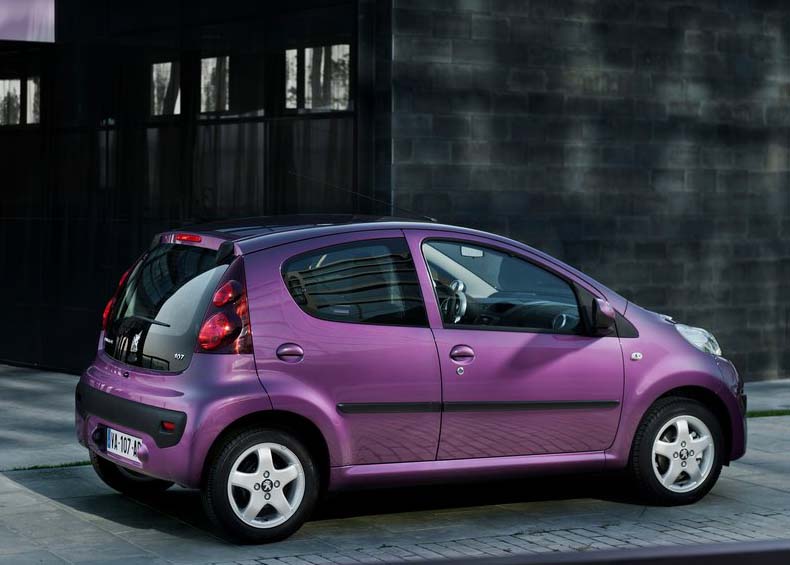
Peugeot 107, 2013


  •  Peugeot 107, 2013

The Peugeot 107 is renewed, more modern and even more urban, a spirited response to the thirst for autonomy, independence and freedom!
Its subtle and sophisticated style, inspired by the new look of the Peugeot marque, gives it a new power of attraction.

Great attention has been paid to its appeal without making any sacrifices in terms of its advantages when facing the constraints of city driving; it has become even more practical and fuel-efficient.

A market and customer base which is constantly changing
The Peugeot 107 evolves and is enriched with a regularly renewed range, special editions and new equipment, in order to keep up with customer expectations.

Its markets have developed too with 16 new countries making a total of 48 countries where it is now sold.
Like most vehicles in this category, the 107 is often the second or even the third vehicle of the household. On the other hand, it distinguishes itself from its segment with an even more predominantly female customer base and appeals to a higher proportion of single people.

The satisfaction that it offers, above all through its manoeuvrability, driving pleasure and economy is above the average for its segment.
After more than 665,000 vehicles produced by the end of 2011, the 107 is now writing a new chapter in its history.

Its aim: to develop its advantages in an increasingly competitive segment.

A new exterior style, subtle and sophisticated
With a completely redesigned front face and unchanged dimensions, the Peugeot 107 adopts the new style of the Peugeot marque, with a look that is both subtle and sophisticated, cut as closely as possible to the mechanics, while retaining its compactness.

The new, more curved bonnet incorporates the new identity of the marque, so the rib of the bonnet which frames the two-tone lion and the number plate repositioned in the centre of the lower front panel hint at its relationship with the 208.

While retaining their shape and their high position, the light units are more refined: at the front, they are extended and adopt a two-tone mask, echoing the colour of the marque emblem situated on the bonnet, whereas at the rear they are adorned with a dark mask thus framing the lamps with a deep ruby colour.

The new radiator grille, composed of honeycomb cells specific to the 107, forms a fine and distinguished mouth, suspended by the body colour that surrounds it.

"It is another interpretation of the floating grille, adapted to the size and architecture of the 107." Ivo Groen, 107 style manager

The new lower front panel has contact cappings - one on the front face and the other two at the side - both aesthetic and protective, particularly useful in urban driving conditions.

The Peugeot 107 adopts a new visual signature at the lower front panel by means of LED day running lamps that emphasise the side protectors, and - according to the model - foglamps animated by a chromed bead.

All of these style components, designed with the utmost care, associated with a sharp body sill line and new trims, give the 107 a new identity, modern and likeable, combining refinement and a strong and thoroughbred appeal.

Furthermore, the range of colours sees the addition of an exclusive new "Plum" colour, modern and attractive, which matches perfectly with its character.

Inside, new equipment and colour schemes
The new "Mistral" interior colour scheme, the new "Manhattan" seat upholstery and the twomaterial door and dashboard trims, which now sport a single black colour, improve the perceived quality of the passenger compartment and give it a touch of refinement.

New comfort equipment makes an appearance, such as:
  •     The CD audio system has 2 additional speakers as standard or as an option according to the level of finish.
  •     A new PC Bluetooth CD audio system available as an option, combined with 2 additional speakers, offers USB, MP3 and Bluetooth connections that are usually found on vehicles of higher segments.
  •     A new steering wheel combined with a new gear lever knob, both leather trimmed, available as standard or as an option.

A simple range and improved features
The Peugeot 107 still has a simple range with 2 levels of finish, available in 3-door and 5-door versions and with 2 engines: 1.0i 5-speed manual and 1.0i 5-speed two-tronic manual.

Its features improve still further with its new audio system that contributes to a higher level of comfort.

The leather-trimmed steering wheel, standard with the two-tronic gearbox is also fitted with steering wheel paddles making the 107 even more manoeuvrable and agile.

It's LED day running lamps and the foglamps, now available as an option or as standard according to the model, contribute to the safety of its occupants, making it more visible in all conditions.

"Last but not least", already very well placed as regards environmental efficiency in its segment, the Peugeot 107 lowers its levels of CO2 emissions still further to 99 and 104 g/km respectively for the manual and two-tronic gearboxes.

It running costs are also improved with fuel consumption reduced to 4.3 and 4.5 l per 100km respectively for the manual and two-tronic gearboxes.

A truly feminine special edition!
A very feminine special edition christened "ENVY" will be available at the launch in March 2012. This fashionable and glamorous version, adorned with either the new "Plum" colour or "Caldera Black", bears special decorations with a cherry blossom branch motif, in particular stickers on the rear door, the bonnet and the tailgate, a "Plum" colour embroidered and braided mat and a rev counter central decoration.

Aluminium door sills and a badge give an additional touch of refinement.
A style line taking up the cherry blossom branch motif is also available. It has a clever handbag pocket, ideal for organising your belongings and changing handbag without forgetting anything, as well as a very practical handbag hook - retractable and therefore compact - which is extremely useful for keeping your handbag "to hand and in sight", without placing it on the floor.

A wide range of personalisation and comfort accessories
With accessories developed especially for it, the Peugeot 107 also fulfils the desire for distinction and adapts to different uses.

Alloy wheels, a brushed aluminium gear lever knob, chromed effect door sills or mats embroidered with "107" give a touch of elegance and a distinctive character.

On the practical side, a retractable navigation system which has a connection for an iPhone or iPod and which integrates perfectly into the dashboard and a central armrest with storage compartment improve comfort and driving pleasure still further.

As regards the side mouldings, these will protect the bodywork against urban impacts.
For leisure pursuits, the Peugeot 107 offers various roof boxes and roof bars for transporting bicycles, skis, etc. and numerous other accessories are also waiting to be discovered in the Peugeot network.
Read More

Saturday, December 15, 2012

Peugeot Urban Crossover Concept, 2012


  •  Peugeot Urban Crossover Concept, 2012

Peugeot Urban Crossover Concept will be presented in turn at the Beijing Motor Show in April 2012 and at the Paris International, in October 2012, so as to illustrate the product of this reflection in a global perspective.

Elegant and cheeky, refined and charismatic, sporty and seductive, with Urban Crossover Concept, Peugeot offers a new vision of a compact Crossover that is modern and relaxed, dynamic and seductive.

At that start of the decade, 30 cities in the world had populations of more than 10 million. By 2050, 5.3 billion inhabitants of the planet will live in mega-conurbations. Peugeot, aware of changes in the world around it, led a reflection on a multi-role compact vehicle, equally at ease in the urban infrastructure, as on the open road.

Cities are changing, mobility as well
From Sao Paulo to Shanghai, from London to Kuala Lumpur, from Cape Town to Moscow, the city lives, changes, grows. Humanity becomes more and more urban, at a rate not seen before. A new generation of city dwellers is being born.

For them, with them, the international teams from Style Peugeot in Paris, in Shanghai and in Sao Paulo have created a new type of vehicle: the Peugeot Urban Crossover Concept. Urban by its contained dimensions (with a length of 4.14m and a width of 1.74m), adventurer by its athletic and sleek style, conferring on it an extraordinary and universal power of seduction. Crossover, it is the vehicle which marries the elegance and refinement of a saloon, the cheekiness, the mischievousness of an SUV, with the multi-role capability and unusual spaciousness for this market segment.

A reflection on the Crossover in the B segment, which draws on considerable expertise in production and concept cars

Peugeot, with its strong credibility in the field of compact cars (15 million units produced in the 200 series) and a legitimacy that is recent, but already remarkable in the Crossover field, with the success of 3008 (368 000 units have been sold in the world to date) and the presentation of the SXC concept at the Shanghai Motor Show in 2011, wanted to develop the reflections and marry these two areas of excellence in a concept car.

Peugeot Urban Crossover Concept wants to be the synthesis of Peugeot's know-how in creating a small vehicle combining agility, compactness, multi-role ability and confident styling at the service of young city dwellers that like the city, live the city, creating the city, while still loving to escape from it.

A unique Style unique, marrying elegance with robustness
Peugeot Urban Crossover Concept naturally embodies Peugeots new styling cues. With its athletic and classy lines, Urban Crossover Concept imposes its audacious posture which shakes up and reinvents the standards of large vehicles for the small vehicle segment.

Peugeot Urban Crossover Concept associates aspects that are normally different and separate:
  •     the height and the robustness of a modern SUV, concerned to be light and aerodynamic
  •     the finesse, the elegance and the dynamism of the new Peugeot saloons
  •     but also, the multi-role ability of a large vehicle that knows how to remain compact

The front end is at the same time refined and full of power. Models that are sensual and with a highly sculpted bonnet or front wings give a reassuring impression of protection and robustness.

The smiling grille, always floating, offers a massive outline, shaped in metal. It is associated with a sophisticated dual-aspect treatment of the image of Peugeot's new badge.

This care in the treatment of details can of course be found in the precise and original design of the headlamps which further refreshes the Peugeot look. Its lower edge closely follows the technical functions showing a keen pupil of the feline, so giving it an even more expressive and singular character.

In profile, the smooth flow between the raked windscreen and the line of the roof continues to the spoiler, creating a profiled and very dynamic outline. The lines of the side, laid out in the direction of the road are evocative of a car that is lively, classy and very dynamic.

Peugeot Urban Crossover Concept presents a sculpturing of the wings and side that is very sensual and sophisticated evocative of natural athletic qualities. The rounded shape of the wheel arches symbolises the qualities of agility associated with all road vehicles.

The raised body and large wheels reveal the true multi-role qualities for family or working life, while also contributing to the reading of a car that is light, respectful of its environment.

Finally, the soft wave of the roof underlines the exclusive upper finishers, crafted in metal. It appears to be set in the body and directly inspired by the RCZ coupé. This refinement is found in the precise design of the roof bars, evocative of both speed and the leisure use of the vehicle.

At the rear, with the dynamic design with the lamps embedded with precision in the body, it presents a luminous Peugeot signature with 3 floating claws using LED technology.

The rear volume is monolithic, a symbol of controlled power and solidity. It is associated with lines that are dynamic in character and sculpted models.

Finally, the aluminium spoiler and roof double bubble are reminiscent of the sporty and elegant aspect of the RCZ.

In this way, Peugeot Urban Crossover Concept posses a pronounced personality, associating:
  •     power and robustness by its posture and its contours
  •     elegant, sensual and very dynamic lines
  •     refinement and technology in the treatment of exclusive details

Peugeot Urban Crossover Concept transcends border. The borders of vehicle style and segmentation. The borders of the needs of future generations of customers. The borders between the city and nature. The borders between continents
Read More