Showing posts with label Honda. Show all posts

Monday, May 12, 2014

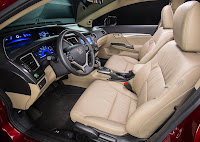
Honda Civic Si Coupe, 2014

Honda Civic Si Coupe, 2014, Indo Automobiles, Cars Concept, Luxury Automobile
 Honda Civic Si Coupe, 2014, Indo Automobiles, Cars Concept, Luxury Automobile
Honda Civic Si Coupe, 2014

Following a major refresh of Civic Sedan styling for 2013, Honda turns its attention to the Honda Civic Coupe and Coupe Si, implementing a host of exterior design changes that include a more aggressive grille, hood, front fenders and headlight design. Additional Coupe exterior changes include new taillight lenses, sportier front and rear bumpers, new side mirrors and new wheel designs.

The Honda Civic Si Coupe benefits from the same styling enhancements as the standard Civic Coupe but adds Si-exclusive design cues, including a unique lower front bumper garnish, larger rear decklid spoiler, a distinctive front spoiler and sporty rear air diffuser. The Civic Si Sedan picks up on these same cues, and both the Si Coupe and Si Sedan get larger, 18-inch (+1 inch) wheels and tires with new wheel designs.

The performance-tuned Honda Civic Si Coupe and Si Sedan also get a retuned exhaust system that helps boost peak output to 205 horsepower (+4 horsepower) and 174 lb-ft of torque (+4 ft-lb).


Read More

Friday, December 20, 2013

Honda Civic Coupe, 2014


  •  Honda Civic Coupe, 2014

Following a major refresh of Civic Sedan styling for 2013, Honda turns its attention to the Honda Civic Coupe and Coupe Si, implementing a host of exterior design changes that include a more aggressive grille, hood, front fenders and headlight design. Additional Coupe exterior changes include new taillight lenses, sportier front and rear bumpers, new side mirrors and new wheel designs.

The Honda Civic Si Coupe benefits from the same styling enhancements as the standard Civic Coupe but adds Si-exclusive design cues, including a unique lower front bumper garnish, larger rear decklid spoiler, a distinctive front spoiler and sporty rear air diffuser. The Civic Si Sedan picks up on these same cues, and both the Si Coupe and Si Sedan get larger, 18-inch (+1 inch) wheels and tires with new wheel designs.

The performance-tuned Honda Civic Si Coupe and Si Sedan also get a retuned exhaust system that helps boost peak output to 205 horsepower (+4 horsepower) and 174 lb-ft of torque (+4 ft-lb).


Read More

Wednesday, December 11, 2013

Honda Accord PHEV, 2014


  •  Honda Accord PHEV, 2014
The 2014 Honda Accord Plug-in Hybrid Sedan will provide the athleticism and craftsmanship of the all-new Accord platform, charged with a remarkable dose of hybrid efficiency and electric torque. Set to go on sale in early 2013, the 2014 Accord Plug-in Hybrid (PHEV) Sedan will offer premium technology, exceptional cabin space, the ability to run in an all-electric mode for 10 to 15 miles and a calculated1 total driving range over 500 miles.

The Honda Accord Plug-in Hybrid Sedan features one of four efficient new powertrains for the all-new Accord. The Accord Plug-in Hybrid will also serve as the basis for a conventional hybrid version of the Accord Sedan, which will join the Honda Accord lineup in the summer of 2013.

The Accord Plug-in Hybrid is powered by Honda's first two-motor hybrid system, and uses a new Earth DreamsTM 2.0-liter i-VTEC 4-cylinder engine producing 137 horsepower, teamed with a powerful 124-kilowatt (kW) electric motor. Electric driving is supported by a 6.7 kilowatt-hour (kWh) lithium-ion (Li-Ion) battery, and total system output is 196 horsepower.

To maximize driving efficiency, the uniquely designed two-motor hybrid system allows the Accord PHEV powertrain to move seamlessly between all-electric EV Drive, gasoline-electric Hybrid Drive; and direct Engine Drive. Fuel efficiency for the 2014 Honda Accord Plug-in Hybrid is expected to exceed 100 MPG-e, and it's also expected to receive an Enhanced AT-PZEV rating from the California Air Resources Board (CARB).

Beyond its function as a full-electric vehicle, owners of the 2014 Honda Accord PHEV will be able to choose two additional driving modes to manage battery capacity and tailor the capabilities of the plug-in Accord to their own commute. In its default upon start-up, the Accord PHEV acts as a pure electric vehicle and will continue on in full-electric mode until battery capacity necessitates the automatic switch to gas/electric hybrid operation. At higher speeds or under high demand for acceleration, the gasoline engine can kick in to provide additional power.

In "HV" mode, the plug-in Accord acts as a conventional hybrid, blending motor power between gasoline and electric to maximize fuel efficiency while maintaining the battery charge level. In "HV Charge" mode, the Accord PHEV blends gasoline and electric power while also augmenting the battery charge level.

The Accord Plug-In Hybrid Sedan will feature an electric servo braking system similar to the setup on the Honda Fit EV, which allows for exceptionally natural brake pedal feel, while extending the range over which the regenerative braking can take place. In addition to its efficient powertrain, the Accord PHEV features remarkably swift charging times. The plug-in Accord can be fully charged from a low-charge indication point in less than three hours using a standard 120-volt household electrical outlet, and in less than one hour using a 240-volt "Level-2" charger. The free HondaLink™ EV smartphone application will allow owners to easily monitor the charging state of the Accord PHEV.

Based on the Touring trim level of standard Accord Sedan, the 2014 Honda Accord Plug-in Hybrid Sedan will feature three exterior color choices, including two standard Accord shades (White Orchid Pearl, Crystal Black Pearl) plus a model-exclusive Burnished Silver Metallic exterior color choice. The Accord PHEV will also feature a weight-saving aluminum hood, 17-inch forged alloy wheels, a unique front bumper along with enhanced underbody aerodynamic treatments.

A host of visibility technologies are standard on the 2014 Honda Accord PHEV, including a rearview camera, an expanded-view driver's mirror, Honda's new LaneWatch™ blind-spot display, LED headlights, LED daytime running lights (DRL), and LED mirror-mounted turn indicators.

Powertrain
The Earth Dreams technology used on the Accord PHEV includes an i-VTEC 2.0-liter 4-cylinder Atkinson-cycle gasoline engine coupled with a two-motor hybrid drive system. The hybrid system features a 124-kW electric motor powered by a 6.7-kWh Li-Ion battery pack. The gasoline engine produces a maximum 137 horsepower (hp) at 6200 rpm. In conjunction with the two-motor hybrid-drive system, the total power output peaks at 196 hp, which surpasses the Toyota Prius Plug-In Hybrid, Chevrolet Volt and projected output of the Ford Fusion Energi plug-in hybrid. The EarthDreams engine horsepower alone surpasses the total gas-electric output of the Prius Plug-In Hybrid.

Though not finalized at press time, anticipated fuel economy ratings for the 2014 Accord PHEV are expected to exceed 100 MPG-e in full-electric mode, provide a 10- to 15-mile EV driving range and a calculated1 total driving range over 500 miles. When in gasoline-only mode, it is expected to return one of the top EPA fuel economy ratings among mid-size sedans, and is also expected to earn an Enhanced AT-PZEV rating from the California Air Resources Board (CARB).

The two-motor hybrid system in the 2014 Honda Accord Plug-in Hybrid allows power from the gasoline engine to flow directly to the front wheels, power the generator to supply electrical propulsion or even charge the battery pack. The Accord PHEV hybrid system moves seamlessly and automatically through its three powertrain states to maximize performance, efficiency and range.

From a low-charge indicator point, recharge time for the Li-Ion battery pack when plugged into a standard 120-volt wall outlet is less than three hours, among the fastest in the Accord PHEV's class. And when plugged into a Level-2, 240-volt charger the recharge time is less than one hour - the quickest in the class. This is about half the required charge time of the Prius Plug-In Hybrid. The battery pack is mounted above the rear suspension, which helps maintain interior and trunk space and provides protection for the battery pack in a collision.

Body
The Accord body received further improvements in weight reduction, aerodynamic efficiency and rolling resistance in its transformation to Accord PHEV. All are designed to help Accord PHEV drivers maximize their driving range from every watt of electrical energy and every gallon of gasoline. Weight reduction features:
    All-aluminum front subframe
    17-inch forged aluminum wheels
    Aluminum brake pedal
    Aluminum hood
    Aluminum rear bumper beam
    Puncture repair kit (in place of gasoline-engine Accord's spare wheel and tire)

Aerodynamic advancements:
    Powertrain undercover
    Cabin floor undercovers
    Rear decklid spoiler
    Aerodynamic wheel covers

Reductions in rolling resistance:
    Low rolling-resistance tires
    Low-friction wheel bearings

Chassis
The Accord PHEV chassis begins with the core engineering of the Accord Sedan, but then adds an all-aluminum front subframe (replacing the steel and aluminum version on the gasoline-engine Accord). The Accord PHEV uses proprietary 17-inch forged-aluminum wheels with a special low-aero drag design, fitted with 225/50-17 tires.

As with the gasoline-engine Accord models, the Accord PHEV uses an electric power steering (EPS) system that automatically adjusts the amount of steering assist for conditions. The EPS system is more efficient than a traditional hydraulic system, and it operates consistently whether the vehicle is using electricity, gasoline, or both.

The Accord PHEV features a braking system similar to the system in the Honda Fit EV, which provides fully electronic control of the hydraulic brake system. This system results in an improvement in regenerative braking efficiency compared to a hydraulic booster system used in other hybrids.

Interior
Sophisticated and contemporary, the redesigned 2013 Accord Sedan interior serves as the ideal basis for the 2014 Accord PHEV interior. Like the Fit EV, the Accord PHEV features a next-gen Honda Bio Fabric seat material, a new fabric that offers conventional softness and durability, but with reduced manufacturing environmental impact. The interior features several brighter trim accents and is available in gray to compliment the choice of three exterior colors.

With the Accord PHEV's free and convenient Honda Link EV smartphone app, owners can remotely schedule charging of the Li-Ion battery pack (taking advantage of "off-peak" electricity rates), monitor the state of charge, and even pre-warm or pre-cool the vehicle's interior while charging before they drive. This suite of capabilities is similar to those offered on the new 2013 Fit EV. Honda Link EV features:
    Charge scheduling
    Charge status
    Charge complete notification
    Drive range display
    Charge station locator
    HVAC pre-conditioning

Safety
Like the all-new Accord, the new Accord PHEV offers a greater range of standard active and passive safety features than any other vehicle in Honda history. These include Vehicle Stability Assist™ (VSA®) Forward Collision Warning (FCW) and Lane Departure Warning (LDW). The Accord PHEV also has an Acoustic Vehicle Alerting System (AVAS) to audibly warn pedestrians when it is approaching in EV Drive mode. Based on internal testing, the 2014 Honda Accord PHEV is expected to earn a TOP SAFETY PICK rating from the Insurance Institute of Highway Safety (IIHS) and 5-Star ratings in federal National Highway Traffic Safety Administration (NHTSA) tests.

Standard Features
The Accord PHEV is available in a single highly equipped trim level, based on the standard features of the premium Accord Touring model. Standard Accord PHEV features:
    Bluetooth HandsFree Link
    USB/iPod connectivity
    Dual-zone automatic climate control
    Pandora internet radio compatibility
    Smart Start and Smart Entry
    Honda LaneWatch
    Honda Satellite-Linked Navigation System™ with Voice Recognition
    Multi-view rearview camera
    Honda Link EV telematics system
    Heated front seats
    Auto-dimming rearview mirror
    Leather-wrapped steering wheel
    Driver's 10-way power seat with 2-position memory
    Home Link
    Intelligent Multi-Information Display (i-MID)
    Audio with touchscreen interface
    Forward Collision Warning (FCW)
    Lane Departure Warning (LDW)
    Adaptive Cruise Control (ACC)
    Bio-Fabric seating surfaces
    Expanded-view driver's mirror
    LED mirror-mounted turn signals
    LED Daytime Running Lights (DRL)
    LED headlights
    Fog lights
    Chrome-plated door handles
    Decklid spoiler
Read More

Tuesday, October 1, 2013

Honda CR-V, 2013


  •  Honda CR-V, 2013

MANUFACTURING
The new Honda CR-V will be built at Honda's UK manufacturing facility, Honda of the UK Manufacturing Ltd (HUM), which was established in 1985. The CR-V was first produced at HUM in 2000. Honda is committed to manufacturing in the UK and the many awards won by the products built at HUM demonstrate the plant's ability to produce high quality products for the European market.

Over the last 25 years, Honda has invested over £ 1.4 billion into its manufacturing operation in Swindon and currently employs 3,500 Associates who will build the new Honda CR-V alongside the Civic and Jazz.

HUM is a fully integrated car manufacturing facility, producing the whole car (casting, engine assembly, pressing, welding, painting and frame assembly) on one, 370 acre site (1.5 million m2) site in Swindon, Wiltshire.

Launched in late 2001, the second generation CR-V took many cues from the original, retaining all of its best features including the rugged 4x4 styling and the 'on demand' Real Time Dual Pump 4WD system. It offered improved performance and economy, achieved through the introduction of Honda's 2.0-litre i-VTEC petrol engine, while the new body structure delivered increased interior space.

Originally launched at the 1995 Tokyo Motor Show, the Honda CR-V was one of the first of the modern generation of 'soft roaders'. It became a benchmark for this fast growing segment with its practical size and excellent utility. The CR-V was designed primarily for on-road use, but with SUV styling and the quality customers expect from a Honda product. Sales began in Europe in 1997 and the CR-V quickly became a firm favourite with buyers. Production of European specification CR-Vs started at Honda's plant in Swindon, United Kingdom in 2000.

A further sales boost came in 2005 with the introduction of Honda's much acclaimed i-CTDi diesel engine. Perfectly complementing the petrol engine, the high output, high torque engine significantly enhanced the CR-V's all-round appeal.

In 2007, the introduction of the third-generation CR-V marked the first CR-V to feature a vertically opening tailgate, a feature made possible by removing the spare wheel from the back door. Lower in height, shorter in length and wider than its predecessors, it offered improved on-road dynamics. A mid-life facelift in 2009 introduced the new generation i-DTEC diesel engine and saw a diesel engine combined with an automatic transmission for the first time in the CR-V.

Over five million CR-Vs have been sold across the world since its introduction in 1995 and the new, fourth generation builds on the success of its predecessors with even greater quality, practicality and refinement. The model that helped define the compact-SUV sector has been comprehensively redesigned for the European market.

For the first time in Europe, the new CR-V will be offered with a choice of both two- and four-wheel drive, while improvements to both the petrol and diesel engines have resulted in a significant reduction in CO2 emissions.

EXTERIOR DESIGN
The pursuit of the perfect balance between a car and an SUV influenced every element of the development process, including the exterior styling.

Exterior Designer Manabu Konaka explains: "The Honda CR-V has always been a car for every occasion. It can be both casual and formal, but the aesthetic must always convey solidity and reliability."

The length and height of the car have been reduced by 5 mm and 30 mm respectively compared with the current model, without reducing the interior space.

While the fourth generation model is instantly recognisable as a member of the CR-V family, it still manages to assert its own identity. The new model takes on a more aggressive and aerodynamic stance with deeper sculpting of the bodylines and a bolder nose section. The front bumper's smooth, flowing lines are joined by a horizontal three-bar grille and deep-set headlights. The lower front bumper is designed to convey SUV capability with a generous approach angle. The signature vertical rear brake lights, which have featured on every generation of Honda CR-V, remain but the fourth generation introduces a more three-dimensional style. The CR-V's large wheels and bold wheelarches further emphasise its dynamic presence and capability.

The CR-V has been designed as a global car but the European model features a number of exterior refinements developed specifically for this market. A revised front bumper emphasises its dynamic appeal, while front LED daytime running lights and rear LED lights are other stylish additions.

The position of the windscreen has been brought forward by 60 mm (measured from bottom of the windscreen) relative to the overall length of the car. As a result, the size of the engine compartment has been reduced.

"At Honda, every project leader pursues our man-maximum, machine-minimum philosophy," says Nakagawa. "It is always our goal to reduce the size of the mechanical parts in order to provide more space for the occupants. It is a big challenge for our engineering and production teams, but one that we must take on."

The repositioning of the windscreen and the new bonnet design have provided a second benefit: the area of the nose of the car that cannot be seen from the driver's seat has been reduced to improve visibility and make the CR-V easier to manoeuvre.

A 10 mm increase in both the steering wheel and seat height adjustments has also ensured that a broader range of drivers can achieve an ideal driving position.

The synergy between form and function has played a critical role in the development of every generation of the Honda CR-V and this latest model is no exception. The expansive glass area of the windows reveals the spaciousness of the cabin.

With the rear seats folded flat, the boot capacity of the CR-V has grown by 147 litres to 1648 litres. If the space-saver spare wheel is specified, the volume increases to 1669 litres with the seats folded up, or 589 litres with the seats in place. The load length has been increased by 140 mm to 1570 mm, while the height of the load lip has been reduced by 25 mm to make it easier to load heavy or awkward items. The boot of the CR-V can now accommodate two mountain bikes or four sets of golf clubs.

A keyless entry system and power tailgate (unique to the European specification CR-V) provide enhanced practicality.

THE INTERIOR DESIGN - QUALITY AND FUNCTIONALITY
The interior design concept for the new Honda CR-V continues the man-maximum, machine-minimum philosophy. "The first thing that we wanted to achieve with the interior design was a feeling of openness," says the Interior Designer, Takehiro Ishibashi. "I wanted to communicate the feeling you get when you stand on top of a mountain, looking down on the valley and seeing a panorama of the landscape. It's a feeling of freedom, space and timelessness."

The influence of this thinking can be seen in the fascia design. "There are a number of horizontal layers which help emphasise the feeling of space," says Nakagawa. "We call this 'lean-layered' design. By arranging the major functions in a series of layers, you create an ergonomically-efficient environment that is very intuitive." The major controls have been further grouped according to their function, with a 'driver interface zone' behind the steering wheel and an 'information interface zone' in the centre of the cabin.

The materials used within the new CR-V have been carefully chosen for the European market. "The high quality finish on the top of the fascia was inspired by the marble-like pattern you find on Japanese Kobe beef," says Ishibashi. "On the decorative strip that flows across the fascia we used a special film that creates a 3D effect. I am really proud of our attention to detail in every aspect of this vehicle."

Care has also been taken to achieve a significant reduction in the engine and road noise entering the cabin. Sound insulation material has been applied to the floorpan below the passenger compartment, while sound absorption material has been fitted to the rear door, rear wheelarches, door frames, front bulkhead and bonnet. The doors also now feature a double seal. The net result is a 3dB reduction in cabin noise compared to the current CR-V.

The high quality ambience is further enhanced by an impressive range of equipment. In the cabin attention focuses on the 5in "intelligent" Multi-Information Display (i-MID), which controls the audio, telephone and navigation systems (where fitted). Also fitted as standard are Honda's acclaimed ECON mode which helps to minimise fuel consumption and Eco Assist system which advises drivers on how their driving style is impacting on fuel economy (see Efficiency).

In order to emphasise the feeling of space inside, the door casings have been sculpted to create a concave shape. This has also allowed the occupants of the front seats to be moved closer to the sides of the car, making it easier to step in and out. As a consequence, more space has been liberated between the seats for a centre console that houses three cupholders, a storage compartment, an armrest and air vents for the rear seats.

The hip point of the rear passenger seats has been lowered by 38 mm compared to the current model, resulting in a more comfortable seating position and increased headroom. A change in the design of the rear seats has also allowed Honda's engineers to introduce easy fold-down 60/40 Split Rear Seats, which can be folded flat in one movement. At the pull of a handle, the CR-V can be transformed from a five-seater passenger car into a versatile load-lugger. "This is a feature of which I am particularly proud," says Ishibashi. "It will make a big difference to how our customers use their CR-V."

EFFICIENCY
The CR-V has always been one of the most efficient SUVs on the market and Honda's engineers have worked tirelessly to hone every aspect of the fourth generation model. Improved aerodynamics and sophisticated electronics combine to achieve significant reductions in fuel consumption and exhaust emissions.

AERODYNAMICS
As with so many elements of the new CR-V, form and function go hand in hand in the aerodynamics of the car. The adoption of a flat under floor and sculptured wheelarches have smoothed the air flow under the car, while a longer roof combined with aerodynamically optimised front bumper and rear spoiler help to manage the air-flow over the body. The result is a reduction in the drag coefficient of 6.5% compared with the current CR-V benefitting performance, fuel economy and reducing exhaust emissions.

ENGINES
Under the bonnet of the Honda CR-V, customers will find either a 2.0-litre i-VTEC petrol engine or a 2.2-litre i-DTEC diesel engine.

Both are developments of the engines found in the third generation CR-V but both have been comprehensively redesigned with a focus on reducing CO2 emissions. "We have placed a key emphasis on applying new technologies to reduce the friction in the engines and improve their efficiency," explains Nakagawa. Idle-stop technology has also been introduced on all models fitted with the six-speed manual gearbox. Improvements in fuel economy and a reduction of CO2 emissions in the new CR-V have been achieved without compromising driving pleasure.

i-DTEC DIESEL ENGINE
The power and torque outputs of the i-DTEC engine remain at 150PS and 350 Nm respectively, but the CO2 emissions have fallen from 171 g/km to 149 g/km (12%) for the manual version, and from 195 g/km to 174 g/km for models equipped with the five-speed automatic transmission.

The i-DTEC engine is all-aluminium, transversely mounted, with 4-cylinders, DOHC, four valves per cylinder, a variable nozzle turbocharger, piezoelectric injection and a second order balancer shaft. A continuously variable swirl control valve, located in the intake manifold, provides fine control of the swirl ratio, to give the ideal combustion environment within the cylinders at all times. This helps to reduce noise levels ( through reduced knocking) and produce smoother performance. A standard particulate filter (DPF) and Exhaust Gas Recirculation technology contribute to a reduction in NOx levels and further improvements in efficiency.

i-VTEC PETROL ENGINE
The power output of the 2.0-litre i-VTEC engine has risen from 150PS to 155PS. Despite this increase in performance, CO2 emissions have fallen from 192 g/km to 173 g/km for the manual version, and from 195 g/km to 175 g/km for the automatic.

Customers opting for the two-wheel drive version (only available with a petrol engine) will see a further reduction in emissions to 168 g/km. The introduction of a front-wheel drive CR-V responds to changing market conditions. Across Europe, two-wheel drive models now account for 51% of the petrol-engined compact-SUV market according to a survey conducted in 2011.

The Honda CR-V's petrol engine uses Honda's long-established VTEC system, which is able to adjust the lift and opening duration of the valves. The system is complemented by Variable Timing Control (VTC), which monitors the engine load and controls the phasing of the inlet camshaft. These work together to produce a remarkably broad and smooth power band. Based on input from a position sensor located at the rear end of the inlet camshaft, the engine's ECU varies the inlet camshaft position relative to that of the exhaust camshaft. In this way it can advance and retard the opening of the inlet valves.

During acceleration, VTC is set at a relatively small degree of valve overlap to provide the optimal output, the valve opening angle using the inertia of the intake air. In addition, as engine speed builds, the VTEC mechanism switches from the low speed cam to the high speed cam, but with the same degree of overlap.

At high engine speeds, there is much greater valve overlap, which reduces pumping losses, maximises exhaust gas recirculation, and provides the best balance between fuel consumption and power output.

At idle and low engine speeds during light load conditions, inlet valve opening is retarded for minimal overlap, generating strong swirl and therefore stable combustion.
Read More

Sunday, July 21, 2013

Honda Civic Sedan, 2013


  •  Honda Civic Sedan, 2013

The top-selling and award-winning Honda Civic returns for 2013, with a host of design upgrades and a bevy of new standard features, while still maintaining the efficiency and value that has made the Honda Civic an automotive icon for the past 40 years. The 2013 Honda Civic Sedan receives all-new front and rear exterior styling, along with extensive interior styling upgrades on all models. Retuned steering and suspension sharpen the Civic's handling, while extensive body and chassis upgrades improve the ride comfort and interior quietness.

Across the board, every 2013 Civic model is equipped with a suite of class-leading standard features. Standard equipment on every Honda Civic includes Bluetooth® HandsFreeLink®, Bluetooth® Audio, rearview camera, color i-MID display, USB/iPod® connection, Pandora® Interface, an SMS text feature, steering wheel audio controls, exterior temperature gauge and sliding center-console armrest. Even with hundreds of dollars of standard features added, the 2013 Civic arrives with only a modest $160 increase in MSRP across the lineup, with pricing for the exceptionally well-equipped 2013 Civic LX Sedan beginning at $18,165.

New safety technologies built into the 2013 Honda Civic include the application of the next-gen Advanced Compatibility Engineering™ II (ACE™ II) body structure, which includes additional front end structures designed to help increase occupant protection by dispersing crash energy in narrow overlap frontal crashes, and should help the Civic obtain a top rating in the new small-offset crash test conducted by the Insurance Institute for Highway Safety (IIHS). Also new are SmartVent™ side airbags, side curtain airbags with a rollover sensor and the availability of Forward Collision Warning (FCW) and Lane Departure Warning (LDW) systems, which make their compact-class debut in the 2013 Honda Civic Hybrid.

Featuring the widest array of powertrain choices available in the segment, the Honda Civic lineup is designed to meet the diverse needs of today's compact-vehicle buyer. The 2013 Honda Civic Sedan and Coupe will be available in LX, EX, EX-L and Si models, with the Civic Hybrid, Civic Natural Gas and Civic HF also available in sedan form. The entry model Civic DX has been discontinued for 2013.

Powertrains
The 2013 Honda Civic lineup includes sedan and coupe models with a conventional gasoline engine and "Si" performance models. Civic also offers a high fuel efficiency "HF," hybrid and exclusive natural gas alternative-fuel sedans.

Heavily revised for the ninth-gen Civic introduction for model year 2012, the Civic's all-aluminum, 140-horsepower, i-VTEC® 1.8-liter 16-valve four-cylinder engine is unchanged for 2013, continuing to provide exceptional responsiveness, refinement, and fuel efficiency. Providing 128 lb-ft of torque at 4300 rpm, the Honda mill is paired with either a 5-speed manual or 5-speed automatic transmission. In the Honda Civic Sedan and Coupe, this powertrain has earned an EPA fuel-economy rating of 28/39/32 mpg city/hwy/combined when equipped with the automatic transmission. In the Civic HF Sedan, those figures climb to 29/41/33 mpg.

Now available in 37 states, the 2013 Honda Civic Natural Gas continues as the only mass produced natural gas sedan available in the U.S. In the Civic Natural Gas, the 1.8-liter engine produces 110 horsepower, and earns an EPA fuel economy rating of 27/38/31 mpg2 (city/hwy/combined). The 2013 Civic Hybrid features a 1.5-liter four-cylinder engine equipped with Honda's Integrated Motor Assist (IMA®) system, which when coupled with its Lithium-Ion battery pack, produces 110 horsepower and 127 lb-ft of torque. Paired to a Continuously Variable Transmission (CVT), the Honda Civic Hybrid earns a city/hwy/combined EPA rating of 44/44/44 mpg. The Civic Sedan and Coupe, Civic Natural Gas and Civic Hybrid models all feature Honda's ECO Assist™ technology, which with the push of the green, dash-mounted "ECON" button, can help drivers operate the vehicle more efficiently.

Along with strong fuel efficiency, the Civic lineup also offers strong performance. The 2013 Civic Si Sedan and Si Coupe models are equipped with an all-aluminum, 201-horsepower, i-VTEC® 2.4-liter DOHC 16-valve engine paired to a 6-speed manual transmission. Even though it provides 170 lb-ft of torque and offers exhilarating performance, the Honda Civic Si has a remarkable 31 mpg EPA highway fuel economy rating.

Body
For 2013, the Honda Civic has received a host of changes that far exceed the typical mid-model refresh. The front and rear styling of the 2013 Honda Civic Sedan has been completely altered for a more youthful and premium feel, including sheet metal changes that include an all-new hood and trunk lid. Up front, a new open-mouth lower bumper with a horizontal chrome accent and a sportier, black honeycomb mesh grille is anchored by new integrated fog lights on EX-L and above trims. The grille is flanked by new clear-lens corner lights to provide a more premium look. The 2013 Civic's more sculpted front end flows into a new taller, more deeply faceted hood.

In back, a new rear bumper design and new rear trunk lid are capped by a clean, horizontal chrome trim piece. The all-new design of the jewel-like taillights now carries into the trunk face, providing a more finished and upscale look. The rear bumper features integrated reflector treatments and a new lower diffuser panel finished with a honeycomb mesh vent. While the expressive exterior styling of the 2013 Honda Civic Coupe remains unchanged, restyled wheels on all models help sharpen the look of the 2013 Civic.

Constructed of 55-pecent high-strength steel, the 2013 Honda Civic's body minimizes weight and maximizes strength for greater rigidity. The 2013 Civic's body has seen a host of changes to the front floor, side sill, A-pillar, upper wheel housing and front bumper extension. This addition of high-strength steel is expected to pay refinement dividends and provide a stiffer structure for the numerous chassis updates for the 2013 Civic. In addition, the Civic's new structure is designed to help it excel in the new Insurance Institute for Highway Safety (IIHS) small overlap crash test.

Chassis
Under the skin, the 2013 Honda Civic has had significant alterations aimed at enhancing handling refinement and noise isolation. A reworked Electronic Power Steering (EPS) setup reduces friction and provides a quicker ratio, while stiffer wheels, stiffer front springs and a thicker front stabilizer bar with new Teflon-lined mounting bushings are designed for more fluid suspension action and a flatter, more responsive cornering attitude.

The rear suspension also receives a thicker stabilizer bar, increased spring rate, new Teflon-lined stabilizer-bar bushings, and reworked suspension bushings to increase both bump- and roll-motion stiffness. With its retuned MacPherson strut front and multi-link rear suspension, handling linearity, responsiveness and overall vehicle composure have been increased, while at the same time improving ride quality and the characteristic Honda fun-to-drive feel. For 2013, front brake-rotor diameter on automatic-equipped Civic LX, EX and EX-L Sedans and Coupes jumps 20 mm from 262 to 282 mm for improved stopping performance.

A large range of new noise, vibration and harshness (NVH) countermeasures work together to reduce road, engine and wind noise in the 2013 Civic's interior. This includes a stiffer front subframe, new thicker windshield and front door glass, and additional soundproofing material in the dash, floor, doors, and rear tray to help reduce unwanted road noise, and provide a more serene ride and quieter cabin.

Interior
Inside, extensive refinements in design and construction gives the entire 2013 Honda Civic lineup a more premium feel, with an all-new tricot headliner, new soft-touch materials on the instrument panel and upper door treatment, and revised textures and panel junctions throughout the instrument panel and center console. Subtle silver accents in the interior lend a higher-quality look, along with door panel and seat fabric upgrades. Providing a more upscale environment, black carpeting and a trunk lid finisher are now standard on all Civic models. For the first time, Civic is available in both cloth and leather with an all-black interior.

The 2013 Honda Civic provides a host of new class-leading standard features, including Bluetooth® HandsFreeLink®, Bluetooth® Audio, rearview camera, color i-MID display, Pandora® Interface, USB/iPod® interface, SMS text message function, steering wheel audio controls, exterior temperature gauge and a sliding finished center armrest. Available on Honda Civic EX, EX-L, Hybrid and Natural Gas models, the Honda Satellite-Linked Navigation System™ with voice recognition now includes a multi-view rearview camera and provides routing and guidance to individual addresses and more than 7-million points of interest within the continental United States. With its 16-GB flash memory system, it offers fast route calculation and includes FM traffic, a subscription-free service that alerts drivers to traffic conditions.

Safety
Named a "2012 Top Safety Pick" by the Insurance Institute for Highway Safety (IIHS), the Civic returns for 2013 with a re-engineered Advanced Compatibility Engineering™ II (ACE™ II) body structure. The changes that went into the ACE II body structure were designed to help increase the protection provided to vehicle occupants in a frontal collision, including the addition of front end structures to help disperse crash energy in narrow overlap frontal crashes. These changes should also help the Civic obtain top marks in the new Insurance Institute for Highway Safety (IIHS) small overlap frontal crash test.

Also new for 2013, the Honda Civic features Honda's new SmartVent™ front seat side airbag construction that recently debuted in the 2013 Honda Accord. The new SmartVent™ airbag design helps mitigate the risk of excessive side airbag deployment force, while eliminating the need for the prior Honda Civic's Occupant Position Detection System (OPDS). The elimination of OPDS allows improved heating of the seatback on Civic EX-L models. Additionally, the 2013 Civic is equipped with a side curtain airbag with rollover sensors, nearly two years ahead of regulatory requirements.

A first in the compact segment, the 2013 Honda Civic Hybrid will provide standard Forward Collision Warning (FCW) and Lane Departure Warning (LDW) systems. FCW is designed to detect a possible collision with another vehicle or object ahead and provide visible and audible alerts to the driver. LDW provides visible and audible alerts if the driver begins to drift out of a detected lane without using the turn indicator.

The 2013 Honda Civic's additional safety technologies include standard dual-stage, multiple-threshold front airbags, an anti-lock braking system (ABS), Vehicle Stability Assist (VSA) with traction control, a tire pressure monitoring system, and a pedestrian injury mitigation design in the front of the vehicle.
Read More

Saturday, June 15, 2013

Honda Civic Natural Gas, 2013

 
  •  Honda Civic Natural Gas, 2013

The top-selling and award-winning Honda Civic returns for 2013, with a host of design upgrades and a bevy of new standard features, while still maintaining the efficiency and value that has made the Honda Civic an automotive icon for the past 40 years. The 2013 Honda Civic Sedan receives all-new front and rear exterior styling, along with extensive interior styling upgrades on all models. Retuned steering and suspension sharpen the Civic's handling, while extensive body and chassis upgrades improve the ride comfort and interior quietness.

Across the board, every 2013 Civic model is equipped with a suite of class-leading standard features. Standard equipment on every Honda Civic includes Bluetooth® HandsFreeLink®, Bluetooth® Audio, rearview camera, color i-MID display, USB/iPod® connection, Pandora® Interface, an SMS text feature, steering wheel audio controls, exterior temperature gauge and sliding center-console armrest. Even with hundreds of dollars of standard features added, the 2013 Civic arrives with only a modest $160 increase in MSRP across the lineup, with pricing for the exceptionally well-equipped 2013 Civic LX Sedan beginning at $18,165.

New safety technologies built into the 2013 Honda Civic include the application of the next-gen Advanced Compatibility Engineering™ II (ACE™ II) body structure, which includes additional front end structures designed to help increase occupant protection by dispersing crash energy in narrow overlap frontal crashes, and should help the Civic obtain a top rating in the new small-offset crash test conducted by the Insurance Institute for Highway Safety (IIHS). Also new are SmartVent™ side airbags, side curtain airbags with a rollover sensor and the availability of Forward Collision Warning (FCW) and Lane Departure Warning (LDW) systems, which make their compact-class debut in the 2013 Honda Civic Hybrid.

Featuring the widest array of powertrain choices available in the segment, the Honda Civic lineup is designed to meet the diverse needs of today's compact-vehicle buyer. The 2013 Honda Civic Sedan and Coupe will be available in LX, EX, EX-L and Si models, with the Civic Hybrid, Civic Natural Gas and Civic HF also available in sedan form. The entry model Civic DX has been discontinued for 2013.

The Powertrains
The 2013 Honda Civic lineup includes sedan and coupe models with a conventional gasoline engine and "Si" performance models. Civic also offers a high fuel efficiency "HF," hybrid and exclusive natural gas alternative-fuel sedans.

Heavily revised for the ninth-gen Civic introduction for model year 2012, the Civic's all-aluminum, 140-horsepower, i-VTEC® 1.8-liter 16-valve four-cylinder engine is unchanged for 2013, continuing to provide exceptional responsiveness, refinement, and fuel efficiency. Providing 128 lb-ft of torque at 4300 rpm, the Honda mill is paired with either a 5-speed manual or 5-speed automatic transmission. In the Honda Civic Sedan and Coupe, this powertrain has earned an EPA fuel-economy rating of 28/39/32 mpg city/hwy/combined when equipped with the automatic transmission. In the Civic HF Sedan, those figures climb to 29/41/33 mpg.

Now available in 37 states, the 2013 Honda Civic Natural Gas continues as the only mass produced natural gas sedan available in the U.S. In the Civic Natural Gas, the 1.8-liter engine produces 110 horsepower, and earns an EPA fuel economy rating of 27/38/31 mpg2 (city/hwy/combined). The 2013 Civic Hybrid features a 1.5-liter four-cylinder engine equipped with Honda's Integrated Motor Assist (IMA®) system, which when coupled with its Lithium-Ion battery pack, produces 110 horsepower and 127 lb-ft of torque. Paired to a Continuously Variable Transmission (CVT), the Honda Civic Hybrid earns a city/hwy/combined EPA rating of 44/44/44 mpg. The Civic Sedan and Coupe, Civic Natural Gas and Civic Hybrid models all feature Honda's ECO Assist™ technology, which with the push of the green, dash-mounted "ECON" button, can help drivers operate the vehicle more efficiently.

Along with strong fuel efficiency, the Civic lineup also offers strong performance. The 2013 Civic Si Sedan and Si Coupe models are equipped with an all-aluminum, 201-horsepower, i-VTEC® 2.4-liter DOHC 16-valve engine paired to a 6-speed manual transmission. Even though it provides 170 lb-ft of torque and offers exhilarating performance, the Honda Civic Si has a remarkable 31 mpg EPA highway fuel economy rating.

The Body
For 2013, the Honda Civic has received a host of changes that far exceed the typical mid-model refresh. The front and rear styling of the 2013 Honda Civic Sedan has been completely altered for a more youthful and premium feel, including sheet metal changes that include an all-new hood and trunk lid. Up front, a new open-mouth lower bumper with a horizontal chrome accent and a sportier, black honeycomb mesh grille is anchored by new integrated fog lights on EX-L and above trims. The grille is flanked by new clear-lens corner lights to provide a more premium look. The 2013 Civic's more sculpted front end flows into a new taller, more deeply faceted hood.

In back, a new rear bumper design and new rear trunk lid are capped by a clean, horizontal chrome trim piece. The all-new design of the jewel-like taillights now carries into the trunk face, providing a more finished and upscale look. The rear bumper features integrated reflector treatments and a new lower diffuser panel finished with a honeycomb mesh vent. While the expressive exterior styling of the 2013 Honda Civic Coupe remains unchanged, restyled wheels on all models help sharpen the look of the 2013 Civic.

Constructed of 55-pecent high-strength steel, the 2013 Honda Civic's body minimizes weight and maximizes strength for greater rigidity. The 2013 Civic's body has seen a host of changes to the front floor, side sill, A-pillar, upper wheel housing and front bumper extension. This addition of high-strength steel is expected to pay refinement dividends and provide a stiffer structure for the numerous chassis updates for the 2013 Civic. In addition, the Civic's new structure is designed to help it excel in the new Insurance Institute for Highway Safety (IIHS) small overlap crash test.

The Chassis
Under the skin, the 2013 Honda Civic has had significant alterations aimed at enhancing handling refinement and noise isolation. A reworked Electronic Power Steering (EPS) setup reduces friction and provides a quicker ratio, while stiffer wheels, stiffer front springs and a thicker front stabilizer bar with new Teflon-lined mounting bushings are designed for more fluid suspension action and a flatter, more responsive cornering attitude.

The rear suspension also receives a thicker stabilizer bar, increased spring rate, new Teflon-lined stabilizer-bar bushings, and reworked suspension bushings to increase both bump- and roll-motion stiffness. With its retuned MacPherson strut front and multi-link rear suspension, handling linearity, responsiveness and overall vehicle composure have been increased, while at the same time improving ride quality and the characteristic Honda fun-to-drive feel. For 2013, front brake-rotor diameter on automatic-equipped Civic LX, EX and EX-L Sedans and Coupes jumps 20 mm from 262 to 282 mm for improved stopping performance.

A large range of new noise, vibration and harshness (NVH) countermeasures work together to reduce road, engine and wind noise in the 2013 Civic's interior. This includes a stiffer front subframe, new thicker windshield and front door glass, and additional soundproofing material in the dash, floor, doors, and rear tray to help reduce unwanted road noise, and provide a more serene ride and quieter cabin.

Interior
Inside, extensive refinements in design and construction gives the entire 2013 Honda Civic lineup a more premium feel, with an all-new tricot headliner, new soft-touch materials on the instrument panel and upper door treatment, and revised textures and panel junctions throughout the instrument panel and center console. Subtle silver accents in the interior lend a higher-quality look, along with door panel and seat fabric upgrades. Providing a more upscale environment, black carpeting and a trunk lid finisher are now standard on all Civic models. For the first time, Civic is available in both cloth and leather with an all-black interior.

The 2013 Honda Civic provides a host of new class-leading standard features, including Bluetooth® HandsFreeLink®, Bluetooth® Audio, rearview camera, color i-MID display, Pandora® Interface, USB/iPod® interface, SMS text message function, steering wheel audio controls, exterior temperature gauge and a sliding finished center armrest. Available on Honda Civic EX, EX-L, Hybrid and Natural Gas models, the Honda Satellite-Linked Navigation System™ with voice recognition now includes a multi-view rearview camera and provides routing and guidance to individual addresses and more than 7-million points of interest within the continental United States. With its 16-GB flash memory system, it offers fast route calculation and includes FM traffic, a subscription-free service that alerts drivers to traffic conditions.

Safety
Named a "2012 Top Safety Pick" by the Insurance Institute for Highway Safety (IIHS), the Civic returns for 2013 with a re-engineered Advanced Compatibility Engineering™ II (ACE™ II) body structure. The changes that went into the ACE II body structure were designed to help increase the protection provided to vehicle occupants in a frontal collision, including the addition of front end structures to help disperse crash energy in narrow overlap frontal crashes. These changes should also help the Civic obtain top marks in the new Insurance Institute for Highway Safety (IIHS) small overlap frontal crash test.

Also new for 2013, the Honda Civic features Honda's new SmartVent™ front seat side airbag construction that recently debuted in the 2013 Honda Accord. The new SmartVent™ airbag design helps mitigate the risk of excessive side airbag deployment force, while eliminating the need for the prior Honda Civic's Occupant Position Detection System (OPDS). The elimination of OPDS allows improved heating of the seatback on Civic EX-L models. Additionally, the 2013 Civic is equipped with a side curtain airbag with rollover sensors, nearly two years ahead of regulatory requirements.

A first in the compact segment, the 2013 Honda Civic Hybrid will provide standard Forward Collision Warning (FCW) and Lane Departure Warning (LDW) systems. FCW is designed to detect a possible collision with another vehicle or object ahead and provide visible and audible alerts to the driver. LDW provides visible and audible alerts if the driver begins to drift out of a detected lane without using the turn indicator.

The 2013 Honda Civic's additional safety technologies include standard dual-stage, multiple-threshold front airbags, an anti-lock braking system (ABS), Vehicle Stability Assist (VSA) with traction control, a tire pressure monitoring system, and a pedestrian injury mitigation design in the front of the vehicle.
Read More

Friday, May 10, 2013

Honda Civic Hybrid, 2013


  •  Honda Civic Hybrid, 2013

The top-selling and award-winning Honda Civic returns for 2013, with a host of design upgrades and a bevy of new standard features, while still maintaining the efficiency and value that has made the Honda Civic an automotive icon for the past 40 years. The 2013 Honda Civic Sedan receives all-new front and rear exterior styling, along with extensive interior styling upgrades on all models. Retuned steering and suspension sharpen the Civic's handling, while extensive body and chassis upgrades improve the ride comfort and interior quietness.

Across the board, every 2013 Civic model is equipped with a suite of class-leading standard features. Standard equipment on every Honda Civic includes Bluetooth® HandsFreeLink®, Bluetooth® Audio, rearview camera, color i-MID display, USB/iPod® connection, Pandora® Interface, an SMS text feature, steering wheel audio controls, exterior temperature gauge and sliding center-console armrest. Even with hundreds of dollars of standard features added, the 2013 Civic arrives with only a modest $160 increase in MSRP across the lineup, with pricing for the exceptionally well-equipped 2013 Civic LX Sedan beginning at $18,165.

New safety technologies built into the 2013 Honda Civic include the application of the next-gen Advanced Compatibility Engineering II (ACE II) body structure, which includes additional front end structures designed to help increase occupant protection by dispersing crash energy in narrow overlap frontal crashes, and should help the Civic obtain a top rating in the new small-offset crash test conducted by the Insurance Institute for Highway Safety (IIHS). Also new are SmartVent side airbags, side curtain airbags with a rollover sensor and the availability of Forward Collision Warning (FCW) and Lane Departure Warning (LDW) systems, which make their compact-class debut in the 2013 Honda Civic Hybrid.

Featuring the widest array of powertrain choices available in the segment, the Honda Civic lineup is designed to meet the diverse needs of today's compact-vehicle buyer. The 2013 Honda Civic Sedan and Coupe will be available in LX, EX, EX-L and Si models, with the Civic Hybrid, Civic Natural Gas and Civic HF also available in sedan form. The entry model Civic DX has been discontinued for 2013.

Powertrains
The 2013 Honda Civic lineup includes sedan and coupe models with a conventional gasoline engine and "Si" performance models. Civic also offers a high fuel efficiency "HF," hybrid and exclusive natural gas alternative-fuel sedans.

Heavily revised for the ninth-gen Civic introduction for model year 2012, the Civic's all-aluminum, 140-horsepower, i-VTEC® 1.8-liter 16-valve four-cylinder engine is unchanged for 2013, continuing to provide exceptional responsiveness, refinement, and fuel efficiency. Providing 128 lb-ft of torque at 4300 rpm, the Honda mill is paired with either a 5-speed manual or 5-speed automatic transmission. In the Honda Civic Sedan and Coupe, this powertrain has earned an EPA fuel-economy rating of 28/39/32 mpg city/hwy/combined when equipped with the automatic transmission. In the Civic HF Sedan, those figures climb to 29/41/33 mpg.

Now available in 37 states, the 2013 Honda Civic Natural Gas continues as the only mass produced natural gas sedan available in the U.S. In the Civic Natural Gas, the 1.8-liter engine produces 110 horsepower, and earns an EPA fuel economy rating of 27/38/31 mpg2 (city/hwy/combined). The 2013 Civic Hybrid features a 1.5-liter four-cylinder engine equipped with Honda's Integrated Motor Assist (IMA®) system, which when coupled with its Lithium-Ion battery pack, produces 110 horsepower and 127 lb-ft of torque. Paired to a Continuously Variable Transmission (CVT), the Honda Civic Hybrid earns a city/hwy/combined EPA rating of 44/44/44 mpg. The Civic Sedan and Coupe, Civic Natural Gas and Civic Hybrid models all feature Honda's ECO Assist™ technology, which with the push of the green, dash-mounted "ECON" button, can help drivers operate the vehicle more efficiently.

Along with strong fuel efficiency, the Civic lineup also offers strong performance. The 2013 Civic Si Sedan and Si Coupe models are equipped with an all-aluminum, 201-horsepower, i-VTEC® 2.4-liter DOHC 16-valve engine paired to a 6-speed manual transmission. Even though it provides 170 lb-ft of torque and offers exhilarating performance, the Honda Civic Si has a remarkable 31 mpg EPA highway fuel economy rating.

Body
For 2013, the Honda Civic has received a host of changes that far exceed the typical mid-model refresh. The front and rear styling of the 2013 Honda Civic Sedan has been completely altered for a more youthful and premium feel, including sheet metal changes that include an all-new hood and trunk lid. Up front, a new open-mouth lower bumper with a horizontal chrome accent and a sportier, black honeycomb mesh grille is anchored by new integrated fog lights on EX-L and above trims. The grille is flanked by new clear-lens corner lights to provide a more premium look. The 2013 Civic's more sculpted front end flows into a new taller, more deeply faceted hood.

In back, a new rear bumper design and new rear trunk lid are capped by a clean, horizontal chrome trim piece. The all-new design of the jewel-like taillights now carries into the trunk face, providing a more finished and upscale look. The rear bumper features integrated reflector treatments and a new lower diffuser panel finished with a honeycomb mesh vent. While the expressive exterior styling of the 2013 Honda Civic Coupe remains unchanged, restyled wheels on all models help sharpen the look of the 2013 Civic.

Constructed of 55-pecent high-strength steel, the 2013 Honda Civic's body minimizes weight and maximizes strength for greater rigidity. The 2013 Civic's body has seen a host of changes to the front floor, side sill, A-pillar, upper wheel housing and front bumper extension. This addition of high-strength steel is expected to pay refinement dividends and provide a stiffer structure for the numerous chassis updates for the 2013 Civic. In addition, the Civic's new structure is designed to help it excel in the new Insurance Institute for Highway Safety (IIHS) small overlap crash test.

Chassis
Under the skin, the 2013 Honda Civic has had significant alterations aimed at enhancing handling refinement and noise isolation. A reworked Electronic Power Steering (EPS) setup reduces friction and provides a quicker ratio, while stiffer wheels, stiffer front springs and a thicker front stabilizer bar with new Teflon-lined mounting bushings are designed for more fluid suspension action and a flatter, more responsive cornering attitude.

The rear suspension also receives a thicker stabilizer bar, increased spring rate, new Teflon-lined stabilizer-bar bushings, and reworked suspension bushings to increase both bump- and roll-motion stiffness. With its retuned MacPherson strut front and multi-link rear suspension, handling linearity, responsiveness and overall vehicle composure have been increased, while at the same time improving ride quality and the characteristic Honda fun-to-drive feel. For 2013, front brake-rotor diameter on automatic-equipped Civic LX, EX and EX-L Sedans and Coupes jumps 20 mm from 262 to 282 mm for improved stopping performance.

A large range of new noise, vibration and harshness (NVH) countermeasures work together to reduce road, engine and wind noise in the 2013 Civic's interior. This includes a stiffer front subframe, new thicker windshield and front door glass, and additional soundproofing material in the dash, floor, doors, and rear tray to help reduce unwanted road noise, and provide a more serene ride and quieter cabin.

Interior
Inside, extensive refinements in design and construction gives the entire 2013 Honda Civic lineup a more premium feel, with an all-new tricot headliner, new soft-touch materials on the instrument panel and upper door treatment, and revised textures and panel junctions throughout the instrument panel and center console. Subtle silver accents in the interior lend a higher-quality look, along with door panel and seat fabric upgrades. Providing a more upscale environment, black carpeting and a trunk lid finisher are now standard on all Civic models. For the first time, Civic is available in both cloth and leather with an all-black interior.

The 2013 Honda Civic provides a host of new class-leading standard features, including Bluetooth® HandsFreeLink®, Bluetooth® Audio, rearview camera, color i-MID display, Pandora® Interface, USB/iPod® interface, SMS text message function, steering wheel audio controls, exterior temperature gauge and a sliding finished center armrest. Available on Honda Civic EX, EX-L, Hybrid and Natural Gas models, the Honda Satellite-Linked Navigation System™ with voice recognition now includes a multi-view rearview camera and provides routing and guidance to individual addresses and more than 7-million points of interest within the continental United States. With its 16-GB flash memory system, it offers fast route calculation and includes FM traffic, a subscription-free service that alerts drivers to traffic conditions.

Safety
Named a "2012 Top Safety Pick" by the Insurance Institute for Highway Safety (IIHS), the Civic returns for 2013 with a re-engineered Advanced Compatibility Engineering™ II (ACE™ II) body structure. The changes that went into the ACE II body structure were designed to help increase the protection provided to vehicle occupants in a frontal collision, including the addition of front end structures to help disperse crash energy in narrow overlap frontal crashes. These changes should also help the Civic obtain top marks in the new Insurance Institute for Highway Safety (IIHS) small overlap frontal crash test.

Also new for 2013, the Honda Civic features Honda's new SmartVent™ front seat side airbag construction that recently debuted in the 2013 Honda Accord. The new SmartVent™ airbag design helps mitigate the risk of excessive side airbag deployment force, while eliminating the need for the prior Honda Civic's Occupant Position Detection System (OPDS). The elimination of OPDS allows improved heating of the seatback on Civic EX-L models. Additionally, the 2013 Civic is equipped with a side curtain airbag with rollover sensors, nearly two years ahead of regulatory requirements.

A first in the compact segment, the 2013 Honda Civic Hybrid will provide standard Forward Collision Warning (FCW) and Lane Departure Warning (LDW) systems. FCW is designed to detect a possible collision with another vehicle or object ahead and provide visible and audible alerts to the driver. LDW provides visible and audible alerts if the driver begins to drift out of a detected lane without using the turn indicator.

The 2013 Honda Civic's additional safety technologies include standard dual-stage, multiple-threshold front airbags, an anti-lock braking system (ABS), Vehicle Stability Assist (VSA) with traction control, a tire pressure monitoring system, and a pedestrian injury mitigation design in the front of the vehicle.
Read More

Thursday, April 4, 2013

Honda Civic Coupe, 2013


  • Honda Civic Coupe, 2013

The top-selling and award-winning Honda Civic returns for 2013, with a host of design upgrades and a bevy of new standard features, while still maintaining the efficiency and value that has made the Honda Civic an automotive icon for the past 40 years. The 2013 Honda Civic Sedan receives all-new front and rear exterior styling, along with extensive interior styling upgrades on all models. Retuned steering and suspension sharpen the Civic's handling, while extensive body and chassis upgrades improve the ride comfort and interior quietness.

Across the board, every 2013 Civic model is equipped with a suite of class-leading standard features. Standard equipment on every Honda Civic includes Bluetooth® HandsFreeLink®, Bluetooth® Audio, rearview camera, color i-MID display, USB/iPod® connection, Pandora® Interface, an SMS text feature, steering wheel audio controls, exterior temperature gauge and sliding center-console armrest. Even with hundreds of dollars of standard features added, the 2013 Civic arrives with only a modest $160 increase in MSRP across the lineup, with pricing for the exceptionally well-equipped 2013 Civic LX Sedan beginning at $18,165.

New safety technologies built into the 2013 Honda Civic include the application of the next-gen Advanced Compatibility Engineering™ II (ACE™ II) body structure, which includes additional front end structures designed to help increase occupant protection by dispersing crash energy in narrow overlap frontal crashes, and should help the Civic obtain a top rating in the new small-offset crash test conducted by the Insurance Institute for Highway Safety (IIHS). Also new are SmartVent™ side airbags, side curtain airbags with a rollover sensor and the availability of Forward Collision Warning (FCW) and Lane Departure Warning (LDW) systems, which make their compact-class debut in the 2013 Honda Civic Hybrid.

Featuring the widest array of powertrain choices available in the segment, the Honda Civic lineup is designed to meet the diverse needs of today's compact-vehicle buyer. The 2013 Honda Civic Sedan and Coupe will be available in LX, EX, EX-L and Si models, with the Civic Hybrid, Civic Natural Gas and Civic HF also available in sedan form. The entry model Civic DX has been discontinued for 2013.

Powertrains
The 2013 Honda Civic lineup includes sedan and coupe models with a conventional gasoline engine and "Si" performance models. Civic also offers a high fuel efficiency "HF," hybrid and exclusive natural gas alternative-fuel sedans.

Heavily revised for the ninth-gen Civic introduction for model year 2012, the Civic's all-aluminum, 140-horsepower, i-VTEC 1.8-liter 16-valve four-cylinder engine is unchanged for 2013, continuing to provide exceptional responsiveness, refinement, and fuel efficiency. Providing 128 lb-ft of torque at 4300 rpm, the Honda mill is paired with either a 5-speed manual or 5-speed automatic transmission. In the Honda Civic Sedan and Coupe, this powertrain has earned an EPA fuel-economy rating of 28/39/32 mpg city/hwy/combined when equipped with the automatic transmission. In the Civic HF Sedan, those figures climb to 29/41/33 mpg.

Now available in 37 states, the 2013 Honda Civic Natural Gas continues as the only mass produced natural gas sedan available in the U.S. In the Civic Natural Gas, the 1.8-liter engine produces 110 horsepower, and earns an EPA fuel economy rating of 27/38/31 mpg2 (city/hwy/combined). The 2013 Civic Hybrid features a 1.5-liter four-cylinder engine equipped with Honda's Integrated Motor Assist (IMA®) system, which when coupled with its Lithium-Ion battery pack, produces 110 horsepower and 127 lb-ft of torque. Paired to a Continuously Variable Transmission (CVT), the Honda Civic Hybrid earns a city/hwy/combined EPA rating of 44/44/44 mpg. The Civic Sedan and Coupe, Civic Natural Gas and Civic Hybrid models all feature Honda's ECO Assist™ technology, which with the push of the green, dash-mounted "ECON" button, can help drivers operate the vehicle more efficiently.

Along with strong fuel efficiency, the Civic lineup also offers strong performance. The 2013 Civic Si Sedan and Si Coupe models are equipped with an all-aluminum, 201-horsepower, i-VTEC® 2.4-liter DOHC 16-valve engine paired to a 6-speed manual transmission. Even though it provides 170 lb-ft of torque and offers exhilarating performance, the Honda Civic Si has a remarkable 31 mpg EPA highway fuel economy rating.

The Body
For 2013, the Honda Civic has received a host of changes that far exceed the typical mid-model refresh. The front and rear styling of the 2013 Honda Civic Sedan has been completely altered for a more youthful and premium feel, including sheet metal changes that include an all-new hood and trunk lid. Up front, a new open-mouth lower bumper with a horizontal chrome accent and a sportier, black honeycomb mesh grille is anchored by new integrated fog lights on EX-L and above trims. The grille is flanked by new clear-lens corner lights to provide a more premium look. The 2013 Civic's more sculpted front end flows into a new taller, more deeply faceted hood.

In back, a new rear bumper design and new rear trunk lid are capped by a clean, horizontal chrome trim piece. The all-new design of the jewel-like taillights now carries into the trunk face, providing a more finished and upscale look. The rear bumper features integrated reflector treatments and a new lower diffuser panel finished with a honeycomb mesh vent. While the expressive exterior styling of the 2013 Honda Civic Coupe remains unchanged, restyled wheels on all models help sharpen the look of the 2013 Civic.

Constructed of 55-pecent high-strength steel, the 2013 Honda Civic's body minimizes weight and maximizes strength for greater rigidity. The 2013 Civic's body has seen a host of changes to the front floor, side sill, A-pillar, upper wheel housing and front bumper extension. This addition of high-strength steel is expected to pay refinement dividends and provide a stiffer structure for the numerous chassis updates for the 2013 Civic. In addition, the Civic's new structure is designed to help it excel in the new Insurance Institute for Highway Safety (IIHS) small overlap crash test.

Chassis
Under the skin, the 2013 Honda Civic has had significant alterations aimed at enhancing handling refinement and noise isolation. A reworked Electronic Power Steering (EPS) setup reduces friction and provides a quicker ratio, while stiffer wheels, stiffer front springs and a thicker front stabilizer bar with new Teflon-lined mounting bushings are designed for more fluid suspension action and a flatter, more responsive cornering attitude.

The rear suspension also receives a thicker stabilizer bar, increased spring rate, new Teflon-lined stabilizer-bar bushings, and reworked suspension bushings to increase both bump- and roll-motion stiffness. With its retuned MacPherson strut front and multi-link rear suspension, handling linearity, responsiveness and overall vehicle composure have been increased, while at the same time improving ride quality and the characteristic Honda fun-to-drive feel. For 2013, front brake-rotor diameter on automatic-equipped Civic LX, EX and EX-L Sedans and Coupes jumps 20 mm from 262 to 282 mm for improved stopping performance.

A large range of new noise, vibration and harshness (NVH) countermeasures work together to reduce road, engine and wind noise in the 2013 Civic's interior. This includes a stiffer front subframe, new thicker windshield and front door glass, and additional soundproofing material in the dash, floor, doors, and rear tray to help reduce unwanted road noise, and provide a more serene ride and quieter cabin.

Interior
Inside, extensive refinements in design and construction gives the entire 2013 Honda Civic lineup a more premium feel, with an all-new tricot headliner, new soft-touch materials on the instrument panel and upper door treatment, and revised textures and panel junctions throughout the instrument panel and center console. Subtle silver accents in the interior lend a higher-quality look, along with door panel and seat fabric upgrades. Providing a more upscale environment, black carpeting and a trunk lid finisher are now standard on all Civic models. For the first time, Civic is available in both cloth and leather with an all-black interior.

The 2013 Honda Civic provides a host of new class-leading standard features, including Bluetooth® Hands Free Link®, Bluetooth® Audio, rear view camera, color i-MID display, Pandora® Interface, USB/iPod® interface, SMS text message function, steering wheel audio controls, exterior temperature gauge and a sliding finished center armrest. Available on Honda Civic EX, EX-L, Hybrid and Natural Gas models, the Honda Satellite-Linked Navigation System™ with voice recognition now includes a multi-view rear view camera and provides routing and guidance to individual addresses and more than 7-million points of interest within the continental United States. With its 16-GB flash memory system, it offers fast route calculation and includes FM traffic, a subscription-free service that alerts drivers to traffic conditions.

Safety
Named a "2012 Top Safety Pick" by the Insurance Institute for Highway Safety (IIHS), the Civic returns for 2013 with a re-engineered Advanced Compatibility Engineering™ II (ACE™ II) body structure. The changes that went into the ACE II body structure were designed to help increase the protection provided to vehicle occupants in a frontal collision, including the addition of front end structures to help disperse crash energy in narrow overlap frontal crashes. These changes should also help the Civic obtain top marks in the new Insurance Institute for Highway Safety (IIHS) small overlap frontal crash test.

Also new for 2013, the Honda Civic features Honda's new Smart Vent™ front seat side airbag construction that recently debuted in the 2013 Honda Accord. The new Smart Vent™ airbag design helps mitigate the risk of excessive side airbag deployment force, while eliminating the need for the prior Honda Civic's Occupant Position Detection System (OPDS). The elimination of OPDS allows improved heating of the seatback on Civic EX-L models. Additionally, the 2013 Civic is equipped with a side curtain airbag with rollover sensors, nearly two years ahead of regulatory requirements.

A first in the compact segment, the 2013 Honda Civic Hybrid will provide standard Forward Collision Warning (FCW) and Lane Departure Warning (LDW) systems. FCW is designed to detect a possible collision with another vehicle or object ahead and provide visible and audible alerts to the driver. LDW provides visible and audible alerts if the driver begins to drift out of a detected lane without using the turn indicator.

The 2013 Honda Civic's additional safety technologies include standard dual-stage, multiple-threshold front airbags, an anti-lock braking system (ABS), Vehicle Stability Assist (VSA) with traction control, a tire pressure monitoring system, and a pedestrian injury mitigation design in the front of the vehicle.
Read More