Showing posts with label BMW. Show all posts

Tuesday, April 15, 2014

BMW 4-Series Convertible, 2014

BMW 4-Series Convertible, 2014, Indo Automobiles, Cars Concept, Luxury Automobile BMW 4-Series Convertible, 2014, Indo Automobiles, Cars Concept, Luxury Automobile
 BMW 4-Series Convertible, 2014, Indo Automobiles, Cars Concept, Luxury Automobile BMW 4-Series Convertible, 2014, Indo Automobiles, Cars Concept, Luxury Automobile
 BMW 4-Series Convertible, 2014, Indo Automobiles, Cars Concept, Luxury Automobile
 
BMW 4-Series Convertible, 2014

The new BMW 4-Series Convertible heralds a new era in the premium mid-size range of open cars offered by BMW. The new design language introduced with the BMW 4-Series Coupe is even more evident in this second model of the series, enhancing the appearance of the BMW 4-Series Convertible while setting new standards in terms of dynamics, elegance and extraordinary driving pleasure - with the top up or down. In addition to having its own distinct design, the BMW 4-Series Convertible sets itself apart from its BMW 3-Series cousins through a number of distinguishing technical features.

The vehicle's impeccable balance of proportions and characteristic flowing lines stem from the typical BMW short overhangs front and rear, the stretched bonnet and set-back passenger compartment. The striking BMW design features up front - such as the double-kidney grille, twin circular headlights and the large air intakes in the front apron - are keen to display this convertible's family ties with the BMW 3-Series.

However, the dynamic convictions of the BMW 4-Series Convertible are expressed by elements such as the so-called Air Breathers positioned rearward of the front wheel arches. Together with the Air Curtains, these elements reduce turbulence and aerodynamic drag at the front wheels. The markedly flat design of the boot area at the rear underlines the flowing harmony of the overall vehicle silhouette. Horizontal lines and muscular wheel arches combine to accentuate the car's wide track and rear-wheel drive concept.

Improved roof design and construction. Extra comfort. More functionality
The design language of the new BMW 4-Series Convertible is reflected in the car's unmistakable and elegant silhouette with balanced proportions when the top is down, and in the sleek look of the roofline - without a B column - when the hardtop is closed. The three-piece retractable hardtop of the BMW 4-Series Convertible is distinguished by advanced soundproofing with its "noise-absorbing" headliner, ensuring quietness and genuine passenger comfort under all weather conditions - even in winter. The interior roof is fully lined and features lamps that add to the ambience expected of a premium sport coupe. When the top is down and stored in the boot, the standard load and unload assistance function pivots the folded roof in the luggage compartment upwards to provide ample storage space and easy access. Thus even large and bulky items and luggage can be conveniently stowed when the top is down. The low and sporty seats ensure more headroom as well as added rear legroom in comparison to the predecessor model.

Individual equipment lines and exclusive details
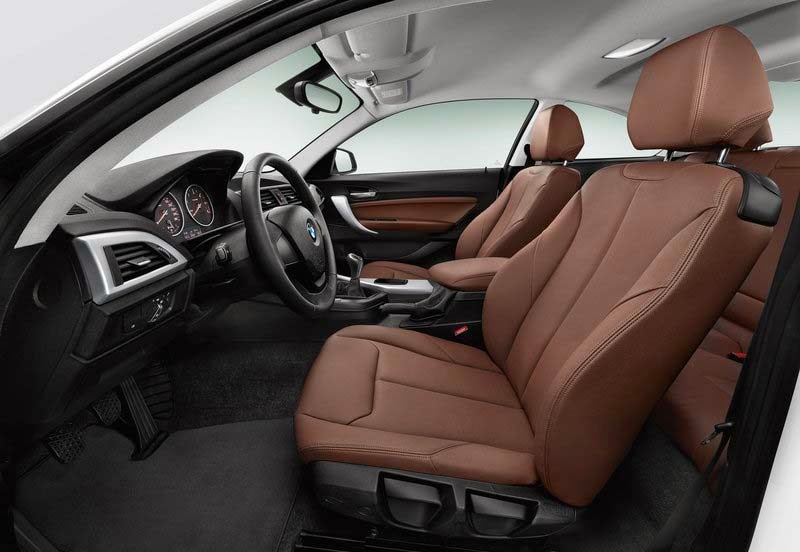
The interior of the BMW 4-Series Convertible presents a stylish fusion of sporty allure, elegance and exclusivity. All of the controls are arranged ergonomically around the driver to provide optimum access to all functions. The doors are designed so that all the lines converge towards the rear, and bright colour combinations featuring a two-tone effect for the door and side panels contribute in combination with the hardtop cover to the "boat deck" look. This wrap-around interior design provides for a seating ensemble that allows all passengers to share the open-sky driving experience.

The design of the seats is new and includes integrated seat belts. The seats are electrically adjustable as standard. If desired, the standard seats and the optional sport seats with recessed head restraints can be equipped with neck warmers for the driver and front passenger, an optional extra available for the first time.

When the top is down, the temperature setting is automatically controlled in relation to the outdoor temperature and the speed of the vehicle.

In addition to the standard model, three specially equipped lines and an M Sport package are also available. The Sport Line, Modern Line and Luxury Line versions can be selected to personalise the new convertible with special interior and exterior accents. The fine materials and meticulous craftsmanship underline the premium ambience of the BMW 4-Series Convertible.

Driving dynamics from the top drawer
In addition to the enjoyment of the unrivalled open-air driving experience at the push of a button, the BMW 4-Series Convertible also impresses with exhilarating performance and sovereign handling. BMW engineers have succeeded in making key improvements in areas such as steering accuracy, precision and agility. Sophisticated chassis technology, torque-steer-free Electric Power Steering, 50:50 weight distribution, a programme of fine-tuning in the wind tunnel and a lightweight construction concept enabled them to build an unadulterated driving machine. The sporty look of the convertible is evident in the longer wheelbase, wider track and standard lower suspension when compared with its predecessor model. Among many factors, the extremely low centre of gravity also accounts for the remarkable performance and handling of the new BMW 4-Series Convertible.

Two petrol engines and one diesel available at model launch
At model launch the BMW 4-Series Convertible can be delivered with an in-line six-cylinder petrol engine (BMW 435i Convertible), a four-cylinder petrol engine (BMW 428i Convertible) and a four-cylinder diesel (BMW 420d Convertible). These engines cover the performance range from 135 kW/184 hp to 225 kW/306 hp and feature the latest BMW Twin Power Turbo technology. These state-of-the-art engines imbue the BMW 4-Series Convertible with outstanding acceleration and elasticity while intelligently reducing fuel consumption in compliance with the EU6 standard.

Six-speed manual or eight-speed Sports automatic transmission
The power from the engines is sent to the rear wheels via a six-speed manual gearbox as standard. BMW also offers all engine variants with an optional eight-speed Sports automatic transmission that allows the driver to change gears manually by using shift paddles on the steering wheel. Both transmissions are equipped as standard with the Auto Start Stop function.

BMW Efficient Dynamics
The sheer driving pleasure of the BMW 4-Series Convertible is accompanied by outstanding economy. The source of this low fuel consumption can be traced to BMW Efficient Dynamics, with innovations that can be found throughout the new BMW 4-Series Convertible. In addition to the optimised fuel economy of the petrol and diesel engines, the intelligent lightweight construction concept and honed aerodynamics - headlined by the Air Curtains and Air Breathers - also help to maximise efficiency. Other features such as the Auto Start Stop function, Brake Energy Regeneration, the gear shift indicator, on-demand operation of ancillary units and the innovative Proactive Driving Assistant all do their part to ensure low fuel consumption and reduced emissions, without compromising driving performance. The ECO PRO mode can even lead to fuel savings of 20 per cent. In conjunction with the automatic transmission, the new convertible - like the BMW 4-Series Coupe - also features a coasting mode for the first time.

BMW Connected Drive
BMW was early in recognising the significance of connecting the automobile with its environment through intelligent networking technologies and thus is able to offer unique mobility services and driver assistance systems. These innovations are available from the Connected Drive product range as standard or optional equipment for the BMW 4-Series Convertible and, for a limited time, some can even be ordered after the initial vehicle purchase. With these innovations, the new BMW 4-Series Convertible is setting standards in terms of safety, convenience and infotainment. Among the highlights are a new generation of the Navigation System Professional, the full-colour BMW Head-Up Display, Driving Assistant Plus, which warns the driver of a potential collision with a pedestrian, the intelligent, glare-free LED High Beam Assistant, Active Protection with Attentiveness Assistant and the latest development stage of the Active Cruise Control with Stop & Go function.
Read More

Monday, January 13, 2014

BMW 2-Series Coupe with M Performance Parts, 2014


  •  BMW 2-Series Coupe with M Performance Parts, 2014

The market launch of the BMW 2-Series Coupé clinches pole position in the premium compact segment. The figure 2 in the model designation stands for supreme sporty flair while the letter M refers to the attractive features available for making a dynamic driving experience even more intensive. As in the case of the BMW M Performance automobile BMW M235i, BMW M Performance parts developed for all variants of the BMW 2-Series Coupé will be available as of the market launch in March 2014. The retrofit components designed in close collaboration with BMW M GmbH in the areas of drivetrain, suspension, aerodynamics and cockpit perceptibly boost driving dynamics as well as underscoring the athletic appearance and sporty interior ambience of the new 2-door model. The product selection forms part of the Original BMW Parts program and enables the driver of a BMW 2-Series Coupé to add a touch of individual style in a way that expresses motor racing enthusiasm.

The BMW M Performance Power Kit available for the BMW 220d Coupé creates perfect starting conditions, increasing the output of the 4-cylinder diesel engine by 12 kW/16 bhp to 147 kW/200 bhp and maximum torque by 40 Nm to 420 Nm. The increased sprint capacity achieved has no impact on fuel consumption and exhaust emission figures. A BMW M Performance silencer system is available for the BMW M235i Coupé which reduces exhaust gas pressure to produce a striking, sports-style sound. In addition BMW M Performance tailpipe trim elements are offered in chrome or carbon, bearing the M logo.

A highlight in the suspension area is the BMW M Performance limited-slip differential available for the BMW M235i Coupé. When the dynamic stability control function DSC is deactivated, the torque-sensitive mechanical limited-slip differential in the rear axle ensures traction-optimised distribution of drive torque between the rear wheels. It reduces the slip that occurs on the wheel with less grip by transferring more drive power to the other wheels using a blocking effect. This converts engine power into forward momentum as effectively as possible so as to be able to accelerate out of a bend even more dynamically, for instance.

Products available for all model variants include the BMW M Performance sports suspension including a lowering of 20 millimetres as compared to the standard version, as well as specific dampers and shortened coil springs finished in red, and the especially light and high-capacity BMW M Performance brake system with brake calipers painted in a choice of red, yellow or orange. 19-inch forged BMW M Performance light alloy wheels are also available in two design versions.

The exterior components created to optimise aerodynamic properties have been developed with characteristic M precision. As a supplement to the M sports package available ex works and in conjunction with the BMW M Performance rear spoiler in carbon there is a BMW M Performance Aerodynamic Kit available for the front apron which has been tailored specifically to this model. The combination of air ducting elements at front and rear guarantees an ideal aerodynamic balance and can be supplemented with a diffuser insert for the rear apron as well as attachments for the side sills. Other individual accents to the outer appearance of the BMW 2-Series Coupé can be added by means of a black decorative grid for the BMW kidney grille, exterior caps in carbon, side sill foils with M Performance inscription and BMW M Performance accent stripes in two colour versions.

An cockpit ambience inspired by motor racing is created by the BMW M Performance sports steering wheel in Alcantara/carbon finish with red central marking and Race Display in 12-o'clock position, a gear lever and handbrake handle in carbon and an Alcantara gaiter. A carbon finish is likewise available for the gear selector switch of the automatic transmission. Other features available for a highly sporty and individually designed interior include interior strips in carbon and Alcantara, high-grade steel pedals and a driver footrest in corresponding design.
Read More

Tuesday, December 3, 2013

BMW 2-Series Coupe, 2014


  •  BMW 2-Series Coupe, 2014

BMW model family celebrates the premiere of another new model series - BMW 2-Series Coupe raises the bar in the premium compact segment in terms of dynamic ability, aesthetic appeal and emotional allure; a distinctive vehicle concept unique in its segment, with a two-door body in classic three-box design typical of BMW Coupes, four seats, rear-wheel drive and an engine range and chassis set-up focused squarely on sporting ability.

This is not the first time that BMW has treated the compact segment to its customary brand of driving pleasure. The BMW 1-Series, for example, has fulfilled this role for almost 10 years now, its standout position among its rivals rooted most prominently in its rear-wheel-drive concept (still a unique proposition in this class), powerful engines with BMW TwinPower Turbo technology and a compelling premium character. And now the BMW 2-Series Coupe takes the levels of driving pleasure on offer in a compact model to even greater heights. The new two-door cuts a particularly impressive figure with its distinctive body design, a range of extremely powerful engines and specially configured chassis technology.

There is clear water between the BMW 2-Series Coupe and the BMW 1-Series, the new model assuming a character all of its own. This differentiation is immediately recognisable in the design of the new car, but it also makes its presence felt in terms of performance. The BMW 2-Series Coupe is an even more eye-catching creation than its predecessor, the resoundingly successful BMW 1-Series Coupe (of which more than 150,000 units have been sold worldwide). As well as a standalone appearance and increased dimensions, there is also greater depth to its product substance in terms of both technology and standard equipment. The result is a new dimension in driving dynamics, aesthetic appeal and premium allure in the compact segment, highlighted by the "2" in the new car's model designation. The number 2 has denoted the presence of a supremely sporting driving experience in a compact two-door car for over 45 years - ever since the introduction of the BMW 02 range.

Characteristic features of a BMW Coupe
The specific vehicle concept behind the BMW 2-Series Coupe - unique in its segment - is faithfully reflected in its body design. The two-door model is first and foremost a Coupe from the BMW brand, and the design features that identify a member of this special breed - a three-box body with clearly defined boot and low-slung silhouette, a long bonnet, doors with frameless windows and a dynamically stretched roofline flowing smoothly into the rear end - are carried over into a compact model with greater enthusiasm and intent than ever. The ultra-sporty driving characteristics of the BMW 2-Series Coupe - generated by a hand-picked selection of engines and chassis technology tuned to make the perfect pairing - are thus unambiguously expressed in the design of the exterior. The 135 kW/184 hp four-cylinder engine in the BMW 220i Coupe is making its debut in a compact BMW model, and the 240 kW/326 hp six-cylinder in-line engine under the bonnet of the BMW M235i Coupe earns it top billing as the most powerful petrol driven member of the BMW M Performance Automobile line-up.

The specific proportions of the BMW 2-Series Coupe are contained within a body measuring 4,432 millimetres in length. The two-door model is therefore 108 millimetres longer than the BMW 1-Series and 72 millimetres longer than the outgoing BMW 1-Series Coupe. The new compact Coupe is also 32 millimetres wider than its predecessor (at 1,774 millimetres), and has a 30-millimetre longer wheelbase (2,690 millimetres) and wider tracks (front: 1,521 millimetres, +41 millimetres; rear: 1,556 millimetres, +43 millimetres). At the same time the vehicle height has been lowered by 5 millimetres to 1,418 millimetres. The result is an increase in interior space and 20 litres of extra boot capacity (now 390 litres). Added to which, the BMW 2-Series Coupe also boasts more efficient aerodynamics than both the BMW 1-Series and its predecessor, as reflected in a Cd of 0.29 for the BMW 220i Coupe.

Sporting tradition on a compact footprint
The BMW 2-Series Coupe builds on the brand's tradition of compact models offering a satisfying degree of driver engagement. And the presence of the 2 in the model designation creates a close link to this heritage. The introduction in 1966 of the BMW 1600-2, for instance, opened up a whole new vehicle segment. Inspired most profoundly by its precisely tailored package of powertrain and chassis technology, the two-door Coupe became a global standard-bearer for sporty handling and intense driving pleasure in the compact car segment. Additional engine variants increased the appeal of the new model series. For example, the BMW 2002 presented in 1968 took centre stage - in terms of both popularity and its success in turning "Freude am Fahren" (Sheer Driving Pleasure) from a slogan into an experience for whole new target groups. The most spectacular variant was the 125 kW/170 hp BMW 2002 turbo - the first model from a European manufacturer to gain the services of a turbocharger.

The design: Strong character cuts a distinctive figure
An instantly beguiling blend of sporting prowess and elegance marks out the design of BMW Coupes. And the exterior features which are such a key element of this identity have been carried over to the compact segment car with greater purpose than ever for the BMW 2-Series Coupe. The proportions, lines and surface design of the car have all been tailored to accentuate both the agile driving properties of the two-door and its unique appearance. The BMW 2-Series Coupe has its own specific design language, which secures it a stand-out position in the brand's model range and - most importantly - sets it apart unmistakably from its segment rivals.

Sporting presence, muscular agility and assured elegance come together in the exterior design of the BMW 2-Series Coupe. Defining elements of its interior, meanwhile, include the driver-focused cockpit design you expect of a BMW and a light and contemporary brand of functionality. The car's more clearly distinguished design identity illustrates its progress in moving the game on from its predecessor. The BMW 2-Series Coupe embodies Sheer Driving Pleasure in more concentrated and intense form than ever before in the premium compact segment.

Classical BMW features and a fresh interpretation of traditional Coupe elements

The individual vehicle concept of the BMW 2-Series Coupe is underlined by its specific front and rear end design, dynamically stretched lines and an almost 11-centimetre increase in body length over the BMW 1-Series. Characteristic design elements of a BMW Coupe have been carried over into the compact segment and signature brand features given a fresh twist.

Another stand-out feature of BMW Coupes - the hallmark three-box body structure with a clear distinction between roofline and boot - has a particularly clear presence in the new compact model. Like the side swage lines that wrap around into the rear end, this feature picks up on characteristic styling elements of the BMW 02, drawing a link between the new car and the brand's long tradition of sporting and agile compact models.

Lines tapering down dynamically towards the BMW kidney grille lend the front end of the BMW 2-Series Coupe a forward-surging presence. The modified contours of the headlight units narrow at their inner extremes, while a standard accent strip - or, if the optional bi-xenon lights are fitted, an LED accent light - cuts across the top of the hallmark BMW twin circular lights. The BMW kidney grille, which is separated from the headlights by narrow strips on either side, protrudes clearly from the front of the car and slants forward at a slight angle. The three-dimensional design of the grille surround and its 11 vertical bars reinforce the car's striking appearance. The lower air intake is split into three sections. The two outer elements are particularly large and their outlines replicate the form of the headlight units. Air Curtains are integrated harmoniously into an additional section at the outer edges of the front apron and channel the onrushing air precisely behind the front side panels, causing it to hang over the wheels like a curtain. This reduces turbulence and further enhances the outstanding aerodynamics of the BMW 2-Series Coupe.

The side view of the BMW 2-Series Coupe sees signature brand features like a long bonnet, short overhangs, set-back passenger compartment, Hofmeister kink (the counter-swing in the window frame at the trailing edge of the C-pillars) and door openers integrated into the swage line blending with coupe-specific design elements, chief among them the slim window graphic and sweeping roofline gliding back smoothly into the rear end. A prominent character line above the door sill sweeps up rearwards of the B-pillar into the rear wheel arch, whose powerfully flared form focuses the mind on the car's rear-wheel drive and swells the BMW 2-Series Coupe's body to its broadest point. The dynamic wedge shape of the two-door model is emphasised, too, by the door sill line itself, which likewise rises up towards the rear. The BMW 2-Series Coupe also has doors with frameless windows and turn signal indicators integrated into the exterior mirrors.

The rear of the BMW 2-Series Coupe is a broad and powerful affair, an impression reinforced by the single-piece light units reaching far into the car's flanks in the L-shape familiar from other BMW models. An unmistakable night design is provided by the likewise L-shaped LED rear light strips within the units. The third brake light positioned at the upper edge of the rear window is also fed by LED units.

The lines along the sides of the boot lid taper downwards slightly. This styling cue, along with the additional crease and suggested diffuser element in the rear apron, accentuates the BMW 2-Series Coupe's road focus and low centre of gravity. And yet the new car also has a wider boot aperture than its predecessor.

The exterior paintwork of the BMW 2-Series Coupe can be ordered in a choice of two non-metallic and 10 metallic shades, while customers can also specify Estoril Blue metallic as part of the M Sport package.

Interior: cockpit design ensures maximum driving pleasure; premium ambience can be enjoyed from four seats

The dominant themes of the BMW 2-Series Coupe's interior are the driver-focused design of the cockpit, contemporary functionality and high-quality materials. An Easy Entry function for the front seats facilitates access to the two rear seats, which offer 21 millimetres more legroom than the outgoing Coupe, while headroom for the driver and front passenger has grown by a similar extent. Functionality levels are raised another notch by features including large storage compartments in the doors. The structure of the surfaces for the instrument panel, centre console and door trim is dominated by the "layering" effect created by various overlapping surfaces. The length of the doors is emphasised by the converging lines of the door trim elements.

If the BMW 2-Series Coupe is fitted with an optional navigation system or the BMW Professional radio, it will also feature the BMW iDrive operating system, which includes a freestanding onboard monitor in flatscreen design. The Control Display comes in 6.5 or 8.8-inch form, depending on the version specified, while the Controller on the centre console has a touch-sensitive surface which allows the driver to input characters (if the Navigation system Professional is fitted).

Dakota leather trim is available as an alternative to the standard cloth seat surfaces in a choice of three colours. The interior trim strips come in matt Satin Silver as standard but are also optionally available in brushed aluminium or Fineline Stream exquisite wood.

Serving the cause of individual style: BMW Sport Line, BMW Modern Line and the M Sport package

The BMW Lines - available as an alternative to standard specification for the BMW 2-Series Coupe - offer harmoniously coordinated exterior and interior design and equipment features. Both the BMW Sport Line and BMW Modern Line include 17-inch light-alloy wheels in exclusive designs, ambient lighting with variable use of colours and special seat upholstery, interior trim strip and car key designs. BMW Sport Line brings a high-gloss black finish for the outer air intake surrounds, the front of the kidney grille bars, the cross rib in the centre air intake and the rear apron, emphasising the dynamic credentials of the two-door newcomer. And BMW Modern Line serves the cause of progressive elegance through the use of matt aluminium for the design elements mentioned above and a body-coloured paint finish for the cross rib in the centre air intake.

Also available from the launch of the BMW 2-Series Coupe is the M Sport package developed specially for the new model. This option comprises bespoke suspension tuning (including a 10-millimetre drop in ride height and 17-inch M light-alloy wheels in double-spoke design), aerodynamically optimised body elements (including large front air intakes, striking side skirts and a diffuser for the rear apron), plus a special design for the BMW kidney grille and an exhaust tailpipe embellisher in high-gloss chrome. In addition to aluminium door sill strips bearing the M logo, features such as sports seats for the driver and front passenger, Aluminium Hexagon interior trim strips with an accent strip in Estoril Blue, a special dial design for the instrument cluster, ambient lighting and an M driver's footrest also combine to bring an intense aura of sporty driving to the interior of the BMW 2-Series Coupe.
Read More

Sunday, November 24, 2013

BMW 4-Series Coupe M Performance Parts, 2014


  •  BMW 4-Series Coupe M Performance Parts, 2014

Model-specific BMW M Performance Parts available from the beginning of 2014 provide additional ways of authentically emphasising the sporty character of the coupé and making the driving experience even more intense. The BMW M Performance Power Kit available for the BMW 420d (+12Kw, +40Nm), BMW 430d (+20kW, +40Nm) and BMW 435i (+25kW, +50Nm) delivers a perceptible increase in power and performances, without affecting fuel consumption and exhaust emission levels. A BMW M Performance silencer system is also available for the models BMW 428i and BMW 435i. It comprises BMW M Performance tailpipe embellishers in chrome, as well as in carbon for the BMW 435i. Meanwhile the BMW M Performance limited-slip differential ensures traction-optimised power transmission on bends. Other features that boost the coupé's dynamic potential are the BMW M Performance suspension with sporty set-up, the BMW M Performance brake system with red, yellow or orange calipers and the BMW M Performance light alloy wheels. The weight-optimised forged wheels in 20-inch format are available in two design variants as well as in the typical BMW M Performance bi-colour look in Ferric Grey with burnished spoke fronts. Another new feature in the BMW M Performance range is the 18-inch winter complete wheel sets in double-spoke design.

Developed from motor racing expertise, perfectly tailored to the model in question and designed to be combined according to individual preference - this is the BMW M Performance Parts program. BMW is now expanding the range in this product area with the addition of retrofit options for the BMW 4-Series. What is more, model-specific BMW M Performance Parts are available for the BMW M automobiles as well as for the models of the BMW 1-Series, BMW 3-Series, BMW 5-Series and BMW 6-Series. Conceived in close collaboration with BMW M GmbH, the retrofit components in the areas of drive, suspension, aerodynamics and cockpit provide a significant bonus in terms of driving dynamics as well as adding a touch of sporty flair to both the exterior and the interior ambience of the automobile.

Following the ideal line to a more intensive driving experience: BMW M Performance Parts for the BMW 4-Series

The dynamic charisma of the BMW 4-Series can also be given greater emphasis by means of BMW M Performance components for the exterior. A black radiator grid for the BMW kidney grille, a diffuser insert for the rear apron, side sill foils with M Performance inscription, BMW M Performance side stripes and carbon front splitters, mirror caps and rear spoiler optimise the coupe's sporty appearance and aerodynamic properties. An interior ambience inspired by racing is ensured by the BMW M Performance sports steering wheel with red central marking or Race Display in 12 o'clock position as well as gear lever and handbrake handle in carbon including Alcantara gaiter. A carbon finish is likewise available for the gear selector switch of the automatic transmission. In addition, interior strips in carbon and Alcantara, high-grade steel pedals, a specially designed driver footrest and BMW M Performance floor mats are also available for the BMW 4-Series.

The new BMW 4-Series Coupé with BMW M Performance Parts premieres at the IAA in 2013.
Read More

Tuesday, November 19, 2013

BMW 4-Series Coupe, 2014


  •  BMW 4-Series Coupe, 2014

The launch of the new BMW 4-Series Coupe marks the arrival of the fourth generation of BMW's sporty premium mid-size Coupe. The BMW 4-Series Coupe Concept, which celebrated its world premiere at the NAIAS 2013 in Detroit, previewed the evolutionary development of BMW's design language. And now this progression is enshrined in the series-production model. The BMW 4-Series Coupe represents the epitome of aesthetic appeal and sporty dynamics in the premium segment and reinforces the company's claims to leadership in the international marketplace. Its stylistic features carry the promise of a powerful presence on the road, stand-out dynamic ability and unbeatable driving pleasure. Indeed, the new BMW 4-Series Coupe represents a paragon of balanced proportions and the final chapter in a story of development. The "4" in its title headlines this new era for the Coupe and emphasises not only its stand-alone design, but also its even sharper sporting dynamics, increased exclusivity and clear technical differentiation from the BMW 3-Series range. At the same time, BMW is using the new nomenclature to latch onto the fine tradition established by the large BMW 6-Series and BMW 8-Series Coupes.

Athletic elegance, impeccable proportions
The dynamic proportions of the new BMW 4-Series Coupe differ significantly from those of the outgoing BMW 3-Series Coupe. Although only 26 millimetres have been added to the car's length (4,638 mm), a 50-millimetre longer wheelbase (2,810 mm) and a roofline that now runs 16 millimetres lower than before (1,362 mm) shine a particularly vivid spotlight on the dynamically stretched coupe outline. These dimensions combine with the BMW 4-Series Coupe's BMW-typical short overhangs, long bonnet, set-back passenger compartment and flowing roofline to produce a silhouette boasting impeccable visual balance. The athletic appearance of the BMW 4-Series Coupe is rounded off by the 43-millimetre increase in the Coupe's width (1,825 millimetres). For the first time, the rear wheel arches mark the car's broadest point - a clear statement of dynamic intent. The resultant 45-millimetre-wider front track (1,545 mm) and full 80 millimetres of extra width at the rear axle (1,593 mm) promise - before so much as a wheel is turned - further improvements in the already superlative sporting characteristics for which BMW is renowned.

Eye-catching front end with prominently sporting contours. Signature BMW front-end design features, such as the double-kidney grille and twin circular headlights, identify the BMW 4-Series Coupe as a BMW without the need for a second glance. Indeed, it is undeniably keen to show off its close family ties with the BMW 3-Series. However, the BMW 4-Series Coupe displays a more sporting approach to its work, underlining its dynamic convictions. The car's head-turning front end is a demonstration of precise contours and multifaceted surfaces. The eye-catching full-LED twin headlights (optional), with their hexagonal design, team up with the slightly forward-slanting BMW kidney grille to form a single stylistic unit and strengthen the athletic presence of the BMW 4-Series Coupe on the road. Below the headlight line, the BMW 4-Series Coupe features a large air intake in the front apron. Its extremely width-accentuating design creates the impression of a sporty three-way split. On the far left and right-hand edges of the air intakes are the additional, aerodynamically motivated small vertical apertures for the Air Curtains. These vents improve the airflow around the outside of the front wheels and lead to a reduction in fuel consumption at higher speeds.

Flowing lines shape the elegantly sporty silhouette
Powerfully taut surfaces and precise, sweeping lines define the athletic outline of the BMW 4-Series Coupe. The gently sloping roofline - a hallmark coupe trait - creates a smooth transition into the rear, stretches the car's overall appearance and elegantly accentuates the sporting profile of the flanks. Added to which, the shallow, homogeneous side window graphic with frameless glass and the signature slimline BMW Hofmeister kink at the trailing edge of the C-pillar generate a dynamic visual tension. Below the windows, the double swage line - made up of two character lines running alongside each other - familiar from the BMW 3-Series teams up with the striking door sill line to strengthen the body's dynamic wedge shape. The small, shrinking shadow below the swage line above the rear wheel accentuates the flared rear wing, emphasising the car's dynamic potential and hallmark BMW rear-wheel drive.

Located just rearwards of the BMW 4-Series Coupe's front wheels are Air Breathers designed to reduce drag around the wheel arches. Together, the Air Breathers and Air Curtains underline the sporting character of the car's design and provide tangible evidence of the innovative aerodynamic solutions devised by BMW as part of its BMW EfficientDynamics development strategy.

Prominently flared wheel arches offer a clear window into even greater sporting ability

The sporting character of the BMW 4-Series Coupe extends into the powerful design of the rear. The prominent horizontal lines and broadly stretched tail lights positioned at the outer edges of the rear draw extra attention to the muscular wheel arches and wide track. The sharply angled rear window has a lowering effect on the car's tail and gives the body as a whole an even more powerful look. It also shows off the car's broad shoulders with satisfying clarity. The L-shaped rear lights of the BMW 4-Series Coupe blend harmoniously into the car's overall design. They continue the path of the swage line from the flanks, creating a seamless link to the rear end.

Exclusivity and dynamic intent dominate the interior
The interior of the BMW 4-Series Coupe blends sporting intent and exclusivity to stylish effect. In the front of the cabin, an approach known as layering - i.e. the clever utilisation of space through the structuring of lines and surfaces into layers - provides a natural canvas for the hallmark BMW driver focus, but is careful not to exclude the front passenger from the action. All the controls central to driving are arranged ergonomically around the driver and give him or her optimum access to all functions. Automatic belt feeders, a Sports steering wheel, crystal-clear circular instruments in black panel look and the freestanding, flatscreen iDrive monitor underline the sense of functional elegance. The iDrive Touch Controller - within easy reach on the centre console - and the optionally fore-and-aft sliding/folding armrest between the front seats add the finishing touches to the cabin's exceptional usability and comfort.

The dynamic horizontal lines of the instrument panel extend into the optional two-tone door and side panel trim, wrapping around the driver and front passenger in an unbroken sweep and lending the interior an engagingly dynamic feel. The interplay of surfaces and lines in the car's side sections also provides an effective showcase for the typically long coupe doors and, through the continuation of the accent strip, creates a visual connection between the front and rear of the interior. In the rear compartment powerfully contoured seats lend further emphasis to the sporting credentials of the BMW 4-Series Coupe. Recessed head restraints and broad, continuously moulded side supports give the rear bench the appearance of two separate seats.

In the interests of maximising the car's variability, the backrest of the BMW 4-Series Coupe's rear seat bench can be folded down, as an option, in a 40:20:40 split and adapted extremely effectively to suit the requirements of the situation at hand. Folding down the centre segment alone creates a large through-loading facility, which can accommodate several pairs of skis or snowboards while still allowing space for four people on board. (A suitable BMW ski and snowboard bag is available from the BMW Accessories range.) The boot can also be opened remotely using the optional Smart Opener as part of the Comfort Access feature. Here, a short movement of the foot under the centre of the rear bumper is all it takes to raise the tailgate.

Individual equipment variants
High-class material combinations, exclusive colours and individual equipment variants boasting unbeatable quality of workmanship define the premium ambience on board the new BMW 4-Series Coupe. As well as the basic trim level, whose material and colour concept accentuates the more classical side of the car's character, customers have a choice of three other equipment combinations and an M Sport package with which to add individual stylistic touches to the car's exterior and interior. The Sport Line, Modern Line and Luxury Line embody different takes on the car's character, adapting the design and colour scheme for the kidney grille and air intakes, exterior mirror caps, Air Breathers and side window graphic, trim strips in the front and rear apron, door sill strips, model badges on the front side panels, and range of wheel rims to set the car apart externally from the basic trim level.

Sport Line
The Sport Line adds extra depth to the dynamic repertoire of the BMW 4-Series Coupe with a selection of eye-catching exterior body features in high-gloss black. Added to which, the standard high-gloss black B-pillars and black wrap-around window strip lend the car's sporting character even greater punch. Nine strikingly moulded high-gloss black kidney grille slats in a chrome-coloured surround lend the front end a particularly sporty and alert look. The three black air intakes in the front apron and the likewise gleaming black Air Breathers, meanwhile, draw the eye to the car's aerodynamic features. 18-inch or 19-inch (optional) light-alloy wheels - depending on the model - in twin-spoke design provide an extra dose of sporting theatre. From the rear, the BMW 4-Series Coupe with Sport Line can be identified by the black trim strip level with the rear apron and the black exhaust tailpipe embellishers. Inside the car, the contrast between black and red accents, such as the red trim rings in the inner circle of the instrument dials and red contrast stitching on the sports steering wheel, provides the requisite sporting flair. An optional extended equipment variant including coral red leather sports seats, red door panel trim and a red lower section for the instrument panel can be specified exclusively for the BMW 4-Series to take its sporting ambience to another new level.
Read More

Friday, October 25, 2013

BMW 3-Series Gran Turismo, 2014


  •  BMW 3-Series Gran Turismo, 2014

The new BMW 3-Series Gran Turismo represents a high-calibre addition to the premium reaches of the mid-size segment. This new concept performs a genuinely unique role within the successful BMW 3-Series range and provides a fresh and distinctive take on aesthetic appeal, space and functionality. The BMW 3-Series Gran Turismo fuses the dynamic sporting attributes of the 3-Series Sedan with the practicality and versatility of the 3-Series Touring, and backs these qualities up with a palpable increase in space and long-distance comfort. The new addition to the range exudes aesthetic and emotional appeal, boasts a distinctive presence on the road and offers similarly pronounced driving pleasure.

Among the eye-catching features of the new BMW 3-Series Gran Turismo are a powerfully formed front end, an elegantly stretched silhouette with coupe-style roofline, frameless side windows and a flowing rear end with large load aperture. Here, an extended rear spoiler - the first of its type on a BMW - provides visual lightness as well as reducing lift at touring speeds. The clear increase in length over the Sedan and Touring benefits not only the car's elegant silhouette, but also the amount of space available on board.

Ease of access, a raised seating position offering an outstanding view out to all sides and luxurious expanses of space around every passenger provide an instant feel-good factor. The Gran Turismo offers more room in the rear compartment in particular. Indeed, passengers in the three full-size rear seats will encounter legroom normally only found in luxury-class cars.

The broad range of qualities - both functional and aesthetic - allows the new BMW 3-Series Gran Turismo to tick all the right boxes for active and demanding drivers who use their car in a variety of ways but would also value the aesthetic appeal of a coupe. All of which allows the new Gran Turismo to make a compelling case for itself as both an elegant business carriage and a dynamic, comfortable tourer for family trips away and leisure activities.

Design: Innovative, emotional and practical.
The first impression delivered by the new BMW 3-Series Gran Turismo invariably centres on the striking combination of dynamic and aesthetic appeal. Attractive proportions, four doors with frameless windows, the coupe-style, gently falling roofline and large tailgate define the distinctive character it has chiselled for itself within the BMW 3-Series ranks. Powerful lines and taut surfaces sketch out an athletic body which lends the car an actively forward-surging purpose, as well as suggesting a high degree of functionality. Indeed, the new BMW 3-Series Gran Turismo sets new standards inside as well as out. A convincing sense of roominess, a high seating position, generous levels of space and intelligent load area management seal its status as a one-off in the premium mid-size segment.

At 4,824 millimetres long, 1,489 millimetres tall, 1,828 millimetres wide and with a 2,920-millimetre wheelbase, the new BMW 3-Series Gran Turismo is notably larger all round than the Sedan and Touring variants of the 3-Series range. However, the designers' clever use of proportions, surfaces and lines ensures that the Gran Turismo appears to cut a similarly low-slung and dynamic figure as its siblings. Its dimensions allow it to lay on impressive levels of space for passengers and their luggage, as a result of which it passes the "long-distance comfort" test with flying colours. At 520 litres, its boot capacity is up 25 litres on the BMW 3-Series Touring's, while an extra 70 millimetres of rear legroom place it between the BMW 5-Series and BMW 7-Series, i.e. firmly in luxury class territory.

Front view: powerful dynamics.
The eye-catching front end of the new BMW 3-Series Gran Turismo makes no secret of its BMW 3-Series family ties, but also brings its own individual flavour into the mix. The broad, powerful BMW kidney grille and modified front apron underline the car's sporting character, while striking twin headlights with corona rings (if xenon headlights are specified) and LED accent lights form a visual unit with the slightly forward-slanting kidneys and reinforce the sense of both width and presence. The silhouette of the headlights is larger than on the Sedan. Large air intakes below the headlights emphasise the sporting character of the car, as do the aerodynamically motivated apertures for the Air Curtains. The bonnet, meanwhile, has smoother contours than the Sedan and Touring. The most prominent design cue remains the kidney grille, which draws the visual focus of the front end further towards the road and gives the car a lower-slung and sportier feel. Another identifying feature of the BMW 3-Series Gran Turismoare the "blades" set into the outer air intakes of the front apron.

Side view: elegance with a coupe-style roofline.
The link between the front and rear of the BMW 3-Series GT is particularly seamless. Hallmark BMW proportions and a coupe-style roofline sloping down towards the rear stretch the car's silhouette, while powerfully taut surfaces and rising lines lend the flanks their inherent dynamic verve. The smooth transition of the roofline into the rear creates extra interior space while showcasing the car's enviable functionality. The BMW 3-Series Gran Turismo is the brand's first-ever model to sport an active rear spoiler. At lower speeds it retracts virtually out of sight, leaving barely a ripple in the coupe-style roofline. One feature that is most definitely visible from the side are the forward-surging kidney slats, which dart up into the bonnet, underlining the agile character of the Gran Turismo.

The dominant theme of the car's flanks is the double swage line, made up of two character lines running alongside each other, which is central to the appearance of the latest BMW 3-Series. Viewed in tandem with the pronounced door sill line it strengthens the body's dynamic wedge shape. The high-set side window graphic, which rises slightly at the Hofmeister kink, lends pleasingly aesthetic emphasis to the clear forward orientation of the exterior design. A new element of the BMW 3-Series Gran Turismo comes in the form of the Air Breathers. Located just rearwards of the front wheels, they are designed to reduce drag around the wheel arches. The Air Breathers team up with the Air Curtains to underline the sporting character of the car's design and provide tangible evidence of the innovative aerodynamic solutions devised by BMW as part of its BMW EfficientDynamics development strategy.

Rear view: a powerful tail end with compelling functionality.
The rear of the new BMW 3-Series Gran Turismo is highlighted by horizontal surfaces and lines emphasising muscular width and unshakable roadholding. The wraparound section below the spoiler has an extremely flat appearance and visually lowers the stance of the rear. The interplay between light and shadowed surfaces generates a dynamism even when the car is stationary.

The extended rear lights, in customary BMW L-shaped design, stretch far into the sides of the car, add further presence to the new BMW 3-Series Gran Turismo's powerful breadth and make the car appear lower to the road. Two integrated bars of LEDs allow a slim light design and ensure the BMW 3-Series Gran Turismo's distinctive appearance is maintained both day and night. The large tailgate, meanwhile, showcases the versatility and functionality of the new BMW 3-Series Gran Turismo. It allows optimum access to the load area and, thanks to its wide, generously sized aperture, makes it easier to load and unload even bulky items.

Interior: surprising spaciousness, generous freedom of movement.
"The focus of the BMW 3-Series Gran Turismo's interior is clearly on the rear compartment - here we wanted to create a totally new, spacious yet also cocooning ambience." Georg Allmendinger, interior designer for the BMW 3-Series Gran Turismo.

The new BMW 3-Series Gran Turismo adds 200 millimetres to the length of the BMW 3-Series Touring and has a 110-millimetre longer wheelbase. The new model variant also stands 81 millimetres taller. These generous dimensions create a luxurious feeling of space for the passengers and ensure unbeatable freedom of movement in every seat. The front and rear passengers all benefit from a seating position raised by 59 millimetres, which allows an outstanding view out and makes entry and exit significantly easier. The Gran Turismo also raises headroom another notch.

Space-loving elegance with lounge-style character.
Rear passengers enjoy a particularly impressive increase in space. Indeed, the Gran Turismo offers a full 70 millimetres of extra legroom in the rear, providing a freedom of movement normally only found in luxury-class cars. Thanks to the car's longer wheelbase - and a reduced overlap with the rear wheel arches as a result - the full breadth of the rear seat bench can be used without restriction and three adults can be seated in comfort. This supreme feeling of space is complemented by the design forms, colour scheme and materials employed in the interior. The flowing lines of the door panels link the front and rear compartments into a single stylistic unit, while the interplay of the flat roofline and frameless windows with the cocooning character of the interior creates a spacious lounge-style ambience in the rear compartment, and thus the ideal environment for relaxed touring.

Maximum long-distance comfort.
An array of storage compartments and other practical details helps lay on a suitably sumptuous level of long-distance comfort. A pair of cupholders are integrated into the centre console, but can be swapped for an oddments tray if desired. And large door pockets front and rear can accommodate up to one-litre drinks bottles (0.75 l in the rear). The BMW 3-Series Gran Turismo can be adapted precisely to meet changing requirements. To this end, the rear seat backrests are fitted with folding head restraints and can be split 40:20:40 as standard, allowing the load area to be increased in stages from 520 up to 1,600 litres. Folding down only the central segment creates a large through-loading aperture that enables four people to bring several pairs of skis or snowboards on board with them. Folding down all the backrests, meanwhile, creates a slightly rising, almost level and flush-fitting load compartment floor.

Load area: large, practical and versatile.
The perceived value and functionality of the generously sized load area in the new BMW 3-Series Gran Turismo impress in equal measure. The gaping 1,120 x 618-millimetre (width x height) load aperture and high-opening electric tailgate make it easier to load up bulky items. Another extremely practical feature is the cargo function for the rear seat backrests. The tilt angle of the backrests can be adjusted through 15 stages and 19 degrees and even brought into a vertical position if required. This allows the space available in the load compartment to be adapted to changing requirements, a process aided by the smooth panel surfaces of the load area's side walls. Another example of the new BMW 3-Series Gran Turismo's practical qualities is the two-piece parcel shelf. The larger segment opens with the tailgate, facilitating access to the load area. The second segment remains on its railing, allowing smaller items to be left in place even when the tailgate is opened. When not in use the sections can be easily removed and stored away neatly under the load compartment floor. The new BMW 3-Series Gran Turismo is fitted as standard with button-controlled electric tailgate activation, but the options list also includes the Smart Opener (part of the Comfort Access option), which allows the boot lid to be opened hands-free with a movement of the foot under the rear bumper.

Four lashing points in the load compartment floor and a multifunction hook in the left-hand side panel are on hand for securing loads, while a multifunction storage tray under the load compartment floor and a deep compartment in the left-hand side panel swallow up all kinds of small items. Also located here is a 12-volt power socket to plug in a cool box or charge electrically-powered devices. The optional storage package, meanwhile, ups the comfort rating another notch when it comes to transporting both people and loads. In addition to an array of interior features, it also comprises handy extras for the load compartment. These include a remote release function for the rear seat backrests, a gas pressure spring for the load compartment floor, a sliding retaining net on the right-hand side panel, an additional strap for holding loads in place and a variable attachment system using two rails integrated into the load compartment floor.
Read More

Tuesday, August 27, 2013

BMW 750Li, 2013


  •  BMW 750Li, 2013

Speed Limit Info with No Passing Info display using road sign symbols
In combination with the Professional or Business navigation system, Speed Limit Info keeps the driver notified of the detected speed limit for the current stretch of road. The front-mounted camera integrated into the rear-view mirror continuously monitors road signs, including variable-message overhead signs on motorways and dual carriageways. This information is checked against the navigation system's database of speed limits. The camera is also able to take into account additional signs or temporary restrictions, for example at roadworks. As with speed limits, a No Passing Info display can now also be flashed up in the instrument cluster or Head-Up Display in the form of a road sign until the restriction has been lifted. Furthermore, drivers now have the benefit of a Speed Limit Device, which caps the car's maximum speed at between 30 and 230 km/h (19 and 143 mph), as set by the driver.

The new BMW 7-Series is set to reinforce its position as the most innovative sedan in the luxury segment. The flagship model series of the BMW fleet embodies sporting elegance, refined powertrain technology and luxurious comfort in equal measure. And now, by making a clear step up in terms of product substance, the Sedan is set to underline its leadership. New LED headlights, an upgraded interior with optimised soundproofing, markedly improved ride comfort, a comprehensive selection of optional equipment and state-of-the-art safety technology combine to create an in-car experience from the top drawer. A line-up of either new or optimised drive systems, including the world's most powerful six-cylinder in-line diesel engine and the second-generation BMW ActiveHybrid 7, set new performance and efficiency benchmarks.

Design: Stylish presence, unique equipment features, an unforgettable way to cover the miles

The BMW 7-Series meets the highest global standards when it comes to aesthetic appeal and innovative technology. In the luxury sedan segment it represents the epitome of athletic elegance and a supreme driving experience. The upgraded BMW 7-Series reaffirms its stylish presence and sporting prowess in 2012 through expressive new design features at the front and rear. Its dimensions have changed only marginally, but its eight-millimetre drop in overall height imbues its sweeping lines with extra expression and emphasises the perfect balance of the car's dynamic proportions.

All-new headlights sharpen the presence of the BMW 7-Series
From the front, the long, broad bonnet of the BMW 7-Series gives it an elegant and expressive profile. The precise contour lines of the bonnet draw the eye to the upright new BMW kidney grille as they extend forward. The grille's chrome surround is now larger, a change which - together with a new slat arrangement (nine slats instead of 12) - gives it greater prominence and reinforces the car's presence on the road. With their elegant accent strip and hallmark BMW corona rings, the optional new full-LED headlights accentuate the unmistakable appearance of the BMW 7-Series.

The large, full-width air intake dominating the lower section of the modified front apron is now split into three sections, a pair of chrome bars marking its outer sections and adding further depth to the car's sporty looks. Two narrow vertical air intakes sit beyond even the LED foglamps to the left and right of the wide intake. These are included as part of the "air curtain" technology, which lowers fuel consumption at higher speeds by forcing the air to flow more aerodynamically around the front wheels. The design of the air curtain therefore represents a fine technological advertisement for the BMW EfficientDynamics strategy.

Hallmark BMW proportions, such as a long wheelbase, short front overhang, long, sweeping bonnet and set-back passenger compartment with a coupe-like roofline, define the sporting and elegant silhouette of the BMW 7-Series. A new design feature that stands out from the side is the indicator integrated into the lower section of each exterior mirror, which makes the car easier to see and therefore safer to drive.

The powerful rear of the BMW 7-Series exudes a feeling of sporting assurance. The horizontal lines and subdivision of the rear into several levels visually lowers the height of the car. The design of the brand's familiar L-shaped rear lights, linked by an eye-catching chrome strip, remains unchanged. They are, however, richer in contrast thanks to differing shades of red. A second, delicately sculpted chrome strip draws a visual connection between the two slim reflectors in the rear apron and gives the rear view a more exclusive and solid feel overall. Another slim chrome bar between the four chromed tailpipe embellishers in the rear apron is a distinguishing feature of the 12-cylinder flagship model.

Exclusive design for the new Rear Seat Entertainment package
The picture of stylish exclusivity and luxurious character is painted with equal clarity inside the new 7-Series. The interior possesses an undeniable air of quality and harmoniousness. Smoothly flowing forms, exquisite materials and stylish colour combinations determine the car's luxurious overall impression. Dakota leather and Nappa leather can now be ordered in Ivory White with the world colour Black and Veneto Beige with the world colour Veneto Beige. The outstanding build quality of the BMW 7-Series reflects the attention to detail of the car's creators, and evidence of the precise craftsmanship at work is striking.

A typical feature of BMW interiors is their unflinching focus on the driver - the way in which they gravitate ergonomically towards the person behind the wheel. In the new 7-Series, this includes the addition of newly designed, more slender front seats offering the best possible ergonomics, optimum lateral support and ultimate long-distance comfort. Sports seats and multifunction seats are also available in place of the standard items. The latter can be ordered with a folding table in the backrest or with the Rear Seat Entertainment package as an option. A brand-new feature are the 9.2-inch screens which, instead of being integrated into the front seats, appear to be "floating" on them. Their exclusive design takes its inspiration from the latest breed of flatscreen monitors, which gives them an extremely slight and lightweight look.

The new BMW 7-Series can be specified as an option with individual rear seats that can be adjusted to suit individual requirements. The backrest angle and seat position can both be varied, as can the position of the head restraints. The controls are the same as those for the front seats with memory function.

The long-wheelbase version of the BMW 7-Series provides the ideal platform on which to maximise long-distance comfort. All of the 140 millimetres added to the wheelbase of the standard-length 7-Series are used to lay on a calm and relaxed journey for the rear passengers in a first-class environment. Indeed, changes to the roofline of the long-wheelbase version create 10 millimetres of extra headroom in the rear.

Extending centre speaker adds to the audio experience
The optimum interior soundproofing of the BMW 7-Series takes the on-board experience another step towards perfection. Additional insulation materials in the B and C-pillars, skirts and boot area team up with intricate sealing around the window frames and exterior mirrors to minimise driving noise. All of which brings the sound experience generated by the new Bang & Olufsen High End Surround Sound System even more powerfully to the fore. The 1,200-watt music system is hooked up to 16 speakers, some of which are positioned behind illuminated, satin-finish aluminium grilles sited in the mirror triangles of the doors and the parcel shelf. The most attention-seizing member of the speaker line-up is the illuminated centre speaker which extends out of the instrument panel and uses B&O Acoustic Lens Technology. Its distinctive form guarantees perfect sound quality in every seat. When the music system is switched off, the centre speaker retreats back into the instrument panel almost without trace. Meanwhile, the new ambient lighting for the interior creates a pleasant ambience, especially at night. Footwell lights for the driver and front passenger and indirect roof liner illumination via lights integrated into the B-pillars further enhance the feeling of well-being. The colour of the ambient light can be altered according to taste.

New screen experience: the multifunctional instrument display
A particular highlight of the BMW 7-Series is the multifunctional instrument display, which makes its debut appearance on the options list. In place of the traditional instrument cluster - in which four circular analogue dials keep the driver informed of the car's speed, engine revs, fuel level and oil temperature -an almost seamlessly integrated 10.25-inch display provides a totally new and appealing screen experience consciously inspired by the looks of the latest electronic devices.

While the familiar format of four circular instruments is retained here, the extended black-panel technology hands the driver a whole new set of display options. For example, the display shows varying information and different colour and mood worlds in the COMFORT, SPORT and ECO PRO driving experience modes, ensuring greater safety and efficiency and demonstrating an exemplary focus on the driver. The information shown is tailored to the driving mode currently engaged and therefore changes accordingly. All of which means the display the driver sees in the instrument cluster is always the optimum one for the driving situation at hand.

While COMFORT mode brings a classic layout with four solid circular instruments, in ECO PRO and SPORT modes the rings open to offer additional space for extra information between the two instruments. In ECO PRO mode the display turns blue in colour and the rev counter morphs into an Efficient Dynamics display to show how efficiently the car is being driven. Here drivers can monitor how hard they have their foot on the accelerator, how much fuel the car is currently using and whether any energy is being recovered through recuperation. If they are pressing too forcefully on the accelerator, the full display turns grey and alerts them to the amount of fuel they are burning unnecessarily. A speedometer zoom function can also be activated in ECO PRO and COMFORT modes. This enlarges the position of the speedo needle as if a magnifying glass were being passed over it, making it even easier to see.

In SPORT mode the display takes on a signature BMW orange hue. This display mode purposefully retains a very puristic look and only shows the driver the most essential information, so that he can maintain maximum concentration on the road ahead. The speedometer shows the car's speed in digital form only with a large, centrally positioned figure, while the gear currently engaged is boldly displayed in the middle of the rev counter if the driver is shifting manually using the steering wheel paddles. As well as the changes in colour, the displays in the instrument cluster also deliver additional information tailored to the situation at hand - such as status and function updates, Check/Control messages and navigation instructions - which drivers can call up as and when they wish.

Control Display
The introduction of the new multifunctional instrument display is accompanied by a technical and stylistic update for the central Control Display positioned between the driver and front passenger. A black surround lends the recessed 10.25-inch display additional visual depth, which has the effect of making it look even larger. Vertical electroplated bars border the screen to the sides and add extra visual flourishes which the electroplated surrounds for the cupholder lids carry over into the centre console.

Powertrain and chassis: Even more ways to enjoy refined power delivery, enhanced efficiency and a step up in comfort

The new BMW 7-Series is poised to strengthen its position even further as the most innovative sedan in the luxury segment. New and comprehensively revised engine variants set new standards in terms of performance and efficiency. All the engines available for the new 7-Series team up with an intelligent eight-speed automatic transmission and distinguish themselves with significantly reduced fuel consumption and emissions. The Auto Start-Stop function, Brake Energy Regeneration and the second-generation Driving Experience Control switch with ECO PRO mode offer additional potential for fuel-saving. Carefully optimised suspension and Electric Power Steering for all rear-wheel-drive models also take driving comfort to a new level, while self-levelling air suspension for the rear axle likewise comes as standard on all models.

Alongside the flagship BMW 760i with 12-cylinder powerplant and the entry-level engine in the BMW 730i (not available in all markets), customers can choose from the new six-cylinder in-line unit powering the BMW 740i and the revised V8 petrol engine in the BMW 750i. The six-cylinder diesel engines in the BMW 730d and BMW 740d also offer drivers the combination of increased output and lower fuel consumption. Making its debut, meanwhile, is the new BMW 750d xDrive. Under its bonnet lies the new TwinPower Turbo six-cylinder diesel engine - the world's most powerful diesel engine of its kind. Rounding off the range is the second-generation BMW ActiveHybrid 7 with new six-cylinder in-line engine and significantly reduced emissions.

BMW 760i: refined 12-cylinder engine still top of the tree
The V12 engine with BMW TwinPower Turbo technology, direct petrol injection and continuously variable camshaft control represents the pinnacle of the BMW 7-Series engine range - no change there. The all-aluminium powerplant generates output of 400 kW/544 hp from its 5,972 cc displacement and makes peak torque of 750 Newton metres (553 lb-ft) available as low down as 1,500 rpm. That's enough to propel the BMW 760i effortlessly from 0 to 100 km/h (62 mph) in just 4.6 seconds and on to an electronically limited top speed of 250 km/h (155 mph). With average fuel economy of 12.8 litres per 100 kilometres (22.1 mpg) and CO2 emissions of 299 g/km, this most cultured of power merchants achieves unprecedented efficiency for its output class.

BMW 750i: eight-cylinder engine develops more power but burns less fuel
The revised V8 petrol engine under the bonnet of the BMW 750i is making its debut. The 4,395 cc eight-cylinder powerplant retains the impressively smooth assurance and spirited power delivery of its pre-update days. However, optimised high-pressure direct injection and reduced charge cycle losses - thanks in the main to the seamlessly variable control of intake valve lift - have pushed its performance potential to a higher level than its predecessor and substantially reduced its fuel economy and emissions. In its latest development stage, the engine generates peak output of 330 kW/450 hp (+ 10 %) and unleashes peak torque of 650 Newton metres / 479 lb-ft (+ 8.5 %) between 2,000 and 4,500 rpm. The engine teams up with the eight-speed automatic transmission, allowing the BMW 750i to sprint from 0 to 100 km/h (62 mph) in just 4.8 seconds and progress on to an electronically governed top speed of 250 km/h (155 mph). The eight-cylinder engine belies its improved performance with better efficiency than ever; with overall fuel consumption of 8.6 litres per 100 kilometres (32.9 mpg) and CO2 emissions recorded at 199 g/km, the BMW 750i trumps its less powerful predecessor by a clear 25 per cent. In the Chinese market, the BMW 750i is powered by a 4-litre variant of the engine offering 300 kW/408 hp and 600 Newton metres (443 lb-ft) of torque.

BMW 740i: new six-cylinder petrol engine boasts outstanding efficiency
The 3-litre six-cylinder in-line engine stands out with its majestic power and unparalleled high-revving character. The state-of-the-art powerplant is one of the first wave of highly efficient petrol engines to bring together BMW TwinPower Turbo technology with High Precision Direct Petrol Injection, twin-scroll turbocharging, Double-Vanos variable camshaft timing and Valvetronic variable valve timing. Peak output of 235 kW/320 hp and a maximum 450 Newton metres (332 lb-ft) of torque on tap as low down as 1,300 rpm make this ultra-refined engine the performance equal of the outgoing BMW 740i. However, fuel economy in the EU test cycle is an impressive 7.9 litres per 100 kilometres (35.8 mpg) while CO2 emissions of 184 grams per kilometre represent a 21 per cent reduction in its predecessor's output.

BMW 730i: entry-level engine variant with reduced fuel consumption (not available in all markets)

This proven 3-litre straight-six petrol engine develops, as before, 190 kW/258 hp and maximum torque of 310 Newton metres (229 lb-ft) at 2,600 rpm. Linking up with the new eight-speed automatic transmission allows the BMW 730i to exploit additional fuel-saving potential; average fuel economy stands at 8.6 litres per 100 km (32.9 mpg), while CO2 emissions of 199 grams per kilometres are 13 per cent below the level recorded by its predecessor working with a six-speed transmission.

BMW 750d xDrive: new range-topping TwinPower Turbo six-cylinder diesel engine with intelligent all-wheel drive

The brand-new top-of-the-line diesel powerplant under the bonnet of the BMW 750d xDrive provides fresh evidence of BMW's pre-eminence in the area of engine technology. The world's most powerful six-cylinder in-line diesel engine grabs the headlines with its innovative and unique technology, and imbues the luxury sedan with impressive dynamics and outstanding efficiency.

The remarkable TwinPower Turbo technology at the heart of the six-cylinder unit works with three turbochargers and a further developed common rail injection system for the first time in order to optimise the engine's output, torque and responsiveness. The precisely coordinated management of the turbochargers ensures that the 3-litre high-performance diesel engine develops imposing pulling power across the full rev range - and all with an exceptionally high level of efficiency. The first charger starts work at just over idle so the combustion chambers can be supplied at an early stage. At 1,500 rpm a larger high-pressure turbo kicks in to help the engine reach its maximum torque. Finally, the third turbocharger joins the fray at 2,700 rpm and ensures particularly impressive power delivery until maximum revs are reached. Piezo injectors spray the fuel into the combustion chambers at up to 2,200 bar, with three pre-injections, one main injection and four post-injections of fuel during each power stroke ensuring efficient and clean combustion.

This enviable engine technology enables the six-cylinder in-line powerplant to produce maximum output of 280 kW/381 hp and impressive peak torque of 740 Newton metres (546 lb-ft) from as low down as 2,000 rpm, endowing the BMW 750d xDrive with extraordinary thrust. Indeed, the Sedan races from 0 to 100 km/h (62 mph) in only 4.9 seconds. The engine's vast reserves of power also give it a compelling elasticity. Equally impressive as its performance capability, however, are the efficiency benefits of the BMW diesel technology on board; the Sedan posts fuel economy of 6.4 litres per 100 kilometres (44.1 mpg) in the EU test cycle, which means CO2 emissions are also suitably low at 169 g/km. Plus, BMW BluePerformance technology enables the new flagship diesel to meet the EU6 exhaust gas standard comfortably ahead of time.

The permanent, electronically controlled all-wheel drive of the BMW 750i xDrive ensures the power from this range-topping diesel finds its way safely onto the road at all times by dividing engine power between the front and rear wheels in response to the situation at hand. The system's precision and rapid responses help give the Sedan stable and dynamic driving characteristics even under demanding conditions.

BMW 740d: further reduction in fuel consumption and emissions
The rigorous further development of BMW TwinPower Turbo technology has also given the dynamics and efficiency of the familiar six-cylinder in-line diesel engine a boost. At 230 kW/313 hp, the maximum output of the 3-litre six-cylinder diesel is five kilowatts higher than its predecessor's, while peak torque of 630 Newton metres / 465 lb-ft (+ 30 Nm / 22 lb-ft) comes on stream at 1,500 rpm. Added to which, thermodynamic optimisations sharpen the diesel model's responses and enhance its agility. Linking up with the new eight-speed automatic transmission, the more powerful BMW 740d manages to record even lower fuel consumption of 5.7 litres per 100 kilometres (49.6 mpg) to go with CO2 emissions of 149 g/km. That's a 17 per cent improvement on its predecessor.

BMW 730d: cleanest diesel in the luxury segment, emitting just 148 g/km
Another round of fuel consumption and emissions reductions sees the BMW 730d building on its position as the world's most economical luxury sedan with the lowest emissions. Peak output of the 3-litre six-cylinder diesel engine, whose construction mirrors that of the engine in the BMW 740d, has increased by 10 kilowatts to 190 kW/258 hp. And its maximum torque has also risen to 560 Newton metres / 413 lb-ft (+ 20 Nm / 15 lb-ft). However, average fuel economy of 5.6 litres per 100 kilometres (50.4 mpg) in the EU test cycle and CO2 emissions of just 148 g/km allow it to outperform its predecessor - married to a six-speed automatic transmission - by 17 per cent. Specifying the engine with the optionally available BluePerformance technology equips it to meet the EU6 standard.

BMW xDrive: available as an option for the BMW 750i, BMW 740d and BMW 730d
BMW xDrive intelligent all-wheel drive makes the BMW 7-Series Sedan an even more attractive proposition. In addition to the typical benefits of all-wheel drive, the electronically controlled xDrive system - which can vary the power distribution between the front and rear wheels with split-second speed - ensures top-class traction, safety and handling, and optimal power management whatever the weather and road conditions. The system has been set up to deliver greater agility and precision through corners as well, offers an ideal combination of dynamism and comfort, and provides the perfect basis for a refined driving experience.

BMW ActiveHybrid 7: second generation with six-cylinder petrol engine
As BMW continues to push ahead with the development of intelligent hybrid drive systems, the second generation of the BMW ActiveHybrid 7 is set to celebrate its premiere in 2012. The updated model sets itself apart with lower fuel consumption and emissions, as well as innovative auxiliary functions. This latest evolution stage uses a six-cylinder in-line engine displaying impressive high-revving characteristics, torque and efficiency. The cutting-edge petrol engine with BMW TwinPower Turbo technology is the 235 kW/320 hp variant of the unit fitted in the new BMW 740i and replaces the eight-cylinder engine used up to now. Other hybrid components include the 40 kW/55 hp synchronous electric motor, the hybrid-spec eight-speed automatic transmission, a lithium-ion high-performance battery and power electronics underpinning intelligent energy management. The various components come together into a powerful and harmonious whole, giving the new BMW ActiveHybrid 7 exceptional dynamics and an outstanding balance between performance and fuel economy - and not only in relation to its predecessor.

With system output of 260 kW/354 hp and peak torque of 500 Newton metres (369 lb-ft), the new BMW ActiveHybrid 7 accelerates from 0 to 100 km/h (62 mph) in just 5.7 seconds. At the same time, the Sedan posts average fuel economy of 6.8 litres per 100 kilometres (41.5 mpg) and CO2 emissions of 158 g/km. That means the more powerful hybrid technology uses some 14 per cent less fuel than a BMW 740i with a conventional drive system.

A host of innovative functions are involved in enhancing the car's dynamics and achieving the excellent efficiency of the overall system. For example, the electric motor hands the six-cylinder an extra 210 Newton metres (155 lb-ft) of torque through the boost function, should the driver need to nail a quick sprint or call on some hard mid-range acceleration. In addition, Brake Energy Regeneration, the Hybrid Start Stop function, ECO PRO mode with coasting function and proactive analysis - to prepare the car's drive system in advance for upcoming situations on the road - ensure the available energy is used as efficiently as possible (more details in the "BMW EfficientDynamics" chapter). The new BMW ActiveHybrid 7 can also run purely on electric power. If the hybrid battery has sufficient charge and the driver goes easy on the accelerator, the car can cover a distance of up to four kilometres (just under 2.5 miles) almost silently and without producing any tailpipe emissions. The top speed possible using electric power alone is 60 km/h (37 mph).

Innovative eight-speed automatic gearbox now fitted as standard
For the year 2012 BMW is fitting all 7-Series models with the extremely effective eight-speed automatic transmission previously reserved for the BMW 760i, BMW 740d xDrive and BMW ActiveHybrid 7. Its additional ratios allow the gearbox to combine unbeatable shift comfort and efficiency, while at the same time aiding the dynamic qualities of the BMW 7-Series Sedan. With its intelligent control technology, the eight-speed transmission boasts extremely fast shift and reaction times and direct downshift capability. The electronic transmission controller can also alter the shift characteristics as required, to cater either for a more sporty or for a more relaxed, fuel-saving driving style.
Read More