Showing posts with label Kia. Show all posts

Monday, June 2, 2014

Kia Ceed GT, 2014

Kia Ceed GT, 2014, Indo Automobiles, Cars Concept, Luxury Automobile Kia Ceed GT, 2014, Indo Automobiles, Cars Concept, Luxury Automobile
 Kia Ceed GT, 2014, Indo Automobiles, Cars Concept, Luxury Automobile Kia Ceed GT, 2014, Indo Automobiles, Cars Concept, Luxury Automobile
 Kia Ceed GT, 2014

The all-new high-performance Kia pro_cee'd GT and cee'd GT are the brand's most performance-focused production cars ever. Both models feature a new turbocharged engine, unique exterior and interior design enhancements, and a suspension system that entertains the enthusiastic driver.

The two new GT models are powered by a new version of Kia's 1.6-litre GDI (gasoline direct injection) engine equipped with a twin-scroll turbocharger and strengthened internal components. Power and torque outputs are dramatically increased (compared with the non-turbo engine), with maximum power up 51% to 204 ps, and torque up 61% to 265 Nm.

Fitted with a six-speed manual gearbox as standard, the front-wheel drive GT models can accelerate from 0 to 100 km/h in 7.7 seconds and reach a top speed of 230 km/h. Thanks to maximum engine torque being developed from just 1,750 rpm, in-gear acceleration is highly responsive with 60-100 km/h in fourth gear in 5.4 seconds, 80-120 km/h in fifth gear in 7.3 seconds and 80-120 km/h in sixth gear in 8.8 seconds.

The distinctive design
Designed in Europe under the direction of President and Chief Design Officer, Peter Schreyer, both GT models feature new front grille and lamp clusters, deeper bumpers, jewel-like four-point LED daytime running lights, new fog lights, dual-exhaust pipes, larger 18-inch alloy wheels, eye-catching red brake calipers and a range of special paint finishes.

The GT models inside are equipped with Recaro sports seats, alloy pedals, bespoke surface materials and a seven-inch, racing-car inspired TFT instrument cluster to create an engaging, performance-oriented ambience for the driver and passengers. For the first time on a Kia, the instrument cluster can be customised by the driver with a choice of two layouts - 'analogue' mode, showing a traditional speedometer and trip information, and 'GT' mode, which shows the vehicle's speed in large, yellow figures and gauges displaying engine torque and turbo-boost.

Handling perfected on road and track
The GT powertrain and chassis were originally engineered in Korea and then developed during extensive road and track testing in Europe. With ride and handling fine-tuned for European roads, the test programme included 160,000 km on German autobahns at an average speed of 150 km/h.

The GT models also undertook 480 laps of the 21 km Nürburgring Nordschleife circuit for durability testing. The Kia pro_cee'd GT and cee'd GT share the same unique 7-Year, 150,000 km warranty as the rest of the Kia model line-up in and are the only performance vehicles in the world with such comprehensive cover for motorists.

Subsequent developments to the suspension system ensure that the high performance credentials of the GT models are matched by exceptional dynamic characteristics, while retaining the outstanding ride quality of the pro_cee'd and cee'd. This means both cars reward the enthusiastic driver while also being well suited for everyday driving.

Across both models, front damper stiffness has been increased by 30% in rebound and 10% in compression, while at the rear the increases are 50% in rebound and 200% in compression. Spring rates have also been stiffened by 10% at the front and rear, the rear anti-roll bar has increased in thickness from 18 mm to 19 mm, and the front suspension benefits from stiffer bushings. These changes allowed Kia engineers to reduce understeer and body roll in order to improve the cars' handling characteristics.

Subtle re-tuning of the ABS system, together with the fitting of wider 225/40 R18 Michelin tyres, also make the Kia pro_cee'd GT and cee'd GT the fastest stopping variants of the popular cee'd range, braking from 100-to-0 km/h in 36.4 metres.

The engine sound has also been addressed by Kia engineers, with intake and exhaust systems specifically tuned to give GT models a sportier engine and exhaust note. Under hard acceleration between 1,000 and 4,000 rpm, a sportier exhaust tone has been increased by 10dB over the base model, achieved by improving the flow of air through the main muffler and reducing the air intake path.
Read More

Friday, September 27, 2013

Kia Cadenza, 2014

 
  •  Kia Cadenza, 2014

The Kia offers a complimentary scheduled maintenance program for the all-new 2014 Cadenza. The program covers the first five factory scheduled service appointments and is applicable for 36 months or 37,500 miles, whichever comes first. The program highlights yet another way Kia promises to further differentiate the Cadenza from its competition.

Since its debut at the 2013 North American International Auto Show in Detroit, the all-new Kia Cadenza sedan has garnered praise for its premium feel and long list of amenities. As the most powerful and technologically-advanced vehicle Kia has ever introduced in North America, the Cadenza expands Kia's long list of award-winning vehicles while moving the brand up-market with an impressive selection of premium standard and available equipment, including Advanced Smart Cruise Control (ASCC), Blind Spot Detection (BSD) and Lane-Departure Warning System (LDWS). The Kia Cadenza is offered in one trim level, known as Premium, with a starting MSRP of $35,100, plus $800 destination and handling.

Sophisticated Features and Technology
Offered in one opulently equipped trim level, the Kia Cadenza takes in-car technology and premium features to an entirely new level. Standard features include an advanced navigation system with SiriusXM Traffic™ and UVO eServices, displayed on a high resolution 8-inch touch screen. Further enhancing driver assurance is a standard back-up camera and warning system, as well as a premium 550-watt Infinity® 12-speaker audio system including rear surround speakers and subwoofer. The Kia Cadenza's standard equipment level is on par with many premium brands and boasts standard leather seat trim, dual-zone automatic climate control with rear seat ventilation, Smart Key keyless entry with push-button start, 10-way power adjustable driver's seat and Bluetooth® wireless technology. Two option packages are offered: The Premium Package and the Technology Package.

Check the box for the Premium Package and receive a full-length panoramic sunroof with power retractable sunshade, HID headlamps with adaptive front lighting system (AFLS), 7-inch TFT LCD instrument cluster, premium Nappa leather seats, a memory enabled 12-way ventilated driver's seat with seat cushion extension for unsurpassed comfort, heated front and rear outboard seats, heated steering wheel with power tilt and telescoping steering column, as well as a power rear sunshade for enhanced comfort and privacy.

Stepping up to the Technology Package adds sleek 19-inch alloy wheels, electric parking brake and Advanced Smart Cruise Control (ASCC), which maintains a set distance to the vehicle ahead and can bring the car to a full stop if necessary. The package also includes water repellant hydrophobic windshield, a radar-based Blind Spot Detection system (BSD) and a Lane Departure Warning System (LDWS) that provides audible and visual alerts to the driver should they inadvertently veer into another lane without using the turn signal.

European Design Evokes Premium Sport-Sedan Elegance
Penned under the watchful eye of Peter Schreyer, Kia's global chief of design, the Kia Cadenza's broad shoulders, contoured hood, large wheels and wide stance give it a strong and grounded appearance. The striking design has a distinctive sport-sedan form, as if the car would be equally comfortable on the Autobahn or carving through the Swiss Alps.

The aggressive "Tiger Nose" front fascia instantly speaks to Kia's brand identity. Flanking the grille are quad headlights that nestle deeply behind crystalline lenses. The lower fascia is wide, lending to the Kia Cadenza's imposing stance, and chrome trim accents around the fog lights and grille add to the vehicle's premium presence. LED positioning lights and available HID headlights provide additional European sophistication.

Moving to the rear of the vehicle, the standard LED taillights sit high on the deck and are designed to cut across a large portion of the vehicle, lending to the Kia Cadenza's broad stance. The twin oval tail pipes accentuate the Cadenza's sporty and elegant design.

The interior of the Kia Cadenza envelops its occupants in a premium environment complete with soft leather upholstery and tasteful accents of wood and chrome. Ambient lighting and horizontally positioned switch gear radiates an uncluttered and sophisticated aesthetic. An elegant analog clock centered between the center stack buttons lends a classic feel. The center console is angled toward the driver for optimized control, and an available large seven-inch high-resolution TFT LCD screen in the gauge cluster showcases a wide range of vehicle information including turn-by-turn navigation and infotainment. Elegant chrome bezels surround the HVAC and audio controls, air vents and the standard push-button start. Standard Bluetooth, wood-trim door inserts, one-touch automatic up/down power front windows and power-folding heated outside mirrors with integrated turn signal indicators all enhance the Cadenza's premium image.

Engaging Driving Experience
The Kia Cadenza is equipped with Kia's most powerful V6 engine ever. The smooth-revving 3.3-liter utilizes gasoline direct injection (GDI) technology that improves performance while maintaining fuel efficiency. Power is seamlessly transferred to the front wheels via a six-speed automatic transmission that includes a Sportmatic manual shift mode and paddle shifters flanking the leather and wood-wrapped steering wheel. The GDI powerplant produces 293 horsepower at 6,400 rpm and 255 lb.-ft. of torque at 5,200 rpm. The advanced all-aluminum engine features dual continuously variable valve timing for improved fuel economy and performance, a maintenance-free timing chain, a three-step variable induction system for enhanced torque, and is designed to run on regular unleaded gasoline. During durability testing, the engine is run 300 continuous hours at redline under full load then for an additional 20 hours at 10 percent above redline under full load.
Read More

Friday, July 26, 2013

Kia Provo Concept, 2013


  •  Kia Provo Concept, 2013

The sleek, low, yet muscular coupe-style hatchback mixes a petrol-fuelled turbo-charged engine with clever regenerative-electric motors to bring a smart-hybrid solution to this fun-focused concept that points to Kia Motors' future B-segment expansion plans.
 
Looking every centimetre a road-legal racer, the Kia provo concept, unveiled at the 83rd Salon International De l'Auto in Geneva, mixes ultra-modern technology with a self-confident and agile look to deliver an exciting new B-segment car for enthusiasts.

Thecar designed for fun - pure and simple. Every curve, crease and line combines to bring provo to life with a single purpose - to delight and entrance its owner and to bring a smile to the driver's face. The car is meant to be cheeky and cheerful in its compactness and to hint at the fun awaiting on the open road.

Created to deliver a new interpretation of the DNA from sporting coupes of the past with all the advantages of up-to-the-minute technology and materials, provo blends a clean, simple yet muscular exterior with a stunning interior treatment mixing high-tech and luxury materials that will set pulses racing whether on busy city streets or at the race-track.

From its steep leading edge featuring an aero-style splitter, carbon-fibre panels and tiny LED cluster front lights, over the long bonnet and sculpted flanks, visor-look windscreen to the sharply cut-off rear treatment (also featuring an aerodynamic splitter with an adjustable vent system to direct airflow), the Kia provo concept looks every inch a purposeful performer.

Described by Gregory Guillaume, Chief Designer at Kia's European styling base in Frankfurt, as "an emotional and muscular car aimed at delivering pure fun and performance for today's city-based enthusiast driver who longs for the curves of the open road," the Kia provo isn't just a styling exercise. It combines a 1.6-litre Turbo GDi engine producing 204 ps with smart-4WD-hybrid technology from an electric motor delivering an additional power surge to the rear wheels when required and also allowing low-speed electric-only motion. A seven-speed DCT transmission - Kia's first - completes the impressive technical package.

Guillaume went on: "This is entirely a car for European tastes and conditions. Designed purely at our Frankfurt studios the Kia provo concept was conceived as a confident and single-minded statement of dynamism and energy to deliver a new sense of fun into the B-segment. The potent shaping displays a balanced and refined outline within a compact overall shape and the tiny front and rear overhangs enhance the balance within its proportions."

Clearly a car from Kia, the compact provo which is 3.88-metres long, 1.77-metres wide and 1.35-metres tall, introduces itself with a steep front nose and carbon fibre lower valance that immediately convey a sense of purpose.

Hidden behind a single piece of glass is the latest take on the Kia's 'tiger nose' grille treatment linking straight into the Schreyer-inspired headlamp units that are made up of more than 850 tiny LEDs. The programmable LEDs can be used to provide daytime running lights, full beam or even race-style configurations - as well as more humorous and decorative displays to add to provo's sense of fun!

Thin, sharp glass panel is echoed at the rear of provo's body and separates a purposeful splitter-style lower valance from the long, flat bonnet panel sculpted with twin creases to hint at, but not slavishly copy, the muscle cars of old.

A wrap-around front screen hides the A-pillars and frameless doors, giving a visor-style appearance to the cabin glass with the clamshell-like roof floating above. This is divided at the rear by different colour sections rising up from the C-pillars in an almost roll-over bar appearance.

Colour is used on the Kia provo concept to enhance the almost-masculine stance with sharp points echoed throughout the design. High-intensity blood-orange accents contrast with the grey-green 'Storm Metal' body colour to draw the eye to particular aspects of the structure and equipment, while carbon fibre surfaces interplay with traditional materials and high-gloss or anodised aluminium to strengthen the connection to the track cars that inspired provo.

Planting provo firmly in touch with the road are distinctive 225/40-shod, 19-inch milled-alloy wheels with a traditional 'cast' look fixed by single centre nuts finished in anodised blood-orange. And with just a 2.53-metre wheelbase, exciting handling and road-holding is guaranteed.

Backing up those performance credentials, Kia provo concept utilises an ingenious Smart 4WD Hybrid power train. The four cylinder turbocharged 1.6-litre GDI (Gasoline Direct Injection) engine is tuned to deliver is 204 ps rapidly and progressively allowing provo to deliver an injection of speed and performance often absent from the more functional B-segment mainstream.

But, this potent internal combustion engine also benefits from a regenerative-powered electric motor driving the rear wheels either automatically when required during cornering and in strong acceleration - giving a power boost of as much as 45 ps - or in a button-activated creep-mode at low speeds to avoid emissions in city traffic or when 'stealth' is required. The regenerative system captures its power during braking when in normal use.

Moving inside, the Kia Europe Design team was able to let imaginations run free although in typical Kia fashion it delivers clear functionality with exuberant style - essential if provo is to go into production at some point in the future.

Guillaume commented: "The interior is very, very black - as we believe it should be to allow drivers to focus on the experience. But we have also looked to make the functional aspects of the car fit the modern demands of today's motorists."

Opening the two side doors - via flush-fitting push-up electronic handles that operate with a satisfying electric click - reveals that the polished aluminium panels featured in the external sculpted flanks extend to create a relatively high-level two-step sill into the car - cut-away at the leading edge to allow easier ingress and exit.

The next surprise is the door construction itself - the doors are made from three individual panels - the outer panel, a carbon-fibre inner panel and a neoprene-covered inner section that also features the Storm Metal body colour. The inner door releases are reassuringly solid polished aluminium.

The dashboard is made from a single expanse of carbon fibre, but does not extend down to the floor - deliberately - in order to keep the footwells clear and uncluttered except for polished aluminium footrests and pedals.

Echoing the sculpted flanks of the Kia provo concept, the dashboard has a business-like main binnacle containing large analogue dials on a digital display and a smaller central display of other minor gauges, but because the display is digital it can be programmed to offer a selection of functions. Set on the centre tunnel are two control hubs - the engine stop-start button and drive selector for the seven-speed DCT transmission and a Multi-Media Interface control.

This latter control allows the driver to select a variety of screen displays - as well as controlling infotainment functions. In 'normal' mode the driver sees a speedometer, rev counter and sat-nav route instructions. In 'cruise' the display is centred on a large scale map, route instructions and a speedometer, while in 'track' mode the display features just a large rev counter, a track-map and a lap-timer. There is also a full 'entertainment' mode allowing visuals of music, radio and other information.

The centre-mounted display provides appropriate gauges to the mode with a series of aluminium toggle switches set underneath - including an anodised blood-orange toggle for the hazard warning lights.

Modern materials allow the front seat construction to be made from a single wave-like panel running from one door sill to the other - covered in quilted leather. The seat backrests are cleverly mounted on a rotating aluminium track so that instead of folding forward, they spin into the centre of the vehicle allowing easy access to the admittedly occasional-use rear seats.

Guillaume commented: "The whole interior concept was designed around not having a big centre console, but instead using latest technology to provide excellent functionality in a clean, clear and attractive manner.

"By using a DCT gearbox we were able to get rid of the floor-mounted gear-shift and use paddles behind the steering wheel, which has blood-orange stitching and a race style straight-ahead indicator, allowing us to use the floor space for other controls resulting in a much tidier environment. And because the seats are fixed we have full electric adjustment for the pedal box and steering column - further simplifying the interior and giving a perfect-fit for any driver."

Completing the moody cockpit feel are tiny red LEDs set in the multi-layered doors, in the air vents and also in roof to give a low-glow ambient illumination. The roof panel also incorporates aluminium window toggle controls.
Read More

Tuesday, June 18, 2013

Kia Sorento, 2013


  •  Kia Sorento, 2013

The Kia Sorento compact crossover utility vehicle (CUV), which is built at Kia Motors' U.S. manufacturing plant in West Point, Georgia, enters its third model year supported by an impressive list of accolades and sales milestones. Since its launch, Kia Sorento has offered discerning consumers a refined and value-minded CUV with class-leading power and fuel efficiency while delivering a full roster of standard comfort and convenience features and an impressive array of safety equipment. For 2013, Sorento's utility and functionality are boosted further by adjusting content to suit consumer needs more than ever before.

The 2013 model year brings newly standard leather seating for the mid-level EX trim and a newly standard third-row seat for the LX V6 trim. In addition, the base LX trim now offers the optional UVO powered by Microsoft® voice-activated infotainment system based on the Windows® Embedded Automotive platform. Available later in the model year is a new, more robust LX Convenience Plus Package, including an eight-way power driver's seat, leather-wrapped steering wheel and shift knob, and a First Aid Kit for family-minded consumers (First Aid Kit also added to all EX/SX Premium option packages).

The Dynamic Design
Kia Sorento employs a unibody design with the ability to comfortably seat up to seven passengers, and represents a modern CUV that is just the right size for today's consumer. With an overall length of 183.9 inches and overall width of 74.2 inches, Kia Sorento offers occupants a spacious interior, while providing a relatively compact exterior size.

Prominently displaying the signature grille and wraparound headlamps exhibited on all newer Kia models, Kia Sorento offers an aggressive stance and sleek profile. Sorento features swept-back lines and dynamic presence with an angled window line, large flared-back headlamps, prominent fog lamps and rounded nose, while the view from the rear offers the same forceful attitude with a rounded back and tail lamps set powerfully within the rear lift gate. The Kia Sorento CUV is available in LX, EX and SX trim levels.

Polished Exterior
The versatile Kia Sorento offers standard 17-inch alloy wheels with 235/65R17 tires and wheel moldings and body-color, heated outside mirrors with integrated LED turn signal indicators. The EX trim offers an 18-inch five-spoke hyper finish wheel outfitted with 235/60R18 tires plus fog lamps, roof rails and a rear spoiler. EX trims offer an optional panoramic sunroof (V6 models only). Advancing to the more refined SX trim adds mirror-finish 10-spoke 18-inch alloy wheels, chrome-tip exhaust, body-color wheel well molding, stainless steel under bumper trim accents and step pad, sleeker body-color front and rear bumpers and LED tail lamps for a decidedly more upscale appearance.

Modern, Tech-Savvy Cabin
The Kia Sorento provides a feeling of spaciousness with both five- and seven-passenger seating configurations, making the Sorento more versatile than most of its compact CUV competitors. With 142.5 cubic feet of interior volume when equipped with five seats or 149.4 cubic feet with seven, Kia Sorento is spacious with generous head and legroom for optimal occupant comfort. In the five-passenger configuration, the CUV offers 37 cubic feet of cargo space to accommodate both passenger and cargo needs for cruising around town as easily as weekends camping in the mountains.

In addition to a comfortable ride, an impressive slate of technology features also come standard, including an AM/FM/CD/MP3/Sat audio system with SiriusXM™ Satellite Radio, auxiliary and USB audio input jacks for connecting personal MP3 players, and Bluetooth® wireless technology connectivity with steering wheel-mounted voice activation controls to enable hands-free operation for all compatible mobile phones. Standard equipment on EX models such as UVO Powered by Microsoft, push button-start ignition with smart key and rear sonar back-up sensors, rear view back-up cameras and air ionization purification technology complete the modern and high-tech driving experience. Moving to the SX trim offers a standard voice-activated navigation system with SiriusXM Traffic™ while also adding an upgraded Infinity® surround sound system with 10 speakers for superior listening enjoyment.

Creature Comforts
Standard amenities for the LX trim include air conditioning, a tilt and telescopic steering wheel with integrated audio controls, automatic up and down driver's window function, illuminated vanity mirror, EcoMinder™ Indicator to assist with fuel-efficient driving habits and three-row seating (LX V6). Progressing to the EX trim provides even more well-appointed standard features, including newly added leather seating, dual automatic temperature control and rear air conditioning (V6 models only). SX trims add touches of sophistication with an automatic dimming rear view mirror with Homelink®, memory driver's seat, four-way power passenger seat and ventilated/cooled/heated front seats (optional on EX), leather seat trim for the first and second rows, stainless steel pedals and a stainless steel sill plate with illuminated scuff trim.

The Kia Sorento offers the discriminating consumer specific package options. The Convenience Package, available for the LX trim, includes the UVO infotainment system with integrated rear view camera display, roof rails, rear sonar, an auto-dimming mirror with compass readout, heated front seats and fog lamps. Later in the model year, a new Convenience Plus Package will be offered, including eight-way power driver's seat, leather-wrapped steering wheel and shift knob, floor mats and First Aid kit. Moving to the Premium Plus Package (EX four-cylinder) adds a power passenger seat, three rows of seating and a host of other amenities. Further adding to the feeling of spaciousness is the available panoramic sunroof (EX V6 and SX trims only). By upgrading to the Limited Package (available for the EX V6 trim), owners will benefit from luxuriously appointed features, including a voice-activated navigation system with real-time traffic, an Infinity premium surround system with 10 speakers and a 550-watt digital amplifier, power folding outside mirrors, memory driver seat and side mirror position and an air-cooled driver seat for added comfort and convenience.

Capable and Efficient Powertrains
The 2013 Kia Sorento offers three engines - an advanced 2.4-liter GDI four-cylinder engine providing class-leading 191 horsepower and 181 pound-feet of torque and a class-leading fuel efficiency rating of 32 mpg/highway; a 3.5-liter V6 providing class-leading 276 horsepower and 248 pound-feet of torque; and the affordable 2.4-liter Multi-Port Injected (MPI) four-cylinder engine producing 175 horsepower and 169 pound-feet of torque. All engines are coupled to a six-speed automatic transmission with Sportmatic™ shifting control. This advanced six-speed automatic transmission is a proprietary design that was developed, engineered and built specifically for Kia vehicles. To further meet consumer needs, there is a choice of either front- or all-wheel-drive configurations, the latter coming with a locking center differential to evenly distribute power to all wheels while operating the vehicle at low speeds during more severe weather conditions. For enhanced ride performance, the Kia Sorento employs a compact and light MacPherson strut front suspension and a fully independent multi-link rear suspension.

Advanced Safety Features
Like all Kia vehicles, the 2013 Sorento is equipped with a plethora of standard safety equipment. All trims come outfitted with driver and passenger advanced front airbags, front seat-mounted side airbags, first and second row side curtain airbags and front active headrests, four-wheel Antilock Brake System (ABS), Electronic Stability Control (ESC) and Electronic Brake Distribution (EBD). Hill Start Assist Control (HAC) and Downhill Brake Control (DBC) also come standard on all models, the former assisting in preventing the vehicle from rolling backward when trying to pull away from an uphill gradient, while the latter helps keep the vehicle moving straight and steady down steep grades.

Industry-Leading Warranty
The 2013 Sorento is covered by Kia's comprehensive warranty program, which offers consumer protection at an exceptional value. Included in this program are a 10-year/100,000-mile limited powertrain warranty, a five-year/60,000-mile limited basic warranty and a five-year/100,000-mile anti-perforation warranty. A five-year/60,000-mile roadside assistance plan also is part of the comprehensive vehicle coverage.
Read More

Sunday, April 7, 2013

Kia Ceed SW, 2013


  • Kia Ceed SW, 2013

Just three months after the arrival of the stylish all-new Kia cee'd hatchback a second model joins the family - the Kia cee'd Sportswagon. Replacing the former Kia Ceed SW, it introduces a new model name which perfectly captures the new car's character: adventurous, sporty, modern and technologically advanced, but with even more of the practicality and value which made its predecessor a major success in the UK fleet and business market.

The Kia cee'd Sportswagon was revealed alongside the cee'd hatchback at the 2012 Geneva Motor Show, and matches it throughout for style, quality, technology, equipment and safety. Like its predecessor, it was designed and engineered at Kia's Frankfurt design studios and technical centre, and is made at the company's Žilina plant in Slovakia. The cee'd Sportswagon is exclusively for European markets.

The Kia Ceed SW has been one of Kia's leading models in the fleet market, and this year it is outselling the hatchback among business users. With more daring styling and advanced technology features, the cee'd Sportswagon is expected to have even more widespread appeal among user-choosers.

With the fleet market so dominant, the cee'd Sportswagon will be sold exclusively in the UK with advanced and highly efficient turbodiesel engines. With their high torque outputs and low operating and running costs, they are ideally suited to the heavy loads and high mileages often inflicted on estate cars by business operators.

The entry-level 89bhp 1.4 CRDi engine develops 220Nm of torque from just 1500rpm, while the 126bhp 1.6 CRDi raises the torque output to 260Nm from only 1900rpm. Both transmissions, including the automatic offered with the 1.6-litre engine, are six-speed units, while manual-gearbox models are fitted with Kia's Intelligent Stop & Go (ISG) fuel-saving, emissions-reducing engine stop/start technology.

As a result the 1.4-litre Kia cee'd Sportswagon is capable of 67.3mpg and has CO2 emissions as low as 109g/km, which means a Benefit-in-Kind (BIK) taxation rate of 15 per cent in 2012-13. Manual 1.6-litre versions, with CO2 emissions of 116g/km, fall into the 17 per cent BIK band, and are almost as sparing in their use of fuel, with official combined economy of 64.2mpg. With prices starting at £16,895 and rising to £24,795, and low maintenance and insurance costs, the new Kia cee'd Sportswagon will be an inexpensive car to run for business motorists and fleet operators, as well as private consumers.

Practical matters
On a practical level the new Kia cee'd Sportswagon will also appeal to those looking for a stylish and capacious estate car with the smallest possible footprint. At just over 4.5 metres long the Kia cee'd Sportswagon is more compact than its major European rivals, and just 15mm longer than the cee'd SW. Yet it offers greater luggage capacity than the majority of the competition - 528 litres up to the load cover with all seats upright and 1642 litres up to the roof with the 60:40 split rear seats folded flat.

Ease of loading has also been taken into consideration. The boot floor is flush with the tailgate opening and 60:40 split rear seat bases and backrests fold to ensure a completely flat load deck. Every version of the Kia cee'd Sportswagon has an under-floor storage compartment and side load areas, a retractable luggage cover, load-securing net hooks, a boot light and a 12-volt boot-mounted power socket.

Higher-specification models also have sliding aluminium luggage area rails and straps plus a high-level luggage barrier net to secure objects and prevent them from falling into the passenger compartment. Roof rails are standard on every model so that extra cargo can be carried outside the car. The cee'd Sportswagon has a payload of up to 500kg and can tow a braked trailer of 1500kg (manual versions).

Putting the 'sports' into Sportswagon
To ensure that the cee'd Sportswagon has the lean, lithe silhouette that its name suggests, it is not only a fraction longer than the previous cee'd SW but also 10mm narrower and 40mm lower, while still managing to offer full five-seater family space. Unusually for an estate car in its class, it has different rear doors to the cee'd hatchback so that the stylish upward sweep of the lower window graphic can continue all the way to the rear of the car without making the cabin dark or claustrophobic for passengers travelling in the back.

As with the new cee'd hatchback, the wheelbase - one of the longest in class at 2650mm - is unchanged, but the track widths have increased by 17mm at the front and 27mm at the rear to give the car a sportier stance and, along with revised suspension geometry, greater high-speed stability and cornering prowess. The cee'd Sportswagon remains unusual in its class in having fully independent front and rear suspension, with inherent advantages for ride and handling. These have been honed even further in the new car.

The Kia cee'd Sportswagon has a more sporty and premium look and feel than its predecessor, emphasised by its radically different proportions. It has a more cab-forward design and a rakish, coupé-like roofline which gives it a sportier stance and greater presence. Even the Kia badge is new - simpler, sleeker and more modern, with 'Kia' script in a raised section. At the front it is now mounted on the bonnet rather than in the radiator grille - another premium-class upgrade.

No stone has been left unturned in the quest to ensure the cee'd Sportswagon is more than a match for its European rivals. Every detail of the previous model came under scrutiny. If something needed to be changed, it was. One seemingly insignificant detail is the fuel-filler flap. In the Far East and America buyers like a separate release lever inside the car, while Europeans prefer it to be linked to the central locking system so that it can be opened with just a push - so that's what you will find.

European quality, safety and technology
The improvements in quality in the cee'd Sportswagon are actual as well as perceived. The tight shutlines would not look out of place on a premium-price luxury car, while most versions have an elegant chrome window surround. The entry-level model has a chromed grille surround, while all other versions have a graphite chrome surround with a black high-gloss mesh grille.

First impressions are matched when stepping into the cabin. Soft-touch surfaces, high-quality materials and lidded storage areas, subtle red ambient lighting, tactile door grab handles and precise panel gaps combine to give the interior of the cee'd Sportswagon a solid, mature, made-from-a-mould feel. This is emphasised by the improved refinement of the latest car. Torsional body strength has been increased by 51 per cent over the previous model. The windscreen is now bonded in rather than mounted in a seal, thus shutting out more exterior noise and adding to body rigidity. There is more filling in the pillar areas, new-style weather strips around the door frames, restyled door mirrors and thicker front door glass. All play a part in adding to refinement. Even the sealing strips on the door sills have been modified to make it more difficult for noise to enter the cabin.

The stiffer bodyshell is the result of a comprehensive package of reinforcements in critical areas with the aim of making the new Kia cee'd Sportswagon not just among the most efficient in its class, but also the safest. In total, 57 per cent of the new body is made from high-tensile steel, with ultra-high-tensile steel in the B-pillar structures.

There is an i-type subframe with a more rigid front apron, dashboard and side members. Horizontal and centre tunnel supports have been added in the dash area. The A-pillars, inner door rail and upper and lower body structures have been reinforced. New transverse cross-members link the front and rear suspension mounts, while the angle of the front side crash members has been decreased for better deformation. And there is a ring-type support around the rear roof rail and tailgate opening. The cee'd Sportswagon also provides better pedestrian protection in the event of a collision, and is easier and cheaper to repair after a low-speed (9mph or lower) accident.

The extensive standard active and passive safety equipment of the previous generation cee'd SW - including Electronic Stability Control (ESC), Vehicle Stability Management (VSM), Hill-start Assist Control (HAC) and six airbags - has been supplemented with new features in the Sportswagon. All versions have Emergency Stop Signalling (ESS), which causes the rear brake lamps to flash in an emergency stop to alert following drivers. Depending on model, static and active cornering lights, a colour reversing camera, a Parallel Park Assist System (PPAS) which automatically steers the car into kerbside spaces and a Lane Departure Warning System are also available.

Driver and passenger comfort have also been substantially upgraded. Most models now have a Flex Steer function within the standard Motor Driven Power Steering with three settings - Comfort, Normal and Sport - so that the level of assistance can be increased when parking and decreased to make the car more stable at highway speeds.

An electronic parking brake, a heated steering wheel, automatic lights and wipers, larger vents to deliver more air to the rear footwells, dual-zone automatic air conditioning with soft and fast air-flow modes, 10-way adjustable driver's memory seat and electric lumbar support are all new features for Kia's mid-sized estate car.

The audio systems have been upgraded and are now fully integrated into the dash for a higher-quality appearance, and feature improved functionality. They incorporate Bluetooth with voice recognition in 10 languages and music streaming, iPod connectivity through the original iPod cable and 600Mb of MP3 memory within the head unit. The high-grade Audio plus Navigation system now has a 20 per cent more powerful control unit and permits voice recognition in 13 languages, full UK postcode entry when setting navigation instructions, Traffic Messaging Channel information and full phone number download from the owner's mobile telephone.

The Kia cee'd Sportswagon in the UK
The cee'd Sportswagon is available in four trim grades - named '1', '2', '3' and '4' in the now-customary Kia UK fashion - with the option of a '4 Tech' version of the cee'd Sportswagon '4'.

All models from the '1' feature a comprehensive list of standard equipment, including luggage area under-floor tray and side tray, a retractable and removable load cover, a boot light and a rear 12-volt power socket and roof rails. Also standard are electrically adjustable heated door mirrors, tilt and telescopic steering wheel adjustment and a height-adjustable driver's seat, air conditioning, steering wheel-mounted controls, front electric windows with auto up and down function, daytime running lights, remote central locking, cooled glovebox, flat-folding 60:40 split rear seats, ambient front lighting, an iPod-compatible audio system with radio and CD player, USB port and Bluetooth connectivity, ESC and VSM, HAC (Hill-start Assist Control), six airbags, speed-sensitive auto door locking and alloy wheels on all 1.6-litre versions.

cee'd Sportswagon '2' adds cornering lights, LED daytime running lights and rear combination lamps, electrically folding and heated door mirrors with LED indicators and kerbside lights, leather trim on the steering wheel, gearshifter and handbrake, greater use of chrome highlights, a rear centre armrest, all-round electric windows, luggage net, cruise control with speed limiter, reversing sensors and the Flex Steer function.

cee'd Sportswagon '3' has in addition privacy glass, automatic headlights with a 'follow-me-home' function, rain-sensing front wipers with de-icing elements, a height-adjustable front passenger's seat, electric lumbar support on both front seats, black and silver seat cloth, auto-dimming rear-view mirror, dual-zone automatic air conditioning with two-step air-flow control and a seven-inch touchscreen satellite navigation with European mapping, UK postcode entry with built-in colour reversing camera.

cee'd Sportswagon '4' introduces the luggage area rail and partition system and barrier net, larger (17-inch) alloys, exterior illumination on the front door handles, black leather seats with contrasting grey inserts and three-stage heating, a heated steering wheel and electronic parking brake, an engine stop/start button and smart entry system, rear air ventilation, a premium centre console with sliding cover and a speed and multi-function LCD high-definition colour display, while the cee'd '4 Tech' is distinguished by its panoramic sunroof, 10-way power-adjustable driver's seat with memory, Parallel Park Assist System including front parking sensors, Lane Departure Warning System and Xenon adaptive front lighting system with automatic levelling.

As with every Kia, the new cee'd Sportswagon comes with a fully transferable seven-year, 100,000-mile warranty.

KIA cee'd SPORTSWAGON: BUSINESS CLASS
The Kia Ceed SW has been one of Kia's leading models in the fleet market, and this year it is outselling the hatchback four-to-one among business users. With more daring styling and advanced technology features, the new cee'd Sportswagon is expected to have even more widespread appeal among user-choosers.

The success of Kia's compact estate car in the business market has been built not just on price but also on its value-for-money specification, and this is even more evident with the more highly equipped cee'd Sportswagon.

Even the entry-level cee'd Sportswagon '1' leaves nothing to be desired. Highlights of the standard specification include electrically adjustable heated door mirrors, tilt and telescopic steering wheel adjustment and a height-adjustable driver's seat, air conditioning, steering wheel-mounted controls, Bluetooth, an iPod-compatible audio system and alloy wheels on all 1.6-litre versions.

Further up the range, cornering lights, cruise control with speed limiter, reversing sensors, Flex Steer, automatic headlights and front wipers, dual-zone automatic air conditioning, a seven-inch touchscreen satellite navigation system, leather seats, a speed and multi-function LCD full colour display, a panoramic sunroof, 10-way power-adjustable driver's seat with memory, a Parallel Parking Assist System, Lane Departure Warning and Xenon adaptive front lighting are fitted, depending on model.

And as with every Kia, the new cee'd Sportswagon comes with a seven-year, 100,000-mile fully transferable warranty.

With the fleet market so dominant, the cee'd Sportswagon will be sold exclusively in the UK with advanced and highly efficient turbodiesel engines. With their high torque outputs and low operating and running costs they are ideally suited to the heavy loads and high mileages often inflicted on estate cars by business operators. The 1.4-litre CRDi turbodiesel engine is new to Kia's compact estate model, while the 1.6-litre CRDi turbodiesel develops 5Nm more than that in the previous Kia Ceed SW.

Six-speed gearboxes become standard across the range. Manual-gearbox models are fitted with Kia's Intelligent Stop & Go (ISG) fuel-saving stop/start technology, which means improved fuel economy, lower CO2 emissions and a Benefit-in-Kind (BIK) taxation of 15 per cent for the 1.4 CRDi and 17 per cent for the manual 1.6 CRDi in 2012-13.

With prices starting at £16,895 and rising to £24,795, fuel economy of well over 60mpg for all manual models and low maintenance and insurance costs, the new Kia cee'd Sportswagon will be an inexpensive car to run for business motorists, fleet operators and retail customers.

Servicing
Routine servicing is needed only once a year or every 20,000 miles for both petrol and diesel versions.

Care-3 - Kia's servicing package for retail customers - is available for the cee'd Sportswagon and offers a fixed cost and inflation-proof servicing for the first three or five years. All work will be carried out by trained product technicians, using genuine Kia replacement parts and specified oils.

The Care-3 package is just £299 including VAT, which covers the first three services, while the Care-3 Plus package is £549 including VAT which covers the first five services.

Both packages are transferable should the vehicle be sold, and if a vehicle with a Care-3 package is sold on the new next owner may upgrade to the five-year service package. The cost of the vehicle's first MoT test fee can be included for an additional £30.

EUROPEAN BY DESIGN
The cee'd family is fundamental to Kia's policy of creating specific cars in and for the markets where they are sold, and the Kia Ceed SW and new cee'd Sportswagon perfectly illustrate that. While there is little or no appetite for estate cars in the Korean domestic market, Kia recognises their importance in Europe, and planned one right from the start of the design stage for the first cee'd family.

The cee'd range is designed and engineered at Kia's Frankfurt design studios and technical centre, and is made at the company's Žilina plant in Slovakia. It is sold exclusively in European markets. From the outset, it was therefore imperative that it was seen as European - not just in styling and ride and handling, or through the availability of state-of-the-art diesel engines, but also in the hundreds of small details which separate European preferences from those in other parts of the world.

Haptics - how things feel and move - and ergonomics, the placement of controls and inter-relation between them, were of paramount importance and played a large part in the design. Europeans like handwheel-type seat adjusters because they offer a fine degree of backrest angle variation, for instance, and they prefer the indicator stalk on the left of the steering column rather than the right. The cee'd designers took note of this. In Europe, quality is also as much about how things feel and look as it is about durability, so the designers also addressed these issues.

For the new cee'd range there is an even finer amount of small detail to ensure the car is in many ways more European than its European competitors. No stone has been left unturned. Every detail of the previous model came under scrutiny. If something needed to be changed, it was. One seemingly insignificant detail is the fuel-filler flap. In the Far East and America buyers like a separate release lever inside the car, while Europeans prefer it to be linked to the central locking system so that it can be opened with just a push - so that's what you will find.

In cold, hard figures, the cee'd Sportswagon is 15mm longer, 10mm narrower and - partly as a result of a 10mm reduction in ride height - 40mm lower than its predecessor. The wheelbase, one of the longest in class at 2650mm, is unchanged, but the track widths have increased by 17mm at the front and 27mm at the rear to give the car a sportier stance and, along with the revised suspension geometry, greater high-speed stability and cornering prowess.

At just over 4.5 metres long the cee'd Sportswagon is more compact than all its major European rivals, yet it offers greater luggage capacity than any of them - 528 litres up to the load cover with all seats upright and 1642 litres up to the roof with the 60:40 split rear seats folded flat. This is 10 per cent more than at least one leading European estate car.

Ease of loading has also been taken into consideration. The boot floor is flush with the tailgate opening and the 60:40 split rear seat bases and backrests fold to ensure a completely flat load deck. Every version of the cee'd Sportswagon has an under-floor storage compartment and side load areas, a retractable luggage cover, load-securing net hooks, a boot light and a 12-volt boot-mounted power socket.

Higher-specification models also have sliding aluminium luggage area rails and straps plus a luggage barrier net to secure objects and prevent them from moving around in the rear. Roof rails are standard on every model so that extra cargo can be carried outside the car. The cee'd Sportswagon has a payload of up to 500kg and can tow a braked trailer of 1,500kg (manual versions).

The most obvious change between the Kia Ceed SW and the cee'd Sportswagon is found in their proportions. The new model has a more cab-forward design and a rakish, coupé-like roofline which gives it a sportier stance and greater presence, without impinging on the original car's outstanding passenger space. Unusually for an estate car in its class, it has different rear doors to the cee'd hatchback so that the stylish upward sweep of the lower window graphic can continue all the way to the rear of the car without making the cabin dark or claustrophobic for passengers travelling in the back.

Kia's Chief Design Officer Peter Schreyer says: 'We wanted to build on the strengths that have already made the first-generation model such a success, but with added emotion and character and improved proportions and stance.'

The athletic appearance of the new cee'd Sportswagon is emphasised by its significantly wider front and rear tracks and heightened by the availability of wheels of up to 17-inches in diameter, tightly encased by the stylish bodywork. With its steeply angled A-pillars, low belt line and emphatic glasshouse, the cee'd Sportswagon has something of a coupé-like profile, while the front is dominated by the latest interpretation of the Kia 'tiger-nose' grille flanked by wrap-around lamp clusters housing signature LED daytime running lights on the majority of models.

Even the Kia badge is new - simpler, sleeker and more modern, with 'Kia' script in a raised section. At the front it is now mounted on the bonnet rather than the radiator grille - another small, premium-class upgrade.

The aerodynamics have been improved so that the cee'd Sportswagon cuts through the air more efficiently at speed. The co-efficient of drag is 0.30. Even a tiny improvement in Cd brings measurable benefits in fuel economy. Kia aerodynamicists spent more than 100 hours in the wind tunnel at the company's research and development centre at Namyang, in Korea, to effect an improvement in the car's Cd.

Improvements in quality are actual as well as perceived. The tight shutlines would not look out of place on premium car, while most versions have an elegant chromed window surround. The entry-level model has a chromed grille surround, while all other versions have a graphite chrome surround with a black high-gloss mesh grille.

First impressions are matched when stepping into the cabin. The classy new key fob with metallised inserts is merely a foretaste of what is to come. Soft-touch surfaces, high-quality materials, damped sun visors and lidded storage areas, red ambient lighting, tactile door grab handles and precise panel gaps combine to give the interior of the new cee'd a solid, mature, made-from-a-mould feel. Even the operation of the tailgate has come in for scrutiny, and now features improved self-closing force.

The elevation in quality is emphasised by the improved refinement of the latest car. Torsional body strength has been increased by 51 per cent over the previous model, aided by a windscreen which is now bonded in rather than mounted in a seal, thus shutting out more exterior noise. There are new-style weather strips around the door frames, more filling in the pillar areas, restyled door mirrors and thicker front door glass. Even the sealing strips on the door sills have been modified to make it more difficult for noise to enter the cabin.

The driver-centric dashboard layout features intuitive controls clearly grouped, with superb attention to detail. Kia's familiar three-dial sporty instrument layout is enhanced by a speed and multi-function LCD full colour display on the '4' and '4 Tech' versions, while trim level '3' and above have the Audio and Navigation system with seven-inch touchscreen and built-in reversing camera.

There are newly shaped seats offering greater side support, with 10-way power-adjustment and memory on the driver's side in the '4 Tech'. Fin-style door grab handles, an asymmetric centre console surround framing a deep storage area, bright chrome highlights in the majority of models, soft-touch surfaces and padded door trims and storage boxes all attest to the attention to detail and enhanced quality of the cee'd Sportswagon.

In the UK the car is available with a choice of seven exterior colours, depending on version. The interior of cee'd Sportswagon '1' is trimmed in black 'Abstract' cloth, cee'd Sportswagon '2' is in black and silver 'Oval' cloth and cee'd Sportswagon '3' has either black or stone cloth - dependent on exterior colour, with a contrasting Mesh design and faux leather inserts. cee'd Sportswagon '4' and '4 Tech' have black leather upholstery with grey inserts.
Read More

Tuesday, February 12, 2013

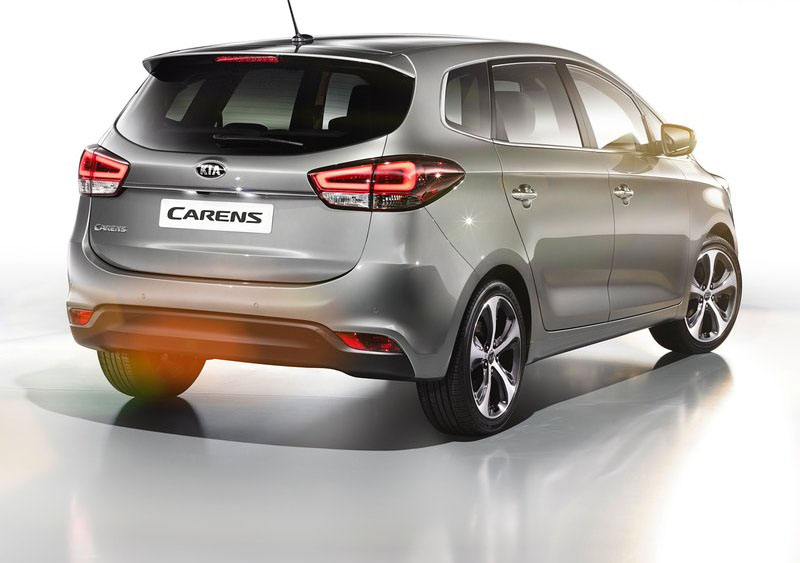
Kia Carens, 2013


  •  Kia Carens, 2013

The all-new Kia Carens is a completely fresh model from the ground up, and its sleek and sculpted design marks a dramatic shift away from the more utilitarian look of its predecessor.

It builds on the functionality and versatility of the original Kia Carens, with a spacious five or five-plus-two seating layout, a generously proportioned luggage bay and numerous stowage spaces, but wraps this family-friendly adaptability in more purposeful sheet metal.

"I wanted to give the new Carens a sleeker look and feel, to create a design that envelops its functionality and versatility in something altogether more athletic and dynamic," says Peter Schreyer, Kia's Chief Design Officer.

"The new-found visual dynamism is important - this car needs to look appealing and attractive - but during its design and development stages, we never lost sight of the fact that its packaging flexibility and adaptability are why people buy these cars," explains Schreyer.

Both Schreyer and Gregory Guillaume, Kia's Chief Designer Europe, are candid when discussing the design of the Kia Carens. "A vehicle like the Carens is probably one of the hardest of all to get right because we are very tightly constrained by the car's functionality," says Guillaume. "That packaging versatility cannot in any way be compromised by the design of the car because to do so would eradicate the car's raison d'être."

Schreyer and Guillaume's team created subtle styling cues to enhance the Kia Carens' elegant and balanced proportions and deliver an air of sophistication and refinement.

As an example Schreyer singles out the understated chrome strip that runs from the base of the windscreen, along the lower level of windows and curls up to meet the C-pillar. "This not only adds a premium feel to the clean-cut exterior, but also creates a visual link with the new Sportage, which features the same design motif," he explains.

One of Schreyer's design goals was improved visibility - a key element for safe driving, particularly in congested urban areas. "The base of the windscreen is very low and this works with the front quarter windows and the low and wide sweeping dashboard design to deliver excellent visibility," explains Schreyer. The panoramic glass roof that floods the cabin with light further enhances this sense of spaciousness.

The Kia Carens design team worked hard on ensuring the front and rear overhangs were kept as short as possible to boost manoeuvrability when parking and negotiating city traffic.

Neat touches abound - the integrated roof rails, the sleek rear spoiler, the three-way split second-row seats that feature individual fore and aft adjustment, and Kia's tactile new steering wheel.

"With its nigh-perfect balance of proportion, style and functionality, the distinctive new Carens marks yet another successful and stylish step for Kia's global design team," says Schreyer proudly. "There's a design honesty here - the Kia Carens is neither over-dressed nor does it feature contrived design elements. It's a car cleanly and elegantly defined by its functionality."
Read More

Thursday, January 10, 2013

Kia K9, 2013


  • Kia K9, 2013

Kia revealed the first official photographs of its all-new flagship sedan to be launched during the first half of 2012 in the Korean market. Referred to by its codename "KH" until now, the company also confirmed that the Korean market name will be Kia K9 - while the name for export markets, as well as overseas launch timings, will be revealed later in 2012.

K9 is Kia's first rear-wheel drive sedan. It boasts Kia's "best of the best" design, driving performance and high technology capabilities and is regarded as one of 2012's most eagerly anticipated all-new models in both Korean and overseas markets.

The model's Korean market name, K9, will complete Kia's domestic market "K" series range of passenger cars, whose members also include the front-wheel drive K5 (Optima in overseas markets) and K7 (Cadenza in overseas markets) sedans.

The letter "K" represents not only Kia and the company's home country of Korea, but also refers to the Greek word "Kratos" (meaning powerful, domination and reign) and the English word "Kinetic" (meaning active, dynamic).

The "K" series trio of sedans is a strong statement of Kia's determination to offer consumers the broadest product line-up and establish itself as a major presence in the global automotive industry through ceaseless innovation and technological developments.

The Kia K9's exterior gives solid form to the recently released sketches of the new model, and presents its design concept, "high-tech luxury sedan" image, with futuristic, sophisticated and distinctive charisma.

Kia K9 is the latest continuation of Kia's evolving design DNA, carrying its family-look radiator grille, bold "high-tech luxury car" style LED headlamps, with classic design echoes in its voluminous hood. Viewed from the front, Kia K9 presents an imposing and characterful image.

Furthermore, the sophisticated and bold profile with its simple but strong character line and the innovative and stable rear view with its high-tech LED combination lamps, luxurious chrome garnish and bumper-integrated muffler, completes the parameters for whole new level of luxury car design.

Soon-Nam Lee, Director of the Overseas Marketing Group, said, "K9 is our first rear-wheel drive large sedan, created without compromise in its design, driving performance and new technologies. K9 sets a whole new level of standards and values in the large sedan segment, and its design will be another Kia demonstration of our brand's power to surprise the world."
Read More

Friday, November 23, 2012

Kia Ceed, 2013


  •  Kia Ceed, 2013
Making its global premiere at the 2012 Geneva International Motor Show is the all-new Kia cee'd. More sophisticated, more efficient, more refined and with a more engaging driving experience than its predecessor, new cee'd is expected to build on the success of the original model, further establishing Kia as one of the leading automotive brands in Europe.

Launched in 2007, the original cee'd was a landmark and game-changing model for Kia. Designed, developed and built in Europe, cee'd was the first model to establish Kia as a serious contender to the established brands. Winning praise from media and public alike for its all-round ownership proposition, cee'd claimed fourth place in the European Car of the Year Awards that year - the highest ever ranking for a Kia vehicle.

New cee'd five-door goes on sale across Europe from the second quarter of 2012, depending on market, and will play a significant role in driving Kia's sales in Europe even higher. Further information about other models in the new cee'd family - including the SW version displayed at Geneva - will be made available later this year.

Longer, lower and more streamlined
New cee'd is both longer and lower than its predecessor, giving the five-door hatchback a more sporty profile. Overall length is increased by 50 mm (to 4,310 mm) and overall height has been reduced by 10 mm (to 1,470 mm) by lowering the ride height. Despite being based on a completely new platform, new cee'd carries over the 2,650 mm wheelbase, one of the longest in the C-segment, from its predecessor.

This more athletic appearance is further enhanced by a wider track. While the overall bodyshell is 10 mm narrower, the front and rear track have been increased (by 17 mm and 32 mm, respectively). The impact on the car's aesthetics is heightened by the availability of 17- and 18-inch diameter alloy wheels, resulting in a minimal gap between tyres and bodywork.

The new model's sleek silhouette was shaped by extensive testing in the state-of-the-art wind tunnel at Kia's R&D centre at Namyang, Korea. A reduced windscreen angle, smooth covers beneath the engine bay and the central floor, a rear spoiler above the tailgate and carefully profiled rear lamp clusters all help new cee'd achieve a Cd figure of just 0.30, placing it among the best-in-class, and helping to reduce fuel consumption and cabin noise.

New Kia cee'd will be manufactured exclusively at Kia's Zilina facility in Slovakia in a range of 10 exterior colours - including five new - and will be among the first models to bear the new-look Kia badge on its bonnet. Simpler, sleeker and with a more modern appearance, the new badge design echoes the premium feel of new cee'd and incorporates the Kia script in a single raised section for greater legibility.

Powerful and efficient engines with six-speed transmissions
In developing new cee'd, Kia's engineers had a strong focus on reducing fuel consumption and emissions without sacrificing engine response or power output. Updated engines and various small but impactful changes have resulted in an average fuel consumption improvement of four per cent across the model range.

Depending on individual market preferences, the new cee'd will be available with a wide choice of engines offering power outputs from 90 to 135 ps. Across most of Western Europe there will be two petrol engines - a 1.4 MPI and a 1.6 GDI producing 100 and 135 ps respectively - plus two diesels - a 1.4 WGT with an output of 90 ps and 1.6 VGT diesel offered in two states of tune (110 and 128 ps). Certain markets in Europe will also offer a 1.6 MPI petrol unit producing 130 ps.

Kia anticipates that its top of the range diesel - the highly-efficient 1.6-litre variable geometry turbo unit - will be the most popular choice in most markets. Generating 128 ps and 260 Nm, the engine will be offered with a choice of six-speed manual or automatic transmissions and will accelerate the new cee'd to 100 kph in less than 11 seconds. Fuel consumption will be just 4.1 l/100 km on the combined cycle (3.7 l/100 km in cars fitted with Kia's EcoDynamics technologies), and CO2 emissions start at just 97 g/km.

The 'Gamma' petrol engines also offer an excellent balance between performance and economy. The most powerful, the 1.6-litre Gamma GDI engine introduced in the Kia Sportage, features direct injection to maximise power (135 ps) and torque (165 Nm) while minimising fuel consumption and emissions. With this engine, new cee'd will accelerate to 100 kph in 9.9 seconds while delivering fuel consumption of 5.8 l/100 km (5.2 l/100 km with EcoDynamics), and tailpipe CO2 emissions from 119 g/km.

All engines will be offered with a choice of manual or automatic six-speed transmissions. Depending on version, the 1.6 GDI will also be available with Kia's all-new six-speed Dual Clutch Transmission (DCT), which improves fuel efficiency and delivers smooth automatic gear shifts for maximum comfort.

Developed by Kia's in-house transmission development team in partnership with a German-based engineering firm, the DCT makes the Korean brand one of a very small number of car makers in the world to produce its own dual-clutch transmission.

The DCT combines two manual transmissions within a single housing, each with its own dry clutch. One transmission shaft is dedicated to 2nd, 4th, 6th and reverse gear, while the other operates with 1st, 3rd and 5th gears.

Working in parallel, one shaft prepares to engage the next ratio, while the other is still engaged with a gear. Electric motor-driven actuators controlled by the Transmission Control Unit (TCU) execute gear selection and clutch engagement, resulting in swift and precise gear changes and uninterrupted torque transfer to the driven wheels, with a minimum of the efficiency loss normally associated with conventional automatics (with a torque converter).

As with other Kia models in Europe, new cee'd will be available with fuel-saving technologies developed under the company's EcoDynamics™ sub-brand to optimise efficiency and lower emissions. These technologies, which will be available on both diesel and petrol models with manual transmission, include ISG (Start/Stop), low-rolling resistance tyres and an alternator management system (AMS).

Smoother ride with improved handling, plus variable power steering
Ride and handling for new cee'd was benchmarked against class-leading competitor vehicles from near-premium brands.

Fully-independent, subframe-mounted suspension with MacPherson struts at the front and a multi-link set-up at the rear exploit the newcomer's wider track to deliver improved handling and road-holding.

The hugely increased torsional rigidity of the new cee'd bodyshell (45 per cent stiffer than the original model), has also enabled Kia's engineers to introduce numerous small changes to components, springs and shock absorbers that influence ride quality, refinement and NVH.

Improvements to the front suspension include an increased castor angle (from 4.4 to 5.2 degrees) for greater straight-line stability, larger wheel bearings in a reinforced hub, and larger diameter bushes for the subframe attachments. At the rear, geometry changes ensure more accurate tracking, the trailing arms have larger bushes and friction has been reduced throughout the system.

The standard steering system employs electric power-assistance and requires 2.85 turns lock-to-lock for a 10.34-metre turning circle. New cee'd is also available, on certain models, with an all-new Flex Steer™ system for improved driving dynamics. This system introduces three operating modes - comfort, normal and sport - allowing the driver to vary the level of steering assistance and the weight of feedback, in order to best suit the current driving conditions and the driver's personal preferences.

Less cabin noise, more cabin space

Kia's engineering team was determined to achieve significant improvements over the previous model in terms of cabin refinement and NVH. Measures adopted include fitting 14 per cent thicker front door window glass, low-drag exterior mirror housings, new vibration-damping engine mounts, hollow drive shafts, stronger bodyshell joints between the sills and B-pillars, double-layer door seals, and increased foam-filling in the A-, B- and C-pillars. As a result of these measures, cabin noise levels have been cut to match class-best standards.

Although the 2,650 mm wheelbase is carried over for new cee'd, the increase in overall length contributes to more interior space for people and cargo. Front seat occupants have 12 mm more headroom and 21 mm more legroom, while rear passengers gain 5 mm of shoulder room. Cargo capacity is boosted by 12 per cent to 380 litres (up 40 litres) with the rear seats upright and the split-folding rear seats can be made fully flat for maximum versatility.

High-quality equipment and advanced technologies
Higher quality cabin materials and a broader range of high-tech equipment will ensure the interior of new cee'd matches the premium exterior appearance.

Primary and secondary controls are grouped in a driver-oriented layout for intuitive ease of use, while new standard equipment will include tilt and telescopic steering wheel adjustment, iPod, Aux and USB support, six speaker audio system and a multi-mode trip computer.

A choice of bright chrome, piano black and anodized metal trim accents will be offered, while indirect LED lighting of the centre console and sweeping 'vertical fin' door handles establish an upmarket ambience for the cabin. The seat and cabin trim will be available in a choice of two colours as standard - black one-tone and stone beige two-tone - in cloth, with a full leather interior available on high specification versions.

Available features will include enhanced instrumentation - with a TFT 'Supervision' Cluster delivering high-definition resolution clarity of the instrument binnacle, dual-zone climate control, powered driver's seat adjustment with memory and a full length (1,045 mm long) powered panoramic glass sunroof.

New Kia cee'd will be available, depending on version, with LED daytime running lights, fixed cornering lamps (illuminated depending on steering angle), and advanced HID headlamps that turn the low beam to match curves in the road and enhance the driver's night vision.

Parking can be made easier with the new Parallel Park Assist System (PPAS). This features front, side and rear sensors and automatic steering control by an on-board computer to safely perform parallel parking. The driver remains in control of the accelerator and brake.

Safety structure and features target maximum rating
Kia continues to make safety a top priority and the new cee'd features advanced active and passive safety technologies to ensure maximum protection for its occupants and other road users. Kia is determined to achieve the maximum rating when tested by EuroNCAP with this new model.

Available active safety features will include ESP (Electronic Stability Program), ABS (anti-lock braking system), BAS (emergency Brake Assist System), HAC (Hill Assist Control) to prevent roll-back, VSM (Vehicle Stability Management) and ESS (Emergency Stop Signal) which flashes the brake lights when the system detects that the driver is making an emergency stop.

In terms of passive safety, the bodyshell is constructed using a high percentage (57 per cent) of ultra high-tensile steel and features numerous improvements to enhance impact resistance. New transverse cross-members are fitted to link the front and rear suspension mounts, new pressings link the rear trunk floor to the tailgate opening and the rear roof rail is connected to the C-pillars and a new floor cross-member to create an extremely strong 'safety ring'.

Side impact protection is enhanced with 50 per cent thicker door beams, plus a stronger roof cross-member between the B-pillars and side sills made from ultra high-tensile steel.

Each new cee'd is fitted with six airbags as standard - front, front side and full length curtain. Pedestrian safety is improved with the adoption of collapsible headlamps, a stiffer lower bumper lip, and shock-absorbing structures in the hood and its hinges.
Read More