Monday, March 24, 2014

Subaru XV Crosstrek Hybrid, 2014

Subaru XV Crosstrek Hybrid, 2014, Indo Automobiles, Cars Concept, Luxury Automobile
 Subaru XV Crosstrek Hybrid, 2014, Indo Automobiles, Cars Concept, Luxury Automobile Subaru XV Crosstrek Hybrid, 2014, Indo Automobiles, Cars Concept, Luxury Automobile
 Subaru XV Crosstrek Hybrid, 2014

The Subaru of America, Inc. unveiled the brand's first-ever production hybrid vehicle, the Subaru XV Crosstrek Hybrid, at the 2013 New York International Auto Show at the Jacob K. Javits Center. Based on the popular XV Crosstrek crossover introduced for 2013, the 2014 XV Crosstrek Hybrid model arrives in Subaru dealerships fourth quarter of 2013. When the XV Crosstrek Hybrid goes on sale it will be the most fuel-efficient and lowest-emissions AWD hybrid crossover in America.

In developing its first-ever hybrid, Subaru chose one of its popular, go-anywhere crossover vehicle platforms. As a result, the new XV Crosstrek Hybrid offers all the capability and versatility of the gasoline XV Crosstrek. The added benefits of a hybrid powertrain, including higher fuel efficiency, broaden the vehicle's appeal. Key to this approach is that the XV Crosstrek Hybrid shares the gasoline model's Symmetrical All-Wheel Drive and chassis capability. For example, the 8.7 inches of ground clearance is the same as for the gas model and is higher than for some dedicated SUVs, while providing a low step-in height.

With the XV Crosstrek Hybrid, Subaru re-engineered the chassis to handle the added weight of the battery system, improving handling, steering and ride. In addition to chassis changes, the XV Crosstrek Hybrid added extra sound insulation, a start/stop feature, revised HVAC, new gauge cluster, keyless start and numerous other changes.

Same Capability and Utility as Gas Model
Significantly, the 2014 Subaru XV Crosstrek Hybrid builds upon the utility and versatility of the gas model, while also offering enhanced handling responses and quieter driving performance.

The Active Torque Split version of Symmetrical AWD provides the same operation and benefits as in the gasoline model. The system sends power to the four wheels all the time and adjusts the torque distribution in response to acceleration, cornering and road conditions.

Passenger cabin room in the new Subaru XV Crosstrek Hybrid is essentially the same as in the gas model (0.7 cu. ft. difference), while the hybrid's maximum cargo room (rear seatbacks down) measures 50.2 cu. ft., vs. 51.9 in the gas model.

Subaru applied a number of other efficiency-enhancing technologies to the XV Crosstrek Hybrid. An Auto Start/Stop system shuts down the gasoline engine when the vehicle is stopped. Brake regeneration works when the car is coasting or the driver has applied the brake, recapturing kinetic energy from the turning wheels to recharge the battery.

All-season tires are mounted on new aluminum alloy-wheels with an aerodynamic design. Exclusive to the North American market, a new Active Grille Shutter system helps reduce air resistance. The air conditioning system uses a temperature and humidity sensor to optimize operation for reduced draw on engine power.

Subaru retuned the platform's suspension and revised the steering ratio to give the XV Crosstrek Hybrid sharper handling responses. Numerous enhancements that help to reduce noise include thicker floor sections, under-floor covers and additional sound

Read More

Sunday, March 16, 2014

Volkswagen Golf 4Motion, 2014

Volkswagen Golf 4Motion, 2014, Indo Automobiles, Cars Concept, Luxury Automobile
 Volkswagen Golf 4Motion, 2014, Indo Automobiles, Cars Concept, Luxury Automobile Volkswagen Golf 4Motion, 2014, Indo Automobiles, Cars Concept, Luxury Automobile
 Volkswagen Golf 4Motion, 2014, Indo Automobiles, Cars Concept, Luxury Automobile Volkswagen Golf 4Motion, 2014, Indo Automobiles, Cars Concept, Luxury Automobile
 Volkswagen Golf 4Motion, 2014, Indo Automobiles, Cars Concept, Luxury Automobile Volkswagen Golf 4Motion, 2014, Indo Automobiles, Cars Concept, Luxury Automobile
 Volkswagen Golf 4Motion, 2014

Volkswagen is expanding the new Golf range: following the models with front-wheel drive launched at the end of 2012, the versions with 4MOTION all-wheel drive are now being unveiled. Volkswagen is thus continuing the long tradition of four-wheel drive Golf models - the first Golf with four driven wheels made its debut back in 1986. The new Golf's permanent four-wheel drive system is one of the most modern and efficient of its kind in the world. In this latest version of the Golf 4MOTION Volkswagen is using a four-wheel drive system with an enhanced, fifth-generation Haldex coupling. The intelligently controlled 4MOTION drive weighs 1.4 kilograms less than the previous system, requires no pressure accumulator and reacts extremely quickly to every conceivable influence exerted on it. The result is greater active safety and improved handling.

15 per cent lower fuel consumption
Volkswagen is offering the new VW Golf 4MOTION in Europe in three levels of specification (Trend line, Comfort line, High line) and with two turbo diesel engines that provide both high torque and great fuel efficiency. The common rail four-cylinder engines deliver 77 kW / 105 PS and 110 kW / 150 PS and consume just 4.5 / 4.7 litres of fuel respectively per 100 kilometres. Just how efficiently the four-wheel drive Golf works is shown by a fuel consumption comparison between the 103 kW / 140 PS version of the old Volkswagen Golf 4MOTION and the new 150 PS model: despite being 10 PS more powerful, the 2013 Golf 4MOTION consumes 0.8 litres (15 per cent) less diesel.

High tech as standard
Like the front-wheel drive versions the new 4MOTION models are equipped as standard with a Stop/Start system and battery regeneration. Also included as standard even on the base version (Trend line) are features such as the four-wheel EDS (electronic differential locks on both axles), the XDS front and rear axle transverse lock, the electronic stabilisation programme, an Automatic Post-Collision Braking System, seven airbags, daytime running lights, air conditioning, electric windows front and back, a multi-function display (on-board computer) and a TFT display with touchscreen operation. The premium payable for the permanent four-wheel drive system on the Volkswagen Golf 4MOTION - sold fundamentally as a four-door vehicle - is €1,800 in Germany.


Read More

Volvo S60 R-Design, 2014

Volvo S60 R-Design, 2014, Indo Automobiles, Cars Concept, Luxury Automobile Volvo S60 R-Design, 2014, Indo Automobiles, Cars Concept, Luxury Automobile
 Volvo S60 R-Design, 2014, Indo Automobiles, Cars Concept, Luxury Automobile Volvo S60 R-Design, 2014, Indo Automobiles, Cars Concept, Luxury Automobile
 Volvo S60 R-Design, 2014

The new R-Design versions of Volvo S60, V60 and XC60 feature an outstanding blend of a renewed sports appearance, a dynamic driving-focused chassis and engine output up to a substantial 329 horsepower with the Polestar performance option.

Unique new front
All three R-Design cars - including the XC60 - now feature a unique face with a redesigned, dynamic, expressive nose. The frameless Tech Matte Black grille has high-gloss black stripes, a silk metal diagonal and a refined R-Designed emblem. The DRL lights in the outer corners reinforce the low, road-hugging impression.

At the rear, the unique diffuser with aero fins is flanked by the round, high-tech R-Design tailpipes.

New generation R-Design interior
The new sport seat come as standard in the R-Design cars. It features a blend of black nubuck textile and perforated leather. The embroidered R-design logo with a blue 'R' confirms the sporty aura. Full leather seats are available as an option.

The Adaptive Digital Display features the option to switch between three layouts with different configuration and functionality - Elegance, Eco and Performance. In the R-Design versions, the Elegance theme boasts a radiant blue colour.

The design team has dedicated much attention to all the interior details that emphasize the distinctive R-Design aura.

"By blending inlays with a perforated look, black leather and contrasting stitching, the design team has created an interior with all the details in perfect harmony, crowned by the black headliner. The new stainless steel tread plate with a bright blue 'R' in the R-Design emblem is another exquisite detail," says Doug Speck.

Sporty ride with up to 329 horsepower
R-Design models can be combined with all the engines available for the standard versions. The range spans from the D2 diesel with 115 horsepower (not available in the XC60) to the 3.0 litre, six cylinder T6 petrol turbo with 304 horsepower and 440 Nm of torque.

The T6 buyer can boost performance to 329 horsepower by opting for the Polestar software that charges the specially designed sport accelerator pedal with an extra 25 hp.

Quicker acceleration
Acceleration times in the T6 version, using the new paddle shift with the automatic gearbox in Sport mode, have been cut in all three cars with 0-100 km/h now down to 5.9 seconds (previously 6.1) in the S60 T6. The equivalent figure for the V60 T6 is 6.0 seconds (6.2), while the XC60 T6 now covers 0-100 km/h in 6.9 seconds (7.3).

Lower and firmer chassis
The R-Design Sport chassis has been lowered 15 mm compared with the Dynamic chassis in the standard S60 and V60, and the spring stiffness is 15 per cent higher compared with the dynamic chassis in the standard S60 and V60. This gives responsive driving pleasure with full control.

Mono tube dampers
The S60 and V60 R-Design features rear mono tube dampers, delivering compression and return damping via the same valve. This gives shorter, faster fluid flow, which in turn means the damper responds more quickly.

Stiffer bushings counteract oscillation, and roll and movements are more controlled. The bushings that attach the rear dampers to the body are 20 per cent stiffer compared with the Dynamic chassis. The front tie-blade bushing is a substantial 400 per cent stiffer to counteract wheel bouncing and shaking.

A strut brace under the bonnet ties together the suspension strut towers to stiffen up the body structure.

The Volvo XC60 R-Design chassis is also stiffer than the standard car and has more dynamic driving properties - without compromising ride comfort. The shock absorber springs and anti-roll bars are adjusted and tuned to be firmer and more balanced. The result is improved control and a sportier, road-hugging drive.

The Corner Traction Control
Just like in the standard variants, a range of electronic systems that sharpen the sporty driving experience backs up the chassis in the R-Design cars.

The Corner Traction Control, which uses torque vectoring to provide smoother cornering, is now also standard on the XC60. The DSTC (Dynamic Stability and Traction Control) system also has several other functions that improve driving and safety properties:
Advanced Stability Control. With a gyroscopic roll-angle sensor the anti-spin system can deploy faster and with greater precision.
Engine Drag Control prevents the wheels from losing their grip during engine braking on a slippery surface.
The DSTC system also has a sports setting that makes it possible for the driver to disable the anti-spin function.

Driver-orientated appeal
The new Volvo S60, V60 and XC60 R-Design will be available in all markets that sell the standard versions of these models. Volvo Cars expects that about 10 per cent of buyers will choose the R-Design version, but this increases to over 30 per cent in some markets such as the United Kingdom and Australia.


Read More

Monday, March 10, 2014

Dacia Logan MCV, 2014

Dacia, 2014, Indo Automobiles, Cars Concept, Luxury Automobile Dacia, 2014, Indo Automobiles, Cars Concept, Luxury Automobile
 Dacia, 2014, Indo Automobiles, Cars Concept, Luxury Automobile Dacia, 2014, Indo Automobiles, Cars Concept, Luxury Automobile
 Dacia, 2014, Indo Automobiles, Cars Concept, Luxury Automobile Dacia, 2014, Indo Automobiles, Cars Concept, Luxury Automobile
 Dacia Logan MCV, 2014

After New Dacia Logan, New Sandero and New Sandero Stepway, Dacia goes from strength to strength with New Dacia Logan MCV, a large estate with a small price.

After Lodgy, the modular 5/7-seat MPV, and Dokker, the 5-seat leisure utility vehicle tailored for both private and business usage, New Logan MCV further confirms Dacia's credibility in the field of spacious, practical vehicles.

The roomy five-seat estate is designed for motorists looking for a comfortable, practical, roomy car (in both passenger space and boot volume) for everyday and leisure use. Its attractive design and modern features make it a valuable addition to the latest generation of Dacia cars.

Robust, attractive design
New Dacia Logan MCV features the new Dacia design identity, with its emphasis on strength and robustness.

New Logan MCV boasts an attractive design as well as offering class-leading loading capacity (boot measuring 573 litres with the rear seats up and 1518 litres with them folded) and generous dimensions (4.49 metres long, 430 mm more than New Sandero), with the ability to carry items up to 2.7 m long. So, a Max capacity vehicle (MCV), true to its name, with flexible and spacious interior, all at city car prices.

From the outside, New Dacia Logan MCV has an energetic look, with design features, including roof rails, that evoke strength and vigour. The black mask above the rear lamp units highlights the impression of spaciousness and robustness.

Spacious, functional, rational interior
If New Dacia Logan MCV looks rugged and robust from the outside, this impression carries through to the interior, which boasts a high degree of perceived quality. The Dacia design team paid special attention to ensure the interior of New Logan MCV fulfils customer expectations on usability. The driving position is comfortable, with fully adjustable driver's seat and steering wheel (on some versions). And the layout obeys sound ergonomic principles, with all controls readily accessible on the steering wheel or in the immediate vicinity.

The interior arrangement is clever, offering no less than 16 litres of handy, accessible stowage features, such as front and rear door bins, cubbies and a storage tray on top of the dashboard. The luggage compartment cover (on some versions) has a rigid upper section with additional interior stowage capability. The easy-to-use 2/3-1/3 split/folding rear bench, standard on all versions, makes for maximum versatility.

More features, same price
Ever true to the Dacia promise of offering more for less, New Logan MCV brings in all the new functional, easy-to-use and 100% useful equipment introduced on Lodgy, Dokker, New Logan and New Sandero.

    Media Nav (available on selected versions) is a fully-integrated multimedia system with a large 7" touchscreen running a highly intuitive homepage menu for trouble-free navigation across the system's many useful functions, which include Bluetooth® technology and satnav with 2D and 3D (Birdview) display. Personal devices can be easily connected to a dashboard USB or jack connector.
    DaciaPlug&Radio, (available on selected versions) a straightforward and highly efficient multimedia solution, with a dashboard-mounted screen showing three lines of information. Dacia Plug&Radio comprises radio, MP3-compatible CD player, Bluetooth® technology and dashboard-mounted USB and jack connectors.
    Cruise control with speed limiter (on some versions), with steering-wheel control for both functions, and speed setting.
    Rear parking sensors (on selected versions), with sensors in the rear bumper to warn the driver when nearing an obstacle.
    Power steering, standard on all versions, for enhanced comfort and driving pleasure.

New engines, for an even better economy/performance ratio
Just like New Logan and New Sandero, New Logan MCV comes with a choice of two petrol engines: 1.2 16v 75, versatile and economical, both in terms of initial purchase price and running costs; and the brand new TCe 90, a three-cylinder turbocharged petrol unit that epitomizes the Renault group's powertrain excellence. The TCe 90 is a featherweight marvel, weighing 15 kg less than a conventional engine of equivalent power. It offers crisp, supple acceleration to combine motoring pleasure with enviable fuel economy (56.5mpg) and low CO2 emissions (116 g/km).

By combining low fuel consumption with record loading volume of 573 litres, New Logan MCV gives the very best ratio between fuel economy and load capacity, making it the very best proposition for budget-conscious customers who need great load carrying capabilities.

New Dacia Logan MCV will be available with the 1.5 dCi diesel engine, producing 66 kW (90 hp). The 1.5 dCi is the Renault group's best selling power unit, renowned for reliability, performance and environmental credentials. Recent optimisation brings further enhancements to acceleration, and fuel consumption remains among the lowest in this segment, at 74.3mpg for a very low environmental impact of 99 g/km of CO2.

Eco Mode function, for further advances in fuel economy
With the Eco Mode function (on TCe 90 and dCi 90), the driver can select optimised fuel economy at any time. Eco Mode adjusts certain engine settings and climate control parameters, to suit the driver and passengers. Depending on usual driving style and road conditions, Eco Mode can bring improvements of up to 10% in fuel consumption and CO2 emissions.

New Dacia Logan MCV further confirms Dacia as the 'smart buy' for the UK motorist: the price:space ratio remains unrivalled whilst running cocts and performance mean affordable and pleasurable motoring. And like every Dacia, with Logan MCV, you'll get the size of a generous B-segment estate for A-segment prices.
Read More

Citroen C3, 2014

Citroen, 2014, Indo Automobiles, Cars Concept, Luxury AutomobileCitroen, 2014, Indo Automobiles, Cars Concept, Luxury Automobile
 Citroen, 2014, Indo Automobiles, Cars Concept, Luxury AutomobileCitroen, 2014, Indo Automobiles, Cars Concept, Luxury Automobile
 Citroen, 2014, Indo Automobiles, Cars Concept, Luxury AutomobileCitroen, 2014, Indo Automobiles, Cars Concept, Luxury Automobile
 Citroen C3, 2014

Making its world debut at the 2013 Geneva Motor Show, the new Citroen C3 strengthens and enhances the qualities of its predecessor. The result is even more C3 with new assets to win over customers!

The new Citroen C3, set for launch in April 2013, will extend the success of the Brand's leading model, which has sold in nearly 3 million units since 2002.

The new Citroen C3 brings motorists even more C3, reasserting its unique qualities and standing apart with new strengths and advantages:
  •     Even more "Créative Technologie", in the shape of the Zenith windscreen, a proven success providing best-in-class visibility, as well as new, more efficient engines with CO2 emissions as low as 87 g/km, including the new PureTech petrol powerplants bringing 15% more power and a 25% cut in fuel consumption.
  •     Even more personality, with more assertive styling, a revitalised front end and new tail lights.
  •     And even more optimism, softness and comfort, with warmer upholstery and new equipment for motoring well-being including a reversing camera for easier day-to-day manoeuvres.

UNIQUE PERSONALITY WITH NEW BODY STYLING
The exterior styling of the new Citroen C3 denotes creativity at the service of well-being. The new model is soft by its curves and dynamic by its flowing, taut lines. The front end gets a new "smile" with restaged Brand chevrons and bumper-mounted LED daytime running lights, providing a steelier gaze and extra expressiveness. Also more expressive are the new tail lights, combined with new reflectors set in the lower sides that underscore the sense of stability conveyed by the new Citroen C3. The model gets new Encre blue body paint, expanding the palette to a total of nine colours.

The new Citroen C3 appeals with its body styling as well as with its meticulous interior. The cabin features well-crafted, top-quality materials including chrome surrounds and a thermo-coated dashboard, underlined by a new cross strip in matte black, warm brown or Moondust grey. The new Citroen C3 is also home to new upholstery that perfectly matches the dashboard strips. And in an exquisite piece of detailing, the instrument cluster is backlit in white, for a contemporary look and easier-to-read driving information.

INTELLIGENT ARCHITECTURE FOR ONE OF THE MOST COMPACT MODELS IN THE SEGMENT

The new Citroen C3 is one of the most compact vehicles in its segment. At 3.94 m long and 1.71 m wide with a 10.8 m turning circle, it is perfectly dimensioned for city driving.

The compact exterior hides a spacious interior. The new Citroen C3 boasts a generously sized cabin, a 300 litre boot (among the largest in the category) and a plethora of storage compartments (central console, glove box, central armrest, etc.). The semi-high seats make access easy and give passengers a commanding view of their surroundings, as part of an approach focused on comfort and safety.

A NEW AUTOMOTIVE EXPERIENCE
The new Citroen C3 retains a feature central to its unique personality: the Zenith windscreen, providing best-in-segment visibility. Bringing the landscape into the cabin, this true technological feat makes for a whole new driving experience.

The Zenith windscreen increases the upward field of vision of front passengers by 80°. The exceptional length of the window, combined with ultra-slim pillars, gives motorists the impression of being outside while in. Strong solar protection at the top of the windscreen above the front passengers merges gradually into regular-transparency glass for forward vision.

The new Citroen C3 also benefits from all of the Brand's expertise in comfort. It brings all occupants real well-being through a soft ride, acoustic and vibration comfort, and the visual and olfactory comfort afforded respectively by the openness of the generous glazed surfaces and the scented air freshener.

Modern and user-friendly, the new Citroen C3 is available with a reversing camera with parking aid sensors - a new technology that makes day-to-day manoeuvres easier - together with the RD4 MP3 audio system, the Connecting Box (Bluetooth hands-free kit, jack plug and USB socket), the eMy Way navigation system and the Hifi System.

IMPRESSIVE AND REASONABLE ON-ROAD PERFORMANCE
The new Citroen C3 is equally at ease in the city and out on the open road, with well-balanced road manners, ultra-controlled mass, optimised drag of 0.30, and a range of responsive and efficient engines.


Read More

Monday, March 3, 2014

Chevrolet Corvette Stingray Indy 500 Pace Car, 2014

Chevrolet, Indo Automobiles, Cars Concept, Luxury AutomobileChevrolet, Indo Automobiles, Cars Concept, Luxury Automobile
 Chevrolet, Indo Automobiles, Cars Concept, Luxury AutomobileChevrolet, Indo Automobiles, Cars Concept, Luxury Automobile
 Chevrolet, Indo Automobiles, Cars Concept, Luxury Automobile
Chevrolet Corvette Stingray Indy 500 Pace Car, 2014

The all-new, seventh-generation 2014 Corvette Stingray will serve as the Indianapolis 500 Pace Car, leading the field to green at the start of the 97th running of "The Greatest Spectacle in Racing," on Sunday, May 26, 2013, at Indianapolis Motor Speedway.

It marks a record 12th time the Corvette has served as the Pace Car, starting in 1978.

With Chevrolet's return in 2012 as an engine supplier, the Corvette Stingray Pace Car extends a legacy at the Brickyard that dates to the racetrack's early days.

Decked out in Laguna Blue Tint coat with official Indianapolis 500 graphics on the doors, the Corvette Stingray Pace Car differs from production models with only track-mandated safety features and strobe lights. No powertrain upgrades are required to run in front of the Indy Car pack, thanks to its all-new 6.2L LT1 engine, which features advanced technologies including direct fuel injection, continuously variable valve timing and Active Fuel Management (cylinder deactivation). They help produce an estimated 450 horsepower more efficiently.

The 2014 Corvette Stingray coupe goes on sale in fall 2013, with a convertible model - featuring a fully electronic top that can be operated remotely with the key fob - coming a few months later. Vehicle highlights:
  1. An interior that offers genuine carbon fiber and aluminum trim, hand-wrapped leather materials, dual eight-inch configurable driver/infotainment screens, and two new seat choices - each featuring a lightweight magnesium frame for exceptional support
  2. Advanced driver technologies, including a five-position Drive Mode Selector that tailors 12 vehicle attributes to fit the driver's environment and a new seven-speed manual transmission with Active Rev Matching that anticipates gear selections and matches engine speed for perfect shifts every time
  3. Lightweight materials, including a carbon fiber hood and removable carbon fiber roof panel on coupes; composite fenders, doors and rear quarter panels; carbon-nano composite underbody panels and a new aluminum frame help shift weight rearward for an optimal 50/50 weight balance that supports a world-class power-to-weight ratio
  4. A sculpted exterior featuring advanced high-intensity discharge and light-emitting diode lighting and racing-proven aerodynamics that balance low drag for efficiency and performance elements for improved stability and track capability
  5. Track-oriented Z51 Performance Package, including an electronic limited-slip differential; dry-sump oiling system; integral brake, differential and transmission cooling; as well as a unique aero package that further improves high-speed stability.
Read More

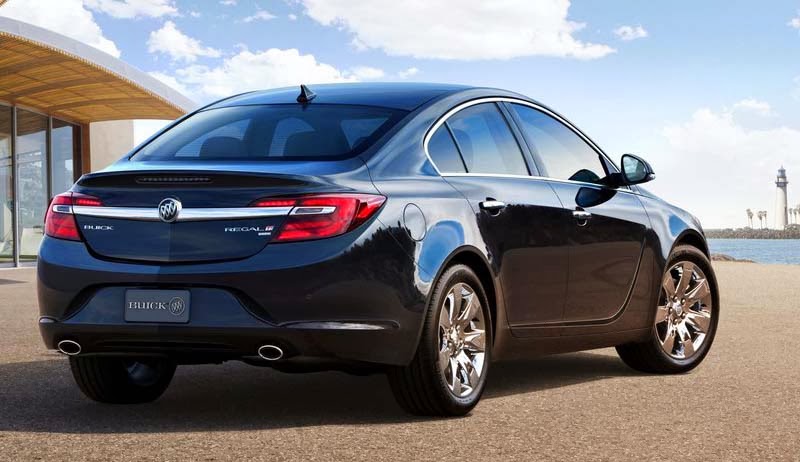
Buick Regal, 2014

Buick, Indo Automobiles, Cars Concept, Luxury AutomobileBuick, Indo Automobiles, Cars Concept, Luxury Automobile
 Buick, Indo Automobiles, Cars Concept, Luxury AutomobileBuick, Indo Automobiles, Cars Concept, Luxury Automobile
 Buick, Indo Automobiles, Cars Concept, Luxury AutomobileBuick, Indo Automobiles, Cars Concept, Luxury Automobile
  •  Buick Regal, 2014

Buick revealed the new 2014 Regal, designed to be a sportier and smarter evolution of the brand's dynamic midsize sedan. New purposeful technologies enhance safety and the driving experience with a more refined turbo engine - along with the introduction of all-wheel drive.

The new Buick Regal also introduces new radar- and camera-based safety features - including Rear Cross Traffic Alert, Lane Change Alert, Side Blind Zone Alert, Lane Departure Warning, Forward Collision Alert and Collision Mitigation Braking - for surround protection. In-vehicle connectivity is enhanced with next-generation Intelli Link, featuring simpler, more intuitive controls and natural speech recognition.

Adaptive Cruise Control is also offered. It senses traffic in front of the Regal to adjust vehicle speed, including stopping the vehicle in heavy traffic and accelerating again.

New front and rear styling, with bold, signature wing-shape LED daytime running lamps and LED tail lamps were designed to give Regal a more contemporary and premium presence. The interior features a redesigned central instrument panel and console along with a new fashion interior trim combination.

The new 2.0L turbo engine delivers 18 percent more horsepower in the Regal Turbo, for a greater feeling of on-demand power The available Haldex all-wheel-drive system helps make the most of traction in all driving conditions and also enhances the cornering capability of the Regal GS when driven in the GS mode of the Interactive Drive Control System.
Read More

Thursday, January 30, 2014

Bugatti Veyron Jean-Pierre Wimille, 2013


  • Bugatti Veyron Jean-Pierre Wimille, 2013

Bugatti, a brand with a rich history unique in the car industry, is celebrating its heroes. The French luxury marque will bring out an exclusive edition, "Les Légendes de Bugatti" (Bugatti Legends), to commemorate the renowned names which have played a crucial role in its history and which have helped creating its mystique. In the 90th anniversary year of the 24 Heures du Mans, the first Legend is dedicated to a personality who is central to the history of motor sports and intimately linked with the Bugatti company: Jean-Pierre Wimille, who garnered two victories for Bugatti at Le Mans.
The Bugatti Legend "Jean-Pierre Wimille" relates to the successes of the eponymous racing driver who won Bugatti two victories at the 24 Heures du Mans: in 1937, driving a Bugatti 57G Tank co-piloted by Robert Benoist, and repeating the feat in 1939, this time supported by Pierre Veyron in a 57C Tank.

The winning race car from 1937 is the inspiration behind the design of the "Jean-Pierre Wimille" Bugatti Legend. For the historic race the 57G Tank appeared in the racing blue finish that habitually identified French racing cars. Accordingly, this Vitesse now shines in blue clear-coated carbon fibre and a light Wimille Bleu paintwork finish.

The colour scheme is continued in the supercar's interior, as Achim Anscheidt, chief designer at Bugatti, explains: "The materials and colours selected, as well as a host of details, all reference the essential characteristics of the classic models driven by those figures to whom our edition pays homage. In each case, this care has resulted in vehicles in which the authenticity of the past is combined with the modern design, the sportive superlative and the luxurious comfort of Bugatti as an icon of the present. With these Bugatti Legends we are giving history a modern makeover."

The six Bugatti Legends are all based on the Bugatti Veyron 16.4 Grand Sport Vitesse. This super sports car, launched in Spring 2012, is officially the fastest series roadster in the world since achieving 408,84 km/h with the top down in April 2013. Centred round an eight-litre W16 engine delivering 1,200 PS, the Vitesse produces unequalled maximum torque of 1,500 Nm (at 3,000 - 5,000 rpm), and accelerates from 0 to 100 km/h in a lightening 2.6 seconds.

The production run for the Bugatti Legend "Jean-Pierre Wimille" will be limited to three vehicles.

Design
The similarity of the car's interior and exterior design to that of the historical race car, the Type 57G Tank, is apparent even at first glance.

Exterior. The body of the "Jean-Pierre Wimille" Legend is composed entirely of carbon and pays tribute to the Type 57G Tank with its blue paint finish, a color characteristic of French racing cars of the era. The dark and light blue color split of the historic vehicle has also been implemented in the Vitesse, often running across whole body parts - an artistic endeavour demanding great technical expertise and craftsmanship. Perfectly crafted dark blue exposed carbon creates a harmonious contrast to the light blue "Bleu Wimille" paint finish, which was developed especially for this model to remain faithful to the original color of the 57G Tank. The entire front area of the vehicle, side doors and the part behind the doors, the so-called "medaillon" (French), are finished in "Bleu Wimille" paint. Only the upper part of the front wing panels remains in dark blue exposed carbon, thus reflecting the striking design of the historic racing car's "Wimille stripes".

The light blue paint finish also graces the underside of the distinctive rear wing, which bears an eye-catching silver silhouette of the Le Mans race circuit reminding of Wimille's first victory there. Further references to Wimille include the driver's signature, which has been lasered into the dark blue tank and oil caps.

Interior
The dual-tone color scheme and attention for detail are also reflected in the interior. The headliner, footwells, and seat inserts have been upholstered in "Bleu Wimille", with the dark blue seat bolsters offering a sense of contour. This dark blue, known as "Lake Blue", is carried through in the dash panel, centre console and doors and creates a color dialogue in the vehicle's interior. Decorative stitching in contrasting light blue delivers subtle accents.

As an homage to Wimille, the vehicle and the brand, the Bugatti designers have developed a special decorative stitching in the French national colors of blue, white and red which has been used on the steering wheel and gearshift lever, lending both parts a real sense of elegance.

The headrests have been embellished with the stitched signature of Jean-Pierre Wimille, adding yet another highlight in "Bleu Wimille".

And references to Le Mans can also be found in the Bugatti's interior: the silhouette of the race circuit gleams as a milled and polished aluminium relief embedded in a prominent position below the EB logo in the lid of the rear centerbox, which is itself made of dark blue exposed carbon.

Further Legends-specific features include exposed carbon inserts in the centre console extension bearing the "Les Légendes de Bugatti" logo with the renowned Bugatti elephant and on the door sill plates decked with the portrait and signature of Jean-Pierre Wimille.

About Jean-Pierre Wimille
Jean-Pierre Wimille was one of the longest-serving test drivers at Bugatti. The son of a journalist, he was born in Paris on 26 February 1908 and drove almost exclusively for Bugatti throughout his racing career. With a number of victories already under his belt, in 1933 Ettore Bugatti invited him to take up the position of official test driver for the brand. He joined Bugatti at a point when its last great racing triumphs lay a few years in the past, making the string of victories he brought home to Molsheim over the following years even more significant. In his very first year he came first in the Algerian Grand Prix, then in 1935 he collected the title in the then-famous hill climb at La Turbie near Nice driving a T 59, following this with a second place in the Tunisian Grand Prix and fourth place in Spain.

And it was Jean-Pierre Wimille who brought Bugatti what was to be its last ever racing number one, in 1947 at the Bois de Boulogne, behind the wheel of a 4.7 litre Monoposto Type 59/50 B. Wimille was a world-class driver, who played a key role at Bugatti, especially as the brand's racing era came to an end. His greatest racing achievement was without doubt his twin victories for Bugatti at Le Mans. He died in a car crash in 1949 in Buenos Aires.
Read More

Tuesday, January 21, 2014

Brabus B63S-700 Widestar Dubai Police, 2013


  •  Brabus B63S-700 Widestar Dubai Police, 2013

The Brabus Dynamic Ride Control suspension offers the perfect symbiosis of superior driving comfort and dynamic handling.
The Brabus B63S-700 Wide star, the Dubai Police is taking delivery of a high-performance power off-roader with a 515 kW / 700 hp 5.5 litre V8 biturbo engine. This enables the all-wheel drive police vehicle to reach a top speed of 240 km/h, sprinting to 100 km in just 4.9 seconds. In visual terms, the "Tune It! Safe!"-campaign vehicle attracts attention for the exciting Wide star wide version and its 23 inch Brabus "Platinum Edition" mono block forged wheels.

At the 2013 Dubai International Motor Show, tuning company Brabus provided the Dubai Police with a B63S-700 Widestar based on the Mercedes-Benz G63 AMG for this purpose. The high-performance power off-roader with 515 kW / 700 hp symbolize the fact that safe automobile tuning and driving pleasure are closely linked and don't need to be mutually exclusive. This initiative is welcomed by the forces of law and order, which is why the Dubai Police use the Brabus upgraded G-Class from Mercedes-Benz to do duty on the streets of the city.
Read More