Thursday, May 9, 2013

Ford Atlas Concept, 2013


  •  Ford Atlas Concept, 2013

Ford unveiled the Ford Atlas Concept to showcase the design, capability, fuel efficiency and smart technologies that will define future pickup trucks.

Design with purpose
The Ford Atlas Concept is inspired by decades of listening to customers at the places they work and play. The result is a purpose-driven design with prominent wheel arches, a wide stance and chiseled grille - all to reinforce its functional Built Ford Tough® image.

Designers enhanced truck functionality, while creating new advanced features(see infographic here). For example, multiple tie-down points are integrated within the cargo box walls and load floor, along with 110-volt electrical outlets in the cargo box to charge power tools. An integrated roof carrying system and hidden extendable ramps give the truck unique functionality for a variety of jobs.

The interior is themed with structural styling cues and features the latest thinking in comfort, utility and refinement. Innovative, thin, lightweight seating in comfortable leather allows for extra legroom for rear passengers - along with integrated storage for smaller items. "Floating" instrument pods and glove-friendly buttons and controls keep the interior functional and ruggedly stylish.

Leading fuel efficiency
The Ford Atlas Concept features a next-generation EcoBoost® powertrain, which introduces truck-enhanced Auto Start-Stop engine shutoff technology. Auto Start-Stop shuts off the engine when stopped in traffic to save fuel - and smartly suspends the feature when the truck knows it is towing.

EcoBoost engines use gasoline direct injection and turbocharging to deliver fuel-economy gains of up to 20 percent and reduction of CO2 emissions of up to 15 percent, compared with larger-displacement engines. More than 500,000 EcoBoost engines have been sold globally, including 250,000 in the Ford F-150.

The Ford Atlas Concept goes further to save fuel through a combination of active aerodynamic elements that reduce wind resistance. They are:
  •     Active Grille Shutters: Automatic shutters behind the grille stay open when extra engine cooling is needed, such as during low-speed stop-and-go driving or while working in hot weather. The shutters automatically close to improve aerodynamics when cruising on the highway at steady speeds
  •     Active Wheel Shutters: Automatic shutters in the wheels are hidden to improve style at rest and low speeds, but automatically close at highway speeds to improve aerodynamics. Self-charging batteries use energy from the wheels' motion to power the shutters
  •     Drop-Down Front Air Dam: A drop-down front wind spoiler lowers at highway speeds to improve underbody airflow. The air dam is raised at low speeds to improve ground clearance - helpful for off-roading
  •     Power Running Boards: Auto-deploying running boards help passengers enter the truck at rest and tuck up against the truck when it is moving to improve aerodynamics and ground clearance

The combination of these fuel-saving features saves more than 2 mpg on the highway without diminishing towing or hauling capability.

Work and play smarter, not harder
Ford Atlas Concept is a rolling showcase of features that improve capability, durability and productivity to meet the diverse needs of pickup truck owners. Features:
  •     Dual-Purpose Tailgate Step and Cargo Cradle: The acclaimed Ford Tailgate Step goes a step further by adding the ability to also act as a cargo cradle - lifting and holding extra-long cargo items above the truck and freeing valuable bed spaceTrailer Backup Assist: This segment-first innovation allows drivers to back a trailer with the twist of a knob. Ford research shows that backing a trailer is often the most intimidating task a truck customer can face
  •     Dynamic Hitch Assist: Hitching a trailer can be time consuming and difficult. Dynamic Hitch Assist helps precisely line up the truck's hitch with the trailer coupling, eliminating maneuvering guesswork by showing visual cues in the truck's center display screen
  •     360-Degree Point-of-View Camera: A Ford truck first, the system gives a bird's-eye view of the truck to help position the vehicle in tight places or when there are obstacles near the truck - such as on a busy job site or grocery store parking lot
  •     LED Headlamps and Taillamps: Advanced LED lighting offers better road illumination than conventional halogen or HID lights and lasts longer. LED lamps also offer near-instant response, giving valuable extra warning time for following traffic
  •     LED Cargo Box and Side Mirror Lighting: Advanced, powerful yet efficient LED lighting brightly lights the cargo box and job site after the sun goes down with minimal battery drain compared to standard headlights or plug-in lights
  •     Hidden Cargo Ramps: Lightweight, durable loading ramps stowed below the cargo box can be quickly removed and set up to assist with loading wheeled items into the bed - from landscaping equipment to dirt bikes
Read More

Wednesday, May 8, 2013

Fiat Viaggio, 2013


  • Fiat Viaggio, 2013

The all-new premium class Fiat Viaggio sedan's debut is without a doubt one of the eye-catchers at the 2012 Beijing International Auto Show. The Fiat Viaggio symbolises an ideal journey between Italy and China, and its Chinese name Fei Xiang reinforces the message, evoking the experience of a flying dream towards the discovery of a new lifestyle totally befitting the brand positioning La Vita è Bella (life is beautiful) which embodies the Italian philosophy of living life to the fullest with passion and style.

Design
Inspired by Italian design, the new Fiat Viaggio teams modern-day fashion elements with a note of lasting classics that add to the passionate Italian legend. Designed by Fiat Group's Style Centre in Turin, the Fiat Viaggio has a timeless, clean-surfaced expressive exterior design that blends fluid and curvaceous forms with strong proportions. A contemporary Fiat "face" ensures unmistakable brand identity. Rear tail lamps with refined LED lights deliver an image of superior quality.

The Fiat Viaggio is tastefully designed inside and out with discernible Italian style. Fiat designed the Viaggio to be a world compact sedan unlike any others in its segment. Equipped with the overall dimensions which are "lower, wider, and longer" inherited from the architecture and platform upon which it is based, the Fiat Viaggio affords a dynamic appeal tuned to bring class-leading ride and handling.

An extended C-pillar enables a sleek silhouette. The abundance of elegant chrome details (from the entry trim level) gives the Fiat Viaggio a highly sophisticated look.

The on-board experience is characterised by a "driver centric" interior design: a unique "floating island bezel" which combines the cluster and centre stack and helps distinguish the interior from others. No films, faux woods, or imitation metals: the dashboard boasts a clean, appliqué-free execution (featuring high-quality soft-touch surfacing with tactile grains in an elegant and warm dual tone (black/beige) cabin. Premium quality materials result in premium tactility. A balanced presence of chrome details and silver-plated elements add brightness and a touch of sophistication to the elegant dashboard. On top trim levels, the presence of the 8.4 inches touchscreen radio navigation unit adds to the sophisticated environment a top high-tech feature unique to the segment.

Cutting-edge technology
Measuring 4,679 mm in length, 1,850 mm in overall width and with a 2,708 mm wheelbase, the Fiat Viaggio is the new C-segment benchmark. With this car, Fiat brings the very best of its technological know-how, design and refinement to the biggest selling segment in China.

The new four-dour, five-seater Fiat Viaggio sedan is based on the CUSW (Compact US Wide) architecture. It is the most advanced within the Fiat Group, and it is also the basis of the new Dodge Dart, presented at the Detroit Motor Show in January 2012. The CUSW architecture is, in turn, derived from the Compact architecture originally developed for the best-selling Alfa Romeo Giulietta, a framework that enables the Italians and the Americans to share technologies and components and most of all best practices for engineering and design capabilities.

Based on this platform, the Fiat Viaggio is tuned to bring class-leading ride and handling with uncompromised comfort for all its occupants. With excellent driving dynamics, exceptional safety performance, outstanding trim levels and finishes, Fiat is ready to spoil the most demanding Chinese customers with a unique blend of power, fuel efficiency, sophistication, technology and vehicle dynamics.

The Fiat Viaggio will be the only car in its segment to offer exclusively sophisticated Turbo engines (1.4L T-Jet 120 HP and 150 HP) on the Chinese market, securing performances that anybody would expect from bigger displacement engines without compromising on fuel economy and maintenance costs. Teamed with the T-Jet Turbo engine is Fiat's latest generation 6 speed dual dry clutch transmission, and alternatively the well-tested 5-gear manual transmission.

Target
The Fiat Viaggio is positioned in the most competitive mid-class segment in China's automotive market, targeting potential consumers with a passion for life. Enthusiastic, responsible, daring to dream and persistent: they are young and styling, having grown up in the cities and set to become the backbone of Chinese society.

World Class Manufacturing
As the first Fiat-Chrysler joint project, the Fiat Viaggio will be produced in the new GAC Fiat production plant in Changsha, in the Hunan province.

The new production plants implements the World Class Manufacturing standards, a way of working that all Fiat and Chrysler plants world-wide have embraced in order to achieve zero accidents, zero defects, zero stocks and zero breakdowns.
Read More

Tuesday, May 7, 2013

Audi A4, 2013


  •  Audi A4, 2013

A bestseller has become even more attractive: Audi has updated the A4 series. New solutions for efficiency, driving dynamics and infotainment, along with an even more attractive design, attest the "Vorsprung durch Technik" achieved by the A4 Sedan, the A4 Avant, the A4 allroad quattro and the S4.

Design
The A4 is Audi's bestseller - for 39 years now and in its eighth generation. The brand has sold ten million such models in total. The Audi A4, with its elegance, sportiness and emotional appeal, forms the centerpiece of the Audi brand. And now the design has become even more clearly defined and striking in all models - the Sedan, the Avant, the allroad quattro and the S4.

The new look further accentuates the horizontal lines at the front end. The engine hood is more arched, the upper corners of the single frame grille are tapered, and the cross ribs and the Audi rings are highlighted three-dimensionally. The grille is painted gray, with high-gloss black on the six-cylinder models or in combination with the S line exterior package. The redesigned bumpers are striking with their angular air inlets, their revised grilles and the flat front fog lights. The Audi A4 allroad quattro is distinguished by its grille's horizontal chrome applications and by the round fog lights.

The headlights have also changed, with a slight wave at the bottom edges, and a re-arranged interior. Xenon plus headlights are available from Audi on request. The LED daytime running lights form a narrow, optically homogeneous band that remains open in the vicinity of the xenon lens. The adaptive light together with dynamic and static cornering lights are available on request.

The tail lights reflect the shape of the headlights, and in combination with xenon plus have homogeneous strips of LEDs. The bumper with its diffuser insert has been redesigned, with the exhaust system always terminating in two tailpipes.

There is a selection of 15 paint finishes, including four new tones. The Sedan and the Avant offer the S line exterior package, while the Avant also includes a roof spoiler.

The modifications have changed the dimensions only by a few millimeters. The Audi A4 Sedan and the Avant each have a length of 4.70 meters (15.42 ft), while the A4 allroad quattro and the S4 are 4.72 meters (15.49 ft) long. The wheelbases for all models are 2.81 meters (9.22 ft), and the width is 1.83 and 1.84 meters, respectively (6.0 and 6.04 ft). The height varies between 1.41 and 1.50 meters (4.63 and 4.92 ft) depending on the body version.

The Interior
The interior of the Audi A4 models has also been refined. Audi offers a wide selection of new steering wheels with chrome and high-gloss inlays, with the leather sport steering wheel also featuring a flattened lower rim. The steering arm and the ignition key have been modified. High-gloss applications and the slender chrome trim at the controls add elegance to the interior.

The elaborate finish makes operation even simpler and more intuitive. The MMI navigation plus system now features four instead of eight buttons, with a script function integrated in the volume control dial. Other improvements concern operation of the automatic transmission, the efficient air conditioning systems, Audi drive select and the multifunction steering wheel. The seat heating and air conditioning are now directly operated at the respective buttons.

The high level of workmanship is as much a matter of course for Audi as a sure touch in the range of colors. All interior colors - except black - have been re-coordinated. The upholstery range has also been revised, with Fine Nappa leather replacing Valcona leather. The new, single-part cluster trim has been adapted in color to the interior, while the inlays are available in Aluminum Trigon, walnut dark brown and fine grain ash natural. Especially eye-catching is the Beaufort oak plywood inlay.

The interior of the S line sport package comes in black, refined with high-quality applications. 18-inch wheels or the optional 19-inch wheels and an S line sport suspension that lowers the body by 30 millimeters (1.18 in) complete the package. Audi exclusive and Audi exclusive line offer further individualized options.

The Audi A4 Sedan's luggage compartment still has its 480-liter capacity - 962 liters with the rear seats folded down (16.95 and 33.97 cubic ft). The A4 Avant and the A4 allroad quattro have 490 and 1,430 liters, respectively (17.30 and 50.50 cubic ft), with Audi offering an optional electrically operated tailgate for both models.

Engines
The new Audi A4's drive system sets new standards. The consumption levels have dropped by 11 percent on average, despite the increased power and torque of many of the engines. In the Sedan and the Avant each, Audi offers any of six TDI and four gasoline engines, with 23 possible engine-transmission combinations. All engines are supercharged direct-injection systems; the start-stop system and the recuperation system are standard throughout.

The TDI engines combine pulling power with pioneering efficiency, with the four-cylinder versions presenting extensive modifications. A new centrifugal pendulum-type absorber (in the 2.0 TDI with 100 kW, 120 kW or 130 kW with quattro drive) in the dual-mass flywheel makes engine running even more refined and quieter at low revs, for even earlier upshifting and savings of up to 0.2 liters per 100 km.

The most economical variant in the model family is the Audi A4 2.0 TDI with 100 kW (136 hp). In the Sedan, this engine needs only 4.2 liters of fuel per 100 km (56.0 US mpg) on average - a CO2 equivalent of just 112 grams per km (180.25 g/mile). The new A4 2.0 TDI with 120 kW (163 hp), also optimized for maximum efficiency, manages with 4.4 liters of diesel per 100 km (53.46 US mpg). This equates to 115 grams CO2 per km (185.07 g/mile). Both engines are available for the Sedan and the Avant.

In addition, three other four-cylinder diesel engines are available - with 88 kW (120 hp), 105 kW (143 hp) and 130 kW (177 hp). They can also be ordered for the allroad quattro, apart from the entry-level version. Three V6 TDI units complete the line. The 3.0 TDI with 150 kW (204 hp) (not for the allroad quattro) is the most efficient six-cylinder engine in its class worldwide; in the A4 Sedan it consumes an average of just 4.9 liters of fuel per 100 km (48.0 US mpg). The second variant, the 3.0 TDI, generates 180 kW (245 hp), with an especially clean diesel version.

The Audi A4 series also presents the latest state of the art in gasoline engine technology. A new highlight of the TFSI family is the new 1.8-liter engine, available for the Sedan and the Avant. The four-cylinder engine delivers sporty thrust, with a power output of 125 kW (170 hp) and 320 Nm (236.02 lb-ft) of torque. The average consumption in the Audi A4 Sedan is limited to 5.6 liters per 100 km (42.0 US mpg), or 134 grams CO2 per km (215.65 g/mile). That is a decrease in consumption of 19 percent compared with the predecessor engine.

The new 1.8 TFSI engine features many innovations: in the control of its valves and their lift, in the novel thermal management system, in the fuel injection system, in the turbocharger and in the integration of the exhaust manifold in the cylinder head. The engine weighs 3.5 kilograms (7.72 lb) less and its internal friction has sharply decreased.

The entry-level gasoline engine is the 1.8 TFSI with 88 kW (120 hp). The 2.0 TFSI - as the only spark-ignition engine also available in the Audi A4 allroad quattro - delivers 155 kW (211 hp). At the top of the line is the 3.0 TFSI in two variants. In the Audi A4 the V6, to follow a bit later, affords 200 kW (272 hp). In the sporty Audi S4 top model its power is an impressive 245 kW (333 hp).

Drivetrain
The wide range of drivetrains is typical of Audi. A six-speed manual transmission is standard on the Sedan and Avant models with front-wheel drive; most variants offer continuously variable multitronic as an option. The quattro versions have either the manual transmission or (as of the 2.0 TDI with 130 kW (177 hp)) the seven-speed S tronic on board. The Audi A4 allroad quattro employs a manual transmission or S tronic with all engine versions.

The innovative thermal management system shortens the warm-up phase of the manual transmission, among other things, and thereby reduces friction loss. All transmissions are distinguished by convenient and precise operation, high efficiency and a wide spread of gear ratios - the long ratios in the higher gears reduces fuel consumption, while the short ratios in the lower gears benefit the dynamics.

The quattro permanent all-wheel drive is standard on the Audi A4 allroad quattro, and available in the Sedan and Avant from the 2.0 TDI with 105 kW (143 hp). The A4 family uses the self-locking center differential here. In regular driving operation it primarily transmits the engine torque to the rear wheels in the ratio of 40 to 60. If necessary, redistribution occurs within the shortest possible time. The torque vectoring function supplements the work of the center differential with finely incremented brake applications, to make handling even more precise and safer.

In the V6 quattro variants Audi offers the sport differential as a supplement, lending maximum precision and high traction to the A4 when cornering at the handling limits. The high-end component actively distributes the power between the rear wheels as required.

Chassis
The chassis of the Audi A4 is striking with its sporty precision, high ride comfort and superior safety. The mounts of the rear suspension control arms and the characteristics of the shock absorbers have been even more finely tuned. Most of the components of the five-link front suspension and the trapezoidal-link rear suspension are made of aluminum.

The electromechanical power steering is new in all models of the series. The direct gear ratios convey precise road contact; slight brake applications counteract pulling to the side on unevenly slippery surfaces. The electromechanical power steering requires no energy for straight-ahead motion, thereby reducing fuel consumption by up to 0.3 liters per 100 km. This is equivalent to a reduction in CO2 emissions of up to 7 g/km (11.27 g/mile).

Another high-end feature that gives the Audi A4 a special status in its class is Audi drive select. In the basic package, the driver can switch the characteristic of the accelerator, the shift points of the automatic transmission, the power steering and the automatic air conditioning between the four modes "comfort," "auto," "dynamic" and "efficiency." If there is an onboard navigation system, the additional "individual" mode is also included.

Further modules are optional - adaptive cruise control or the cruise control system, the sport differential, the suspension with damper control and dynamic steering. By means of a superposition gear, the gear ratio is adjusted in a continuously variable manner depending on the driven speed; at the handling limits small interventions compensate for understeering and oversteering.

All front-wheel-drive versions of the Audi A4 feature the electronic stabilization program (ESP) with electronic limited slip differential. In dynamic driving the system further improves handling and safety by initiating minimum brake interventions at the front wheel that is subject to a reduced load on the inside of the curve. The large wheel brakes - with ventilated front and rear disks in many variants - offer excellent stopping power and can be precisely modulated.

All Audi A4 variants roll off the assembly line on elegant aluminum wheels. Depending on the engine version, they are 16 or 17 inches in size; tires with optimized rolling resistance belong to the 205/60 and 225/50 series. The A4 3.0 TFSI has 18-inch wheels with 245/40 series tires. The line of options ranges to 19 inches with 255/35 series tires. Four of the 18 available wheels are new designs. The A4 allroad quattro offers four independent designs.

Assistance systems
Audi offers highly developed assistance systems for the A4 family, for making driving even more relaxed. Standard on all variants is the new driver information system with break recommendation - it detects and draws the driver's attention to deviations from typical driving behavior on the basis of steering motions and other parameters.

The adaptive cruise control assistance system keeps the Audi A4 at a constant distance from the preceding vehicle at speeds between zero and 200 km/h (124.27 mph). If the threat of a rear-end collision becomes imminent at speeds below 30 km/h (18.64 mph), the system will execute a full brake application. Audi active lane assist supports the driver in keeping to his lane. A camera detects the lane markings and the system makes slight corrections to the steering if necessary. Audi side assist monitors the space behind the Audi A4 by radar and detects any vehicles in the blind spot, for example.

Infotainment systemsAudi offers a whole kit of state-of-the-art infotainment systems for its A4 series. The chorus CD radio with eight speakers is standard, while the MMI navigation plus system with large hard disk, color monitor, 3D graphics and DVD player forms the top of the line. Voice control and the optional digital audio broadcasting are further improvements to the system.

The high-end supplement to the MMI navigation plus system is the Bluetooth online car phone. Via Audi connect the system provides special services in the car, such as voice-controlled Google searches for points of interest and navigation with Google Earth pictures, along with Google Street View. Audi online traffic information, another such service, gives the driver the latest news on congestion along the selected route. The WLAN hotspot, another feature of the Bluetooth online car phone, allows passengers in the Audi A4 to surf the internet and send e-mails as they please with their mobile devices.

The Audi S4
The Audi S4, available in the Sedan and Avant versions, employs the most powerful engine in the line - the 3.0 TFSI with 245 kW (333 hp) and 440 Nm (324.53 lb-ft) torque. The Sedan's average fuel consumption is a mere 8.0 liters per 100 km (29.40 US mpg) - with an impressive performance: The Audi S4 accelerates in 5.0 seconds from zero to 100 km/h (62.14 mph) and achieves an electronically limited maximum speed of 250 km/h (155.34 mph).

The modified Audi S4 is identifiable from the changes to the headlights, the bumpers, the air inlets and colors. The interior also contains subtle changes in appearance. The S sport suspension and 18-inch wheels featured on the S4 deliver outstanding road grip.

Prices
The prices of the A4 have changed only slightly, despite the extensive upgrading. For example, the Audi A4 2.0 TFSI costs just 475 euros more - the sporty Sedan is now listed at 35,425 euros.
Read More

Monday, May 6, 2013

Acura RLX, 2014


  •  Acura RLX, 2014

Acura took the wraps off its all-new 2014 RLX luxury-performance sedan - the most powerful, spacious, and technologically advanced Acura sedan, ever. In keeping with the Man-Machine Synergy direction of the Acura brand, the RLX utilizes an all-new direct-injection engine, lightweight body structure, and the first-ever application of Acura Precision All-Wheel Steer™ to deliver a new and dynamic driving experience unlike that of any other luxury performance sedans. The next-generation AcuraLink® cloud-based connected car system makes its debut on the new Acura RLX, offering a broad range of convenience, entertainment and security features.

The 2014 Acura RLX is powered by an all-new 310-horsepower direct-injected SOHC 24-Valve i-VTEC® V-6 engine with Variable Cylinder Management, and is expected to earn best-in-class estimated EPA fuel economy ratings of 20/31/24 mpg (city/highway/combined). The new Acura RLX delivers full-size interior space in a nimbler, mid-size luxury sedan package and boasts the best rear-seat legroom (38.8 inches), longest tandem seating distance (36.4 inches), and best front and rear shoulder room in the mid-luxury class.

Precision All-Wheel Steer™ (P-AWS) is the world's first technology to feature independent and continuous control of the left and right rear-wheel steering (toe) angles to achieve new levels of handling agility, high- and low-speed maneuverability, and confident handling control for a two-wheel-drive luxury sedan.

As previously announced, a version of RLX featuring Acura's new Sport Hybrid Super Handling All-Wheel Drive® (Sport Hybrid SH-AWD®) technology, producing 370 horsepower with expected fuel economy ratings of 30 city/30 highway/30 combined, will debut later in 2013.

The new Acura RLX will confidently compete in the high-end luxury sedan market with an incredible array of leading-edge technologies - including the next-generation AcuraLink™ connectivity system with AcuraLink Real-Time Traffic™ featuring freeway traffic and all-new surface street conditions, the Lane Keeping Assist System and Forward Collision Warning safety systems, and new driver-assistive technologies such as Adaptive Cruise Control with Low-Speed Follow, Agile Handling Assist dynamic braking technology and Jewel Eye™ LED headlights.

The 2014 Acura RLX is slated to go on-sale at U.S. Acura dealers nationwide in the spring of 2013 and will be available in five grades - the well-equipped RLX, the RLX with Navigation, the feature-packed RLX with Technology package, the Acura RLX with Krell Audio package, and the top-of-the-line RLX with Advance package. Pricing details will be announced closer to launch.

Exterior Design and Function
The RLX follows an "aero-fused" exterior design motif with its wide and athletic stance, sharp upswept bodylines, aerodynamic greenhouse, and distinctive new Jewel-Eye™ LED headlights offering improved down-the-road illumination. The RLX's sleek upper body and numerous other aerodynamic features result in aerodynamic efficiency to best-in-class levels.

Seven spoke 18x8J aluminum-alloy wheels and 245/45 R18 all-weather tires are standard, while Technology, Krell and Advance grades feature 19x8J wheels and 245/40 R19 tires. The Acura RLX's alloy wheels also feature a noise-reducing design that lowers tire noise by 7 decibels across the audible frequency range.

Additional exterior features available on the RLX include an acoustic glass windshield and door glass, integrated power rear sunshade, front and rear parking sensors, heated and auto-dimming side mirrors, and rain-sensing windshield wipers.

Interior Design and Function
The Acura RLX interior features premium, soft touch materials throughout, with the tasteful application of premium metal and wood-grain accents. A stitched leather instrument panel, center console and steering wheel, along with available Milano perforated leather seats, communicate a new level of craftsmanship and refined luxury appeal in Acura's top-of-the-line sedan.

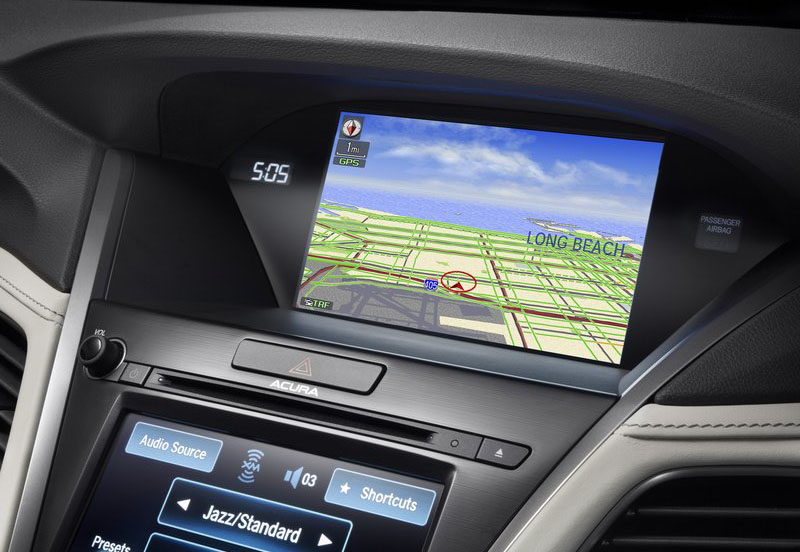
Luxury form and function are smartly integrated in the RLX's new center console, featuring dual screens - an 8-inch Navigation screen and a 7-inch On-Demand Multi-Use Display™ touch screen - that provide easy and direct one-touch access to key functions, including audio, air conditioning, navigation and text-to-voice SMS text message function. The sliding, leather-trimmed armrest conceals a storage compartment with USB connectivity, 12-volt accessory power outlet and space to store a tablet device.

Additional interior comfort and convenience features include push-button start, power tilt and telescoping steering, power sunroof, tri-zone automatic climate control, and Bluetooth® HandsFreeLink®.

The standard 10-speaker ELS® audio system includes HD radio™, XM radio, Pandora® interface, USB connectivity, and an auxiliary jack. The RLX with Technology package is equipped with a 14-speaker Acura/ELS® Studio premium audio system. The Krell Audio and Advance grades receive an all-new Krell ultra-premium system that sets a new benchmark for high-fidelity sound in a luxury vehicle.

Chassis Technology
Whether on a serpentine mountain pass, congested city street, or cramped airport parking deck, and in all weather conditions, the Acura RLX with Precision All-Wheel Steer™ (P-AWS™), is designed to deliver an unprecedented level of handling precision and control.

Working in concert with Vehicle Stability Assist® (VSA®) with Traction Control and Agile Handling Assist dynamic braking system, P-AWS™ provides enhanced vehicle stability, maneuverability, and control. The RLX's handling performance is further elevated by its new double-wishbone front and multi-link rear suspension system with Amplitude Reactive Dampers, and new high-output, belt-type electronic power steering.

All RLX models have 4-wheel disc brakes with high-friction pads and a 4-channel anti-lock braking system (ABS), along with new Hydraulic Brake Boost that improves brake pedal feel. New Electric Parking Brake with Automatic Brake Hold, and high-efficiency Vehicle Stability Assist (VSA) are additional firsts for Acura.

New Direct Injected VTEC V-6 with VCM
The 2014 RLX is powered by an all-new 3.5-liter direct-injected SOHC i-VTEC® V-6 engine with Variable Cylinder Management. Rated at 310 horsepower and 272 lb.-ft. of torque, the engine delivers exceptional drivability, with more than 90-percent of its peak torque produced from 2000 rpm to 6600 rpm. Variable Cylinder Management™ with 3-cylinder and 6-cylinder operation works in concert with the VTEC valvetrain to deliver superb cruising efficiency. The engine is mounted to a lightweight and rigid aluminum front subframe using a vibration-canceling Active Control engine Mount (ACM) system.

The new engine is mated to a reengineered Sequential SportShift 6-speed automatic transmission with revised gearing, an intuitive selector and steering-wheel-mounted shift paddles. A driver-selectable Sport mode provides more aggressive shift points and more pronounced engine braking during deceleration, along with manual operation.

Acura Link Connectivity System
The Acura RLX is equipped with the next-generation of the AcuraLink® connectivity system, delivering a bevy of new information, media, convenience, and security services via embedded two-way communications and web-enabled devices. AcuraLink® leverages the Aha™ by Harman cloud-based interface to provide users with thousands of customizable media and connectivity choices. Next-generation AcuraLink® also delivers an array of available security and convenience features, such as AcuraLink Real-Time Traffic™ featuring freeway traffic and all-new surface street traffic, airbag deployment notification, stolen vehicle tracking, remote locking and unlocking, security alarm notification and 24-hour personalized concierge services for restaurant reservations and more.

Advanced Safety, Visibility, and Driver Assistive Technology
The Acura RLX offers a comprehensive list of leading-edge technologies, including Lane Departure Warning, Lane Keeping Assist system, Forward Collision Warning and Collision Mitigation Brake system safety technologies, Adaptive Cruise Control with Low Speed Follow driver assist system, and Blind Spot Information and Multi-Angle Rearview Camera with Dynamic Guidelines enhanced visibility systems.

Featuring Acura's next-generation Advanced Compatibility Engineering™ II (ACE™ II) body structure, the RLX is anticipated to earn top-level safety ratings, including a 5-star NCAP Overall Vehicle Score, and IIHS 'Top Safety Pick' rating as well as a GOOD rating in the new IIHS small overlap frontal crash test.

Additional details on key advances and technologies for the all-new 2014 RLX:
  •     Class leading interior space based on the Acura RLX's longer wheelbase and efficient packaging. At 196.1 inches, the RLX is similar in length to the outgoing RL, but it has a two-inch longer wheelbase and is nearly two inches wider, placing the new RLX well above the norm in the mid-luxury class. The flagship RLX sedan has up to three inches more rear legroom than competing models, including the BMW 535i, Lexus GS350 and Audi A6.
  •     Extensive use of lightweight materials includes the application of high-strength steel to 55 percent of the body, and the intensive use of aluminum—for the front fenders, hood, steering hangar beam, front and rear bumper beams, front subframe, and front and rear door outer panels (mated to steel inner panels). The RLX weighs in at 3,933 pounds. Static bending and torsional body rigidity are up 52 percent and 46 percent, respectively.
  •     Jewel-Eye LED headlights (an Acura first) LED lamps enhance the Acura RLX's modern and distinctive appearance while providing outstanding light distribution and improved down-the-road illumination.
  •     Acura Navigation System with Voice Recognition™ offers a wide range of search options including local search functionality and AcuraLink Real-Time Traffic™ for both highways and surface streets.
  •     Agile Handling Assist (an Acura first) uses active braking to help the driver smoothly and easily trace the desired line through a curve with smaller steering inputs.
  •     Electric Parking Brake (an Acura first) provides one-touch parking brake activation.
  •     Automatic Brake Hold (an Acura first) maintains the vehicle's position when the driving or parking brake are released until the throttle is depressed.
  •     Adaptive Cruise Control (ACC) with Low-Speed Follow (an Acura first), allows the RLX to independently maintain a set following distance in low-speed traffic situations, including stop and go traffic, and to initiate vehicle braking when necessary.
  •     Forward Collision Warning (FCW) uses a camera mounted in the upper portion of the windshield to detect vehicles ahead of the Acura RLX and audibly and visually alert the driver when it determines a frontal collision with a detected vehicle is possible.
  •     Lane Departure Warning (LDW) uses the same windshield-mounted camera to detect lane markings on the road and alerts the driver if the vehicle is wandering from a detected lane.
  •     Front seatbelt e-pretensioners use electronic control to reduce belt tension under normal driving conditions, while also enabling automatic belt tensioning in hard cornering maneuvers or in the event of a collision.
  •     Multi-angle rearview camera with dynamic guidelines uses guidelines that reflect steering wheel inputs on the display to aid in backup maneuvers.
  •     Capless fueling (an Acura first) eliminates the fuel cap and improves ease of fueling.
Read More

Sunday, May 5, 2013

Volvo V40, 2013


  •  Volvo V40, 2013

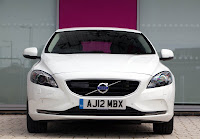
The all-new Volvo V40 is a sporty five-door hatchback that sets new ride handling, fuel efficiency and safety standards in its class.

Its eye-catching coupé design, which uses styling cues from the C30 coupé and classic P1800ES Volvo, is sportier and sleeker than the homogeneous class norm.

Special attention has been given to handling, steering feel, agility and ride comfort. Volvo engineers believe that the Volvo V40 is now the class benchmark for dynamic fineness.

Volvo's reputation for safety leadership has not been overlooked. A new innovation, Pedestrian Airbag Technology, joins a previous Volvo world-first, Pedestrian Detection with Full Auto Brake, which was first shown on the Volvo S60. Together, they ensure the all-new V40 offers unrivalled protection for pedestrians, as well as for the car's occupants.

The new Pedestrian Airbag, which makes its world debut on the Volvo V40, inflates from under the rear edge of the bonnet when the car detects that it has hit a pedestrian. The raised bonnet better cushions the unfortunate pedestrian, and the airbag also protects the pedestrian's head from the "hard points" at the base of the windscreen and the lower A-pillars.

In Europe, 14 per cent of all traffic fatalities are pedestrians. In China, it's over 25 per cent.

City Safety, an innovation first shown on the Volvo XC60 to avoid noise-to-tail urban accidents, has been further improved for the Volvo V40. It now works at up to 50 km/h (31 mph), instead of 30 km/h (19 mph). Insurance claims involving the Volvo XC60 show that City Safety has reduced personal injury claims by 51 per cent, while vehicle repair costs have been lowered by more than 20 percent. Little wonder that many insurers now reduce premiums for Volvo drivers.

Pedestrian Airbag Technology, Pedestrian Detection and City Safety are all part of Volvo's IntelliSafe safety philosophy. Other new safety features on the Volvo V40 include a Cross Traffic Alert radar system - which helps you reverse out of a parking space and see traffic coming from the side - and an improved Blind Spot Information System (BLIS). This new radar-based technology still warns of vehicles in the blind spot, on both sides, but in addition now warns of vehicles approaching rapidly from the rear - making it safer, for example, to change lanes on the motorway.

Volvo also has a time-honoured reputation for environmentally friendly motoring - the three-way catalytic converter with lambda sensor is among Volvo's many green innovations. The all-new V40's 1.6-litre D2 engine emits only 94 g/km (when fitted with 205/55 R16 wheels) of CO2, a class-leading figure. This also offers major company car taxation, road tax and residential parking savings. Little wonder the Volvo V40 is so good in this area: one third of Volvo's entire research and development budget is earmarked for cutting CO2 emissions.

The design is particularly striking. The exterior was styled by Volvo's Californian studio in Camarillo by American Chris Benjamin. "I wanted an emotionally engaging car that looked like a coupé but had the practicality and functionality of a five-door hatchback," he says. The Pedestrian Airbag Technology allowed him to lower the bonnet line and lower the whole car. It's actually 29 mm (just over an inch) lower than a C30 coupé, one of the lowest hatchbacks on the road. The rear styling is based on the C30, which in turn took cues from the classic P1800ES of the '70s.

The cabin design priorities were to give, "a large car feel inside a small car". The dash is wide - accentuating the big car feel - while a new high-tech TFT (thin film transistor) instrument digital display is available. Three different instrument displays can be selected, including an "eco" setting to help you drive more economically and a "performance" mode to better suit more spirited driving. There is also a more classical "elegance" mode. TFT instrumentation is available as an option on all models in the Volvo V40 range.

The Volvo V40 comes with Bluetooth music streaming and handsfree mobile connectivity as standard. A navigation system with directions in the main instrument cluster, and a mobile app that can find your car in a large car park, lock or unlock doors and even give you a journey log.

These choices are all part of Volvo's innovative infotainment system, giving outstanding connectivity, security and personalisation.

The seats are new and continue Volvo's fine reputation for occupant comfort. The rear seat is prominently sculpted to offer maximum support for two and sees them positioned slightly more inboard than is the norm, improving comfort and forward visibility. Nonetheless there is room for three in the rear, and a trio of three-point seat belts (a Volvo invention, of course) in the back seat.

An optional panoramic glass roof improves the "big car feel" of the cabin. Another unusual and stylish design touch is the rimless rear view mirror - further proof of the Volvo V40's design focus and crisp, uncluttered detailing.

Driving pleasure was a priority. "We sought dynamic leadership in this class and I'm confident we have achieved it," says Stefan Karlsson, Manager of Vehicle Dynamics and Calibration. "Our goal was to offer a truly connected feel, to give great driver confidence. If a driver feels well connected, he or she feels in control. This not only improves driving enjoyment, it also improves dynamic safety."

Ride comfort was also crucially important. "We just don't accept that agility should come at the expense of comfort. It is not necessary."

The damping - a key quality in comfort and driver interaction - was mostly calibrated by testing on British B-roads, "the best real world testing ground," says Stefan Karlsson. "They are extremely demanding roads, which is why so many cars struggle on them. They are brilliant for damper tuning, which in turn improves ride comfort, steering response, handling and agility."

The all-new Volvo V40 comes with three different diesel engines, and three petrol engines. They include a 1.6 diesel, which gives an outstanding and class-leading CO2 figure of 94 g/km (equivalent to 78.5mpg on the combined cycle), a sporty 177hp 2.0-litre five-cylinder diesel, and the high performance T5 petrol, good for 254hp. All engine and gearbox versions have start/stop technology, to boost economy and reduce emissions.

Volvo Car UK expects the D2 to be the big selling engine, with 63 per cent of UK sales.

Three trim levels are offered - ES, SE and SE Lux. Prices start at £19,745 for the D2 ES. The cars are all extremely well equipped. The entry level ES has City Safety, Pedestrian Airbag, Bluetooth hands-free, High Performance Audio, Electronic Climate Control, leather steering wheel and a cooled glovebox as standard.

Taking into account equipment levels, the Volvo V40 is not only less expensive than the equivalent Audi A3 and BMW 1-Series, but also undercuts many mass-made rivals too.

Just over 12,000 are likely to be sold in the UK during the first full calendar year (2013). That would make the UK the V40's biggest market worldwide.

UK customer deliveries begin in September 2012, with the high-performance T5 coming later in 2012. The Volvo V40 is a new class entrant for Volvo, but it will also replace the S40 and V50.

DESIGN
Low, sleek and sporty, the Volvo V40 is one of the most eye-catching Volvos ever. It looks like a two-door car, thanks to the low roof (29 mm or 1.1 inches lower than a C30) and bonnet lines. In fact, it's a five-door hatchback with all the functionality and practicality you'd expect from a Volvo.

Exterior designed in Volvo's Californian studio

The exterior was designed by Chris Benjamin, Design Director at Volvo's Californian studio in Camarillo, north-west of Los Angeles. "I wanted a car with a wedge shape, a high tail and wide shoulders. I see it as a combination of coupé and a sports wagon. Volvo has always done estates well and has had some classic coupés too." He describes it as, "a 3D piece of art you can drive".

The sleek exterior profile is accentuated by the low and wide high gloss grille that accentuates the car's ground hugging qualities. Daytime LED running lights are set into the lower corners of the front end, giving a "blade design" appearance. LEDs are also used in the door mirror turn indicators, rear position lights, high position rear brake light and in rear number plate illumination.

Volvo's classic V-shaped bonnet has bolder edging. The wide shoulders stretch from just behind the headlamps. They, too, are sharp edged, echoing the rising beltline. At the end of the rear door it sweeps into an integrated "hook", a design legacy from the P1800 coupé.

Dramatic wedge shape with wide shoulders
The roof silhouette is also wedge shaped, and contributes to the lean-forward stance. Rear tail lamps are positioned high, for maximum visibility, and follow the curvature of the shoulders. The broad-shouldered look is another Volvo design trademark, which goes back to the Amazon models of the '50s and was reintroduced by Volvo's British-born design boss Peter Horbury on the S80 and V70.

The Volvo V40 was designed under the leadership of Steve Mattin, Volvo's then Vice-President of Design. As is usual for new models, Volvo's design satellites in Camarillo and Barcelona pitched ideas against the head office in Gothenburg. (Since then, a new design studio has been added in Shanghai.) Chris Benjamin's Camarillo proposal was eventually chosen. Benjamin then spent two years working and living in Gothenburg, finishing the car.

Some pleasing small details: it is the first Volvo with body colour washer jet nozzles and is the first Volvo that uses hemmed wheel flanges, which allows the use of bigger wheel and tyre combinations.

Another practical new detail is that the fuel-filler pipe is self-closing. This is a "smart" design that makes refuelling easier as there is no longer a need for a fuel-filler cap.

At 4369 mm in length, the Volvo V40 is slightly longer than an Audi A3 or BMW 1-Series, and slightly wider too. The drag co-efficient varies from 0.29 to 0.31 depending on tyre and wheel choices.

Personalisation is a key aspect of "Designed Around You", the central theme of all new Volvos. This includes an exterior styling kit, which further improves aerodynamic efficiency and gives an even sportier aura. The kit includes deflectors, a twin-coloured rear diffuser, a striping kit and enlarged rectangular chromed tail pipes.

Panoramic glass roof improves feel of spaciousness

A fixed panoramic glass roof, stretching from the front windscreen to the backrest of the rear seats, improves the feeling of light and space in the car and makes the cabin even airier and brighter. The roof is tinted to reduce infrared radiation into the cabin. A fabric curtain, under the roof, provides shade, and can be used to block out the sun for part of the cabin. So the rear passengers, for example, can enjoy sunshine while the driver relaxes in shade.

The all-new Volvo V40 comes with a choice of 16-, 17- or 18-inch wheels, depending on trim level and customer specification.

INTERIOR DESIGN
Nowhere is Volvo's "Designed Around You" philosophy better manifested than in the cabin. It is comfortable, simple in design (like all good Scandinavian design), intuitive and visually pleasing. "The interior of the all-new Volvo V40 is designed around people and puts a strong emphasis on ergonomics, comfort and an in-command driving experience," says Sven-Olof Persson, Interior Design Manager.

Adds President and CEO Stefan Jacoby: "The all-new V40 has the most intuitive driver interface ever in a Volvo. We believe that the ultimate luxury is to own a car that fits you, understands you and evolves together with you. You jump in behind the wheel for the first time. You take a look at the dashboard ­ and you find everything so functional and obvious that you are ready to take off directly.

Volvo is renowned for the quality of its car cabins, its ergonomics and its seating comfort. The all-new Volvo V40 takes all these qualities to a new level.

"Big car" feel
The large and wide instrument panel accentuates the "big car" feel, as does the airiness offered by the deep windscreen and panoramic glass roof (when fitted). Instrumentation is classy yet simple. Intuitive design is a Volvo hallmark.

The cabin is full of easy-to-use technology, all part of Volvo's high-tech but easy to use HMI (Human-Machine Interface). The infotainment system - combining audio, navigation, mobile phone and other functions - is presented on a five- or seven-inch colour screen in the upper part of the centre console. It's set high to make it easier for the driver to keep his or her eyes on the road. All functions can be controlled from the steering wheel, or by controls directly below the screen.

The human-machine interface is a crucial quality of any Volvo. The controls are so intuitive that Volvo's goal was to make reading the instruction manual unnecessary.

"My Car" button typical of easy-to-use technology
The "My Car" button on the dashboard offers easy access to a wide range of personalised settings for City Safety, Collision Warning, Pedestrian Detection, Driver Alert System, Active Cruise Control, lighting, door mirrors, climate unit, central locking and audio system.

If the customer chooses a Multimedia audio system, Volvo's infotainment system comes upgraded with the larger seven-inch screen that also displays information and images from the navigation system, phone, reversing camera, DVD player, digital TV and more.

The Bluetooth connection has been upgraded to allow not only hands-free phone conversations but also music streaming from your preferred Bluetooth-enabled portable music player. Volvo is the only brand to offer Bluetooth throughout the entire range as standard. Integrated navigation with voice commands is available as an option.

High-tech TFT instrumentation available
The TFT (thin film transistor) instrument display is new for Volvo and also a class-first. It offers excellent legibility in all light conditions, can prioritise information in emergency situations, and also allows the display to be personalised - all part of Volvo's "Designed Around You" philosophy.

There are three settings:
    The "Eco" theme has a green background and includes an economy meter to allow you to drive as economically as possible. A green light is illuminated when your eco driving is optimal.
    The "Performance" theme has red background illumination and includes a power meter that tells the driver how much power is being used and how much is available. In this mode, the tachometer is centralised on the instrument display, and speed is shown digitally. This is the setting of choice when spirited driving is preferred.
    The "Elegance" theme has an amber illumination and gives a more conventional dash display. It's perfect for a calm, relaxing drive, and will probably be the everyday setting of choice.

The instrument display also includes navigation instructions, when satellite navigation is fitted.

The V40's cabin is designed around the driver, but never to the exclusion of passenger comfort. "It's driver oriented," notes design director Chris Benjamin. "You feel you're in a real cockpit. But the passengers never feel isolated."

Improved iconic centre stack
The floating centre stack, first seen on the S40 and V50 in 2003 has become a Volvo design trademark and is the centrepiece of the Volvo V40 cockpit. It was inspired by Swedish furniture and its tendency to "bend wood". The depth of the stack gives the effect that it "floats".

On the V40, the centre stack is even more sculpted. "It's larger at the top and tapers down. This helps to increase knee room for driver and front passenger," notes Chris Benjamin. The centre stack comes as standard in charcoal, upgrading to Shimmer Graphic in the higher trim levels. Modern Wood and Centre Court (tennis-inspired look with a red stripe) are available as an accessory.

The centre stack has a Silk Metal Chrome finish frame that enhances the décor. The same finish is also found in the doors and on the instrument panel as well as around the centre display, outer air vents, start button and gearshift gaiter.

A design highlight is the unusual yet classy rimless rear view mirror - without an unsightly plastic surround. It was inspired by classic '50s and '60s cars, many of which had dainty rimless rear view mirrors.

Sculpted seats, including in rear
Volvo is famed for its seating comfort. On the Volvo V40 the seats are new. Like the front seats, the outer rear seats are also noticeably sculpted, to offer greater comfort and support. You sit slightly more inboard than the norm, moving you further from the doors and allowing greater forward visibility. The rear seat is ideal for two people, although there is ample room for three.

Front and rear seat heaters are available. The latter is an unusual Volvo speciality, an upshot of our chilly home market.

There is extensive storage space. Below the armrest is a storage compartment suitable for CDs and other small items. It also has a connector for either USB/iPod or AUX. Two cupholders and a 12V power outlet are integrated in the console in front of the armrest.

The glovebox has space for two soft-drinks cans or bottles. It is refrigerated with cold air from the Electronic Climate Control system.

Other convenient features include an accessory supplied sunglass compartment above the driver's door, a pen holder in the glove compartment and handy storage compartments under the instrument panel and on the outside of the outer rear seats. Another smart detail is the specially designed, drained storage unit for an ice scraper in the driver's door panel.

The interior lighting is designed to give a "theatre lighting" feel. This adds to the luxury feel of the interior. LED lamps are used to light up strategic areas. The driver can enjoy a red-to-blue setting that adapts the light to the interior temperature - or choose between another seven mood themes. The reading lights front and rear can be dimmed.

Illuminated gearshift
There is an optional gearshift knob for the automatic and manual transmissions which is transparent and LED-illuminated from inside. There are also LED lights in the door panel storage pockets. This is another example of elegant imaginative design, boosting the quality feel of the cabin.

There is a practical hanging load net in the load compartment. A soft safety net is optional and a metal version is available as an accessory.

Twin floor boot
The V40 can be equipped with an "extra" floor in the load compartment, making the floor flat when the rear seat is folded. In addition to the two permanent hooks, the extra floor integrates hooks for grocery bags. Between the upper and lower floors there is a concealed storage area.

The accessory range includes a "Cargo Mat Organiser" that keeps smaller items secure, as well as a "Load Organiser" that includes a load compartment divider, a load belt and two floor rails.

High quality upholstery and trim
Luxury materials, including leather, aluminium and high-quality fabrics, are used throughout. The leathers are tanned organically, which means they age better, and develop a patina as they mature. Quality stitching is a feature, even on the man-made fabrics. Buyers have a choice of leather, sporty T-Tec (a synthetic "skin" inspired by wetsuits and other durable outdoor gear) and Lorensburg textile (a finely woven fabric that feels very modern and durable). Real aluminium inlays are also a highlight.

Charcoal upholstery is, of course available, but Sweden is famous for its lighter hues - an upshot of those long, dark winters. So charcoal and blond, as well as espresso and blond themes are also available.

DRIVING DYNAMICS: CHASSIS
A huge effort has gone into making the Volvo V40 the class leader in all-round dynamics. According to Stefan Karlsson, Manager of Vehicle Dynamics and Calibration, Volvo wanted a "great balance of ride, handling, steering and braking, as well as the driver assistance functions".

He feels the V40's special niche is, "the whole connected feel of the car. The way you are always in charge, never with any nasty surprises. It's the intuitive way the car drives and behaves. If the driver is well informed on the behaviour of the car, he or she will always make the right decisions. He or she will be a better driver, will enjoy driving more, and be a safer driver."

Great steering feel connects you to road

Special emphasis was put into the steering, "the main connector with you and the road. We tried very hard to ensure that the steering provides an intuitive and linear feel between you and the road. That way it's very responsive and very precise. I'm confident we are more 'connected' than rivals. I think we really have an edge here."

The Electrical Power Assist Steering (EPAS) system uses electric power on a rack and pinion. Early electric steering systems were sometimes criticised for lack of feel but Karlsson says Volvo has conquered that failing, and claims that feedback and feel is now as "as good as a good hydraulic steering system". A key benefit of electric steering is that, because there is no hydraulic assistance, there are fuel economy savings.

The steering column's thick tubing and stiff insulation increase torsional rigidity. This also contributes to the enhanced feeling of direct contact with the wheels and the road.

The electric steering allows you to choose between three levels of power assistance. In Low mode the system provides a high degree of power support, making manoeuvring easier. Medium mode has lower power support to offer more road response at higher speeds. High mode is the ultimate setting for the enthusiastic driver, contributing to the car's dynamic character.

The Electrical Power Assist Steering also allows for the integration of safety and driver support functions that involve the steering, such as Lane Departure Warning and Park Assist Pilot.

Suspension tested in Britain
The damper tuning on the all-new Volvo V40 was done mostly in the UK, on our country's legendary B-roads. "It was Richard Parry-Jones [legendary Ford technical director] who first alerted us to the advantages of using British B-roads," says Karlsson. "They test every possible area of damping, because of their roughness, their camber changes, their undulations and the variety of corners." Karlsson says Volvo now does "90 per cent of our damper tuning in the UK. And the dampers are such a critical part of the suspension. They affect ride, handling, steering - everything."

The dampers include rear monotube designs that have compression and rebound damping done by the same valve. This gives shorter, faster fluid flow, which in turn means that the damper responds more quickly.

Karlsson is part of a small (only four engineers) dynamic team that test new Volvos partly "by the seat of the pants". Of course we have tons of people working on CAE [computer-aided engineering]. Our suspension designed is heavily influenced by them. But real-world driving is also crucial. So it's a mixture of subjective testing and objective measurement."

The four chassis dynamic team members each averages 15 years of driving-tuning experience. "My background is as a calculations engineer. One of my team is a Swedish rally driver." Karlsson races a Mazda MX-5 sports car on weekends.

The chassis set up - fully independent suspension front and rear, using MacPherson struts at the front - is complemented by a suite of electronic controls, designed to boost safety but also improve driving enjoyment.

DSTC improves safety and driving enjoyment

The Dynamic Stability and Traction Control (DSTC) system in the Volvo V40 includes several sophisticated features that offer a unique blend of driving pleasure and safety. The Advanced Stability Control, that is part of it, uses a roll angle sensor that makes it possible to identify any skidding tendency at an early stage. This means that the stability control system can step in earlier and with greater precision. Advanced Stability Control is a great asset in dynamic driving involving considerable lateral forces, improving handling and rapid avoidance manoeuvres.

Engine Drag Control prevents the wheels from locking during engine braking on a slippery surface.

If the car is equipped with a towbar, Trailer Stability Assist helps dampen the snaking action that may occur when towing a trailer or caravan. The car is stabilised by braking one or more wheels and by reducing torque.

Corner Traction Control improves handling
Corner Traction Control is a new feature of the Volvo V40 that uses torque vectoring to make the car corner even more smoothly. The car's inner driven wheel is braked, causing more power to be transmitted to the outer driven wheel. This allows the driver to corner more tightly while reducing any tendency to understeer.

This system makes it easier to smoothly maintain the desired line on winding roads, in roundabouts and on wet surfaces. Corner Traction Control is a huge asset when exiting from a small side road to merge swiftly with faster highway traffic.

The standard V40 comes with a "dynamic" chassis, but a "sports" chassis is also available. This lowers the ride height by 10mm (just under half an inch), lowering the centre of gravity and offering firmer springs and dampers, to give even more responsive driving.
Read More