Tuesday, August 7, 2012

Jaguar XKR, 2011

 
  •  Jaguar XKR, 2011

The Jaguar debuts the latest dramatic evolution of its supercharged Jaguar XKR coupe at the 2010 Geneva Motor Show. The stunning new Jaguar XKR Special Edition delivers a significantly raised maximum speed - 174mph (280km/h) - and bold exterior styling changes that create the ultimate supercharged Jaguar.

The Jaguar XKR Special Edition combines a number of new features and option packs that are introduced to the XK range at 2011 Model Year. Jaguar customers have the option to personalise their vehicle by building on the existing Jaguar XKR package to deliver a car that offers even greater performance without sacrificing the refinement and luxury for which every Jaguar is renowned.

Introduced in 2009, the Jaguar XKR boasts a state-of-the-art 5.0-litre supercharged AJ-V8 Gen III R engine that delivers 510PS (510bhp SAE), 625Nm of torque and propels the coupe to 60mph in just 4.6 seconds. Now, in Special Edition guise, the Jaguar XKR's top speed climbs significantly from an electronically limited 155mph (250km/h) to 174mph (280km/h) thanks to the addition of the Speed Pack. Allied to that remarkable engine is an advanced six-speed automatic transmission with steering-wheel mounted paddles, lightweight aluminium body structure and a range of computer-controlled systems including Active Differential Control and Adaptive Dynamics that ensure the supercharged car accelerates even faster, handles even more precisely and sets new standards of ride and comfort.

The benefits of the Jaguar XKR's lightweight but stiff and strong advanced all aluminium body are already acknowledged. Not only does this architecture bring dynamic benefits thanks to its torsional rigidity, it also offers excellent safety and crash repair features and provides the ideal base to improve performance across the board - including optimised fuel economy and CO2 emissions. Thanks to the combination of excellent powertrain efficiency and the Jaguar XKR's advanced lightweight body architecture, its fuel economy is comparable to the previous generation of Jaguar XKR - despite the significant increases in power and performance.

The Jaguar XKR Special Edition pairs the optional Speed and Black Packs to create the bold new model unveiled in Geneva, which also sports optional Piano Black veneers on the dashboard and red brake callipers. Both option packs are also available separately for customers who seek to personalise their cars in terms of either styling or additional performance. Whatever combination is chosen, every Jaguar XKR delivers that classic Jaguar blend of seductive, powerful and elegant looks, beautifully finished interiors and even more comprehensive specification.

The driver is the centre of attention in the Jaguar XKR Special Edition, with exciting new features including the acclaimed JaguarDrive Selector™, and high levels of specification such as the 7-inch Touch-Screen, 16-way heated and cooled memory seats, Jet Suedecloth premium headlining and Flint Grey premium carpet. In addition, a bespoke new Jaguar XK suitcase (which will be available as an option for all XK models) has been fashioned for the Jaguar XKR Special Edition. From 2010, the Jaguar XK range (UK and certain European markets only) will be fitted with the tyre repair Instant Mobility System. By adopting IMS on all models, the XK frees up its 30-litre wheel well, which is now carpeted and can hold the specially designed and tailored XK accessory suitcase, substantially increasing the versatility of the car.

The new 2011 Jaguar XKR Special Edition consists of two new styling and performance packs - the Speed and Black Pack. Both are available to Jaguar XKR coupe customers separately and provide new levels of styling and performance for owners looking to further personalise their Jaguar.

The Jaguar XKR Speed Pack

The Jaguar XKR with new optional Speed Pack allows customers to further strengthen their XKR's already impressive breadth of capability, by extending the car's top speed from 155mph (250km/h) to an electronically limited 174mph (280km/h), thanks to a unique engine and transmission recalibration.

To ensure the Jaguar XKR with Speed Pack remains stable at high speeds, the coupe uses a revised front aerodynamic splitter and larger rear spoiler to provide increased balance and a reduction in lift. The Jaguar XKR's computerised Active Differential Control also adjusts to reduce steering sensitivity at very high speeds, further improving stability and driver control.

Customers who order the Jaguar XKR coupe with the Speed Pack will be offered a paint palette that is part of the Jaguar Designers' Choice programme - a range of colours that have been specifically chosen to compliment the performance potential of the car. Seven colours are available on Speed Pack models - Ultimate Black, Polaris White, Salsa Red, Liquid Silver, Lunar Grey, Kyanite Blue and Spectrum Blue.

Every Jaguar XKR with the Speed Pack will come with body-coloured side sills and rear diffuser, and a chrome finish to the window surrounds, upper and lower mesh grilles, side Power Vents and boot lid finisher. Red brake callipers with a Jaguar 'R' logo sit inside 20-inch Kasuga alloy wheels.

By raising the Jaguar XKR's maximum speed the new car has extended its sporting credentials, taking it even further into supercar performance territory. Russ Varney, Chief Programme Engineer, XK Series, explains the philosophy behind the uprated Jaguar XKR: "With 510PS and 625Nm of torque, the Jaguar XKR has immense reserves of power and acceleration which impress everyone who experience it. The car has always had the potential to reach speeds far beyond its original electronically limited maximum and many of our customers have expressed an interest in a car that can safely be driven faster where conditions permit. The new Speed Pack allows them to release some of that potential and give them control of the fastest Jaguar XK we've made to date."

The performance potential of the supercharged AJ-V8 Gen III R engine comes courtesy of its highly advanced design. The all-aluminium four-cam power unit has a number of features that deliver power with very high efficiency, including spray-guided direct injection (SGDI), which improves performance and economy, and dual independent variable cam timing (DIVCT), which benefits performance and economy, while also reducing emissions.

The AJ-V8 engine is built around a stiff, aluminium block with cast-in iron liners and cross-bolted main bearing caps to reduce noise, vibration and harshness. The block is high pressure die-cast, providing a superior finish and greater dimensional accuracy. The engine uses aluminium heads, with four valves per cylinder and spheroidal-graphite cast-iron crankshafts and forged steel connecting rods. The cylinder heads for the first time are specified with a secondary (recycled) aluminium alloy thus reducing the environmental impact of manufacturing the new engine.

A sixth-generation, twin vortex system supercharger is fitted to the Jaguar XKR's 510PS engine. It is a compact Roots-type unit, feeding air through twin intercoolers, which in turn are water-cooled by their own discreet cooling circuit. The high helix rotor design improves the supercharger thermodynamic efficiency by more than 20 percent over its predecessor. It also improves noise quality to the point where the unit is virtually inaudible (making supercharger whine a thing of the past). The intercoolers reduce the temperature of the pressurised intake-air and so optimise power and efficiency. Mechanically, the new supercharger and its intercoolers are efficiently packaged in the 'V' of the engine to deliver a lower overall engine height in support of pedestrian safety requirements.

An industry-first, centrally-mounted, six-hole, spray-guided fuel injection system delivers fuel at a pressure of up to 150bar directly to the cylinder. This substantially contributes to improved low-speed, dynamic response. The positioning of the injectors ensures fuel is precisely delivered to the centre of the combustion chamber, maximising air-fuel mixing and improving combustion control. Fuel is delivered through twin, high-pressure fuel pumps that are driven via an auxiliary shaft in the all-new engine block.

The charge cooling effects of the direct-injection fuel system have allowed the compression ratio of the supercharged engine to increase from 9.1:1 to 9.5:1, further optimising fuel economy. During the engine warm-up phase, the combustion system employs multiple injection mode strategies to deliver 50 percent more heat for fast catalyst warm-up and emissions reduction.

A new type of variable camshaft timing (VCT) system introduces another new technology. The four VCT units are activated by the positive and negative torques generated by opening and closing the intake and exhaust valves, instead of by oil pressure. This has allowed the engine oil pump to be reduced in size, saving energy and improving fuel consumption.

VCT units work independently on all four camshafts with 62 degrees of authority on the inlet cams and 50 degrees of authority on the exhaust cams. Timing is optimised by the engine control unit for torque, power and economy at every point in the engine's speed range. The new VCT units are capable of a response rate up to three times faster than in previous Jaguar engines, with actuation rates in excess of 150 degrees per second. This delivers a more immediate engine response to the driver's demand for power.

Minimising internal friction is key to improving fuel consumption and CO2 emissions, and as such was a key aim when it came to the design of the engines. As a result, the new Jaguar AJ-V8 Gen III engines achieve another best in class, setting a new industry benchmark for cranktrain efficiency.

All engine bearings were engineered for reduced friction without compromising reliability. Diamond-Like Carbon Coating (DLC) has been used to reduce friction on the fuel pump tappets and a solid film lubricant has been used to coat the piston skirts. New engine oil has a lower viscosity, contributing to an extension in service intervals from 10,000 miles to 15,000 miles (or 12 months). The V8 engine is fitted with an electronic oil-level indicator for added peace of mind.

Sound quality is a key characteristic of all Jaguars and is one particular aspect that customers relish. With that in mind, Jaguar engineers have accentuated the acoustic feedback into the cabin in order to further enhance the driving pleasure.

In addition to the fully active exhaust system in which valves open to provide a more rewarding note, the new Jaguar XKR has been engineered to provide an intake feedback system to enhance the V8 sound character commonly absent on supercharged engines. Intake manifold pressure pulsations are fed into an acoustic filter at the rear of the engine that is tuned to provide an edgy sports car 'crescendo' at high revs. The filter is controlled by the engine management system, which only allows the sound to enter the cabin under the appropriate driving conditions.

The new intake feedback system combined with the fully active exhaust system provides the most exhilarating aural experience yet delivered on a Jaguar.

The Jaguar XKR Black Pack

For customers looking to create a real statement with their Jaguar XKR, the new optional Black Pack allows them to own a bold and purposeful Jaguar with undeniable visual impact thanks to menacing gloss black wheels and exterior detailing.

Like the Speed Pack, XKRs fitted with the Black Pack have a paint palette that is restricted to colours that Jaguar's Design team believe to be ideal for creating a coupe with immediate exclusivity. The Black Pack models will be available in Ultimate Black, Polaris White or Salsa Red and boast eye-catching 20-inch gloss black Kalimnos alloy wheels. Further gloss black finishing is applied to the window surrounds, front grilles and side Power Vents. Optional red painted brake callipers contrast strongly with the black alloy wheels, while body coloured front and rear spoilers and boot lid finisher round out the package. Customers also have the option to apply a sweeping 'XKR' side body graphic that runs along the door sills.

Jaguar's Design Director, Ian Callum, says the new Black Pack is a fitting addition to the Jaguar XKR: "While Jaguars are about beauty, they are also about speed and power. With the optional Black Pack you can now add a sense of drama and severity to that performance."

In addition to the Black Pack's exterior changes, the Jaguar Designers' Choice programme has also selected a range of interior trims that support the visual impact of the car. All XKRs with the Black Pack will be trimmed with Charcoal leather hides that can be personalised with a range of colour stitching and grain. Three interior finishes and veneers for the fascia and door trims are also available - Dark Oak, Dark Mesh Aluminium and Piano Black.

Whatever interior trim is selected, the Jaguar XKR's cabin is evidence of contemporary, sporting luxury, exceptional quality of craftsmanship, and Jaguar's renowned attention to detail. The interior is clean, elegant and spacious, and remains entirely in harmony with the sporting character of the revised exterior.

The latest feature enhancements are showcased by the JaguarDrive Selector™, which is neatly and elegantly packaged in the centre console. First seen on the Jaguar XF saloon, the JaguarDrive Selector™ features a rotary shift control which rises into the driver's hand as the car is started, to give intuitive, ergonomically efficient transmission control from a neat, space-efficient interface.

The selector is, in fact, much more than just an unobtrusive yet completely practical solution to selecting an automatic gear mode. It also imbues the car with a strong driver 'handshake' - get into an Jaguar XKR and the start button in front of the JaguarDrive Selector™ pulses red, like a heartbeat; press this button to start the engine and the cast alloy JaguarDrive Selector™ rises into the palm of your hand.

From there, automatic transmission functions are selected simply by turning the control with the fingertips. As an example, Drive to Drive Sport selection is accomplished with a simple push and turn action. Returning from S to D, the rotary control operates with spring-assistance, which eliminates the need to pull the Selector. It couldn't be simpler. And when the engine is stopped, the JaguarDrive Selector™ returns automatically to its Park position.

The welcome to the car is also enhanced by bright treadplate inserts. Many of the other changes emphasise high levels of Jaguar craftsmanship with jewel-like touches. The three-spoke steering wheel contains a leather-wrapped lower spoke, and Jaguar's striking 'growler' badge. The Jaguar XKR's instruments further emphasise the car's performance character with red pointers and white illumination.

The door casings are even more luxuriously crafted than before, with saddle-stitched lines and a new interlayer to give a softer touch to the top shoulder of the casing. The leather door pulls also introduce twin-needle stitching and a soft-feel interlayer. In each door, the modified seat switch pack includes single-piece chrome 'highlight' switches.

In true, contemporary Jaguar fashion, a great deal of relevant and intuitive technology is controlled by the clear and elegant seven-inch Touch-screen in the centre console. The Touch-screen provides access and control for the Climate Control and Audio systems, for the Satellite Navigation System, for Bluetooth mobile connectivity, and for Jaguar's Portable Audio Interface - which are all standard equipment. The satellite navigation system offers DVD mapping, postcode entry, and a traffic message channel. The Portable Audio Interface offers iPod connectivity, and the connection of other storage devices through a USB port, to the in-car sound system, with full Touch-screen control.

The audio system for the new Jaguar XKR is the ultimate Bowers & Wilkins 525-watt system with Dolby® ProLogic®II Surround Sound, three-channel stereo with unique amplifier, Kevlar mid-range speakers with high output and low distortion, and specially designed aluminium tweeters.

Depending on market, a number of Digital Radio options are available: HD radio is available for North American market cars, SDARS satellite radio for North America and Canada, and Digital Audio Broadcasting (DAB) is offered in selected European markets.
Read More

Monday, August 6, 2012

Bentley Continental GTC V8, 2013


  •  Bentley Continental GTC V8, 2013

The red winged 'B' and black gloss grille provide a strong indicator that a different Bentley powerplant nestles in the engine bay of the Bentley Continental GT V8 and its convertible stablemate.

Settle into the supportive cobra-style seats, press the start button, and all is revealed. The new 4.0 litre Bentley engine comes to life with an unmistakable V8 burble: deep, sporty and ready for action.

To achieve the 40 per cent efficiency improvement targeted by Bentley's Board of Directors back in 2008, Bentley's engineering team left no detail unexamined. The reduction in displacement from 6.0 litre W12 to 4.0 litre V8 was the first starting point - but a smaller capacity engine in itself would not have delivered anything close to the ambitious power and emissions targets.

Variable displacement - deactivating cylinders when at a gentle cruising speed or light throttle - was already an area of Bentley expertise. The Bentley Mulsanne's 6.75 litre V8, though similar in format to the original Bentley V8 of 1959, features variable displacement as part of its technologically-advanced specification.

Similar technology now features on the Bentley 4.0 V8: when the engine's control microprocessor detects a light throttle opening as the driver maintains a steady cruising speed or gentle acceleration or deceleration it closes the valves in four of the eight cylinders so that they simply act as air springs.

This has two immediate benefits; the remaining four cylinders operate at a higher level of efficiency, and the engine's frictional and gas transfer losses are reduced. As soon as the driver presses the throttle harder the engine instantly switches back to full eight-cylinder operation.

Switchable hydraulic engine mounts compensate for the different resonances of V8 and V4 mode, as the mount switches to a 'soft' state during idle for improved isolation from vibration.

Seamlessly managing the transition between modes and maintaining optimum efficiency throughout the V8's operating range is a highly advanced engine management system (EMS). A 32-bit TriCore™ microprocessor performs up to 180 million instructions per second, providing an unparalleled level of precision in its control of the combustion process.

The EMS also controls the thermal management system that ensures a faster warm up for the engine and transmission, as well as the switchable oil control system, each of which has a contribution to make to the new model's overall 40 per cent efficiency gain.

Another key component of the innovative V8 powertrain is the new close-ratio 8 speed automatic transmission. Not only does it deliver faster, smoother gearshifts, it also accounts for 6 per cent of the total 40 per cent efficiency gain achieved by the new V8. Having a greater number of ratios ensures that the engine is always working at its most efficient gearing, while drag torque losses have been minimised within the transmission.

New thermal management features ensure that the V8 reaches its most efficient working temperature as swiftly as possible, minimising losses via the unwanted extra drag of cold lubricants and bearings.

A rapid warm-up valve keeps coolant inside the engine until a preset temperature has been reached. It then diverts the warm coolant to the transmission, heating it rapidly thereby reducing energy losses. Only when both major drivetrain components have reached their most efficient operating temperatures does the coolant enter the full cooling system.

In the quest for efficiency, Bentley engineers considered the design of every component to minimise energy losses without compromising power or durability. This process of 'engine optimisation' encompassed everything from oil viscosity, variable oil pressure and indirect intercooling to the use of low friction bearings. Unusually, as well as being technically demanding to achieve, the turbochargers are mounted within the 'V' of the V8, contributing to efficiency and weight reduction, a process that Bentley's engineering describe as 'hot side inside'.

Bentley's engineers have also designed the electrical system to work in a more efficient way, reducing the amount of power sapped by the alternator. Using the principle of recuperation, the alternator's output is 'topped up' by the battery at low engine speeds, then the process is reversed via energy recovery during those times when the car is decelerating.

Over a typical drive cycle this can reduce fuel consumption by 4 per cent, while the 'on demand' variable power assistance for the steering adds a further 3 per cent efficiency gain. Even the specification of the tyres had an additional 1 per cent efficiency gain to contribute, naturally without compromising the Bentley's limpet-like grip and responsive handling characteristics.

As a result of these incremental gains through the use of advanced engineering technology, the new Bentley Continental GT V8 does indeed offer a 40% improvement, compared to the W12-engined Continental GT of 2008, the date when the commitment was made.

But the greatest achievement of all is that the thunderous Bentley performance characteristics are maintained. Full throttle acceleration will catapult the Bentley Continental GT V8 or GTC V8 past sixty miles an hour in less than five seconds; performance figures only surpassed by the 6.0 litre W12 powered models.

Better still, it will do so with an intensity of aural and sensory feedback - a deep growl rising to a full throttle racer's pitch - that delivers a new form of Bentley driving exhilaration. Bentley's engineers accepted no compromises in their pursuit of efficiency - and as a result, the owners of the new Bentley Continental V8 models need make no compromises in their enjoyment of its performance.

Contemporary, sporting design character
The new Bentley Continental V8 models have all the sculpted, muscular elegance of their W12 stablemates, with their distinctive wide rear track, super formed aluminium wings, powerful haunches and low, poised stance. But a number of key differences distinguish these branches of the Continental family.

One of the most significant differences is also one of the smallest. When it appears on the Mulsanne and the 6.0 W12 Continental models the winged 'B' emblem above the radiator grille has a black enamel background.

On the Continental V8, the enamel is red. It's a distinction that dates right back to the 1920s, where the 'red label' badge appeared upon the company's smaller cars, such as the short-chassis 3 Litre, while black badges were usually reserved for larger-engined models.

Other external distinguishing features are more striking. The radiator grille of the V8 models features gloss black mesh, bordered by a fine chrome surround, in place of the W12 Continental GT's brightwork.

Underneath the grille the lower bumper also features black mesh and is divided by strakes into three distinct segments. The effect, both literally and figuratively, is a Bentley with a darker side to its character; potent, muscular and challenging.

At the rear two eye-catching 'figure eight' exhaust pipes, one each side of a dark lower rear valance, tell those in the know that this Bentley is powered by the advanced, exhilarating and efficient new 4.0 litre V8.

Both the coupe and convertible will be launched with 20-inch wheels as standard and customers will also be able to select from two 21-inch wheel designs especially created for the Continental V8 models. Both these options feature a six-spoke alloy with a strong, sporting theme and are finished in either Diamond Black (exclusive to the Continental V8) or Diamond Silver. Each Bentley 'B' emblem featured on the wheel centre caps is also finished in red.

The cockpit of the two Continental V8 models has a correspondingly sporty ambience, featuring a new veneer, Dark Fiddleback Eucalyptus, for the fascia and trim. Both the coupe and convertible feature a technical finish Eliade cloth headlining, rather than the leather that is standard in their W12-engined counterparts.

Unlike the full through-console of the W12, the centre console simply separates driver and front passenger seats, underscoring the sporting, lean and weight-conscious ethos of the V8 models.

Both the coupe and convertible will be offered with a choice of four single-tone interior hide colours, seven exterior finishes and (in the case of the GTC) three hood colours.

However, owners wishing to access the full palette of 17 exterior finishes, 17 hide colours, up to seven interior duotone colour 'splits' and eight hood colours available on the Continental W12, can take this option. This also brings access to the full Bentley range of veneers and a new sporty duotone seat design.

The other optional packages include the Driving Specification, Mulliner Styling Specification, Touring Specification and Convenience Specification. Many, however, will prefer the sporting, focused simplicity of the single-colour interior with its contemporary, clean Fiddleback Eucalyptus trim and Eliade cloth headlining.
Read More

Mazda 5, 2011


  • Mazda 5, 2011

Mazda Motor Corporation staged the global premiere of the all-new Mazda 5 (known as the Mazda Premacy in Japan) during the press days of the 2010 Geneva Motor Show on March 2 and 3, 2010. Embracing dynamic and elegant Nagare design, the new Mazda 5 emits approximately 15 percent less CO2 than the current model thanks to Mazda's "i-stop" idling stop system, a direct injection gasoline engine and other technologies. European sales of the all-new Mazda 5 will commence during fall 2010.

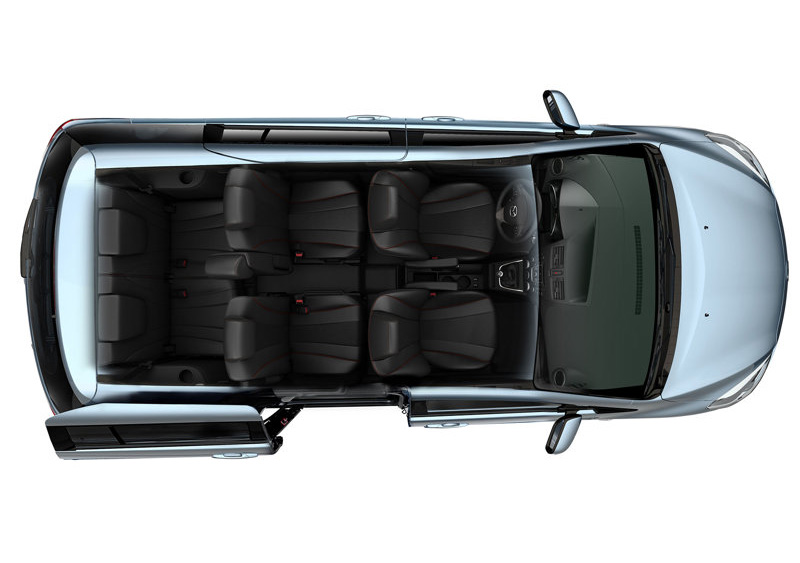
The new Mazda 5 features an emotional design that blends elegance with a dynamic spirit. It will be the first Mazda production model to fully adopt Mazda's Nagare (meaning "flow" in Japanese) design language, which finds inspiration in the beauty of flows found in nature. Nagare design has appeared in certain elements of recent production models and was previously showcased through a series of concept cars. The new Mazda 5's design achieves excellent aerodynamic characteristics with an outstanding drag coefficient and lift balance. In order to meet wide-ranging customer requirements, it also offers a high level of functionality, with dual sliding rear doors and multiple seat arrangements. This includes a karakuri second-row center seat that can be converted to a versatile storage space. With a sportier and smoother ride, the new Mazda 5 responds precisely to the driver's commands, enabling the whole family to travel in comfort and security.

Based on its long-term vision for technology development, Sustainable Zoom-Zoom, Mazda is striving to improve the eco-friendly performance of its products. Whether stuck in traffic or cruising on the highway, the all-new Mazda 5 with 2.0L direct injection gasoline engine and i-stop significantly reduces CO2 emissions thanks to the effective combination of i-stop, the high combustion efficiency provided by direct injection, and a six-speed manual transmission with optimized gear ratios. The new Mazda 5 cuts CO2 emissions by roughly 15 percent compared to the model it replaces and provides a more comfortable ride with linear and smooth performance characteristics. It is now one of the most eco-friendly minivans in its class in Europe.

The new Mazda 5's green credentials are further enhanced by its other available powertrains, which include a 1.8L gasoline engine mated to a six-speed manual transmission.

Commenting on the development concept, Hideki Matsuoka, the Mazda 5 program manager, said, "The all-new Mazda 5 meets the many needs of today's customers. In a single model, we offer the competitive eco-performance necessary to address current market trends together with our distinctive, emotional design. The Mazda 5 features outstanding functionality with sliding rear doors and multiple seat arrangements, and it delivers fantastic comfort with a linear and smooth ride that responds precisely as the driver intends."
Read More

Sunday, August 5, 2012

LCC Lightning GT Concept, 2008


  •  LCC Lightning GT Concept, 2008

In June 2007, The Lightning Car Company announced its intent to develop electric technology for a luxury British sports car - the Lightning GT. Today sees the unveiling of its evolutionary design. This super car with its outstanding presence & performance is set to put British sports car innovation well and truly back on the map.

Designed to accommodate the latest battery and motor technology and reflect its 100% electric power and performance, the electric Lightning prototype is being hand-built by a small team of passionate British engineers, designers and collaborators.

Whilst the rest of the automotive world engages in the hybrid, hydrogen or electric debate, the Lightning Car Company firmly believes its 100% Electric Lightning GT will help kick start the market for performance EV's. Without a significant positive shift in perception, electric motoring will remain a huge compromise in the eyes of driving enthusiasts and therefore fail to impress the masses. Our vision is shared by the world's biggest car maker, General Motors, who believes the global oil supply has peaked and a switch to electric cars is inevitable...

The design team has created a successor to the petrol Lightning GT. Combining the spirit, heritage, individuality and drama of the original car with a dynamic and contemporary design language moves it into a new era and, in doing so, embraces the new technologies and innovative architecture that reside beneath its skin. Subtle creases, positive and negative sections add a sense of strength and finesse to the dramatic surfaces of the car while retaining an understated, yet distinctive British Grand Tourer aesthetic. The Lightning's interior will also be designed to complement the unique electric driving experience.
With the build of the prototype well underway, we should see how this translates into the 'real thing' during the second half of 2008. The electric Lightning GT and Sports versions are now available to pre-order and deposits of £15,000 are being accepted.

THE ELECTRIC LIGHTNING - DESIGN FEATURES
The vehicle proportion has been retained yet exaggerated, enhancing the dramatic volumes of the car. A reduction of visual mass through the corners of the vehicle has assisted creating a more dynamic shape in keeping with the lightweight ethos of the vehicle.

The Carbon skin appears to be draped over the revised chassis architecture and wheels creating powerful arch bulges and undulations within the surfaces. These augment the sense of drama and character, enhancing the visual strength of the vehicle.
Feature creases run from front to rear of the car accelerating your eye through the surfaces generating a subtle nose forward movement while linking key functional areas.

The iconic head fairings have been retained and revised carbon panels form exit air vents. Vents in the bonnet and side surfaces hint at the performance credentials of the car while adding visual continuity, interest and cooling of the power source.
The "face" of the car has been reinterpreted to generate a stronger, more contemporary shape. The light cluster design follows the crease line forming an aggressive feature while the revised "mouth" encases feature fog lamps.

In place of the exhaust housing is a down force generating sculptured diffuser. Rear lamps are inset into a Carbon fibre graphic adding sophistication while generating a signature rear shape. The overall design appears lower, wider and more muscular than its predecessor hinting at superior aggression and performance characteristics.c amber that echoes the vibrant ochre hues found in Africa; eye-catching whether exploring mountain tracks, breezing along a beach or cruising through town.

The Interior
Functionality and usability are two key characteristics of Land Rover interiors - the position and logic of every control should be obvious the moment the driver enters. The concepts take this premise and address it in a truly contemporary way.

The form and function of the concepts are visually integrated in the interior layout; the door structure flows into the cabin before forming an elegant beam running the width of the dash. This means that the concepts can recreate the Series 1 three-abreast seating layout.

Social Seating
This seating arrangement, as well as creating a more social vehicle, extends its versatility. The passenger seat can be folded out of the way to increase carrying capacity. The middle seat conceals a large secure storage area while in front of it is a machined aluminium tray which contains induction charging technology to power electronic devices.

The innovative layout is particularly space-efficient, allowing for integrated storage areas both above and below the central beam and for the gearlever to be mounted on the centre console. This reduces the time the driver's hand is away from the wheel while changing gear, increasing control during off-road or high-speed driving.

Multi-functional Removable Touchscreen
Like the original Land Rovers, the DC100 concepts have a central instrument binnacle mounted above the gear lever. Combining the informatics functions of an instrument panel with an intuitive touchscreen interface, the unit is backed by powerful telematics technology that co-ordinates the ground-breaking technologies to be found in these concepts.
All of the concepts' functions can be controlled via this interface, using a combination of swipe and press gestures on the touchscreen. The steering wheel includes four shortcut keys that reconfigure the touchscreen to control functions such as navigation, audio and climate.

The control unit is removable from the concepts to extend its functionality. Finished in shock and water-resistant silicon and equipped with its own power source, camera and satellite connectivity, this allows it to be used as a portable navigation tool with an internal hard drive that can record waypoints, HD video footage and stills images.

Sustainable Materials
The cabins of both concepts have been finished with materials that share certain rugged, durable qualities. All these have been chosen for their sustainability both in terms of composition and manufacture, such as seat foam derived from castor oil - a first for a European manufacturer - and semi-structural panels and sound insulating boards made from flax and natural polymers.

Premium Performance
Taking its cue from technical sportswear, DC100 uses the latest generation of performance materials to create an interior of premium quality that is adaptable and hardwearing. The beam running the width of the cabin, door panels and seat bolsters are trimmed in Obsidian Grey and Carbon Black Ultrafabric, a technical cloth found on designer furniture and super yachts. Ultrafabric is not only antimicrobial, water-repellent, breathable and resistant to solar ageing, it is also PVC-free, low in volatile organic compounds and lightweight, making it a very sustainable product.

Complementing this is Superfabric, an almost indestructible textile with a premium feel. Normally found in protective clothing for extreme environments - including spacesuits - DC100 uses it on the seat cushions and to line the footwells and rear load space. The base fabric is 100 per cent recycled and the printed plate is made of eco-friendly non-toxic materials. Aluminium also features extensively and as a trim material - such as the drains in the fully washable rear load bed - it is made of 100 per cent recycled metal.

Traditional Toughness
DC100 Sport achieves the same singularity of purpose with a mixture of ultra-modern and traditional materials. The seats are trimmed in the original protective material; leather, with a lightweight, breathable mesh insert in a bold Tribal Tech pattern. The hide, itself a by-product, is sourced from Bridge of Weir, a Scottish company with impeccable environmental credentials that make it 97 per cent self-sufficient. The hide is covered with a 3D-textured mesh that alternately reveals and hides the Tribal Tech pattern.
The Tribal pattern is repeated on the floor of DC100 Sport where floor mats are made of Ombrae, a sculptural medium used in art installations and modern architecture. This dynamic 3D material changes its appearance through the use of light and shadow, depending on the angle from which it is viewed. The same pattern is also echoed in the hand-cut Pirelli tyres.

Adaptable Interior
The concepts' outward modularity is repeated in the interior where the door canisters can be configured according to requirements with options ranging from portable barbecue sets to field first-aid kits.
This inclusion of technology extends to the rear of the two concepts with cutting-edge features in the fully configurable load spaces. Down the centre of each is an aluminium inductive charging strip which in the DC100 Sport is used to either chill or heat a removable compartment - perfect for picnics on the beach or hot drinks on the slopes - while the remaining space has been designed to accommodate three kite surf boards.

In DC100 the inductive strip can be used to charge a range of power tools on the move, with supplementary equipment carried in flanking canisters. A further charging area to one side is used in DC100 Sport for charging a bespoke removable speaker system from audio specialists Meridian that wirelessly streams music from concept to cabana. In DC100 this feature can be used to charge communication equipment or laptops.

Technology and Capability
These two concepts showcase the next generation of technologies that will extend Land Rover's reputation for legendary all-terrain prowess and 365 day-a-year usability.

21st Century Capabilities
As with any Land Rover, both DC100 designs have towing and load-carrying capabilities that exceed expectations but use two different and well-proven Land Rover suspension systems specifically tailored to their distinct performance parameters.
DC100 uses a development of the existing air suspension system that allows ride height to be altered by up to 320mm for extreme approach and departure angles, axle articulation and ground clearance. The DC100 Sport's performance remit sees it use the third-generation MagneRide adjustable suspension for sports car like on-road handling while losing little in all-terrain ability.

Auto Terrain Response
Powerful new off-road tools will extend the capabilities of the much-praised Land Rover Terrain Response programme to allow it to automatically optimise the concepts for any environment without driver pre-selection. The system combines data from sensors that assess suspension travel, steering angle, wheel slip and braking and acceleration inputs to allow the vehicle to react by continuously and unobtrusively altering spring, damper, gearing and power delivery parameters.

Terrain Response on the Land Rover DC100 concepts also features High-Definition cameras mounted on the front to analyse the visual spectrum of the ground ahead. This is then compared to images stored within a predictive neural network and allows the system to visually determine, for example, the difference between sand, grass, mud, gravel, snow and asphalt. Terrain Response can then actively alter the off-road performance parameters.

Intelligent Terrain Mapping
Acting as an early-warning system is the state-of-the-art Terrain-i mapper that creates a virtual 3D visualisation of the ground ahead and displays it on the central touchscreen. Similar to systems used by fighter pilots, Terrain-i uses a headlamp-mounted scanner that runs complex algorithms to assess the route ahead and warn the driver of obstacles potentially too large to be safely negotiated.

Instead Terrain-i will suggest alternatives, displaying the safe route on the central screen. Cameras mounted on each corner of the concepts, giving the driver a 360-degree field of vision of the immediate vehicle environs, supplement the system.

Terrain-i also plays a vital support role to the driver in crowded urban environments where the intelligent 3D scanner can identify pedestrians and other hazards with far greater accuracy than current systems. This can initially warn the driver and, if avoiding action is not taken, safely stop the vehicle.

Wade Aid
Land Rover has developed a sonar-based system for assessing water depth that allows the driver to make informed decisions as to whether to proceed into flooded areas.
The system utilises sensors mounted in the bumpers and wing mirrors. These are able to measure depth and by working in conjunction with inclinometers recognise whether the level is increasing or decreasing. All this information is displayed in an intuitive graphic on the central touchscreen.
The system will also automatically optimise the concept for a water crossing by raising the ride height, closing body vents, selecting a lower gear to maintain engine revs and advising on the optimum speed for the depth of water, allowing a maximum wading depth of 750mm.

On-Demand Spiked Tyres
Further allowing the concepts to adjust to changing conditions is a driver-deployable spiked tyre system. This is operated by an electro-mechanical system mounted within the tyre on the inside of the wheel; activation of the technology causes air to inflate a secondary air chamber, filling pods moulded into the tread of the tyre which contain the spikes. The spikes rise just above the tread surface and fix into place for driving on packed snow and ice. When conditions have eased, the spikes can be retracted, obviating the need to carry two sets of tyres or snow chains.

Telematics
Underpinning these systems is a powerful telematics programme that seamlessly integrates many of the vehicle functions and presents information to the driver in the clearest, most straightforward manner.
In addition to this, the telematics allow communication between the concepts and a smartphone or laptop, letting the owner to check everything from the tyre pressures to the cabin temperature and, for instance, operate the climate control remotely.

In addition, the telematics system can store data from every one of the car's journeys and download them for comparison. So, for instance, information from the Wade Aid system could chart changes in water depth or data from the traction control could be used to assess the rate of terrain erosion.
The system also has full on-the-move connectivity via 3G and satellite and can deliver not just traffic alerts but also weather warnings for remoter areas.

Leisure Key
Land Rover prides itself on offering solutions to everyday as well as extraordinary situations. Land Rover has adopted Radio Frequency Identification (RFID) technology to increase the accessibility, usability and security of the concepts.
The concepts come with a set of RFID chips built into impact and water resistant items such as wristbands and watches. These allow the main key fob to be left in a slot in the glovebox, which deactivates it and transfers its lock and unlock functions to the rugged RFID chip. Once the system is armed and the car secured, only that specific RFID smart tag will allow it to be unlocked and reactivate the key fob.

Future developments of the system will allow each family member to have their own smart tag, which would save their personal audio, climate, communication and seating settings. This would also allow parents to restrict vehicle power and speed when their children used it. Third-generation smart tags could also include biometric data that would use facial systems to increase security.

Park Assist
Extending the DC100 Sport's capabilities in the urban environment is a Park Assist system, which parallel parks the concept with minimal input from the driver. Sensors scan the side of the road to select a suitably sized space. If the driver confirms the selection, the DC100 Sport can then reverse into the space, performing all the steering functions automatically while the driver retains control over the brakes and accelerator.

Drivetrain
Land Rover is actively researching the next generation of powertrains appropriate to the extreme uses and environmental challenges to which its cars are put. In association with research centres, suppliers and universities, the company is looking at a wide range of options to reduce fuel consumption and CO2 emissions.

Intelligent Stop/Start
The eight-speed ZF automatic transmission, with Intelligent Stop/Start fitted to the two concepts represents the first stage in Land Rover's programme to introduce suitable, sustainable technology.
Designed with future hybridisation in mind, the gearbox utilises the Twin Solenoid Starter system that offers considerable benefits over more conventional Stop/Start technologies such as the ability to restart the engine during its rundown phase. The addition of a transfer case for a wide spread of ratios and wheel-mounted paddles for manual selection allow for great control both on and off road.

Appropriate Powertrains
Both concepts are powered by variations of a 2.0-litre four-cylinder engine. The go-anywhere DC100 is diesel-powered for maximum mud-plugging torque while the more performance-biased DC100 Sport is petrol-powered for a sportier drive. Both engines are capable of being configured as parallel or plug-in hybrids, as appropriate to their role.

Torque Vectoring
A new electronic torque vectoring system greatly extends the stability, traction and handling of the DC100 concepts on any surface. As opposed to purely mechanical differentials, those designed for torque vectoring use electronic control systems to channel specific amounts of power to each individual wheel.

In on-road driving situations this allows for both a sportier and safer drive, with the torque vectoring acting to further enhance vehicle performance by working in conjunction with stability programmes. During off-road driving, torque vectoring confers even greater benefits, being able to infinitely and instantaneously send torque to whichever combination of the four wheels has the most grip.

Driveline Disconnect
Driveline Disconnect reduces friction losses by sending drive to the front axle only unless conditions dictate that all-wheel drive is required. Unlike conventional switchable four-wheel drive, which reroutes engine power electronically, the Land Rover system physically decouples the rear propshaft from the centre differential for greater efficiency benefits with potential fuel savings of up to 7 per cent. The system can recouple and send drive to the rear wheels when it detects a loss of traction as swiftly as an electronic programme.
Read More

Land Rover Range Rover Sport, 2012


Land Rover Range Rover Sport, 2012

The exceptional 3.0-litre V6 diesel engines in the iconic Land Rover Range Rover Sport now offer even greater efficiencies, with reduced CO2, improved fuel economy and an increase in power for 2012. The output of the more powerful 245PS engine has been increased to 256PS with CO2 emissions reduced from 243g/km to 230g/km; whilst CO2 emissions for the entry level 211PS engine have been substantially reduced from 243g/km to 224g/km, thanks to a low-flow fuel injection system.

These improvements are partly due to the introduction of the new, highly-efficient, ZF 8HP70, 8-speed automatic gearbox, combining smooth shifting and improved fuel economy. The combined fuel consumption for the 211PS engine has been reduced from 30.7mpg to 33.2mpg and the 256PS engine from 30.7mpg to 32.1mpg. In conjunction with the new 8-speed gearbox, the Range Rover Sport comes equipped with the rotary gear shift selector and steering wheel-mounted paddle shift.

The awe-inspiring 5.0 LR-V8 Supercharged remains unchanged for 2012, continuing to offer supreme power and sublime refinement.

All EU5 models are equipped with a diesel particulate filter (DPF) making them among the cleanest diesel engines on the market.

The European markets and countries still conforming to EU4 regulations, will receive the existing 245PS version of the LR-SDV6 3.0, equipped with the ultra-refined 6-speed automatic transmission with command shift.

Design and equipment levels have moved up a level too with exterior colour changes to detailing, and new interior colour ways for the Autobiography Sport and Limited Edition. A new powered tailgate has also been introduced for the majority of markets across the range for 2012, enabling drivers to set their desired lift height.

For the first time on the Land Rover Range Rover Sport, the next generation 7-inch touch-screen is included with optional Dual View technology, allowing the driver to view the navigation display whilst the passenger watches a DVD. The rear seat entertainment package has also been enhanced with the availability of WhiteFireTM wireless technology.

Significant specification and performance improvements have been made to the Hi-ICE and Premium audio systems which have been upgraded to the MOST Gen 2.1 electrical architecture, offering a staggering 825W of power through 17 speakers on the Premium Harman Kardon LOGIC 7. The new 'Say What You See' voice command on premium systems helps the driver learn commands with useful step-by-step screen prompts and allows the use of spoken short codes too.

More power and reduced emissions
The latest version of the entry level 3.0 LR-TDV6 diesel delivers 211PS at 4,000rpm and 520Nm torque at 2,000rpm with CO2 emissions reduced from 243g/km to 224g/km thanks partly to a new, low-flow fuel injection system. Output of the 245PS engine has been increased to 256PS at 4,000rpm with maximum torque of 600Nm at 2,000rpm and a reduction in CO2 from 243g/km to 230g/km.

Both versions of the 3.0-litre diesel are equipped with the same parallel sequential turbocharging system. Throttle response is staggering with maximum torque available from only 2,000rpm. The 3.0-litre diesel can significantly out perform its rivals by delivering 500Nm in only 500 milliseconds from idle. This means drivers have instantaneous access to 83 percent of maximum torque. When it was introduced in 2010, the parallel sequential turbocharging system was the first of its kind to be fitted to a V-engine anywhere in the world. The twin turbochargers work sequentially to provide best in class torque at low speeds and pack a huge punch at high speeds.

Driving a turbocharger requires pressure from the exhaust, creating pumping losses in the engine and increasing fuel consumption. To minimise this effect, valves isolate the secondary turbocharger both from the exhaust stream and the engine inlet tract when it is not required. A balance pipe connecting the two manifolds allows the gas from both manifolds to feed through the primary turbocharger. A variable geometry, medium-sized turbocharger is in use most of the time during average acceleration and up to motorway cruising speeds and performs with no discernible lag. It is a more efficient system than series turbocharging in which the smaller primary turbo increases pumping losses.

The 3.0-litre diesel set new standards of refinement and fuel economy with its third generation common rail fuel injection system. Operating at 2,000bar, the piezo injectors are designed to minimise noise while optimising combustion. The system operates in 'metering mode' supplying just the right amount of fuel to the injectors rather than returning it to the tank and wasting pumping energy in the process. All diesel models are now fitted with a DPF and have an advanced EGR system to reduce NOx."The improvements to the 3.0 LR-TDV6 engine enhance the Range Rover Sport even further to continue to deliver the kind of stunning performance Range Rover Sport customers have come to expect,"said Paul Walker, Chief Programme Engineer.

Highly-efficient ZF 8HP70 automatic gearbox
Fitted to EU5 versions of the 3.0-litre diesel engine, the remarkable ZF 8HP70 transmission delivers unrivalled response for driving pleasure while driving fuel consumption and CO2 emissions down to an all-time low. Eight speeds provide closer ratios and a greater overall ratio spread, while the higher overdrive ratio compliments the huge torque of the 3.0 LR-SDV6, reducing fuel consumption and CO2 emissions. Efficiency is further improved by the internal mechanical layout of the 8HP70 which means that no more than two internal clutches are open at any one time.

The 8HP70 is packed with energy saving features. The hydraulic actuating system is more efficient too, the hydraulic pump drawing less energy from the engine. The torque converter is calibrated to lock-up at lower speeds and operating temperature, reducing fuel consumption and once again taking advantage of the 3.0-litre diese engine's immense low-end torque. Transmission Idle Control seamlessly and transparently selects neutral when the car is stationary and the engine idling in drive, reducing drag on the engine and saving fuel. The 8HP70 has brains too. In hot conditions it selects a lower gear to run the engine and air conditioning pumps faster to cool down the cabin quickly. In cold conditions it runs the engine faster to reduce warm-up time and emissions.

Apart from CO2-busting efficiency improvements, the 8HP70 offers performance benefits too. Taking just 200 milliseconds to complete the entire shift event, the 8HP70 gears change with an imperceptible interruption of torque for smoothness equalling that of a dual-clutch transmission, while providing a more sophisticated driving experience. The 8HP70 matches the engine speed to its turbine speed in anticipation of oncoming downshifts for an absolutely smooth transition from one ratio to the next. Closer ratios also contribute to making individual shifts smoother.

Driver Type Detection monitors driver inputs and the car's systems to optimise the response of the gearbox to the driver's style, while Curve Detection makes sure the gearbox avoids unwanted upshifts and holds on to the same gear when taking a sequence of bends. The gearbox also monitors the driver's use of the brake together with the rate of deceleration to set up the correct gear for entry and exit to the corner. The 8HP70 does not have to change to a lower gear sequentially and can skip up to six ratios if necessary, for much faster response when preparing to overtake.

Driver controls include steering wheel paddles as standard enabling the driver to take control of gear shifting manually. The CommandShift lever is replaced by a rotary knob for selecting park, reverse, neutral, drive or sport modes, the last of these optimising the gearbox response times for maximum acceleration, improved response and sharper upshifts. The selector knob is flush with the centre console when the ignition is switched off, rising up when it is switched on. To avoid confusion, the Terrain Response Rotary Switch is replaced by a new Terrain Response Optimisation Switch."The new 8-speed transmission is a perfect match for our 3.0-litre diesel engine. The additional ratios combined with skip shifts mean the engine is always working in the most efficient part of its operating range," said Paul Walker, Chief Programme Engineer.

5.0 LR-V8 supercharged and 5.0 LR-V8 naturally aspirated petrol engines continue to lead the pack
Land Rover's remarkable 5.0 LR-V8 petrol engines continue to head the Range Rover Sport powertrain range in 2012. With the supercharged version developing 510PS and 625Nm torque and the naturally aspirated version, 375PS and 510Nm torque, they set new standards in petrol engine design when first introduced, packed as they are with innovation design features aimed at boosting both performance and economy. Despite the supreme levels of power and torque, the 5.0 LR-V8 naturally aspirated meets both the European EU5 and ULEV 2 emissions standards and has CO2 emissions of 327g/km. The 5.0 LR-V8 supercharged is just as efficient with CO2 emissions of only 348g/km.

The centrally-mounted, multi-hole, spray-guided fuel injection system delivers fuel at a pressure of up to 2175psi(150bar) directly to each cylinder. The injectors are positioned to deliver fuel precisely to the centre of the combustion chamber for maximum air-fuel mixing and accurate combustion control. The charge cooling effects of the direct injection system allow a high compression ratio of 11.5:1 which further improves engine efficiency. During the engine warm-up phase, the combustion system employs multiple injection mode strategies to deliver 50 percent more heat for fast catalyst warm-up and substantially reduced emissions.

On the supercharged engine, a sixth-generation, twin-vortex system (TVS) supercharger feeds air through twin intercoolers, water-cooled by their own discrete cooling circuit. The high-helix rotor design improves the supercharger's thermodynamic efficiency and does away with traditional supercharger whine, making it almost inaudible. Air is delivered through twin air boxes, which reduce flow loss and are highly efficient. Mechanically, the new supercharger and its intercoolers are neatly packaged in the V of the engine, helping reduce engine height.

A number of other design features include the industry-first, torque-actuated variable camshaft timing on all four cams. Unlike conventional systems, these are actuated by the positive and negative torques generated by the opening and closing of the valves, rather than oil pressure, reducing energy consumption. Torque and power is also optimised by a variable inlet manifold which changes the length of its eight inlet tracts.

The manifold switches between a 680mm inlet tract to provide high torque at low revs and a 350mm inlet path allowing maximum power at high revs. The precise position is optimised throughout the rev range at all times. The engine also features a unique reverse flow cooling system where coolant passes through the cylinder heads before the block. This allows the heads to remain cooler and the knock threshold is pushed further back for greater efficiency. On the naturally aspirated engine only, cam profile switching (CPS) selects either a profile suitable for low speed running or another which gives increased lift for high performance. This provides the Land Rover Range Rover Sport with exceptional low-end torque to negotiate demanding terrain and allows it to become fleet of foot when conditions allow.

An oil to water heat exchanger also transfers heat from the coolant to the engine oil. These features promote faster engine warm-up for reduced emissions and enables the cabin to warm-up faster too. Frictional losses have been reduced by the use of Diamond-Like Carbon Coating (DLC) on some components, an intelligent oil pump pressure relief valve (PRV) to optimise oil pressure and the use of lower viscosity 5W-20 oil further reduces parasitic losses without compromising durability."The 5.0 LR-V8 engines remain an industry benchmark following their introduction to the range in 2010, thanks to their dazzling performance and extremely high efficiency. For a performance SUV they are simply without peer and make ideal power units for the Range Rover Sport,"said Murray Dietsch, Director of Land Rover Programmes.

6-speed automatic transmission - responsive and refined
Both petrol engines are equipped with the ultra-refined ZF HP28 6-speed automatic transmission for 2012. Its characteristics have been optimised by Land Rover engineers to provide the same class-leading response and rapid, refined shifts on all engines. Their superior power and torque characteristics make it possible to actuate the transmission's lock-up clutches much earlier in each gear, reducing slip through the hydraulic torque converter, optimising both fuel consumption and CO2 emissions.

Advanced chassis, brakes and suspension
As standard on the Range Rover Sport 5.0 LR-V8 supercharged petrol and as an option on the 256PS 3.0 LR-TDV6 only, an Adaptive Dynamics system is available which operates in conjunction with the existing Dynamic Response system. With Adaptive Dynamics, DampTronic Valve Technology™ replaces conventional dampers and monitors damper pressure 500 times a second, continuously adapting to surface conditions and driving style thanks to an active valve technology. The chassis is complemented by high performance braking systems which include four-piston opposed calliper front disc brakes on the diesel models and lightweight aluminium, six-piston Brembo callipers for the supercharged models. A variable ratio steering rack improves stability in high speed cruising and increases driver involvement on twisting roads. The high performance character of the Range Rover Sport chassis is further emphasised by the Roll Stability Control system which responds to steering inputs from the driver and intervenes by braking individual wheels if the possibility of a rollover is detected.

Off-road ability still the best in class
When it comes to off-road ability, Land Rover vehicles are acknowledged as setting the standards for others to follow. In 2011, two additional functions were added, Hill Start Assist and Gradient Acceleration Control.

Hill Start Assistretains the initial driver-generated brake pressure, long enough for the foot to move from brake pedal to throttle without the car rolling backwards. The brake is released after a sufficient time has elapsed or when the engine is supplying enough torque to move the car up the hill. Hill Start Assist is always available, not selectable, and neither is its operation indicated to the driver.

Gradient Acceleration Controlis designed to provide safety cover on severe gradients when the driver does not have Hill Descent Control engaged. By pressurising the brake system, Gradient Acceleration Control slows the car to a limit determined by the throttle position when the car is descending the slope in the driver's intended direction of travel. This includes descending the slope forwards in drive, or rearwards in reverse. Otherwise (such as descending while facing up the gradient with Drive selected) Gradient Acceleration Control restricts speed to 5km/h (3.1mph) for up to 20 seconds, allowing the driver to regain proper control."These new features enhance the outstanding ability of the Land Rover Range Rover Sport off-road while continuing to deliver an intoxicating driving experience on-road. They also deliver an added layer of safety and support to drivers who want to discover what their vehicle is really capable of,"said Nick Veale, Vehicle Engineering Manager.

Powered tailgate for greater convenience
A new powered tailgate has been introduced for the majority of markets across the range for 2012. Operated by the button located on the fascia, the key fob or tailgate, the lift height can now be set by simply holding the tailgate at the desired height and pressing the tailgate button for 10 seconds. The height can be overridden to accommodate other drivers, providing effortless use and greater convenience to the user.

Enhanced interior and external design revisions across the range
The external design and interiors of the Range Rover Sport, Autobiography Sport and Limited Edition are all upgraded for 2012.

For the Range Rover Sport, there are changes to the rear tailgate graphics to create a distinctive new look and a Gloss Black treatment to the headlight inners and grille surround. The S and SE derivatives now sport a Dark Atlas grille whilst the HSE takes on the Light Atlas. The Supercharged model can now be fitted with a new 20" alloy wheel option finished in Sparkle Silver with high-gloss lacquer and adopts the Atlas grille surround. The Limited Edition is equipped with the Gloss Black five-spoke wheels with Diamond Turned face. Interior colour ways on both the Autobiography Sport and Limited Edition have been refreshed for 2012 with a headlining option of Ebony Morzine joining the interior line-up. Subtly revised colour schemes to the grille and fender vents, bonnet badges and tow-eye, as well as body colour door handles, have been made across the range.

Infotainment levels significantly upgraded
The introduction of MOST Gen 2.1 electrical architecture to the Hi-ICE and Premium audio and infotainment systems sees a significant upgrade for the 2012 Range Rover Sport. There's new connectivity supporting DVD audio formats on the Hi-Line and Premium systems, a Hard Disc Drive Music server, Dual Tuner to give a seamless signal, iPod and video streaming by USB, audio streaming by Bluetooth and two USB ports are located in the console lid. Rear seat entertainment is further enhanced with the availability of WhiteFireTM wireless technology incorporating cordless headphones. The Hi-ICE Harman Kardon System has been upgraded from 9-speakers to 11-speakers and the output boosted from 240W to a substantial 380W. The Premium Harman Kardon LOGIC 7 system has seen the most dramatic improvement, from 14 to 17 speakers and an almost unbelievable increase in output power from 480W to a staggering 825W.

For the first time on a Land Rover Range Rover Sport, the next generation 7-inch touch-screen offers Dual View technology. Dual View first appeared on the Range Rover for 2010, allowing the driver to view the navigation display whilst the passenger watches a DVD.

Hard Disc Navigation systems include Traffic Message Channel (TMC) and destination entry by voice. The new 'Say What You See' voice command on premium systems helps the driver learn commands with useful step-by-step screen prompts and allows the use of spoken short codes. There's also a new 7-day timer for the Park Heater.

Luxury Pack
An optional Luxury Pack is available on the 3.0 TDV6 HSE bringing equipment levels close to that of Supercharged models. The pack includes contrast stitching on selected upholstery, 20-inch alloy wheels, Premium ICE, extended leather pack, HSE Luxury badge, heated steering wheel and adaptive cruise control.

e_terrain technologies boost economy and lower CO2 emissions
The new Range Rover Sport is laden with features aimed at reducing both fuel consumption and CO2 emissions. Both the 256PS and 211PS versions of the LR-TDV6 3.0 Sequential Turbo Diesel engine are designed to deliver class-leading fuel economy and improved low-end torque.

The parallel sequential turbocharging system of the 3.0-litre diesel makes use of its larger, primary turbo most of the time. The smaller secondary turbo remains dormant when higher power is not required, reducing pumping losses and consequently, fuel consumption. The highly efficient, third generation common rail injection system with piezo injectors and fuel metering, also makes a substantial contribution to fuel economy.

The high pressure, spray guided direct injection system of the 5.0 LR-V8 optimises combustion while the variable camshaft timing system, camshaft profile switching (naturally aspirated only) and variable inlet manifold all join forces to ensure the engines are optimised for fuel efficiency throughout the range. Thanks to the advanced cooling system, faster warm-up also improves fuel economy as do the low friction design features.

All engines have been optimised for low-end torque as well as economy, making it possible to activate the lock-up clutch of both the ZF 8HP70 and the 6HP28 automatic transmission at lower speed. This reduces 'slip' in the hydraulic torque converter improving both fuel consumption and CO2 emissions. The higher torque at lower rpm also enables longer gearing for more economical cruising.

The Land Rover Range Rover Sport incorporates several other energy saving features too. At standstill, the idle speed of the 3.0 LR-TDV6 is a low 710rpm and the 5.0 LR-V8 supercharged, 700rpm, using the minimum of fuel without compromising refinement. An Intelligent Power Management System includes Smart Regenerative Charging, so whenever possible the alternator charges the battery when it is most economical to do so, such as when the car is coasting rather than accelerating.

Aerodynamic features at the front end such as the lower chin spoiler and front wheel deflectors help to reduce drag by increasing underfloor airflow. The air conditioning pump is driven through a clutch which disengages when the air conditioning is not in use reducing parasitic losses and delivering improvements in fuel consumption and CO2 emissions.
Read More