Wednesday, May 1, 2013

Toyota Auris Touring Sports, 2013


  •  Toyota Auris Touring Sports, 2013

The new Toyota Auris Touring Sports adds a popular wagon body style to the model range's comprehensive choice of powertrains. It is the first wagon in the segment available with a full hybrid powertrain, representing a further diversification of Toyota's application of its Hybrid Synergy Drive technology.

The new Toyota Auris Touring Sports combines dynamic design with segment-best functionality and superior loadspace. With battery located beneath the rear seats, the installation of the HSD powertrain offers no compromise to either loadspace or luggage capacity.

Wagon variants currently represent 25% of the C-segment sales mix, with 76% of those sales attributed to the fleet market. The new Auris Touring Sports will further broaden the appeal of the Auris range, helping to increase the model's segment share to over 5.0% by 2014, its first full year of European sales.

Design and Packaging
Sharing its 2,600 mm wheelbase and 10.4 metre turning circle, the Toyota Auris Touring Sports is 285 mm longer than the hatchback, all of which is dedicated to the extended loadspace.

Rear seats in place, the loadspace is 1115 mm long and 1452 mm wide with a superior capacity of 530 litres. With the rear seats folded flat, loadspace length increases to a maximum length of 2047 mm, a maximum height of up to 890 mm and a class-leading total capacity of 1658 litres.

The superior luggage capacity is matched by segment-best functionality. The Toyota Auris Touring Sports is the only C-segment wagon to offer customers the combined benefits of Toyota's Easy Flat, one-touch foldable rear seats, a double level loadspace floor, a two-way tonneau cover, a roller-type luggage net, shopping bag hooks, aluminium roof rails and a 12 V outlet in the luggage compartment.

As with the new hatchback, the Toyota Auris Touring Sports' bold, dynamic exterior design maximises the aerodynamic benefits of the model's reduction in overall height, and the dynamic improvements offered by its lower centre of gravity.

The new Auris Touring Sports shares the hatchback's new frontal design, which combines Toyota's Under Priority design language with Keen Look detailing to give a powerful yet elegant road presence.

The Toyota Auris Touring Sports also shares the hatchback's steeply raked windscreen, which flows into an extended roofline featuring aluminium roof rails and an integral rear spoiler. At 1553 mm long by 960 mm wide, the optional Skyview panoramic sunroof is one of the largest in the segment and further strengthens the impression of roominess created by the all-new interior.

The extended, three-panel side glazing features blacked-out pillars, including a piano black finish to the B pillar, and is underscored by chrome-accented trim above the bodywork's powerful, rising beltline crease.

To the rear, the Toyota Auris Touring Sports features a new bumper and tailgate design, with the loadspace sill set 100 mm lower than that of the hatchback, above a chrome floating rear spoiler. As with the rest of the Auris range, a new, wraparound rear combination lamp design reinforces the shape of the rear wing, new D pillar design and rear screen.

Driving Performance
Reinforcing Toyota's commitment to improving the dynamic abilities of its vehicles to offer customers a more engaging driving experience, the Auris Touring Sports benefits from all the improvements made to the new Auris hatchback.

If features an increase in bodyshell rigidity, a lower centre of gravity, enhancements to suspension and steering, a better driving position and improved NVH characteristics to offer drivers a more comfortable and engaging driving experience.

The Toyota Auris Touring Sports will be available with the same engine range as the Auris hatchback; a choice of 1.33 litre Dual VVT-i and 1.6 litre Valvematic petrol engines, improved 1.4 litre and 2.0 litre D-4D diesel engines, and the first full hybrid powertrain in the C-segment wagon market.

Capable of operating both independently and in combination, the HSD system's 1.8 litre VVT-i petrol engine and electric motor generate a maximum power output of 136 DIN hp (100 kW), equipping the Auris Hybrid Touring Sports with a 0-100 km/h acceleration time of 10.9 seconds and a maximum speed of 180 km/h.

Conversely, the Toyota Auris Touring Sports full hybrid returns class-leading CO2 emissions of only 86 g/km, and significantly lower NOx and NO particulate emissions than diesel engined cars of comparable performance.

In conjunction with Toyota's Stop & Start technology and an advanced Multidrive S transmission, CO2 emissions are highly competitive across the entire Auris Touring Sports engine range. The 1.33 and 1.6 litre petrol engines generate 127 and 139 g/km respectively, the 2.0 litre diesel 115 g/km, and the 1.4 litre diesel just 109 g/km.
Read More

Tuesday, April 30, 2013

Suzuki S-Cross Concept, 2012


  •  Suzuki S-Cross Concept, 2012

At the 2012 Paris Motor Show, Suzuki has unveiled the S-Cross Concept car, which heralds the company's next-generation C-segment crossover model. The new crossover will be the first in an ambitious programme of annual European model launches which Suzuki will be starting in 2013.

Suzuki's future model strategy
Suzuki has established a reputation for producing cars which make everyday life more exciting. These cars reflect a brand strategy which is expressed through the company's slogan "Way of Life!" Suzuki has always been focusing on creating models - such as the Alto - which are characterised by small environmental footprints and low running costs thanks to exceptionally low fuel consumption and CO2 emissions. Going forwards, the company plans to launch models which exceed the environmental performance ceiling in their segments at an even higher level. The production model of the Suzuki S-Cross concept will be amongst the lowest CO2 emitting cars in the crossover C-segment.

The crossover pioneer
Since launching the Jimny (originally the LJ series) in 1970, Suzuki has expanded its line-up of off-road vehicles to include models such as the Vitara and Grand Vitara; earning the company a reputation as the pioneer of compact sport utility vehicles (SUVs). Meanwhile, Suzuki has gained incomparable know-how in the development of compact passenger cars. Since the latter half of the 1980s, the company has been refining its performance technologies in the field of motor sport. In 2006, Suzuki united its advanced technologies in the form of the SX4 sport crossover - a vehicle which offers relaxing city driving and great performance on snow and rough roads. With the SX4 Suzuki created the crossover category in Europe and has driven its growth. Suzuki is the crossover pioneer.

Smart Crossover for more freedom in daily life
The new model heralded by the S-Cross will mark Suzuki's full-scale entry into the market for C-segment crossovers.

The new vehicle's features and functions will be designed primarily for comfort. It will also offer a high degree of practicality by providing one of the largest luggage areas in the crossover c-segment.

Suzuki is also ensuring that the new crossover inherits the on-road handling and performance excellence of the Swift series, the SX4 and the Kizashi. And Suzuki is adopting systems which represent an evolution in the four-wheel-drive performance that is part and parcel of its heritage.

The new model will offer drivability which encompasses gentle, fuel-saving driving, sportier driving, and even driving on snow. It will maximise the enjoyment of day-to-day tasks such as commuting or carrying children, as well as the pleasure of longer trips at weekends; in short, it will allow people to get the most out of urban lifestyles. It will perfectly embody Suzuki's vision of a smart crossover for more freedom in daily life.

The new crossover will join the Alto, Splash, Swift, SX4, Kizashi, Jimny and Grand Vitara in a line-up which already includes A-, B- and D-segment passenger cars and SUVs. Suzuki will continue to expand its range to meet a wider range of user needs.

The design
Emotion is expressed by dynamic lines running from the front bumper to the rear of the body, by chrome-plated features which extend deep into the body from LED fog lamps in the front bumper, and by LED headlamps and tail lamps with organic designs suggesting the muscles of an animal.

Quality is expressed by a mesh front grille consisting of dark chrome and silky chrome and by innovatively designed roof rails which are flush with the roof line when not in use.

Aerodynamics is expressed by a roofline which slopes downwards towards the rear and by smooth contours on the sides of the front bumper, at the bottom of the doors and on the sides of the rear bumper. The shape of the body helps the vehicle meet increasingly tough demands for fuel economy.

Crossover toughness is expressed by a front skid plate, by boldly flared wing arches and under mouldings, and by 20-inch chrome wheels.

Body colour
A specially created Crystal Green Metallic body colour has intensity and radiance which create a dynamic impression in the minds of onlookers. The image it evokes is one of "nature in the city and the city in nature".

Specifications
  •     Overall length - 4,310 mm
  •     Overall width - 1,840 mm
  •     Overall height - 1,600 mm
  •     Wheelbase - 2,600 mm
  •     Tyres - 235/55R20
Read More

Monday, April 29, 2013

Subaru Impreza WRX Special Edition, 2013


  • Subaru Impreza WRX Special Edition, 2013

Subaru of America, Inc. revealed 2013 Subaru WRX and WRX STI Special Editions at the 2012 SEMA Show. The new models are in keeping with a long tradition of customized Subaru SEMA show cars - and just in time for Halloween. The Special Edition WRX and WRX STI models feature an "Orange and Black" custom paint scheme, with Tangerine Orange paint off-set with jet black custom wheels, black front fender badging and exterior mirrors. The Special Editions cars also receive black exterior graphics.

The Special Edition line-up is limited to just 200 WRX sedans and 100 WRX STI sedans. For a true custom look, the WRX Special Edition features the dark interior trim from the WRX STI, including a black headliner. The Special Edition orange interior is also applied to the stitching on the seats, doors and shift boot, and custom orange trimmed floor mats. The WRX STI also features front fog lamps.

On sale in spring of 2013, the Special Editions spice-up an already potent line up of AWD sports cars. Featuring Subaru BOXER engines, the WRX and WRX STI models develop 265hp and 305hp respectively. Delivering massive bang for the buck, the 2013 WRX Special Edition produces 244 lb.-ft. of peak torque at 4,000 rpm and running through its standard Subaru Symmetrical All-Wheel Drive. 

The 2013 WRX STI Special Edition delivers a rally-inspired driving experience with its 305-horsepower turbocharged BOXER engine, six-speed manual transmission and exclusive Multi-Mode Driver Controlled Center Differential (DCCD) version of Subaru Symmetrical All-Wheel Drive. The WRX STI is also equipped with Subaru Intelligent Drive (SI-DRIVE) and a Multi-Mode Vehicle Dynamics Control (VDC) system, the latter featuring a track performance-optimized mode.
Read More

Sunday, April 28, 2013

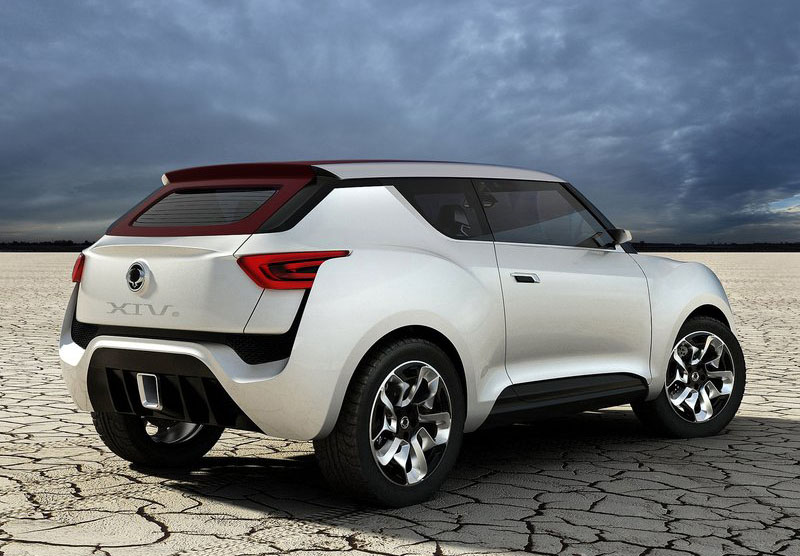
SsangYong XIV-2 Concept, 2012


  •  SsangYong XIV-2 Concept, 2012

SsangYong Motor Company is gaining a reputation in Europe for creative, futuristic and advanced designs, and at the 2012 Geneva Motor Show the 4x4 specialist will unveil its next groundbreaking concept.

Making its world debut at the 2012 Geneva Motor Show, the XIV-2 is a premium convertible CUV (crossover utility vehicle), and follows in the tracks of SsangYong XIV-1 Concept, first shown at the IAA in Frankfurt, September 2011.

Evolving the idea behind the first generation concept, SsangYong XIV-2 (eXciting User Interface Vehicle 2) has been developed into a vehicle that offers 'a special experience with fun'. Central to that fun element is an advanced convertible roof to give driver and passengers a rich 'wind in the hair' experience whether travelling on or off road.

XIV-2 is SsangYong's strategic global model, and has harnessed every element of the company's design and engineering expertise from its inception. B segment in size, this CUV retains at its core a dynamic, robust SUV and has been tailored through global design clinics to appeal to young drivers in their twenties.

Environmental considerations are also at the heart of SsangYong XIV-2's design, and the car equipped with various highly fuel efficient, low CO2 technologies:
    Euro VI compliant 1.6 petrol and diesel engines
    Efficient six speed manual or automatic transmission
    Idle Stop and Go (ISG)

Representing a strategic milestone for SsangYong, XIV-2 will be launched in various body styles including 5 door, 3 door, coupé and an extended body version.

Styling Concept
Embodying SsangYong's design philosophy of 'Robust Aesthetics Realisation', XIV-2 moves forward from the previous XIV-1 design with progressive styling cues. Showing how drivers can enjoy the aesthetics of an SUV along with the benefits of a B segment car, XIV-2's design combines the appeal of an active, urban model with the dynamic shape of a coupé.

In profile, the body blends fast, confident lines with strong themes creating a dynamic silhouette. Carbon fibre trim gives a sense of the SsangYong's nimble, lightweight feel while the aerodynamic shape will appeal to active young drivers.

SsangYong XIV-2 features a fabric roof with a one-touch automatic operating system to provide open air driving enjoyment with ease.

Inside, the concept's design continues the dynamic design with refined simplicity carried over from the XIV-1. Red colour highlights on the dials emphasise the SsangYong's dynamics, with every part of the cabin styled to enhance driving pleasure.

SsangYong XIV-2's cabin controls are integrated into one central system and managed using a centre console mounted screen. Smart and mobile devices use an Auto User Interface to provide passengers with a moving communication space. Maximum space is assured for occupants thanks to four independent bucket seats creating a comfortable and luxurious environment, and the car's colour palette works in harmony with specialist materials and finishes including aluminium and carbon fibre.

SsangYong's design philosophy focuses on conveying 'driving fun' through its experimental and progressive design spirit. Just as XIV-2 reflects SsangYong's design principle now, the same ethos will be displayed in all future concept vehicles.
Read More

Saturday, April 27, 2013

Spyker B6 Venator Concept, 2013


  •  Spyker B6 Venator Concept, 2013

The global resurgence of Spyker as a creator of meticulously built automobiles whose beauty is equaled by their unrivaled craftsmanship. The brand's revival is heralded by the introduction of the Spyker B6 Venator Concept, a unique alternative in the High Luxury Sports sector, at the 83rd Geneva International Motor Show. The Spyker B6 Venator Concept is a compact, 2-door mid-engine sports car that offer the discerning driver of the highest standards a new choice, delivering a rare combination of heritage, design, performance and exclusivity.

Designed by Victor R. Muller, Chief Executive Officer of Spyker N.V., the Spyker B6 Venator Concept makes a defiantly contemporary statement whilst paying homage to its past, making it instantly recognizable as a Spyker. Highly detailed design, bespoke materials and aviation-inspired elements are a core part of the Spyker DNA. With the announcement of the Spyker B6 Venator Concept, the company once again proves its Latin axiom: "Nulla tenaci invia est via" - "For the tenacious no road is impassable." The name "Venator" is Latin as well, meaning "Hunter" - a nod back to Spyker's "Hunter" fighter aircraft of the early 20th century.

The Spyker B6 Venator Concept begin production in early 2014 for key markets including Europe, the Middle East, Asia Pacific and India, followed by the US in autumn 2014.

The Spyker B6 Venator Concept is being shown for the first time at the 2013 Geneva International Motor Show alongside the Spyker C8 Aileron that was first introduced at the 2009 Geneva International Motor Show. The design of the Spyker C8 Aileron represented another significant step in the evolution of Spyker, shifting from propeller to turbine inspired design.

The introduction of the Spyker B6 Venator Concept marks the beginning of a new era for the brand, one that will include a significant increase in production led by a management team that has never been stronger. Last year Spyker expanded its global leadership with the appointment of John Walton as Chief Commercial Officer. Together, Muller and Walton are leading a passionate team that is supremely dedicated to creating unique and beautiful high- performance sports luxury cars.

Since the brand's rebirth in 2000, the company has lived its motto - "for the tenacious no road is impassable" - making bold moves to ensure that Spyker will continue to be a viable, no-compromise brand. The company was taken public in 2004 in order to fund product development and growth. After a few bleak years and newfound partnerships, the momentum is all in the right direction. The financial standing of Spyker N.V. is strong, thanks to the recent conversion of all shareholder debt into equity and a €10M share issue to Youngman. The result: in 2012, Spyker N.V. recorded a €125M profit, laying the foundation for brand's global resurgence that is signaled today by the introduction of the Spyker B6 Venator Concept.

Victor R. Muller, Spyker's CEO said, "There is no denying that Spyker went through a very rough period in recent years. However, today we prove the truth of our motto since 1914, 'Nulla tenaci invia est via' - 'For the tenacious no road is impassable.' Our dealer body and prospective clients have been asking us to make a more affordable car for everyday use. The Spyker B6 Venator Concept is that car and more: it is the highlight of our hard work to create a viable future for our company. By offering an exquisite, hand-crafted, exclusive car at a more accessible price point of approximately $125,000 / $150,000, more of those discerning drivers who have aspired to own a Spyker able to achieve that dream. Spyker B6 Venator Concept represents our view of the future, the beginning of an exciting new chapter in our history."

Exterior highlights
  • The trademark radiator grille's mesh is V-shaped, referencing Spyker models of the previous century. The 1903 Spyker logo harkens back to an era when Spyker built racers such as the amazing 60HP.
  • The aerodynamically shaped glass aircraft canopy extends rearwards to minimize drag, optimizing performance.
  • The 3D LED rear lights are akin to the iris-type after burners of a jet engine from a modern fighter aircraft.
  • The brake light has been sculpted into the rear panel design to ensure smooth, flowing design lines.
  • Elegantly aggressive 19" TurbofanTM wheels are shown in mirror polish finish.

Interior highlights
  •     Interior surroundings crafted from the finest materials are unusually open and airy for a sports car, the light and glass akin to an aeroplane cockpit. The leather is sourced from the Litano range produced by the Royal Hulshof Dutch Tanneries in Lichtenvoorde. Hulshof uses only West European first choice bull hides and a special tanning process that produces the beautifully rich colour palette.
  •     The red cover on the ignition switch evokes the spirit of starting an aeroplane, as does the dashboard that lights up as part of the 'pre-flight check.' The dashboard is shown with a turned aluminium fascia, similar to those seen on Spykers of the 1920s.
  •     Pressing the engine start button brings to life a powerful V6 engine that delivers 375+ bhp.
  •     The trademark exposed gear change mechanism was inspired by early aircraft controls from Spyker's aviation heritage.

Technical Specifications

    Body: All carbon fibre
    Chassis: All aluminium platform

    Engine
        Engine mount position: rear-mid
        Engine orientation: transverse mounted V6

    Drivetrain
        Drivetrain type: RWD
        Transmission: 6-spd automatic

    Dimensions
        Overall length: 4347 mm
        Wheelbase: 2500 mm
        Kerb weight: < 1400 kg

Read More

Friday, April 26, 2013

Smart fortwo electric drive, 2013


  • Smart fortwo electric drive, 2013

12 June 2012 - this date marks the starting signal for the first real alternative to the usual refuelling stops. With the launch of the new smart fortwo electric drive, in future smart customers can enjoy even more fun at the wheel of an attractively priced vehicle that has the familiar compact dimensions - as a coupé or a cabriolet. The most important feature distinguishing it from its siblings with conventional engines is the fact that it does not produce any emissions on the road. With its 55kW electric motor the smart fortwo electric drive accelerates from 0-60 km/h in 4.8 seconds, and with a maximum speed of 125 km/h driving pleasure is also guaranteed on urban motorways. The 17.6 kWh battery enables the urban two-seater to travel approximately 145 kilometres in city traffic without producing any local emissions. The new sale&care model makes opting into electric mobility particularly attractive: it offers customers an opportunity to buy, finance or lease the vehicle at an attractive price and to rent the battery for a monthly fee.

Extensive experience and customer feedback from various electric mobility projects were integrated in the further development of the smart fortwo electric drive. Ever since 1998 the smart has been revolutionising urban mobility like no vehicle before it. Compact, agile, environmentally friendly and stylish - it has evolved from a practical small car to a lifestyle product and has long become a familiar sight on the roads of cities around the world.

From the summer the smart fortwo electric drive will start winning wide-ranging buyers in more than 30 international countries for its innovative and forward-looking drive concept.

The new model is fitted with a 55 kW magneto-electric motor - the first product from the EM-motive joint venture founded together with Bosch - ensuring that it is as agile and lively as ever.

With torque of 130 Newton metres it accelerates powerfully from 0 to 60 km/h in 4.8 seconds, and thanks to better acceleration in the higher speed range it can sprint from 0 to 100 km/h in 11.5 seconds as it has much more tractive power than its predecessor.

This makes for speedy driving and overtaking. The battery-electric two-seater smart fortwo now has a higher top speed of 125 km/h, as well. That is putting it on a par with the combustion-engined smart - also on the motorway.

A battery from the joint venture "Deutsche ACCUmotive" with Evonik Industries is fitted in the new smart fortwo electric drive for the first time. With capacity of 17.6 kWh the lithium-ion battery enables 145 kilometres of pollutant-free driving fun. In addition to the higher battery capacity clear improvements have been made to the efficiency of the drive system, resulting in a greater range. When completely empty it takes a maximum of seven hours to fully charge the battery at a household socket or charging station on the electricity systems of most countries i.e. overnight.

Quick charging in less than one hour
For the feasibility of quick charging it is possible to optionally equip the car with a quick-charging function. The 22 kW on-board charger enables a completely empty battery to be fully charged in less than an hour. A power cable is needed for this which is used to connect the vehicle to a public quick-charging station or a "wallbox" at home or work.

smart will offer this in future in cooperation with SPX, one of the world's leading suppliers of technology solutions in the fields of energy and automotive as a global installation and service partner, and with KEBA, a specialist for innovative E-charging infrastructure and wallboxes. If a customer decides to install a wallbox at home or work the smart Sales department will contact SPX. SPX will examine the local conditions, make an individual offer, and after a purchase decision, arrange for installation of the wallbox from KEBA. The wallbox is standardised and can of course also be used to charge vehicles from other manufacturers, for example if there is a mixed fleet.

There are two different types of wallbox: Basic and Connected. Both variants can be used for the quick charging of a single vehicle, or several vehicles one after the other. For private customers who want to charge up quickly and easily at home, a Basic wallbox is the perfect solution. It provides quick charging up to 22 kW and can be used both indoors and outdoors. The Connected wallbox also provides internet connectivity once linked up to the customer's web connection.

Furthermore, the Connectivity Plus system is an ideal solution for fleet customers. It enables up to 16 Connected wallboxes to be linked up to the "fleet server". This fleet server then enables several vehicles to be charged at once, all controlled intelligently and automatically. For example, certain vehicles can be given priority or a load limitation can be set. SmartCharging is also possible: economical charging and charging with green electricity (if the utility company provides the relevant data). This is financially advantageous to customers as they always have full control over their charging. The relevant charging cables are of course also available from SPX.

Attractive introduction to electric mobility
The smart fortwo electric drive makes opting into electric mobility very attractive with a new marketing concept. With the sale&care model customers can buy, lease or finance the vehicle at an attractive price and rent the battery. The rental costs include regular maintenance and, if necessary, quick battery replacement. smart also has a solution for all those who want to buy the entire vehicle.

In Germany the price for the vehicle with the sale&care model is €18,910 inc. VAT for the coupé and €22,000 for the cabrio. As well as this there is the standard battery rental charge of €65 including VAT in all sale&care markets. In view of the low operating costs electric driving is therefore a very attractive form of individual mobility.

National promotion programmes in many countries and various mobility benefits such as the use of special lanes or exemption from city congestion charges are further advantages of electric driving. With the attractive sale&care package and the significant technological advancement of the smart fortwo electric drive smart offers its customers affordable driving pleasure in daily use based on the environmentally friendly drive.

smart also has an attractive offer for customers who want to buy or lease the complete vehicle with the battery: including VAT the new smart fortwo electric drive costs €23,680 as a coupé and €26,770 as a cabrio.

Since the International Motor Show in Frankfurt anyone interested has been able to register on www.smart.com with no obligation to receive all the latest news on the new electric smart. In some markets, including Germany, France, Spain, Italy and the UK customers have been able to make advance reservations for a vehicle online - and these customers will be among the first owners of the new smart fortwo electric drive. A four-figure number of reservations has already been received - and a five-figure number of people have even registered on the smart website.

Fill up on renewable energies
Electric vehicles cut down greenhouse gases on a sustained basis, especially when they are powered by renewably generated electricity. This is why the company is supplying as much additional energy generated by wind power to the German grid as is needed to run all new electric smarts sold in Germany - thus supporting the ambitious climate targets of the EU. The energy needed for this is supplied by a new wind power plant on the A9 motorway, which Daimler has acquired in order to supply additional power generated from a completely renewable source to the grid on time for the launch of the new electric smart. Within the framework of this initiative Daimler is deliberately not taking up support measures from the German Renewable Energy Sources Act (EEG). With nominal output of 2.3 megawatts per year the onshore wind energy plant type Enercon E82 will generate enough green electricity to run the approximately 2,500 smart fortwo electric drives initially sold in Germany. Any power required over and above this could also be covered with electricity from wind power, without EEG funding.

A fresh green and even more colours
With a larger radiator grille featuring the electric drive logo, stylish LED daytime driving lights below the headlamps, wider door sills and several modifications to the rear the new model is much more dynamic than its predecessor. The new E-smart comes in all smart colours and colour combinations that are also available for the diesel and petrol models.

The new colour fresh green is a particularly visible manifestation of electric driving fun. The electric drive design package comprises crystal white bodypanels and white alloy rims, tridion cell and mirror caps painted in electric green and numerous green accents in the interior, which form an attractive contrast to the black seats.

Those looking to give their vehicle an even more exclusive touch can choose from the range of options offered by smart BRABUS tailor made - with an even greater choice of colours and materials.

Perfectly equipped
As to be expected the new smart fortwo electric drive features extensive equipment. A highlight is the fully automatic air conditioning with pollen filter and pre-entry climate control. When it is connected to the power supply the vehicle can be automatically pre-cooled or pre-heated as required for a programmed departure time. A new feature is the possibility to start the pre-entry climate control via the internet or a smartphone at any time. The standard equipment furthermore includes electric windows, a leather steering wheel, leather gear knob, the audio system basic, power steering, 9-spoke alloy wheels and a luggage compartment cover. In addition to the standard solid roof, a glass roof and a cabrio version are available. The trip computer - also a standard feature in the electric smart - shows journey information including the remaining range. And like the predecessor model the two round instruments show the battery state-of-charge and the energy used and recuperated. In addition, the smart fortwo electric drive can be equipped with a navigation system and a 3-spoke leather steering wheel.

Clever app for infotainment with smartphones
smart is the first car brand to develop its own drive app for the iPhone®. Together with the smart kit and cradle for the iPhone® the cult phone becomes a multimedia trip computer that is optimised for the smart fortwo in terms of function and design. The smart drive app for the iPhone has all the important features needed whilst driving: phone calls via hands-free system, your own extensive music collection, internet radio and a clever navigation system with a special smart touch. There are also smart extras - for example the Car Finder that will guide you back to wherever you parked your car.

The new smart drive app for the iPhone is simple to operate, for example thanks to extra-large buttons. The new app therefore makes urban mobility even easier and more fun - the declared objective of the smart philosophy.

Two new elements developed by smart make the two-seater car and the iPhone a perfect team:
    The smart cradle for the iPhone with control unit and microphone serves as a stylish and functional holder. It charges the iPhone and also functions as a hands-free system using the loudspeakers of the smart radio for sound output and automatically muting it when phone calls are made
    The smart drive app for the iPhone is the world's first drive app on the market to be developed by a car brand. It combines all the features needed on the road in a single app. All the functions are extremely easy to use thanks to extra-large buttons and extra-large letters

Always know how far you can go: connected services

The smart drive app for the iPhone can be supplemented with further functions tailored to the smart fortwo electric drive. However, the current state-of-charge or the SmartCharging charge configuration can also be conveniently controlled and managed via a web portal from a home computer or with any modern smartphone.

The Vehicle Homepage offers every smart fortwo electric drive customer a chance to visualise the range on an interactive map with 3D views.

All the destinations that can be reached with the current battery charge are displayed. The public charging stations within reach can also be seen at a glance. If a desired destination is further away than the available range the Vehicle Homepage can be used to quickly check how long the battery still needs to be charged for to reach it. Among other factors, the depiction of the range considers the topography and the route profile. The intuitive graphic depiction that can be combined with 3D views and satellite images is an attractive feature. Furthermore, the vehicle itself can also become active: information on the charge status and range can be sent by email or Twitter messages for example. The driver is notified as soon as the desired range can be reached with the current charge.

Intelligent charging
The smart fortwo electric drive can be connected to the internet at home via a standard powerline adapter (Homeplug AV) for SmartCharging. After entering the planned departure time in the vehicle or the web portal the vehicle will be fully charged in a battery-saving and economical way. The smart fortwo electric drive also makes charging at public stations easy. With Plug&Charge the vehicle identifies itself as soon as it is plugged into a compatible charging point and the charging process is settled automatically.

"Electric history at smart"
With the start of the first electrically driven test fleet in 2007 in London smart also took on a pioneering role in the area of electric mobility when 100 smart fortwo electric drives took to the roads of the British capital - with great success.

With the introduction of the second generation in 2009 the smart fortwo electric drive was ready to take to the roads. The electrically driven avant-gardiste from Stuttgart was introduced in 18 markets. The objective was to gather as much experience as possible about how customers use and charge electric vehicles. The huge demand exceeded all expectations. Instead of the planned 1000 vehicles more than 2000 smart fortwo electric drives were produced in Hambach. This means that smart has one of the largest fleets of electrically driven vehicles on the roads worldwide and a trove of customer experience and wishes that have been input in the new smart fortwo electric drive.

A higher top speed and better acceleration at speeds above 60 km/h were right at the top of the customers' list of priorities. However, contrary to prevailing opinion the range wasn't the crucial point from the perspective of the test customers. The vast majority of users confirmed the results of surveys which say that people drive approximately 30 to 40 kilometres per day on average in urban areas and they expressed great satisfaction with the range of their smart.

Technical specifications
    Electric motor: Magneto-electric synchronous motor from EM-motive
    Continuous output: 35 kW
    Maximum output: 55 kW
    Max. torque: 130 Nm
    Battery: Lithium-ion battery from Deutsche ACCUmotive
    Battery capacity: 17.6 kWh
    Maximum speed: > 120 km/h
    Acceleration
        0-60 km/h: 4.8 s
        0-100 km/h: 11.5 s
    Range (NEDC): 145 km
    Charging time (0-100%)
        domestic socket: 7h (without wallbox), 6h (with wallbox)
        400V: Less than 1h
Read More

Thursday, April 25, 2013

Skoda Citigo 5-door, 2013


  •  Skoda Citigo 5-door, 2013

Å koda presented the new Citigo 5-door subcompact. Following a successful debut in its Czech home market, Å koda will be introducing its seventh and most recent model line in other European markets this spring as both a 3- and a 5-door version. This 3.56 metre long car is Å koda's entry into the fast-growing subcompact segment. The Citigo stands for a perfect price-value ratio and offers a maximum of space, clever features, high safety, perfect handling and an attractive design. The Å koda Citigo is produced in Bratislava.

Compact and roomy
At 3.56 metres long, 1.65 metres wide and 1.48 metres high, the Citigo ranks among the most compact and at the same time among the roomiest cars in its segment. The Citigo is to conquer new customer groups for Å koda especially in Europe. Says CEO Vahland: "The Citigo puts us on the map in a car segment that today represents almost 10 percent of global car sales. Europe accounts for one quarter of these sales. In the years to come, demand for cars with low fuel consumption, an attractive price and low operating costs will grow sharply. This means the Citigo is coming at just the right time and will win over many customers for Å koda, especially in Europe."

A subcompact for all generations
In marketing the Citigo, Å koda is targeting young drivers just as much as families looking for a second car or so-called "best agers." "Our new model is a subcompact that transcends generations and caters to individuals that are highly cost-conscious and have a high demand for quality, practicality, design and safety," Winfried Vahland stresses. It is exactly the combination of these qualities that the Å koda Citigo embodies perfectly. Three trim lines are available: Active, Ambition and Elegance.

Clever all around
True to the "City Clever" motto, the car is an allrounder made for the city. It handles easily and offers superior visibility. At the same time, the car offers Å koda's typical interior values, providing a high level of "Value for Money". No competitor from outside Volkswagen Group has a bigger boot volume (251 litres) and interior width (1.36 metres). Folding down the back seat rest increases luggage volume to 959 litres. Thanks to a 2.42 metre wheelbase, four can sit in comfort even on long trips. In the three-door version, an Easy Entry function facilitates access to the rear seats.

Quite a character
This city runabout's design shows a character typical of the brand. The first look will tell you: her comes a real Å koda. The Citigo is the first model ever to bear the brand's new logo. Å koda's new crest, set into the moulded front edge of the bonnet and onto the car's rear has been reduced to bare essentials and is executed in chrome and black. The winged arrow is contoured more precisely than hitherto and comes in chrome where it used to be green. The round emblem carrying the arrow at its centre is black with an enclosing chrome ring. The laurel wreath and Å koda lettering have been dropped from the new logo.

The chrome-framed slat grille and the precisely moulded headlights combine with the new logo to create the typical Å koda face. The designers also outdid themselves in the lateral body layout, which impresses with its clear contours and large glass surfaces. The brand's typical C-shape in the taillights and the logo make the Citigo as unmistakable from the rear as it is from the front.

Simply Clever
The clean and clear layout of the cabin and the bicolour dashboard in the higher-value trim lines create a sense of wellbeing on board the car. A number of ingenious features make the Citigo a real "simply clever car" à la Škoda. One expression of this are the many storage options, cup and multimedia holders and the storage nets on the sides of the front seats' back rests. Other clever solutions include the bag hook integrated into the glove compartment opening mechanism or the photo holder on the dashboard. A convenient range of nets permits safe transport of objects in the boot.

Safety writ large
The Å koda Citigo's designers placed great emphasis on safety. As a result, the Citigo - together with the Volkswagen up! and the Seat Mii - was awarded the top score of five stars in the Euro NCAP crash test. For the first time in a Å koda, head-and-thorax airbags are available for the driver and front seat passenger. This and other features amount to an exemplary passive-safety package. The new "City Safe Drive" braking assistant is an innovation and a safety highlight. This optional city emergency braking function activates itself at speeds below 30 kph. A laser sensor will detect an impending crash. Depending on speed and traffic situation, the subsequent automatic brake actuation can reduce the severity of an impact or even prevent them altogether. This significantly lowers the risk of inner-city rear-end crashes. Together with the VW up! and the Seat Mii, the Å koda Citigo is the only car in the subcompact segment so far to offer this emergency braking function.

Efficient engines
Two new three-cylinder petrol engine in two power variants has been available in the Citigo from its launch: the engine has a displacement of 1.0 litre (999 cu cm) and output 44 kW/60 hp or 55 kW/75 hp. In Green tec, the most efficient variant, average fuel consumption is 4.1 l/100 km. CO2 emissions are 96 g/km. Engines and transmissions have been designed for optimum fuel efficiency in the city and in an urban environment. They will reach their operating temperature quickly even during short trips and will thus operate extremely economically.

Despite their small displacement, the engines achieve a high torque at a low noise level. Based on current plans, a gas-powered engine will be available besides the petrol engines. In this version CO2 emissions will be 79 g/km. In addition, an automated transmission will complement the manual gearbox before year 2012 is out, further improving the Citigo's efficiency.

Distinctive front end
Innovative and fresh, the Citigo immediately conveys the message: I'm with the Å koda family! The car's appearance displays all the elements of Å koda's new design.

Å koda's redesigned logo rests prominently in the bonnet's moulded front edge. Clear and precise, the winged arrow is now executed in chrome on a black-matte base. The Å koda logo rests atop the distinctive grille, whose 19 slats are enclosed by a finely drawn chrome frame. Expressive headlights flanking the grille create the unmistakable face of the car, which endows the front of the Å koda Citigo with additional optical width.

The new Å koda Citigo's headlights give the car a pleasant appearance. Chamfers in the cover glass create optical vibrancy and a precise grinding of the glass. The reflectors in the main headlights, blinkers and daytime running lights all contrast with their shiny black cover plates, thus creating three-dimensionality and optical depth. The front bumper displays a clear and orderly layout. The air intake with its vertical slats and integrated horizontal bar complete the new Citigo's distinctive appearance, as do the circular foglights with their black frames.

Designers went all out in creating the car's side section. The car's lateral contour shows a 1 ½ box design with a short engine area and generous passenger space, one of Å koda's basic brand values. The Citigo impresses with its cleanly modelled surfaces, precisely drawn lines, clear contours and ample side windows. A slightly rising beltline conveys dynamism without obstructing rear seat passengers' visibility. The wheelhouses' vigorous arching and ample lateral surfaces makes the wheels appear larger and underlines the car's solid appearance.

A long wheelbase and minimal overhangs at the front and at the rear make for good proportions and perfect handling in the city. The Å koda Citigo may be ordered as a 3-door or as a 5-door model. In the three-door version, the doors will open to circa 130 cm at an angle of about 80 degrees, permitting easy entry and exit.

The Citigo's rear section displays an equally clear and distinctive layout. The new Å koda logo is positioned centrally on the ample tailgate's raised area. The tailgate's contours run on into the taillights, whose brilliant and three-dimensional execution is typical of Å koda, as is the C-design with a finely drawn reflector band creating unmistakable recognisability both by day and by night. Slender and vertical, the taillights make room for the wide tailgate, which is handsomely framed by the pillars on either side and by the bumper. A clearly designed bumper unit with an integrated numberplate holder underscores the optical width of the car's rear thanks to its horizontal lines, rounding off the Å koda Citigo's solid and high-quality appearance.

Just as compelling is the new subcompact's interior. The first impression on boarding is a surprise at a space that is generous and airy for its class. The cockpit shows a horizontal layout, clearly conveying optical width. Depending on the trimline chosen - Active, Ambition or Elegance - the cockpit is available in interesting colour combination. At the centre of the driver's attention is a steering wheel with lots of grip displaying the new Å koda logo and a combination instrument in a compact design. For good ergonomics, the control unit for the air conditioning, radio and other functions has been placed in the middle of the dashboard. Atop it sits a wide flat-jet nozzle providing draft-free ventilation inside the car. Round jets that can be completely shut have been positioned near the pillars.

The seats with their integrated headrests have been ergonomically designed and provide optimum lateral hold. A large number of combinations of colours and materials convey quality and lots of wellbeing. Numerous storage compartments in the centre console, the glove box and the doors offer enormous storage space and deliver on the Citigo's functional promise. A multitude of Å koda-typical "Simply clever" solutions such as the bag hook on the glove compartments opening handle, the photo holder on the dashboard or the optional "Move&Fun" navigation system will turn every trip in this car into a special experience.

The Å koda Citigo proves its enormous space offering not just to the driver and the front seat passenger, but also to rear seat occupants. Comfortable seating elements can be tilted to permit an enormous increase in boot capacity.

The new Å koda Citigo is a completely new car with a clear and attractive design, perfect functionality and an excellent price-to-value ratio which is bound to set new benchmarks. Here is a car with extremely compact dimension representing a milestone in the ultracompact segment regarding precision and space economy.

Generous space, perfect comfort on board
One of the longest wheelbases in its segment - engines positioned far out front - newly designed axles: the Å koda Citigo's engineers pulled out all the stops to make optimum use of space in the car down to the last millimetre. It's a success: occupants ride with space to spare, in comfort with no hint of tightness. The new Citigo demonstrates that even a subcompact can be roomy on the inside.

The car's interior width is another best in segment. At 1.36 metres, it is way above what most competitors have to offer and makes for good freedom of movement. Headroom numbers in the back also leave nothing to be desired.

The three-door version's "Easy Entry" function enables effortless access to the rear seat. This involves pushing front seats forward and simultaneously folding down its backrest with just one motion of the hand so that rear-seat occupants can sit down easily.

Ergonomic aspects impress with their excellent design, as does seating comfort. Seating position is not too low, and sufficient thigh support in conjunction with knee room creates a comfort level not generally associated with a subcompact. In this connection, designers paid special attention to the positioning of the steering wheel column including the steering wheel itself

At 251 litres, the Citigo's boot space is the largest in its class. The boot also impresses with its height: it will hold objects up to 58 cm high. The boot lid will open to 185 cm. On folding down the rear seat backrest, boot volume increases to 959 litres (Å koda Citigo 5-door). In addition, the resulting loading surface is almost level, permitting to transport objects up to 2 metres long in the Citigo. Other practical items include four hooks in the boot for bags or other objects. In addition, a double storage net attachment suitable for holding objects up to 3 kg in weight in space is available for the boot.

Practical through and through
The Å koda Citigo is a practical car for the city. This is thanks to its agility and easy handling, but also to many simple and practical solutions in its interior. First and foremost, practicality means enough storage space, but without wasting even a millimetre. There are storage areas in the centre console and in the glove compartment. Bottle (up to 1.0 litre) and cup holders are also available. An extremely practical and unique detail is the bag hook attached to the glove compartment. A document and photo holder on the dashboard is also bound to come in handy. A multimedia holder is for storing a mobile telephone, an iPod and other mobile little helpers. The Citigo's "storage net programme" offers practical options for holding small objects on sides of the boot. List of simply clever solutions includes also storage pocket on front seats.

Small car - big on safety
Modern small cars today do not compromise on safety. The Citigo boasts exemplary active and passive safety features, which Euro NCAP, the consumer protection organisation, awarded a top rating of five stars only a few weeks ago. An innovation and a highlight in the subcompact segment at the same time is the "City Safe Drive" automatic braking assistant. This optional automatic emergency braking function helps prevent urban accidents. This assistant automatically activates itself at speeds of 5 to 30 kph. In the first stage, a laser sensor integrated into the windshield will scan the space 10 metres ahead of the Citigo. If an impending collision is detected, the braking system will be conditioned in the second stage if the driver shows no reaction, with the hydraulic braking assistant being switched to increased sensitivity. Depending on the situation, the third stage involves an automatic emergency braking action through to standstill or support for the driver to achieve maximum braking deceleration if the driver himself does not brake hard enough. In case of extreme collision danger, deceleration will reach 10 m/s2. Depending on speed and the actual traffic situation, "City Safe Drive" can reduce an accident's severity or prevent impact altogether.

In all this, a driver will retain full control and responsibility for the vehicle at all times. A driver can deactivate the system's function at any time by accelerating, steering or pressing the clutch pedal. He may also choose to switch the function off by pressing a button. In this case, a symbol with the wording "off" will indicate deactivation. This indication will be visible for 5 seconds, reappearing whenever the car is in motion within the 5 to 30 kph speed band. In case of malfunction, the symbol will flash slowly and continuously.

Mobile information and navigation with "Move&Fun"
The Å koda Citigo also proves clever when it comes to modern multifunction systems. Available for the first time ever in a Å koda is the optional "Move&Fun" mobile multifunctional infotainment system. "Move&Fun" is about navigation, telephone, information and entertainment. The system was developed in cooperation with Navigon, the German navigation system specialists.

The system will not just show the right way while driving, it can also be carried outside the car. In addition, important vehicle data such as onboard computer information or parking sensor signals are displayed via the mobile system's touch screen. To fix "Move&Fun," simply click into place in its sturdy holder located on the middle console. This will connect the system to the car's electronics.

The "car" menu area holds all of the onboard computer's relevant information regarding range, consumption data, trip time and speed. An instrument panel that is generated digitally but features analogue displays shows engine speed, engine oil temperature and coolant temperature. In addition, status displays show whether all doors are closed.

The "navigation" menu area contains the navigation system. It includes maps for a total of 37 countries. In addition, it will display so-called "Points of Interest" (PoI): up to 500 personal favourites, in full detail and in in 3D. Also, "Move&Fun" can point out 2 million landmarks. Other useful features include a search function for parking lots and parking garages, import of Outlook addresses or a "vehicle log".

In cars fitted with the "Funky" Radio-CD system, the "Media" menu area allows operation of Radio and CD or MP3 player via "Move&Fun" as well. Select stations or tracks and play them on the radio, from a micro SD card readers (for cards with up to 32 Gigabyte) or via the "Funky"'s CD/MP3 player. Or play music from your iPod or iPhone via Bluetooth. Photos can be displayed from an SD card. In addition, the driver or front seat passenger can still actuate radio functions on the radio itself. Thus, when "Move&Fun" is being used for navigation, tracks or volume can still be selected and adjusted on the radio without affecting the on-screen display.

Finally, the telephone menu area: At the core is the hands-free function, which connects to a Bluetooth-enabled telephone to allow safe and legal conversations. The touchscreen will display a keypad and a connected telephone's entire phonebook as well as numbers dialled last. Voice operation is also possible.
Read More