Monday, February 18, 2013

Dodge Dart GT, 2013


  • Dodge Dart GT, 2013

The Dodge brand dug deep into its rich, nearly 100-year history to name its all-new compact car, the 2013 Dodge Dart, and is again drawing on the storied history for the newest Dodge Dart model.

The sporty Dodge Dart GT model originally made its debut in 1963 and offered drivers enhanced performance and style, including a heavy-duty suspension that delivered improved ride and handling characteristics.

The all-new 2013 Dodge Dart GT model delivers sport-tuned suspension attributes that cater to the driving enthusiast, distinctive styling, including standard class-exclusive racetrack LED taillamps and integrated dual exhaust, and it's loaded with premium standard features, including perforated heated Nappa Leather seats, 8.4-inch touchscreen and 7-inch TFT for an outstanding value, with a starting U.S. Manufacturer's Suggested Retail Price (MSRP) of only $20,995 (excluding destination).

"The Dart GT embodies the best attributes that compact car buyers are looking for, including outstanding style, performance, technology and value," said Reid Bigland, President and CEO Dodge Brand. "With 184 horsepower, 18-inch aluminum wheels, sport suspension, premium leather interior and several class-exclusive features, the Dart GT represents the sweet spot in the compact car market, offering mid-size roominess combined with premium amenities for only $20,995 MSRP."

The Dart GT model is the latest addition to the 2013 Dodge Dart lineup, which currently includes the Dart SE, SXT, Rallye, Aero and Limited models. Dodge continues to investigate a high-performance R/T model.

Building off the exceptionally well-equipped Dart Limited, the GT adds: 184 horsepower 2.4-iter Tigershark with MultiAir 2 with six-speed manual or available six-speed PowerTech automatic AutoStick; 18-inch aluminum wheels; sport suspension with frequency sensing damping shocks; unique performance front fascia with black accents and Hyper Black grille; black projector headlamp bezels; body-color door handles; class-exclusive integrated dual exhaust with bright exhaust tips; class-exclusive racetrack LED taillamps; unique premium Nappa perforated leather seats in Black with Ruby Red stitching or two-tone Black/Ruby Red; class-exclusive heated steering wheel; heated front seats; dual-zone automatic temperature control; remote start (with automatic transmission); universal garage door opener and GT badge.

Additional standard equipment on the 2013 Dart GT model includes: projector fog lamps; power heated mirrors with supplemental signals and courtesy lamps; class-exclusive 8.4-inch Uconnect touchscreen; class-exclusive floating island bezel; ParkView rear backup camera; class-exclusive 7-inch TFT (Thin Film Transistor) reconfigurable instrument cluster display; premium door trim panel with soft-touch upper surfaces; leather steering wheel with audio controls and speed control; accent stitching on the instrument panel; power 10-way driver seat, including power lumbar support; driver and front passenger seatback pockets; overhead console with sunglass holder; front passenger in-seat storage; illuminated front cup holders; illuminated vanity mirrors; temperature and compass gauge; 12-volt auxiliary power outlet in console; speed-sensitive power locks; power windows with express one-touch up/down front windows; ambient LED interior lighting; automatic headlamps; active grille shutters; underbody aerodynamic treatment; tire pressure monitoring display; air conditioning with micron filter; power mirrors; remote keyless entry; front center console with fore and aft sliding armrest; 60/40 split folding rear seat with armrest with storage/cup holders and trunk pass-through; six-speakers; security alarm; front and rear floor mats and 600-amp maintenance-free battery.

A variety of options are available to allow the GT customer the ability to personalize their Dodge Dart to their exact specifications. It starts with a choice of 12 exterior colors - all available at no extra charge - including Redline Red, Header Orange, Blue Streak, Citrus Peel, Laguna Blue, Pitch Black, Tungsten, Bright Silver, Bright White, True Blue, Maximum Steel and Winter Chill.

Optional equipment:
  •     Six-speed Powertech automatic transmission with AutoStick
  •     Technology Group (push-button start, keyless Enter 'N Go, rain sensing wipers, smart beam headlamps, blind spot monitoring with rear cross path detection)
  •     18-inch Hyper Black Aluminum Wheels
  •     Power Sunroof
  •     HID (High Intensity Discharge) headlamps
  •     SiriusXM Satellite Radio
  •     Garmin Navigation with Sirius XM Travel Link
  •     Alpine Premium Sound System with 10 speakers, including subwoofer and 506 watt amplifier
  •     Engine block heater
Read More

Sunday, February 17, 2013

Ford Fiesta ST, 2013


  • Ford Fiesta ST, 2013

Ford Motor Company is unveiling the new production-ready Ford Fiesta ST at the 2012 Geneva Motor Show in advance of the performance hatchback's launch in Europe in 2013.

The Customers have clamoured for a new Fiesta ST since the last model disappeared from European showrooms in 2008. The all-new model will take Ford Fiesta ST performance to a new level. The numbers tell the story: 180PS 1.6-litre EcoBoost, 240Nm of torque, 0-100km/h in under seven seconds, and top speed of more than 220km/h. At the same time, the EcoBoost technology delivers a 20 per cent reduction in CO2 emissions compared with the previous Fiesta ST.

Developed by Ford's Team RS, the new Fiesta ST delivers significant ride-and-handling improvements through the introduction of a specially tuned chassis that sits 15mm lower than the standard Fiesta; Ford's enhanced Torque Vectoring Control system; and three Electronic Stability Control modes. The technologies were put to the test over 5000 kilometers of driving on Germany's Nürburgring Nordschleife.

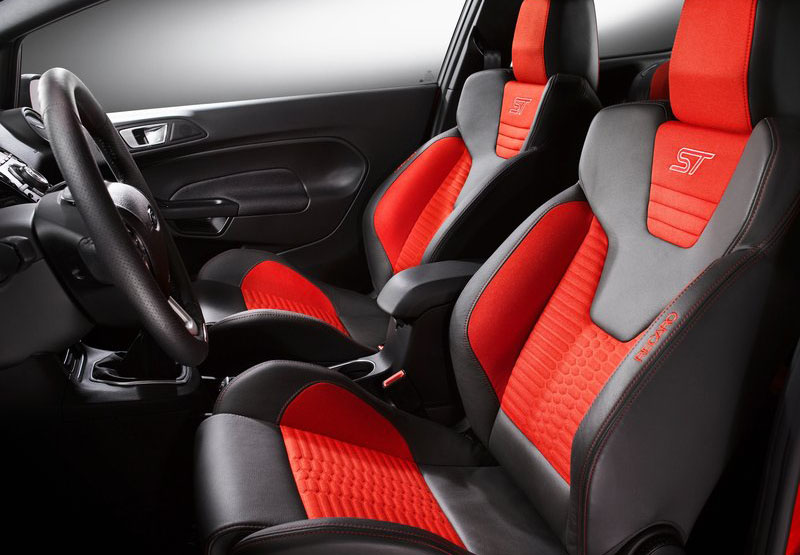
The high-contrast interior features unprecedented levels of equipment and specification to suit the sporting driver, with standard Recaro sports seats appearing in a Ford Fiesta ST for the first time. It also will be equipped with MyKey, which allows owners to limit performance and ensure activation of safety features for when less-experienced drivers use the vehicle; and SYNC, Ford's voice-activated in-car connectivity system. A new bold and dynamic exterior design drives home the high performance message and features the latest Ford design signatures including a large trapezoidal grille.

The new Ford Fiesta ST was engineered using Ford's global Performance Car DNA and developed by Ford Team RS, the European arm of the company's Global Performance Vehicles group.

The experience of the engineering team in working with Ford's motorsport partners to develop the Fiesta RS WRC, Fiesta Rallycross and Racing Fiesta vehicles, also proved invaluable for developing the new Fiesta ST.

With production of the new Ford Fiesta ST confirmed for Europe, Ford also remains open to the idea of introducing the high-performance small car to other regions, including North America for the first time following a highly positive response to the five-door Fiesta ST concept that made its North American debut at the 2011 Los Angeles Auto Show.

"We're delighted to be bringing a new generation Fiesta ST to our European enthusiasts in 2013 and we'll have more to say about our plans for other markets in the near future," said Capito. "With the Fiesta ST joining the new Focus ST, we will be able to deliver a choice of affordable small performance cars that are designed to deliver a unique blend of stand-out styling and dynamic on-road performance with true practicality for everyday use."


Read More

Saturday, February 16, 2013

FM Auto Mazzanti Evantra V8, 2013


  •  FM Auto Mazzanti Evantra V8, 2013

The carbon fiber composite body of the Evantra V8 is characterized by the new rear wing and the series of inserts realized in carbon fiber, or brushed aluminium.

Inside a new chrome-molibden rollcage is positioned under the roof while another one connects the new engine to the rear suspension hard-points, this way enchancing the structural stiffness of the chassis and in the same time helps protecting the occupants.

The Evantra's "mechanical heart" is an aluminium V8, naturally aspirated 7.0 L. which is capable of developing 701 hp @ 6600 rpm and 848 Nm @ 4500 rpm. The engine has a compression ratio of 11.0, a dry sump lubrification system, and valves, connecting rods in titanium.

The performance of the Evantra V8 equipped with a 6-speed sequential gearbox arrives up to the maximum velocity of over 350 Km/h with an acceleration of 0-100 in 3.2 seconds.

The aerodynamic development process was realized in partnership with YSIM, a company with notable experience in F1 and Le mans.

SILA Holding Industriale, leader company of gearshift systems, has developed a special version of its robotized gearshift system "silatronic" for Mazzanti.

The power of the Evantra V8 is transferred onto the tarmac thanks to special high performance tyres from CONTINENTAL 255/30 R20 front and 305/25 R20 rear, mounted on special 20" OZ alloy wheels. The braking system comes from BREMBO, formed by 380mm discs with 6 piston calipers in the front and 360mm discs with 4 piston caliper is the back (carbon-ceramic system is optional).

The tailor-made interior of the client is covered with all-natural leather prepared with special aniline leather treatment. The incredible soft touch of the leather is achieved thanks to a collaboration with a leader of the fashion/luxury sector. Every aspect of personalization is possible with the infinite options of special material, including exotic leather and precious materials.

The center console is equipped with a dash and data acquisition system from AIM and a Headunit (NAVI/CD/MP3) from BOSCH as first equipment. The engine starter button is placed onto the roof panel in "Mazzanti" style as in the "sister car" ANTAS. On the lower part of the console the modality selector is placed with different maps for the engine/gearbox, "Strada - Street" and "Corsa - Race". On the NARDI steering wheel a small display shows the actual gear, while behind the paddles are placed.

"I am really proud to present the Evantra V8 .With her an enormous work is finished, that mainly focused on conciliating elements difficult to harmonize to each other: a personal concept that is absolutely out of todays market trends, a really precise and tipically italian stylistical identity and a powertrain with " absolute" performance are perfectly united in forms and function. Evantra V8 was not born to please everyone, instead to be herself and to generate emotions with her character and exclusivity" - Luca Mazzanti

Technical specifications
    Engine layout: V8 naturally aspirated
    Engine capacity: 7.0 L
    Power: 701 hp @ 6600 rpm
    Torque: 848 Nm @ 4500 rpm
    0-100 km/h : 3.2 s
    Length: 4325 mm
    Height: 1225 mm
    Width: 1955 mm
    Wheelbase: 2550 mm
    Kerb weight: 1300 kg (PRO-BODY)
Read More

Friday, February 15, 2013

Dacia Logan, 2013


  • Dacia Logan, 2013

The new styling identity of the Dacia brand, the exterior design of New Logan is more dynamic, with a more flowing form at the front. The new styling approach is most apparent in the grille and headlights, featuring a more emphatic design common to all three of the new models. The rear further emphasises Logan's robust nature with new lights and a design that showcases the spaciousness of the vehicle. The styling upgrade gives New Logan a harmonious look and an extra dose of elegance.

Spaciousness for money as impressive as ever
New Logan remains a true family car providing top-notch comfort and practicality for five adults. And it still boasts impressive spaciousness for money. The least expensive car in Europe brings occupants knee room of 178 mm and a boot offering space of 510 dm3 VDA with the seats up - an unrivalled performance in the segment. The new model gains a 60/40 split-folding rear bench, depending on the trim level.

With New Logan, New Sandero and New Sandero Stepway, Dacia styling becomes more assertive and upmarket

The Dacia's new design identity emphasises quality and strength. The three restyled models share the same harmonious front end, radiating outwards from the Dacia logo in the grille. The design of the large headlights and grille gives the cars a more expressive face.

In profile, the proportion of body to glazed surfaces underlines the impression of robustness, helped by a sculpted waist line, more emphatic wheelarches and flanks found on each new model.

More appeal inside
The three new models feature a new dark-carbon or two-tone dashboard (according to model and version) home to comprehensive and contemporary-style instrumentation, with chrome-surrounded dials and latest-generation, eminently functional controls.

The air-vent surrounds, steering-wheel logo and gear-stick handle label are chrome-finished (according to trim level). The central fascia is highlighted by a color wheel trim embellisher (according to trim) that matches the door handles and the design strip on the steering wheel.

Aesthetic quality has been enhanced through the clever choice of materials and flusher fit.

Gasoline: TCe 90
For the first time, New Dacia Logan and New Dacia Sandero are available with the TCe 90, a new symbol of the Renault group's powertrain excellence. This exceptional engine combines driving pleasure and comfort with controlled fuel consumption (54.3 mpg) and CO2 emissions (120 g/km) for reduced running costs.

Featuring the latest technology and downsizing techniques, the TCe 90 is a three-cylinder, 898cc turbocharged gasoline engine. With its ultra-low-inertia turbocharger plus variable valve timing, it delivers 66 kW (90 hp) at 5,250 rpm and generates 135 Nm from low engine speeds (90% from 1,650 rpm), making it a lively and responsive performer with smooth acceleration. It brings drivers a best-in-class balance between driving performance and fuel consumption.

Gasoline: 1.2 16v 75 (Euro 5)
This 1,149cc engine, developing 55 kW (75 hp), is an impressive all-rounder, equally at ease in the city or out on the open road. Fuel consumption is an impressive 47.8 mpg, for CO2 emissions of 137 g/km on New Dacia Logan and New Dacia Sandero. The 1.2 16V 75 engine is also available in an LPG version for lower running costs and just 125g/km of CO2 (in course of homologation, unavailable in UK).

Diesel: dCi 75 and 90 (Euro 5)
Renowned for its driving pleasure, performance reliability, and environmental respect, the 1.5 dCi is available in 55 kW (75 hp) and 66 kW (90 hp) versions. With a torque increase of 20 Nm - 200 Nm of torque at 1,750 rpm for the 75 hp unit and 220 Nm at 1,750 rpm for the 90 hp unit -the 1.5 dCi engine is responsive from even the lowest engine speeds. This performance comes hand in hand with some of the lowest fuel consumption figures in the segment, at 74.3 mpg, for CO2 emissions of 99 g/km for New Logan and Sandero, over a combined cycle representing a decrease of 5 g. Both engines naturally carry the Dacia eco2 signature.

New Dacia Sandero Stepway: TCe 90 and dCi 90
Equipped with the TCe 90, the latest example of the Group's mechanical expertise, New Sandero Stepway consumes 52.3 mpg for CO2 emissions of 125 g/km.

The dCi 90 version bears the Dacia eco² signature in recognition of its low consumption (68.9 mpg) and emission (105 g/km) levels over a combined cycle.

DaciaPlug&Radio
New Logan, Sandero and Sandero Stepway are available with the Dacia Plug&Radio multimedia solution. Plug&Radio consists of a wide screen and an MP3-compatible CD player, plus Bluetooth® technology, fascia jack and USB sockets, and steering wheel-mounted controls. With Bluetooth® technology drivers can make hands-free calls, with synchronised contacts book and call history, and listen to their favourite tunes by audio streaming through the car's speakers.

MEDIA NAV multimedia system
After debuting on Dacia Lodgy and Dokker, MEDIA NAV is available on all three new models. The simple and user-friendly system, fitted seamlessly in the central fascia, comprises in-car navigation, a radio, Bluetooth® hands-free connectivity and audio streaming, all controlled via a 7-inch (18-cm) touch screen. Navigating the system is easy, via the Menu page. Occupants can also hook up their nomad devices via the USB and jack sockets, mounted on the central fascia for enhanced access and ergonomics, and play them using the touch controls on the screen or the buttons on the steering wheel.

The intuitive touch screen features 2D and "Birdview" (3D) graphics. Customers can update and add mapping content using the USB socket and Naviextra website.

Speed limiter/cruise control and rear parking sensors
A cruise control system - new to the Dacia range - will be available (depending on the version) on New Logan and Sandero, alongside the speed limiter. Rear parking sensors are now available depending on trim level.

Passive safety
For maximum passenger protection, New Dacia Logan, Sandero and Sandero Stepway benefit from all the safety expertise of Renault's engineers. Seatbelts are equipped with calibrated load limiters for thorax protection in the event of impact. The three models also feature Isofix anchorage points in the two rear lateral seats for easy and 100% safe installation of child seats. Every trim level is fitted as standard with front and side driver and passenger airbags and ESC.

Wide range of accessories
For extra personalisation, Dacia proposes a broad range of accessories for everyday use including side mouldings, floor mats, headrest hangers and boot nets. Weekend getaways and holidays have never been easier thanks to a roof box, ski rack, towing hook, bike rack and portable coolbox. Customers can also customise their Dacia using decal strips, exclusive wheel rims and fog light surrounds.

Roominess and load capacity from the segment above
The interior and exterior dimensions of the three new models are as generous as ever, worthy of the segment above. Rear elbow room in New Sandero is 1436 mm, giving enough room to seat three adults comfortably or install three child seats.

Boot volume, as high as 510 dm3 VDA for New Logan (320 dm3 VDA for Sandero), remains unbeatable given the price and the compact exterior dimensions of the vehicle. Practicality and versatility also remain strong points, thanks to the 60/40 split-folding rear bench.

The cabin has been enhanced to bring occupants more storage possibilities, notably with the addition of a central cubby box. The storage spaces in the front and rear doors are large enough to house a 1.5-litre and 0.5-litre bottle respectively.

Driving comfort and efficiency
As all the models in the Dacia range, New Logan, Sandero and Sandero Stepway have excellent ground clearance enabling them to take on all kinds of road conditions. They also feature robust underbody protection for impressive performance on unpaved tracks.

Acoustic comfort has also been improved through additional soundproofing material in the engine compartment and controlled road noise.

Dacia, a reliable brand that perfectly meets customer needs
Dacia customers have simple and well-targeted needs. They are looking for generous, simple and reliable vehicles that are smart and affordable. Dacia's is a practical offering that responds perfectly to the expectations of its customers.

Marketing an increasingly wide range of vehicles (Logan, Logan MCV, Sandero Stepway, Duster, Lodgy, Dokker, Dokker Van), Dacia is posting remarkable quality results. In the latest 2012 results of ADAC, the benchmark German organisation, the reliability of Dacia vehicles has improved continuously over the last three years and Sandero is number four in its category. In February, the brand ranked number-one on reliability in a survey carried out with 30,000 customers by consumer organisations in Belgium, France, Spain, Italy and Portugal.

Dacia builds durably reliable cars and is winning the trust of its customers

Dacia vehicles, like Renault ones, are tested in the most extreme conditions. In addition to conventional bench tests, the Renault group puts its vehicles through demanding tests in real-world conditions to confirm their durability. Logan, for example, was tested over 1.9 million kilometres. Dacia cars are designed from the outset to be sold internationally, and notably in emerging markets. They are developed according to demanding specifications given the diversity of road and weather conditions in such countries.

The Dacia models are covered by a 3 year/60,000 miles manufacturer warranty, with service at all dealerships in the network and top-level repair expertise with manufacturer parts. The warranty is targeted at winning new customers, raising awareness of the brand, and building a relationship of trust with customers.

Dacia benefits from the quality expertise of Renault, which has become a leading carmaker on reliability, largely the result of a global group quality policy launched in 2003.

Dacia relies on Renault group and Alliance know-how in standards and processes

New Logan, Sandero and Sandero Stepway produced at the Pitesti plant in Romania and the SOMACA plant in Casablanca, Morocco for the regional market (including Morocco and Tunisia). Starting in the second-half of 2013, New Sandero will also be produced at the Tangier plant in Morocco.
Read More

Thursday, February 14, 2013

Chevrolet Malibu ECO, 2013


  •  Chevrolet Malibu ECO, 2013

The Chevrolet celebrated Earth Day at the 2011 New York Auto Show by introducing the all-new 2013 Chevrolet Malibu ECO, the most fuel-efficient midsize sedan in its 100-year history. It features eAssist™ "light electrification" technology, which is engineered to deliver an estimated 26 mpg in city driving and 38 mpg on the highway without compromising performance.

ECO is based on the all-new, 2013 Malibu sedan, which will be sold in nearly 100 countries on six continents. Sales of the new Malibu begin with the ECO model in the United States in early 2012. The Malibu LS, LT and LTZ trim level offerings join the ECO in summer 2012. Pricing will be announced later.

Malibu's eAssist system uses a state-of-the-art lithium-ion battery and an electric motor-generator to enable regenerative braking electric assist and start-stop functionality. It is efficiently sized, weighing only 65 pounds (29 kg).

The Chevrolet Malibu ECO also features an aerodynamic exterior - including underbody aero enhancements - and electronically controlled shutters in the lower grille that close at higher speeds to push more air over and around the vehicle. These enhancements increase aerodynamic efficiency to boost fuel economy.

An ECO gauge in the cluster continuously responds to driving behavior, encouraging fuel-efficient driving, while an Auto Stop Indicator on the tachometer informs the driver when the engine is in start-stop mode.

eAssist details
Chevrolet Malibu ECO's eAssist system is mated to a 2.4L Ecotec direct-injection four-cylinder engine and next-generation six-speed automatic transmission. The 2.4L engine is efficient and lightweight, featuring dual-overhead cams, direct injection, continuously variable intake and exhaust timing and electronic throttle control, as well as a lightweight aluminum cylinder block and cylinder head. It is rated at an estimated 180 horsepower (134 kW) and is a variant of the same engine that was recognized as one of Ward's Ten Best Engines in 2010.

Along with the Ecotec 2.4L and six-speed transmission, the eAssist system uses power stored in the air-cooled, lithium-ion battery to provide needed electrical boost in various driving scenarios, optimizing engine and transmission operation. An advanced 115V lithium-ion battery and latest-generation 15-kW motor-generator unit help increase fuel economy through:
  •     Regenerative braking, which provides up to 15 kW of electricity to charge the battery
  •     Providing up to 15 hp (11 kW) of electric power assistance during heavier acceleration
  •     Using electricity instead of gasoline when stopped, with automatic and smooth engine start-stop functionality
  •     Aggressive fuel cut-off during deceleration down to zero mph for added fuel savings
  •     Intelligent charge/discharge of the high-voltage battery.
The eAssist system captures up to 15kW of energy that would be normally lost during braking and uses it to recharge the lithium-ion battery. The system also shuts down fuel delivery in certain deceleration conditions, further improving fuel economy. While in fuel shut-off mode, the motor-generator unit continues spinning along with the engine to provide immediate and smooth take-off power when the driver presses on the accelerator. As the vehicle comes to a stop, the engine's start-stop function is active when the motor-generator unit brings the engine to a smooth stop to position it properly for a smooth restart when the brake is released.

A hill-assist system captures brake pressure to help keep the vehicle stationary when eAssist's start-stop function is activated on a moderate or steep grade, allowing the driver to accelerate more smoothly from a stop.

The Chevrolet Malibu ECO's eAssist power pack brings together the lithium-ion battery, the integrated power inverter and 12V power supply. It is located in the trunk, behind the rear seat. The electric motor-generator is mounted to the engine in place of the alternator to provide both motor assist and electric-generating functions through an engine belt-drive system. The motor-generator is a high-performance, compact induction motor that is liquid-cooled for increased performance and efficiency. An electric fan cools the power pack, drawing air from a vent located behind the rear seat.

Aero efficiency
Chevrolet Malibu ECO - and the entire 2013 Malibu lineup - was designed to be aerodynamically efficient, with a coefficient of drag near the standout performance of the Chevrolet Volt extended-range electric vehicle.

Aerodynamic design engineers removed about 60 counts of wind drag from the new Malibu, compared to its predecessor. Malibu spent hundreds of hours in GM's wind tunnel, fine-tuning the form to maximize fuel efficiency. For example, engineers shaped Malibu's front corners so that air runs close and uninterrupted along the body sides to the rear of the vehicle.

Chevrolet Malibu ECO is among the first in the midsize segment with a fuel-saving, active shutter system in the lower grille. The Malibu ECO's active shutter system automatically closes airflow through the lower intake opening when air intake is least needed. When closed, the shutter system enhances aero performance by redirecting airflow around the front of the vehicle and down the sides, rather than through it. The shutter is open or closed based on engine coolant temperature and speed. For example, the shutters open when the car is traveling up a hill, pulling a trailer, or in hot city driving; the shutters close at highway speeds when engine cooling is less required.

Other aerodynamic features on the Chevrolet Malibu ECO:
  •     Outside rearview mirrors designed to maximize aerodynamic efficiency
  •     Taillamps are shaped for aero performance without design penalty
  •     Four underbody panels - more commonly found on premium-priced cars - cover approximately 50 percent of the lower portion of the vehicle and provide an aerodynamically clean flow path under the vehicle
  •     Standard 17-inch wheels and low-rolling-resistance tires engineered to improve fuel economy.

About the all-new 2013 Malibu
The Chevrolet Malibu ECO is part of the all-new, 2013 Malibu lineup - Chevrolet's first global midsize sedan - which gives customers more style, fuel efficiency, content and features, craftsmanship, and dynamic capabilities rivaling high-end sedans. Product highlights for North American models :
  •     Expressive exterior design with a wide, athletic stance
  •     Segment-best aerodynamics - close to those of the Chevrolet Volt extended-range electric car - that enhance fuel efficiency and reduce wind noise, including active electronic shutters on select models
  •     All-new, Chevrolet-signature dual-cockpit interior that is more spacious, features premium materials and is engineered to be the quietest in the midsize segment
  •     New Chevrolet MyLink connectivity seamlessly integrates online services like Pandora® Internet radio and Stitcher SmartRadio®
  •     European-influenced ride and handling traits
  •     New safety features and technologies including up to 10 air bags, ultra-high-strength steel, lane departure warning/forward collision warning and rearview camera system.

The exterior design of the all-new Malibu carries DNA from its sister vehicles, the Camaro and Corvette. A wider stance, broad shoulders and an integrated rear spoiler bring a new athleticism to Malibu and give it a more aggressive, track-tested appearance. It has a 4.5-inch (114mm) shorter wheelbase and 62-inch (1,574mm) front and rear tracks that are more than 2 inches (51mm) wider than the model it replaces.

The Malibu's interior was designed to bring an element of sophistication to everyday driving, featuring an all-new dual cockpit design with more room, thanks to its increased width. Compared to the previous model, Malibu has nearly four cubic feet (113 L) of additional interior volume, along with more front and rear shoulder and hip room and more than one cubic foot (28 L) of extra trunk space. Available soft, ice-blue ambient lighting reflects off of and complements chrome accents and ensures even, consistent illumination along the instrument panel and in storage pockets.

The Malibu also has a number of storage areas, including a radio face that articulates up and down to reveal a six-inch deep, illuminated storage area behind its seven-inch touch-screen radio display - a U.S. first in a midsize car. Malibu will also offer a full range of the latest infotainment options, including new color radio systems and an available navigation system.

Malibu include Chevrolet's new MyLink infotainment package at launch. It builds on the safety and security of OnStar and seamlessly integrates online services like Pandora® Internet radio and Stitcher SmartRadio®. MyLink integrates wireless connectivity through Bluetooth to enable hands-free use of selected smart phone apps while the device remains safely stowed. It features a high-resolution, full-color touch screen display designed to manage the number of steps required to complete a task.

A global lineup of fuel-efficient and powerful four-cylinder engines complements the Malibu's European-inspired driving characteristics. In addition to the ECO's Ecotec 2.4L engine, the Malibu's North American lineup also features an all-new Ecotec 2.5L dual overhead cam, four-cylinder engine with direct injection. It has new features, including enhanced authority continuously variable valve timing, variable-displacement oil pump and electronic thermostat that save fuel while delivering V-6-like performance. It is estimated the engine will be SAE certified at more than 190 horsepower (141 kW) and 180 lb.-ft. of torque (245 Nm). Both engines are mated to a Hydra-Matic 6T40 six-speed automatic with features designed to enhance powertrain efficiency.

When it comes to the driving experience, the 2013 Chevrolet Malibu has been engineered to deliver ride and handling capabilities that are best-in-class and on par with more expensive sports sedans. These are:
  •     A solid body structure as stiff as any in the global midsize sedan market, allowing for precise tuning and dynamic vehicle control
  •     A premium steering gear that ensures smooth, precise responsiveness and on-center feel
  •     Proven and continuously refined MacPherson strut front and mutli-link rear suspensions
  •     Large, ventilated front disc and solid rear disc brakes, clamped on by dual-piston front and single-piston rear aluminum calipers, which are expected to deliver best-in-class stopping distance
  •     An isolated engine cradle for tuned, refined feedback, without noise or vibration
  •     Fuel-saving electric power rack-and-pinion variable-effort power steering, resulting in effortless low-speed maneuvers and a higher degree of steering feel at higher speeds
  •     Chassis control technologies include four-channel anti-lock brakes, full-function traction control, four-corner electronic stability control, electronic brake force distribution, brake assist system, corner brake control, hydraulic brake fade assist and drag torque control.
Read More

Wednesday, February 13, 2013

KTM X-Bow R, 2011


  •  KTM X-Bow R, 2011

The KTM X-Bow R has been completely revised and even if the new developments of the KTM X-Bow R are not obvious at first glance from its outward appearance, a lot of things have been changed around the carbon monocoque. The engineers did not restrict themselves to improvements to the engine. In fact there have been improvements in all other relevant components to ensure that an optimal performance can be achieved. And that is because the customers had clearly expressed their wishes that the super sports car that many of them want to take to the racing circuit weekend after weekend, should be even more extreme, even faster and even more powerful.

In 2011 the product range of the super sports car with the carbon monocoque includes the KTM X-Bow R, the most powerful version yet developed. The "R" is the result of concentrated further development of this spectacular lightweight sports car. In the rear of the "R" is a 300 hp 2.0 Liter TFSI engine from Audi with a maximum torque of 400 Nm and this ensures an unbelievable driving experience both on and off the racing circuit, because naturally the KTM X-Bow R is homologated for use on the road.

At the German premium carmaker Audi, KTM chose one of the most efficient and powerful engines with a 2.0 litre displacement. This is all about an engine block that was used by the Ingolstadt-based company for a long time in the S3 model and which generated up to 265 hp. there. It was later also used in the TT-S with 272 hp. For use in the KTM X-Bow R, the reinforced block has a bigger turbo, an altered fuel injection system and the engine electronics have been additionally updated by Bosch Engineering Group (BEG). This means that the performance not only increases to 300 hp but also the torque: to be exact 400 Nm are set free at 3,300 revs and results in a very smooth torque curve which provides impressive drive in all situations.

This was how the KTM X-Bow evolved into the 'R' but it was far from complete. For the engineers, the additional power meant that the entire periphery - from the engine mounting to the suspension had to be reviewed. And that is why, in addition to the engine, very many other parts of the vehicle were either changed or completely newly constructed.

The stay of the torque support arm has been completely changed
60 hp more - a good 25 percent - caused far more extreme forces that meet and must be absorbed on the engine mounting points on the aluminium rear frame. It was the aim of the development not simply to meet the additional burden but to strengthen the rear beyond that of the 240 hp model. The solution was to reposition the torque support arm. Up to date this had been attached to the rear frame, now it sits directly on the carbon monocoque. With this, the torsional stiffness is significantly increased, especially when accelerating out of corners and the KTM X-Bow R handles even better on the road as its "little brothers" the X-Bow Street and Clubsport.

The entire drive train unit has been lowered by 19 millimeters
By relocating the torque arm and its connection, the developers then faced another demand. The entire engine unit should be lowered to lower also the center of gravity. The initial target could be even exceeded thanks to clever construction so that the drive unit now sits lower in the rear frame by a massive 19 mm. The main effect: the vehicle's already impressively low center of gravity has been moved even further down towards the road surface so that the central center of gravity of the vehicle is lower by 15 mm. As a direct consequence even higher cornering speeds and greater lateral acceleration of more than 1.5 g is possible and the handling of the KTM X-Bow R is significantly improved.

The suspension has been significantly revised
25 percent more power, higher cornering speeds, greater G-loads. All this has resulted in a significant additional burden on the chassis, which in combination with the tires represents the final link in a long chain for achieving optimal contact with the road. The push rod suspension on the front axle, which comes directly from the Formula racing sport, but also the suspension on the rear axle has been revised. The first step was trying to reduce the friction on the wishbones of the X-Bow. For this purpose special Teflon washers have been used to reduce the friction and play, which at the same time improving the precision and the response of the suspension In addition to this the engineers devoted time to the springs and shock absorbers: stiffer springs in the front and rear suspension and new damping characteristics meant that the KTM X-Bow R is characterized by an additional increase in the handling, even more extremely exact and delicate than up to this stage of the development.

The price of the KTM X-Bow R is € 58,795 (excluding national taxes and import duties).

The standard equipment (extract)
  •     Carbon fiber racing monocoque with crash box in visible carbon fiber
  •     Audi 2.0 TFSI engine with direct fuel injection and 220 kW (300 hp)
  •     Mechanical limited slip differential
  •     Smooth surface racing underbody with a rear diffuser in aluminium composite
  •     Individually adjustable pedals
  •     Adjustable and removable multi functional steering wheel
  •     Sports suspension, adjustable in rebound and compression damping
  •     Keyless go system
  •     Painted rims
  •     4-point safety belt
  •     Special paint work in "R" design
Read More

Tuesday, February 12, 2013

Kia Carens, 2013


  •  Kia Carens, 2013

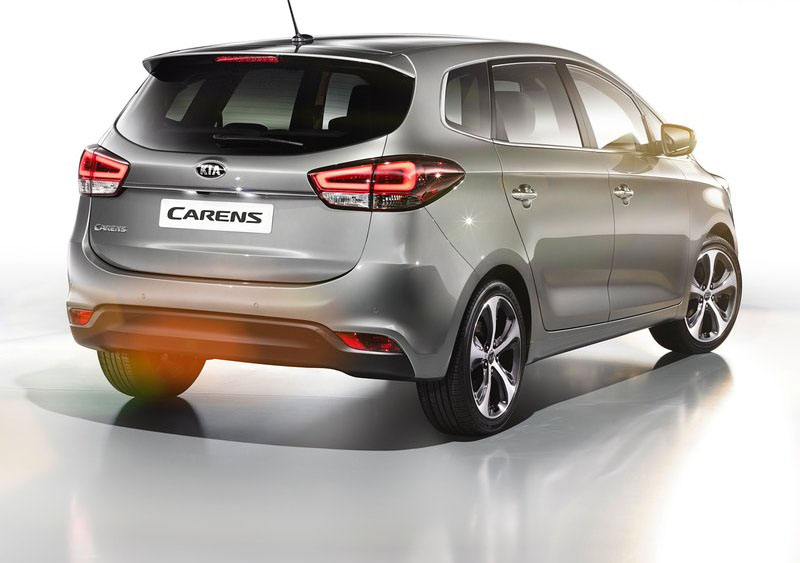
The all-new Kia Carens is a completely fresh model from the ground up, and its sleek and sculpted design marks a dramatic shift away from the more utilitarian look of its predecessor.

It builds on the functionality and versatility of the original Kia Carens, with a spacious five or five-plus-two seating layout, a generously proportioned luggage bay and numerous stowage spaces, but wraps this family-friendly adaptability in more purposeful sheet metal.

"I wanted to give the new Carens a sleeker look and feel, to create a design that envelops its functionality and versatility in something altogether more athletic and dynamic," says Peter Schreyer, Kia's Chief Design Officer.

"The new-found visual dynamism is important - this car needs to look appealing and attractive - but during its design and development stages, we never lost sight of the fact that its packaging flexibility and adaptability are why people buy these cars," explains Schreyer.

Both Schreyer and Gregory Guillaume, Kia's Chief Designer Europe, are candid when discussing the design of the Kia Carens. "A vehicle like the Carens is probably one of the hardest of all to get right because we are very tightly constrained by the car's functionality," says Guillaume. "That packaging versatility cannot in any way be compromised by the design of the car because to do so would eradicate the car's raison d'être."

Schreyer and Guillaume's team created subtle styling cues to enhance the Kia Carens' elegant and balanced proportions and deliver an air of sophistication and refinement.

As an example Schreyer singles out the understated chrome strip that runs from the base of the windscreen, along the lower level of windows and curls up to meet the C-pillar. "This not only adds a premium feel to the clean-cut exterior, but also creates a visual link with the new Sportage, which features the same design motif," he explains.

One of Schreyer's design goals was improved visibility - a key element for safe driving, particularly in congested urban areas. "The base of the windscreen is very low and this works with the front quarter windows and the low and wide sweeping dashboard design to deliver excellent visibility," explains Schreyer. The panoramic glass roof that floods the cabin with light further enhances this sense of spaciousness.

The Kia Carens design team worked hard on ensuring the front and rear overhangs were kept as short as possible to boost manoeuvrability when parking and negotiating city traffic.

Neat touches abound - the integrated roof rails, the sleek rear spoiler, the three-way split second-row seats that feature individual fore and aft adjustment, and Kia's tactile new steering wheel.

"With its nigh-perfect balance of proportion, style and functionality, the distinctive new Carens marks yet another successful and stylish step for Kia's global design team," says Schreyer proudly. "There's a design honesty here - the Kia Carens is neither over-dressed nor does it feature contrived design elements. It's a car cleanly and elegantly defined by its functionality."
Read More