Friday, February 15, 2013

Dacia Logan, 2013


  • Dacia Logan, 2013

The new styling identity of the Dacia brand, the exterior design of New Logan is more dynamic, with a more flowing form at the front. The new styling approach is most apparent in the grille and headlights, featuring a more emphatic design common to all three of the new models. The rear further emphasises Logan's robust nature with new lights and a design that showcases the spaciousness of the vehicle. The styling upgrade gives New Logan a harmonious look and an extra dose of elegance.

Spaciousness for money as impressive as ever
New Logan remains a true family car providing top-notch comfort and practicality for five adults. And it still boasts impressive spaciousness for money. The least expensive car in Europe brings occupants knee room of 178 mm and a boot offering space of 510 dm3 VDA with the seats up - an unrivalled performance in the segment. The new model gains a 60/40 split-folding rear bench, depending on the trim level.

With New Logan, New Sandero and New Sandero Stepway, Dacia styling becomes more assertive and upmarket

The Dacia's new design identity emphasises quality and strength. The three restyled models share the same harmonious front end, radiating outwards from the Dacia logo in the grille. The design of the large headlights and grille gives the cars a more expressive face.

In profile, the proportion of body to glazed surfaces underlines the impression of robustness, helped by a sculpted waist line, more emphatic wheelarches and flanks found on each new model.

More appeal inside
The three new models feature a new dark-carbon or two-tone dashboard (according to model and version) home to comprehensive and contemporary-style instrumentation, with chrome-surrounded dials and latest-generation, eminently functional controls.

The air-vent surrounds, steering-wheel logo and gear-stick handle label are chrome-finished (according to trim level). The central fascia is highlighted by a color wheel trim embellisher (according to trim) that matches the door handles and the design strip on the steering wheel.

Aesthetic quality has been enhanced through the clever choice of materials and flusher fit.

Gasoline: TCe 90
For the first time, New Dacia Logan and New Dacia Sandero are available with the TCe 90, a new symbol of the Renault group's powertrain excellence. This exceptional engine combines driving pleasure and comfort with controlled fuel consumption (54.3 mpg) and CO2 emissions (120 g/km) for reduced running costs.

Featuring the latest technology and downsizing techniques, the TCe 90 is a three-cylinder, 898cc turbocharged gasoline engine. With its ultra-low-inertia turbocharger plus variable valve timing, it delivers 66 kW (90 hp) at 5,250 rpm and generates 135 Nm from low engine speeds (90% from 1,650 rpm), making it a lively and responsive performer with smooth acceleration. It brings drivers a best-in-class balance between driving performance and fuel consumption.

Gasoline: 1.2 16v 75 (Euro 5)
This 1,149cc engine, developing 55 kW (75 hp), is an impressive all-rounder, equally at ease in the city or out on the open road. Fuel consumption is an impressive 47.8 mpg, for CO2 emissions of 137 g/km on New Dacia Logan and New Dacia Sandero. The 1.2 16V 75 engine is also available in an LPG version for lower running costs and just 125g/km of CO2 (in course of homologation, unavailable in UK).

Diesel: dCi 75 and 90 (Euro 5)
Renowned for its driving pleasure, performance reliability, and environmental respect, the 1.5 dCi is available in 55 kW (75 hp) and 66 kW (90 hp) versions. With a torque increase of 20 Nm - 200 Nm of torque at 1,750 rpm for the 75 hp unit and 220 Nm at 1,750 rpm for the 90 hp unit -the 1.5 dCi engine is responsive from even the lowest engine speeds. This performance comes hand in hand with some of the lowest fuel consumption figures in the segment, at 74.3 mpg, for CO2 emissions of 99 g/km for New Logan and Sandero, over a combined cycle representing a decrease of 5 g. Both engines naturally carry the Dacia eco2 signature.

New Dacia Sandero Stepway: TCe 90 and dCi 90
Equipped with the TCe 90, the latest example of the Group's mechanical expertise, New Sandero Stepway consumes 52.3 mpg for CO2 emissions of 125 g/km.

The dCi 90 version bears the Dacia eco² signature in recognition of its low consumption (68.9 mpg) and emission (105 g/km) levels over a combined cycle.

DaciaPlug&Radio
New Logan, Sandero and Sandero Stepway are available with the Dacia Plug&Radio multimedia solution. Plug&Radio consists of a wide screen and an MP3-compatible CD player, plus Bluetooth® technology, fascia jack and USB sockets, and steering wheel-mounted controls. With Bluetooth® technology drivers can make hands-free calls, with synchronised contacts book and call history, and listen to their favourite tunes by audio streaming through the car's speakers.

MEDIA NAV multimedia system
After debuting on Dacia Lodgy and Dokker, MEDIA NAV is available on all three new models. The simple and user-friendly system, fitted seamlessly in the central fascia, comprises in-car navigation, a radio, Bluetooth® hands-free connectivity and audio streaming, all controlled via a 7-inch (18-cm) touch screen. Navigating the system is easy, via the Menu page. Occupants can also hook up their nomad devices via the USB and jack sockets, mounted on the central fascia for enhanced access and ergonomics, and play them using the touch controls on the screen or the buttons on the steering wheel.

The intuitive touch screen features 2D and "Birdview" (3D) graphics. Customers can update and add mapping content using the USB socket and Naviextra website.

Speed limiter/cruise control and rear parking sensors
A cruise control system - new to the Dacia range - will be available (depending on the version) on New Logan and Sandero, alongside the speed limiter. Rear parking sensors are now available depending on trim level.

Passive safety
For maximum passenger protection, New Dacia Logan, Sandero and Sandero Stepway benefit from all the safety expertise of Renault's engineers. Seatbelts are equipped with calibrated load limiters for thorax protection in the event of impact. The three models also feature Isofix anchorage points in the two rear lateral seats for easy and 100% safe installation of child seats. Every trim level is fitted as standard with front and side driver and passenger airbags and ESC.

Wide range of accessories
For extra personalisation, Dacia proposes a broad range of accessories for everyday use including side mouldings, floor mats, headrest hangers and boot nets. Weekend getaways and holidays have never been easier thanks to a roof box, ski rack, towing hook, bike rack and portable coolbox. Customers can also customise their Dacia using decal strips, exclusive wheel rims and fog light surrounds.

Roominess and load capacity from the segment above
The interior and exterior dimensions of the three new models are as generous as ever, worthy of the segment above. Rear elbow room in New Sandero is 1436 mm, giving enough room to seat three adults comfortably or install three child seats.

Boot volume, as high as 510 dm3 VDA for New Logan (320 dm3 VDA for Sandero), remains unbeatable given the price and the compact exterior dimensions of the vehicle. Practicality and versatility also remain strong points, thanks to the 60/40 split-folding rear bench.

The cabin has been enhanced to bring occupants more storage possibilities, notably with the addition of a central cubby box. The storage spaces in the front and rear doors are large enough to house a 1.5-litre and 0.5-litre bottle respectively.

Driving comfort and efficiency
As all the models in the Dacia range, New Logan, Sandero and Sandero Stepway have excellent ground clearance enabling them to take on all kinds of road conditions. They also feature robust underbody protection for impressive performance on unpaved tracks.

Acoustic comfort has also been improved through additional soundproofing material in the engine compartment and controlled road noise.

Dacia, a reliable brand that perfectly meets customer needs
Dacia customers have simple and well-targeted needs. They are looking for generous, simple and reliable vehicles that are smart and affordable. Dacia's is a practical offering that responds perfectly to the expectations of its customers.

Marketing an increasingly wide range of vehicles (Logan, Logan MCV, Sandero Stepway, Duster, Lodgy, Dokker, Dokker Van), Dacia is posting remarkable quality results. In the latest 2012 results of ADAC, the benchmark German organisation, the reliability of Dacia vehicles has improved continuously over the last three years and Sandero is number four in its category. In February, the brand ranked number-one on reliability in a survey carried out with 30,000 customers by consumer organisations in Belgium, France, Spain, Italy and Portugal.

Dacia builds durably reliable cars and is winning the trust of its customers

Dacia vehicles, like Renault ones, are tested in the most extreme conditions. In addition to conventional bench tests, the Renault group puts its vehicles through demanding tests in real-world conditions to confirm their durability. Logan, for example, was tested over 1.9 million kilometres. Dacia cars are designed from the outset to be sold internationally, and notably in emerging markets. They are developed according to demanding specifications given the diversity of road and weather conditions in such countries.

The Dacia models are covered by a 3 year/60,000 miles manufacturer warranty, with service at all dealerships in the network and top-level repair expertise with manufacturer parts. The warranty is targeted at winning new customers, raising awareness of the brand, and building a relationship of trust with customers.

Dacia benefits from the quality expertise of Renault, which has become a leading carmaker on reliability, largely the result of a global group quality policy launched in 2003.

Dacia relies on Renault group and Alliance know-how in standards and processes

New Logan, Sandero and Sandero Stepway produced at the Pitesti plant in Romania and the SOMACA plant in Casablanca, Morocco for the regional market (including Morocco and Tunisia). Starting in the second-half of 2013, New Sandero will also be produced at the Tangier plant in Morocco.
Read More

Thursday, February 14, 2013

Chevrolet Malibu ECO, 2013


  •  Chevrolet Malibu ECO, 2013

The Chevrolet celebrated Earth Day at the 2011 New York Auto Show by introducing the all-new 2013 Chevrolet Malibu ECO, the most fuel-efficient midsize sedan in its 100-year history. It features eAssist™ "light electrification" technology, which is engineered to deliver an estimated 26 mpg in city driving and 38 mpg on the highway without compromising performance.

ECO is based on the all-new, 2013 Malibu sedan, which will be sold in nearly 100 countries on six continents. Sales of the new Malibu begin with the ECO model in the United States in early 2012. The Malibu LS, LT and LTZ trim level offerings join the ECO in summer 2012. Pricing will be announced later.

Malibu's eAssist system uses a state-of-the-art lithium-ion battery and an electric motor-generator to enable regenerative braking electric assist and start-stop functionality. It is efficiently sized, weighing only 65 pounds (29 kg).

The Chevrolet Malibu ECO also features an aerodynamic exterior - including underbody aero enhancements - and electronically controlled shutters in the lower grille that close at higher speeds to push more air over and around the vehicle. These enhancements increase aerodynamic efficiency to boost fuel economy.

An ECO gauge in the cluster continuously responds to driving behavior, encouraging fuel-efficient driving, while an Auto Stop Indicator on the tachometer informs the driver when the engine is in start-stop mode.

eAssist details
Chevrolet Malibu ECO's eAssist system is mated to a 2.4L Ecotec direct-injection four-cylinder engine and next-generation six-speed automatic transmission. The 2.4L engine is efficient and lightweight, featuring dual-overhead cams, direct injection, continuously variable intake and exhaust timing and electronic throttle control, as well as a lightweight aluminum cylinder block and cylinder head. It is rated at an estimated 180 horsepower (134 kW) and is a variant of the same engine that was recognized as one of Ward's Ten Best Engines in 2010.

Along with the Ecotec 2.4L and six-speed transmission, the eAssist system uses power stored in the air-cooled, lithium-ion battery to provide needed electrical boost in various driving scenarios, optimizing engine and transmission operation. An advanced 115V lithium-ion battery and latest-generation 15-kW motor-generator unit help increase fuel economy through:
  •     Regenerative braking, which provides up to 15 kW of electricity to charge the battery
  •     Providing up to 15 hp (11 kW) of electric power assistance during heavier acceleration
  •     Using electricity instead of gasoline when stopped, with automatic and smooth engine start-stop functionality
  •     Aggressive fuel cut-off during deceleration down to zero mph for added fuel savings
  •     Intelligent charge/discharge of the high-voltage battery.
The eAssist system captures up to 15kW of energy that would be normally lost during braking and uses it to recharge the lithium-ion battery. The system also shuts down fuel delivery in certain deceleration conditions, further improving fuel economy. While in fuel shut-off mode, the motor-generator unit continues spinning along with the engine to provide immediate and smooth take-off power when the driver presses on the accelerator. As the vehicle comes to a stop, the engine's start-stop function is active when the motor-generator unit brings the engine to a smooth stop to position it properly for a smooth restart when the brake is released.

A hill-assist system captures brake pressure to help keep the vehicle stationary when eAssist's start-stop function is activated on a moderate or steep grade, allowing the driver to accelerate more smoothly from a stop.

The Chevrolet Malibu ECO's eAssist power pack brings together the lithium-ion battery, the integrated power inverter and 12V power supply. It is located in the trunk, behind the rear seat. The electric motor-generator is mounted to the engine in place of the alternator to provide both motor assist and electric-generating functions through an engine belt-drive system. The motor-generator is a high-performance, compact induction motor that is liquid-cooled for increased performance and efficiency. An electric fan cools the power pack, drawing air from a vent located behind the rear seat.

Aero efficiency
Chevrolet Malibu ECO - and the entire 2013 Malibu lineup - was designed to be aerodynamically efficient, with a coefficient of drag near the standout performance of the Chevrolet Volt extended-range electric vehicle.

Aerodynamic design engineers removed about 60 counts of wind drag from the new Malibu, compared to its predecessor. Malibu spent hundreds of hours in GM's wind tunnel, fine-tuning the form to maximize fuel efficiency. For example, engineers shaped Malibu's front corners so that air runs close and uninterrupted along the body sides to the rear of the vehicle.

Chevrolet Malibu ECO is among the first in the midsize segment with a fuel-saving, active shutter system in the lower grille. The Malibu ECO's active shutter system automatically closes airflow through the lower intake opening when air intake is least needed. When closed, the shutter system enhances aero performance by redirecting airflow around the front of the vehicle and down the sides, rather than through it. The shutter is open or closed based on engine coolant temperature and speed. For example, the shutters open when the car is traveling up a hill, pulling a trailer, or in hot city driving; the shutters close at highway speeds when engine cooling is less required.

Other aerodynamic features on the Chevrolet Malibu ECO:
  •     Outside rearview mirrors designed to maximize aerodynamic efficiency
  •     Taillamps are shaped for aero performance without design penalty
  •     Four underbody panels - more commonly found on premium-priced cars - cover approximately 50 percent of the lower portion of the vehicle and provide an aerodynamically clean flow path under the vehicle
  •     Standard 17-inch wheels and low-rolling-resistance tires engineered to improve fuel economy.

About the all-new 2013 Malibu
The Chevrolet Malibu ECO is part of the all-new, 2013 Malibu lineup - Chevrolet's first global midsize sedan - which gives customers more style, fuel efficiency, content and features, craftsmanship, and dynamic capabilities rivaling high-end sedans. Product highlights for North American models :
  •     Expressive exterior design with a wide, athletic stance
  •     Segment-best aerodynamics - close to those of the Chevrolet Volt extended-range electric car - that enhance fuel efficiency and reduce wind noise, including active electronic shutters on select models
  •     All-new, Chevrolet-signature dual-cockpit interior that is more spacious, features premium materials and is engineered to be the quietest in the midsize segment
  •     New Chevrolet MyLink connectivity seamlessly integrates online services like Pandora® Internet radio and Stitcher SmartRadio®
  •     European-influenced ride and handling traits
  •     New safety features and technologies including up to 10 air bags, ultra-high-strength steel, lane departure warning/forward collision warning and rearview camera system.

The exterior design of the all-new Malibu carries DNA from its sister vehicles, the Camaro and Corvette. A wider stance, broad shoulders and an integrated rear spoiler bring a new athleticism to Malibu and give it a more aggressive, track-tested appearance. It has a 4.5-inch (114mm) shorter wheelbase and 62-inch (1,574mm) front and rear tracks that are more than 2 inches (51mm) wider than the model it replaces.

The Malibu's interior was designed to bring an element of sophistication to everyday driving, featuring an all-new dual cockpit design with more room, thanks to its increased width. Compared to the previous model, Malibu has nearly four cubic feet (113 L) of additional interior volume, along with more front and rear shoulder and hip room and more than one cubic foot (28 L) of extra trunk space. Available soft, ice-blue ambient lighting reflects off of and complements chrome accents and ensures even, consistent illumination along the instrument panel and in storage pockets.

The Malibu also has a number of storage areas, including a radio face that articulates up and down to reveal a six-inch deep, illuminated storage area behind its seven-inch touch-screen radio display - a U.S. first in a midsize car. Malibu will also offer a full range of the latest infotainment options, including new color radio systems and an available navigation system.

Malibu include Chevrolet's new MyLink infotainment package at launch. It builds on the safety and security of OnStar and seamlessly integrates online services like Pandora® Internet radio and Stitcher SmartRadio®. MyLink integrates wireless connectivity through Bluetooth to enable hands-free use of selected smart phone apps while the device remains safely stowed. It features a high-resolution, full-color touch screen display designed to manage the number of steps required to complete a task.

A global lineup of fuel-efficient and powerful four-cylinder engines complements the Malibu's European-inspired driving characteristics. In addition to the ECO's Ecotec 2.4L engine, the Malibu's North American lineup also features an all-new Ecotec 2.5L dual overhead cam, four-cylinder engine with direct injection. It has new features, including enhanced authority continuously variable valve timing, variable-displacement oil pump and electronic thermostat that save fuel while delivering V-6-like performance. It is estimated the engine will be SAE certified at more than 190 horsepower (141 kW) and 180 lb.-ft. of torque (245 Nm). Both engines are mated to a Hydra-Matic 6T40 six-speed automatic with features designed to enhance powertrain efficiency.

When it comes to the driving experience, the 2013 Chevrolet Malibu has been engineered to deliver ride and handling capabilities that are best-in-class and on par with more expensive sports sedans. These are:
  •     A solid body structure as stiff as any in the global midsize sedan market, allowing for precise tuning and dynamic vehicle control
  •     A premium steering gear that ensures smooth, precise responsiveness and on-center feel
  •     Proven and continuously refined MacPherson strut front and mutli-link rear suspensions
  •     Large, ventilated front disc and solid rear disc brakes, clamped on by dual-piston front and single-piston rear aluminum calipers, which are expected to deliver best-in-class stopping distance
  •     An isolated engine cradle for tuned, refined feedback, without noise or vibration
  •     Fuel-saving electric power rack-and-pinion variable-effort power steering, resulting in effortless low-speed maneuvers and a higher degree of steering feel at higher speeds
  •     Chassis control technologies include four-channel anti-lock brakes, full-function traction control, four-corner electronic stability control, electronic brake force distribution, brake assist system, corner brake control, hydraulic brake fade assist and drag torque control.
Read More

Wednesday, February 13, 2013

KTM X-Bow R, 2011


  •  KTM X-Bow R, 2011

The KTM X-Bow R has been completely revised and even if the new developments of the KTM X-Bow R are not obvious at first glance from its outward appearance, a lot of things have been changed around the carbon monocoque. The engineers did not restrict themselves to improvements to the engine. In fact there have been improvements in all other relevant components to ensure that an optimal performance can be achieved. And that is because the customers had clearly expressed their wishes that the super sports car that many of them want to take to the racing circuit weekend after weekend, should be even more extreme, even faster and even more powerful.

In 2011 the product range of the super sports car with the carbon monocoque includes the KTM X-Bow R, the most powerful version yet developed. The "R" is the result of concentrated further development of this spectacular lightweight sports car. In the rear of the "R" is a 300 hp 2.0 Liter TFSI engine from Audi with a maximum torque of 400 Nm and this ensures an unbelievable driving experience both on and off the racing circuit, because naturally the KTM X-Bow R is homologated for use on the road.

At the German premium carmaker Audi, KTM chose one of the most efficient and powerful engines with a 2.0 litre displacement. This is all about an engine block that was used by the Ingolstadt-based company for a long time in the S3 model and which generated up to 265 hp. there. It was later also used in the TT-S with 272 hp. For use in the KTM X-Bow R, the reinforced block has a bigger turbo, an altered fuel injection system and the engine electronics have been additionally updated by Bosch Engineering Group (BEG). This means that the performance not only increases to 300 hp but also the torque: to be exact 400 Nm are set free at 3,300 revs and results in a very smooth torque curve which provides impressive drive in all situations.

This was how the KTM X-Bow evolved into the 'R' but it was far from complete. For the engineers, the additional power meant that the entire periphery - from the engine mounting to the suspension had to be reviewed. And that is why, in addition to the engine, very many other parts of the vehicle were either changed or completely newly constructed.

The stay of the torque support arm has been completely changed
60 hp more - a good 25 percent - caused far more extreme forces that meet and must be absorbed on the engine mounting points on the aluminium rear frame. It was the aim of the development not simply to meet the additional burden but to strengthen the rear beyond that of the 240 hp model. The solution was to reposition the torque support arm. Up to date this had been attached to the rear frame, now it sits directly on the carbon monocoque. With this, the torsional stiffness is significantly increased, especially when accelerating out of corners and the KTM X-Bow R handles even better on the road as its "little brothers" the X-Bow Street and Clubsport.

The entire drive train unit has been lowered by 19 millimeters
By relocating the torque arm and its connection, the developers then faced another demand. The entire engine unit should be lowered to lower also the center of gravity. The initial target could be even exceeded thanks to clever construction so that the drive unit now sits lower in the rear frame by a massive 19 mm. The main effect: the vehicle's already impressively low center of gravity has been moved even further down towards the road surface so that the central center of gravity of the vehicle is lower by 15 mm. As a direct consequence even higher cornering speeds and greater lateral acceleration of more than 1.5 g is possible and the handling of the KTM X-Bow R is significantly improved.

The suspension has been significantly revised
25 percent more power, higher cornering speeds, greater G-loads. All this has resulted in a significant additional burden on the chassis, which in combination with the tires represents the final link in a long chain for achieving optimal contact with the road. The push rod suspension on the front axle, which comes directly from the Formula racing sport, but also the suspension on the rear axle has been revised. The first step was trying to reduce the friction on the wishbones of the X-Bow. For this purpose special Teflon washers have been used to reduce the friction and play, which at the same time improving the precision and the response of the suspension In addition to this the engineers devoted time to the springs and shock absorbers: stiffer springs in the front and rear suspension and new damping characteristics meant that the KTM X-Bow R is characterized by an additional increase in the handling, even more extremely exact and delicate than up to this stage of the development.

The price of the KTM X-Bow R is € 58,795 (excluding national taxes and import duties).

The standard equipment (extract)
  •     Carbon fiber racing monocoque with crash box in visible carbon fiber
  •     Audi 2.0 TFSI engine with direct fuel injection and 220 kW (300 hp)
  •     Mechanical limited slip differential
  •     Smooth surface racing underbody with a rear diffuser in aluminium composite
  •     Individually adjustable pedals
  •     Adjustable and removable multi functional steering wheel
  •     Sports suspension, adjustable in rebound and compression damping
  •     Keyless go system
  •     Painted rims
  •     4-point safety belt
  •     Special paint work in "R" design
Read More

Tuesday, February 12, 2013

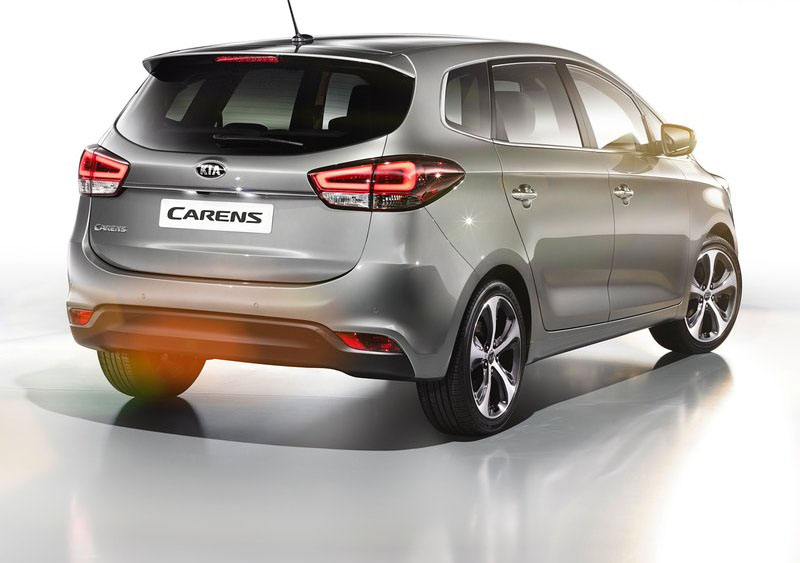
Kia Carens, 2013


  •  Kia Carens, 2013

The all-new Kia Carens is a completely fresh model from the ground up, and its sleek and sculpted design marks a dramatic shift away from the more utilitarian look of its predecessor.

It builds on the functionality and versatility of the original Kia Carens, with a spacious five or five-plus-two seating layout, a generously proportioned luggage bay and numerous stowage spaces, but wraps this family-friendly adaptability in more purposeful sheet metal.

"I wanted to give the new Carens a sleeker look and feel, to create a design that envelops its functionality and versatility in something altogether more athletic and dynamic," says Peter Schreyer, Kia's Chief Design Officer.

"The new-found visual dynamism is important - this car needs to look appealing and attractive - but during its design and development stages, we never lost sight of the fact that its packaging flexibility and adaptability are why people buy these cars," explains Schreyer.

Both Schreyer and Gregory Guillaume, Kia's Chief Designer Europe, are candid when discussing the design of the Kia Carens. "A vehicle like the Carens is probably one of the hardest of all to get right because we are very tightly constrained by the car's functionality," says Guillaume. "That packaging versatility cannot in any way be compromised by the design of the car because to do so would eradicate the car's raison d'être."

Schreyer and Guillaume's team created subtle styling cues to enhance the Kia Carens' elegant and balanced proportions and deliver an air of sophistication and refinement.

As an example Schreyer singles out the understated chrome strip that runs from the base of the windscreen, along the lower level of windows and curls up to meet the C-pillar. "This not only adds a premium feel to the clean-cut exterior, but also creates a visual link with the new Sportage, which features the same design motif," he explains.

One of Schreyer's design goals was improved visibility - a key element for safe driving, particularly in congested urban areas. "The base of the windscreen is very low and this works with the front quarter windows and the low and wide sweeping dashboard design to deliver excellent visibility," explains Schreyer. The panoramic glass roof that floods the cabin with light further enhances this sense of spaciousness.

The Kia Carens design team worked hard on ensuring the front and rear overhangs were kept as short as possible to boost manoeuvrability when parking and negotiating city traffic.

Neat touches abound - the integrated roof rails, the sleek rear spoiler, the three-way split second-row seats that feature individual fore and aft adjustment, and Kia's tactile new steering wheel.

"With its nigh-perfect balance of proportion, style and functionality, the distinctive new Carens marks yet another successful and stylish step for Kia's global design team," says Schreyer proudly. "There's a design honesty here - the Kia Carens is neither over-dressed nor does it feature contrived design elements. It's a car cleanly and elegantly defined by its functionality."
Read More

Monday, February 11, 2013

Jeep Grand Cherokee Trailhawk, 2013


  • Jeep Grand Cherokee Trailhawk, 2013

For 2013, Jeep announces the production version of the Jeep Grand Cherokee Trail hawk first seen as a concept at the 2012 Easter Jeep Safari in Moab, Utah. The Grand Cherokee Trail hawk is evidence that even the most awarded SUV ever, and the most capable Grand Cherokee ever, can get even better.

The 2013 Grand Cherokee Trailhawk is available with a V-6 or V-8 engine and includes the following capability-enhancing equipment:
  •     18-inch Goodyear Silent Armor all-terrain tires with Kevlar reinforcement
  •     Solid steel rock rail body protection
  •     Quadra-Lift air suspension, with nearly 11 inches of ground clearance
  •     Selec-Terrain traction control system with five settings: Snow, Rock, Sand/Mud, Sport and Auto
  •     A Rear Electronic Limited-slip Differential (ELSD, V-8) that can transfer up to 100% of engine's torque to one rear wheel in order to keep the Jeep moving forward even in the most extreme situations
  •     Quadra-Track II or Quadra-Drive II (V-8) with a two-speed transfer case to help conquer the toughest obstacles

The Jeep Grand Cherokee Trailhawk is easily recognized with new signature red Trailhawk and Trail Rated badging and tow hooks, black-surround headlamps and a unique gray on the grille surround, side mirrors, rear light bar, 4x4 badge and five-spoke 18-inch aluminum wheels. A black hood decal with a red accent stripe helps reduce glare from the sun which can help the driver in extreme off-road situations.

Trailhawk-specific interior touches include black leather and performance suede seats with red accent stitching and Mopar slush floor mats front and rear.

The 2013 Jeep Grand Cherokee Trailhawk is available in Bright White, Brilliant Black, Mineral Gray, Maximum Steel and Deep Cherry Red.
Read More

Sunday, February 10, 2013

Iveco Campagnola, 2009


  •  Iveco Campagnola, 2009

The Iveco Campagnola is back, after more than twenty years . The Italy's best loved Fiat vehicle was originally produced in different versions from 1951 to 1987.

The new Iveco Campagnola is part of the Iveco brand and is derived from Massif, the 4x4 off-road vehicle. Iveco is one of the few global manufacturers to offer a complete range of all-wheel-drive vehicles and with Massif the company has entered a completely new sector of professional transport for the first time offering two light off-road vehicles. Iveco Campagnola extends the range with a model specifically for passenger transport, without sacrificing the authentic off-road features behind the success of its ancestor: separate chassis, all-wheel-drive, high mobility and exceptional off-road capability. In addition to offering the qualities of comfort and driveability demanded by a modern off-road vehicle.

THE MODEL IN BRIEF
Heir to the Fiat tradition in this sector, the new Iveco Campagnola is a special numbered version of the Iveco Massif conceived for professional off-road use.

As a people carrier, the Iveco Campagnola uses the original form of the sporty off-road vehicle, reinventing the authentic spirit of the 4x4 with a modern twist. Its appearance, designed by Giugiaro and the Fiat Centro Stile is very endearing and makes it particularly attractive its front reflecting the family style of Iveco vehicles with its charachteristic radiator grille.

Available only with 3 doors and 4 seats, Iveco Campagnola has a wheelbase of 2452mm, is 4248 mm long, 1750mm wide and 2050mm high. It is equipped with the Daily 3 litre Euro 4 HPT 4-cylinder 16-valve turbodiesel range recognized as the best engine in its class. With its Variable Geometry Turbocharger, it delivers 176hp (129.5kw) at 3,200-3,500 rpm and a maximum torque of 400 Nm at 1,250-3000 rpm. It is combined with 6-speed FPT 2840 transmission.

Available in two historical colours, sage green and ivory with echoes of the past, Iveco Campagnola offers equipment and features more often found in ordinary cars than off-road vehicles. The interior has plenty to offer, with electric front windows, leather upholstery even for the steering wheel and transmission controls, climate control, radio/CD player with 4 speakers and optional GPS system. Outside the Iveco Campagnola "Opening Edition" nameplate displays on both sides the vehicle's logo and number indicating a limited production series. The wheel rims and the bodywork are in matching colours while the bumper and mudguards are finished in matt. Iveco Campagnola is equipped with a engageable rear differential lock, ABS, Immobilizer and anti-theft device.

HEIR TO THE FIAT OFF-ROAD TRADITION
With this vehicle Iveco puts an era-defining means of transport back on the road: "the go-anywhere vehicle that doesn't need a road" as an advertising slogan put it in 1951, the year the Fiat Campagnola was launched.

The memory of the legendary light military vehicles used during the second world war still fresh in the memory: the Willys proved themselves an ideal means of support and reconnaissance. Inspired by this formula, the Italian government ran a competition for special-use vehicles. The history of Campagnola, an icon of Fiat off-road vehicles, is linked, in post-war Italy with that of its 'twin' Alfa Romeo. Fiat and Alfa separately designed two analogous models, named in military terms AR 51 (the abbreviation is short for 'Autoveicoli da Ricognizione' and the number a reference to its year of introduction of 1951) both with 1900 cm3 engines. For civilian use, Fiat chose the less aggressive name of Campagnola and its Milanese 'rival' was called Matta (like the joker in a pack of cards). Only the Campagnola met with extraordinary success, while the Alfa 4x4 was produced up to 1955 with only 2059 units produced. The decisive factor in determining the preference for the Fiat model was its price, the Alfa featured much more expensive technology, inaccessible to public bodies.

The Campagnola D, designed by Dante Giacosa and constructed according to the Willys mould, debuted at the Fiera del Levante show in Bari in 1951 at a price of 1,600,000 lire. It had a front mounted engine, 4 driven wheels with disengagable front driven wheels and a transfer box. In November 1951 it crossed Africa from Cape Town to Algiers in 11 days, 4 hours and 54 minutes, overcoming every possible adversity and establishing the world record. The Campagnola, with petrol engine rated at 53hp at 5,300 rpm, 4 speed and reverse transmission, (II, III and IV synchronized), lockable rear differential, central gearshift lever and top speed of 100km/h. with a gradeability of 90% (in first gear) and consumed an average of 12.1 litres per 100km. The body was 3.64m long and 1.48 wide and weighed 1,250kg. The front suspension was independent with wishbones, helical springs, hydraulic dampers and stabilizing bar. In short, the best available at that time. The rear suspension was by leaf springs with a rigid axle and hydraulic dampers. The AR 51 military version was also adopted by the Carabinieri.

1953 saw the appearance of the 40hp 3200 rpm diesel version (still 1.9) offering 85km/h at a price of 1,792,000 lire.

In 1955 came the Campagnola A (AR 55) with more powerful 63hp (116 km/h) petrol engine and 43hp diesel model, in 1960 the Campagnola B with 47hp diesel engine, reaching 95 km/h. The Fiat off-road was able to carry 6 people with more than 60kg of luggage, or one person with 410kg of luggage.

1968 was the turn of the C Diesel: a 1895cc, 47 hp engine developing at 3,800 rpm, 96 km/h. The production of the first Campagnola ceased in 1973, following the production of 39,086 models, of which 7,783 models were diesel.

The summer 1974 saw the debut of the new Campagnola, manufactured until 1979. Much more technically advanced it was also a much more comfortable model: it could transport up to 7 people. It was launched at the Belgrade Show and retained only the name of its predecessor. It was a modern vehicle with engines already proven on the Fiat 132, independent four wheel suspension and automotive bodywork. Optional features included locking differentials on both axles and improved tyres, dual-joint front driveshafts rear seats and a ventilation system. The engine had 4 cylinders inline of 1,995 cm3 swept volume rated at 80hp at 4,600rpm, 4 speed and reverse transmission, (fully synchronized), central gearshift lever and a top speed of 115 km/h. The new Campagnola was 3.77m long and 1.58 wide and weighed 1,570kg when empty. It had a selling prico of 4,076,000 lire. The 'Torpedo Corta' version features roof and sides in removable fabric.

In 1976 the 'Lunga' (with an increased rear of 25cm overhang) and 'Hardtop' (with completely metallic bodywork) versions were introduced.

In autumn 1979 Fiat replaced the engine of the new Campagnola with a new diesel engine more suited for off-road use: the 2-litre SOFIM provided 60hp at 4,200 rpm and guaranteed a top speed of 120km/h. There have been numerous enhancements to its bodywork and interior. The list price ranged from 14,018,000 to 15,198,000 lire according to the version. Production of Campagnola ceased in 1987.

The Campagnola held particular significance for post-war Italy and during the reconstruction of the 1950s. It was a means of transport that defined an era in a country still lacking an adequate road infrastructure and is still alive in the memories of Italians. Used by the Carabinieri, the Italian army and the Civil Defence Corps and also became famous as the Popemobile, the white livery model featuring the Vatican insignia. The one used by Benedict XVI for his first official outing in the crowds of the Piazza San Pietro is the same one that was donated to John Paul II on the occasion of his visit to Turin in 1980 and accompanied the public appearances of Karol Wojtyla who introduced - also thanks to this vehicle - a new way of communicating with people. Also in white, but with the UN logo, the Campagnola has participated on numerous international peace missions throughout the continents,

CAMPAGNOLA TECHNOLOGY
Iveco Campagnola has adopted the Massif off-road cutting-edge technology, with a strong impression that sets it apart from the Sports Utility Vehicle used mainly on metalled roads. A return to the origins of 4x4 that makes compromising between road and off-road vehicles a thing of the past. Like Massif, the new Campagnola is suitable for all terrains, capable of offering specific optimal performance and tackling extreme off-road routes with confidence. The gradeability at full-load is 100%, with an approach angle of 50°, a departure angle of 34° and a ramp angle of 33°. The standard fording depth is 500m, the all-wheel-drive is disengageable - with traction on the rear axle - to ensure considerably reduced fuel consumption.

The transmission
The 6-speed FPT 2840 with overdrive is linked to the transfer case allowing a choice of 4x2 or 4x4 traction. It has 12 forward gears and 2 in reverse. The excellent combination of components takes its inspiration from the Daily range, the transfer box is linked to the front and rear axles via the transmission shafts. This provides a drive ratio of approximately 1:1 and the engagement of all-wheel-drive is selectable when the vehicle is in high range. In low range only all-wheel-drive is available. The parking brake is mounted on the rear axle output flange of the transfer box, resulting in a more powerful braking torque since it is multiplied by the drive axle ratio. This is an extremely important feature because it means that the vehicle can be held by its parking brake in all the impressive gradients it can climb.

Suspension
The separate chassis with axles mounted on parabolic leaf springs is a no-compromise choice: the separate chassis ensures the high structural stresses of off-road use avoid being transmitted to the body structure, preserving longevity. The leaf springs provide axle location and body suspension without the need for extra drive- or braking-force reaction members or axle location links to the vehicle chassis. The parabolic leaf springs serve a double role of suspension of the chassis and axle location. The suspension layout facilitates the reactions to the drive and braking torque without the need for additional links or forks: a definite advantage for off-road vehicles. The front axle is equipped with double-acting hydraulic dampers, the rear axle with double acting gas dampers. The system is completed by front and rear antiroll stabilizing bars. The maximum load of the front and rear axle is respectively 1175kg and 1750kg with the maximum vehicle load of 2650kg.

The braking system
The braking system incorporates a double hydraulic circuit with a vacuum servo-assistance circuit which actuates the disc brakes all round, ventilated on the front axle. The parking brake is a cable-actuated drum brake, mounted on the transfer box for improved braking torque with a multiplication factor matching the drive axle ratio.

State-of-the-art engine
The heart of the Iveco Campagnola is its 3 litre HPT engine originating from the Daily range, a 4-cylinder 16-valve turbocharged diesel engine with technologically advanced common rail fuel injection system offering superb performance and consistent fuel economy. The engine is certified according to Euro 4 emission standards, using Exhaust Gas Recirculation (EGR) to reduce production of nitrogen oxide and an oxidizing catalyst. With its variable geometry turbocharger, the engine delivers 176hp at 3,200-3,500 rpm and a maximum torque of 400 Nm at 1250-3000 rpm. It is a power unit unique in its category,

BRAND VALUES
Iveco Campagnola is designed to reflect the fundamental values of Iveco excellence: determination, reliability, performance and team spirit. These values are shared by the New Zealand rugby squad, the All Blacks, that have won more matches than any other team in history. The same team spirit serves as inspiration for Massif and Campagnola: it means working alongside clients for the entire vehicle's life, starting with the product development phase, through work of specialist engineers and Iveco R&D centres which involve clients from the planning stage and then during the purchase, with the help of professionals ready to offer technical assistance and financial solutions to cater for every necessity. The same high service is offered to clients during vehicle activity, with a call centre open 7 days a week, 24 hours a day, 365 days a year and a efficient and widespread network (more than 4,600 specialist centres in 100 countries).

Iveco - the complete range of all-wheel-drive vehicles
The Iveco Campagnola is one of the Massif passenger-carrying models, forming part of a small but important niche in the market for all-wheel-drive work vehicles. Massif is produced with conjunction with the Spanish manufacturer Santana, whose original vehicle has been completely redesigned by Iveco experts with considerable use of technology and solutions derived from the Daily. The fruit of this profound re-engineering is a vehicle suitable for genuine 'off-road truck' missions. Iveco's authority in the 4x4 sector extends to the entire range of commercial vehicles, from light to heavy models - Daily, Eurocargo and Trakker, not to mention the Iveco Astra range and the advanced technology products developed by the Iveco defence division - providing an appropriate response to all types of mission and all work conditions. These all-wheel-drive vehicles are remarkably sturdy, ideal to transport people and equipment wherever they are needed, often in emergency conditions. The reliability of these vehicles is second to none in extreme as well as normal conditions. The numerous demands of the off-road have no negative impact on driver comfort which remains as enjoyable as it would imagine to be.

Front and rear drive axles
Drive axles are positioned at the front and rear of the vehicle with a final drive ratio of 3,909:1. The final drive gearing used on the front axle is helicoidal while that on the rear axle is a hypoid gear set to provide improved ground clearance for the centrally-mounted differential housing.

Wheels and tyres
235/85R16 tyres suitable for all surfaces are included in the base vehicle specification with the choice of specific off-road tyres mountable on the standard steel rims or on optional aluminium rims.
Read More

Saturday, February 9, 2013

Isuzu Rodeo 3.0 Denver, 2011


  •  Isuzu Rodeo 3.0 Denver, 2011

A pickup without compromise from the company that calls itself 'the pickup professionals', the 2011 Isuzu Rodeo range offers UK consumers the perfect blend of rugged ability with performance, comfort with style, and self-assured confidence with truck-like toughness.

Unlike other pickups, the Isuzu Rodeo doesn't just have bespoke parts, it's an entirely bespoke vehicle built from the ground up to take on a broad range of challenges in the widest variety of conditions.

Isuzu believes that a pickup isn't a pickup if it is not equally as good off-road as it is on the tarmac. Thanks to its commercial vehicle DNA and decades of Isuzu expertise, the Rodeo can make the toughest of jobs seem effortless and the inaccessible suddenly isn't.

In its latest form, the Isuzu Rodeo line-up presents UK consumers with a choice of eight models, single and double cab body styles, two diesel engines, two- or four-wheel drive and manual or automatic transmissions.

Prices for the 2011 Rodeo line-up range from £12,699 to £22,549 (commercial vehicle on the road), and because of their 1,000 kg-plus payloads, all Rodeos allow a VAT registered company to reclaim the VAT.

A choice of seven exterior colours is offered - with solid white as standard and two metallic and four mica colours available either as a £315 extra cost option (FOC on the two Max LE models).

Originally launched in the UK in November 2003, the Isuzu Rodeo underwent a substantial upgrade in 2007 with a plush new interior and world-beating new common-rail diesel engine joining the line-up to keep it a highly competitive vehicle in the hotly-contested UK market for 'lifestyle' one-tonne pickups.

The Rodeo was soon acknowledged as the most up-to-date and sophisticated vehicle in its class and quickly racked up numerous awards. These included: 'Best Double Cab Pickup' from Used Car Buyer magazine, 'Lifestyle Pickup Winner' from 4x4 magazine, the Caravan Club's '2005 Towcar of the Year / Utility Class' accolade and the 'Best-In-Class' title from WhatVan? magazine.

In addition to the Rodeo's competitive fuel economy, running costs are driven down by 12,000 miles or 12 months service intervals. Isuzu's legendary reliability is endorsed by a three-year/60,000 mile bumper-to-bumper mechanical warranty, along with three-years' recovery and assistance cover. Extra underbody and box section rust proofing allows Isuzu Rodeo owners to also benefit from a six-year anti-corrosion warranty.

Outside the UK, the Isuzu Rodeo pickup is a remarkable global phenomenon. Known as the Isuzu D-Max in certain countries, it was launched in Thailand, where it is manufactured, in May 2002. Its remarkable combination of attributes quickly established this model as a global leader, with Isuzu exporting vehicles to more than 80 countries worldwide - including Australia where it wears a 'Holden' badge.

Selling in vast volumes, the Rodeo has been the world's Number One best-seller in the one-tonne pickup market since 1983.

STYLING
Famed for its understated yet purposeful appeal, the super-tough appearance of the Rodeo range combines car-like detailing with a strong road presence.

Completely upgraded in 2007, the Isuzu Rodeo double-cab features a whole new look, with a new grille, projector-type headlamps, new bumper within inset foglamps and a new bonnet with intercooler intake.

The pickup's wide track is accentuated by clearly-defined wheelarch swage lines - further enhanced by chunky-looking extensions. The cab design itself is especially well integrated with the load bed - avoiding the boxy, add-on look of many vehicles in this segment. Smoother rear side panels behind the cab have contours which are complemented by a new tailgate and rear lamps.

Sophisticated, car-like detailing extends to the multi-element headlamps, turn indicator 'repeaters' set in the door mirrors and tight panel-gaps throughout the body. The flowing surface treatment can be further enhanced by the choice of high-gloss mica or metallic paint.

The overall sensation of high quality is endorsed by the grab-type exterior door handles which have a substantial feel, but also an especially light movement, and the large wrap-round rear lights.

Spacious, comfortable and ergonomic interior
The neat sophistication of the Rodeo's exterior design is carried over into the interior styling, with a one-piece fascia, car-like soft-touch surfaces across the doors and fascia, plus efficient control ergonomics with all major controls readily at hand and a standard of seat comfort previously unheard of in a pickup.

Generously proportioned, the Rodeo seats are trimmed in a plush Moquette cloth which is also featured on the door trims. Featuring crisp, clear graphics, the three instrument dials are electro-luminescent. Large circular, adjustable air vents in the centre and outboard on the fascia, compliment the chunky, four-spoke steering wheel with a bold 'ISUZU' logo encircled inside a chrome ring. All Rodeos benefit from extensive cabin sound-proofing with insulation placed in critical areas of the bodyshell to heighten refinement.

The attractive centre stack houses easy-to-use rotary controls for the ventilation and air-conditioning, the audio and (where fitted) sat-nav systems, and below the top air vents, a digital clock and three selector buttons for the 'shift-on-the fly' drivetrain, allowing 2WD (2H) and 4WD (4H) to be engaged on the move at speeds up to 60 mph. For low ratio (4L) selection, the vehicle must be stationary but operation is equally simple.

Cabin space is generous with 1,004 mm of headroom and 1,450 mm of shoulder room, up front. To ensure that the majority of users can find a comfortable driving position, the driver's seat has 200 mm of fore/aft travel and the steering wheel is height-adjustable.

Rear seat passengers are also well looked after. Access is easy as the rear doors are much wider than most competitors and can be opened up to 68.5 degrees allowing easy entry and exit. The rear seat backrest is reclined to a greater angle (than many rivals) for improved comfort and rear legroom is also ample.

COMFORT & CONVENIENCE
The 2011 line-up of Isuzu Rodeo models encompasses four versions of the Double Cab 4x4 so customers can tailor their chosen vehicle to their specific needs and budget.

The entry-level Denver has a generous specification that includes as standard: air-conditioning, four electric windows, 16-inch alloy wheels, keyless-entry central-locking, a leather-wrapped steering wheel, single-disc radio/CD player with MP3 capability and iPod connectivity. This model is priced from £16,049 (Commercial OTR).

Expected to be the biggest seller, the Denver Max costs just £1,000 more (from £17,049) and comes with additional features such as soft-type front bumper A-bar, stainless steel side-steps, an under (or over) -rail load bed liner, stainless steel door scuff plates, a 'double-DIN' radio with CD player and MP3 capability, plus Bluetooth hands-free kit and chrome-finish rear lamp protectors.

Priced from £19,299, the Denver Max Plus adds a two-tone leather interior, cruise control and a touch-screen colour sat-nav system to its standard specification.

The range-topping Denver Max LE benefits from 18-inch 'Shadow Chrome' alloy wheels with 255/60 R18 tyres, stainless steel mesh front grille, chrome finish bonnet garnish, and a body-colour hard top with locking tailgate. Pricing is from £21,549.

With its focus on hard work, rather than a work/leisure mix, the Rodeo Single Cab 4x2, which carries a £12,699 price tag, is equipped with tinted glass, ABS, front airbags, seatbelts with pre-tensioners, single disc radio/CD player with two speakers and an anti-theft alarm.

The ENGINES & PERFORMANCE
Isuzu is the world's biggest manufacturer of diesel engines and appropriately, its four cylinder power units for the Isuzu Rodeo pickup range deliver best-in-class combinations of fuel-economy, emissions, performance and refinement.

Available in two capacities (2.5 and 3.0 litres), the Isuzu diesel for Rodeo is fitted with a top mounted intercooler and five-speed manual gearbox as standard. It features twin overhead camshafts with 16 valves, a stainless steel timing chain, and an advanced common-rail system operating at a high-pressure (180 MPa), with an electronically-controlled injection pump for precise and constant 'just-in-time' fuel supply. A variable geometry turbocharger (VGT) - with turbine blades that vary their pitch according to engine speed - provides strong pulling power throughout the rev-range.

For excellent pulling power, a large percentage of maximum torque is available from both engines at just 1,000 rpm - 60 percent (2.5) and more than 70 percent (3.0).

Featuring a 95.4 mm bore and short 87.4 mm stroke, the 2,499 cc engine is especially smooth, quiet and free-revving and runs on an 18.3:1 compression ratio. Maximum power is 136 ps at 3,600 rpm, with 294 Nm of torque from 1,800 to 3,200 rpm.

This engine complies with Euro4 emission standards and delivers class-leading fuel economy - 28.8, 39.8 and 34.9 mpg on the Urban, Extra Urban and Combined cycles - with a CO2 rating of 213 g/km.

The Isuzu Rodeo's 2.5-litre engine generates more power and torque than the previous generation 3-litre power unit, throughout the entire rev-range and delivers an especially strong performance between 2,500 and 3,500 rpm with much improved throttle response. With this engine, Rodeo accelerates to 62 mph in just 12.8 seconds - a 38 percent improvement on the previous model.

3-litre delivers 20 percent more power and torque
The 3-litre engine has the same cylinder bore, with a significantly longer stroke (104.9 mm) for a capacity of 2,999 cc. Its power output is up 20 percent to 163 ps and torque rises to 360 Nm for the manual transmission Rodeo - a 22 percent hike. Acceleration time to 62 mph is cut by 2.1 seconds to 10.7. Fuel economy figures are 26.9, 39.2 and 33.6 mpg (Urban, Extra Urban and Combined cycles), with CO2 emissions of 222 g/km.

When mated to the optional four-speed automatic transmission, the 3-litre engine is re-tuned to deliver a little less torque (333 Nm) but over a wider rev-band, from 1,600 to 3,200 rpm. This engine/gearbox combination returns fuel economy of 25.9, 35.8 and 31.4 mpg (Urban, Extra Urban and Combined cycles), with CO2 emissions of 237 g/km.

Standard transmission for Isuzu Rodeo is a five-speed manual gearbox with a high top gear ratio - 0.745:1 (2.5) and 0.790:1 (3.0) - for quieter and more fuel-efficient motoring at higher cruising speeds. Fifth gear, for example, now delivers a relaxed 27.9 mph/1,000 rpm in the 3-litre model.

Class-leading 'hauling' and 'towing' performances

The Rodeo's Double-Cab and Single-Cab cargo dimensions, payload capacity and towing weights are among the very best available in the UK's pickup marketplace.

The Double-Cab's cargo bay measures 1,360 x 1,340 mm and can accommodate a highly competitive 1,075 kg payload. This is comfortably over the tax-critical 1,000 kg threshold which allows companies to reclaim VAT. Towing weight is equally impressive at a class-leading 3,000 kg.

Off-road, the Rodeo Double-Cab's credentials promise an amazing capability. Ground clearance is a generous 205 mm while approach, departure and ramp angles are 34, 21 and 21 degrees. The maximum transverse angle is a remarkable 49 degrees and Isuzu's pickup can wade through 600 mm deep water at 5 mph. The rear axle even has a snorkel to enable the Rodeo to 'breathe' under water.

Optimised for a hard working life, the Single-Cab's cargo area is a massive 2,280 mm long and 1,520 wide, while the maximum payload is 1,235 kg. Ground clearance is 195 mm, wading depth 400 mm and towing capacity 2,500 kg.

CHASSIS & RUNNING GEAR
Decades of experience manufacturing some of the world's best-selling trucks and commercial vehicles, are incorporated into Isuzu's Rodeo pickup range which is 'built tough' from the ground up.

Maximising the attributes of a traditional ladder frame and separate bodyshell structure, the Isuzu Rodeo features the largest and widest chassis of any pickup with eight cross members and a reinforced cargo bed support. Highlighting this model's truck DNA, the heavy-duty rear axle has dual-taper wheel bearings, while the front suspension's upper control arms and stub axles are engineered for immense strength and longevity.

Rugged yet refined, the Rodeo's suspension is designed to deliver a smoother ride than most competitors, with an unusual degree of steering precision for this class. It features power-assisted rack-and-pinion steering rather than the less precise recirculating ball system still used by many one-tonne pickups.

Front suspension is fully independent employing double wishbones and torsion bars, with an anti-roll bar as standard. Rear suspension features a live axle suspended by semi-elliptic steel leaf springs for maximum simplicity and durability, plus the ability to absorb punishing payloads. The rear springs are carefully tuned to work in harmony with the front suspension to reduce the unladen ride choppiness displayed by many rival models. Ride comfort is further enhanced by the fitting of gas-filled double-acting shock absorbers, front and rear.

The Rodeo has a braking system especially designed for demanding commercial use when fully laden. It features large 280 mm ventilated front discs with twin-piston calipers which enhance braking performance and ensure even brake pad wear. The 295 mm rear drums are fitted with improved, fade-resistant pad material. The dual-circuit braking system has a large 230 mm (9.0 ins) tandem servo. In addition, all Rodeos have a sophisticated three-channel, four-sensor anti-lock braking system (ABS) with electronic brakeforce distribution (EBD).

Alloy wheels are standard on all Isuzu Rodeo Double Cab derivatives in the UK - 16 x 7 inch with 245/70 R16 tyres on most models, with 18 x 8.5 inch alloys and 255/60 R18 tyres for the Rodeo Denver Max LE.

SAFETY & SECURITY
The Rodeo's standard 'active' and 'passive' safety features are truly outstanding for a pickup - the result of Isuzu taking care of its product users bearing in mind that in many countries, such as in the Far East or on the Greek peninsular, this vehicle is chosen as the primary family car, as well as an everyday work mate.

The Isuzu Rodeo has built-in strengths that also deliver benefits in terms of safety. The separate ladder-frame chassis is 60 percent stiffer longitudinally and 50 percent stronger laterally - compared to the previous generation model. A special cross member at the rear of the chassis greatly increases torsional rigidity and spreads the weight of the payload more evenly.

Helping safety, refinement and durability is a single-piece cabin side panel. This is formed from galvanized steel, for maximum corrosion-protection, as are the cabin rear bulkhead, inner and outer door skins, bonnet, wings, wheel arch housings, load bay floor and sides, plus the tailgate. For maximum longevity as well as impact resistance, the fuel tank is made of polyethylene.

To help Rodeo drivers cope with everyday motoring hazards, 'active' safety features fitted as standard include a three-channel, four-sensor anti-lock braking system (ABS) with electronic brakeforce distribution (EBD). This latter feature is especially important on a pickup which has to cope with a wide variation between laden and unladen weight. The Rodeo's EBD compensates for the front and rear load differences during braking - before the ABS intervenes - preventing rear wheel lock-up which can affect some pickups.

'Passive' safety kit fitted to all Rodeos includes twin front airbags and impact-resistant side protection beams for all doors. The front and rear of the bodyshell have special crush zones designed to provide maximum absorption of impact forces, while the centre section and chassis are specially reinforced.

Every Isuzu Rodeo occupant benefits from a three-point seatbelt - even for the rear centre passenger in double-cab models. The front seatbelts have pretensioners with load-limiters and are height-adjustable as are the two outer rear seatbelts. An ISOFIX child seat mounting is fitted to the two outer rear seats - making the Rodeo ideally suited for use as a 'lifestyle' family vehicle.

Passenger car-like security features include an engine immobiliser for all models plus a warning reminder should the ignition key be left in the vehicle inadvertently. An anti-theft alarm is standard, together with central door locking with a keyless entry facility featuring a rolling code for even greater security. This works by changing the code between the key and the vehicle every time the Isuzu Rodeo is locked and unlocked.
Read More