Friday, February 8, 2013

Hyundai HB20, 2013


  • Hyundai HB20, 2013

Hyundai Motor Brasil (HMB), a wholly-owned subsidiary of Hyundai Motor Company, launched its long-awaited Brazil-exclusive model, officially entering the biggest and most competitive segment in the country's auto market.

The Hyundai HB20 compact hatchback will be the first model to be produced at Hyundai's fully-owned new plant in Piracicaba, which will officially hold an opening ceremony later this year. Production of the new vehicle will begin on Sept. 20, while sales will begin in early October.

"For Hyundai, the launch of HB20 means a lot more than simply presenting a new model. Unlike our other models currently offered in Brazil, HB20 is the first model strategically developed and produced exclusively for the Brazilian market. The new car is optimized to the taste of Brazilian consumers and the driving conditions in this country, with years of dedication from our engineers. I guarantee with pride that HB20 will change the perception of Brazilian customers in the small car segment," Chang Kyun Han, President of HMB, said at the launching event, which was held at Hotel Transamerica Ilha de Comandatuba in the eastern Brazilian state of Bahia yesterday.

Offering modernity and equipped with the latest technologies to differentiate itself from the competition, all nine versions of the Hyundai HB20 will have a comprehensive package of items offered as standard from entry levels: Hydraulic power steering, dual front airbags, air-conditioning, a spoiler with a built-in brake lights, a rear windshield wiper and storage compartments for all passengers, to name a few. The name "HB" stands for Hyundai Brasil, while the number "20" is the company's characterization for vehicles in this segment, a category that includes models assembled on small or compact vehicle platforms.

Hyundai dedicated approximately five years to develop the new model, which is part of the company's larger regionalization strategy. Dozens of Brazilian and Korean engineers were involved in the project during the conception phase to develop an ideal car that could handle Brazil's typical road conditions, as well as satisfy consumers' emotional needs. Mainly, Hyundai placed great importance on design, taking into account Brazilian consumers' sensitivity to stylish and fuel-efficient cars. HB20, Hyundai's first flex-fuel car, also features advanced anti-theft functions for maximum security.

The Design
The Hyundai HB20 is a compact and economical model that is poised to become a benchmark in style due to its flowing lines, excellent finish and the quality of its assembly.

Based on Hyundai's Fluidic Sculpture design philosophy, HB20's external details accentuate the modern and sporting lines of the hatchback. Its high waist-line and rear accentuates its stylishness and exclusivity.

The Hyundai HB20's interior also differentiates itself from competitors with its modernity, sophistication, comfort and practicality. The impressive details and high quality of its finish are immediately noticeable, while chrome, metallic and leather-covered parts are options that enhance the model's stylishness even more. In its search to maximize consumer comfort, the HB20 has achieved some of the lowest noise and vibration levels in its class, while the spacious interior will surprise consumers.

The Powertrain & Transmission
The Hyundai HB20 comes with three powertrains: 1.0L and 1.6L, with a manual gearbox and 1.6L, with automatic transmission.

The vehicle's 5-speed manual gearbox has precise and perfect shifting, providing comfort and a rapid response. The automatic option has four gears, with smooth changing.

All versions are equipped with a flex-fuel engine. The 1.0L model has three cylinders and gains in power due to reduced friction and better energy efficiency, leading to lower fuel consumption, a reduction in pollutant emissions and lower maintenance costs. It is considered to be 6% more powerful than the segment's average. The 1.6L version has four cylinders and emits 23% more power than the segment's average.

The Hyundai HB20 is equipped with a continuous variable valve timing (CVVT), which optimizes the air-fuel mixture both at low and high RPM, leading to improved performance and fuel consumption.

The HB family will also have sedan and crossover versions that will come to market during 2013. The three models will all be produced at Hyundai's first plant in Brazil. The Piracicaba factory covers 1,390,000 square meters of land, of which 69,000 square meters will consist of facilities. The plant is Hyundai's seventh overseas manufacturing base outside South Korea, after Turkey, India, China, the United States, the Czech Republic and Russia. The company invested a total of US$ 600 million in the facilities.
Read More

Thursday, February 7, 2013

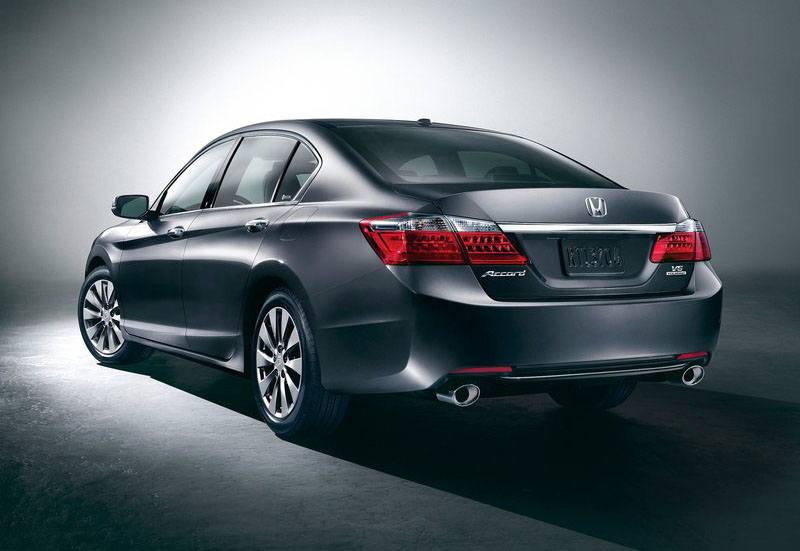
Honda Accord, 2013


  •  Honda Accord, 2013

The all-new 2013 Honda Accord Sedan and Honda Accord Coupe mark the beginning of the ninth generation of Honda's best-selling midsize car. More luxurious, more sophisticated, better performing and better equipped than any other model in the Accord's 37-year history, the 2013 models remarkably advance the sense of luxury and craftsmanship, vehicle dynamics and the range of standard equipment to the highest levels in their class. Built in two locations in Ohio, launch of the all-new models celebrates 30 continuous years of Accord production in the United States.

The exterior length and wheelbase of both the Accord Sedan and Coupe are slightly more compact than the prior generation Accord while still providing improvements in key interior dimensions including rear legroom and trunk volume. The result is a spacious all-new Accord that boasts a sportier appearance, more responsive handling and improved driving dynamics.

From the tip of the front bumpers to the end of the exhaust finishers, literally nothing was left unexamined when redesigning the Honda Accord. This includes major elements like the unit-body, sheet metal, glass and aerodynamics, along with interior features and electronic systems, the engines and transmissions, the chassis components, and the many safety systems. Despite the complete generational changes, however, the 2013 Accord Sedan and Coupe are still tightly focused on providing the same long-established blend of unbeatable Honda safety and security, value for money, fun-to-drive performance and handling, and passenger comfort and convenience.

Fuel efficiency is also improved, with EPA estimated highway mileage ratings up to 36 mpg for the 4-cylinder Accord and 34 mpg for the V-6 Accord Sedan. Not only does Accord advance the state of the art in its segment, but the new Honda Accord models also introduce a host of new technologies to Honda - while serving as the first vehicle to use Honda's new Earth Dreams™ technology, which is dedicated to enhancing fuel efficiency and minimizing the company's environmental footprint. In early 2013, an all-new 2014 Accord Plug-in Hybrid (PHEV) Sedan will launch, followed by a conventional hybrid based on the same powertrain architecture in the summer of 2013, bringing Honda levels of fun and efficiency to the hybrid segment.

Safety advancements include a thoroughly revised Advanced Compatibility Engineering™ (ACE™) body structure and available Forward Collision Warning (FCW) and Lane Departure Warning (LDW) systems.

Body
Crisply styled and aerodynamically efficient, the all-new 2013 Accord Sedan and Accord Coupe body design and engineering are the most sophisticated in the Accord nameplate's 37-year history. The advances are tailor-made to improve every aspect of the Accord ownership experience, from more precise ride and handling to a quieter interior environment, along with enhanced visibility and greater fuel efficiency.

The 2013 Accord's unit-body uses more high-strength steel than any Accord in the model's history. This gives the Accord high structural strength for improved ride quality and more precise cornering. The Sedan's body design is bold and decisive, sleek and fluid, while the Coupe body design is rakish, taut and athletic. In both body styles, extensive use of aerodynamic detailing, including expanded use of under-covers, improves the Honda Accord's aerodynamic efficiency, which directly benefits fuel efficiency. Other advances include available LED headlights, LED DRLs, mirror-mounted turn signals, and an Expanded View Driver's Mirror that increases the driver's field of vision by 4.2 degrees.

Exterior Design
Even the Sedan's body-sides are expressive, with a character line flowing upward and rearward across the door surfaces, and a deep contour strategically positioned at the lower doors, offering substance and a sense of motion. Bright window surround trim adds a luxury feel, while in back, the tops of the rear fenders curve inward toward the C-pillars like flexed muscles. The EX-L and Touring models offer chrome door handles and additional trim on the rear panel for added elegance.

The Accord Coupe is the most exhilarating 2-door Honda Accord yet. Its front end is set apart with a large lower radiator opening and twin faux brake scoops, which double as fog-light nacelles on all models except the LX. The large front wheel arches segue to deep character lines sweeping across the doors and back to the muscular rear wheel arches, while the flowing roofline draws the eye up and over the windswept cabin.

Careful sculpting on the lower door sides continues the kinetic look of the Accord Coupe, while helping to direct airflow around the rear tires. The roofline, bodyside character lines and rear wheel arches all converge at the deck-lid, drawing the eye to the rear spoiler on the V-6 models and providing an emphatic final impression as the Coupe drives away.

The 2013 Accord Sedan is available in nine exterior colors, including four metallic and five pearl colors. All-new colors include Champagne Frost Pearl, Hematite Metallic, Modern Steel Metallic and Obsidian Blue Pearl. The 2013 Accord Coupe is available in seven exterior colors, including two metallic, five pearl and one solid color. All-new colors include Modern Steel Metallic, Still Night Pearl, Tiger Eye Pearl and White Orchid Pearl.

Accord Sedan and Coupe body features
    Advanced Compatibility Engineering™ (ACE™) body structure
    Extensive use of high-tensile steel
    Expanded View Driver's Mirror
    Available Honda LaneWatch™ blind spot display (EX, EX-L and Touring Sedan; EX-L Coupe)
    One-touch open/close power moonroof (EX, EX-L and Touring)
    Variable-speed windshield wipers
    Auto on/off headlights
    LED headlights (Touring)
    LED daytime running lights (DRL) (V6)
    LED brake lights (Sedan EX-L and above)
    Rearview camera
    Multi-reflector/projector-beam headlights
    Body-colored folding side mirrors (with turn signals on EX, EX-L and Touring)
    15.8 cu ft. of trunk volume (Sedan)
    13.7 cu ft. of trunk volume (Coupe)

Aerodynamic Performance
Engineers considered every facet of the Accord Sedan and Coupe exterior in pursuit of low aerodynamic drag for a quiet ride and maximized fuel efficiency. The effort begins with an overall "teardrop" exterior cabin shape, which results in the most effective combination of low aero drag and useable interior space. To this basic concept engineers added numerous aerodynamic details including near-flush windshield glass, carefully tailored A-pillar shapes, flush-mounted windshield wipers, and careful under-body tailoring that reduces aerodynamic drag, directly improving fuel efficiency.

Accord Sedan and Coupe models have under-body aerodynamic covers in front of the engine/transmission assembly and rear wheels and trunk. Accord V-6 models also have two more covers under the driver's and front passenger's floor areas. In addition, ground clearance is purposefully lowest just in front of the rear wheels, causing a low-pressure area in between the wheels. This low-pressure area pulls the airflow around the rear wheels instead of across them. Although seemingly small, the details add up, and result in meaningful gains in fuel-efficiency.

High-Strength Steel
The 2013 Honda Accord unit-body uses 55.8-percent high-tensile steel, more than in any previous Accord. In addition, 17.2-percent of the steel is now grade 780, 980 and 1,500 - extremely high grades that have never before been used in any Accord. This contributes to higher body rigidity and reduced weight, which directly benefits ride and handling, interior quietness, performance and efficiency and long-term durability.

The measured improvements in rigidity are significant. In static tests, bending rigidity is up 34 percent and torsional rigidity is up 42-percent compared to the previous-generation Accord. In dynamic tests, front lateral rigidity is up 16 percent and rear vertical rigidity is up 39-percent.

Body-Colored Folding Power Side Mirrors
Standard on all Accord models, body-colored power side mirrors allow the driver to adjust the mirrors position with ease. They can also be manually folded inward for tight parking spaces, if desired. Side mirrors on EX and above models are heated for all-weather driving convenience, and the passenger-side mirror includes an integrated Honda LaneWatch™ camera. The mirrors were specifically designed to be more aerodynamic, reducing wind noise. Every Accord EX, EX-L and Touring model has LED turn-signal indicators integrated into the side mirror housings for added visibility in traffic.

Expanded View Driver's Mirror
Introduced to the Honda line in the 2012 CR-V, the 2013 Accord's Expanded View Driver's Mirror is integrated into the driver's side mirror. Standard equipment on all 2013 Accord models and trim levels, the mirror increases the driver's field of vision by 4.2 degrees to provide a better view of objects to the back and side of the vehicle.

Honda LaneWatch™ Blind Spot Display
The new Honda LaneWatch™ blind spot display, included on Accord EX, EX-L and Touring Sedan models and EX-L Coupe, uses a camera located below the passenger-side mirror to display an expanded rear view of the passenger side roadway on the intelligent Multi-Information Display (i-MID).

One-Touch Open/Close Power Moonroof
Included on Accord EX, EX-L and Touring models, a power glass moonroof with tilt feature includes one-touch control for both open and close functions. An auto-reverse feature reverses direction of the sliding moonroof panel if the operating system detects resistance to closing. A manually operated sliding sunshade improves comfort on bright or hot days.

Integrated Rear-Window Antenna
All new Accords feature an AM/FM radio antenna integrated into the rear window. This eliminates the need for a traditional mast antenna, improving the vehicle's exterior appearance and eliminating the possibility of damage in automatic car washes. Models equipped with XM Radio have a small fin-type antenna mounted at the rear of the roof.

Power Door Locks With Remote Entry and Programmable Auto-Locking Doors
All Honda Accord LX and Sport Sedan models feature a convenient manual remote entry system, while Accord EX, EX-L and Touring models include a new Smart Entry system.

Remote Entry System
The manual remote entry system allows the driver to lock or unlock the doors and trunk with the press of a button on the integrated wave key. This system has a range of up to 50 feet and includes an emergency "panic" button that sounds the horn when pressed. In addition, the manual remote entry system features a security system that is automatically activated when the lock button on the remote is pushed. A beep of the horn confirms that the security system is set. Any unauthorized entry will then sound an alarm.

Smart Entry System
The new Smart Entry system with engine start/stop button on Accord EX, EX-L and Touring models simplifies approaching, entering and starting the Accord - especially when the driver is carrying personal items. The Smart Entry system allows the driver to walk up to the vehicle, touch the door handle to unlock the door, start the engine and shut it off at the end of the trip using a push button ignition switch, and then get out and touch the lock button on the door handle to secure the car - all without ever touching a key. The system only requires that the driver has possession of the Smart Entry key. The Smart Entry key features a die-cast body with attractive chrome plating and acrylic covers that use "back side printing" for durability.

Auto-Locking/Unlocking System
All 2013 Accord models also include a programmable auto-locking/unlocking system that is preset to automatically lock the doors when the vehicle reaches approximately 10 mph. Drivers can program the system to lock and unlock doors in several different ways, or else deactivate some or all of the system if desired.

Variable-Speed Windshield Wipers
All Accord models have variable-speed windshield wipers that automatically adjust the rate of operation according to vehicle speed. The result is the most efficient clearing of moisture from the windshield, and minimal wind noise at highway speeds. The design of the wipers also helps the blades press firmly against the windshield even at higher speeds, further assisting the clearing process. For 2013, the windshield wipers are positioned at the same level as the Accord's rear hood edge when not in use, reducing aerodynamic drag and wind noise.

Auto On/Off Headlights
All 2013 Accord models feature auto-on/off headlights for greater convenience. The headlights are multi-reflector/projector-beam units on all Sedan and Coupe models except the V-6 Touring Sedan, which has auto-on/off LED headlights. The headlights are sculpted for maximum aerodynamic efficiency and to compliment the Accord's styling. All Accord models likewise feature Daytime Running Lights (DRL) - halogen on 4-cylinder models and bright, dramatic LED DRLs on the V-6 models.

LED Headlights
The 2013 Honda Accord Touring Sedan exclusively features Honda's first use of Light Emitting Diode (LED) headlights. This dual-lamp LED projector array provides improved light distribution for improved visibility and enhanced nighttime driving performance, while requiring only one-half the electrical power of conventional halogen/projector headlights. The LED array also has a highly technical appearance that sets the Touring Sedan model apart.

LED Daytime Running Lights (DRL)
Every Accord is equipped with Daytime Running Lights (DRL), making it easier for pedestrians and other drivers to see the Accord in both daylight and twilight conditions. For 2013, new Light Emitting Diode (LED) DRLs are on all V-6 powered Accord Sedan and Coupe models.

LED Brake Lights
Light Emitting Diode (LED) brake lights are standard on all Accord Sedan EX-L and Touring models. Compared to traditional incandescent bulbs, LEDs illuminate more quickly, use less power and have a longer service life. They also provide a high-tech look to the rear of the EX-L and Touring models.

Exterior Colors
The 2013 Accord Sedan is available in eight exterior colors, including three metallic and five pearl colors. All-new colors include Champagne Frost Pearl, Hematite Metallic, Modern Steel Metallic and Obsidian Blue Pearl. Also available are Alabaster Silver Metallic, Basque Red Pearl II, Crystal Black Pearl and White Orchid Pearl.

The 2013 Accord Coupe is available in seven exterior colors, including two metallic, four pearl and one solid color. All-new colors include Modern Steel Metallic, Still Night Pearl, Tiger Eye Pearl and White Orchid Pearl. Also available are Alabaster Silver Metallic, Crystal Black Pearl and San Marino Red.

Noise, Vibration and Harshness (NVH) Reduction

Generation after generation, the Accord's ability to filter out noise, vibration and harshness (NVH) from the ride experience has become measurably better. For 2013 the reduction efforts are even more impressive, beginning with structural improvements in the unit-body and the greatest use of high-tensile steel in Accord history. The exceptional rigidity of the unit body reduces bending and twisting, which directly improves NVH characteristics.

Aerodynamic tailoring of the body and undercarriage also contribute to reduced cabin noise levels as turbulence is reduced in the surrounding airflow. The strategic use of specific engine, body, door and interior insulation materials also contributes to an even quieter cabin in both Sedan and Coupe models. This directly increases passenger comfort and helps put the Accord near the top of its class for quietness. NVH countermeasures continue, even in areas that cannot be seen. These include under the hood, inside the doors and body openings, and in the technical properties of the interior carpeting and trim. Key Accord NVH countermeasures :
    Body A-pillars are now nearly flush with the windshield glass for reduced wind noise
    Windshield wipers are positioned flush with the rear edge of the hood, smoothing airflow for reduced noise
    Windshield and side glass thickness is optimized for reduced wind noise
    Hood insulator reduces audible engine and road noise
    Fender liner insulators reduce road and tire noise
    Sealing rubber at bottom of doors reduces road noise
    Foam at leading edge of front door openings reduces road and tire noise
    Trunk trim with insulator reduces road noise

Cargo Area
The Honda Accord Sedan has a trunk capacity of 15.8 cubic feet - 1.1 cubic feet larger than the previous-generation Accord Sedan's, and is spacious enough to easily accommodate four large golf bags. Meanwhile the Coupe trunk has a capacity of 13.7 cubic feet, 1.8 cubic feet larger than previously. In both models, the new trunk area is easier to access and use, and the trunk floor is flatter, allowing easy placement and removal of items, with more secure storage. Integrated storage hooks allow securing cargo for safe transit. All Accord models one-piece rear seatback can be lowered to expand the cargo area when needed by pulling a convenient handle located in the trunk. The trunk is carpeted and lined, and a temporary spare tire is located in a well under a removable section of the cargo-area floor.

Rearview Camera
A rearview camera is now standard on all Accord models. Accord LX, Sport and EX models feature a single-angle "Normal View" display, while EX-L and Touring models have a multi-angle rearview camera with three viewing angles - wide view, normal view and top-down view. Drivers may select the preferred view according to driving conditions. All rearview camera systems feature guidelines.

Interior
To give the Accord every advantage in the highly competitive mid-size class, a completely new interior was designed, bringing with it a level of luxury and craftsmanship never before seen in the Accord. Available in Black, Gray and Ivory, the Accord's new interior combines welcoming comfort with an impressive new range of standard and available technologies. Redesigned seating and features like dual-zone climate control enhance passenger comfort inside the roomy cabin, and the controls and instrumentation have been simplified to help the driver feel in command and control.

Though the Accord's length has decreased over three inches and the wheelbase is almost an inch shorter, key interior dimensions grow. While the Accord's sleeker shape decreases already plentiful headroom slightly, rear legroom increases over an inch, both front and rear shoulder room increase, and trunk space is up over a cubic foot. Both the Accord Sedan and Coupe interiors offer spacious accommodations for five passengers, upscale style and high-quality fit and finish. The more capacious trunk also now features a flatter floor and more space for greater utility. Along with interior quietness, seating and ergonomics, personal connectivity and electronic technologies are rapidly evolving, and the Accord can seamlessly interface with the latest generation of compatible personal mobile electronics.

A bright, full-color 8-inch (diagonal) "intelligent" Multi-Information Display (i-MID) serves as the control center for the Accord's many electronic functions. The i-MID screen displays the image from the new standard backup camera, fuel economy information, audio functions, and an available LaneWatch™ feature, which can help drivers on busy multi-lane roads by displaying a wide-angle view of the passenger side roadway of the vehicle.

A new Audio with touchscreen system is standard and features a Pandora® internet radio interface, and a convenient SMS text messaging function that can read incoming texts aloud and allow the driver to respond with factory preset text messages. A Bluetooth® HandsFreeLink® phone interface adds intuitive hands-free calling convenience. Honda Satellite-Linked Navigation System™ with Voice Recognition and FM Traffic, is available.

The 2013 Accord is the first Honda product to offer available HondaLink™ technology, which works with the owner's compatible smartphone to connect the Accord with music and other media sources, internet apps, roadside assistance and more to help improve the driving experience. Aha™ by Harman is the first HondaLink internet app resource, and future apps will expand HondaLink functionality substantially.

The Accord EX-L and Touring have new Forward Collision Warning (FCW) systems to advise the driver when the system determines a potential collision with another vehicle ahead exists. The Lane Departure Warning (LDW) system will alert the driver with audio and visual alerts if the driver begins to move out of a detected lane without using the turn indicators. The line-topping Accord Touring features Adaptive Cruise Control (ACC), which can regulate the Accord's speed to maintain a pre-set following distance interval between it and the vehicle directly ahead.

Interior Materials
Inside the Accord, all tactile surfaces, from the interior door handles to the seat controls to the instrument panel, steering wheel, and switchgear are designed to be pleasing to the touch - and easy to operate. The upper instrument panel is now one seamless piece of soft-touch material, the product of a new in-house Honda manufacturing process. This soft upper pad has an improved fit, a luxurious finish and an integrated passenger-side airbag cover. Cloth velour upholstery is standard in the Accord, while the Accord EX-L and Touring grades have standard leather seating surfaces.

Control Layout
During the design of the Honda Accord, designers set out to create a highly functional and intuitive interface between the vehicle and the driver. Key design features include large analog instrumentation complemented with a new 8-inch color "intelligent" Multi-Information Display (i-MID) positioned high in the central part of the instrument panel. A range of new audio systems is offered, with EX-L and Touring Sedan and EX and above Coupe models featuring an easy-to-use color touch screen display that eliminates button clutter. The final elements of the Accord's smart interface approach are its steering wheel mounted controls. By allowing the driver to operate a range of features without taking their hands off the wheel, the potential for driver distraction can be reduced in many situations.

Instrumentation
The Accord has elegant analog instrumentation with a sophisticated and technical appearance. The centrally positioned speedometer is the largest feature in the instrument cluster. A high-contrast Multi-Information Display (MID) is positioned in the center of the speedometer and provides a range of information and trip computer functions. Illuminated Eco Assist arcs on each side of the speedometer indicate when the vehicle is being operated efficiently. The speedometer is flanked by an analog tachometer, coolant temperature and fuel level gauge.

Intelligent Multi-Information Display (i-MID)
All Accord models without navigation feature Honda's "intelligent" Multi-Information Display (i-MID) with a large 8-inch WQVGA (480 x 320 pixel) screen. Compared to the previous Accord's MID system, the new i-MID system offers added interactive elements and improved graphics. The i-MID displays information on Bluetooth® HandsFreeLink®, fuel economy, audio functions, and more. Wallpaper display and customizable settings are also included. Accord models with navigation have a high-resolution WVGA (800x480 pixel) display that takes the place of the i-MID display in non-navigation models. The high-resolution screen combines navigation and i-MID functionality. The i-MID information categories:
    Audio system
    Rearview camera
    Honda LaneWatch™ (EX, EX-L and Touring Sedan, EX-L Coupe)
    SMS text message function
    Pandora® internet radio compatibility
    Bluetooth® HandsFreeLink®
    Warning screens
    Clock
    Compass
    Customizable wallpaper
    Customizable settings

Multi-Information Display (MID)
All Accord models have a new, larger Multi-Information Display (MID) positioned in the center of the speedometer face. The high-contrast white-on-black display can provide a wide range of information for the driver, including exterior temperature, trip information and much more.

MID information categories:
    Average fuel economy
    Digital odometer and dual digital tripmeters
    Engine oil life
    Exterior temperature
    Instant fuel economy
    Maintenance Minder™
    Miles to empty
    Shift lever position (when equipped with CVT or 6AT)
    Adaptive Cruise Control (ACC) (Touring)

Maintenance Minder Display
All Accord models have a Maintenance Minder system that tracks service related items based on vehicle usage. The Maintenance Minder system automatically indicates when to have standard service performed based on actual driving conditions (tracked by the ECU) and minimizes the guesswork related to whether the vehicle is being used in standard or severe use conditions for maintenance interval purposes. The display indicates when to change the oil, air cleaner, transmission fluid, spark plugs or coolant, as well as when to rotate the tires. Maintenance Minder information appears in the Multi-Information Display located in the center of the speedometer.

Rearview Camera
For 2013, a rearview camera is standard on all Accord grades. Accord LX, Sport and EX models feature a single-angle "Normal View" display, while EX-L and Touring models have a multi-angle rearview camera with three viewing angles (wide view, normal view and top view). Drivers may select the preferred view according to driving conditions. The rearview image is displayed on the 8-inch color i-MID display, or on the navigation system display on models equipped with navigation. All rearview camera systems feature distance guidelines.

Steering Wheel
For greater convenience, many of the controls that are most frequently used are positioned on the Accord's steering wheel within easy reach. An improved circular switch layout similar to the current Civic and CR-V models helps make operation simple and intuitive. Paddle shifters are included on a number of automatic-transmission Accord models, including the Sport Sedan, and all Coupe models. All Accord models feature a manually adjustable tilt and telescope steering column that allows drivers to easily adjust the steering wheel position to their liking. For greater comfort, the Accord EX-L and Touring steering wheels are wrapped in upgraded leather using fine chain stitching for improved comfort.

Comfortable, Supportive Seating
Redesigned seats with updated internal structure and reengineered padding blend comfort with support. Roomy and accommodating, the front seats are designed to help reduce the likelihood of neck injuries in rear collisions and have pronounced lateral support to help secure the occupant when cornering. Smoothly contoured shapes give the seating an appealing appearance, and help make entry and exit easier. The new front headrests are smaller to afford rear passengers a better view forward, and the headrests have softer padding for greater comfort. New side airbag technology now allows a seatback heater in the passenger's seat on EX-L and Touring models (previously only the passenger's seat cushion was heated).

Interior Utility And Storage
The Accord's interior is designed to offer excellent day-to-day livability, with plenty of storage space. A revised center console adds to the Accord's versatility, and offers internal storage space that can accommodate seven CD jewel cases. A USB port, auxiliary input jack and 12-volt power outlet are positioned in front of the console, and another 12-volt power outlet is positioned inside the console. The padded console lid serves as a comfortable armrest for the driver or front passenger.

A pair of large cupholders is positioned just ahead of the storage compartment within easy reach, and there is a bottle holder and storage bin in each door. The rear seating area of the Sedan has a fold-down padded center armrest with dual cupholders.

Cargo Capability
The Accord Sedan has a trunk capacity of 15.8 cubic feet, an increase of 1.1 cubic feet compared to the previous-generation Honda Accord Sedan. The Coupe trunk has a capacity of 13.7 cubic feet, an increase of 1.8 cubic feet compared to the previous generation Coupe. To make loading and packing easier, the trunk floor of both the Sedan and Coupe is now flatter. A redesigned trunk lid torsion bar system and thinner parcel shelf bulkhead open up additional cargo space. Storage hooks on the left and right walls make it easy to secure cargo.

The trunk is carpeted and lined, and a temporary spare tire is located in a well under a removable section of the cargo-area floor. The one-piece rear seatback can be lowered to expand the cargo area when needed by pulling a convenient handle located in the trunk.

Dual-Zone Automatic Climate Control
All Accord models feature a dual-zone automatic climate control system with independent left and right temperature controls. A single temperature can be selected for the entire cabin, or the driver and front passenger can set different temperatures for their sides of the cabin. Dual adjustable vents located in the rear of the Sedan center console (EX and above) help keep rear seat passengers comfortable.

Eco Assist
All Accord models come with an Eco Assist function. Located on either side of the speedometer, Eco Assist has illuminated arcs that show if the vehicle is being driven in an efficient style. The system operates in essentially the same manner as on other Honda models, in this case with white and green "coaching" arcs that illuminate on either side of the speedometer. A white color signifies inefficient driving, while green means a more efficient driving style is being used. The color changes gradually in response to overall driving style.

ECON Mode
Every 2013 Accord is equipped with a green ECON button to the left of the steering wheel, a feature that was included on the 2012 Civic and CR-V. When the button is pushed to activate ECON mode, several operating characteristics of the vehicle are modified for enhanced fuel efficiency. The Drive-by-Wire throttle system provides more gradual response, and to save additional energy, the climate control's fan speeds are lowered incrementally and other climate control system characteristics are altered based on the conditions. Another push of the ECON button reverts all systems to their normal mode.

Auto-Dimming Rearview Mirror
The EX-L and Touring Sedan models feature an electrochromic interior rearview mirror that automatically dims during nighttime driving to reduce glare from the headlights of following vehicles.

HomeLink Remote System
Accord EX-L V-6 and Touring Sedan, and V-6 Coupe models feature the HomeLink wireless remote system. Built into the overhead module, HomeLink can be programmed with the remote-control codes of up to three devices, such as a garage-door opener, a remote lighting system, or a home security system.

Power Windows With Auto-Up/Down
All Accord models have front and rear power windows with a one-touch auto-up/down driver's window. In the EX grade and above, the front passenger's window also has auto-up/down capability. In all models except the LX Sedan, illuminated controls allow for easy operation at night.

Power Door Locks with Remote Entry
Power door locks are standard on all Accord models, and a customizable auto-locking feature can be configured using the i-MID and steering-wheel mounted controls. Remote entry is standard equipment on all Accord models. The LX Sedan and LX-S Coupe have a wave key design that has an integrated transmitter in the handle with lock, unlock, trunk open and panic buttons. All other Accord models have the keyless Smart Entry system.

Smart Entry System
The Accord EX and above models have Honda's new Smart Entry & Push Button Start. The Smart Entry system lets the Accord owner gain access to the vehicle without having to unlock it with the remote transmitter or a conventional key. The Smart Entry remote has a unique digital identity and the Accord can be unlocked when the driver pulls one of the front door handles while the remote in his/her possession. When carrying the fob (or if all doors are unlocked), the trunk can be opened by pressing a button located on the Accord's rear fascia.

Once the driver has opened the door and is seated, the Smart Entry system allows the Accord to be started by pushing the Engine Start/Stop button positioned on the instrument panel. When leaving the car, a press of the soft-touch button on exterior door handle locks all the doors. Alternatively, a press of the Lock button on the Smart Entry remote will also simultaneously lock all the doors. The Smart Entry system will not allow the transmitter fob to be locked in the interior or the trunk of the Honda Accord.

Active Noise Control (ANC) and Active Sound Control (ASC)
Key contributors to the Accord's quiet, refined interior are Active Noise Control (ANC) and Active Sound Control (ASC). The two systems are comprised of dual overhead microphones, an ANC/ASC electronic processor, and the audio system's four door-mounted speakers. ASC/ANC operates whenever the Accord is running, even if the audio system is turned off.

ANC is designed to reduce low frequency sound in the cabin caused mainly by the roughness of the road surface. The overhead microphones pick up sound waves and send them to the ANC/ASC processor, which creates and sends a precisely timed "reverse phase" audio signal to a special amplifier. In turn, the amplifier drives the door speakers to cancel the original noise signal.

ASC is a related technology designed to improve the engine sound quality by making the sound pressure level more linear as the engine revs increase. Typically, engine noise doesn't increase in a linear way with rising revs; instead there can be many resonances that create peaks and valleys in the sound pressure level and an uneven sound. ASC helps smooth out the engine sound by creating a same-phase or reverse-phase sound signal as needed and sending it to the door speakers. Though the system offers benefits from idle to redline, it makes the largest difference in the range between 1000 and 2000 rpm, where it lowers the sound pressure level by approximately 3-dB with an opposite-phase audio signal.

Audio Systems
The Accord LX and Sport Sedan are equipped with a 160-watt AM/FM/CD audio system with four speakers. The CD player can also read CD-Rs loaded with Windows Media® Audio (WMA) or MP3 audio files. The system also includes Bluetooth® streaming audio and Pandora® internet radio compatibility (with compatible iPhone and Android devices). Audio information is displayed on the color i-MID screen positioned high in the center section of the instrument panel. An auxiliary input jack is standard, along with a USB Audio Interface that can allow an iPod, iPhone or flash drive to be connected to the system.

The audio system features Speed-Sensitive Volume Control (SVC). With SVC, as the vehicle speeds up and exterior noise increases, the audio system automatically raises the music's volume, and then lowers it again as the vehicle slows down. If desired, SVC can be deactivated at any time.

The LX-S and EX Coupe, and the EX Sedan have an upgraded AM/FM/CD audio system with six speakers. Accord EX-L and Touring models provide an even more impressive 360-watt, 7-speaker premium audio system including subwoofer and XM® Radio. When equipped with the Honda Satellite-Linked Navigation System With Voice Recognition and FM Traffic, the hard disk drive (HDD) includes 15-GB of audio memory for storage of personal music libraries.

The audio system's new color touch panel eliminates multiple hard keys and improves audio-system ease of use. It allows quick and intuitive control of the audio system, HandsFreeLink phone interface and a range of customizable settings. When an iPod is plugged into the Accord's USB port, the audio touch panel can display iPod contents in Cover Flow format when the vehicle is stopped.

USB Audio Interface
A USB Audio Interface is located in the center console of all Accord models. It can read flash drives and compatible digital music devices, such as iPods or iPhones, that contain MP3 or WMA music files. (It is important to note that only the iPod Video, iPod Nano and other fifth-generation or later iPods are compatible with this system. The iPod Shuffle, Mini, and older iPod models are not compatible.) When an iPod or iPhone is connected, the Honda logo will appear on the screen of the compatible device showing it is ready for use. The device can then be controlled using the steering wheel-mounted controls or audio system controls. Information such as song title, artist, album art and other information will appear on the Accord's i-MID screen and audio touch-screen. The USB audio interface will also charge the device while it is connected.

Bluetooth® HandsFreeLink®
The Bluetooth® HandsFreeLink® interface is designed to offer hands-free operation for many Bluetooth-enabled mobile telephones. Standard on all Accord models, the system wirelessly connects the driver's cell phone to the vehicle's audio system. This allows the driver to make or answer cell phone calls without removing hands from the steering wheel. The system is compatible with Bluetooth-enabled cell phones that have the Hands Free Profile (HFP). A list of compatible phones can be found at handsfreelink.com or honda.com.

Bluetooth HandsFreeLink enables audio files to be played through the vehicle's audio system wirelessly with a feature called Bluetooth Audio. If an audio compatible device is paired it will be added as an auxiliary source on the audio screen. This allows the Bluetooth device's media to be played wirelessly by the audio system. Cell phone devices that support the Advanced Audio Distribution Profile (A2DP) and Audio Video Remote Control Profile (AVRCP) 1.3 allow the display of metadata for artist, album and track name. The vehicle's audio controls for "skip forward" and "skip backward" allow for navigation from track to track.

Bluetooth HandsFreeLink is designed for easy use. After the driver completes a simple one-time "pairing" process to link the cell phone with the vehicle, Bluetooth HandsFreeLink can communicate wirelessly and securely with the driver's cell phone when the phone is within about 33 feet of the vehicle. Once the driver enters the vehicle, the phone can be stored in a pocket, briefcase, purse or a storage bin inside the vehicle's cabin as the call transfers information through the wireless telephone interface. Certain compatible cell phones can also transfer the cellular phonebook into the vehicle through the Bluetooth HandsFreeLink system. After the cellular phonebook is transferred, calls can be made by making selections from the registered phonebook displayed on screen.

Operational features:
    Phone numbers of incoming calls are displayed on the i-MID (or navigation screen, if so equipped)
    Pressing the steering wheel-mounted "Pick up" button answers the call and mutes the audio system
    Caller is heard through the audio-system speakers
    An overhead microphone picks up the driver's voice while minimizing background noise and echoing
    Numbers with voice tags may be stored in the system's memory
    To make a call hands-free, the driver first activates the system using the steering wheel-mounted fingertip controls, then speaks a preset voice tag
    Numbers can also be dialed by speaking the telephone number (in Accord models equipped with navigation system)
    Automatic import of phone book and call history
    Up to five different compatible mobile phones can be paired with the Bluetooth® HandsFreeLink® system
Read More

Wednesday, February 6, 2013

Ford Fiesta, 2013


  •  Ford Fiesta, 2013

The Ford revealed the dynamic new version of the best-selling Fiesta that features a sharper design and a host of exclusive technology features.

New Ford Fiesta delivers an advanced package of technologies including voice-activated in-car connectivity system Ford SYNC, Active City Stop and the European debut of MyKey. It  also be equipped with the acclaimed 1.0-litre EcoBoost petrol engine to deliver expected best-in-class fuel economy.

"Fiesta has been one of the world's best-loved small cars across five decades, and the sporty appeal of the last generation Ford Fiesta inspired real passion among global compact car customers, contributing to its status as the world's most successful small car," said Martin Smith, Ford of Europe executive design director. "We had to keep that vital part of Fiesta's make-up - but we also wanted to give it a more sophisticated look."

The new Ford Fiesta marks the latest chapter in the journey of the popular small car. Ford launched the first Fiesta in 1976 and has since sold more than 15 million models around the world. New Fiesta features design cues inspired by the latest Ford global design language and concept vehicles.

The Ford Fiesta's face is dominated by a trapezoidal front grille, bracketed by laser-cut headlamps with daytime running lamps that use LED technology, and features a power-dome bonnet design. The redesigned Ford Fiesta also delivers a harmonious and ergonomically optimised interior.

Fiesta follows Ford's approach of democratising technology - bringing advanced features to a greater number of drivers for the first time - and be unique among its European competitors in featuring Active City Stop, a system designed to help drivers avoid low speed collisions.

Ford SYNC in-car connectivity system delivers an unprecedented level of connectivity, enabling owners to voice-activate phone calls and music selection from devices connected via Bluetooth or USB. The SYNC system includes Emergency Assistance, which directly connects the vehicle occupants to local emergency services operators after an accident, in the correct language for the region.

The new Ford Fiesta feature the European debut of segment-first MyKey, which enable parents in particular to encourage safer driving and limit their teenager's exposure to risk at the wheel. The system allows owners to configure maximum speed and audio volume limits. It also mutes audio until seat belts are fastened and ensures driver aids, safety systems and more vigorous alerts cannot be deactivated when used.

The 1.0-litre EcoBoost petrol engine is the 2012 "International Engine of the Year" and is expected to deliver best-in-class fuel economy.
Read More

Tuesday, February 5, 2013

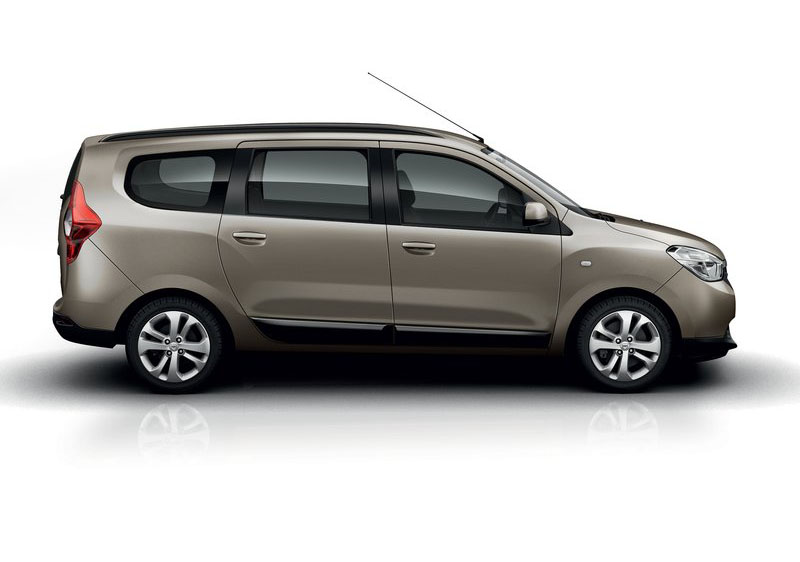
Dacia Lodgy, 2013

 
  •  Dacia Lodgy, 2013

The Dacia is flouting convention by offering genuine five- and seven-seater variants of the new Dacia Lodgy from just €9,900, a revolutionary price for a car of this type.

SPACIOUS AND PRACTICAL
The Lodgy is stamped with Dacia's trademark DNA: unbeatable value for money, reliability and practicality. Measuring 4.5 metres in length and 1.75 in width, Dacia Lodgy's contours and proportions above all reflect its size and strength. With the grille moulded around the Dacia logo and sharp lines that highlight the sculptured wheel arches, Lodgy provides a preview of Dacia's new corporate look. Optimal use of Lodgy's generous external dimensions has created a roomy interior, with the result that each of its seven seats can accommodate a passenger in total comfort. The third row features class-leading space in terms of knee and head room (144 and 866mm respectively), which is more than enough to seat two adults comfortably. The two rearmost seats are equipped with Isofix fittings, so that child seats and booster cushions can be attached safely and securely. Lodgy's modular interior is particularly versatile. In seven-seat configuration, the third-row bench seat can be removed completely or else folded up against the front seat backs, depending on the requirements of the moment.

The size of Dacia Lodgy's spacious boot will not come as a surprise to those who are familiar the Dacia brand. Indeed, it one of the biggest in its segment, with capacity ranging from 2,617dm3 in two-seat configuration, to 827dm3 as a five-seater and 207dm3 when all seven seats are installed. Lodgy also features 30 litres of storage space in the cabin, in the form of various pockets and cubbies. Of particular note are the new, three-litre area on top of the dashboard and, in the back, a drinks holder and large storage pocket.

A DACIA FOR THE TODAY'S GENERATION
The Dacia Lodgy heralds the arrival of a new generation of Dacia vehicles, a range that will benefit from attractively designed interiors and modern equipment. Great care has been taken to express the cars' inherent strengths, with sophisticated materials featuring ever more widely as you move up the range (notably chrome detailing), high quality fit-and-finish and ergonomically placed controls. In line with Dacia's philosophy, standard features are added in a straightforward, comprehensible manner as you move up the range. As always, the specification is carefully tailored to stick as closely as possible to what customers really want.

Innovative, practical technology
Dacia Lodgy features a brand-new multimedia system: MEDIA NAV. Competitively priced in the brand's tradition, at an unbeatable €430, MEDIA NAV incorporates a radio, auxiliary sockets (for MP3 players, etc), Bluetooth connectivity and satellite navigation via a seven-inch (18cm) touch-sensitive display. The main menu permits simple access to six essential functions: radio, media, telephone, route map, satellite navigation and settings. Thanks to Bluetooth® technology, drivers can make hands-free telephone calls and synchronise their contacts book and previous call registry. It is also possible to audio-stream remote music players through the car's own speaker system. Furthermore, there is the option of connecting an iPod or smartphone through USB or jack sockets located on the dash panel. They can be operated via either the touch-sensitive display or the steering wheel-mounted controls, while track titles are displayed on the MEDIA NAV screen.

The intuitive navigation system has both 2D and 3D (Birdview) graphics. A dedicated website enables drivers to access information updates and upload them via the USB port.

In keeping with the spirit of the Dacia brand, which makes a point of providing customers with equipment they really need, a second multimedia option is available: Dacia-Plug&Radio.

The system features a new radio with large screen, an MP3-compatible CD player, Bluetooth® technology, dash-mounted USB and jack sockets and steering wheel-mounted fingertip remote controls.

Dacia Lodgy incorporates another feature that is new to the Dacia range - a speed limiter, available on higher trim specifications. This device permits drivers to programme a maximum speed they do not want to exceed, enabling journeys to be completed in stress-free safety.

And while on the subject of giving customers a range of technology suited to their needs, some versions of Lodgy are fitted with rear parking sensors - a practical touch on large vehicles of this type.

A REVISED ENGINE RANGE
Dacia Lodgy is available with a selection of petrol and diesel engines that will suit the needs of customers in all the countries where the model is marketed. There are two petrol engines: the 1.6 MPI and the new, turbocharged TCe 115 with direct fuel injection. The TCe 115 represents the Renault Group's very best petrol engine technology, including the turbocharged, direct-injection combination first introduced with the Mégane and Scénic Collection 2012 line-ups. With its 1.2-litre capacity, but the kind of performance more usually associated with a 1.6, the TCe 115 combines an impressive driving experience with excellent fuel economy and low CO2 emissions. There are also two diesels, both based on the 1.5 dCi block that has received worldwide acclaim for its reliability and performance. The dCi 90 and dCi 110 powerplants qualify for the Dacia eco² signature - a symbol of low fuel consumption and CO2 emissions.

Widely acknowledged by customers and the media, reliability is a core element of Dacia Lodgy's DNA. Like other members of the Dacia family, the newcomer benefits from technology that is well proven on other Renault Group vehicles. During pre-launch endurance tests, the equivalent of 1.9 million kilometres was covered in extremely demanding climates and conditions: the result is a car with a comprehensive range of features and peerless reliability.
Read More

Monday, February 4, 2013

Chevrolet Onix, 2013


  • Chevrolet Onix, 2013

The new Chevrolet Onix compact hatchback, derived from General Motors small car architecture but completely developed by General Motors do Brasil, made its debut at the 2012 International Auto Show of São Paulo featuring connectivity and customization unique to its class.

The Chevrolet Onix, which is being produced in in GM Complex in Gravataí (State of Rio Grande do Sul), goes on sale in Brazil in November. It offers five-speed manual or six-speed automatic transmissions and a choice of 1.0-liter and 1.4-liter engines, both equipped to run on 100 percent ethanol or a flex fuel mixture of gasoline and ethanol.

Create a car with high levels of design, comfort and technology thatexceed customer expectations.
The Chevy Onix feature Bluetooth capability along with the Chevrolet MyLink system, a segment first, that allows the user to bring his/her songs, photos, videos and mobile phone applications for display on a seven-inch color LCD screen inside the vehicle.

Chevrolet Onix offered in LS, LT and LTZ trim levels, each offering exclusive customization through adhesives and appliques with "Joy," "Race," and "24 Hours" themes. The personalization of these add-ons can make every Chevrolet Onix unique. Off-the-shelf art is also available.


Read More

Sunday, February 3, 2013

BMW 5 ActiveHybrid, 2013


  •  BMW 5 ActiveHybrid, 2013

BMW has developed its intelligent hybrid drive technology to the next level with a further ActiveHybrid production model. Again, a petrol engine is combined with an electric motor to enhance both efficiency and the brand's hallmark driving pleasure. The BMW 5 ActiveHybrid is the company's first model to combine a BMW TwinPower Turbo six-in-line engine, an electric motor and an eight-speed automatic transmission. The transmission sends combined power of up to 250 kW/340 hp to the rear wheels.

The BMW ActiveHybrid 5's synchronous electric motor is powered by a lithium-ion high-voltage battery housed between the wheel arches in the boot. The latest-generation BMW ActiveHybrid technology also adds precisely controlled - and therefore extremely efficient - energy management to the mix. This means that for a car in the premium executive class, the BMW ActiveHybrid 5 offers an exceptionally good balance between performance and fuel consumption.

All the hybrid-related powertrain and energy management components were developed specifically for the BMW ActiveHybrid 5. The result is an extremely well-integrated overall system which convincingly showcases the benefits of BMW ActiveHybrid technology out on the road. Needless to say, all the new hybrid components are designed to last the life of the vehicle.

Award-winning engine is powerful and efficient: first BMW TwinPower Turbo six-in-line engine to be fitted in a hybrid model.

The BMW ActiveHybrid 5 is the first hybrid model from BMW to use a six-cylinder in-line engine in its powertrain. Whereas the BMW ActiveHybrid 7 and BMW ActiveHybrid X6 both utilise a V8 engine, which is combined with either one or two electric motors, the internal combustion engine in BMW's third hybrid model is a 3.0-litre six-cylinder unit with BMW TwinPower Turbo technology. Also featured in the BMW 535i, this six-cylinder petrol engine develops maximum power of 225 kW/306 hp at 5,800 rpm and maximum torque of 400 Newton metres (295 lb-ft) between 1,200 and 5,000 rpm, and has gained wide recognition as offering outstanding driving enjoyment and efficiency. It has already won the international "Engine of the Year" award two years in a row.

The six-cylinder powerplant's BMW TwinPower Turbo technology comprises a twin-scroll turbocharger, High Precision Direct Injection and VALVETRONIC fully variable valve timing. This technology package improves throttle response, revving ability, refinement and efficiency, while an aluminium crankcase also optimises weight.

Electric motor: eager power delivery, compact design.
The BMW ActiveHybrid 5's synchronous electric motor develops a maximum output of 40 kW/55 hp. As well as supporting all-electric operation around town, it can also provide a performance-boosting function for the petrol engine to enable more powerful acceleration. In either case, the drive power is supplied instantly and without lag. Like all electric motors, this one develops its full torque - of 210 Newton metres (155 lb-ft) - from a standing start.

The electric motor is compactly integrated in the housing of the eight-speed automatic transmission, and is connected to the transmission by a clutch. Its operating temperature is controlled by the cooling system of the internal combustion engine.

Thanks among other things to its high internal efficiency and low weight, the eight-speed automatic transmission contributes to the efficiency of the powertrain as a whole. With its eight speeds, it combines a wide gear range with close ratio spacing. It also allows more use to be made of top gear, for a fuel-efficient, low-rpm driving style. The direct downshift capability and exceptionally short shift times can support very sporty driving too. Throughout, the high-performance transmission controller ensures that gear changes are always closely matched to the driver's demands and the driving situation. Optionally, the BMW ActiveHybrid 5 can be supplied with a quick-shifting sports automatic transmission, whose dynamic characteristics are emphasised by a customised selector lever and steering wheel-mounted paddle shifts.

Lithium-ion high-voltage battery housed in the boot.
The electric motor is powered by a lithium-ion high-voltage battery, which again was developed specifically for the BMW ActiveHybrid 5. The battery is encased in a special high-strength housing and positioned between the wheel arches in the boot. This provides optimal protection for the battery and helps to ensure a well-balanced weight distribution. The battery cooling system is integrated into the air conditioning cooling circuit. The battery comprises 96 cells and has an effective energy capacity of 675 Wh.

In addition to its conventional 14V electrical system, the BMW ActiveHybrid 5 is also equipped with a high-voltage electrical system with a rated voltage of 317V. Linked by a voltage transformer, these two systems provide maximum electrical power throughout the operating range, for improved performance and comfort. Both the electric motor and the air conditioning compressor are powered exclusively by the lithium-ion high-voltage battery, via the high-voltage electrical system. This allows a pleasant interior climate to be maintained even when the internal combustion engine is switched off - i.e. when the car is at a standstill, operating purely on electric power or in coasting mode.

The driving experience: Innovative functions for maximum dynamics and efficiency.

In the BMW 5-Series hybrid, BMW ActiveHybrid technology again combines a significant boost in driving enjoyment with a substantial reduction in fuel consumption and emissions. The precisely controlled power splitting between the internal combustion engine and the electric motor makes for an exhilarating hybrid driving experience. The BMW ActiveHybrid 5 is a full hybrid, which means that it is capable of operating solely on electric power, for zero-emission driving around town. At the same time it is also capable of very sporty performance - yet combines this with a double-digit percentage improvement in fuel consumption over the BMW 535i. Developed specifically for this model, the BMW ActiveHybrid technology reduces average fuel consumption to between 6.4 and 7.0 litres per 100 kilometres (40 - 44 mpg imp) and CO2 emissions to 149 - 163 grams per kilometre (figures according to EU test cycle, may vary according to the tyre format specified).

To make the most of the ActiveHybrid technology in the BMW ActiveHybrid 5, the power electronics incorporate a range of innovative intelligent energy management functions whose aim is to ensure that the powertrain operates as efficiently as possible. In addition to the hybrid start-stop function, ECO PRO mode and the coasting mode (available at any speed up to 160 km/h / 100 mph), these functions also include a unique proactive powertrain control system. All these systems help to ensure that the energy supplied by the fuel is used as efficiently as possible.

Full-hybrid capabilities for zero tailpipe emissions around town, boost function for extra-dynamic performance.

Up to a speed of 60 km/h (37 mph), the BMW ActiveHybrid 5 can operate in all-electric mode for zero emissions in town. Fully charged, the lithium-ion high-voltage battery provides an all-electric driving range of up to four kilometres (approx. 2.5 miles) at an average speed of 35 km/h (22 mph).

The internal combustion engine is only started when the driver requires more power; it is then engaged automatically. Its performance can be boosted by the electric motor to provide extra power when accelerating. Maximum combined power is 250 kW/340 hp, with maximum torque of 450 Newton metres (332 lb-ft). Under combined ICE/electric power, the BMW ActiveHybrid 5 delivers a 0 to 100 km/h (62 mph) acceleration time of 5.9 seconds. The governed top speed is 250 km/h (155 mph).

Hybrid-specific auto start-stop function and coasting mode.

The specially designed hybrid auto start-stop function ensures that comfort is not affected even when the vehicle is stopped in traffic for longer periods - because the automatic climate control is powered by the lithium-ion high-voltage battery. When moving off again, when the driver releases the brake, the vehicle will restart on either the electric motor alone or the electric motor and the petrol engine, depending on the high-voltage battery's current charge level and on how much power the driver wants.

ECO PRO mode, which can be activated with the Driving Experience Control switch, supports a particularly fuel-efficient driving style and makes more frequent use of all-electric mode. ECO PRO mode modifies the characteristics of the powertrain, including the transmission, while the electrically powered convenience functions are programmed for optimal energy efficiency.

A further function developed for the BMW ActiveHybrid 5 - the "coasting mode" - boosts efficiency by shutting the internal combustion engine down not only when the vehicle is stationary, or when driving in town, but also on overrun. Coasting mode switches off the petrol engine and disconnects it from the drive shaft. From this point on, the BMW ActiveHybrid 5 coasts soundlessly, with zero emissions and with no engine braking effect. The efficiency improvements are further enhanced by reduced rolling resistance tyres. In ECO PRO mode, the coasting function is available at any speed up to 160 km/h (100 mph). In any of the other modes selectable with the Driving Experience Control switch, the coasting mode is available at speeds up to 80 km/h (50 mph).

Even in coasting mode, all safety and comfort functions remain fully operational. When the engine is shut down, the stationary climate control continues to maintain a pleasant interior climate just as it does when the car is at a standstill or operating purely on electric power. The stationary climate control can also be used to cool the interior before getting into the vehicle.

Intelligent energy management with proactive analysis of the driving situation.

In the BMW ActiveHybrid 5, the advanced-design power electronics have been developed a stage further. In addition to coordinating the operation of the internal combustion engine and electric motor with precise reference to the current driving situation, they also support proactive, forward-thinking analysis of the driving situation for even more efficient energy management. This is achieved by integrating the power electronics with the standard-fitted Navigation system Professional. The electronics can therefore access and analyse data that gives early warning of an upcoming change in external conditions or driver requirements. Based on this analysis, and subject to the quality of the navigation data, the vehicle can be prepared in advance for upcoming requirements so that all powertrain systems and the on-board electronics can be managed appropriately and in such a way as to make the most efficient possible use of the available energy.

Factors that may cause a change in powertrain operating strategy include the topography of the route and speed limits. For example, if the system knows that a downhill stretch is coming up soon, the BMW ActiveHybrid 5 can invest all the high-voltage battery's electrical energy in providing supplementary driving power, since the battery will be recharged during the forthcoming descent at no cost in terms of fuel consumption. On longer downhill sections the electric motor's generator function, too, can be enlisted to recharge the high-voltage battery with no loss of speed. The operating strategy can also be managed so as to ensure that the high-voltage battery is as fully charged as possible when nearing the end of the journey, thereby increasing the electric driving range on the "last lap".

The operating status of the powertrain components is shown in intuitive, model-specific displays in the instrument cluster and in the Control Display of the BMW ActiveHybrid 5. As well as the energy flow and energy recuperation display, these include a further gauge next to the rev counter which shows the boost effect being provided by the electric motor during acceleration. A model-specific menu in the iDrive operating system provides a variety of information - for example on the lithium-ion high-voltage battery's charge level and the power sharing between the internal combustion engine and the electric motor in the course of a journey. A fuel consumption history can also be displayed, which not only shows fuel consumption history for the previous 15 minutes but also how much driving power was provided by the electric motor.

Exceptional hybrid model, typical BMW 5-Series: highest standards of driving dynamics, safety and comfort.

The chassis specifications of the BMW ActiveHybrid 5 include a double-wishbone front axle and integral rear axle, Electric Power Steering including the Servotronic speed-sensitive power assist function, a high-performance brake system and 17-inch alloy wheels. Dynamic Damper Control, featuring electronically controlled damping, is optionally available. The Dynamic Stability Control (DSC) system, which stabilises the vehicle by applying braking pressure and reducing engine power, also incorporates functions such as Dynamic Traction Control (DTC), the Anti-lock Braking System (ABS), Cornering Brake Control (CBC), Dynamic Brake Control (DBC), Brake Assist, Fading Compensation, a Dry Braking function and Start-Off Assistant.

In the BMW ActiveHybrid 5, too, the standard-fitted Driving Experience Control switch offers ECO PRO, SPORT+, SPORT and COMFORT set-ups. If the optional Dynamic Damper Control is specified, it also offers COMFORT+. These different modes allow the driver to alter the accelerator response characteristics, engine response, the power steering characteristics, the DSC settings, the shift characteristics of the automatic transmission and, if the vehicle is equipped with Adaptive Drive, the damping characteristics as well.

Design: Detailed indications of outstanding efficiency.
Dynamic lines and precisely contoured surfaces give the body of the BMW 5-Series Sedan an unmistakable and expressive appearance. And that means the BMW ActiveHybrid 5 exudes a similarly assured presence, stylish elegance and promise of supreme sports performance the first time you set eyes on it. However, the hybrid 5-Series stands apart from its siblings visually with the addition of design features hinting at the pioneering drive technology beneath the surface. These eye-catching touches bring into even sharper focus the car's exceptional efficiency - which, along with their hallmark BMW driving pleasure, outstanding comfort and uncompromising premium quality, defines the character of all BMW 5-Series models.

The typically BMW proportions of the Sedan are headlined by a sweeping bonnet, short overhangs, long wheelbase and a roof line that swoops dynamically into the rear end. The front end, for example, is given expressive presence by the upright BMW kidney grille, V-shaped contours of the bonnet, broad, three-section styling of the air intake and powerfully flared wheel arches. The BMW ActiveHybrid 5 incorporates the brand's traditional kidney grille - which stands out with its galvanised slats - as a visual link to the engine behind it. The tops of the twin circular headlights, meanwhile, are levelled off by an accent strip, giving them the focused look typical of BMW cars. And if the optional xenon headlights are specified, the daytime running lights feature visually distinctive LED light rings.

Model lettering on the C-pillars and boot lid.
Viewed from the side, the car's wedge shape underlines the sporty, forward-surging character of the Sedan. Its silhouette radiates a fine sense of balance, reflecting the even distribution of weight between the front and rear axles, while extra flaring around the rear wheel arches emphasises the presence of rear-wheel drive. High-quality details, such as the particularly tight line of the Hofmeister kink at the base of the C-pillar, chrome-coloured design elements containing integrated side indicators and the door openers recessed into the side swage lines reinforce the Sedan's premium character. The hybrid model can also be identified by the "ActiveHybrid 5" lettering on its C-pillars.

The powerfully formed rear end, with its dominant horizontal lines, accentuates the sporting credentials of the Sedan. The L-shaped LED rear lights ensure the car is instantly recognisable at night. Identifying features of the hybrid model include additional "ActiveHybrid 5" lettering on the boot lid and matt chrome exhaust tailpipes integrated into the far left and right of the rear apron. The BMW ActiveHybrid 5 is the only member of the BMW 5-Series family which can be ordered in the exterior paint shade Bluewater metallic. 18-inch Streamline light-alloy wheels with optimised aerodynamic properties are also available exclusively for this model.

Open the door to subtlety.
In common with its BMW 5-Series siblings, the interior of the BMW ActiveHybrid 5 is characterised by its driver-focused cockpit design and impressive spaciousness. However, the hybrid model also contains a selection of bespoke touches, including "ActiveHybrid 5" lettering on the front door sills and an aluminium plate with the same inscription in front of the gearbox's selector lever on the centre console. The ActiveHybrid 5 also stands apart from the other variants of the Sedan with its model-specific engine cover and "ActiveHybrid Power Unit" badge visible on the special casing of the high-performance battery in the luggage compartment.

Like all BMW 5-Series models, the BMW Active Hybrid 5 boasts an instrument cluster with black panel technology. The rev counter, for example, also includes graphics detailing the electric motor's boost function and for the energy flow and recuperation display. The instrument cluster of the BMW Active Hybrid 5 also comes as standard with a 9.2-inch display for extended display capability. In addition to the likewise standard navigation system, numerous other vehicle, entertainment and communications functions can be operated via the iDrive system, whose Control Display is integrated harmoniously into the Sedan's instrument panel.

Body and safety: Intelligent systems, perfectly integrated.
The body structure of the BMW Active Hybrid 5 meets highest standards of strength and intelligent lightweight design. Using the right materials in the right places not only provides an excellent basis for passive safety but also results in optimised weight, and therefore in improved efficiency and driving dynamics. The safety components are all carefully synchronised within a comprehensive system that was developed specifically for the BMW 5-Series Sedan and delivers outstanding levels of occupant protection. In addition, pedestrian protection is enhanced by special contouring of the front-end body components and by an active bonnet.

The BMW Active Hybrid 5 has an extremely stiff passenger cell. Intelligent use of higher-strength multi-phase steels and hot-stamped ultra-high-tensile steel helps give the safety passenger cell maximum rigidity, combined with relatively low weight.

Comprehensive safety specification.
In a collision, high-strength load-bearing structures and large deformation zones help to keep impact forces away from the passenger cell and also from the hybrid drive components. Standard safety features on the BMW Active Hybrid 5 also include front and side airbags, side curtain head airbags for both rows of seats, three-point inertia-reel belts on all seats, front-seat belt force limiters, belt latch tensioners and active head restraints, and ISOFIX child seat attachments in the rear.

The optional Active Protection function helps to mitigate the risk of occupant injury in a collision. If an accident risk is detected this system, which is controlled by the central safety electronics, automatically closes the side windows and the sunroof (if fitted). At the same time the front seatbelts are pre-tensioned and, if comfort seats are fitted, their backrests are adjusted to an upright position.

The hybrid components are likewise protected by a comprehensive safety package. All elements of the high-voltage electrical system are protected by extensive insulation and specially designed connectors. The hybrid-related safety features protecting the lithium-ion high-voltage battery and the power electronics are integrated into the top-class comprehensive active and passive safety system featured on all BMW 5-Series models.

Since the lithium-ion high-performance battery is packaged in the boot, the load capacity (375 litres) of the BMW Active Hybrid 5 is reduced by 145 litres compared with other BMW 5-Series Sedan models. The battery is encased in a special housing and is fitted in a protected position between the wheel arches, which also offers optimal security in a crash. The vertical partitioning between the battery and the boot means that there is no loss of height and width in the boot, which can still accommodate larger items of luggage. The positioning of the high-voltage battery near to the rear axle also contributes to the balanced weight distribution of the BMW Active Hybrid 5.

Optimised weight due to intelligent multi-material mix.
Intelligent lightweight design is a further area where the BMW Active Hybrid 5 sets standards in its class. The hybrid-related components result in a weight penalty of just 140 kilograms compared with the BMW 535i. The hybrid model also benefits from the intelligent multi-material mix developed for this model series. The bonnet, front side panels, front spring struts and the doors are all made of aluminium. The use of aluminium doors alone results in an overall vehicle weight saving of around 23 kilograms compared with conventional steel doors.

The hallmark BMW twin round headlamps, including LED light rings with sidelight and daytime running light functions, are standard specification, along with a light sensor and rain sensor. Optionally, bi-xenon headlights and Adaptive Headlights with cornering lights are available. To reduce the risk of rear-end collisions, the BMW Active Hybrid 5 is equipped as standard with adaptive brake lights. If the driver brakes very sharply and the ABS system intervenes, drivers behind are warned by conspicuous flashing of the brake lights that they too should brake as hard as possible.

Equipment and BMW Connected Drive: Wide range of options, intelligent integration.

The BMW Active Hybrid 5 combines its pioneering driving pleasure and efficiency-boosting drive technology with the customary comfort-enhancing properties of the BMW 5-Series. It also comes with a particularly extensive range of standard equipment, while almost all of the options available for the BMW 5-Series Sedan can also be specified to tailor the hybrid model to the owner's personal requirements and tastes.

The range of BMW Connected Drive features is impressively wide-reaching. These driver assistance systems and mobility services use the intelligent integration of the driver, car and outside world to optimise the comfort, safety and operation of the on-board infotainment functions.

Climate control with individual controls and stationary function.
The 4-zone automatic climate control fitted as standard in the BMW Active Hybrid 5 allows the ventilation and temperature to be controlled individually both for the driver and front passenger and in the rear. This system comprises comfort air vents, additional outlets in the B-pillars and a separate control unit on the rear face of the centre console. The BMW Active Hybrid 5 sources the energy for its air conditioning compressor from the lithium-ion high-performance battery. The standard-fitted stationary climate control function allows the on-board temperature to be controlled even when the combustion engine is switched off. In order to cool the interior in advance, the system can also be activated from outside the car several minutes before the start of a journey, using the car key or by remote control.

The likewise standard Navigation system Professional includes hard disk storage for maps and music collections. It is operated using the iDrive system which, in addition to the Controller with direct menu control buttons on the centre console, also includes a 10.2-inch monitor integrated into the instrument panel. The iDrive system is also used to operate a host of vehicle, communications and entertainment functions.

Exclusive options for tailor-made comfort, extensive range of BMW Connected Drive features.

Available in addition to the equipment fitted as standard are comfort and individuality-enhancing extras such as active seats, active seat ventilation, an electrically adjustable steering column and a heated steering wheel. The optional Comfort Access, meanwhile, includes hands-free boot lid opening, a Soft Close Automatic function can be specified for the doors, and an electrically operated glass roof and high-quality audio and rear-seat entertainment systems are also on the options list.

The selection of BMW Connected Drive systems available as an option for the BMW Active Hybrid 5 includes Park Distance Control, a rear-view camera, Surround View, Adaptive Headlights and High-Beam Assistant. Other driver assistance systems on the options list are Speed Limit Info, BMW Parking Assistant, the Lane Change Warning System, the Lane Departure Warning System, BMW Night Vision with pedestrian detection and the BMW Head-Up Display. Plus, innovative technologies allow both the integration of an Apple iPhone (or other smartphones) and music players and the use of the real-time traffic information function and apps. Among other features, the apps option enables Apple iPhone owners to receive web radio stations and view Facebook and Twitter posts on the on-board monitor.

Production: Technology and quality of the highest standard.
The BMW ActiveHybrid 5 adds an even more efficient and technologically groundbreaking model to the BMW 5-Series range. The new model will be produced alongside the other variants of the BMW 5-Series at BMW Plant Dingolfing. The BMW 5-Series Sedan, BMW 5-Series Touring and BMW 5-Series Gran Turismo all roll off the assembly line at Dingolfing, the largest production plant for BMW cars worldwide. Plus, the plant also handles production of the BMW 6-Series and BMW 7-Series, including the BMW ActiveHybrid 7. And that makes the BMW ActiveHybrid 5 already the brand's second hybrid model to be produced at Dingolfing.

The BMW plant in Dingolfing, Lower Bavaria, has been part of the company's global production network since 1967. Today this network comprises 25 plants in 14 countries across five continents. 1973 saw the start of BMW vehicle production at the newly constructed Plant 2.4 in Dingolfing. Approximately 18,600 people currently work at the site, more than 12,000 of them in car production at Plant 2.4.

Integrated production optimises quality and efficiency.
The shared vehicle architecture for the BMW 5-Series, 6-Series and 7-Series models forms the basis for integrated production at BMW Plant Dingolfing. Manufacturing quality and efficiency are optimised through the use of shared product and process modules. The flexible set-up of the production machinery ensures both even capacity utilisation across the plant and rapid delivery as part of the Customer-Oriented Sales and production Process (KOVP).

Synergies are generated by the use of modular vehicle components, or product modules. The benchmark for the functionality and quality of these components is provided by the extremely high standards that apply for the BMW 7-Series Luxury Sedan.

Ongoing improvement of the production process.
BMW Plant Dingolfing operates according to the very latest principles of modern production process design and in line with the BMW Value-Added production system (VPS). Process-sharing is a typical example of this approach. Shared vehicle components provide the basis for using integrated production processes, in which top-quality multi-model production on a single assembly line is combined with integrated production planning. The result is that the BMW ActiveHybrid 5 is assembled on the same production line as all the variants of the BMW 5-Series Sedan, BMW 5-Series Touring and BMW 5-Series Gran Turismo. All hybrid-specific components are integrated during the series production process. Further advances are achieved by developments in the area of Value-Added Technology Processes (VTP) and logistics. The goal is to achieve one-piece flow of parts and materials from the supplier through to the completion of the vehicle.

In technological terms as well, the accent is on developing innovative production techniques. For example, the door production process is based on the results of research work carried out at the Dingolfing-based BMW Group Aluminium Competence Centre. Innovative processes have been introduced in sheet steel processing too. 50 million euros has been invested in two new sheet steel presses for the Dingolfing plant which are now turning out exceptionally high-quality body parts for the BMW ActiveHybrid 5. It makes BMW the world's first carmaker to use a hot-stamping technique whereby galvanised sheet steel is cold-formed, heated to a temperature of over 900 degrees Celsius, then immediately water-cooled to a temperature of around 70 degrees and hardened. This technique gives the components between three and four times the strength of conventional sheet steel.

Concentrated expertise in the field of hybrid technology.
BMW Plant Dingolfing also carried out a rigorous programme of expertise development in the area of hybrid technology and its integration into the relevant models. The BMW ActiveHybrid 7 has been produced here since 2009. As with this model, the integration of all hybrid components into the BMW ActiveHybrid 5 will also be carried out by specially trained plant employees in a separate process stage. For example, installing the high-performance battery demands additional production know-how on account of its particularly high voltage (over 400 V).

The plant's targeted development of expertise has enabled hybrid BMW models to be incorporated into the integrated production process through the intelligent fusion of state-of-the-art automated process engineering and the skilled craftsmanship of specially trained employees.
Read More