Wednesday, January 2, 2013

Nissan Sunny, 2012


  • Nissan Sunny, 2012

Nissan Motor Co., Ltd. unveiled an all-new sedan model at the 8th China (Guangzhou) International Automobile Exhibition. Using the famed 'Sunny' name in China, this new model will go on sale first in China in January 2011 and then progressively across 170 countries worldwide under different vehicle brand names.

The Nissan Sunny was first introduced in China in 2003 and was significant as the first locally built model from the new Dongfeng Nissan partnership. Acclaimed by consumers for its combination of quality, space and driving performance, the Nissan Sunny quickly help establish a foundation for the Nissan brand in the passenger vehicle market in China.

A projected class leader in fuel economy, the all-new Nissan Sunny is expected to appeal to young families in their 30s looking for a medium sized sedan that combines a dynamic upscale design with the space, quality and features associated with the Sunny and Nissan brand.

Combining the proven Nissan 1.5-liter HR15DE engine with dual injectors and a new-generation Xtronic CVT with an auxiliary transmission, both of which are newly introduced in China, Nissan Sunny delivers ease in handling for city driving where there's frequent acceleration and deceleration, and superior environmental performance as a projected class leader in fuel economy.

MacPherson struts are used for the front suspension and a torsion beam for the rear suspension, making for sporty and agile driving at low speeds, and steady and stable driving at higher speeds.

The new Nissan Sunny will be produced in Dongfeng Nissan's Huadu Plant in Guangzhou and will be priced from RMB 82.8K to 112.8K (1.04 million - 1.41million yen).
Read More

Mercedes-Benz CLS350 CDI, 2012


  •   Mercedes-Benz CLS350 CDI, 2012

Outrageous proportions: a long bonnet, narrow-look windows with frameless side windows, dynamic roof sweeping back at an angle towards the rear. In 2003 the four-door Coupé was born: and the Mercedes-Benz CLS-Class immediately established itself as a new style icon. The proportions have stayed the same - and yet everything is different: the second generation of this design trendsetter has adopted a completely new look.

What immediately strikes the eye is the innovative front design, which is reminiscent of the Mercedes-Benz SLS AMG. Visually, the radiator grille is not integrated into the bonnet but is formed separately. This highlights the long, sporty bonnet even further. The grille is dominated by the large central star, which underlines the car's relationship to the other coupés of the brand and strengthens the brand identity. The large, elongated dark air inlets with black grilles also add to the vehicle's athletic appearance.

Another distinguishing feature comes in the form of the LED High Performance headlamps, which are the world's first to offer all of the regular dynamic light functions using LED technology. This innovation boasts an impressive design - inside it is divided into three arrow-shaped layers from top to bottom: the upper layer contains an LED indicator, beneath which is a striking LED side light offering LED low beam functions. The side light can also be seen when the dipped beam function is switched on, thereby creating a novel and separate night-time design as a distinctive look. The lowest level of the headlamp houses the main beam and nightview functions. A total of 71 LEDs not only provide an unmistakable appearance, but also offer a significantly enhanced view of the road compared with previous systems.

The typical Mercedes-Benz CLS-Class outline, with its elegantly long proportions, is the dominating attribute of the new model. The effect of the dynamic, athletic form has been enhanced with a new interplay of lines and areas. The front edge of the structure above the wings slopes off towards the rear. This novel design feature, called the dropping line by designers, represents a new interpretation of a formal design element harking back to the uniquely rich wealth of forms present in historic Mercedes sports cars.

A distinctive and muscular sports car-like shoulder line above the rear axle highlights the athletic character of the new CLS. The flared wheel arches resemble the powerful thighs of a feline predator waiting to pounce.

The side view is rounded off with wide wrap-around tail lights featuring LED technology which are arranged in the form of a linking element to the rear of the vehicle. The shape is emphasized by the broad shoulder line, which is clearly visible from behind and supports the flat hardtop. A wide metal insert adds a further visual highlight at the rear.

The interior: Luxurious surrounds with many exclusive touches
Quite apart from its breathtaking design, the vehicle body of the new Mercedes CLS spoils all occupants with its generous interior measurements: in particular, the four-door coupé offers more elbow room (8/21 millimetres at the front/back) and more shoulder room (21/13 millimetres) than its predecessor. The starting point for this extra space was the vehicle body, which is 29 millimetres longer, 13 millimetres higher and 8 millimetres wider than its predecessor. The wheelbase has increased too, by 20 millimetres to 2874 millimetres.

The boot has a capacity of 520 litres and, for the first time in the Mercedes-Benz CLS-Class, comes with EASY-PACK quickfold as an optional extra for the rear seat backrest which folds down in a 1/3:2/3 proportion. Up to 19 different places to store and secure objects throughout the car make it quick and easy to accommodate smaller objects. The EASY-PACK comfort box for the boot, which is an optional extra, provides even more stowage space. It is normally folded flat and stored under the parcel shelf. If the EASY-PACK comfort box is needed, it can be pulled out and folded down. Thanks to its flexible base, its volume can be varied from 7 to 55 litres. Its can bear a maximum of ten kilograms in weight. The box, which is some 530 millimetres wide, can be removed from the boot without the need for tools if its full capacity is required.

Stylish cockpit with three round dials and two colour displays
In addition to the "wrap-around effect" of the instrument panel support, the newly-designed multifunction steering wheel in the 3-spoke design in Nappa leather is particularly eye-catching. The steering wheel is available in black or almond beige; a wood-and-leather finish is also available as an optional extra. In the optional AMG Sports package there is a particularly sporty steering wheel which has a flattened wreath in the lower half. Both steering wheel options have 12 multifunction keys to control the infotainment functions.

The highlight of the exclusive CLS instrumentation is the all-colour, three-dimensional TFT display in the middle of the speedometer, measuring 109 millimetres in diameter. The mileage and trip odometer appear in the lower area of the display, the top displays - amongst other things - information from the driver assistance systems. A three-dimensional image of the vehicle appears when getting into or out of the Mercedes-Benz CLS-Class.

Three tube-shaped round dials in the cockpit inform the driver of the coolant temperature and fuel tank level (on the left), speed (in the middle) and engine rpm (on the right). A large colour display in 16:9 format, elegantly integrated into the upper part of the instrument panel support, gives information on all the infotainment functions. The TFT display (Active Matrix Thin Film Transistor), which is backlit with LED lights, uses so-called IPS technology. IPS stands for "in-plane switching", which describes the shift direction of the liquid crystal. The benefit of this technology is that it displays high-contrast images which stay sharp outside the direct line of vision. Depending on the specification, two versions of this cutting-edge display are available: a 14.7 cm version for the Audio 20 and Audio 50 APS systems; and a high-resolution 17.7 cm variant for COMAND APS.

The centre console fits harmoniously with the shape and colour of the instrument panel. The control unit for the infotainment system and the optional car telephone can be found underneath the analogue clock and air vents. The push-button switches for seat heating, seat ventilation, the hazard warning lamps, rear window blind and other items of equipment ordered as options are arranged below this; they have been galvanised and are backlit. The large round control knobs for the automatic climate control, which is supplied as standard, are located in the lower part of the centre console. The controller in the tunnel trim serves as the central control element for the infotainment systems and provides a quick and easy starting point for navigating the well-organised menus controlling the systems.

THERMOTRONIC climate control with three individual climate modes
The second-generation Mercedes CLS can be optionally fitted with an automatic climate control system which not only allows individual temperatures to be set for three zones - for the driver, the front passenger and the rear passengers - but additionally offers special climate modes. This means that, if the optionally available THERMOTRONIC system is fitted, the car occupants can select "Diffuse", "Medium" or "Focus" settings on the THERMOTRONIC at the push of a button and thus adjust the air quantity and air distribution to their liking without having to leave the convenient automatic mode.

In "Diffuse" mode, for example, the THERMOTRONIC system operates with a lower air speed and distributes the air over a wide area so that there are fewer draughts. This is the purpose of the automatically controlled, upwards inclined diffuse nozzle in the centre of the dashboard. In "Focus" mode, meanwhile, the air outlets in the centre area of the dashboard are used for the most part, meeting the need for a direct flow of a larger quantity of air. The standard system fitted in the CLS is the two-zone THERMATIC automatic climate control.

The ultimate in seating comfort allowing adjustments to suit individual ergonomic needs
Refined sportiness - this philosophy applies also to the seats, as they combine the ultimate in seating comfort with sporty lateral support. Four different front seat types are available to choose from:

    The standard seat itself meets the highest ergonomic standards. Thanks to the filled seat piping, the feeling of comfort simply when getting into the vehicle is unique. A special upholstery technology is deployed here, which inserts additional foam filling immediately beneath the cloth or leather upholstery. The front seats can be adjusted electrically as standard. The Memory package, which enables three individual settings to be saved, is available as an optional extra.
    The shape of the optional multicontour seat can be individually adjusted by and for the driver and passenger to fit their anatomy or to suit their personal wishes with regard to comfort. Thanks to an innovative technology for adjusting the seat side bolsters, for example, the width of the backrest can be adjusted on both sides in a stepless operation by up to 45 millimetres, i.e. by up to 90 millimetres in total. Other bonuses of the new multicontour seat include the pneumatic height adjustment facility for the seat cushion and the high-comfort head restraints.
    The active multicontour seat offers the same comfort functions and additionally has high-speed piezo valves in the air chambers which adjust the charging pressure and volume of the air chambers in the side bolsters of the seat backs, depending on the steering angle, lateral acceleration and vehicle speed, to provide both the driver and front seat passenger with even greater support. It also has the high-comfort head restraint and, additionally, a massage function.
    Climate comfort is further enhanced by the optionally available active climatised front seats, which are available as an optional extra. Four ventilators in the seat cushion and in the backrest extract cool air from the floor area of the interior and distribute it evenly through a ventilation tissue beneath the seat surface. The mild airflow can prevent the car's occupants from sweating, even when it is extremely hot outside. Seat heating can also be selected for all four seats as an optional extra.

Individual seats for the passengers in the rear, for the first time fitted with ISOFIX child seat attachments
Two individual seats in the rear provide a particularly comfortable experience in the second row. These seats are well-liked for their extensive lateral support which comes from the contouring. There is a roomy stowage compartment in the centre armrest between the two seats, which if desired can also contain a cup holder for a bottle. An electrically-operated rear-window blind for the rear passengers is also available as an option, which can palpably and measurably reduce sunlight streaming in at the touch of a button. It is fixed to the C-pillars, as it is in the S-Class.

For the first time Mercedes-Benz is offering the Mercedes-Benz CLS-Class with ISOFIX, the international standard securing system for child seats. The mechanism is fitted as standard and comprises two retaining brackets in each rear seat position, in the gap between the back rest and seat cushion, as well as an additional third anchor point above the backrest, the so-called top tether.

Car radio, CD player and Bluetooth interface as standard
Nowadays, nobody wants to miss out on the news, the telephone, route guidance or music listening pleasure when in the car. For this reason Mercedes-Benz has equipped the new CLS with state-of-the-art infotainment facilities, which stand out for their high performance capability, but above all for their ease of use. They are called the Audio 20 CD (supplied as standard), Audio 50 APS and COMAND APS (supplied as optional extras).

All of the devices include speed-sensitive volume control, a keypad for entering telephone numbers and radio frequencies, a colour display in the centre of the dashboard, and a Bluetooth interface to connect a mobile phone to the hands-free system wirelessly. Eight loudspeakers supplied as standard and located in the doors ensure excellent sound quality.

Features of the Audio 20 CD system, fitted as standard, include a CD player (with MP3 capability), a dual tuner for FM/MW/LW/SW, automatic station search, RDS function (FM reception) and a 4 x 20-watt amplifier.

The AUDIO 50 APS infotainment system is an all-in-one device featuring a combination of car radio, DVD player and Europe-wide navigation system with two-dimensional map display. The radio functions and the options for linking with other systems are the same as for the Audio 20 system. Mercedes customers who opt for the version with integral six-disc DVD changer also receive the LINGUATRONIC voice-operated control system.

The COMAND APS multimedia system developed by Mercedes-Benz includes a DVD player for audio and video as well as a Europe-wide navigation system whose data are stored on a 40-gigabyte hard drive, allowing extremely fast access to the navigation data and, compared to DVD-based navigation, even faster route calculations. The high-resolution map appears on the 17.7 cm colour display in the centre of the instrument panel and excels in providing useful additional information. By way of example, the map shows the outlines of prominent buildings along the route to aid orientation.

Mercedes-Benz combines COMAND APS with the voice-operated control system LINGUATRONIC and a so-called text-to-speech function as standard. This makes it possible for route-related traffic reports, SMS messages, address book entries or radio station names to be read out to the driver. The system automatically reads out new traffic reports that are relevant to the current route.

Additional systems for the ultimate in listening pleasure and entertainment

Mercedes customers can, if desired, combine the infotainment facilities for the CLS with other systems:
    The Logic7 surround sound system developed by Mercedes-Benz together with the audio specialists harman/kardon® delivers an outstanding performance with three-dimensional sound as a natural 360-degree musical experience for all passengers.
    iPods, USB sticks or other external audio devices can link to the infotainment system of the new Mercedes CLS through a media interface in the stowage compartment in the centre console.
    A separate DAB tuner (DAB = Digital Audio Broadcasting) and additional aerials (optional) allow passengers on board the new CLS to receive digital radio stations in CD quality. The system switches to analogue reception automatically when the DAB signal is too weak.

The model range: Every CLS is a one-off
Individuality is written large in the new Mercedes CLS. The model range for the four-door Coupé is correspondingly extensive - it will be at first be available with rear-wheel drive and then, from September 2011 onwards, for the first time as a 4MATIC with all-wheel drive. As regards the drive system, customers will at first have a choice between four petrol and diesel engines, with four, six and eight cylinders and an output range of between 150 kW (204 hp) and 300 kW (408 hp), or 2143 to 4633 cc displacement.

A total of 12 different paint finishes, including the SHAPE manganite grey matt paintwork, can be combined with the five interior colours - black, alpaca grey, almond beige, aubergine and porcelain. Three different versions of leather upholstery are available to choose from: leather (nappa leather), PASSION leather (a fine semi-aniline leather) and Exclusive PASSION leather (where also the instrument panel and beltline are leather-covered). There are five different finishes available for the trim elements - brown high-gloss burr walnut, black high-gloss ash, satin-finish light brown poplar, black piano lacquer as well as AMG carbon fibre for the CLS Edition 1. In this way, customers purchasing a CLS can, according to their own tastes, choose to accentuate either fresh naturalness or elegant sportiness.

Countless optional extras make it possible to individualise one's Mercedes-Benz CLS-Class further - including opting for active multicontour seats, LED High Performance headlamps, Keyless Go and the harman/kardon sound system, as well as many support systems including the new Active Blind Spot Assist and Active Lane Keeping Assist with brake actuation (for more information on the latter, please refer to the section "Active Safety"). Over and above this, Mercedes-Benz has put together three packages offering appropriate combinations of optional extras.

A customer opting for the Exterior Sports package will get a Mercedes CLS with visible, chromed tailpipes. The Sport CLS also has a lowered suspension with sports tuning, alloy wheels in size 18 or 19 (and, optionally, in anthracite) and a trim element in black on the rear bumper.

The AMG Sports package comprises a multifunction sports steering wheel in nappa leather in the 3-spoke design, with flattened bottom section, aluminium pedals, AMG bumpers to the front (with single-louvred grille) and rear, AMG alloy wheels in size 18 or 19, AMG floor mats, visible tailpipes, and in the interior, in combination with black leather seats, light-coloured felled seams on the seats, headrests and armrests. With the AMG Sports package, the automatic transmission has a third shift programme - M - which allows the gear to be selected manually using the paddles on the steering wheel. In addition to this, the adaptive suspension is more sportily tuned.

The Exclusive package combines seats in fine semi-aniline leather with nappa leather for the instrument panel, centre console and parts of the door trim. The roof lining is made of alcantara. The Exclusive package, which also includes ambient lighting, is available with all the interior colours and trim elements.

The CLS "Edition 1" will be available for a limited period of one year following market launch. The distinguishing features of this special model are the SHAPE matt paint finish in manganite grey; the leather upholstery in designo corteccia tundra brown pearl which has a metallic shimmer to it; floormats with Edition 1 lettering; a black roof liner; and aluminium pedals. For the interior trim elements in the Edition 1 there is a choice between satin-finish light brown poplar, black piano lacquer or AMG carbon fibre.

The bodywork: A first: frameless, all-aluminium doors
Intelligent lightweight construction plays a decisive role in bridging the classic conflict of objectives between low weight and high strength in the new CLS. The CLS is thus the first vehicle from Mercedes-Benz to have frameless, all-aluminium doors. These are made from deep-drawn aluminium panels with extruded sections, and in comparison with conventional steel doors, are some 24 kilograms lighter. This is not only beneficial to the environment, operating convenience is increased too: the Coupé doors can be opened and closed more easily, particularly on an incline. The new construction has called for new joining techniques: instead of welding, a combination of gluing and riveting has been used.

In order to assure quality, in the production process the doors are positioned in the frames by extremely precise robots; and the side windows are fitted with the greatest precision using laser measurement technology. As a result, this door design meets the same seal requirements as for the door frames on a saloon, which has to be demonstrated in a Mercedes internal test (one of several) in which it is subjected to high-pressure testing with water pressure at 80 bar. To put this in context: this pressure is about five times higher than the pressure needed by an espresso machine to produce a good crema.

Apart from the doors, the bonnet, front wings, boot lid, parcel shelf, various support profiles and substantial parts of the suspension and engines are all made of aluminium. The front end is a hybrid construction made of aluminium panels and plastic strengthened with fibre-glass. The one-piece aluminium crash boxes in the front area are fitted in the side members and are screwed into the side with them.

The large front bumper with the integral grille with the centred star is made of polypropylene. The materials experts at Mercedes-Benz have worked together with the experts from the supplier of this part to develop the plastics formulation, which has a specific talcum content of 15 percent, in order to achieve an optimum compromise between weight and rigidity, as well as excellent thermal properties. As supporting structure for the bumper there is a front end which is a hybrid construction of aluminium sheet and plastic strengthened with fibre glass. For every CLS, special adjustable fixtures are used to ensure the front fits exactly and the gap dimensions are the same all round.

About 72 percent of all panels used for the bodyshell of the new Mercedes-Benz CLS-Class are made from rigid and ultra-rigid steel alloys. The ultra-rigid high-tech alloys, which have three to four times more tensile strength than conventional rigid types of steel, account for around eight percent of total weight. They are deployed in areas in which there could be extreme material stresses in the event of an accident - for example, in the event of a side-on collision, in the B-pillars and side frame of the roof; as well as in the rear, to create a stable crossmember.

Front-end structure: crumple zone on four levels
Compared to the previous model series, the Mercedes engineers have further enlarged the deformation zones substantially in the front and rear sections of the new CLS, as well as improving the energy flows. The front crumple zone has four independently acting impact levels, meaning that the forces can be distributed over a wide area while bypassing the passenger cell.

    Sectional panelsabove the wheel arches form the upper side-member level. From here, the impact forces are channelled into the A-pillars and, subsequently, into the roof frame.
    An aluminium crossmember connects the forward-extended side members and ensures that the forces are transferred to the side facing away from the impact. The crossmember and the forward-extended side members form the central impact zone.
    The subframe to which the engine, steering and front axle are attached also serves as an impact level in the event of a frontal collision. It is made of high-strength steel and, depending on the engine variant, can be connected to the newly developed floor side members by means of special supporting tubes. As a consequence, the subframe can deform in a predetermined manner and absorb energy in the event of a crash on the one hand and channel high impact forces straight into the vehicle floor on the other.
    The side skirts have been extended forwards to support the wheel and prevent it from entering the footwell in the event of an offset frontal collision. In order to provide specifically targeted front-wheel support and location, Mercedes-Benz has also developed special struts and additional energy-absorbing elements for the wheel arches. The struts are arranged diagonally and prevent the passenger cell from sinking in the event of an impact.

The firewall is a four-part construction. This design enables Mercedes engineers to vary the material thickness according to the level of vulnerability in an accident. As the load acting on the firewall during a frontal crash is greatest in the lower section, the sheet steel used here is almost 50 percent thicker.

As well as being a major reason behind the high level of impact resistance, this intelligently designed bodyshell not only enhances ride comfort, it also reduces noise and vibration. The Sindelfingen engineers paid particular attention to the connecting points between the suspension and the bodyshell, which are required to withstand very high forces. These were specifically reinforced to ensure that road-induced vibrations are not transferred to the body at the expense of driving enjoyment. An indicator of the excellent overall result is the static flexural strength of the bodyshell, which shows a 28 percent improvement over its predecessor. Torsional strength increased by six percent.

Passenger cell: custom-designed floor panels and robust load-bearing sections
The passenger cell of the new CLS has been shown to be a structure which is virtually immune to deformation and which keeps the occupant space intact, even at high impact speeds, regardless of whether the collision is head-on, from the rear or from the side, or whether the vehicle rolls over. The use of high-strength steel and thicker panels plays as important a role here as the installation of additional load-bearing members.

The main floor assembly thus consists of different sheet-metal plates that either undergo flexible rolling or are welded together by laser beam and subsequently shaped. Flexible means that the high-tensile steel can be processed in such a way that areas with different steel thicknesses can be produced within a single component. The middle blank forms the tunnel - the actual backbone of the passenger cell. Here the thickness of the custom-designed panels varies between 0.7 and 1.1 millimetres, and between 1.55 and 2.0 millimetres for the tunnel reinforcements, depending on the stresses and loads to which they are subjected.

The continuous floor side members, the insides of which are further reinforced with extra sections, are very important both for occupant protection and the rigidity of the bodyshell. Their front faces connect to the side members, thereby lengthening the load-bearing paths along which forces can be distributed in the event of an impact. At the rear, the floor side members extend as far as the crossmember beneath the rear seat unit to stabilise the entire floor structure.

The Mercedes engineers have also incorporated sturdy aluminium transverse sections - known as transmission tunnel braces - into the floor assembly. One is located beneath the transmission, and is designed to direct forces to the side of the vehicle facing away from the impact in the event of a side-on collision. The second forms a connection between the two side members. It likewise braces the floor assembly and is able to channel impact forces into the floor structure at an early stage following a side-on collision.

Rear-end structure: side members with specifically graduated material thicknesses
Multi-piece side members and a robust, flexible crossmember made from ultra-high-strength steel form the key components of the rear-end structure. The rear side members are continuous, closed box sections with carefully graduated material thicknesses. These are able to absorb high forces, thereby making a decisive contribution to occupant safety in the event of a rear impact. The bolt-on flexible crossmember is manufactured using a flexible rolling process which likewise allows the material thickness to be varied as required. Accordingly, the material thickness on the outside of the crossmember - where impact loads are highest - is greater than on the inside.
Read More

Tuesday, January 1, 2013

Hyundai i30, 2013


  •  Hyundai i30, 2013

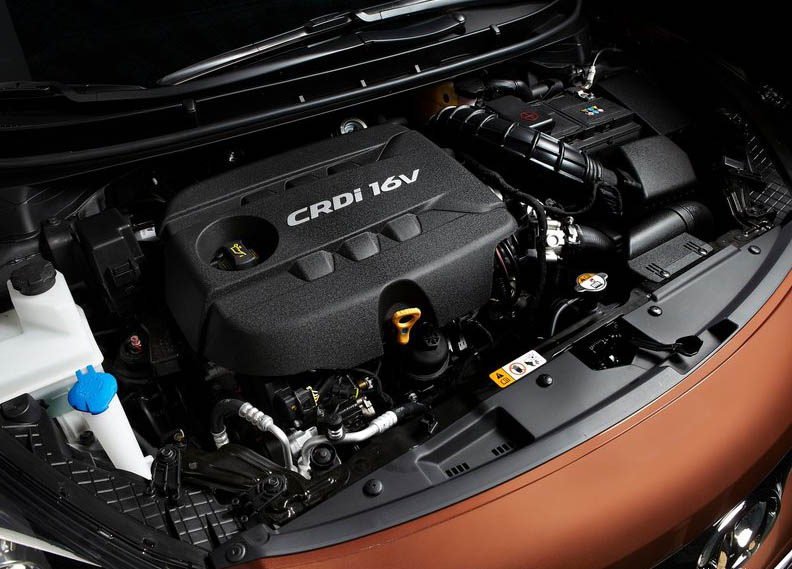
At the 2011 Frankfurt International Motor Show (IAA), Hyundai has unveiled its new-generation i30, a vehicle the company expects will build on the success of the original model thanks to enhanced design, quality, performance and efficiency.

Designed and engineered at the Hyundai Motor Europe Technical Centre in Rüsselsheim, Germany, the new-generation Hyundai i30 represents a further evolution of the unique Hyundai form language, 'fluidic sculpture' - the company's distinctive design DNA - and offers a choice of four engines with a total of six power options and CO2emissions below 100 g/km thanks to an upgraded, super-efficient 1,6-litre diesel unit.

The new-generation Hyundai i30 will go on sale in Europe early in 2012 as a five-door hatchback. The newcomer will be produced in Europe at the company's state-of-the-art manufacturing facility in Nošovice, Czech Republic.

Every new-generation Hyundai i30 will be backed by the industry-best, fully-transparent Five Year Triple Care warranty from Hyundai. This award-winning package provides five years of unlimited-mileage warranty, five years of roadside assistance, and five years of vehicle health checks.

A worthy successor to Hyundai's best-seller
The original Hyundai i30 has defied the industry norm by recording increased annual sales with each passing year. Since launch in 2007, the i30 has recorded over 360.000 European sales, including more than 115.000 units during 2010 - the highest-ever sales figure for an individual Hyundai model on sale in Europe in one year, putting the Hyundai i30 at six in the C-segment rankings.

Hyundai expects the new-generation i30 to maintain this growth trend, contributing to future sales success, growing brand awareness and improving perceptions of Hyundai among European consumers.

The fortunes of the new-generation Hyundai i30 will also be helped by a recovering market. Industry analysts forecast the mainstream C-segment will grow by 7% over the next three years, reaching sales of 2,4 million vehicles per year by 2014. Hyundai is planning to sell on average over 120.000 units of the new i30 per year during the car's lifecycle, capturing a larger market share of around 5% and challenging established competitors.

Allan Rushforth, Senior Vice President and COO of Hyundai Motor Europe, commented: "We expect the new-generation i30 to play a significant role in developing our sales and brand image in Europe, taking on the leading vehicles in the C-segment and joining the all-new i40 as a brand ambassador and quality benchmark for Hyundai."

Style inspired by nature
The 'fluidic sculpture' ethos utilises flowing lines inspired by nature and modern architecture to give a constant three-dimensional presence to Hyundai vehicles. Since its introduction on the Hyundai ix-onic concept at the 2009 Geneva Motor Show, fluidic sculpture has been the form language for all new Hyundai models launched in Europe.

The new-generation Hyundai i30 also bears Hyundai's signature frontal feature - the hexagonal-shaped grille.

Powering the new generation
The new i30 will be available with a choice of three gasoline and three diesel variants, with power outputs ranging from 90 to 135 ps. Both fuel types play a significant role in the European C-segment, with diesel representing 52% and gasoline 43% of total sales. Overall, Hyundai is expecting a 50:50 split between diesel- and gasoline-powered Hyundai i30 sales.

Hyundai believes that its highly-efficient 1,6-liter variable geometry turbo (VGT) 'U-II' diesel unit will be the most popular engine in the range. Generating 128 ps at 4.000 rpm, the upgraded engine will accelerate the new-generation i30 from standstill to 100 kph in 10.9 seconds, with a top speed of 197 kph.

The petrol engines, too, offer a balance between performance and economy. For example, the new-generation Hyundai i30 can be specified with Hyundai's 1,6-liter 'Gamma' GDI (gasoline direct injection), a 1.591 cc unit that generates 135 ps and 164 Nm of torque.

Low emissions and real-world efficiency
The addition of technologies developed under the company's Blue Drive™ sub-brand optimizes efficiency and lowers emissions for the new-generation i30. These include: Integrated Stop & Go (ISG), low-rolling resistance tyres and an alternator management system. With CO2emissions below 100 g/km and an engine delivery of 128 ps, the 1,6-litre diesel new Hyundai i30 will feature a best-in-class power to efficiency ratio.

Buyers will be offered a choice between manual and automatic six-speed transmissions, with both units providing a refined driving experience and enhanced fuel efficiency.

Interior quality and equipment from the class above
Cabin refinement and specification on the new i30 have been inspired by the high standards of the all-new i40. Behind the wheel, for example, drivers benefit from Hyundai's new Flex Steer™ option. With three operating modes - Comfort, Normal and Sport - the system can be used to vary the level of steering assistance and feedback in order to suit driving conditions and make the journey more pleasurable. A large TFT Supervision cluster is available in the same quality found on i40 - providing a wide range of essential information to the driver in high-resolution clarity. Located in the centre console, the navigation system is displayed via a 7-inch touch-screen.

The generous equipment levels on the new-generation Hyundai i30 will enhance the Hyundai experience for passengers too. Dual-zone climate control will ensure a comfortable environment for all occupants during long journeys, and the addition of a panoramic sunroof provides increased natural light within the cabin. The panoramic sunroof has been designed to open fully or tilt open, offering passengers flexibility and functionality.

Customers will benefit from the new-generation i30's roomier interior compared to the previous model. The overall length (4300 mm) and width (1780 mm) have been increased, while the height has been reduced (1470 mm), generating sportier exterior proportions without compromising functionality. Cargo capacity in the new-generation Hyundai i30 is 378 liters with the rear seats upright - an increase of 10% compared to the original model.

Five-star safety features
The new-generation i30 features the latest active and passive safety technologies to ensure maximum protection for its occupants. Active safety features include ESP (Electronic Stability Program), ABS (anti-lock braking system), VSM (Vehicle Stability Management) and Emergency Stop Signal. In terms of passive safety, the new-generation Hyundai i30 will be fitted with six airbags as standard - front, side and curtain - while a driver's knee airbag is optional.

The safety features available on the new-generation i30 reinforce Hyundai's excellent record on safety, and the company anticipates the new car will follow the outgoing model in attaining the maximum five-star score in Euro NCAP's impact assessment programme.

Driving fleet growth
Since going on sale in 2007, the original Hyundai i30 has played an important role in expanding Hyundai's sales and reputation in Europe's fleet sector. Hyundai expects the new-generation i30 to be even more popular with fleet managers and company car drivers than its predecessor.

Targeting sales of over 120.000 units in Europe during a full year for the new i30, Hyundai forecasts approximately 50% of sales to come from the fleet sector.

Five Year Triple Care will be a valuable point of differentiation for the new-generation Hyundai i30 in a highly competitive class. The five-year warranty has no mileage limit, roadside assistance is included for five years, and vehicle health checks are performed annually, providing peace of mind for fleet buyers and operators.

Compared to the original i30, total cost of ownership for the new-generation model will be reduced, helped by improved fuel efficiency, lower CO2 emissions and a lower insurance classification.
Read More

Honda Odyssey, 2012


  •  Honda Odyssey, 2012

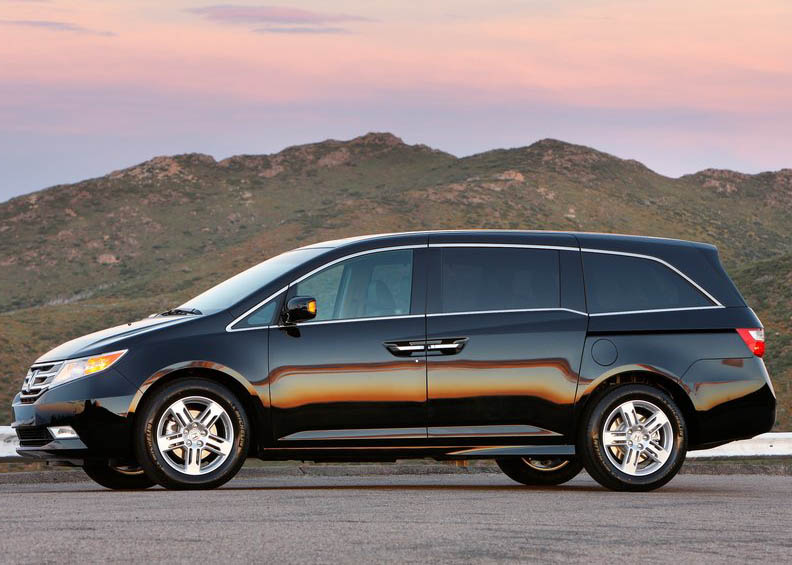
Completely redesigned for the 2011 model year, the 2012 Honda Odyssey remains the class-leading minivan for fuel economy and safety ratings, while continuing to offer the refinement, space and engaging driving experience that people have come to expect from this highly acclaimed family vehicle.

Class-leading achievements include the highest EPA highway fuel economy rating for an eight-passenger minivan of 28 mpg for Honda Odyssey Touring. Plus, all Odyssey models achieve the best possible safety ratings from both the National Highway Traffic Safety Administration (NHTSA) with a 5-Star Overall Vehicle Score and the Insurance Institute for Highway Safety (IIHS) with a TOP SAFETY PICK, an achievement that no other currently-tested minivan can match.

Designed and built in the United States, the five available models consist of the Honda Odyssey LX, EX, EX-L, Touring and Touring Elite, with each providing a unique combination of features, value, luxury and in-vehicle entertainment technology. Changes for 2012 include the addition of select features to the Odyssey EX that were previously exclusive to the Odyssey EX-L. For 2012, the Odyssey EX now includes Bluetooth HandsFreeLink, the intelligent Multi-Information Display (i-MID) with an 8-inch TFT screen, a 2-GB CD Library and a USB Audio Interface. The 2012 Odyssey Touring receives an exclusive exterior color, White Diamond Pearl, replacing Taffeta White on the prior model.

Body
The Honda Odyssey body uses a tapered cabin design with a signature "lightning bolt" character line to create a dynamic and distinctive appearance. Additionally, the styling cue creates a relatively large third-row window that enhances the outward perspective for third-row passengers. Engineered for a quiet interior, the Odyssey's highly-rigid body with 59 percent high-strength steel (an exceptional amount by industry standards) helps enhance the effectiveness of the vehicle's sound-deadening material to isolate road noise. The high-strength steel also helps to reduce body weight for better fuel economy and optimize body rigidity for agile handling.

Interior and Features
The interior offers multiple modes for accommodating child seats, adult passengers and cargo, along with offering a comprehensive range of in-vehicle entertainment technology. To fulfill its design goal to be the ultimate family vehicle, the interior provides three rows of comfort-oriented seating with generous sedan-like legroom in each row; along with providing up to five Lower Anchors and Tethers for CHildren (LATCH) positions for child seats (the Odyssey LX has four LATCH positions). The passenger volume measures 172.6 cu-ft. (Odyssey LX and EX) and the cargo volume ranges between 38.4 cu-ft. cargo volume (all seats up) to 148.5 cu-ft. depending on the seating configurations. A 4x8 sheet of plywood can fit inside the Odyssey's cargo bay with the second-row seats removed, and 10-foot-long 2x4 studs can fit inside the vehicle with the available front console removed.

To help enhance driver comfort, especially on long trips, the driver's seat features 10-way power adjustable seating (8-way power adjustable on Odyssey LX). A "3-mode" second-row seat design provides the ability to attach up to three child seats across the second row (Odyssey EX and above) by relocating the outboard seats to alternate positions closer to the doors. The one-motion, 60/40 split third-row Magic Seat, one of the Odyssey's original concepts and most versatile features, affords legroom for average size adults and is easy to open and close with one hand.

Highlights of standard features on all models include air conditioning with manual front and rear controls, power driver's seat, power windows with auto-up/down driver's and front-passenger's windows, tilt and telescopic steering column, a maintenance minder system and more. Honda Odyssey EX models and above come standard with power sliding rear doors, an "intelligent" Multi-Information Display (i-MID) with customizable wallpaper, center console storage, a flip-up trash bag ring, conversation mirror and more. Odyssey EX-L models include leather-trimmed seating surfaces (front and outboard second row), heated front seats, XM Radio®, power tailgate, a cool box, rearview camera and much more. Standard equipment on the Honda Odyssey Touring includes the Honda Satellite-Linked Navigation System, a Rear Entertainment System with a 9-inch display, driver's seat with two-position memory, 115 Volt power outlet, fog lights, parking sensors, six-speed automatic transmission and much more. The Odyssey Touring Elite adds an Ultra-Wide Rear Entertainment System (RES), blind-spot information system, High Intensity Discharge (HID) headlights and more.

Technology
Technology features available on certain models include a Honda Satellite-Linked Navigation System with Voice Recognition, which is available on the Odyssey EX-L and standard on the Odyssey Touring. The system features an 8-inch, high-resolution VGA color display and GPS technology to provide turn-by-turn guidance to a destination, in addition to other features including subscription-free FM Traffic data and a Zagat® restaurant guide.

Standard on the Honda Odyssey Touring Elite is the state-of-the-art, factory-integrated Rear Entertainment System that includes an ultra-wide 16.2-inch flip-down LCD screen and a 12-speaker, 650-Watt sound system capable of reproducing Dolby Digital 5.1 Surround Sound in 360-degree detail. A High-Definition Multimedia Interface (HDMI) video input and two wireless headphones for rear passengers are also provided. The Odyssey Touring Elite also includes the Blind Spot Information system (BSI), which helps alert the driver via indicators near the side mirrors when other vehicles are detected in set zones to the left and right of the Honda Odyssey.

Powertrain
An advanced 3.5-liter, 24-valve, SOHC, i-VTEC V-6 engine with Variable Cylinder Management (VCM) provides a balanced combination of performance, fuel economy and low emissions. The engine produces 248 hp (the most ever for Odyssey) and 250 lb-ft. of torque, while delivering an EPA-estimated city/highway/combined fuel economy of 19/28/22 mpg on Odyssey Touring models (18/27/21 mpg on Odyssey LX, EX and EX-L models). A 5-speed automatic transmission is standard on Odyssey LX, EX and EX-L models. Odyssey Touring models feature a 6-speed automatic transmission for enhanced driving refinement.

Chassis
A 118.1-inch wheelbase, a fully independent suspension design and features such as Vehicle Stability Assist (VSA®) with traction control contribute to the Honda Odyssey's confident driving performance and comfortable ride. The MacPherson strut front and multi-link rear suspension allows each wheel to maintain its own contact patch with the road, which is a significant benefit compared to less sophisticated torsion beam-style rear suspensions often used on other minivans.

Safety
The Honda Odyssey was recently named a TOP SAFETY PICK from IIHS, the institute's highest safety rating. The rating recognizes vehicles that do the best job of protecting vehicle occupants involved in front, side and rear crashes, plus rollover performance based on ratings in IIHS tests, as well as having a standard electronic stability control system. The Odyssey earned the highest-possible score of GOOD in all four ratings, including the rigorous roof-strength test. In addition to earning the TOP SAFETY PICK designation, the Odyssey was one of the first vehicles to achieve NHTSA's best-possible "Overall Vehicle Score" of 5 stars. The Honda Odyssey achieved its top "Overall Vehicle Score" with 5-star ratings for the frontal crash safety test and both side crash safety tests in all evaluated front and rear seating positions and scenarios. The Odyssey also received 4 stars for the rollover rating.

An extensive list of safety equipment includes the Advanced Compatibility Engineering (ACE) body structure, a Honda-exclusive body design that enhances occupant protection and crash compatibility in frontal collisions. Additional standard safety equipment includes: Vehicle Stability Assist (VSA); anti-lock brakes with electronic brake distribution (EBD) and Brake Assist; three-row side-curtain airbags with a rollover sensor; driver's and front passenger's side airbags with passenger-side Occupant Position Detection System (OPDS); and dual-stage, multiple-threshold front airbags.
Read More

Monday, December 31, 2012

Jeep Liberty Arctic, 2012


  • Jeep Liberty Arctic, 2012

The Jeep Liberty Arctic shares many of the same features as the Wrangler Arctic. Available exterior colors are Winter Chill, Bright Silver, Bright White and Mineral Gray. "Arctic" badges on the front fenders are shared, though the "Arctic" decal on the hood is unique to Liberty. Semi-gloss black 16-inch aluminum wheels with center caps painted semi-gloss black are wrapped in P235/70R16 OWL all-terrain tires. Rounding out the exterior highlights are deep tint glass and tow hooks, blacked-out headlamps and standard fog lamps.

The interior features a similar black and Arctic Orange color scheme found in Wrangler. Seats are covered in black vinyl with a Gortex embossment, and the inserts are Tectonic fabric with Polar White accents. Arctic Orange accent stitching can be found on the seat backs, cushions and headrests. Power front seats are heated and feature an "Arctic" logo in the seat back. Finishing touches include gray-faced gauges, express up/down one-touch windows, Media Center 430 touch-screen with a nine-speaker Infiniti sound system and Mopar slush mats with white "Jeep" lettering.
Read More

Nissan Qashqai, 2012


  • Nissan Qashqai, 2012

In line with its Pure Drive strategy, Nissan continues to innovate to improve CO2 and fuel economy performance to deliver no compromise, real benefits for consumers. As part of this strategy Nissan is introducing a new Pure Drive version of the top selling Nissan Qashqai equipped with a new state-of-the-art 1.6 dCi engine.
This new engine is the perfect example of Nissan's Pure Drive strategy, replacing the previous 2.0 dCi with a more efficient engine that not only delivers lower emissions and considerably improved levels of fuel economy but which offers the same level of performance as the bigger engine.

Best of all, when coupled with Nissan's Stop / Start system CO2 emissions tumble to just 119 g/km.

At the same time, innovative new options become available on the Nissan Qashqai range, including a new CVT gearbox and, for the first time on a C-segment car, Around View Monitor. AVM uses a series of small cameras located on the exterior of the vehicle to make parking and manoeuvering as safe as possible by giving the driver a real-time helicopter view of the environment around the car.

The moves will underline Nissan's leadership of the booming Crossover market and keep Nissan Qashqai one, or even two, steps ahead of its opposition.

The new engine and Stop / Start System has been a joint development between Europe and Japan with Alliance Partner Renault concentrating on the engine and Nissan perfecting the automatic cut off system. It had been originally hoped to introduce the two elements at the same time.

Unfortunately the tragic earthquake which affected Japan so badly at the start of the year has led to a short delay in the manufacture of the Stop / Start System's electronic components. As a result, Nissan Qashqai models built between now and December and powered by the new engine will not have Stop / Start. But even without the system, CO2 emissions are a still impressive 129g/km. From January production, however, Stop / Start System will become a standard feature.

The Pure Drive designation is given to every Nissan product that emits 130g/km of CO2 or less. On its introduction the 'cut off' point was 140g, but as part of the Nissan Green Programme membership of this exclusive club gets tougher all the time. The programme will instigate a further drop to 120g in 2013.

Nissan's Pure Drive champion is, naturally, the zero emission 100% electric Nissan LEAF but the recently introduced Nissan Micra DIG-S heads the conventionally-powered cars. Its technically advanced three-cylinder 1.2-litre petrol engine uses direct injection and a supercharger to deliver brisk performance but with excellent fuel economy and CO2 emissions of just 95 g/km.

The Nissan Qashqai 1.6 dCi
Available on both Nissan Qashqai and Qashqai +2 models, the new dCi engine has been jointly developed with Alliance partner Renault.

Its arrival in Qashqai is in line with Nissan's policy of 'penalty-free' engine downsizing: the 1.6-litre direct injection diesel engine gives the fuel economy and emissions expected from an engine of its size, but with power and torque figures anticipated from a 2.0-litre engine.

Notably compact, the engine, which displaces 1598cc, is a state-of-the-art unit with more than 30 patents registered representing an investment of €230 million.

Thanks to its 130PS, it is the most powerful of its size in the world while its peak torque figure - an exceptional 320Nm: exactly the same as the 2.0-litre dCi it is replacing - is developed at only 1,750rpm with some 80 per cent available from a mere 1,500 rpm. The resulting dynamic performance lifts the latest Nissan Qashqai well above the 1.6-litre class norm: top speed is 190 km/h, with 0-100 km/h taking 10.3 secs.

But this performance gain is not at the expense of the environment. Its combined cycle fuel consumption (NEDC) is 24 per cent better than the 2.0 dCi - 4.5 l/100km as against 5.9 l/100km - while it produces much lower CO2 emissions - 119 g/km rather than 155 g/km.

These figures refer to the 2wd manual version of Nissan Qashqai: the equivalent Qashqai+2 with Stop / Start System produces 123g/km, while figures for 4wd versions are 135g and 139g respectively.

High Technology Inspiration
The starting point for the engineering team was 'square' architecture, allowing large-diameter valves to be housed in the cylinder head for more efficient filling of the combustion chambers. It's a technique inspired by motor racing and seldom seen in modern diesel road car engines.

Downsizing
Reducing the weight of the cylinder block, cutting mechanical losses and reducing dynamic forces have resulted in the best balance between fuel consumption and performance.

Stop / Start System

The 1.6 dCi features Stop / Start System. Reducing CO2 on a mass-market car to 119g/km brings real economic as well as environmental benefits for many consumers.

Smart Energy Management
Stop / Start System is combined with alternator regeneration, using deceleration energy to charge the battery. The regenerative braking system alone is responsible for a 3% reduction in CO2

Cold-Loop, Low-Pressure Exhaust Gas Recirculation (EGR)

This dCi engine is the first to have been developed in Europe using cold-loop, low-pressure exhaust gas recirculation. By recycling the exhaust gas at a lower temperature, emissions of nitrogen oxides and CO2 are reduced.

Thermo Management
The system uses a valve located in the cooling circuit upstream of the cylinder head and cylinder block. When the engine starts from cold, the valve is closed and prevents water from circulating around the combustion chambers. This allows the engine to reach its ideal working temperature more quickly, optimizing combustion efficiency.

Internal friction is also reduced thanks to the quicker warm-up of the oil. The result? More power, lower fuel consumption and lower emissions.

Variable Displacement Oil Pump
Unlike a conventional oil pump which has a fixed capacity, the Variable flow pump delivers only the right amount of oil to avoid unnecessary energy loss. The power needed to drive the oil pump is minimized and varies with engine speed.

Variable Swirl Technology
'Swirl' describes the phenomenon of air rotating inside the cylinder, much like a cyclone. As a result the air-fuel mix is optimised for engine speed conditions reducing fuel consumption, while also minimising the emission of CO2 and other pollutants like nitrogen oxides and particulates.

Among many other refinements, considerable attention was paid to the new engine's acoustic performance thanks to advanced work on combustion in order to deal with noise generation at source. Customers get a smooth, quality, refined ride experience.

Around View Monitor
Qashqai will be available with Nissan's Around View Monitor: it's the first time such an innovative feature has been available on a C-segment car.

In fact, Nissan was the first manufacturer to introduce Around View Monitor anywhere in the world - made available in Japan on the Nissan Elgrand in 2007. In Europe the system has most recently been seen on the Infiniti EX and iconic FX

Combining the feeds from small cameras mounted on the front grille, tailgate and both door mirrors, the system projects an overhead 360° 'helicopter view' of the area around the vehicle onto the Nissan Connect satellite navigation and infotainment screen.

A natural progression from the rear facing parking camera pioneered by Nissan - its first application was on the 2002 Nissan Primera - Around View Monitor makes parking or slow speed manoeuvres simple and safe. The 360° helicopter view gives the driver a clear indication of obstacles around the car. The system switches on automatically when the car is placed in reverse or, while driving up to 10 km/h, by pressing the "camera" button on dashboard; then it switches off once the car has reached a set speed.

If preferred the feed from each camera can be displayed individually and the system can operate as a simple reversing camera which incorporates course lines on the screen to guide the driver to the correct path into the chosen parking spot.

Around View Monitor will make it first appearance on equipment laden special versions of Nissan Qashqai and Qashqai+2 due early 2012. As well as Nissan Connect and AVM - the two systems are interlinked - the special versions will also feature a full-length panoramic glass roof and smart dual tone black and silver 18inch alloy wheels. AVM will also be optionally available on Acenta and Tekna versions (depending on markets).

New CVT gearbox
The latest generation of Nissan developed continuously variable transmission will be introduced on 117PS 1.6-litre petrol-powered Nissan Qashqai models early 2012. The CVT version will increase Qashqai's market coverage.

The Nissan Qashqai range
Since its launch in March 2007, the Nissan Qashqai has redefined Europe's mid-size hatchback market. Designed and built in Europe, Qashqai - the original Crossover - adopted a genuinely fresh approach to a traditional, conservative sector of the market... and Nissan's bold stance has been a resounding success.

In under five years, European sales of Nissan Qashqai and its seven-seat sister Qashqai+2 have exceeded 1,000,000 units, with more than 80 per cent of sales going to first time Nissan buyers. The longer Qashqai+2 arrived in the autumn of 2008 to expand the appeal of the range still further.

March 2010 saw the first major change to Nissan Qashqai as a refreshed model was introduced to help it maintain its class-leading sales performance, a move that surprised many competitors who, at the time, were still playing catch up and had yet to bring their own crossovers to market.

There were visual changes including a new bonnet, grille, wings and new headlamps at the front and new rear lights and a re-profiled tailgate at the rear. The changes were set off by fresh designs of alloy wheel. Discreet aerodynamic improvements, including the adoption of full-length underbody panels, saw the CD figure fall to 0.33. As well as smoothing the airflow under the car, the panels helped reduce noise intrusion into the cabin.

Inside there were easier to read instruments and a great emphasis on quality with new materials, new colours and other subtle touches for a feeling of increased sophistication. Mechanically a number of small changes enhanced the vehicle's dynamics still further. Dampers were retuned for improved body control, reduced noise and better bump-thump absorption while the steering feel was also improved.

The basic mechanical layout remained unchanged with front- or ALL MODE four-wheel drive and fully independent suspension by sub-frame mounted struts at the front and a multi-link rear.

With the arrival of the new 1.6 dCi engine, the range line-up now encompasses two petrol and three diesel offerings. The entry-level 1.6-litre petrol develops 117PS while the 2.0-litre petrol produces 140PS. The entry-level diesel is the 110PS 1.5 dCi, while the 150PS 2.0-litre dCi unit remains to power the automatic 4WD version only. As before, the range runs through Visia, Acenta and Tekna specifications with the special version featuring a high level of equipment as well as reinforced exterior Crossover design.
Read More