Tuesday, December 11, 2012

Renault Megane RS Trophy, 2012


  •  Renault Megane RS Trophy, 2012

With a power output of 265hp and peak torque of 360Nm, Renault Mégane RS Trophy delivers unrivalled efficiency for its class. A new tyre fitment and an increase in power make the very most of the Cup chassis' potential, without detracting from the car's acclaimed versatility and ride comfort.

A production run of 500 cars is planned, and Renault Mégane RS Trophy's specific styling features put it at the very top of the Mégane RS range.

Order books open on June 20, 2011, and the newcomer marketed in France, the United Kingdom, Germany, Belgium, Portugal, Spain, Italy, Switzerland, Austria and Slovenia. Prices in France will start from €35,500.

Technical evolutions for the existing, exceptional performance package
With maximum power of 265hp (up 15hp), peak torque of 360Nm (+20Nm) available across a particularly broad rev-band (3,000 to 5,000rpm), a power-to-weight ratio of 5.09kg/hp and specific power of 132.5hp/litre, the car boasts an exceptional performance package. Even so, Renault Sport's engineers have worked hard on the specification of the Mégane RS's 2.0-litre turbocharged engine to take driving enjoyment and response to even higher levels. Maximum turbo pressure has been uprated to 2.5 bar (up 0.2 bar), while the air intake design has been revised to take the higher pressure and higher running temperatures into account.

Performance has been enhanced in the process, and the result is a 0-to-100kph time of just 6.0s (down 0.1s), a top speed of 254kph (up 4kph) and the 1,000km standing start in 25.4s (down 0.3s). Beyond these statistics, however, the experience of driving Renault Mégane RS Trophy is a constant source of enjoyment and satisfying sensations. In addition to the finely-tuned set-up of the Cup chassis and the standard limited slip differential, a new tyre fitment contributes to the car's exceptional road-holding on dry roads, especially through tighter turns, as well as in the wet. The design of the Formula 1-inspired Bridgestone Potenza RE050A's asymmetric, directional tread pattern and the form of its tread blocks provide outstanding grip, stability and acoustic comfort, whatever the conditions. Last but not least, Renault Mégane RS Trophy's fuel-efficiency has been carefully optimised to return combined-cycle fuel consumption of just 8.2 litres/100km, equivalent to 190g of CO2/km, which represents a saving of 0.2 litres/100km and 5g/km over Renault Mégane RS at the time of the latter's launch.

Assertive yet seductive R.S. styling cues
Renault Mégane RS Trophy is recognisable at a glance thanks to its black roof, specific decals, new rear lip spoiler, 19-inch Gloss Black STEEV wheels with red piping and R.S. valve caps (optional or standard, depending on market) and numbered plaque. The LED daytime running lights also play a part in its striking looks. Renault Mégane RS Trophy marks the introduction of a new Sirius Yellow finish, an emblematic metallic paint that will be particularly appreciated by Renault Sport fans. This specific body colour is available as an alternative to Glacier White, Etoilé Black and Cassiopée Grey.

Inside, the Recaro bucket seats (fabric or leather, depending on market) add to the cabin's unmistakably sporty feel, as does the central display which shows the data provided by the R.S. Monitor. This innovative onboard data-logging system records performance and displays a range of mechanical parameters in real-time, a feature which owners will especially appreciate during track days, an exercise to which the Renault Mégane RS Trophy lends itself particularly well. Indeed, the car will be on show at the Renault Sport Day which forms part of the Renault Sport Enthusiasts Day programme at the Nürburgring, Germany, on June 17, 2011.
Read More

Porsche 918 Spyder Prototype, 2012


  •  Porsche 918 Spyder Prototype, 2012

The Porsche 918 Spyder is on the road: Dr. Ing. h.c. F. Porsche AG, Stuttgart, has taken the driving trials of the super sports car of the future a step further with completion of the initial prototypes. The Porsche 918 Spyder go into production at the end of September 2013 as planned, with the first customers receiving their vehicles before 2013 is out. 

The prototypes, their camouflage harking back to historical Porsche 917 racing cars, signal the final touches to the Porsche 918 Spyder. The focus is on the interplay between the highly sophisticated individual drive components. The combination of combustion engine and two independent electric motors - one on the front axle and one in the drive line, acting on the rear wheels - poses completely new demands on the development of the operating strategies. "They are therefore a critical component in this vehicle into which we have put all of our expertise and capacity for innovation," said Wolfgang Hatz. These operating strategies and the development of the software to go with them are one of Porsche's core competences. Both of them have a major influence on the extreme driving fun to be had with the 918 Spyder and they make possible a unique combination of minimal fuel consumption and maximum performance. The initial results of the driving trials are in line with the high expectations placed on the Porsche 918 Spyder.

The super sports car is designed as a plug-in hybrid vehicle combining a high-performance combustion engine with cutting-edge electric motors for extraordinary performance: on the one hand, the dynamics of a racing machine boasting more than 770 hp, on the other hand, fuel consumption in the region of three litres per 100 kilometres. Moreover, Porsche is breaking yet more new ground with the technology demonstrator with spectacular solutions such as the full carbon fibre reinforced plastic (CFRP) monocoque with unit carrier, fully adaptive aerodynamics, adaptive rear-axle steering and the upward-venting "top pipes" exhaust system. In the process, the Porsche 918 Spyder is offering a glimpse of what Porsche Intelligent Performance may be capable of in future.

Technical Specifications
  •     Body: Two-seater Spyder; carbon fibre reinforced plastics (CFRP) monocoque interlocked with CFRP unit carrier; two-piece Targa roof; fixed roll-over protection system.
  •     Drivetrain: Parallel full hybrid; 4.6-litre V8 mid-engine with drysump lubrication; hybrid module with electric motor and decoupler; electric motor with decoupler and gear unit on front axle; electrical system recuperation; four cooling circuits for motors, transmission and battery; thermal management.
    Engine Power
  • V8 engine: >570 hp
  • Hybrid module on rear axle: ~90 kW
  • Electric motor on front axle: ~80 kW
  • Combined: >770 hp
  • Suspension: Double-wishbone front axle; optional electro-pneumatic lift system on front axle; electro-mechanical power steering; multi-link rear axle with adaptive electromechanical system for individual rear wheel steering
  • Brake system: High-performance hybrid brake system with adaptive recuperation; ceramic brake discs (PCCB).
  • Energy supply: Lithium-ion battery with 6.8 kWh capacity (BOL nominal), 202 kW maximum power and mainscompatible plug-in charger.
    Performance
        Top speed: >325 km/h
        Purely electric top speed: >150 km/h
        0-100 km/h: under 3.0 s
    Fuel Consumption (NEDC): ~3.0 l/100 km
    CO2 emissions: ~70 g/km
    Purely electric range: >25 km
Read More

Monday, December 10, 2012

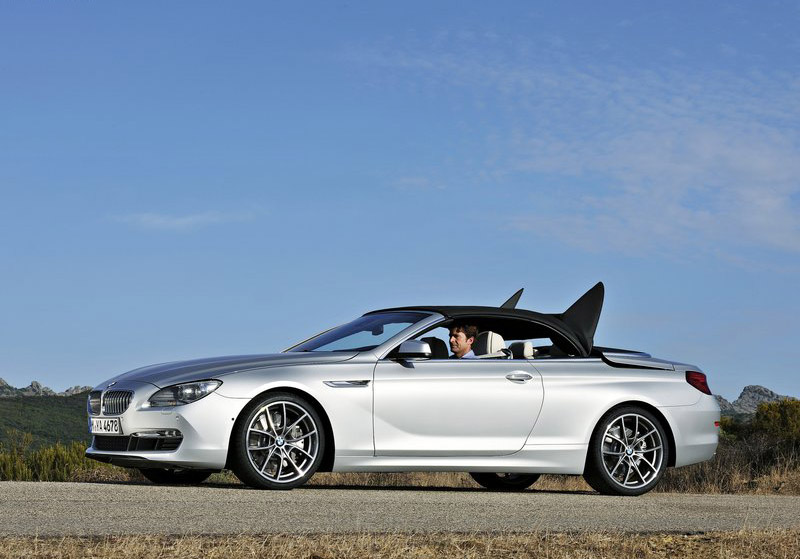
BMW 650i Convertible, 2012


  •  BMW 650i Convertible, 2012

The BMW 6-Series Coupe Concept debuting at the 2010 Los Angeles International Auto Show as its backdrop, BMW announced the production-ready BMW 650i Convertible. The new 650i Convertible will go on sale in the Spring of 2011 as a 2012 model for the United States. Final pricing, options, and packages will be announced closer to the on-sale date.

Words like "breathtaking" and "irresistible" punctuate the history of BMW Convertibles. Now, BMW has opened a new chapter in the tradition of open-top cars. The new BMW 650i Convertible fulfils the wishes of the most discerning automotive enthusiast as The Ultimate Driving Machine® with groundbreaking luxury and crisp good looks. In the premium convertible market, the BMW 650i Convertible presents a convincing case with the most advanced chassis technology and most innovative comfort, infotainment and safety features.

A sweeping hood, aft-set passenger compartment, long wheelbase and muscular profile embody the hallmark proportions of a BMW Convertible. The new BMW 650i Convertible combines these features with a classic soft-top roof with flying buttress design. Powerfully contoured surfaces of its lines promise the anticipated BMW driving experience. The luxurious ambience of the interior is highlighted by a driver-oriented cockpit which wraps the front and rear passengers in a feeling of aesthetic security. Nowhere is the high-class functionality of the interior underlined more prominently than in the redesigned freestanding 10.2" Central Display of the standard iDrive control system.

V-8 engine with High Precision direct injection and turbocharging.
The 4.4-liter V-8 engine develops a maximum 400 hp between 5,500 and 6,400 rpm, and makes peak torque of 450 lb-ft between 1,750 and 4,500 rpm (preliminary). This unique "reverse-flow" engine, whose turbochargers are positioned in the V-area between the cylinder banks, produces an instantaneous and sustained wave of power, making it an energetic delight for the enthusiast driver.

Instantaneous power and torque are the stand-out features of the V-8 engine available of the new BMW 650i Convertible. The engine combines sporting character with outstanding smoothness, linear power delivery, and exceptional efficiency. The engine can be paired with either BMW's new 8-speed Sport Automatic gearbox or BMW's traditional 6-speed manual transmission, quite popular with North American enthusiasts.

The new BMW 650i Convertible completes the sprint from 0 to 60 mph in 4.9 seconds with the manual transmission (4.9 seconds with the 8-speed automatic), and top speed is electronically limited to 155 mph. This engine also boasts extraordinary efficiency for a model in its output class. EPA figures will be available closer to the on-sale date in 2011.

8-speed Sport Automatic Transmission.
The 8-speed Sport Automatic transmission fitted to the new BMW 650i Convertible boasts a perfect combination of speed, flexibility, sportiness, and efficiency. Its minimal torque converter slip and rapid gear changes set it apart. An innovative gear set configuration allows this transmission to offer eight gears, optimizing the sprinting power yet allowing the driver to save fuel by driving at low revs. Naturally, the driver can choose to select gears manually via shift paddles on the standard Sport leather steering wheel.

In addition to the efficiency of the engine and 8-speed Sport Automatic transmission, an extensive range of BMW EfficientDynamics measures contribute to reducing fuel consumption and emissions. Brake Energy Regeneration, on-demand operation of ancillary components, intelligent lightweight construction and extensive aerodynamic refinement ensure maximum efficiency.

Chassis Management and optional Integral Active Steering.
Cutting-edge chassis technology gives the new BMW 650i Convertible the tools to provide both sporty handling and exceptional comfort. The double wishbone front axle and the multi-link rear axle are made predominantly from aluminum. The chassis is geared to the requirements of drivers with sporting intentions, although the dampers also respond sensitively to bumps in the road surface under high lateral acceleration. The optional Active Roll Stabilization combines with the standard Dynamic Damper Control to offer the driver even more precise responses and perfectly flat cornering ability. The electronically controlled shock absorbers adapt to the road surface and the driver's style to perfectly control the car's body motions.

The electronically controlled damper system in the new BMW 6-Series Convertible adjusts compression and rebound settings continuously and independently. For example, a stiff chassis setting can be combined with comfortable responses to unevenness in the road surface. The control unit of the damping system processes the data supplied by sensors on the lifting movements of the wheels and the ride height of the car. The driving speed and the damper setting chosen by the driver are also taken into account in calculating the damping force required for each individual wheel to even out body movements. This data is fed back to the damper units at intervals of just 2.5 milliseconds.

The Active Roll Stabilization feature (optional) reduces body roll in high-speed corners and in sudden changes of direction, or transitions. Sensors calculate the amount of body roll based on the driving situation at hand, and this is then counteracted quickly and precisely by hydraulic rotary actuators in the front and rear axle swaybars, leading to a significant improvement in body motion management.

The electric power steering features standard Servotronic vehicle-speed sensitive assistance, and serves up the familiar BMW recipe of precision, comfort and linear response.

The new BMW 650i Convertible is the first car in its class that can be equipped with Integral Active Steering. This system combines the Active Steering system for the front axle (available on the previous generation 6-Series Convertible) with a new, steerable rear axle. Precisely harmonized steering angle movements at both axles create a virtual lengthening or shortening of the vehicle's wheelbase, which fosters greater high-speed stability and enhanced maneuverability for parking and city use.

Brakes, Wheels, and Tires.
The lightweight floating-caliper brakes with vented discs are easy to use with precision, and their effectiveness is reinforced by Dynamic Stability Control (DSC). DSC brings together technology such as the Anti-lock Braking System (ABS), Dynamic Traction Control (DTC), Cornering Brake Control (CBC), Dynamic Brake Control (DBC), the Start-off Assistant, the automatic Brake Drying function and Brake Fade Compensation. Standard equipment also includes 8.5 x19-inch light-alloy wheels, with all-season runflat tires (size 245/40 R19) and a tire pressure monitoring system.

Driving Dynamics Control.
With standard Driving Dynamics Control, the dominant virtues of athletic driving sportiness and ride comfort can be chosen by the driver as situations demand. The driver can choose settings of COMFORT, NORMAL, SPORT and SPORT+ modes using the large rocker switch on the center console. Affected parameters include the tuning of the throttle response, power steering assistance, shock absorbers, roll stabilization (if equipped), Integral Active Steering (if equipped), and automatic transmission shift characteristics. In SPORT+ mode, the Dynamic Traction Control mode of the standard Dynamic Stability Control system is activated, raising the thresholds for stability intervention in the most sport-oriented driving circumstances.

Unmatched chassis technology works with the cutting-edge engine to provide the driver with greater dynamic capability and improved ride comfort compared to the previous-generation 6-Series Convertible.

Design: Athletic elegance, natural sportiness.
The dynamic driving experience of the new BMW 650i Convertible is reflected by its athletic presence and sporty exterior design. A long hood, aft-set passenger compartment, long wheelbase and muscular profile create the proportions signature to a BMW Convertible. The precise interplay of eye-catching lines and meticulously sculpted surfaces help to give the new BMW 650i Convertible its show-stopping looks.

Like the lines projecting outward from the nose of the car and continuing along its full length, the harmoniously curved surfaces of the body take their cue from the movement of waves sent out by a the bow of a motor boat piercing the water. Continuing the theme, the waistline surface which leads the body into the interior mimics the character of a classic runabout.

The new BMW 650i Convertible introduces the viewer to its dynamic character through its front end design. The large, slightly forward-slanting BMW kidney grille - the "6-Series shark nose" as characterized by many enthusiasts - gives the car a sense of surging forward, while a broad air intake, strikingly contoured hood and muscular wheel arches hint at the powerful engine and athletic roadholding abilities. High-quality chrome elements positioned on the outer edges of the front apron further accentuate the width of the car. The standard LED foglamps are placed in front of these chrome elements.

The standard Xenon Adaptive headlights of the new BMW 650i Convertible pick up BMW's familiar "twin round" headlamp appearance. An LED accent strip cuts across the top of them. The daytime running lights appear through familiar LED corona rings, whose bright white light illuminates the distinctive front end. A horizontal light strip below the corona rings, meanwhile, handles the turn signal duties.

Uninterrupted, flowing lines lend the silhouette of the BMW 650i Convertible a sweeping elegance. Powerful curves mimic the natural movement of waves. The hallmark BMW character line at door handle level is spawned in the front wheel arch gill - which houses the side indicator lamp - and extends all the way back to join the rear lights.

Another character line is released from the bulge of the front wing, stretching powerfully over the front wheel like a wave before dropping down and continuing horizontally to the rear. Together with the character line, it creates a dynamic wedge shape which emphasises the car's forward-surging character.

Wide and flat surfaces define the rear of the new BMW 650i Convertible. The dominance of horizontal lines adds extra emphasis to the wider track of the new car compared to its predecessor. In addition, downward-converging lines underline the car's focus on the road, echoing the approach at the front end. This distinctive V-shape is created by lines including the side edges of the trunklid, the license plate surround and the contours of the reflectors positioned in the bumper. The slightly concave lower section of the trunklid produces light and shade effects which lend an extra lightness to the rear of the car.

The two-part rear light clusters give BMW's familiar L-shape a particularly sporty edge. Inside, two LED-powered light strips create the familiar BMW "bloodlines" night-time look. The indicators and brake lights are also LED units.

The new BMW 650i Convertible again features an electrically powered soft-top roof with flying buttress architecture. The multi-layer canvas roof -optimized in terms of its acoustic properties and structural rigidity - offers outstanding thermal insulation and thus enables the new convertible to be used comfortably all year round. The buttresses project out along the flanks of the 650i into its rear section, accentuating the car's gracefully sweeping silhouette and giving it an unmistakable appearance. The transition of the roofline into the rear end flows as smoothly as on a hard-top coupe.

The heated, vertical glass rear window, which is situated just behind the rear seats, is retracted independently from the soft top itself. This reduces the volume of the soft-top components that need to be stowed in the soft-top compartment, leaving more room for luggage in the low-profile trunk of the new BMW 650i Convertible. The independent rear window also allows just the right amount of fresh air to be admitted to the car, when desired. Conversely, leaving the rear window up while lowering the top keeps air turbulence in the rear to a minimum.

The automatic opening and closing operation for the roof is activated by holding a button on the center console. Opening the roof takes 19 seconds, the closing process 24 seconds. Importantly, as with the preceding generation, both operations can be activated while on the move at speeds up to 25 mph (40 kmh).

The roof of the new BMW 650i Convertible is available in two colors, including new beige. Two non-metallic exterior paint colors and seven metallic shades are available. Exclusive Nappa leather is standard in the United States, and can be ordered in four color options (Vermillion Red, Ivory White, Cinnamon Brown, and Black). The instrument panel, center console, and the upper sections of the rear door panel and side trim can also be lined with Nappa leather with contrasting stitching as an option.

Interior with BMW's traditional driver-oriented cockpit.
The new BMW 650i Convertible is designed to be a 2+2-seater. Its interior offers individually tailored seats for the driver, front passenger and rear passengers. High-quality materials, carefully coordinated colors and, once again, meticulously formed surfaces combine to produce an ambience defined by luxury, sweeping style and Teutonic functionality. A hallmark BMW element of the interior design is the driver-oriented cockpit layout. The central section of the instrument panel, containing the iDrive system's Central Display, the air vents and the controls for the audio system and air conditioning, are all angled slightly towards the driver. Added to which, the gearshift lever and the switches for the parking brake, roof operation and Driving Dynamics Control are located on a surface that opens out towards the driver and is set lower than the front passenger side of the center console.

The front passenger area is bordered by a surface curving elegantly from the armrest over the side edge of the center console, upwards and outwards into the instrument panel and then horizontally into the door trim. This provides a harmonious surround for the front passenger area, creating a feeling of exclusive security. The contour of the rear waistline surface, which extends slightly into the interior between the head restraints, highlights the individual seat layout of the rear.

Premiere: Freestanding Central Display with flatscreen design.
The black-panel instrument cluster of the new BMW 650i Convertible combines the traditional sports car circular instruments with state-of-the-art display technology. The Navigation system, telephone and entertainment functions are operated using the iDrive control system, whose Central Display boasts an innovative design. The on-board monitor takes the form of a freestanding display for the first time in the new BMW 650i Convertible. The standard 10.2 inch screen features a high-quality galvanized chrome surround. The shallow depth of the display gives it a modern character. Transreflective technology ensures the display remains easy-to-read in bright sunlight. The new arrangement of the Central Display - which now reaches further into the passenger compartment -influences the architecture of the instrument panel, which rises steeply in front of the driver and front passenger.

This impression is further enhanced by the structure of the door trim panels. Their surfaces have a powerfully taut look and, like the black waistline surface, pull in and rise up to create a smooth transition into the instrument panel, giving the interior the effect of wrapping around the driver and front passenger.

Dimensions and Storage.
At 4,894 millimeters (192.6 in.) in length, the new BMW 650i Convertible is 74 millimeters (2.9 in.) longer than its predecessor. Its extended wheelbase now stretches to 2,855 millimeters (112.4 in.). The car is 39 millimeters (1.5 in.) wider, measuring 1,894 millimeters (74.5 in.) across, while 9 millimeters (0.35 in.) have been shaved from its height (now 1,365 mm / 53.7 in.). These dimensions create a significantly more powerful and elegant impression, while taking interior spaciousness to new levels.

Despite its lower height, the new BMW 650i Convertible offers greater headroom in both front and rear seats. The height adjustment of the driver and front passenger seats also cover a greater range of travel. The increase in the width of the interior is noticeable from all four seats, and passengers in the rear seats benefit from additional legroom. The tilt angle of the rear seat backrest now achieves virtually the same angle as found in BMW Sedans.

A ski bag with a pass-through opening in the rear seat backrest is available as part of the Cold Weather Package (also adds heated steering wheel and heated front seats) and offers space for two sets of skis. The new BMW 650i Convertible boasts 300 liters (10.6 cu. ft.) DIN of trunk space with the convertible top open, allowing two 46-inch golf bags and a business case to be accommodated. With the roof closed, the variable soft-top stowage compartment can be folded up in a single movement to increase trunk capacity to 350 liters (12.3 cu. ft.) DIN. The principles of lightweight design were similarly followed in the construction of the soft-top roof, the stowage compartment for the roof weighing 50 percent less than its predecessor.

New lightweight technology, comprehensive safety equipment.
The new BMW 650i Convertible is fitted with newly developed lightweight seats with an integrated seatbelt system and standard 20-way multi-contour adjustability and adjustable lumbar support. Optionally, the Luxury Seating Package adds front ventilated seats and active fatigue reduction can be added. All seat variants come with crash-activated anti-whiplash head restraints.

The range of standard safety equipment also includes front airbags, head-thorax side airbags integrated into the seat frame, three-point automatic belts for all seats, belt force limiters and front belt pre-tensioners, ISOFIX child seat mounts in the rear and a standard Roll-Over Protection System. The Roll-Over Protection System developed for the new BMW 650i Convertible consists of two high-strength aluminum roll-bars hidden behind the rear head restraints. If the integrated safety electronics register a risk of the car rolling over, the pyrotechnic release mechanism is activated, causing the high-strength aluminum roll-bars to rise from their stowed position in a fraction of a second.

Carefully researched advances in materials and development of the car's load-bearing structure have significantly enhanced the body's construction in terms of the agility and safety it offers. Its static torsional rigidity is about 50 percent greater than that of its predecessor. In the interests of perfect balance, the doors, hood and front spring mounts are all aluminum, while the front side panels, roof lid and trunklid are made from reinforced composite.

This weight optimization has been combined with an improvement in passive safety; the car's mean body strength is 29 percent greater than its predecessor. This has been achieved primarily through the use of high-strength multi-phase steels, high-strength hot-molded steels and aluminum.

Cutting-edge features from BMW ConnectedDrive.
The new BMW 650i Convertible is available with a great variety of driver assistance systems and mobility services from BMW ConnectedDrive. The comprehensive Driver Assistance Package includes Automatic High Beams, Lane Departure Warning, Active Blind Spot Detection, Rear and Top View cameras, Parking Assistant, and a new three-dimensional, full-color Head-Up Display. Also available are BMW's Night Vision with Pedestrian Detection, Active Cruise Control with stop-and-go capability.

HiFi stereo system.
The standard HiFi audio system in the new BMW 650i Convertible comes with an HD Radio receiver, MP3-compatible CD drive, AUX-IN connection, and a HiFi loudspeaker system with nine speakers. The available Premium Sound Package adds SiriusXM satellite radio with a 1-year subscription, iPod and USB adapter, and the Premium HiFi system comprised of 12 loudspeakers and a digital amplifier. It features DIRAC signal processing and model-specific equalizing.

World debut of new-generation Head-Up Display.
Like its predecessor, the new BMW 650i Convertible is the only vehicle in its class with an optional Head-Up Display system. By projecting important information onto the windshield, directly in the driver's line of sight, the Head-Up Display minimizes distraction from the road and traffic. The new-generation system brings a further improvement in display quality: the symbols are projected as three-dimensional graphics and in ultra-clear resolution onto the windshield. Full-color capability makes the road sign symbols even more realistic. At the same time the Head-Up Display is now able to present a wider range of information. Depending on vehicle specification, guidance information supplied by the Navigation system, Check Control messages, status messages from the Lane Departure Warning System and warnings from the BMW Night Vision system can all be shown in the Head-Up Display. The positioning of the messages on the windshield is highly ergonomic, so that drivers are aware of them without having to refocus or take their eyes off the road.

The intensity of the projection automatically adjusts to the ambient light level, and the brightness setting can be adjusted via the iDrive menu. The driver can also choose what information will appear in the Head-Up Display in addition to road speed and warnings from the driver assistance systems.

Rear-View, Top View, and Side View Cameras.
To supplement the standard Park Distance Control, which uses ultrasonic sensors to monitor distance from objects in front or behind, the new BMW 650i Convertible also features a standard rear-view camera. The camera is integrated in the trunklid under the BMW "roundel" badge, which protects it from dirt. When the rear-view camera is activated, the roundel badge pivots up out of the way to expose the camera lens. The perspective-corrected color images are relayed to the Central Display. Superimposed on the images are interactive tracking lines which indicate the optimal steering angle for parking, as well as the tightest turning circle.

The optional Top View system with Side View provides an even more comprehensive picture. In addition to the rear-view camera and the PDC sensors, this system also uses a fish-eye camera in each of the side mirrors. The data acquired by Top View is relayed to a central computer which generates a bird's eye view of both vehicle and surroundings and presents the image in the Central Display. This view allows the driver to maneuver precisely in confined spaces.

The Side View function uses two cameras integrated in the front fenders to provide an improved view of cross-traffic at speeds below 10mph. These images are relayed to the Central Display where they may give the driver an early idea of what is happening on the road to the left and right of the car when pulling out from narrow and concealed gateways or car park exits.

The BMW 650i Convertible: Production in Dingolfing, Germany.
The new BMW 650i Convertible is built at the BMW plant in Dingolfing, Germany. Also rolling off the assembly line at the BMW Group's largest production plant are the BMW 7-Series and BMW 5-Series models. The flexible and efficient processes at the plant combine state-of-the-art production technology with a standard of quality defined by meticulous craftsmanship in the manufacture of premium cars configured to customer requirements.
Read More

Rinspeed E2, 2009


  • Rinspeed E2, 2009

What is Rinspeed E2? 
It is round, small and cuddly, has eyes to fall in love with, a sexy behind - and on demand 60 or 160 hp as necessary. It is Rinspeed's answer to the fast changing requirements of the market and sociopolitical perception about the tuning industry.' Rinspeed boss Frank M. Rinderknecht hits the nail on the head: "Just like the auto industry has to adjust to the demands of a new era, tuners have to look for new ways to do business as well." The Swiss automobile visionary Rinderknecht, who has his roots in the tuning business, observes a change in people's attitude, at least in the western world.

Rinspeed's creation is based on the Abarth version of the Fiat 500. Its name 'E2' signals the fact that the nimble little Italian car is equipped with two different power levels: The 60-hp 'Commuting' level is more than sufficient to move along with city traffic while saving energy. In this mode the Rinspeed E2 consumes just some four liters of fuel per 100 kilometers. Outside the city, the 'Highway' mode provides driving fun and added power for fast and safe passing. In 'Highway' mode the engine produces 160 lively horsepower and transforms the Italian flea into a venerable hornet. Fuel consumption in 'Highway' mode is in the neighborhood of seven liters per 100 kilometers. The energy management system of the Rinspeed E2 is controlled by a small button in the cockpit that affects the engine electronics.

Rinderknecht believes he is on the right path with his new interpretation of automobile customizing. With the Rinspeed E2 and his Rinspeed iChange Concept, which is much further removed from production, he wants to nudge the automotive as well as the tuning industries in a new direction, to leave well trodden paths and creatively look for new ones: "I don't believe in eco tuning. Many drivers are not willing to miss out on driving fun and don't want to drive a something that announces to the world that they do without. But the number of people who want to use our energy supply responsibly not in the least because they want to protect our environment will grow quickly."
Read More

Sunday, December 9, 2012

Mercedes-Benz C-Class UK Version, 2012


  • Mercedes-Benz C-Class UK Version, 2012

The new Mercedes-Benz C-Class was launched in spring 2011 and is a comprehensive modernisation. The front and rear sections of this best selling model have a more striking design. There is now a high-resolution colour display screen in the instrument cluster, an elegant new dashboard with grained surface and prominent decorative trim emphasising the premium character of the interior. Fuel consumption has been improved by up to 31 per cent. Efficiency-enhancing measures including new engines, the improved 7G-TRONIC PLUS automatic transmission and the ECO start/stop function also feature. Ten new driving assistance systems ranging from the standard ATTENTION ASSIST drowsiness detection system to the optional DISTRONIC PLUS proximity control system are also now available for this model series for the first time.

A total of more than 2,000 new components distinguish the latest generation of the Mercedes-Benz C-Class from its predecessor. The UK market launch of the Saloon and Estate versions will take place in March 2011.

The Mercedes-Benz C-Class is the highest-selling model series for Mercedes-Benz. The current series has found well over one million buyers worldwide since its launch in March 2007 (98,000 UK sales). Since the introduction of the first C-Class in 1982 (then known as the model 190), Mercedes-Benz has sold more than 8.5 million vehicles in total in this segment. In 2010 too, the Mercedes-Benz C-Class has repeatedly won top places in the registration statistics.

Dynamic, resolute, self-assured: the exterior
The front bumper has more expressive and dynamic contours, with the front section being brought in line with the brand's new design idiom. The radiator grille surround is now more prominent. The central air intake opens out upwards in a V-shape, forming a visual base unit for the radiator grille. Pronounced side sections extend from the sporty V-shape at the centre of the bumper. Continuing beneath the headlamps, these sections blend into the feature lines along the vehicle flanks, linking the front section with the sides. The side air inlets in the bumper are positioned low down, giving the car a more road-hugging appearance.

The Saloon and Estate now have a new aluminium bonnet, which contributes to weight reduction and therefore enhances fuel efficiency. Its contour in the area of the headlamps and radiator grille emphasises the V-shape of the front section more heavily than before. In conjunction with the newly designed headlamps, this gives the front section a more resolute impression.

The shape of the clear-lens headlamps has been modified to create a more dynamic and resolute impression, and to act together with the bonnet, radiator grille and bumper to emphasise the V-shape of the front section. This impression is reinforced by both the exterior form of the headlamps and the interior of the housings. The headlamps show their modernity by precision and an interplay between matt and high-sheen areas. The halogen headlamps are arranged in the classic way, with low beam on the outside, high beam on the inside and the indicators neatly arranged in the outer corner formed with the front wing.

If the optional bi-xenon headlamps with the Intelligent Light System (ILS) are specified, the impression of depth is reinforced by a row of lighting modules. A position light with a distinctive C-shape emphasises the night design. Behind it is a cornering light extending to the main headlamp module on the outside. All three levels are connected by a transverse strip extending through the complete headlamp interior with dark contrasts, shiny areas and matt areas. A visual base in the lower section of the headlamp is formed by a horizontal broadband LED indicator unit. The horizontal LED daytime running lamps in the bumper also make the Mercedes-Benz C-Class unmistakable from a distance.

In the case of the rear bumper, the light-catching contours and dividing lines have been modified to emphasise the width of the Saloon and Estate even more strongly. This change is particularly obvious in the more steeply rising course of the side light-catching contours towards the tail lights. A continuous light-catching contour at the upper end of the rear bumper extends into the flanks to connect the rear end with the sides to emphasise the sporty character of the rear aspect. In the latest model, the tail lights are even more neatly integrated into the rear section by a continuous covering lens. The characteristic surface meander is now on the inside of the light, and reminiscent of preceding model series. The particular impression of depth is achieved by a centrally located LED indicator, which appears to float in front of the red upper and lower light bands with their more deeply set LEDs. The tail lights have a particularly high recognition factor in the dark.

The aerodynamics of the Mercedes-Benz C-Class are a mark of the bodyshell's efficiency. With a Cd figure of 0.26 it not only sets the benchmark in its class, but also glides through the wind better than most compact cars with its drag area of Cd x A = 0.57 sq. m.

Sporty, high-quality interior
The main focus of the design work in the interior was on restyling the dashboard with its integrated screen and new surface grain. The touch surfaces of the controls are now also more finely detailed and galvanised. A stepped extension to the instrument cluster now also accommodates the central display. The instrument cluster and a discreet light-catching contour continue into the front passenger side while the central, trapezoidal air vents and the round vents on the outside are highlighted in detail by galvanised trim.

The large section of trim is an important part of the newly designed dashboard. This extends from the centre air vents across the front passenger side to the outer air vent, while the lower edge of the upper dashboard section continues into the beltlines of the door panels with a new surface grain.

The control panel of the new-generation communication and information unit has keys with high-gloss surface inserts. The combination of keys, high-gloss areas and a new knurled wheel design accentuates the enhanced interior. In conjunction with the new generation telematics generation, the Mercedes-Benz C-Class is now available with a high-resolution colour display in the instrument cluster.

More power, lower consumption: the engines
An improvement of up to 31 per cent has been achieved in fuel consumption and all Mercedes-Benz C-Class launch models will feature the ECO start/stop function as standard. All the engine variants are now classed as BlueEFFICIENCY units, showing that they are particularly efficient and environmentally compatible in their use of fuel. In future all automatic versions will feature the further-developed 7G-TRONIC PLUS seven-speed automatic transmission. In addition, the overall ratio of all new powertrain variants has been optimised for better fuel economy.

All the petrol engines in the model series have direct injection. One of the highlights is the introduction of the new V6 petrol engine with its innovative and highly efficient BlueDIRECT process in the C 350 BlueEFFICIENCY. The quantum leap in efficiency is particularly well illustrated by the six-cylinder unit: Power has increased considerably, the C 350 BlueEFFICIENCY delivering 306 hp and 370 Nm (previously 292 hp and 365 Nm).

The four-cylinder petrol engines, which made a great evolutionary leap forward in 2009 and all feature direct injection and turbocharging and excel with high performance and exemplary economy.

The most economical model in the Mercedes C-Class range has also become even more frugal: the C 220 CDI BlueEFFICIENCY with the manual six-speed transmission and the standard ECO start/stop function. This corresponds to 117 grams of CO2 per kilometre. In conjunction with the improved 7G-TRONIC PLUS automatic transmission and the ECO start/stop function included as standard, the C 220 CDI BlueEFFICIENCY and C 250 CDI BlueEFFICIENCY both deliver top-class figures with a combined diesel consumption of 58.8 mpg. This corresponds to CO2 emissions of 125 grams per kilometre.

Warning and intervening: the new driving assistance systems
With a total of ten new driving assistance systems ranging from ATTENTION ASSIST drowsiness detection to DISTRONIC PLUS proximity control, the C-Class reaches a new level in safety. The assistance systems are based on the latest radar, camera and sensor technology, and cover frequent accident causes such as driving too closely, fatigue and darkness. The new assistance systems, some of which only warn and some which actively intervene in hazardous situations, at a glance:
  •     Adaptive Highbeam Assist
  •     Active Lane Keeping Assist
  •     Active Blind Spot Assist
  •     ATTENTION ASSIST
  •     DISTRONIC PLUS
  •     Speed Limit Assist
  •     Parking guidance including PARKTRONIC
  •     PRE-SAFE Brake
  •     Lane Keeping Assist
  •     Blind Spot Assist
More operating comfort, better connectivity: new-generation telematics
The new Mercedes-Benz C-Class also sees the debut of a new telematics generation which will also be gradually introduced in other model series. Major new features include greater operating convenience, larger displays, telephone directory transfer, display of SMS messages, wireless music reproduction via Bluetooth and a USB interface now accommodated in the centre armrest.

The multimedia system COMAND Online now provides internet access for the first time (via the customers data enabled mobile phone). When the car is stationary, customers are able to browse freely or surf to a Mercedes-Benz Online service whose pages load particularly rapidly and are also easy to use while on the move. The integrated services include weather information and a special destination search via Google, as well as the option of downloading a route that has been previously configured on a PC using Google Maps and sent to the car. The navigation system of COMAND Online also has added functions.

Also new: routes covered can be recorded and repeated later, specific personal destinations can be imported via an SD card and four alternative routes can be displayed on the navigation map, one of them a particularly economical variation.

As a first in the Mercedes-Benz C-Class, the Becker® MAP PILOT makes a low-cost navigation function, which can also be retrofitted, available for the entry-level Audio 20 CD radio. Its advantages over aftermarket solutions include integrated operation via the central controls and the Audio 20 display, a concealed location in the glove compartment and updating via an internet portal.
Read More

Ford Explorer Sport, 2013


  •  Ford Explorer Sport, 2013
The first-ever performance version of the Ford Explorer arrives this year with the highest projected fuel economy among gasoline-engine-powered, high-performance SUVs.
With a twin-turbocharged EcoBoost V6 engine making at least 350 horsepower and four-wheel drive with a Terrain Management System, Ford Explorer Sport delivers enhanced on-road dynamics with sporty design cues inside and out.

Power, capability, fuel efficiency
Completely new for 2011, the Ford Explorer has been winning over customers with its improved on-road handling, impressive comfort and convenience technologies, and fuel economy never before delivered by an SUV.

For the 2013 model year, Ford Explorer Sport brings high-performance SUV power and projected fuel economy of up to 16 mpg in city driving and 22 mpg on the highway - anticipating 3 mpg better in the city and 2 mpg on the highway than the Jeep Grand Cherokee and Dodge Durango R/T 5.7-liter Hemi engines. It scores 3 mpg higher in the city and 4 mpg higher on the highway than the Land Rover Range Rover Sport.

The Ford Explorer Sport features a paddle-shifted six-speed SelectShift Automatic™ transmission with a unique 3.16 to 1 final drive ratio to provide the balance of responsive acceleration and economical low-rpm cruising for better fuel efficiency.

The chassis also has been specially reinforced, making Ford Explorer Sport stiffer and improving its handling.
Ford Explorer Sport also brings a solid-mounted electric power-assisted steering (EPAS) rack with a faster ratio, providing more responsiveness to drivers both on-road and off.

Ford's newest SUV comes standard with larger brakes for shorter stopping distances and better performance while towing.

Ford Explorer Sport also has received special terrain management settings for tackling sandy, snowy, rutted mud and hill descent.

"Upgrading to Sport specification enabled us to maintain the standards of traditional Explorer capability plus delivering the highest highway fuel efficiency among gasoline-engine-powered, high-performance, three-row SUVs," Widmann said.

Subtle, sporty design elements
Sport builds on Explorer's muscular, sculpted form with subtle cues to differentiate it from other models in the lineup. Available in four exterior colors - Ruby Red Metallic Clearcoat, White Platinum Metallic Tri-Coat, Tuxedo Black Metallic and Ingot Silver Metallic - Ford Explorer Sport has unique 20-inch painted and machined wheels, features blacked-out headlamp and taillamp treatments, black roof rack rails, sideview mirror skull caps and a liftgate appliqué.

The Ford Explorer Sport's special grille is a low-gloss Sterling Gray mesh, with contrasting ebony high-gloss bars. The black front lower fascia features a functional opening for additional cooling. Explorer logotype in billet-like black adds a bold identity statement. Subtle Sport and EcoBoost badges at the rear finish the liftgate.

Inside, the high-end feel continues. Charcoal Black leather-trimmed seating is available with and without contrasting Sienna inserts.

The interior design contrast was inspired by fashion, mirroring two-tones that are currently seen in leather accessories and apparel from design houses Balenciaga and Prada. Stitching is emphasized to lend a handcrafted appearance while highlighting Ford Explorer Sport's sculptured seats.

Ford Explorer Sport also has unique steering wheel stitching, a technical look to instrument and door panel appliqués, unique Sport-logo floor mats and illuminated scuff plates.

Comfort, convenience, connectivity
As the top of the Explorer line, Sport offers a robust array of standard and optional customer-focused technologies that make driving more comfortable, convenient and connected. These are:
  •     4WD with Terrain Management System
  •     Dual-Zone Electronic Automatic Temperature Control
  •     10-way power driver's seat with power recline and lumbar
  •     Six-way power passenger seat with recline and lumbar
  •     First-row heated seats
  •     Compass and exterior temperature display
  •     Rear view camera
  •     SYNC with MyFord Touch driver connect technology
  •     Sony Premium Audio System with HD Radio and 12 speakers

Ford Explorer Sport can be tailored to individual preferences with the following options as well:
  •     Active park assist
  •     Blind Spot Information System (BLIS) with cross-traffic alert
  •     Inflatable rear seat belts
  •     110-volt outlet
  •     PowerFold mirrors
  •     Intelligent access with Push-Button Start
  •     Remote Start
  •     Adjustable pedals with memory
  •     Dual-panel moonroof
  •     Power liftgate
  •     Class III trailer-towing package
Read More