Friday, December 7, 2012

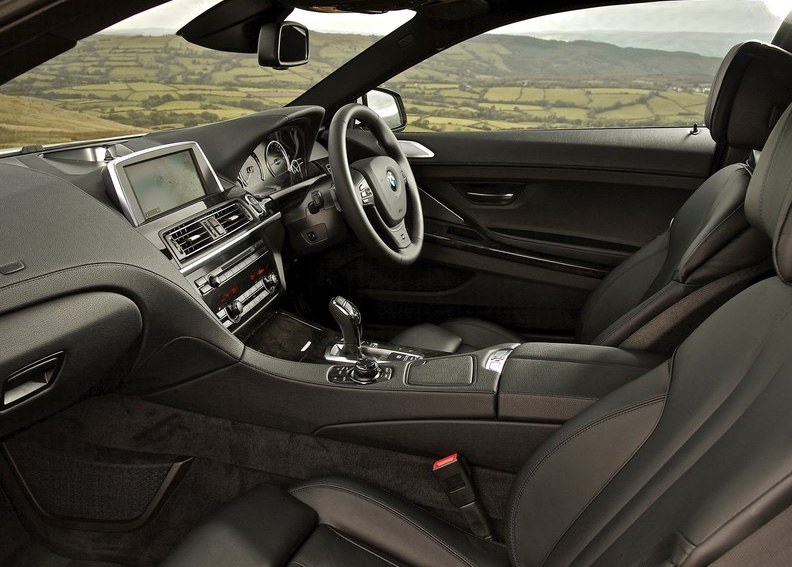
BMW 640d Coupe, 2012


  • BMW 640d Coupe, 2012

Now in its third generation, the new BMW 6-Series Coupé takes the luxury 2+2 concept a step further by matching enhanced comfort and elegant design with sporting performance on a even higher level. The BMW 6-Series Coupé features a sweeping coupé roofline while the long bonnet, short over-hangs, set-back passenger compartment with Hofmeister kink, long wheelbase and flat waistline embody the typical proportions of a BMW coupé more than any other model.

Two exceptional BMW turbocharged petrol engines and a twin turbocharged diesel powerplant, a newly developed chassis and a host of class-leading driver assistance technology ensure that the new BMW 6-Series Coupé is full of substance, while interior space and comfort have been enhanced.

Design
The new BMW 6-Series Coupé features a long sweeping bonnet, set-back passenger compartment and flowing roof-line. Its now traditional BMW "shark nose", with a large, forward-slanted BMW kidney grille, broad air intakes, wide, contoured bonnet and muscular wheel arches, allude to the powerful engine beneath. Inspired by the movement of water, the fluid lines of the car combine with the subtly curved surfaces to create a look of athletic elegance, which together with the 74mm increase in length and 5mm lower height creates a powerful stance.

Character lines stretching the full length of the body define the side view of the BMW 6-Series Coupé. The long, flat bonnet elongates the silhouette while the roof sweeps down in one fluid line, combining with the main body effortlessly, in an elegant coupé fashion, while the frameless doors and chrome side window border emphasise the tight lines of the typically BMW Hofmeister kink.

From the rear, bulging wheel arches and horizontal lines highlight the wide track of the new BMW 6-Series Coupé, alluding to its sporting performance and impressive road holding. Two-part rear light clusters give the typical BMW L-shape lights a particularly sporty, dynamic edge. Inside the units, two LED-powered light strips create a striking night-time look. The rear indicators and brake lights also use LED units.

Longer, lower and wider, the new car is larger in every dimension than its predecessor except height, where it now stands half a centimetre closer to the ground. At 4,894mm in length, the new model is 74mm longer than its predecessor, while the wheelbase has stretched similarly, to 2,855mm. The car has also grown by 39mm in width, and now measures 1,894mm across, while 5mm have been shaved off its height.

As standard the new BMW 6-Series Coupé is equipped with xenon headlights that have BMW's familiar double corona look while high-quality chrome elements, such as the fog lamps consisting of a string of three LED units, on the outer edges of the front apron accentuate the width of the car.

Optional Adaptive LED Headlights are available for the first time and provide a bright white light, similar to natural daylight, with low beam and high beam LED light rings. Horizontal LED ribs are positioned in the centre of the light rings ensuring BMW's hallmark twin round headlight look is expressed in a strikingly fresh way. More than just style over substance, the Adaptive LED lights automatically pivot and adjust to the line of the corner depending on the car's speed, steering angle and yaw rate to provide the best visibility possible for the driver.

The interior: made to measure luxury for four
Despite its lower height, the new 2+2 BMW 6-Series Coupé offers greater headroom in both the front and the rear, and height adjustment of the driver and front passenger seats now cover a greater range too. The individual rear sets also provide passengers with additional shoulder and elbow room, making for more comfortable cruising.

The front passenger area is bordered by a surface curving elegantly from the armrest over the side edge of the centre console, upwards and outwards into the instrument panel and then horizontally into the door trim, surrounding the front passenger area with a feeling of exclusive security.

In tune with the rest of the car's optimised performance and greater comfort, the new BMW 6-Series Coupé is fitted with newly developed lightweight seats with an integrated seatbelt system and Easy Entry function to the rear passenger compartment: a brief tap of a switch automatically moves the seat as far forward as possible. Sports seats and Comfort seats can be fitted as an option too. The boot can accommodate 460 litres of luggage, equivalent to three 46-inch golf bags or two medium hard-shell cases and a flight case. To utilise the rear space further the rear seats can be specified with a through-loading ski hatch, allowing two pairs of skis to be transported with ease.

Drivetrain
The new BMW 6-Series Coupé is available with two petrol engines and one diesel engine: the 650i, 640i and 640d respectively.

The world's sportiest diesel engine is a 3.0-litre twin-turbocharged in-line six-cylinder unit producing 313hp at 4,400rpm and 630Nm of torque from only 1,500rpm with the help of variable geometry turbocharging. The BMW 640d Coupé is capable of accelerating from zero to 62mph in 5.5seconds before topping out at an electronicallylimited top speed of 155mph.

It achieves this performance courtesy of sequential turbochargers, one smaller than the other, that provide a near continuous wave of torque from low revs. A complex arrangement of waste gates in the exhaust ensure the smooth transition from one turbo to another as the revs increase. The BMW 640d Coupé is fitted as standard with an eight-speed automatic transmission with Auto Start-Stop and active air flaps behind the kidney grille. Such engineering expertise is the reason why the model offers rapid performance but can still achieve 51.4mpg on the combined cycle and record CO2 emissions of 145g/km.

The 4.4-litre eight-cylinder engine in the new BMW 650i Coupé is unique in that the brace of turbochargers are positioned in the V-shaped area between the cylinder banks. This design results in more efficient packaging and greater engine efficiency. A maximum 407hp is developed between 5,500 and 6,400rpm, with peak torque of 600Nm available between 1,750 and 4,500rpm.

The new BMW 650i Coupé sprints from zero to 62mph in 4.9 seconds, with a top speed electronically limited to 155mph. For a model of such blistering performance and refinement, it is also extraordinarily efficient, with average combined fuel consumption of 26.6mpg and CO2 emissions of 246g/km.

The six-cylinder in-line engine in the new BMW 640i Coupé uses single turbocharger technology alongside petrol direct injection with VALVETRONIC fully variable valve control. This enables the 3.0-litre unit to develop a maximum 320hp at 5,800rpm and maximum torque of 450Nm between 1,300 and 4,500rpm. This engine propels the BMW 640i Coupé from zero to 62mph in 5.4 seconds and on to an electronically limited top speed of 155 mph.

Perhaps even more remarkable are its efficiency figures. The BMW 640i Coupé achieves 36.2mpg on the combined cycle, while CO2 emissions are only 181g/km, proving that at BMW luxurious sporting performance does not come at the expense of economy. Indeed, this model, like the 640d, is fitted as standard with an automatic transmission that features Auto Start-Stop technology and an automatic active air flap control behind the car's kidney grille for optimum engine performance.

EfficientDynamics
Fuel saving technology called ECO PRO mode is offered on the 6-Series. By a touch of the Drive Dynamic Control button ECO PRO mode tweaks the engine management system, accelerator mapping and gear-shift characteristics to favour a relaxed, lowrevving driving style. At the same time, power usage for electronically operated functions such as climate control is regulated to ensure maximum efficiency. A display on the instrument cluster keeps the driver informed of the levels of energy efficiency being achieved to encourage an economical driving style.

As with all BMWs, the new 6-Series Coupé comes with a raft of BMW EfficientDynamics measures to reduce fuel consumption and emissions. In addition to the features highlighted on the 640i Coupé and 640d Coupé, all models have technology such as Brake Energy Regeneration, Electric Power Steering (EPS), the need-based operation of ancillary components and intelligent lightweight construction to ensure maximum efficiency as standard.

Transmission
An eight-speed Sport automatic gearbox is standard fitment on all three models, and its wide range of ratios offer a perfect balance of muscular, sprinting performance, refined high speed cruising and low speed efficiency.

Chassis
The newly developed chassis of the new BMW 6-Series Coupé comes as standard with Drive Dynamic Control, which allows drivers to choose how responsive they want the gearbox, steering and throttle to be, while the Adaptive Drive system is available as an option with electrically controlled dampers and anti-roll stabilisation.

Both the double wishbone front axle and the integral rear axle are made predominantly from aluminium. The chassis set-up is geared to the requirements of drivers looking for a sporting character, although the dampers also respond sensitively to bumps in the road surface under high lateral acceleration.

In addition to the standard electromechanical power steering, another unique feature in this segment is the optional Integral Active Steering system. This system combines Active Steering for the front axle with a steering rear axle, allowing the steering angle and power assistance to be controlled at both the front and the rear with the help of electric motors. This precisely harmonised system offers extraordinary agility in dynamic driving situations, while allowing for an impressively deft touch around twisty mountain passes and in city traffic.
Pricing and specification including M Sport for the first time

The new BMW 6-Series Coupé comes with the highest ever level of standard specification on a Six. Standard for the 640i Coupé and 640d Coupé are 18-inch light alloy wheels, while the 650i Coupé comes as standard with a 19-inch light alloy wheel. All derivatives feature Dakota leather upholstery, eight-speed Sport automatic transmission, electric seat adjustment with memory, BMW Professional Multimedia Navigation system, Xenon headlights, LED front fog lights and front and rear Park Distance Control to name but a few of the standard specification highlights.

The BMW 6-Series Coupé is now available in M Sport specification. The M Sport package adds the M aerodynamic bodystyling package, 19-inch M light alloy wheels, dark chrome exhaust tailpipes, High-gloss Shadowline exterior trim and black brake callipers. Inside Anthracite headlining, Aluminium Hexagon trim, Sport seats and M Sport multi-function leather rimmed steering wheel are fitted.

At the same time as M Sport and the 640d derivative come to the UK for the Coupé, the 6-Series Convertible can now also be specified with M Sport.

Optional equipment
Includes Surround-view, BMW Night Vision with pedestrian recognition, Parking Assist, Lane Change Warning System, Lane Departure Warning System, Speed Limit Display and, still unique in the segment, Head-up Display.

Most advanced audio system ever to grace a BMW offered
Exclusively developed as an option for the new BMW 6-Series, the Bang & Olufsen High-End Surround Sound System produces an exceptionally natural sound from 16 speakers distributed around the cabin. Jointly developed by the Danish audio specialists and BMW, the superb sound system, comprising of two bass speakers, seven mid-range speakers and seven tweeters, all with individual amplifiers, uses Dirac Dimensions technology to recreate the acoustics of a reference listening room. This allows all passengers to enjoy the same outstanding sound quality regardless of where they are sitting.

In addition a number of other options, exclusive to the premium luxury segment, can be specified such as Surround-view, BMW Night Vision with pedestrian recognition, Parking Assist, Lane Change Warning System, Lane Departure Warning System, and Speed Limit Display. The new BMW 6-Series Coupé is also the only car in its segment to be available with a Head-up Display. The latest generation Head-up Display system uses a broader palette of colours and three-dimensional graphics to create an even sharper image.

Prices (UK):
    BMW 650i SE Coupé: £67,340
    BMW 650i M Sport Coupé: £71,840
    BMW 640i SE Coupé: £59,565
    BMW 640i M Sport Coupé: £64,230
    BMW 640d SE Coupé: £62,080
    BMW 640d Coupé M Sport: £66,745
Read More

Audi R8 GT Spyder, 2012


  • Audi R8 GT Spyder, 2012

Lighter, even more powerful, even more captivating: The Audi R8 GT Spyder delivers breathtaking performance. The open-top flagship version of the high-performance sports car develops 412 kW (560 hp) and - thanks to Audi ultra - has trimmed a full 85 kilograms (187.39 lb) from an already low weight. The Audi R8 GT Spyder accelerates from zero to 100 km/h (62.14 mph) in 3.8 seconds and reaches a top speed of 317 km/h (196.97 mph).

Audi unveiled the R8 GT in coupe form as the new flagship model of the R8 model line, 1 year ago. It wasn't long before all 333 units in the limited series were sold out. Now the open-top version of the high-performance sports car is being launched, with production again capped at 333 units. Each car sports a tag with its individual number on the gear lever knob.

The Audi ultra lightweight technology is the key to the Audi R8 GT Spyder's weight of just 1,640 kilograms (3,615.58 lb). That's 85 kilograms (187.39 lb) less than its technical basis, the R8 Spyder 5.2 FSI quattro. The Audi Space Frame (ASF) body, consisting of cast nodes, extruded sections and aluminum panels, accounts for just 214 kilograms (471.79 lb) of the total weight. The body is assembled predominantly by hand in the R8 workshop at the Neckarsulm plant. Final assembly of the car takes place in the same way.

The engine frame is made of ultra-light magnesium; the long cover over the soft-top compartment and the large side panels at the rear are made of carbon fiber-reinforced polymer (CFRP). CFRP is also used for the modified front spoiler, the fixed rear spoiler and the new rear bumper. Together, these components provide a weight saving of 5.5 kilograms (12.13 lb).

Visual modifications accentuate the styling of the Audi R8 GT Spyder. These include add-on parts in contrasting titanium gray, a front splitter with a dual lip, flics at the sides of the front bumper, red GT badges, round exhaust tailpipes, an enlarged diffuser and dark LED tail lights in a clear-glass design. Audi offers an optional windshield frame in matt CFRP.

Audi engineers also trimmed weight from the technical components in the area of the transmission, wheels and brakes. In the interior, the bucket seats alone, with their chassis of glass fiber-reinforced polymer (GFRP), saved 31.5 kilograms (69.45 lb) of weight.

In classic Audi fashion, the Audi R8 GT Spyder features a lightweight fabric soft top that is extremely quiet and fully suitable for highway cruising. Its electrohydraulic drive brings it up or down in 19 seconds, even at speeds up to 50 km/h (31.07 mph). The extendible glass rear window is nestled in the bulkhead, separate from the soft top. Integrated in the bulkhead is a rollover protection system comprising two pretensioned plates.

Prodigious power: the drivetrain
The performance offered by the new top-of-the-line model in the R8 family is formidable. The 5.2-liter V10 with an aluminum crankcase draws its fuel from an FSI direct injection system. Dry-sump lubrication ensures a reliable supply of oil even under maximum lateral or straight-line acceleration.

With its modified electronic management, the long-stroke engine produces 540 Nm (398.28 lb-ft) of torque at 6,500 rpm, and its peak output is 412 kW (560 hp). Each unit of horsepower has only 2.93 kilograms (6.46 lb) to move.

The Audi R8 GT Spyder catapults from zero to 100 km/h (62.14 mph) in 3.8 seconds and reaches a top speed of 317 km/h (196.97 mph). In every situation, the engine impresses with its thrust and bite - and that unmistakable sound of an Audi ten-cylinder.

The Audi R8 GT Spyder comes standard with an automated six-speed R tronic transmission with two fully automatic modes. In the additional manual mode, the driver can shift gears using the paddles on the steering wheel or by flicking the joystick. At high load and revs, gear changes take only one-tenth of a second. The launch control program manages the starting sprint with high engine speed and precision-control of the tire slip.

The quattro permanent all-wheel drive has a strong rear-wheel bias, granted by the axle load distribution. If the situation calls for it, the system sends additional torque to the front axle. In tandem with the limited slip differential at the rear, it provides an added measure of traction, stability and cornering speed, giving it a strong lead over the rear-wheel-drive competition.

The suspension, too, is unrivaled in its performance. Aluminum double wishbones locate the wheels, and the rack-and-pinion power steering provides intimate contact with the road. Taut tuning lowers the body by approximately 10 millimeters (0.39 in). The open high-performance sports car has 19-inch wheels, with 235/35 tires up front and 295/30 tires at the rear. The large, lightweight carbon-fiber ceramic brake discs decelerate the car with supreme ease. The ESP stabilization program has a sport mode and can also be deactivated entirely.

Pure comfort: the interior and equipment
Great attention to detail is evident in the materials and workmanship inside the car. The salient aspect of the controls is their logically structured design. The open two-seater offers a roomy interior, and its front end can accommodate up to 100 liters (3.53 cu. ft) of cargo. The rear bulkhead houses three storage compartments.

The interior is black and can be adorned with stitching in a choice of titanium gray or crimson for added refinement. Alcantara upholstery comes standard - on the sport steering wheel and windshield frame, too.

Audi offers leather in Fine Nappa quality. Numerous details - including white dials and R8 GT logos - provide classy accents. The distinctive R8 "monoposto," a large arch encircling the driver's cockpit, is made of matt CFRP.

Audi ultra requires no sacrifice on the part of Audi R8 GT Spyder owners. The standard equipment includes LED headlights, LED tail lights, an automatic air conditioning system, the navigation system plus, an alarm system and the driver information system with a built-in laptimer.

Audi offers a sophisticated sound system from Bang & Olufsen and a Bluetooth interface including a seatbelt microphone for carrying on a phone conversation conveniently. Options specific to the R8 GT include bucket seats with a carbon-fiber composite chassis, matt CFRP applications and embroidered logos on the seat upholstery.

The Audi R8 GT Spyder will have a base price in Germany of 207,800 euros.
Read More

Thursday, December 6, 2012

Toyota Camry Hybrid, 2012


  •  Toyota Camry Hybrid, 2012

Toyota introduced the all-new, seventh-generation Toyota Camry, America's best-selling car for nine years running and 13 of the past 14 years. The 2012 Camry debuts a bold, sophisticated new design with a more spacious interior, improved driving dynamics and an even quieter ride than before. With class leading safety, fuel economy and multi-media technology added in, the end result is the best Toyota Camry ever made. Introduced in 1983, the Toyota Camry would later establish the template for the modern midsize sedan, setting benchmarks for Quality, Dependability and Reliability, along with a comfortable, quiet ride. Since that time, Toyota has sold more than 15 million Camry models worldwide.

The Toyota Camry again offers three powertrain choices, all of which have been enhanced for 2012 to provide better fuel economy and more responsive performance. All Camry models with the revised 2.5-liter four-cylinder engine now offer 178 horsepower, an increase of nine hp, and 170 lb.-ft. of peak torque. EPA-estimated fuel economy figures are 25 mpg city/35 highway, and the 28 mpg combined is two more than the previous generation Camry. The 2.5-liter engine employs Dual VVT-i (Dual Variable Valve Timing-intelligent), which controls valve timing on both the intake and exhaust camshafts for optimal performance and efficiency at all engine speeds. The Acoustic Control Induction System (ACIS) helps optimize torque over a broad engine speed range.

Performance and Efficiency
The DOHC 3.5-liter V6, available in the SE and XLE grades, delivers 268 horsepower at 6,200 rpm and 248 lb.-ft. of peak torque at 4,700 rpm. Enhancements to this engine boost its fuel economy to projected EPA-estimated ratings of 21 mpg city/30 mpg highway, the best for any current V6 midsize sedan.

The V6 uses chain-driven camshafts and Dual Variable Valve Timing with intelligence (Dual VVT-i). To improve efficiency, the V6 features a new, lower oil viscosity and an automatic transmission fluid warmer that brings the transmission to operating temperature more quickly in cold weather. Higher final drive-gear ratios also contribute to better fuel economy in the new Toyota Camry models.

The gas-engine LE, XLE and SE models come equipped exclusively with a six-speed automatic transmission that offers a sequential manual shift mode using the console shifter. Intelligent control adapts shifting strategy in response to driver input, with fast kick-down. In addition, the Camry SE exclusively offers a "D range" sequential shifting, which allows manual shifting with the new steering wheel paddle shifters even when the console shifter is in the "D" mode. Also exclusive to the Toyota Camry SE, the automatic transmission features faster shift times when in "S" mode and downshift blipping control emphasizes a sense of sportiness.

All-New Camry Hybrid Sets New Standard for Mid-size Hybrid Sedans
The all-new Camry Hybrid debuts a highly revised version of the brand's Hybrid Synergy Drive powertrain, including a new 2.5-liter four-cylinder engine. The 2012 Camry Hybrid LE, with EPA-estimated 43 mpg city/39 mpg highway/41 mpg combined, yields a more-than-30 percent boost in fuel economy in the EPA city and combined driving cycles, compared to the previous generation, thanks largely to the new hybrid powertrain, but also due to lighter vehicle weight and optimized aerodynamics.

Through its unique transaxle, the Hybrid Synergy Drive system combines output from the four-cylinder engine with a small high-torque electric motor. The system produces a combined 200 horsepower and varies power between the gas engine and electric motor, or combines both, as needed.

The new 2.5-liter engine, like the 2.4-liter it replaces, uses the Atkinson cycle (delayed intake-valve closing for an expansion ratio greater than compression ratio) to achieve maximum efficiency. The Variable Valve Timing with intelligence (VVT-i) system on the intake camshaft enhances torque, which is greater than with the previous engine. An electric water pump, a roller-rocker type valvetrain and a variable-output oil pump help to reduce internal friction, boosting economy.

A new water-cooled exhaust gas recirculation (EGR) system helps to ensure the lowest possible emissions at all vehicle speeds and helps increase fuel efficiency. By cooling and controlling exhaust gas injected into each cylinder, the system eliminates the need to richen the air-fuel mixture to control cylinder temperatures.

The 2012 Camry Hybrid meets AT-PZEV (Advanced Technology Partial-credit Zero Emissions Vehicle) standards. New sound absorbing materials in the engine compartment, along with more linear control over engine speed, give the 2012 Camry Hybrid a more pleasing sound under acceleration.

Because there are situations in which the gas engine in the Toyota Camry Hybrid shuts off, air conditioning and power steering systems are driven electrically. New efficiency measures in the Hybrid Synergy Drive system include reducing internal losses in the transaxle, improving motor-voltage control, and optimizing the regenerative braking. The proven nickel-metal-hydride battery, located in the luggage compartment behind the rear seats, now features enhanced air-cooling. Its more compact size, along with moving the DC/DC converter to the engine compartment, results in a trunk that is 2.1-cubic feet larger than in the previous-generation Camry Hybrid.

Lighter overall vehicle weight also contributes to better performance and fuel economy. Its 7.6-second zero-to-60 acceleration time places the Camry Hybrid between the four-cylinder and V6 models. Lower rolling resistance tires, available for the first time in 17-inch size, also help boost fuel economy.

New for the 2012 Camry Hybrid, an EV Drive mode allows the driver to operate the car on the electric motor alone for up to 1.6 miles at lower speeds (below approximately 25 mph). The EV indicator illuminates when the vehicle is being propelled solely by the electric motor.

As on the previous Toyota Camry Hybrid, ECO mode optimizes throttle response and air conditioning output to prioritize maximum fuel economy. A Hybrid-exclusive instrument cluster with Hybrid System Indicator and fuel consumption indicator helps the driver to operate the car as economically as possible.

Instantaneous fuel economy is shown with LEDs (light emitting diodes) around the outside of the average fuel economy gauge. The car's Multi-Information display graphically shows fuel economy in real time and can also show energy flow, and cruising range information.

As before, applying the brake converts the motor to a generator that captures the kinetic energy from the still-spinning vehicle wheels, storing it in the hybrid battery pack. Putting the shifter into "B" uses regenerative braking as a form of engine braking for enhanced control on steep descents. New hill-start assist control helps prevent the vehicle from rolling backward when starting off on an incline when the brake pedal is released.

Exclusive exterior and interior design touches and badging differentiate the 2012 Camry Hybrid from other Camry models. Inside, Hybrid-exclusive trim is found on the instrument panel and door switch bases, upper console panels and shift knob. The Camry Hybrid also features its own exclusive seat fabric in ivory or light gray. An exclusive leather and Ultrasuede is also available. A three-dial Optitron gauge panel with chrome-accented outer rings provides a luxurious appearance.

Grade Strategy
The all-new Toyota Camry and Camry Hybrid will offer six different model grades to choose from. Camry will be available in the entry-level L, value-driven LE, premium XLE and sporty SE grades. The XLE and SE are available with four-cylinder or V6 engines. The Camry Hybrid is offered in LE and XLE grades.

Exterior Design
The 2012 Camry employs an elegantly simple but modern form, emphasizing a wider, lower stance than previous models. The design conveys an "architectural statement" through crisp, precise character lines, while a more strongly curved door cross-section and more defined rocker panel molding (chrome accented on LE and XLE) give the Camry a more expressive appearance.

Headlights show a more dynamic shape, with a pronounced curvature of the main-beam unit merging into the bumper cover. Fog lights are standard on the XLE and SE grades. The rear lamp clusters wrap tightly into the body sides, with their top sections extending into the trunk panel.

The Camry LE and XLE feature additional exterior chrome trim, and the SE grade debuts its own lower-body design and exclusive fine-mesh upper grille section. The SE also features three-part lower grille section housing fog lamps, along with black sport trim headlamp bezels. The more prominent rocker panel moldings on the SE cleanly link to integrated front and rear underbody spoilers, emphasizing width, and the trunk lid carries an integrated spoiler.

Accentuating the new body design are four new colors. Two of the colors (Attitude Black Metallic and Clearwater Blue) are all-new to Toyota in the U.S. Attitude Black Metallic blends in a bright blue pigment for an intriguing take on traditional jet black; Clearwater Blue incorporates a silver metallic pigment to lend this hue a glassy, water-like finish.

Interior Design
While featuring nearly the same external dimensions as the previous generation, the 2012 Camry offers a more inviting and spacious interior. A new dashboard design, modified seat locations, redesigned seats and "lean" door, pillar and headliner trim all combine to add both real space and greater perceptual spaciousness while also enhancing outward visibility. Repositioning the driver's seat and the standard tilt/telescoping steering wheel (tilt has increased 33 percent for greater driver comfort) also aid forward visibility and enhance the driver's positioning.

The accelerator pedal and front seats were moved forward, and the rear-seat hip point was positioned rearward, increasing the couple distance by 0.6-inch; together with reshaped front seatbacks help increase rear-knee room by 1.8-inch. The redesigned center console and front edge of the rear-seat cushion increase rear middle seat legroom by two inches.

Not as obvious are the many areas where Toyota Camry designers reshaped interior trim to increase the feeling of spaciousness, including the A- and B-pillars, headliner over the rear seat and door trim. In most vehicles, space is left between the structure and the trim to yield a "clean" surface. Using a lean-car design approach, the trim more closely follows the structure beneath it. The result is added space that contributes much more to a feeling of comfort than the gains in mere millimeters might suggest.

Three-dimensional construction and contrasting-material textures give the new instrument panel a feeling of depth, while the shapes themselves contribute to a more spacious cabin and improved forward sightlines. The prominently curved center cluster appears to float over the instrument panel, reducing its visual mass. Soft textures used on the upper instrument panel, upper door trim, door armrests and center console armrest contribute to greater comfort in the Camry. Stitching on the instrument panel soft padding and matching stitching-look trim elsewhere helps to create a sense of luxury. Aluminum-color and chrome trim are used judiciously.

The Camry LE and XLE grades feature either ivory or gray seating color; the Camry SE features unique upholstery in black-on-black or black-on-gray. Newly designed front-seat frames, higher seatbacks and longer seat cushions enhance comfort. The height adjustment on the driver's seat offers nearly a half inch greater range than before (total travel is 2.4 inches). The SE's sporty front seats provide thicker side bolsters, and the exclusive three-spoke leather-wrapped steering wheel offers paddle-shift control for the six-speed automatic transmission.

For 2012, the Toyota Camry offers four seat-covering materials: fabric in the LE and XLE; fabric with SofTex in the SE, standard leather trim on the XLE V6 (optional in the XLE four-cylinder), and Ultrasuede® with leather available for the SE and XLE Hybrid. Heated seats are standard on the XLE V6 and are available for SE, XLE four-cylinder and Hybrid with variable temperature control.

The new Camry provides the added functionality demanded by consumers today, yet keeps its controls straightforward and intuitive to use. Control knobs impart a high-precision feel when used. Special attention was paid to function and comfort with the center console design. Soft kneepads on both sides add comfort for the driver and passenger; the front section offers a 12V accessory connector and an easy-to-access USB/input jack port for connecting iPods and other media devices. A sliding rear console door - rather than the more traditional flip-up design - enables easier access from either front seat. Two steering wheel designs, with integrated audio and Bluetooth® controls, are featured: a four-spoke for LE; a leather-wrapped four-spoke for XLE; and a sporty three-spoke, leather-wrapped wheel for the SE.

All grades now feature a standard 60/40 split folding rear seatback to expand cargo capacity. The seats can be lowered by a remote release from the trunk area. Rear-seat side airbags are standard across the line, and an armrest with cup holders adds comfort and convenience.

Advanced Connectivity
Seamlessly integrated into the Camry are state-of-the-art electronics and enhanced connectivity features. A Bluetooth wireless connection for compatible hands-free phone calls is standard, now improved by an available automatic phone book transfer function. Also standard is a USB port that allows playing of music and video from portable audio devices, using the vehicle sound system and available in-dash display screen, including full iPod integration.

The standard audio system on LE, XLE and SE has a 6.1-inch screen and six speakers. The screen also displays the energy monitor and fuel consumption data, and functions as the monitor for the available integrated back-up camera (SE and XLE only) and the Display Audio System. The screen also offers a new value-driven navigation system and serves as a portal for Entune, Toyota's innovative new multimedia system. An available HD Radio system enables CD sound quality from digital FM broadcasts, and has features that maximize analog and AM broadcast sound quality. The system will include HD Radio with iTunes tagging for future purchase and SiriusXM Satellite Radio.

The top-of-the-line audio is equipped with a new seven-inch Premium HDD Navigation system with Entune and JBL. This system offers a new split-screen feature that allows for simultaneously displaying navigation and audio information.

Toyota Camry also offers the new JBL GreenEdge audio system that combines an eight-channel amplifier and door-mounted "acoustic lens" speakers, to provide a high-quality sound. The GreenEdge amplifier achieves a 66-percent reduction in overall mass and a 50-percent enhancement in sound efficiency. The GreenEdge speakers produce a higher output of sound with the same power or less consumption of conventional models.

Entune Multimedia System
Camry will be one of the first Toyotas to offer the Entune multimedia system. For the first time ever in a Toyota automobile, this new system leverages the mobile smartphone to provide a richer in-vehicle experience with fully integrated access to navigation, entertainment and information services.

Toyota Entune debuts the first-ever support for engaging mobile apps, such as Bing, OpenTable, and movietickets.com, along with accessing useful travel-related services, such as live weather, traffic, fuel information (location and price), stocks, and sports. Toyota Entune brings the largest selection of music options available to a vehicle, including iHeartRadio's 750+ stations, and Pandora's personalized music service.

A New Benchmark for Midsize Sedan Quietness
Long lauded as a benchmark for ride smoothness and quietness in the midsize segment, the all-new Camry resets the standard by taking both attributes to an even higher level of refinement. To reduce noise throughout the entire cabin, focus was placed on suppressing noises that stand out. As powertrains have become more refined and quieter, wind noise and road noise have tended to become more noticeable to drivers and passengers. A low noise reading (in decibels) does not always equate to a subjectively quiet interior. Vehicle occupants' perception of quietness also depends on the type and frequency of the sound.

It was determined where such noticeable sounds enter the cabin, and additional insulation was placed in those areas. New sound absorbing materials silence any noise that manages to penetrate the interior. In particular, engineers focused on suppressing noises that are near the frequencies of human speech to provide an environment that is more comfortable for conversation.

Measures that focus on reducing wind noise include stronger door and rocker area seals; optimized placement of sound insulating materials; foam applied in the roof, pillars and door openings; acoustic glass used for the V6 and Hybrid model's windshield; and special bracing of cowl intake louvers.

The dashboard structure and assembly, one of the most complex areas in modern cars, was thoroughly optimized to prevent noise intrusion. It can also be a source of noise intrusion. The structure employs a new cross member and center brace, along with sandwiched sheet steel to suppress resonance and reduce vibration. With the sandwiched steel, asphalt foam is used to absorb vibration energy while increasing sound blocking effectiveness.

A dash outer silencer uses an air layer between the dash panel and sound absorbing felt. An inner silencing layer uses soft and hard felts to block a wide range of low-to-high frequencies. Damping-coating thickness and application areas have been optimized for reduced floor-panel vibration and noise penetration through the floor, and a new type of carpet helps eliminates noise. Silencer panels installed in the rear-wheel housings, and new sound-absorbing materials added to the trunk's interior side trim further reduce road noise from the tires and wheel housings.

Exceptional Handling and Ride
A more rigid body structure, revised front suspension, redesigned rear suspension and aerodynamics all help to imbue the new Camry with greater straight-line stability and crisper steering response, while also enhancing overall ride comfort. Handling stability, more than just conveying a sense of driving enjoyment, also greatly influences the driver's feeling of security.

The 2012 Toyota Camry body structure uses a greater amount of high tensile steel (440 Mpa or higher) than before and even stronger high tensile strength sheet steel (590 Mpa or higher), resulting in a stronger but lighter body than the previous model. A flared design on the doors and fenders enables use of slimmer but stronger construction. High tensile aluminum bumper supports are lighter yet stronger than before. Newly developed plastic for the bumper covers and cowl louvers reduces weight as well.

The stiffened cowl section increases suspension-area rigidity, suppressing twist. The front-suspension towers are directly connected through the cowl to increase rigidity, and the attachment method and reinforcement braces have been strengthened. The all-new rear underbody and rear subframe increase lateral force control and torsional rigidity.

The McPherson-strut front suspension now uses inversely wound coil springs that enhance straight-line stability. Shock-absorber damping and stabilizer-bar thickness have been optimized as well. The rear suspension retains the proven dual-link strut configuration of the previous model but has been redesigned with new geometry (increased toe-in during cornering and braking) and retuned components to enhance cornering stability. Coil springs, bushings, stabilizer-bar and shock-absorber damping have all been revised.

Rear-combination lamps and side-view mirrors on the 2012 Camry incorporate aero stabilizing fins, inspired by Formula One racing technology, that create air vortexes on the body sides to stabilize the body and contribute to handling stability. Underbody aerodynamic elements regulate airflow under the vehicle, also contributing to ride smoothness.

The Camry SE model features specific suspension components and tuning, including exclusive steering knuckles and lighter, stiffer lower front control arms. The front and rear springs are exclusive to this model, and the shock absorbers feature internal rebound springs for greater cornering roll resistance. The rear suspension No. 1 control arm uses a pillow-ball bushing to further enhance handling agility.

All new Camry models will be the first to feature Toyota's latest electric power steering (EPS) control system, which will offer more flexibility to steering-feel tuning. The system regulates power-assist response based on vehicle speed, and for the first time steering-input rate. The vehicle-speed sensing feature will provide light effort during low speeds, changing to moderate effort during higher speeds.

The SE grade will feature a power-assist ratio that provides a more sporty feeling than the LE and XLE.
Also, electricity is only consumed when assist power is necessary, helping to improve fuel economy. Electric power steering is also more environment-friendly, as it does not require hydraulic fluid.

All Toyota Camry grades feature newly developed all-season tires designed for an optimal balance of fuel economy, handling, quietness, ride comfort and braking performance. The LE grade features standard 16-inch wheels; the SE comes standard with five-spoke 17-inch alloy wheels and the V6 SE offers the first 18-inch alloy wheels on a Camry. The latter feature is a unique twist-spoke design with 225/45R18 all-season tires. Camry SE models will also include tires that have more grip. The Camry XLE comes standard with 17-inch alloy wheels featuring an elegant 10-spoke design.

Safety and Security
All 2012 Camry models are equipped with 10 standard airbags: dual-stage advanced SRS front airbags, front and rear seat-mounted side airbags, side curtain airbags and a driver's and front passenger's knee airbag. The front-passenger's knee airbag and rear-seat side airbags are new to Toyota Camry.

The Camry's body structure is designed to help absorb collision-impact forces and help minimize impact deformation to the passenger cabin. High-strength steel is used for B-pillar and rocker-panel reinforcements to help manage overall body deformation in the event of certain side collisions. The seat frames also are designed to help absorb side collision loads. The inner-hood structure and front-edge construction are designed to help reduce pedestrian injuries in a collision.

Like all Toyota models, the Camry will feature Toyota's Star Safety System standard, which includes Vehicle Stability Control (VSC), Traction Control (TRAC), Anti-lock Braking System (ABS), Electronic Brake-force Distribution (EBD) and Brake Assist. It also features the standard Smart Stop Technology brake-override system. An electronic tire pressure monitoring system is standard equipment.

Another available safety system, Safety Connect, can access a call center with a live operator who can dispatch police and emergency vehicles. The system combines automatic collision notification and a stolen vehicle locator feature, which can track the location of the stolen vehicle via GPS and help guide police to recover it.

The new available Blind Spot Monitor uses sub-millimeter wave radar to detect vehicles in the driver's blind spots. When the system detects a vehicle in the adjacent lane, it alerts the driver using indicators on the side mirrors. If the turn signal is on when the there is a vehicle in the blind spot of the driver's intended lane, the indicator on the corresponding mirror will flash. The driver can switch off the system, if desired.

In vehicles equipped with one of the display audio systems and backup camera, when the vehicle is shifted into Reverse, the audio display will show the image of what the camera captures, along with an overlay of positioning lines representing the parking space and distance to obstacles.
Read More

Wednesday, December 5, 2012

Volvo S60 Polestar Concept, 2012


Volvo S60 Polestar Concept, 2012

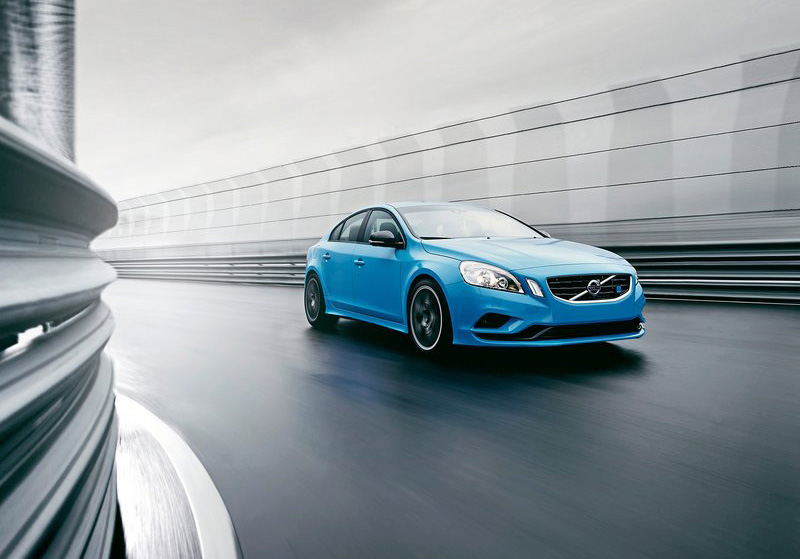
Volvo Cars Official Motorsport and Performance partner Polestar present the Volvo S60 Polestar Concept, a performance concept car developed with the aim of satisfying the performance minded driver.

The main focus when developing the car has been to combine a comfortable genuine Volvo driving experience with a high level of power and handling. The Volvo T6 engine has been tuned to deliver a considerable increase in power and torque. This, in combination with a lowered, widened and reinforced chassis together with a tuned Haldex all-wheel drive system and Öhlins suspension makes the car suitable for both high performance driving and long distance travelling.

Robert Dahlgren, Volvo Polestar racing driver, comments the driving experience: "to me the Volvo S60 is a very well sorted car from start. In our concept car we have developed chassis, engine and transmission just like we want it, and the result is a huge leap forward in terms of handling and performance. It is, by far, the most impressive street Volvo I've ever driven. But I must also say that the genuine Volvo feeling is still there. "

The car presented at Gothenburg CityArena is the first car built for one specific client. A small series of Polestar modified S60s may be built pending market response;

Technical specification
    Performance
        0-100 km/h: 3.9s
        Top speed: >300 km/h

    Engine
        Volvo T6 inline six (B6304T4)
        508 hp @ 6500rpm
        575Nm @ 5500rpm
        Max rpm: 7100
        Modified cylinder head and combustion chambers
        Modified inlet manifold and air intake
        Special manufactured conrods
        Garret 3171 turbo
        Ferrita 3.5" stainless steel exhaust system

    Drive train
        Reinforced M66C (close ratio) manual 6-speed gear box
        Haldex E-LSD in rear
        Haldex Gen4 XWD

    Chassis
        Tires 265/30R19
        Rims Polestar 9,5X19"
        Chassis lowered 30mm
        Öhlins 3- way shock absorbers
        Reinforced anti-roll bar front and rear
        Track width increased 20 mm front and 40 mm rear
        Polestar-tuned EHPAS steering
        Stabilising X- members, front and rear
        Modified control-arms with uniballs front and rear
        Reinforced bushings in sub-frame and control-arms
        Modified engine mounts

    Weight
        Total weight 1640kg and optimized weight distribution

    Brakes
        Front Polestar-Brembo 6 piston calipers, 380 mm ventilated discs
        Rear Polestar-Volvo calipers, 302 mm ventilated discs
        Brake cooling air intakes from front

    Aerodynamics
        Based on tests in Volvo's wind-tunnel
        Lowered front splitter and larger rear spoiler to reduce high speed lift
        Carbon fiber diffusor
        Body 20 mm widened front and rear

    Interior
        Polestar designed seats with increased support. Alcantara on all functional areas steering wheel, gear knob, and seats to ensure maximum grip.
        Centre console lowered for optimised gear-lever ergonomics.


Read More

Volkswagen Cross Coupe TDI Concept, 2012


  •  Volkswagen Cross Coupe TDI Concept, 2012

Research - regardless of the area of research - always aims to identify solutions that point the way to the future. In December 2011, it was the VW Cross Coupé - a concept vehicle from Volkswagen - which with a fuel consumption value of just 2.7 l/100 km (equivalent to 62 g/km CO2) illustrated a technical approach to implementing an SUV that can be extremely fuel-efficient despite its high performance and all-wheel drive system. This plug-in hybrid concept was driven by two electric motors and a turbocharged petrol direct-injection engine (TSI). Now, Volkswagen has conceptualised an even more fuel-efficient Cross Coupé. It is powered by an alliance of a turbodiesel direct-injection engine (TDI) and two electric motors. Its combined fuel consumption in the New European Driving Cycle (NEDC) is a sensationally low of 1.8 l/100 km. This is equivalent to CO2 emissions of just 46 g/km. Noteworthy here is the fact that the Cross Coupé is a powerful SUV with a top speed of 220 km/h, 225 kW / 306 PS of power (system power) and a kerb weight of 1,858 kg. Volkswagen is presenting the concept with a TDI plug-in hybrid in a world premiere at the Geneva International Motor Show (08 to 18 March 2012).

Efficiency and driving fun meld together
High-tech network. Technically, the SUV is based on the new Modular Transverse Matrix (MQB) from Volkswagen AG.
Within the MQB, there are certain design parameters that are standardised across model series and brands - such as the distance between the accelerator pedal and the front wheel axis and the mounting position for all engines. There are also variable parameters that make it possible to optimally and individually develop a wide variety of models. They include such parameters as the wheelbase, track widths and wheel sizes, for example.

In the new Volkswagen Cross Coupé, MQB elements for a future generation of SUVs - in this case, the MQB front and rear suspensions, 140 kW / 190 PS TDI of the new EA288 engine series and a 6-speed DSG. They were merged with electrical components that are also "made by Volkswagen", and they include the lithium-ion battery in the centre tunnel, front E-motor with 40 kW and rear E-motor with 85 kW.

Breadth of variations. The Cross Coupé also impressively demonstrates the large breadth of variations that can be implemented based on the MQB. It should be noted that the modular systems used in the concept car could theoretically have been used, just as easily, to produce a full hybrid (without external interface) or a vehicle with only an internal combustion engine or only an electric drive instead of the plug-in hybrid (battery with external interface for charging) that was actually implemented.

Efficiency and dynamic performance. Efficient drive technologies can offer extreme levels of dynamic performance. The new Cross Coupé demonstrates this par excellence. Its combination of cutting-edge fuel efficiency and exceptional dynamic performance demonstrate that an all-round vehicle of a sporty kind has been created here like never before. The Volkswagen Cross Coupé being shown in Geneva accelerates to 100 km/h in just 6.5 seconds, and its TDI develops a torque of up to 400 Nm from very low revs - from approx. 1,600 rpm. Practically at the press of a button, the two E-motors deliver 180 Nm of torque in front and 270 Nm at the rear. During boosting - which involves full use of both motors and the engine - the drive system supplies a maximum system torque of 700 Nm. This performance positions the concept car in the field of today's high-performance sports cars, yet the vehicle consumes less fuel than any other small car!

Intelligent networking of drive systems
Zero emissions thanks to electric motors. In pure electric mode - in this case its speed is limited to 120 km/h -, the concept car can cover up to 45 km. This is sufficient driving range for most of the world's commuters to drive to work with zero emissions. In pure E-mode, the driver can choose whether the focus should be on optimising electric driving range or dynamic performance. This is implemented by the combination of E-mode and CITY mode and the combination of E-mode and SPORT mode. In the electric driving range maximising E-mode (CITY), only the E-motor on the rear axle powers the car. In the dynamic E-mode (SPORT), the electric drive system powers both the rear and front wheels. In pure electric driving, the turbodiesel is decoupled from the drivetrain by disengaging the clutch, and it is shut off. The clutch on the gearbox side remains closed, and the 6-speed DSG is engaged. The E mode is activated by pressing what is knowna s the EV mode button (EV: electric vehicle) next to the gear shift lever. The Cross Coupé then drives like a purely electric vehicle. Even during fast driving, the internal combustion engine is not engaged, provided that the battery is sufficiently charged. As soon as the power of the TDI is needed again, either because of the battery's charge state or other parameters, the engine engages without any jolt, and it is once again actively coupled to the drivetrain within fractions of a second.

Battery in the centre tunnel. In pure electric driving, the E-motors are supplied with energy from a lithium-ion battery that consists of eight modules. The battery has an energy capacity of 9.8 kWh and is located in the centre tunnel of the Cross Coupé. Power electronics operating at a voltage of approx. 370 Volt, which is integrated in the front engine compartment, manages the flow of high-voltage energy to and from the battery and the electric motors. Meanwhile, the 12 Volt electrical system is supplied with power via a DC/DC converter. The electric drive system does not impose any space limitations on the interior. The battery can be charged either from external power sources (230 Volt connection) or while driving.

Charging also at push of a button. The driver can intentionally switch to CHARGE mode (by pressing another button next to the gear shift lever) to charge the battery via the TDI engine while driving. This mode might make sense, for example, if the driver wishes to drive in certain designated environmental zones that might be toll-free for electric vehicles operating with zero emissions. The momentary electric driving range and total range of the Volkswagen Cross Coupé are continually displayed in the instruments. An engine controller regulates the overall energy and drive management system under consideration of the specific load demanded by the driver. The driver can choose from a total of five driving modes: CITY (an eco mode with minimal fuel consumption), SPORT (high dynamic performance), OFFROAD (continuous all-wheel drive), E-mode (pure electric driving) as EV-CITY or EV-SPORT, or CHARGE (via the TDI). In parallel, the Cross Coupé utilises different operating states, in which the motors/engine and drive axles are coupled or decoupled as a function of driving needs:

Zero emissions by 'sailing'. As soon as the driver lifts his or her foot from the accelerator, both electric motors and the engine are shut off and decoupled from the drivetrain - provided that the battery is sufficiently charged. This is referred to as 'sailing'. Zero emissions are generated in this case as well.

Zero emissions in battery regeneration mode. If the driver takes his or her foot off the accelerator pedal or brakes, and the battery is not sufficiently charged, the two electric motors are operated as generators to feed energy recovered from braking into the lithium-ion battery. The TDI is also shut off and decoupled in this operating state.

Boosting. When driving should be especially sporty in nature, the E-motors form an alliance with the TDI. In the professional jargon of the hybrid world this joining of forces is known as 'Boosting'. The Cross Coupé is driven by all four wheels in this mode.

Offroad with 'electric propshaft'. As soon as the driver chooses to activate OFFROAD mode, all four wheels are once again driven. However, in this mode the front electric motor, now supplied with energy by the TDI, is the sole source of electrical power for its counterpart at the rear axle. Since the energy for the rear electric drive is by wire and does not flow mechanically, this is referred to as an 'electric propshaft'. Since the TDI powers the rear electric motor via the front electric motor in OFFROAD mode, the all-wheel drive system is fully functional, even if the lithium-ion battery is in a low charge state.

Driving with the TDI. If the TDI is powering the vehicle by itself, the Cross Coupé is a pure front-wheel drive vehicle. In driving states in which greater fuel efficiency is possible by load boosting, the E-motors act as generators to charge the battery. When all of the on-board energy reserves are utilised, the vehicle's combined fuel consumption value is 1.8 l/100 km; the vehicle's 55 litre fuel tank thus enables a theoretical driving range of 1,287 km.

The new TDI of the Cross Coupés
Engines of the MQB. As noted, the TDI of the Volkswagen Cross Coupé is an engine developed especially for use in the Modular Transverse Matrix (MQB). A key characteristic of the MQB is a uniform mounting position for all engines. Therefore, Volkswagen developed two new engine series - the EA288 series was created for the diesels, and the EA211 series for the new petrol engines. Within the MQB, these two engine series and relevant electric motors make it possible to implement any classic, alternative or hybrid drive system.

Range of turbodiesels. The new TDI engines of the MQB will be available in versions with 1.6 and 2.0 litre displacement and will span a power range from 66 kW / 90 PS to the 140 kW / 190 PS of the concept car in Geneva. The diesel engines are not only exceptionally low-emitting, fuel-efficient and torque-strong. They are also exceptionally refined and smooth running. Consider the 2.0 TDI of the Cross Coupé: two balancer shafts are used. They eliminate system-induced free inertial forces that naturally occur in a reciprocating engine. Meanwhile, the toothed belt drive for the oil and vacuum pump, which operates in the sump oil, and the engine's encapsulated injection nozzles also have a positive effect on acoustic comfort.

SUV styling meets coupé dynamics
More streamlined than other SUVs. At a length of 4,357 mm, the Cross Coupé is longer than a Golf and shorter than a Tiguan. The vehicle's width (1,868 mm) and height (1,523 mm) are positioned exactly between these two bestsellers as well. The concept vehicle's wheelbase of 2,630 mm is clearly long relative to its overall length (52 mm longer than in the Golf, 26 mm more than the Tiguan). This makes the body overhangs short (855 mm in front, 860 mm at rear), and in the interplay of all dimensions the car's overall proportions are extremely attractive. The vehicle's large track widths of 1,585 mm (front) and 1,613 mm (rear) emphasise its powerful appearance. More important to driving on unpaved trails are parameters such as the vehicle's approach/departure angles and its ramp angle. The approach angle in front is a good 24.2 degrees, while the departure angle at the rear is 32.5 degrees - excellent for offroad driving. The ramp angle, which is important for driving over hilltops, is 15 degrees.

Precisely shaped coupé silhouette. Defining the look of the Cross Coupé are its very long bonnet, new front end styling, passenger compartment shifted significantly towards the rear, and very streamline line of windows compared to conventional SUVs. Overall, the designers also gave the vehicle muscular, athletic and yet very clean lines. In keeping with the powerful appearance of the Volkswagen Cross Coupé, it is equipped with 20-inch alloy wheels fitted with 265/45 tyres. Towards the rear, a large-volume coupé-like C-pillar is built over the wheel housings.

Impressive front end. The characteristic horizontal lines of the 'Volkswagen face' forge a link between present and future on the Cross Coupé. Different than on today's models, the designers have physically merged the xenon dual headlights and chrome ribs of the radiator grille. Specifically, the headlights join to two overlapping chrome strips. Chrome wings ascending towards the outside emphasise the vehicle's width and are part of a new type of lighting concept; the lower of the two chrome wings contains the daytime running light, while the upper wing houses the direction indicators. The LED fog lights are mounted in the bottom section of the bumper.

Rear of a SUV coupé. The rear is also typified by a streamlined line of side windows. Typical of a coupé is the rear window that is worked in at a low angle. At its top, the boot lid terminates in a spoiler, which visually extends the roof surface and technically optimises aerodynamics as a trailing edge. The rear lights have a narrow profile. Typical of an SUV, meanwhile, is the brawny rear bumper, in which dual tailpipes are integrated to the outer left and right.

Sporty interior with rugged qualities
The best of two worlds. The SUV and coupé worlds form an exciting alliance in the Cross Coupé. In the four-seat interior, this has resulted in all design details being much sportier than in conventional SUVs. Consider the instruments: they have the dynamically precise lines of a coupé, but they are positioned up high as in an SUV. The surfaces of the instruments are very sophisticated in their construction, but they are designed to be very rugged. This ruggedness is also reflected in user controls, handles and the general feel of interior elements. Take the centre console, for example: two aluminium dials make control of powertrain and climate functions quick and easy. Located between these two dials is the button for the electronic parking brake, and in front of it are the gear shift grip of the 6-speed DSG, also in aluminium. Integrated in front of this, in turn, is the start button for the drive system. To the right and left of the gear shift lever, there are sturdy yet elegant grab handles and, on the right side, the selection buttons for pure electric driving and active battery charging. Further up, there is a touchscreen display, on which onroad and offroad navigation and all relevant vehicle features up to and including the audio system are shown.

Programmable instruments. Arranged behind the three-spoke steering wheel is a user-programmable instrument cluster display. A control wheel to the left of the gear shift lever can be used to dynamically change the display contents between the modes 'SPORT', 'CITY' and 'OFFROAD'. The functionally different display mode contents are activated based on this selection - a gyrometer, compass and topographic map are shown in OFFROAD mode, for example. All three modes have unique layouts, and they also have different colour schemes. Centrally positioned between the two round instruments is another multifunction colour display for showing vehicle information, the telephone menu, audio information and other navigation data as well as a 3D offroad view.

Ergonomics for long trips. The Volkswagen Cross Coupé is equipped with four individual seats, each designed as a shell with a permanently integrated head restraint. These seats exhibit very balanced ergonomic properties. There is ample room for all four occupants - to their sides, in front of them and above them. The backrests of the rear seats and front passenger's seat can be folded forward completely to load surfboards, paragliders or other bulky equipment in the Cross Coupé. Helpful here: the backrests have exterior plastic shells; folding them produces a durable cargo surface. The boot behind the rear seats has a volume of 380 litres (up to the height of the window sill). When the interior is filled to the backs of the front seats and all the way to the roofliner, cargo capacity increases to 1,230 litres - a lot of space for a car that only consumes 1.8 l/100 km!
Read More