Monday, November 26, 2012

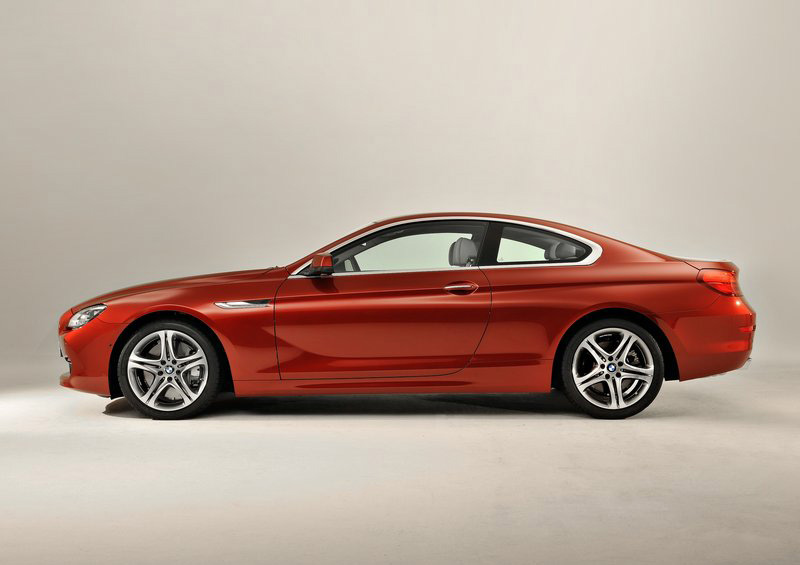
BMW 6-Series Coupe, 2012


  • BMW 6-Series Coupe, 2012

The hearts of sports car aficionados with an eye for beauty and a thirst for luxury and innovative technology will beat a little faster with the arrival of the new BMW 6-Series Coupe. The third generation of the top-class Coupe sees premium car maker BMW adding another intoxicating chapter to its decades-long tradition in the production of exclusive dream cars. The new BMW 6-Series Coupe impresses with its irresistible design and inspires with even sharper driving dynamics than its predecessor, noticeably optimised comfort levels and extra space. This is the only car in the segment to offer the combination of top-class sporting ability, exclusive touring comfort and a 460-litre (16.24 cu. ft) luggage space. Also on board to deliver the BMW 6-Series Coupe's signature driving experience are a range of innovative driver assistance systems and BMW Connected Drive infotainment features. The new car therefore meets the highest - not to mention the broadest - expectations of driving pleasure in a large, premium 2+2-seater in incomparable style.

BMW Twin Power Turbo technology with petrol direct injection provides both sporty power development and exceptional efficiency in the engines available for the new BMW 6-Series Coupe from launch. In the new BMW 650i Coupe, a V8 power plant with turbochargers positioned between the cylinder banks develops maximum output of 300 kW/407 hp. An exclusive feature of the 235 kW/320 hp six-cylinder in-line engine in the new BMW 640i Coupe, meanwhile, is the addition of VALVETRONIC variable valve control. Both units are hooked up to an eight-speed Sports automatic gearbox as standard. Also part of the standard specification is an extensive range of BMW Efficient Dynamics technology, including the Auto Start-Stop function and ECO PRO mode (in the BMW 640i Coupe).

The new BMW 6-Series Coupe strikes an ideal balance between dynamic handling and ride comfort thanks to a newly developed chassis. Its standard Electric Power Steering and optional Integral Active Steering both break new ground in this segment. Also on the options list are Dynamic Damper Control and the Adaptive Drive system, complete with roll stabilisation. Drive Dynamic Control - which allows drivers to adjust the car's set-up to their individual tastes - comes as standard in the new BMW 6-Series Coupe.

The innovations in the new BMW 6-Series Coupe also extend to light technology, in the shape of Adaptive LED Headlights. Their bright white light provides an extremely intense and evenly spread illumination of the road. This technology is unparalleled in the segment and also allows the beam of the headlights to follow the progression of corners. Customers can also order their Coupe with optional LED foglamps.

Other features that set the new car apart from its rivals are the BMW Connected Drive driver assistance systems and mobility services. The rear-view camera, Surround View, Parking Assistant, BMW Night Vision with pedestrian recognition, Speed Limit Info, Lane Departure Warning System and Lane Change Warning System are joined on the list of available equipment items by the new generation of the BMW Head-Up-Display. The latest incarnation of the system uses a full spectrum of colours to display the information projected onto the windscreen. The BMW iDrive control system, meanwhile, is included as standard in the BMW 6-Series Coupe as an operating portal for the navigation, communications and infotainment functions. Its Control Display comes in the form of a fixed, freestanding flat screen, which adds an extra exclusive flourish to the generously sized and luxurious interior. Elsewhere, the optional Bang & Olufsen High-End Surround Sound System lays on a feast of aural pleasure seldom experienced inside a car.

The design: commanding presence and athletic elegance.
The new BMW 6-Series Coupe heralds the arrival of an exceptionally sporty and exclusive 2+2-seater in the premium segment of top-class Coupes. The new model's extra length and width over its predecessor model combine with its 5-millimetre lower height to produce a strikingly low-set and powerful design. The new interpretation of the traditional BMW Coupe proportions is embellished by lines and surfaces inspired by the movement of waves. Flowing lines and harmonious curves create a feeling of athletic grace, complemented by extremely classy and eye-catching design features which underline the opulent character and elegant appearance of the two-door BMW.

The expressive front end is dominated by the large and slightly forward-slanting BMW kidney grille. The grille emphasises the car's sporting pedigree with a broad, flat design, and creates a visual connection with the engine nestling behind. The kidney grille slats, angled slightly towards the top, lend additional emphasis to the front end's "shark nose" character. The contour lines of the bonnet converge towards the kidney grille, forming a V-shape which is continued by the contours of the headlights, kidney and wide air intake to give a road-focused look. High-quality chrome elements and the LED units of the optional foglamps positioned in front of them guide the eye to the muscular wheel arches.

High-visibility innovation: Adaptive LED Headlights.
The new BMW 6-Series Coupe is equipped with bi-xenon headlights as standard. An accentuating trim element cuts across the top of the hallmark BMW twin round headlights to produce the intent look familiar from other BMW models. The optional Adaptive LED Headlights provide a fresh take on this established feature. The Adaptive LED Headlights for low beam and high beam contain LED light rings for the parking lights and daytime running lights, which are levelled off at the lower edge and overlapped at their top edge by an accent light - also featuring LEDs. The result is a stunning, distinctively BMW showcase for the innovative light technology below the surface. In addition, they also generate the low beam and high beam light from the two light rings. The light sources here are horizontal LED ribs positioned in the centre of the light rings. The brand's hallmark twin round headlight look is therefore expressed even more strikingly not only with the daytime running lights switched on, but also when the headlights are activated in the dark.

However, the Adaptive LED Headlights are about more than just looking good; they also ensure the driver can see well. Their bright white light provides an intense and even illumination of the road ahead. From a colour perspective, the light comes much closer to natural daylight than that created by conventional halogen or xenon headlights, lending even reflective objects far greater contrast. The cornering element of the Adaptive LED Headlights is also tailored to the car's speed, steering angle and yaw rate, allowing the pivot of the headlights to adapt automatically to the line of the corner. Meanwhile, a light source positioned specially in the headlight housing generates the cornering light which, at low speeds, ensures illumination of the road surface in the direction the car is turning. LED technology is also deployed for the direction indicators, each of which consists of eight LED units arranged in a row underneath the light rings. As well as enhancing visibility in the dark, the Adaptive LED Headlights thus also significantly improve the signalling effect of the car's lights.

Side view: elegant roofline, powerfully curved surfaces.
Tightly curved surfaces and character lines stretching the full length of the body define the side view of the BMW 6-Series Coupe. The forward-slanting BMW kidney grille is particularly clear from this angle. Despite its smooth curves and innovative pedestrian protection measures, the long bonnet still has a flat appearance. Its contour lines fan out wide and extend towards the rear. In combination with the car's typical Coupe proportions, this creates a particularly elegant, elongated silhouette.

The exterior design has been inspired by waves with clearly defined lines and volume formed around an object in flowing water. This gives the new BMW 6-Series Coupe a naturally powerful and sporty edge. The typical BMW swage line extends out from behind the front wheel arch, takes in the sporty gill feature and extends dynamically along the flank of the car to the rear. In so doing, it stretches the new BMW 6-Series Coupe visually and lends it a dynamic yet elegant allure. The door handles are integrated precisely into the swage line. A further character line emerges from the swell of the front wheel arch, before dropping down between the gill and the door and then levelling out towards the rear, its path replicating a forward-surging wave. The door sill line underneath it and an additional crease give the lower edge of the body a light and sporty appearance.

The roofline of the new BMW 6-Series Coupe also swoops in an elegant, flat progression into the tail. It comes across as especially svelte when viewed from the side, creating a contrast typical of BMW Coupes between the powerful body and light passenger compartment. Doors with frameless windows underline this impression. The chromed side window border emphasises the "counter-swing" at the foot of the C-pillar (known as the Hofmeister kink) with its particularly tight line.

Rear view: striking indications of dynamic and secure road holding.
From the rear, the new BMW 6-Series Coupe exudes power, athleticism and solidity. Bulging wheel arches accentuate the wide track of the new car, offering a hint of its impressive road holding. Added to which, horizontal lines and the broadening impression of the car's shape as you follow it towards the rear paint a clear picture of the sporting performance waiting to be unlocked. The slightly concave lower section of the boot lid generates light and shade effects which lend an extra lightness to the rear of the car. The edges of the boot lid and the licence plate surround create a V-shape, which - similarly to the front of the car - steers the eye towards the road. The exhaust tailpipes are positioned on either side of a diffusor-style apron. On the BMW 650i Coupe they are trapezoidal in shape while on the BMW 640i Coupe they are circular.

The two-part rear light clusters display the customary BMW L-shape in a particularly wide rendition that extends far into the boot lid, while the swage line that flows into the rear lights forges a harmonious link between the side and the rear of the car. Inside the rear light clusters, two LED-powered light strips generate the familiar BMW night-time look, an effect that is reinforced by the L-shaped lower light unit. The direction indicators and brake lights are also LED-powered. The wide additional brake light is located in the upper edge of the boot lid.

Interior: driver-oriented cockpit, exclusive ambience.
The driver-oriented cockpit layout familiar from BMW models down the years and a dynamic forward-surging movement define the design of the interior. The centre section of the instrument panel - including the Control Display, the central air vent and the controls for the audio system and climate control - is angled slightly towards the driver. The gearshift lever is located on a surface that opens out towards the driver and is set lower than the front passenger side of the centre console. This structure is repeated in the central section of the instrument panel, further enhancing the driver-focused feel. The fluent transition between the centre console and instrument panel can be accentuated with optional stitching in contrasting colour for the leather surfaces.

The horizontal structuring of the instrument panel is accentuated by an electroplated strip on the driver's side of the cabin. This is extended into the front-passenger side in the form of a subtle crease in the glove compartment. Meanwhile, powerfully taut waistline surfaces - which are carried forward into the instrument panel - embody the feeling of dynamic forward movement inside the cabin. The decorative surface of the instrument panel extends into the centre console with an elegant, slightly curving sweep to lend the front-passenger side an exclusive allure.

The rear seats also provide their passengers with a very pleasant level of touring comfort thanks to their individual-seat character and greater shoulder and elbowroom compared with the outgoing model. In addition, there is also more headroom for all the passengers, despite the reduced overall height of the car. The rear seat backrests can be specified as an option with a through-loading facility for a ski bag, allowing two pairs of skis to be transported in comfort. The luggage area can accommodate 460 litres (16.24 cu. ft) of luggage, which means that the BMW 6-Series Coupe can carry three 46-inch golf bags or two medium-sized hard-shell cases plus a flight case.

Optimised display, exclusive feel: instruments in black-panel technology, Control Display with flat screen design.
The instrument cluster in black-panel technology combines state-of-the-art display technology with classic sports-car circular instruments. A high-resolution 9.2-inch display below the four dials includes the mileage counter, fuel consumption and Efficient Dynamics display, as well as feedback from the driver assistance systems and Check/Control messages. This black-panel technology, which made its debut in the BMW 7-Series, is also used for the climate control displays in the centre section of the instrument panel.

In addition to the Controller with direct menu control buttons positioned on the console centre, the standard-fitted iDrive operating system also comes with a new monitor in exclusive flat screen design. This freestanding Control Display is located in a prominent and optimal position within the instrument panel, and creates the feeling of a powerboat cockpit rising up dynamically in front of the driver and front passenger. The central Control Display in the new BMW 6-Series Coupe has a 7-inch-diameter screen as standard. However, if the optional Navigation system Professional is specified, this is upgraded to a 10.2-inch version - the largest on-board monitor in the segment - bordered by a high-class electroplated chrome surround.

The exterior paintwork of the new BMW 6-Series Coupe can be ordered in a choice of eight metallic and two non-metallic shades, allowing customers to highlight both the sporting credentials of the Coupe and its modern and elegant character. The standard Dakota leather trim is available in three colour variants, the optional Exclusive Nappa leather in a choice of four shades. As an alternative to the standard Softskin surfacing, the instrument panel, door and side panels can be specified with Exclusive Nappa leather trim. Also, double French seams in a contrasting colour matching the seat covers can be ordered in place of the black French seams. The interior trim comes as standard in High-gloss Black, but can alternatively be ordered as an option in Brushed Aluminium, Poplar Grain Grey or American Oak high-gloss. Optional ceramic applications for the audio system and air conditioning controls, gearshift lever and iDrive Controller lend the interior an extra flourish.

Outstanding seat comfort, comprehensive safety equipment, body with excellent torsional rigidity.
The lightweight seats with integrated belt system developed for the new BMW 6-Series range are available in three variants. The integrated belt system makes it easier both to reach the belt and to climb into the rear of the car. The standard-fitted driver and front passenger seats boast electric adjustment for the seat height and fore/aft position, backrest angle and head restraint height - including memory function - as well as seat heating and an easy-entry function to facilitate access to the rear compartment.

The optional sports seats offer optimal lateral support with their raised seat and backrest sides, and come fitted with integrated head restraints as well as manually adjustable thigh support. Comfort seats are another option, adding comfort head restraints, lumbar support, and electric adjustment of the thigh support, backrest width and angle of the upper backrest segment. Offering an alternative to the standard Dakota leather upholstery is Exclusive Nappa leather with extended features. For the sports seats and comfort seats, there is the added option of active seat ventilation. Plus, comfort seats can also be specified with the active seat function.

All the seat variants available for the new BMW 6-Series Coupe come with crash-activated head restraints. The standard safety specification also includes front airbags, seat frame-mounted side airbags, side curtain head airbags for both rows of seats, three-point inertiareel seatbelts on all seats, belt force limiters and belt latch tensioners, as well as ISOFIX child seat attachments in the rear. To optimise passive pedestrian protection, in some national markets the new BMW 6-Series Coupe is equipped with an active bonnet system; in the event of a collision with a pedestrian, a pyrotechnic actuator mechanism automatically raises the front and rear of the bonnet.

The new BMW 6-Series Coupe is fitted with robust load-path structures, precisely defined deformation zones and an extremely rigid safety passenger cell. These safety features ensure maximum occupant protection in all types of collision. Carefully targeted advances in the use of materials have increased the strength and lowered the weight of the body with the aim of enhancing both the safety and agility of the car. Indeed, the static torsional rigidity of the new Coupe is around 53 per cent greater than that of its predecessor. In the interests of weight optimisation, the doors, bonnet and front axle spring mounts are all aluminium, while the front side panels are made from plastic and the boot lid from glass fibre composite.

Top-class performance from eight or six cylinders: BMW Twin Power Turbo in the new BMW 6-Series Coupe.

One V8 and one six-cylinder in-line engine are available for the new BMW 6-Series Coupe from market launch, and both can claim unique features.

The power units are kitted out with BMW Twin Power Turbo technology, including High Precision Injection petrol direct injection, and stand out with their instantaneous power development, majestic in-gear acceleration, outstanding refinement and exemplary efficiency for their output class.

The eight-cylinder power unit in the new BMW 650i Coupe produces maximum output of 300 kW/407 hp from its 4.4-litre displacement between 5,500 and 6,400 rpm. This unique engine, whose turbochargers are positioned in the V-shaped area between the cylinder banks, produces an instantaneous and sustained wave of power, making it a feast for the enthusiast driver. Peak torque of 600 Newton metres (443 lb-ft) is served up between 1,750 and 4,500 rpm. The sporting performance attributes of the V8 engine enable the new BMW 650i Coupe to accelerate from 0 to 100 km/h (62 mph) in 4.9 seconds, leaving the engine electronics to call a halt to proceedings at 250 km/h (155 mph). And yet the range-topping model also demonstrates extraordinary efficiency for this output class, recording average fuel consumption of 10.4 litres per 100 kilometres (27.2 mpg imp) in the EU test cycle, together with CO2 emissions of 243 grams per kilometre.

The new BMW 640i Coupe is powered by a six-cylinder in-line engine in which the BMW TwinPower Turbo technology brings both direct injection and VALVETRONIC fully variable valve control to the table. This combination optimises both the responsiveness and efficiency of the 3.0-litre powerplant, which generates maximum output of 235 kW/320 hp at 5,800 rpm and puts its peak torque of 450 Newton metres (332 lb-ft) on tap between 1,300 and 4,500 rpm. The BMW 640i Coupe completes the sprint from rest to 100 km/h (62 mph) in 5.4 seconds, and its top speed is electronically limited to 250 km/h (155 mph). Average fuel consumption in the EU test cycle stands at 7.7 litres per 100 kilometres (36.7 mpg imp), while CO2 emissions come in at 179 grams per kilometre.

Standard-fitted eight-speed Sports automatic gearbox with steering wheel shift paddles; BMW 640i Coupe with Auto Start-Stop function.

Both the BMW 650i Coupe and BMW 640i Coupe transfer their power to the rear wheels via an eight-speed Sports automatic gearbox. This standard-fitted unit enhances sporty driving with exceptionally rapid gear changes, offers outstanding shift comfort and also optimises the efficiency of both model variants.

The innovative gear set configuration of the compact, low-weight automatic allows it to offer eight gears and a correspondingly wide gear spread. This not only enhances the car's sprinting ability, but also supports economical driving at low revs. With its minimal converter slip and impressive inherent efficiency, the eight-speed Sports automatic helps to ensure efficient power transmission. And the driver can also change gear manually using the shift paddles mounted on the steering wheel.

Extensive BMW Efficient Dynamics technology also plays its part in cutting fuel consumption and emissions in the new BMW 6-Series Coupe. Among the systems fitted as standard are Brake Energy Regeneration, Electric Power Steering (EPS), the on-demand operation of ancillary components, intelligent lightweight construction and low-rolling-resistance tyres. The new BMW 640i Coupe is also fitted with automatic active air flap control and the Auto Start-Stop function. When the driver draws to a standstill at junctions or in a traffic jam, the engine is automatically switched off to prevent unnecessary fuel consumption at idle. As soon as the driver releases the brake pedal, the engine starts up again. If the driver is using the Auto Hold function, the engine is restarted when the accelerator is depressed.

Another innovation also helps smooth the way to particularly low fuel consumption while on the move. A touch of the Drive Dynamic Control button allows BMW 640i Coupe drivers to activate ECO PRO mode and unlock additional efficiency-boosting potential. ECO PRO mode tweaks the engine management, the accelerator mapping and the shift characteristics of the automatic gearbox to favour a consciously relaxed and frugal driving style at low engine revs. At the same time, efficient power usage for electrically operated functions such as the climate control system and the seat and exterior mirror heating ensures extremely efficient in-car energy management. Special readouts in the instrument cluster and Control Display keep the driver informed on the levels of energy efficiency currently being achieved, as well as keeping a record for the journey up to that point, and encourage a driving style that minimises fuel consumption. For example, the increase in range achieved by using ECO PRO mode is shown in kilometres.

Advanced chassis technology and optional Adaptive Drive deliver the perfect balance of sports performance and comfort.

The driving experience in the new BMW 6-Series Coupe is defined by sporty handling characteristics. However, the cutting-edge chassis technology of the two-door car also delivers impressive ride comfort. Both the double wishbone front axle and the integral rear axle are made predominantly from aluminium. The chassis set-up is geared to the requirements of drivers with sporting intentions, although the dampers also respond sensitively to bumps in the road surface under high lateral acceleration.

Available as options for both model variants are Dynamic Damper Control and the Adaptive Drive system, which also includes Dynamic Drive active roll stabilisation. The electronically controlled dampers adapt to both the nature of the road surface and the driver's style to prevent unwanted movements in the car body, while an innovative damping system adjusts the compression and rebound settings continuously and independently from one another. For example, a stiff chassis setting can be impressively combined with comfortable responses to unevenness in the road surface. The roll stabilisation feature also reduces effects such as body roll in high-speed corners and under sudden changes in direction.

Unmatched in the segment: Electric Power Steering as standard, Integral Active Steering optional.
The Electric Power Steering system with Servotronic function delivering speed-sensitive power assistance is unique in the BMW 6-Series Coupe segment and combines customary BMW precision, comfort and efficiency. In contrast to conventional mechanical/hydraulic systems, the power assistance is provided by an electric motor, which only goes to work - and therefore uses energy - if power assistance is required or desired by the driver.

In addition, the new BMW 6-Series Coupe is the first car in its class that can be ordered, as an option, with Integral Active Steering. This system combines the Active Steering system for the front axle - already available for the predecessor model - with a steering rear axle, allowing the steering angle and power assistance to be controlled at both the front and the rear with the help of electric motors. Precisely harmonised wheel deflections pave the way for extraordinary agility in dynamic driving situations. Also, Integral Active Steering displays an impressively deft touch around twisty mountain passes and in city traffic. At speeds of up to 60 km/h (37 mph), the rear wheels are turned in the opposite direction to the steering angle of the front wheels. This has the effect of reducing the car's turning circle and the amount of steering effort required. At higher speeds, Integral Active Steering gives the car extremely comfortable and assured reactions when changing lanes and cornering. The rear wheels follow the same steering movements as the front wheels, enabling the car to follow the course set by the driver with even greater immediacy and precision.

Drive Dynamic Control gives the driver the choice of car set-up.
With Drive Dynamic Control, the virtues of sportiness and comfort can take precedence as the situation demands. Drivers can make their own choice of suspension settings in NORMAL, SPORT and SPORT+ modes using a button on the centre console. In the new BMW 640i Coupe, ECO PRO mode can also be activated. If the Dynamic Damper Control or Adaptive Drive option has been specified, the COMFORT setting can also be used. In this mode, as well as adjusting the accelerator pedal progression, engine responses, power steering characteristics, DSC response thresholds and the shift dynamics of the automatic gearbox, Drive Dynamic Control also tweaks the damper responses and, if necessary, the roll stabilisation settings. On cars also fitted with Integral Active Steering, the basic steering set-up is also adjusted according to the mode selected, as well as the level of power assistance. As a result, in SPORT and SPORT+ modes the car's sporting responses are sharpened even further.

The lightweight, floating-calliper brakes with inner-vented discs are easy to use with precision, and their effectiveness is reinforced by Dynamic Stability Control (DSC). This driving stability system brings together technology such as the anti-lock braking system (ABS), Dynamic Traction Control (DTC), Cornering Brake Control (CBC), Dynamic Brake Control (DBC), the Start-Off Assistant, the automatic Brake Drying function and brake fade compensation. Standard equipment also includes 18-inch light-alloy wheels on the new BMW 650i Coupe or 17-inch rims for the new BMW 640i Coupe, as well as runflat tyres and a runflat indicator.

Exclusively from BMW Connected Drive: a wide range of driver assistance systems, including BMW Head-Up Display with a full spectrum of colours.

The selection of driver assistance systems and mobility services available from BMW Connected Drive for the new BMW 6-Series Coupe is even broader than that enjoyed by its predecessor. These systems and services enable the intelligent link-up of the driver and car with the outside world, enhancing both comfort and safety and the use of the car's infotainment features. Among the options largely unmatched in this vehicle category are the Lane Change Warning System, Lane Departure Warning System, Speed Limit Info, BMW Night Vision with pedestrian recognition, the rear-view camera, Surround View and the BMW Parking Assistant. Innovative technologies optimise the integration of the Apple iPhone and other smartphones, as well as music players. And, in addition to internet access, BMW ConnectedDrive also allows email messages received on a smartphone to be shown on the Control Display, as well as the use of internet-based services for navigation and entertainment. Other functions not offered by the new Coupe's rivals include the location-based telephone information service from BMW Assist and the Advanced Emergency Call function with automatic vehicle location and accident severity detection.

The optional BMW Head-Up Display - which projects important information onto the windscreen, directly in the driver's line of sight - remains the only system of its kind in the segment. And the latest generation of this BMW innovation is now available in the new BMW 6-Series Coupe. For the first time, a full spectrum of colours is used to display graphics and symbols, making road sign symbols, for example, impressively realistic. At the same time, the Head-Up Display is now able to present a wider range of information. Depending on vehicle specification, the following can be shown in the Head-Up Display: High Guiding function information supplied by the navigation system, information from the Speed Limit Info system, Check/Control messages, status messages from the Lane Departure Warning System and warnings from the BMW Night Vision system.

Top-class comfort features: Bang & Olufsen High-End Surround Sound System delivers an unparalleled audio experience.

The standard-fitted comfort-enhancing features on board the new BMW 6-Series Coupe include 2-zone climate control, a multifunction steering wheel, electric steering column adjustment, electrically adjustable and heated exterior mirrors, Cruise Control with braking function, a rain sensor with integrated automatic driving lights control, and a HiFi audio system complete with nine speakers, MP3-compatible CD drive and AUX-IN connection. Meanwhile, technology such as a DVD changer, TV module, DAB (Digital Audio Broadcasting) receiver and USB audio interface allows passengers to enjoy their personal choice of on-board entertainment.

When it comes to delivering audio pleasure of the highest order, the Bang & Olufsen High-End Surround Sound System designed especially for the new BMW 6-Series Coupe hits all the right notes. Jointly developed by the Danish audio specialists and BMW, this system produces an exceptionally natural sound from 16 speakers distributed around the cabin. It is a fully active system featuring digital signal processing, which means the two bass speakers, seven mid-range speakers and seven tweeters all have individual amplifiers. This technology enables the targeted modification of any sound reflections inside the vehicle. The Bang & Olufsen High-End Surround Sound System uses Di-rac Dimensions™ technology to recreate the acoustics of a reference listening room in the passenger compartment. All vehicle occupants therefore enjoy the same high-quality sound stage wherever they are sitting.

The electrical signals are converted into precisely defined sound waves using neodymium magnet drivers, and the mid-range speakers feature extremely stiff Hexacone diaphragms. The outstanding quality of the Bang & Olufsen High-End Surround Sound System is underlined by exclusive design features. The form and colour of the advanced all-aluminium speaker grilles have been tailored precisely to the interior design of the new BMW 6-Series Coupe. The special perforation pattern of the grilles is created using a very sophisticated drilling technique. The grille mounts are not visible from the outside, ensuring that the grilles stand out from their surroundings by appearing to float in a slightly raised position above the surface. This exclusive ambience is further enhanced by a discreet lighting effect, which showcases the contours of the sound sources with a subtly impressive effect. A both visually and acoustically significant innovation, meanwhile, is the novel design of the centre speaker in the instrument panel area, which uses Acoustic Lens Technology developed by Bang & Olufsen to provide a particularly harmonious sound. As soon as the audio system is activated, the central element containing the integrated mid-range speaker pops up, prompting the tweeter lens to be extended at the same time. The tweeter lens distributes its signals evenly at 180 degrees throughout the interior. This extraordinarily harmonious horizontal dispersion of sound is achieved through the special design of the lens, which also minimises unwanted vertical sound dispersion.

Among the other highlights on the options list are Adaptive Headlights, a heated steering wheel, Comfort Access and the electrically operated panoramic sunroof with tilt function, whose glass cover - with a clear surface spanning 806 x 578 millimetres - spreads across almost the full width of the car. The optional Navigation system Professional, featuring a hard disk for storing maps and personal music collections, uses the high-resolution graphics of the Control Display to give a particularly detailed overview of the region the car is currently travelling through. As an alternative to the map display in full-screen mode, the driver can also make use of assistance windows. In addition, the High Guiding function with integrated lane recommendation transfers detailed views from the screen directly to the instrument cluster or, optionally, to the BMW Head-Up Display.

The BMW 6-Series Coupe: a sports car boasting outstanding dynamics and a fascinating heritage.

The BMW brand's large Coupe once again embodies the essence of dynamic capability and exclusive driving pleasure in a stylish and luxurious two-door design. The new BMW 6-Series Coupe represents the latest chapter in a story which now stretches back more than 70 years, a heritage enriched by legendary motor racing glories and numerous icons of automotive design. The unmistakable characteristics which marked out the BMW 327, BMW 503, BMW 3200 CS, BMW 2000 CS and the large Coupes based on the BMW 3.0 CSi - and which since 1976 have been perpetuated by the BMW 6-Series models - can now be enjoyed once again in a fresh interpretation inspired by the future. And so the new BMW 6-Series Coupe reprises the role of trailblazer in terms of aesthetics, dynamics and innovative technology, and provides the perfect next instalment in the tradition of inspirational dream cars from BMW.

The new BMW 6-Series Coupe built alongside the new BMW 6-Series Convertible at BMW's Dingolfing plant. The BMW Group's largest production plant also produces the BMW 7-Series and BMW 5-Series. The flexible and efficient manufacturing processes at the plant combine state-of-the-art production technology with a quality standard underpinned by unbeatable precision craftsmanship in the construction of customer-configured premium cars.
Read More

Citroen C1, 2013


  •  Citroen C1, 2013

The popular Citroën C1 has a sparkling new look and even greater buyer appeal for 2012. The brand's entry-level city car has already attracted over 620,000 customers worldwide, with more than 80,000 sold in the UK since its launch in 2005. Now, with new styling, enhanced levels of equipment and a more frugal engine, the New C1 sets an even higher benchmark in the segment.

New features include CO2 emissions from just 99g/km, LED daytime running lights, a CD audio system with Citroën's integrated Connecting Box (Bluetooth® system with USB socket) and an Electronic Gearbox System with steering-mounted paddles.

Making its world debut at the 2012 Brussels Motor Show on 10 January, the New Citroën C1 will be available in the UK from April 2012.

A PRACTICAL, USER-FRIENDLY CITY CAR
At just 3.44m long, the New C1 remains the most compactmodel in the Citroën range. Available in both 3-door and 5-door guise from launch, the New C1 appeals as one of the most economical and ecological city cars on the market, but it still has the ability to transport four adults in comfort and boasts a plethora of storage compartments in the dashboard, central console and door panels. Boot volume can also be adjusted thanks to folding rear seats and ranges from 139 litres to over 700 litres. The New C1's compact dimensions make it the ideal travelling companion, offering an agile and responsive ride, perfectly tailored for urban and city driving. A turning circle of just 9.63 metres makes the New Citroën C1 incredibly easy to manoeuvre in city traffic.

UP TO 65.7 MPG & 99 G/KM OF CO2
Agile and frugal, the New Citroën C1 is powered by a three-cylinder petrol engine developing 68hp. Equipped with a manual gearbox, the New Citroën C1 1.0i boasts improved fuel economy of up to 65.7mpg over a combined cycle. Emissions are also improved, to just 99g/km of CO2, making the New C1 congestion charge exempt. As well as being the first Citroën petrol model to emit less than 100g/km of CO2, the New C1 is also available with an Electronic Gearbox System complete with steering-mounted paddle controls for enhanced handling and driving pleasure. The EGS version delivers an impressive 62.8 mpg (combined) and emits only 104g/km of CO2.

EVEN MORE CHARACTER ON THE OUTSIDE
The New Citroën C1 gains even more appeal and personality through its new front end and shorter bonnet.

The headlights keep their rounded shape, while the front bumper has been entirely redesigned to house fog lights and LED daytime running lights, which are still a rarity in the segment. The vertical design LED light signature - which is specific toCitroën and can also be seen on DS3 and C4 AIRCROSS - strengthens the character of the new model. At the rear, New C1 retains its innovative glass tailgate and features the brand's new chevrons and badging.

New C1 also gains new 'Notus' design 14" wheels and is available with 'Rift' 14" alloy wheels, as standard, on top of the range models.

ATTRACTIVE COLOURS & MATERIALS
The playful New Citroën C1 comes in a special launch colour that already adorns the C3 and DS3: Botticelli blue, a fresh-looking body colour included in the 2012 catalogue. The range of body colours also includes Scarlet red, Electra blue, Lipizzan white, Caldera black and two grey tones - one light, Gallium grey, and one dark, Carlinite grey.Citroën has also finished the grille with a chrome strip available from the mid-range trim level. The New Citroën C1 is as attractive inside as it is from the exterior. The leather steering wheel for EGS models has been redesigned, while manual gearbox versions get a new-look gearstick. Most models are available with stylish new 'Orsai' upholstery and entry-level models come with Mistral 'Nokimat' cloth. A Leather/Alcantara® option is now available, adding a high-end touch to the New C1 interior.

NEW 'CRÉATIVE TECHNOLOGIE' EQUIPMENT
The New Citroën C1 comes with a range of 'Créative Technologie' features. Technological treats, just for the driver, include steering-mounted paddle controls for the Electronic Gearbox System - a first for the C1. For even greater travelling comfort, the radio offering has been enhanced by a new facia matching the styling of the dashboard. Featuring a time display, the all-new CD audio system comes with a Connecting Box (optional from the second trim level and standard on top of the range models), which is able to read all MP3 formats and is equipped with a Bluetooth® function. It is accompanied by USB and jack hook-ups at the base of the central console.

ENHANCED WELL-BEING & SAFETY
The New Citroën C1 is a versatile performer. Complementing its existing on-road abilities, the model features new power steering settings and shock absorbers for more agility and ride comfort at low speeds. The new model will be available with a range of technologies for safer urban driving, including ABS with Electronic Brakeforce Distribution, Isofix anchorage points and ESP.

WORLD DEBUT IN BRUSSELS
The New Citroën C1 will make its official debut at the 2012 Brussels Motor Show.
Read More

Sunday, November 25, 2012

Chevrolet Camaro ZL1 Convertible, 2013


  •  Chevrolet Camaro ZL1 Convertible, 2013

The Chevrolet's most-powerful convertible ever - the 2013 Chevrolet Camaro ZL1 Convertible - made its debut at the 2011 Los Angeles Auto Show. When it goes on sale in late 2012, it will deliver more performance and technology than many exotic cars and ultra-luxury convertibles.

Like the coupe, the 2013 Chevrolet Camaro ZL1 Convertible features a supercharged 6.2L "LSA" engine, SAE-rated at 580 horsepower (432 kW) and 556 lb.-ft. of torque (754 Nm). That's enough to exceed the output of 2+2 convertibles of many performance icons:
  •     2012 Aston Martin DB9 Volante - 470 hp / 443 lb.-ft.
  •     2012 Mercedes SL63 AMG - 518 hp / 465 lb.-ft.
  •     2011 Porsche 911 Turbo S - 530 hp / 516 lb.-ft.
  •     2011 Ford Shelby GT500 - 550 hp / 510 lb.-ft.

The Chevrolet Camaro ZL1 Convertible's power is complemented by advanced powertrain and chassis technologies designed to deliver exceptional performance on the road or track. In fact, it's the same balance of acceleration, handling and ride quality that enabled a Camaro ZL1 coupe recently to lap the Nürburgring's Nordschleife course in 7:41.27 minutes.

From Day One, the architecture for the fifth-generation Camaro was designed to accommodate a convertible model, which gives the ZL1 convertible coupe-like driving dynamics. Four strategic reinforcements enhance the already-stiff body structure to quell the cowl and steering wheel shake common in convertibles:
  •     A tower-to-tower brace under the hood
  •     A transmission support reinforcement brace
  •     Underbody tunnel brace
  •     Front "X" brace and stiffer cradle as well as rear underbody "V" braces.

Additional structural reinforcements in the ZL1 convertible are designed to improve noise and vibration characteristics, while also reducing unwanted ride and body motions. They include a hydrofoamed tube in the A-pillars, an inner reinforcement bracket in the windshield header, a reinforced front hinge pillar and reinforcements inside the rockers.

The suspension of the ZL1 convertible uses the third-generation of Magnetic Ride. New, twin-wire/dual-coil dampers at all four corners enable faster response, with damping levels now adjusted up to 1,000 times per second - about one adjustment per inch of vehicle travel at 60 mph - making the system exceptionally responsive to changing driving and road conditions.

The 2013 Chevy Camaro ZL1 Convertible will also offer Performance Traction Management as standard equipment, which is exclusive to General Motors. First introduced on the Corvette ZR1, it is an advanced system that integrates magnetic ride control, launch control, traction control and electronic stability control, to enhance both launch-acceleration performance and corning.

The result is a convertible designed to preserve nearly all the acceleration, road-holding and performance capabilities of the Camaro ZL1 coupe, which on sale in early 2012.
Read More

Ford C-MAX Hybrid, 2013

 
  •  Ford C-MAX Hybrid, 2013

Ford revealed two next-generation hybrid vehicles - including its first production plug-in hybrid electric vehicle - at the 2011 North American International Auto Show, bringing consumers more choice, versatility and style for high-mileage family-friendly vehicles.

The Ford C-MAX Energi plug-in hybrid and C-MAX Hybrid are based on the new Ford C-MAX five-passenger multi-activity vehicle, and each will offer high mileage and low emissions as well as distinctive body design and a flexible interior. The plug-in hybrid and third-generation full hybrid leverage Ford's global C-car platform, acclaimed powersplit architecture, next-generation driver information features and advanced lithium-ion battery systems.

Ford C-MAX Hybrid is targeted to deliver better fuel economy than the 41 mpg Ford Fusion Hybrid, the most fuel-efficient sedan in America today. It builds on the success of the critically acclaimed powersplit architecture Ford uses in its current hybrids, allowing it to operate in fuel-saving electric mode beyond 47 mph.

Both the C-MAX Energi and C-MAX Hybrid models will be built alongside the all-new 2012 Ford Focus and Focus Electric at Ford's Michigan Assembly Plant in Wayne, Mich. The plant's production is powered in part by one of the largest solar energy generator systems in the state. The C-MAX Energi and C-MAX Hybrid vehicles sold in Europe in 2013 will be built at Ford's plant in Valencia, Spain, starting in 2013.

The plug-in advantage
Targeted to achieve AT-PZEV (Advanced Technology Partial Zero Emissions Vehicle) status, Ford C-MAX Energi provides maximum fuel efficiency by pairing a high-voltage lithium-ion battery and electric traction motor with a high-efficiency Atkinson-cycle gasoline engine. This allows it to run in electric mode before using the gasoline engine.

Ford C-MAX Energi will offer more than 500 miles (800 kilometers) of overall driving range using the battery and engine - more than any other plug-in or extended-range electric vehicle. C-MAX Energi delivers better charge-sustaining fuel economy than Chevrolet Volt.

In general, plug-in hybrid vehicles offer several benefits:
  • Electric driving range, perfect for emissions-free and silent city driving
  • Potential consumer savings on energy and fuel costs thanks to improved fuel efficiency over a standard hybrid
  • Reduced dependency on petroleum and increased energy independence
  • Reduced environmental impact through reductions in greenhouse gas emissions
  • Increased use of electricity from renewable energy sources (e.g. wind and solar), where available, for vehicle recharging
The development of Ford's first-ever production plug-in hybrid leverages more than 200,000 miles of road testing conducted in collaboration with a coalition of 10 utility companies, the U.S. Department of Energy, the New York State Energy Research and Development Administration and the Electric Power Research Institute.

Getting charged up
Ford C-MAX Energi and C-MAX Hybrid will use advanced lithium-ion battery systems developed and assembled in-house by Ford in Michigan. Each system is smartly designed to maximize use of common, high-quality components, such as control board hardware that has proven field performance in Ford's current, critically acclaimed hybrid vehicles.

Li-ion battery packs offer a number of advantages over the nickel-metal-hydride (NiMH) batteries that power today's hybrid vehicles. In general, they are 25 to 30 percent smaller and 50 percent lighter, which makes them easier to package in a vehicle, and can be tuned to increase power to boost acceleration or to increase energy to extend driving distance.

While Ford C-MAX Hybrid will operate much like today's hybrid vehicles, C-MAX Energi will benefit from daily charging to maximize its all-electric range. Thanks to the efficiencies of its right-sized battery system, the plug-in hybrid easily recharges 100 percent overnight on a 120-volt outlet.

A full charge in C-MAX Energi allows owners to increase their driving significantly in all-electric mode and drastically reduce their use of the on-board fuel engine.

On start-up, Ford C-MAX Energi operate in charge-depletion mode, providing electric driving range. When the battery has been depleted or certain conditions are met, it switches to charge-sustaining hybrid mode for continued optimal fuel efficiency.

Ford worked with a supplier to provide an industry-standard five-point plug for C-MAX Energi (and new Focus Electric) that is ergonomically comfortable to hold as well as durably and distinctively designed. The plug handle uses a matte-finished black rubber for a comfortable, non-slip grip and the plug head is shielded with a glossy white hard plastic to protect the electronics. The Ford Blue Oval trademark helps make the device immediately recognizable.

When the cord set connector is plugged into the vehicle's charge port, which is located conveniently between the driver's door and front wheel well, it activates a light ring that loops around the port twice in acknowledgement of connectivity. The light ring then illuminates in quadrants as the vehicle charges. Flashing quadrants represent charge in progress and solid-lit quadrants show stages of charge completion. When the entire ring is solidly lit, the vehicle is fully charged.

Smarter interface
Ford C-MAX Energi owners will have access to a suite of driver information systems - on-board and off-board - designed to help them manage the recharge process, manage the most eco-friendly route on-board, remotely control their vehicle's charge and preconditioning settings, monitor battery state of charge and maximize energy efficiency to extend use of electric mode. Ford C-MAX Hybrid owners also will benefit from the on-board features.

Among these tools is a unique execution of MyFord Touch driver connect technology, especially for electrified driving. It offers exceptional configurability of vehicle information, including fuel level, battery power level, and average and instant miles per gallon.

The cluster's new MyView feature allows drivers to access even more vehicle data such as the electrical demands of vehicle accessories, including air conditioning, which influences fuel economy and the electric driving range of the Ford C-MAX Energi.
The Brake Coach feature helps to educate drivers to optimize their use of the regenerative brakes to recapture kinetic energy and send it back to the battery, also reducing wear on the brakes.

Long-term fuel efficiency can be displayed in two ways - either as a traditional chart or using an innovative display that shows a growing leafy vine on the right side of the cluster. The more efficient a customer is, the more lush and beautiful the leaves and vines become, creating a unique visual reward for the driver's efforts.

To reinforce the message, at the end of each trip a display screen provides distance driven, miles gained through regenerative braking, fuel consumed (average and total) and a regenerative braking score.

New MyFord Mobile
Off-board, Ford C-MAX Energi owners in North America can maintain constant contact with the car anywhere they have mobile phone or web access using the Ford-developed MyFord Mobile.

MyFord Mobile enables access to a secure Ford website and smartphone/feature phone app to get instant vehicle status information, perform key functions remotely, monitor the car's state of charge and current range, get various alerts including when the vehicle requires charging, remotely program charge settings and download vehicle data for analysis.

The feature also allows the owner to program the vehicle to use electricity from the grid to heat or cool the battery and cabin while plugged in. For example, during hot summer months, owners can preprogram the car the evening before to be fully charged - and fully cooled to a particular temperature - by a certain time the following morning. Users can also locate the vehicle with GPS, remotely start the vehicle, and remotely lock and unlock the car doors.

Working with MapQuest, MyFord Mobile can communicate charge station and other points of interest to Ford C-MAX Energi using SYNC's Traffic, Directions and Information (TDI) service. Turn-by-turn guidance is provided by the in-car map-based Navigation System. Drivers can also get up-to-date charging station information in their vehicle directly through SYNC TDI simply by connecting to SYNC Services.

Value charging, powered by Microsoft
Using the value charging feature, powered by Microsoft, Ford C-MAX Energi owners in North America will be able to optimize their home's energy use and vehicle recharging practices. Value charging allows Ford customers to reduce their electricity costs by taking advantage of off-peak or reduced rates from their utility without a complicated set-up process.
 
Proven powersplit technology
Ford C-MAX Energi and C-MAX Hybrid build on the success of the critically acclaimed powersplit architecture Ford uses in its current hybrids, including the Ford Fusion Hybrid, winner of the 2010 MOTOR TREND Car of the Year® award.

In a powersplit hybrid, the electric motor and gasoline-powered engine can work together or separately to maximize efficiency. The engine also can operate independently of vehicle speed, charging the batteries or providing power to the wheels as needed. The motor alone can provide sufficient power to the wheels in low-speed, low-load conditions, and work with the engine at higher speeds.

While this system enables the current Fusion Hybrid to operate in fuel-saving electric mode up to 47 mph, Ford is targeting higher electric operating speeds for Ford C-MAX Hybrid and even more capability for C-MAX Energi, which will have the advantage of additional battery power.

Ford's global C-car strategy
C-MAX Energi and C-MAX Hybrid are two of at least 10 new models or derivatives that Ford will launch around the world based on its new global C-car platform - Ford's first truly global One Ford platform.

Ford's new generation of C-segment vehicles will be sold in more than 120 markets and will account for more than 2 million units annually. The C-segment accounts for one in four cars sold worldwide today and, in conjunction with the B-segment, is expected to rise to 50 percent of all cars sold globally by 2013.

The all-new C-MAX lineup also introduces a number of advanced new technologies to the compact multi-activity vehicle class. More often found only on larger or more premium cars, these technologies are focused on enhanced comfort, safety and sustainability, including the availability of new and powerful, yet highly fuel-efficient, low-CO2 Ford Eco Boost gas engines.

The previous European C-MAX established a reputation for providing a balance of enjoyable driving dynamics and impressive comfort. The all-new model is set to take that performance to a new level, giving drivers a class-leading combination of responsive, sporty handling and overall refinement approaching the standards usually associated with larger, luxury vehicles.

Ford C-MAX Energi and C-MAX Hybrid are two of five electrified vehicles that Ford will bring to the North American market during the next two years. In addition, the Ford Transit Connect Electric small commercial van, built in collaboration with Azure Dynamics, began initial production at the end of 2010, and Focus Electric will launch in late 2011. A second next-generation hybrid electric vehicle will be announced later and available in North America and Europe in 2012.
Read More

Saturday, November 24, 2012

Opel Astra Sedan, 2013


  • The Opel Astra Sedan, 2013

The Opel is expanding its successful Astra model family with a new sporty and stylish sedan. Featuring typical Astra strengths, including advanced technologies and its widely recognized quality, the new upscale and elegant notchback is a more affordable alternative for customers who would usually opt for this type of car in the mid-size segment. With this new four-door Opel Astra Sedan, the five-door hatchback, the Sports Tourer station wagon and the racy GTC coupe, the line-up of Opel´s top-seller Astra is now complete.

At the start of sales in June 2012, customers can initially choose between seven engines for the new Opel Astra sedan: four gasoline units (74 kW/100 hp to 132 kW/180 hp), of which three can be combined with a six-speed automatic and three diesel engines (70 kW/95 hp to 96 kW/130 hp). The two ultra-efficient Astra notchback 1.7 CDTI ecoFLEX models with Start/Stop system and further efficiency enhancing technologies combine powerful outputs of 81 kW/110 hp or 96 kW/130 hp with diesel consumption figures as low as 3.7 liters per 100 kilometers. This is equivalent to only 99g/km CO2 emissions. In addition to this broad powertrain offer, early next year the new Astra four-door will benefit from the launch of Opel's new highly efficient, powerful and refined SIDI ECOTEC four-cylinder gasoline engine generation with 1.6 liters displacement, turbocharging and spark ignition direct injection.

The new Astra notchback sedan (Length/Width/Height: 4,658/1,814/1,476 mm) has a wheel base of 2,685 mm and provides generous interior space. Its separate trunk offers 460 liters of volume - 90 liters more than the five-door model. By folding the 60:40 split rear bench flat the luggage volume can be increased up to a maximum of 1,010 liters.

Sporty and stylish design combined with balanced proportions
The Opel design team gave the new Astra notchback a very stylish and sleek silhouette. The roofline arcs gently over the passenger area, then descends in a seamless sweep through the steeply raked rear screen to the sculpted aerodynamic lip at the end of the short rear deck. And because the raked C-pillar stretches so far back into the rear deck area, it visually conceals the size of the trunk in an elegant fashion. The feature line running through the door handles becomes more defined towards the rear, creating a muscular "shoulder" effect below the base of the C-pillar and the rear deck.

The rear is characterized by the steeply raked rear screen, the integrated deck spoiler, and the broad sweep of the sculpted bumper. The design of the tail lights echoes those of other Astra models, and the subtle crease which links them adds width and avoids any impression of bulkiness. The lamps also have an inner wing shape for the taillight function that continues the Opel brand signature. There are more sculptural features within the bumper where the number plate indent reflects the shape of the deck-lid cutout. Together, all these elements combine to create a particularly well-balanced and harmonious automotive design.

The Vice President of Design, Mark Adams, says: "The Astra model family implements our design language with sculptural artistry meeting German precision in a very dynamic fashion. All body style variants have their very own personality. We believe that the Astra four-door sedan we're now launching is the best proportioned and most stylish notchback currently available in the compact segment." Customers who wish to make their Opel Astra Sedan even more attractive visually, can choose from a wide offer of wheel designs of sizes up to 19 inches.

Top technology standards and typical Astra qualities in notchback segment
With its sporty, elegant design, typical Astra qualities and a large array of technological highlights - some are unique, some are unusual for the segment - Opel´s new compact four-door notchback targets customers with high expectations. The Advanced Forward Lighting (AFL+) with bi-xenon headlamps and a host of sophisticated lighting functions including variable light distribution, curve light, cornering light and high-beam assist greatly enhance active safety. The adaptive FlexRide chassis system automatically adjusts damping to the prevailing driving conditions and gives the driver the choice between three different modes - Standard, the comfort-oriented Tour mode and the more responsive Sport mode. The highly ergonomic AGR ("Aktion Gesunder Rücken e.V") approved seats that are easy on the back are available for the driver and the front passenger. Added to that are several infotainment systems which make travelling even more relaxing and safer. The Navi 900 top unit features the routes of more than 30 European countries and a digital travel guide stored on an SD card.

Compact notchbacks offer growth opportunities
The new four-door Opel Astra Sedan is an important addition to the latest generation of the successful Astra model family. In Western Europe, especially in Germany and Spain, Opel marketing experts see growth opportunities for the new four-door model as an elegant, more affordable alternative to sedans from the upper segment. 
Moreover, there is strong demand for compact notchback variants in the high growth markets of Eastern and Central Europe, particularly Russia and Turkey. Russia currently has the second highest sales volume in Europe and is expected to become Europe´s main market with up to 3.4 million total vehicle sales in 2014. Across all segments, more than 60 percent of all sedans sold in Europe are sold in Russia. Last year, in the compact segment 51 percent of customers there opted for a notchback version. Russia is also the third biggest market for the Astra in Europe. Therefore, Opel has decided to celebrate the world premiere of the new member of the Astra model family at the 2012 Moscow Auto Salon (August 29 - September 9).
Read More

Mini John Cooper Works Coupe Endurance, 2011


  •  Mini John Cooper Works Coupe Endurance, 2011

Motor sport is in the MINI genes. And now the carmaker is set to add a new chapter to its racing heritage with the arrival of the MINI John Cooper Works Coupé Endurance. The newly developed racer will line up at the 2011 24-hour race at the Nürburgring-Nordschleife circuit.

With the participation of the MINI John Cooper Works Coupé Endurance, the Nürburgring 24-hour race will be staging an automotive world premiere for the first time in its history. At the same time, the extreme demands of the classic endurance event ensure the new MINI model will be given a baptism of fire.

MINI's declared aim in entering the Nürburgring 24-hour race is to experience the adventure of the "Green Hell", as the Nürburgring-Nordschleife is affectionately known. And the brand has called, among other things, on the experience gained over many years of MINI Challenge sprint racing in the development of its new racing car for this unique event.

A pure-bred racing set-up will equip the MINI John Cooper Works Coupé Endurance for a full day lapping the combined Nordschleife/Grand Prix circuit at race speed. Providing the power is a specially-tuned version of the series-produced MINI John Cooper Works engine. The 1.6-litre four-cylinder unit - which boasts a twin-scroll turbocharger and petrol direct injection - delivers 250 hp, and the Overboost function pushes peak torque up to 330 Newton metres. Top speed is in excess of 240 km/h.

The MINI John Cooper Works Coupé Endurance sees the brand's customary go-kart feeling taken to a whole new level. The stiff race suspension ensures impressive roadholding and gives the driver constant, direct feedback from the road surface. Adjustable shock absorber units allow the suspension set-up to be adapted to fluctuating track conditions, a feature that will come in particularly handy at the Nordschleife.

The more steeply raked windscreen of the car's flat coupé silhouette sets it apart clearly from the Hatch and helps to minimise aerodynamic drag, which the drivers will acknowledge with a smile on the circuit's long straights.

The John Cooper Works Aerodynamics Package further enhances the Coupé's already supreme handling; the front spoiler, rear diffuser and adjustable rear wing generate downforce, optimising the balance between the front and rear axle.

The MINI John Cooper Works Coupé Endurance achieves an exceptionally high level of safety thanks to features including a roll cage welded to the body and a sports bucket seat with six-point safety belt and Formula One-style HANS (Head And Neck Support) system. When it comes to active safety, the car adopts the proven braking system with Race ABS from MINI Challenge racing and adds a specially tuned DSC dynamic control system, likewise optimised for the race track. Plus, in the interests of safety - and rapid pit stops - the MINI John Cooper Works Coupé Endurance is kitted out with an integrated pneumatic jack.

Technical data
  • Engine: Tuned version of series-produced MINI John Cooper Works engine with adapted engine management. Four-cylinder in-line engine (front/transverse-mounted) with twin-scroll turbocharger and petrol direct injection. Racing exhaust system
  • Displacement: 1,598 cc
  • Power output: Approx. 184 kW / approx. 250 hp
  • Max. torque: Approx. 330 Nm (incl. Overboost)
  • Top speed: > 240 km/h
  • Power transfer: Front-wheel drive, sequential six-speed gearbox with electronic differential lock
  • Suspension: Independent race suspension (KW Suspension) with adjustable compression and rebound, adjustable front strut brace
  • Tyres: Racing tyres (Dunlop) / slicks: 215/45 R17, wets: 205/620 R17, 17-inch racing rims (Borbet)
  • Body: John Cooper Works Aerodynamics Package, adjustable rear wing, rear diffuser acc. to regulations, pneumatic jack
  • Safety: MINI Challenge braking system with Race ABS, race-tuned DSC, welded-in roll cage, six-point safety belt, racing seat (Recaro) with HANS system, main switch concept with electronically controlled fire extinguishing equipment
  • Interior: Racing steering wheel (Sparco), Drive Data Display with shift display
  • Weight: 965 kg
  • Wheelbase: 2,467 mm
  • Tank capacity: 100 litres
Read More

Friday, November 23, 2012

Kia Ceed, 2013


  •  Kia Ceed, 2013
Making its global premiere at the 2012 Geneva International Motor Show is the all-new Kia cee'd. More sophisticated, more efficient, more refined and with a more engaging driving experience than its predecessor, new cee'd is expected to build on the success of the original model, further establishing Kia as one of the leading automotive brands in Europe.

Launched in 2007, the original cee'd was a landmark and game-changing model for Kia. Designed, developed and built in Europe, cee'd was the first model to establish Kia as a serious contender to the established brands. Winning praise from media and public alike for its all-round ownership proposition, cee'd claimed fourth place in the European Car of the Year Awards that year - the highest ever ranking for a Kia vehicle.

New cee'd five-door goes on sale across Europe from the second quarter of 2012, depending on market, and will play a significant role in driving Kia's sales in Europe even higher. Further information about other models in the new cee'd family - including the SW version displayed at Geneva - will be made available later this year.

Longer, lower and more streamlined
New cee'd is both longer and lower than its predecessor, giving the five-door hatchback a more sporty profile. Overall length is increased by 50 mm (to 4,310 mm) and overall height has been reduced by 10 mm (to 1,470 mm) by lowering the ride height. Despite being based on a completely new platform, new cee'd carries over the 2,650 mm wheelbase, one of the longest in the C-segment, from its predecessor.

This more athletic appearance is further enhanced by a wider track. While the overall bodyshell is 10 mm narrower, the front and rear track have been increased (by 17 mm and 32 mm, respectively). The impact on the car's aesthetics is heightened by the availability of 17- and 18-inch diameter alloy wheels, resulting in a minimal gap between tyres and bodywork.

The new model's sleek silhouette was shaped by extensive testing in the state-of-the-art wind tunnel at Kia's R&D centre at Namyang, Korea. A reduced windscreen angle, smooth covers beneath the engine bay and the central floor, a rear spoiler above the tailgate and carefully profiled rear lamp clusters all help new cee'd achieve a Cd figure of just 0.30, placing it among the best-in-class, and helping to reduce fuel consumption and cabin noise.

New Kia cee'd will be manufactured exclusively at Kia's Zilina facility in Slovakia in a range of 10 exterior colours - including five new - and will be among the first models to bear the new-look Kia badge on its bonnet. Simpler, sleeker and with a more modern appearance, the new badge design echoes the premium feel of new cee'd and incorporates the Kia script in a single raised section for greater legibility.

Powerful and efficient engines with six-speed transmissions
In developing new cee'd, Kia's engineers had a strong focus on reducing fuel consumption and emissions without sacrificing engine response or power output. Updated engines and various small but impactful changes have resulted in an average fuel consumption improvement of four per cent across the model range.

Depending on individual market preferences, the new cee'd will be available with a wide choice of engines offering power outputs from 90 to 135 ps. Across most of Western Europe there will be two petrol engines - a 1.4 MPI and a 1.6 GDI producing 100 and 135 ps respectively - plus two diesels - a 1.4 WGT with an output of 90 ps and 1.6 VGT diesel offered in two states of tune (110 and 128 ps). Certain markets in Europe will also offer a 1.6 MPI petrol unit producing 130 ps.

Kia anticipates that its top of the range diesel - the highly-efficient 1.6-litre variable geometry turbo unit - will be the most popular choice in most markets. Generating 128 ps and 260 Nm, the engine will be offered with a choice of six-speed manual or automatic transmissions and will accelerate the new cee'd to 100 kph in less than 11 seconds. Fuel consumption will be just 4.1 l/100 km on the combined cycle (3.7 l/100 km in cars fitted with Kia's EcoDynamics technologies), and CO2 emissions start at just 97 g/km.

The 'Gamma' petrol engines also offer an excellent balance between performance and economy. The most powerful, the 1.6-litre Gamma GDI engine introduced in the Kia Sportage, features direct injection to maximise power (135 ps) and torque (165 Nm) while minimising fuel consumption and emissions. With this engine, new cee'd will accelerate to 100 kph in 9.9 seconds while delivering fuel consumption of 5.8 l/100 km (5.2 l/100 km with EcoDynamics), and tailpipe CO2 emissions from 119 g/km.

All engines will be offered with a choice of manual or automatic six-speed transmissions. Depending on version, the 1.6 GDI will also be available with Kia's all-new six-speed Dual Clutch Transmission (DCT), which improves fuel efficiency and delivers smooth automatic gear shifts for maximum comfort.

Developed by Kia's in-house transmission development team in partnership with a German-based engineering firm, the DCT makes the Korean brand one of a very small number of car makers in the world to produce its own dual-clutch transmission.

The DCT combines two manual transmissions within a single housing, each with its own dry clutch. One transmission shaft is dedicated to 2nd, 4th, 6th and reverse gear, while the other operates with 1st, 3rd and 5th gears.

Working in parallel, one shaft prepares to engage the next ratio, while the other is still engaged with a gear. Electric motor-driven actuators controlled by the Transmission Control Unit (TCU) execute gear selection and clutch engagement, resulting in swift and precise gear changes and uninterrupted torque transfer to the driven wheels, with a minimum of the efficiency loss normally associated with conventional automatics (with a torque converter).

As with other Kia models in Europe, new cee'd will be available with fuel-saving technologies developed under the company's EcoDynamics™ sub-brand to optimise efficiency and lower emissions. These technologies, which will be available on both diesel and petrol models with manual transmission, include ISG (Start/Stop), low-rolling resistance tyres and an alternator management system (AMS).

Smoother ride with improved handling, plus variable power steering
Ride and handling for new cee'd was benchmarked against class-leading competitor vehicles from near-premium brands.

Fully-independent, subframe-mounted suspension with MacPherson struts at the front and a multi-link set-up at the rear exploit the newcomer's wider track to deliver improved handling and road-holding.

The hugely increased torsional rigidity of the new cee'd bodyshell (45 per cent stiffer than the original model), has also enabled Kia's engineers to introduce numerous small changes to components, springs and shock absorbers that influence ride quality, refinement and NVH.

Improvements to the front suspension include an increased castor angle (from 4.4 to 5.2 degrees) for greater straight-line stability, larger wheel bearings in a reinforced hub, and larger diameter bushes for the subframe attachments. At the rear, geometry changes ensure more accurate tracking, the trailing arms have larger bushes and friction has been reduced throughout the system.

The standard steering system employs electric power-assistance and requires 2.85 turns lock-to-lock for a 10.34-metre turning circle. New cee'd is also available, on certain models, with an all-new Flex Steer™ system for improved driving dynamics. This system introduces three operating modes - comfort, normal and sport - allowing the driver to vary the level of steering assistance and the weight of feedback, in order to best suit the current driving conditions and the driver's personal preferences.

Less cabin noise, more cabin space

Kia's engineering team was determined to achieve significant improvements over the previous model in terms of cabin refinement and NVH. Measures adopted include fitting 14 per cent thicker front door window glass, low-drag exterior mirror housings, new vibration-damping engine mounts, hollow drive shafts, stronger bodyshell joints between the sills and B-pillars, double-layer door seals, and increased foam-filling in the A-, B- and C-pillars. As a result of these measures, cabin noise levels have been cut to match class-best standards.

Although the 2,650 mm wheelbase is carried over for new cee'd, the increase in overall length contributes to more interior space for people and cargo. Front seat occupants have 12 mm more headroom and 21 mm more legroom, while rear passengers gain 5 mm of shoulder room. Cargo capacity is boosted by 12 per cent to 380 litres (up 40 litres) with the rear seats upright and the split-folding rear seats can be made fully flat for maximum versatility.

High-quality equipment and advanced technologies
Higher quality cabin materials and a broader range of high-tech equipment will ensure the interior of new cee'd matches the premium exterior appearance.

Primary and secondary controls are grouped in a driver-oriented layout for intuitive ease of use, while new standard equipment will include tilt and telescopic steering wheel adjustment, iPod, Aux and USB support, six speaker audio system and a multi-mode trip computer.

A choice of bright chrome, piano black and anodized metal trim accents will be offered, while indirect LED lighting of the centre console and sweeping 'vertical fin' door handles establish an upmarket ambience for the cabin. The seat and cabin trim will be available in a choice of two colours as standard - black one-tone and stone beige two-tone - in cloth, with a full leather interior available on high specification versions.

Available features will include enhanced instrumentation - with a TFT 'Supervision' Cluster delivering high-definition resolution clarity of the instrument binnacle, dual-zone climate control, powered driver's seat adjustment with memory and a full length (1,045 mm long) powered panoramic glass sunroof.

New Kia cee'd will be available, depending on version, with LED daytime running lights, fixed cornering lamps (illuminated depending on steering angle), and advanced HID headlamps that turn the low beam to match curves in the road and enhance the driver's night vision.

Parking can be made easier with the new Parallel Park Assist System (PPAS). This features front, side and rear sensors and automatic steering control by an on-board computer to safely perform parallel parking. The driver remains in control of the accelerator and brake.

Safety structure and features target maximum rating
Kia continues to make safety a top priority and the new cee'd features advanced active and passive safety technologies to ensure maximum protection for its occupants and other road users. Kia is determined to achieve the maximum rating when tested by EuroNCAP with this new model.

Available active safety features will include ESP (Electronic Stability Program), ABS (anti-lock braking system), BAS (emergency Brake Assist System), HAC (Hill Assist Control) to prevent roll-back, VSM (Vehicle Stability Management) and ESS (Emergency Stop Signal) which flashes the brake lights when the system detects that the driver is making an emergency stop.

In terms of passive safety, the bodyshell is constructed using a high percentage (57 per cent) of ultra high-tensile steel and features numerous improvements to enhance impact resistance. New transverse cross-members are fitted to link the front and rear suspension mounts, new pressings link the rear trunk floor to the tailgate opening and the rear roof rail is connected to the C-pillars and a new floor cross-member to create an extremely strong 'safety ring'.

Side impact protection is enhanced with 50 per cent thicker door beams, plus a stronger roof cross-member between the B-pillars and side sills made from ultra high-tensile steel.

Each new cee'd is fitted with six airbags as standard - front, front side and full length curtain. Pedestrian safety is improved with the adoption of collapsible headlamps, a stiffer lower bumper lip, and shock-absorbing structures in the hood and its hinges.
Read More