Friday, November 16, 2012

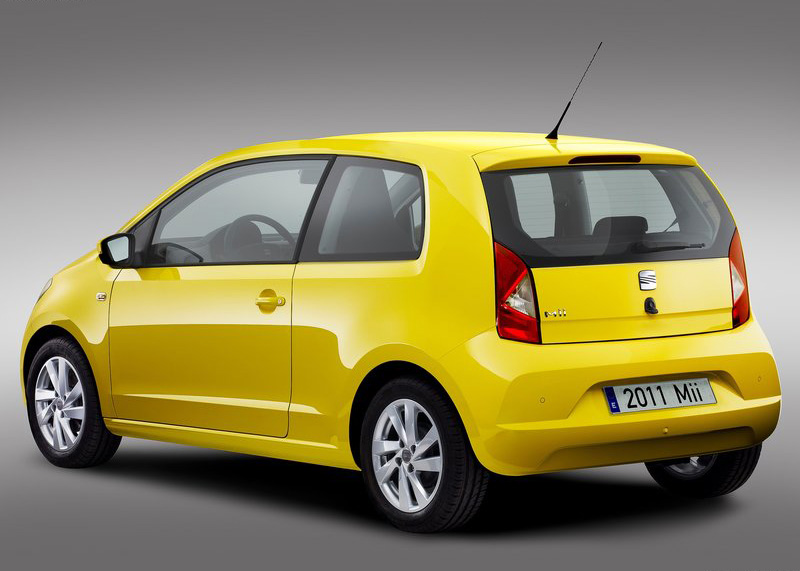
Seat Mii, 2013


  •  Seat Mii, 2013

SEAT is unveiling the SEAT Mii city car - the perfect vehicle for today's urban lifestyle. Quite simply, the SEAT Mii makes life easier - with compelling practicality, exceptional driving fun, high efficiency and innovative technology.

The Mii combines SEAT's sporty Mediterranean design with the very best craftsmanship and enormous scope for personalisation. Moreover, the outstanding value-for-money and low maintenance costs make the joy of driving a SEAT Mii easily attainable.

Spain, SEAT's home market, will begin sales of the Mii before the end of 2011, with the rest of Europe following in Spring 2012.

At a length of 3.55 metres, the SEAT Mii is the perfect size for modern-day urban use. The Mii comes to market at the end of 2011 as a three-door; the five-door version follows in 2012.

The new SEAT will be offered with all-new 1.0-litre petrol engines of 60 PS and 75 PS outputs. Combined with the vehicle's low weight of 854 kg these guarantee nimble agility and exemplary efficiency. The Mii Ecomotive has a CO2 figure of just 97 g/km.

The SEAT Mii is also a leader when it comes to innovative technology. The City Safety Assist for instance, adds an extra dimension of safety in the city, while the SEAT Portable System brings together entertainment, navigation, phone and vehicle functions in an entirely new way.

Perfect for the city, and longer journeys
Even though the SEAT Mii fits neatly into almost every parking space, its optimum use of space means it still offers plenty of space for four people. With a volume of 251 litres, the Mii offers the largest luggage compartment in its class. With the rear seat back folded, this increases to as much as 951 litres.

Yet the SEAT Mii doesn't stop at the city boundaries. Its spaciousness, excellent comfort levels and sporty dynamics - a direct result of its low weight - also make the Mii a compelling companion over longer distances.

'At just 3.55 metres long, the SEAT Mii combines innovative technologies with an incredibly well-balanced overall feel,' said Dr Matthias Rabe, SEAT Vice President for Research and Development.

'With its low weight and modern drivetrains, the Mii is both sporty and efficient at the same time.'

Design - Mediterranean modernity with clear character
Characteristic and unmistakable - the Mii is clearly recognisable as a member of the SEAT family. Its front end carries forward the typical arrow visual, while its profile is distinguished by powerful wheel arches and slender roof pillars.

The rear end shows a new form of light design with triangular lamp units. The perfect proportions are a key element and comprise a width of 1.64 metres, a long wheelbase of 2.42 metres and exceptionally short overhangs front and rear. The steep rear end facilitates the Mii's excellent spaciousness - optimal functionality is particularly important in the super-compact segment.

Modern clarity and compelling functionality are defining aspects of the interior, too. The perfect ergonomics of the instruments and the control elements fit beautifully with the premium surfaces that can be individualised using coloured trim from the various equipment lines. Its seats are also new - with integrated head restraints they offer sports car flair, while being very comfortable and well-suited to long-distance driving.

Safety - the SEAT Mii monitors the road and brakes for itself
A unique innovation in this class of vehicle is the SEAT Mii's City Safety Assist. In the event of danger the Mii warns its driver, or even brakes automatically. A laser sensor recognises other vehicles in front, whether they are driving or stationary. The system warns the driver when there is the imminent threat of an accident at speeds of less than 18 mph (30 km/h). If he does not react, the Mii brakes automatically. In many situations this is sufficient to avoid an accident altogether but will, at the very least, mitigate its consequences. ESP is also available, and is always combined with City Safety Assist when specified.

Systematic lightweight design means that the base weight of the SEAT Mii is only 854 kg. Its bodyshell is a piece of high technology formed largely from high-strength and, in places, form-hardened steels. Thanks to exceptional stiffness, it delivers a high-quality feel and excellent passive safety. The side airbags are standard equipment and are particularly large for optimum protection of head and upper body.

Drive - sporty agility with low fuel consumption
Beneath the short bonnet of the Mii is a completely new generation of engines. The three-cylinder petrol powerplant with a one-litre displacement is very light, compact and smooth-running. With two outputs of 60 PS or 75 PS, it ensures agility and compelling dynamics both in the city and on the open road.

Top speeds stand at 99 mph (160 km/h) and 106 mph (171 km/h) respectively, while fuel consumption on the combined cycle is measured at 4.5 and 4.7 litres per 100 kilometres. With a generous 35-litre tank volume, it offers considerable range between fill-ups and long-lasting driving fun.

There are two Ecomotive versions of the Mii. Thanks to a start/stop system, brake energy recuperation and further consumption-lowering initiatives, they make do with just 4.2 litres of fuel per 100 km, which equates to a CO2 figure of just 97 g/km.

In Continental Europe the little SEAT will also be offered with CNG engineering. This lowers CO2 emissions to just 86 g/km, making the SEAT Mii one of the cleanest cars in the world.

Furthermore, as an alternative to a manual transmission, the Mii is also available with an automated manual box that boasts two electric motors to help manage the smooth gear change.

Infotainment - unique technology to boost efficient driving
SEAT is a young brand and the unique new SEAT Portable System is, of course, part of that. This innovative technology includes a five-inch screen - it is removable for mobile use and yet perfectly integrated into the vehicle electronics. Its many functions include a state-of-the-art navigation system, hands-free phone system with voice control and an on-board computer. The device can be combined with the integrated radio and speaker system.

'The Mii offers enormous intelligence in a compact format,' said Dr Matthias Rabe, SEAT Vice President for Research and Development. 'The SEAT Portable System shows how it is possible to offer fascinating technology and innovative functions with tangible added value at an attractive price.'

The unique features of the SEAT Portable System include an 'Eco-trainer' function. Gearshift display, engine speed recommendations, average values and consumption profile all help the SEAT Mii owner to drive particularly economically. Plus, the SEAT Portable System is fully integrated into the vehicle electronics. It can be kept up-to-date via internet downloads, while tailor-made apps will offer additional functions in the future.

Equipment - sporty chic
Offered in its home market with three equipment lines, two Style Packs and a wide array of optional equipment and accessories, the Mii can be adapted perfectly to suit individual lifestyles and preferences.

Even the base model has all the key elements for safety and urban driving fun such as ABS, an adjustable steering column, side airbags and Isofix points with Top Tether. Reference and Style are the names of the two other equipment lines in Spain, with Style offering features such as power windows and central locking.

Prefer more chic or more sporting character in your SEAT Mii? The two equipment packages Chic and Sport offer the choice, with special colour and trim elements for interior personalisation. Alloy wheels and a leather steering wheel are always part of the package - the chrome package in the Chic version adds a special touch, while the Sport version offers tinted windows and a sporty suspension set-up for an even more dynamic feel.
Read More

Fiat Panda, 2013


  •  Fiat Panda, 2013

The new Fiat Panda is the consistent evolution of an invention that in its 31-year history has always been likeable, versatile and easy to use. The Panda is all this and something more: a brand rich in strong rational and emotional value, a car of which more than 6.4 million units have been produced, and which has won 16 million drivers different from one another in terms of taste, age, nationality and background. A best seller which has significantly contributed to the undisputed leadership of Fiat in this segment: from the first 600 to the 500, from the 126 to the first Panda, from the Cinquecento to the Seicento, from the second generation Panda (2003) to the new 500 launched in 2007. Fiat has always been the point of reference of the city-car segment in Europe due to its unrivalled expertise developed in the continental cities.

The third generation of the Fiat Panda model springs forth from this technical and human heritage. It comes of age offering more quality in terms of space, comfort, functionality, technology and safety features. It combines the best features of the first- and second-generation cars. This intelligent vehicle is ideal for those wanting to combine the practical handling of a city car with the space and comfort of a five-door compact car. All this is further enhanced by a modern and harmonious look which exalts that pleasant appearance of the Panda that by now has become a part of our collective memory just like other objects resulting from Italian creativity, from the Fiat 500 to the Vespa Piaggio, Moka Bialetti and Cubo by Bruno Munari. Unique products that can neither be judged by their appearance nor just represent a good engineering exercise. Instead they are powerful alchemies, innovative in their design and concept that redefine the common points of reference and comparison. When this happens, essential masterpieces in the history of industry are born. The Fiat Panda is one of these.

Simply Panda
Fiat Panda is the byword for substance, practicality and usefulness. There is a concept of beauty connected to making all of this visible and perceptible, a concept pursued throughout the new Panda design procedure. Now at its third generation, the Panda is improving each of its elements both functionally and in attention to detail. The result is of great overall harmony, due to applying signs consistent with one another that increases its usability and pleasing design values.

In seeking a higher and more perceptible value, design sets out to create a true sentimental value between car and user such as to make using the new Panda every day more rewarding. This is why lines of thought on how to alter the Fiat Panda's concept were not followed. Instead, Centro Stile Fiat designers put themselves in the shoes of the customer to try to understand how the car could have even better portrayed the combination of utility and an even bolder personality. The end result is a car brimming in sparkling personality and value, one that combines the outstanding reputation of a timeless model with amazing quality up to the very last detail.

Appealing
The new Fiat Panda conveys freshness and appeal in addition to a strong "Italian style" that makes it instantly recognisable from the very first glance. That is due to a few "anthropomorphic" traits of its front. The slightly convex bonnet joins with the elegant horizontal grille and the new front headlamps with a rounded shape that bring to mind a smiling face extending an invitation to take a spin light-heartedly and cheerfully. The same aesthetic elements also express the family feeling of the latest Fiat models, and in particularly stress their bond with the other successful city car heir of an icon of international motoring, the new 500.

The designers added a touch of personality to this "human" stamp to make it a solid and reassuring car that is roomier than what is expected from a model of this size. The passenger compartment is designed as a single, comfortable space to increase quality of life on board, even for children. Proof of that is the parcel shelf that turns into a useful rigid platform for placing toys and - something new in the segment - a few graphic patterns decorating the door panels and roof of the car, in this way creating an attractive "sky" over the heads of the tiny passengers. In this same way the radio interface sports a pleasant and intuitive look, quite similar to the last-generation portable consoles. All controls and buttons are grouped into two islands so they are easier for the driver to use.

Solid
The new Panda has been created drawing inspiration from the most up-to-date trends. It proposes an elegant restyling of the exteriors with smooth and rounded lines on a volume of regular form so the available space is used effectively. The absence of corners conveys solidity and emphasizes the welcoming and protective "shell" nature of the passenger compartment. The rounded shapes of the exterior also combine aesthetic and aerodynamic features so that the Cx is lowered to 0.32, one of the best in this market segment.

The side view has several distinctive features of the second-generation Fiat Panda, starting with the third window, now with softened angles in harmony with the softer shape of the exteriors, which creates the effect of an uninterrupted glazed surface up to the vertical rear light clusters. Among other things, the light clusters arranged higher up improve lighting and reduce the possibility of damage in case of minor knocks. Unlike the second-generation Panda, the front light clusters continue down the side to give the exterior volumes an additional three-dimensional effect.

Smooth and rounded shapes also distinguish the bumper strips on the bumpers and side panels that not only pay tribute to the first generation Fiat Panda, but also play an essential protective role in protecting the body in the city and accentuate the "all-terrain" look of the model also accompanied by the marked wheel arches. It is a new design language that evolves, taking the concept of robustness to the extreme. This is confirmed by many interior and exterior details, such as the door handles of a more substantial visual and tactile shape.

Moreover, the side windows are designed to maximise a few performance aspects. The upper line of the windows improves outward visibility and accessibility to the car, while the low waistline gives a feeling of greater control of the surrounding environment, increasing the perception of safety behind the wheel.

Finally, as on the current model, the lower section of the tailgate protrudes with respect to the rear window. Combined with the side line, this gives a distinct impression of a roof panel resting on the bodywork. Then the third window is positioned to improve visibility from an angle which is usually very difficult to check to guarantee greater safety for both those outside and inside the car.

Free
Offered with five doors and with the comfort of a higher segment, the new Fiat Panda proves it is a true super-compact that with its super efficiency is able to combine the smaller size outside with amazing volume inside. Even though it is just 365 centimetres long, 164 wide, 155 high and has a wheelbase of 230 centimetres, the new car can accommodate up to five people and has one of the most spacious boots of its segment: 225 litres which become 260 with the sliding rear seat in the fully forward position and 870 litres with the backrest of the rear seats folded down.

The Fiat Panda offers maximum freedom of use with its roomy, functional and comfortable passenger compartment that is in no way inferior to that of cars of a higher class. Besides, flexibility has always been one of the model's strong points, as the new dashboard, various seat configurations and large number of storage compartments demonstrate.

First of all, the new dashboard is designed as a practical multipurpose shell containing a roomy storage "pocket", just like that of the first series of the model, which becomes the perfect place for stowing everything you want in total freedom... even in "cheerful and democratic" untidiness if you want. Added to that is the more classic glovebox stored in the lower part of the dashboard.

In detail, the dashboard is wrapped up in a colourful frame, without interruptions, which serves as a single perimeter to the steering wheel, radio and main controls, and that houses the vents. Also in this case there is a return to the first generation Panda, where the elements were tightened to the fabric "pouch", which constituted the main part of the dashboard.

There is also something new for the seats, which confirm the flexibility of the model. The driver's seat is also available with height adjustment, whereas the front passenger seat can be fitted with a backrest that folds down to form a table. The table function provides a surface for placing both objects of common use, such as a bag or a laptop, and for oversize loads. If the rear seats are also lowered, the customer can get a flat boot platform extending over the entire length of the passenger compartment (over 2 metres) so that the interior space is used to the utmost.

The rear seat ensures the same versatility. It is available in the standard 2-seater version with fold-down split backrest or, upon request, in the configurations: 2 seats sliding longitudinally with fold-down 50/50 split backrest, 3 seats with fold-down backrest and 3 seats with fold-down 60/40 split backrest. It can all be made even more functional if combined with the handy and useful cargo box that when placed in the boot can both hold several objects inside and offer an all but flat loading space.

Smart
Maximum functionality is also found in the slim front seats. This technology is applied here for the first time at Fiat. It simultaneously ensures more leg space for the rear passengers, greater flexibility - the seat travel distance is 21 centimetres and vertical adjustment is 6 cm - and enhanced seat comfort thanks to their comfortable and embracing shape. What's more, the "squares" electrically welded to the backrest perform the important task of guaranteeing air passage between the passenger's back and the seat fabric to improve comfort, especially during the warmer months.

In the same way the door panel was designed with the idea of freeing space in mind. The speaker in the panel has been raised to make the pocket wider and improve sound quality. Upholstery has been extended to the maximum to improve comfort.

Another new stylistic and functional innovation is the special shape of the parking brake which comes out of the desire to optimise the space of the console. Its small longitudinal dimensions allow the space in front of and behind the lever to be exploited in addition to clearing space for use directly underneath it.

To guarantee comfortable and distraction-free driving, in keeping with tradition the gear lever of the Fiat Panda is in a raised position in the centre of the dashboard, very close to the steering wheel. The steering wheel is perfectly round on the outside to make it easy to turn and square on the inside to improve grip and provide maximum instrument panel visibility.

The 14 storage compartments in the Fiat Panda are not just abundant and capacious: they are designed and conceived according to those who use the Panda every day for everyday items. There are open compartments which are easy to reach into for frequent use and closed, more concealed compartments for objects that are usually left in the car. One new feature is the glasses holder located above the driver's window.

Lastly, the new Fiat Panda offers the innovative "Smart fuel system" that replaces the classic cap and that is fitted to the end of the fuel filler pipe. Filling up is one of those operations which has not developed in step with automotive technology. The new car takes a leap forward with this feature, which automatically opens and closes when the pump is put inside and removed, so refuelling is easier and safer since it reduces gas emissions and fuel overflow. The new "Smart fuel system" also solves the problem of "misfuelling" as it does not allow petrol to be pumped into a diesel powered car or vice versa.

In short, the new Panda is a car sure to continuously surprise owing to its ability to transform itself according to the situation and adapt to the needs of whoever uses it, driver or passenger as the case may be. What's more, offering original style, advanced technology accessible to everyone, and smart solutions that simplify and improve life on board is in Fiat's DNA.

More Panda
Today whoever chooses a compact car does not want to forgo the technology found on higher segment cars. The new Fiat Panda is able to reconcile these needs with the need for sustainable and safe mobility, accessible in terms of price and running costs. Thus it combines the best features of the first- and second-generation cars. This is a new intelligent solution especially in such uncertain economic times.

Specifically, behind that fun and confident appearance, the Fiat car offers sophisticated technological solutions which are nonetheless straightforward to use and satisfy both the concrete needs of everyday mobility as well as the growing social awareness of the environment and safety issues. So Fiat is raising the bar to prove that it is leading the technological evolution of the super-compact segment, a segment where a large part of history carries its name: from the first 600 to the 500, from the 126 to the first Panda, from the Cinquecento to the Seicento, from the second generation Panda (2003) to the new 500 launched in 2007. There has always been a Fiat city car near the people, and now it is the Fiat Panda's turn once again.

Protective
To guarantee the protection of the passengers, the new Panda combines a body designed according to the most modern criteria with active and passive safety content that ensures its optimum performance, so much so as to be at the top of its category.

The safety performance was designed by the designers and the Fiat Safety Centre after examining all possible types of collisions: front and side impacts, roll-over, pile-up and collisions with pedestrians. Various speeds at which impact may occur were also taken into consideration as well as different types of obstacles and different types of occupants with greatly varying physical characteristics.

To guarantee the protection of the occupants, the new Fiat Panda offers 4 airbags standard (front and window protecting the head), ABS complete with B.A.S. (Brake Assist System), front seat belts with pretensioner and load limiter. Depending on the markets and versions, the ESC (Electronic Stability Control) complete with Hill Holder system that aids the driver in uphill starts while keeping the brake locked for about 2 seconds, in this way making starting off easier, is also available standard or as an option.

Special attention has been devoted to the seats. Those in front are equipped with an anti-whiplash system that reduces the risk of whiplash in case of impact, while those in back are fitted with isofix attachments for child seats and headrests. Completing the equipment of the new model are front headlamps with daytime running lights.

Lastly, the new "Low Speed Collision Mitigation" system deserves an in-depth look. It will become available after the launch. It is an innovative active safety feature capable of recognising obstacles in front of the car and of braking automatically when the driver fails to avoid the collision. Depending on certain parameters (road surface conditions, dynamics and trajectory of the vehicle, position of the obstacles, condition of the tyres, etc.), the intervention of the LSCM system can avoid impact completely ("Collision Avoidance") or minimise the consequences of a possible impact ("Collision Mitigation").

The sophisticated device of the new Panda integrates three added functions: Automatic Emergency Braking (AEB), Prefill and Brake Assist. The former, while respecting the driver's wishes and leaving full control of the car in his/her hands, is triggered by emergency braking after carefully assessing the position and speed of the obstacles, the speed of the vehicle (below 30 km/h), lateral acceleration, the steering angle and pressure on the accelerator pedal and its variation. The Prefill function, on the other hand, prefills the braking system in order to allow prompter response both when the Automatic Emergency Braking system is triggered as well as when the driver brakes. Brake Assist instead recognises emergency situations and alters the brake pedal's response to get even quicker braking in emergency situations.

The system is based on a laser sensor installed in the windscreen that "communicates" with the ESC (Electronic Stability Control) system.

Based on the same principle as those used in astronomy to measure distances between satellites, the laser sensor detects the presence of obstacles in front of the vehicle when certain alignment conditions be present: the overlapping of the car and obstacle must be more than 40% than the width of the vehicle while the angle of impact must be less than 30°.

The control unit of the LSCM system is designed to activate automatic braking, following a request by the laser sensor, in addition to being designed to request a reduction in the torque from the engine control unit if the accelerator pedal has not been released. Lastly, the control unit keeps the car braked for 2 seconds after stopping, to allow the driver to resume normal driving safely.

The goal of the LSCM system is to guarantee maximum safety in all conditions of use, so in certain conditions such as unfastened seatbelts, icy roads or reversing, different triggering logics are activated.

Brisk
The Fiat Panda is a substantial car that boasts cutting-edge engines in terms of both performance and fuel consumption and emissions. Combined with 5-speed gearboxes, standing out amongst the engines in the range are the brand new twin-cylinders with Start&Stop system supplied standard: the 85 HP 0.9 TwinAir Turbo, named "International Engine of the Year 2011", and the 65 HP 0.9 aspirated TwinAir, being fitted for the first time (not sold in Italy). The renewed 69 HP 1.2 Fire petrol engine and the 75 HP 1.3 Multijet II, with Start&Stop supplied standard, complete the range of engines.

Later the new Fiat Panda range will be expanded with the Dualogic automatic robotized transmission combined with the TwinAir engine, the 80 HP 0.9 TwinAir Turbo Natural Power (petrol/methane) and 69 HP 1.2 EasyPower (petrol/LPG) bifuel engines that attest to the constant attention Fiat Automobiles pays to the environmental topics through its research and development of immediately accessible solutions.

85 HP 0.9 TwinAir Turbo
First of a new family of two-cylinder engines developed by Fiat Powertrain, this 0.9 TwinAir Turbo engine develops 85 HP (63 kW) at 5500 rpm of full power and a torque of 145 Nm at 1900 rpm (constant up to 3000 rpm). Moreover, if you prefer to prioritise the green aspect and lower fuel consumption, you can press the ECO key on the dashboard to limit torque to 100 Nm at 2000 rpm. This engine records 4.2 litres/100 km and CO2 emission equal to 99 g/km in the combined cycle.

A real jewel of engine design, the brilliant two-cylinder employs the revolutionary MultiAir technology developed and patented by Fiat Powertrain which was introduced in 2009. The heart of MultiAir is a new electro-hydraulic valve management system that reduces fuel consumption by controlling air directly via the inlet valves (without using the throttle). MultiAir reduces polluting emissions (thanks to its improved combustion control) and also considerably improves performance by boosting driveability. Indeed, compared to a traditional petrol engine of equal displacement, MultiAir engines guarantee an increase in power (up to 10%) and torque (up to 15%) in addition to a significant reduction in emissions of CO2 (up to 10%).

Elected "International Engine of the Year 2011", the new TwinAir engine also takes the concept of downsizing to an extreme: by combining a small-sized engine with a next-generation turbocharger performance comparable to - or even better than - that of a larger engine is obtained but with less fuel consumption and lower emissions. Not only that, the turbo significantly increases the maximum torque, making it available at a very low rpm, with the result of offering greater flexibility and an unrivalled responsiveness compared to conventional aspirated engines. All this comes with a simple build to the benefit of strength and reliability.

The new engine has undergone a number of unit displacement optimisation and tuning interventions in terms of thermo-dynamic efficiency and fluid dynamic configuration.

Finally, special attention has been placed on the NVH (noise, vibration, and harshness) aspect to ensure vibration performance with a characteristic sound. For this purpose, a balancing countershaft was used to maintain optimal vibration levels in all operating conditions of the engine, from idling speed to top power.

65 HP 0.9 aspirated TwinAir
The new Panda is the first Fiat Group Automobiles car to make its world debut in the "aspirated" version of the TwinAir engine that delivers maximum power of 65 HP (48 kW) at 6250 rpm and a torque of 88 Nm at 3500 rpm. All with a reduction in fuel consumption and CO2 emissions - the values recorded in the combined cycle are 4.2 l/100 km and 99 g/km, respectively - and with performance comparable to engines of the same power.

One peculiarity of the new engine is the introduction of the second-generation MultiAir system that sets its sights on the goal of maximising combustion efficiency. This is thanks to an innovative profile of the intake cam bush and a new way to manage the valves, called "hybrid". In detail, the new intake profile makes a pre-lift of the intake valve possible during the exhaust phase. In this way a part of the exhaust gases can flow into the intake duct to be re-aspirated during the following intake phase. In this way the so-called internal recirculation of exhaust gases (Internal EGR) is achieved, which further optimises combustion efficiency and therefore reduces fuel consumption. With the high degree of flexibility that distinguishes the MultiAir system, this new adjustment of the valves (called hybrid) can obviously be activated only where it is needed, and furthermore the amount of recirculated internal EGR can be totally modulated.

69 HP 1.2 Fire EVO II
The 69 HP 1.2 EVO II is the latest evolution of the FIRE family that boasts over 10 million units produced. Thanks to the continuous updates and its flexible architecture, this family of engines remains a point of reference in the category as use of the continuously variable valve timing unit shows, able as it is to optimize valve timing (opening and closing) at all engine speeds. In this way fuel consumption and CO2 emissions on the one hand are reduced (5.2 litres/100 km and 120 g/km, respectively); on the other, performance increases to ensure torque availability at low rpm (102 Nm at 3000 g/min) and power at high rpm (69 HP at 5500 g/min).

75 HP 1.3 Multijet II
With a view to respect for the environment coupled with driving satisfaction, the new Fiat Panda offers the 1.3 MultiJet II (Euro5) with DPF standard, which delivers a maximum output of 75 HP (55 kW) at 4000 rpm and a torque of 190 Nm at just 1500 rpm.

A masterpiece of technology in miniature - complete with all of its accessories, it weighs about 140 kg - the new turbodiesel is small in size: less than 60 cm long and less than 70 cm high, it boasts a component layout designed to take up less room. The compact and technologically sophisticated 1.3 Multijet II is also capable of outstanding performance.

Equipped with fixed geometry turbocharger with intercooler optimised for delivering torque at low speed, the 1.3 Multijet II records just 104 g/m of CO2 emissions and fuel consumption equal to 3.9 litres per 100 km in the combined cycle.

Belonging to the second generation of Multijet engines, this engine ensures economy, ecology and performance levels found nowhere else on the market. In contrast to the first generation of MultiJet engines, the fuel supply system is now equipped with faster injectors able to execute multiple injections in rapid succession. Specifically, the system can now perform a main modulated injection of fuel in several distinct phases and anticipate the ones that follow. The servo valve with balanced plunger of the MultiJet II system enables it to manage up to 8 injections per cycle, offering greater speed, flexibility and precision in the various phases of operation. The injector is also simpler and more reliable because its construction is less complex and it has 40% less components.

Thanks to the new type of injector, now strategies focused on optimizing the increasingly advanced combustion can be achieved, such as the Rate Shaping injection that involves two consecutive injections so close together in time as to generate a continuous and modulated profile of the fuel supply into the cylinders. With this method the combustion process is improved, all to the benefit of quieter operation and particulate and nitrogen oxide (NOx) emissions. Today the Multijet II engines totally satisfy the Euro 5 standard and at the same time mark a decisive step toward stricter regulatory levels in the future.

Lastly, again in full respect for the environment, advanced exhaust gas treatment technologies have been used for the 75 HP 1.3 Multijet II, namely a Close Coupled Diesel Particulate Filter and a built-in EGR (Exhaust Gas Recirculation) system that improves control of temperature and gas flow, simultaneously guaranteeing lower emissions and reduced fuel consumption.

Respectful
In addition to its agility and lively spirit, a true "city car" also needs to afford low fuel consumption and to respect the environment. In this context, the new Panda is unrivalled, owing to the implementation of a large number of systems designed to increase the vehicle's dynamic efficiency: from Start&Stop to the Gear Shift Indicator (GSI), ecoDrive and the ECO mode of the TwinAir Turbo engine. Technical words which are now part of the standard terminology that Fiat has contributed to create and develop and which are now grouped together in "Air Technologies", the new brand that identifies the low environmental impact technologies which team eco-friendliness with driving satisfaction.

Start&Stop
All TwinAir petrol engines and the 75 HP 1.3 MultiJet II offer the Start&Stop device as standard. It switches the engine off temporarily and then restarts it in order to reduce fuel consumption and CO2 emissions.

Specially designed for driving in the city, the system automatically switches off the engine when traffic conditions require the vehicle to stop (red lights, tailbacks and temporary stops, for example), keeping all of the functions that guarantee comfort and safety on board active (lights, climate control system, radio and windscreen wipers).

Switching off the engine when the car is stopped prevents consuming fuel needlessly (up to -15% over an urban cycle), reduces emissions and improves acoustic comfort.
The device can be activated/deactivated using the button on the dashboard.

Gear Shift Indicator (GSI)
The Gear Shift Indicator (GSI) device is a genuine "co-pilot" which discreetly suggests to the driver the best time to change gear in order to minimise fuel consumption. For example, the GSI may suggest shifting up, by means of an indication on the control panel, to allow the engine to run at a lower speed or to downshift to make best use of the available torque.
Read More

Thursday, November 15, 2012

Rinspeed Dock-Go Concept, 2012


  •  Rinspeed Dock-Go Concept, 2012

It is specifically the third on-demand axle that is the crucial point of the innovative modular mobility system the Rinspeed boss has devised. "Dock+Go" was built - in the traditional sense - by Peter Kägi and his company 4erC. The concept draws its irresistible charm from easy-to-dock single-axle "backpacks on wheels." These so-called "packs" carry out their assigned tasks depending on current need. But the best thing is: they cleverly solve the much-debated operating range problem that electric vehicles suffer from. Neither unnecessary space nor superfluous weight is being transported. This truly creates "mobility à la carte."

Any electrified city speedster could serve as the basis for "Dock+Go." For demonstration purposes Rinderknecht selected a two-seat smart car as the basis. Different "packs" can turn the electric flea into the dream car of every pizza delivery driver - complete with a built-in isothermal box. Or they allow winter sports enthusiasts to comfortably stow their gear. In Geneva Rinspeed will furthermore show off a rolling "sound pack" which multimedia and infotainment specialist Harman has filled with the latest high-end sound solutions in order to guarantee a first class acoustical experience.

The car truly always saves the best for last: and in this case it is a generous helping of operating range if the 100 kilometers that are usually on tap in electric vehicles simply are not enough. An "energy pack," fitted with a range extender or additional batteries, powered by a fuel cell or equipped with a combustion engine, provides the crucial extra kilometers to reach more distant destinations. The simple and equally clever trick of the latter is: the docked third axle drives the rotating second axle and in doing so also recharges the on-board batteries of the city speedster. The world's first Variohybrid - as Frank M. Rinderknecht calls his range donor - is born. And to top it all off: when the pack with auxiliary batteries is docked and the vehicle is not in use, the pack will even provide electricity to the owner's private residence or serve as a buffer for the public energy grid, in effect turning it into a "smart grid."

Rinspeed's automotive visions live not only on the quality of the ideas behind it, but also and in particular on their sharp implementation. That's because one key element of Frank M. Rinderknecht's credo is that a car must provoke emotions and visions, especially if it is to serve as a vehicle for communicating new technologies and innovative materials. And there is a lot to see on the "Dock+Go" in that respect, contributed by large corporations and small but brilliant specialists alike in order to effectively showcase "Dock+Go," which is currently going through the Swiss patenting process.

An immediate eye-catcher is the silver outer skin from AkzoNobel with a finish that resembles sparkling ice crystals. It ties in with the Goodyear low-rolling-resistance tires in size 205/40-17 mounted on 7.5-inch AEZ rims, whose decorative silver covers are attached to red fasteners with rubber bands. At night the chrome-blue accent striping on either side stands out immediately, developed by Lumitec based on an electroluminescent 3D-flexible film. Anyone with a message for their environment can broadcast it using the innovative "Identiface" feature. This display-based surface, developed by MBtech, replaces the front grille, which on an electric vehicle serves virtually no purpose. Thanks to internet connectivity "Identiface" can display the owner's Facebook pages, news from around the world, the manufacturer's badge or even the offer of a ride from point A to point B.

The interior is dominated by black and red. The high-tech Schoeller yarns have strong natural thermoregulation, good insulation and a high capacity for absorbing moisture. They keep comfortably warm in winter and remain pleasantly cool in summer. Premium automotive textile manufacturer Gaenslen&Völter spun them into soft, supple upholstery that provides that special feel-good factor. And wherever plastics are used, it is in the form of high-grade man-made materials, such as the creatively and stylishly embossed synthetic leather that is supplied by Hornschuch, a specialist in this field. 
The transparent roof and its distinctive grass inlays - as well as a number of other interior materials - were contributed by Studer. The view ahead is dominated by a 12.1-inch monitor. It belongs to the multimedia equipment and is part of the intelligent infotainment system developed from Harman. The platform features the latest integration technologies for smart phones, adaptive navigation and the cloud-based Aha-platform
with a flexible Human Machine Interface (HMI) and gesture control in order to bring digital contents intuitively, easy and safely into the car. This gesture-controlled system makes operation of the contents child's play and the four cameras integrated into the vehicle body make dents from parking maneuvers things of the past.

The instruments were again supplied by - who else? - VDO. Also brand-new is the steering wheel from the German-Japanese Takata Corporation with integrated "parking space" for a smartphone, which serves as a second monitor when docked. This is made possible these days by a driver airbag that thanks to vacuum technology requires reduced installation space.

But Rinspeed Dock+Go Concept offers more than just style; it also serves up a high level of technical sophistication. The recently newly developed high-strength, lightweight door frames come from Austrian steel manufacturer Voestalpine. Weber Fibertech built the extremely lightweight liftgate insert with function integration, the high voltage electric heater including the futuristic air vents were supplied by German specialist Eberspächer. No compromises can be made when it comes to handling huge amounts of energy safely, a fact accounted for by the extremely robust electric plug connectors from TE Electronics. Apropos plug connectors: recharging the car no longer requires it to be plugged in. Instead the vehicle simply rolls onto an induction field from SEW Eurodrive for non-contact charging.

Rinspeed Dock+Go is a clever mobility concept, implemented rich with emotions, enhanced with technical delicacies and intriguing enough for Swiss insurance giant Zürich Versicherung to commit to the cause. Who wouldn't think of a series production in this context? No wonder that dynamic Frank M. Rinderknecht, one of the flagships for Swiss watch manufacturer C.F. Bucherer, is toying with this possibility. Rinderknecht on this issue: "Yes, we have been in productive talks with potential manufacturers for some time now." Düsseldorf-based consulting company A.T. Kearney at any rate has already devised a manufacturing and marketing concept for the series production.
Read More

Iveco Massif, 2008


  •  Iveco Massif, 2008

Iveco is one of the few makers worldwide to offer a full range of all-wheel-drive vehicles. With Iveco Massif, the new 4x4, the Italian company breaks into a completely new professional transport segment, harking back to the memory of a glorious ancestor that won Fiat Group a prominent place in the history of off-road vehicles: the Fiat Campagnola.

The Iveco Massif signals Iveco's first entry into the light off-road vehicle segment, and with two body styles. The spirit of the Massif follows in the tyre tracks of the Fiat Campagnola, the Italian Army standard-issue jeep designed in 1951 that became an icon in Italy in an age when the country still lacked a modern road infrastructure. The Campagnola was an important symbol for postwar Italy and the reconstruction of the 1950s, still fresh in the Italian collective memory. But the Campagnola meant even more than this: in the white livery of the Popemobile, it is inseparably associated with the appearances of John Paul II, a Pope who ushered in a new way of reaching out to the faithful. Still in white, but now bearing the UN insignia, the vehicle contributed to a large number of international peacekeeping missions in every continent of the world. From its ancestor, the Iveco Massif has taken the robust versatility and workmanlike appearance of a vehicle designed for demanding tasks, but without losing sight of operating economy.

A Serious Off Road Working Vehicle
The new Iveco Massif is a rugged 4 wheel drive vehicle for serious off-road applications. The vehicle is based on the structure that was used for the first sports off-road vehicles, before they were "urbanised" into sport utility vehicles, mainly for on-road use. It signals a return to the roots of 4x4 utility vehicles, removing the off-road/on-road compromise: this is, in short, a serious, professional, off-road workhorse and it intends to be seen as such. But seen with style, courtesy of Giugiaro.

The Iveco Massif is a genuine, go-anywhere off-road vehicle with high performance and able to tackle extreme off-road terrain with ease. It boasts a fully-laden gradeability of 100%, an approach angle of 50°, a departure angle of 30° and a ramp angle of 24°. Its fording capability in standard trim is 500 mm and its under-axle ground clearance is 200 mm with standard wheels and tyres. The four-wheel-drive can be disengaged to provide rear wheel drive for optimised on-road fuel economy.

Iveco Massif is available in a long wheelbase (2768 mm) version as a 5-door station wagon, pick-up truck and chassis cab, and in a short wheelbase (2452 mm) version as a 3-door station wagon. All versions are available in both right and left hand drive.

Iveco Massif is available in a wide range of variants and configurations, offering maximum productivity in every type of mission: 2 engines and 4 versions, with product configurations that can be changed according to the market and the customer. And naturally, to all this is added the maximum versatility in the pick-up and chassis cab configurations for specific transport missions.

Iveco - a full range of all-wheel-drive vehicles
Iveco Massif 4x4 competes in a small but very important niche market of 4x4 work vehicles. Iveco Massif is produced jointly with Spanish maker Santana: their original vehicle was completely revised by Iveco experts with support on a massive scale in terms of technologies and solutions derived from the Daily. Iveco Massif is actually the true heir to the Daily 4x4 floor plan, well-known for its performance in military and civilian situations in the form of the VM 90, used by the armed forces and civil defence corps of many countries. Iveco Massif shares its engageable all-wheel-drive architecture, with the transfer box flanged to the gearbox to lower the vehicle's profile as far as possible, making it perfectly adapted for long, rapid on-road transfers and demanding off-road missions at the destination. The end result of this extensive re-engineering is a vehicle that's ready to take on missions that would need an "off-road lorry". Iveco's expertise in the 4x4 market spreads right across the commercial vehicle range, from light to heavy - Daily, Eurocargo and Trakker - covering every type of mission and all working conditions. These all wheel drive vehicles are exceedingly rugged, and are ideal for taking personnel and equipment where they are most needed, often in emergency conditions. And the reliability of these vehicles is second to none, whether they are operating under extreme or normal conditions. Even driver comfort is not compromised by the stresses and strains deriving from off-road driving - not always the fun pastime it would seem.

Outstanding power train combination
Iveco Massif uses two highly successful FPT engines: the 3.0 HPI rated at 146Cv and 350Nm of torque and the 176CV HPT with 400 Nm of torque, coupled to the ZF 6S400 6-speed transmission. This outstanding power train combination is taken from the Daily product range and is well proven on all counts of reliability, performance and low fuel consumption. Coupled to the power train is the transfer box and, via the transmission shafts, also the front and rear drive axles. The transfer box provides a high-range drive ratio, approximately 1:1, and selection of all wheel drive. The low-range ratio provides all-wheel-drive only. An optionally available freewheel front hub control is available to prevent transmission wind-up when 4-wheel-drive is used on firm ground conditions. The parking brake is mounted on the rear axle output flange of the transfer box, resulting in a more powerful braking torque as it is multiplied by the drive axle ratio. This is an extremely important feature since it means that Iveco Massif can be held on the parking brake on all of the incredible gradients it is able to climb.

Maximum cab comfort
The cab interior is perfectly designed to give maximum comfort to the driver and passengers, even in the turbulent off-road driving conditions for which the Iveco Massif range is designed. Seat upholstery is in fabric or leather, but for heavy-duty missions a robust synthetic material is available. The rubber floor mats in the cab are easy to clean. The in-cab instrumentation meets the requirements of a serious off-road machine. The gear shift and transfer box controls are floor-mounted and within easy reach of the driver. Air conditioning is optionally available to further improve driver and passenger comfort.

Like the latest Trakker and Daily models, the Iveco Massif is designed to demonstrate Iveco's fundamental values towards excellence: Commitment, Reliability, Performance, Team Spirit and Power. Values that Iveco Massif shares with the New Zealand national rugby team, the All Blacks, who in their history have won more titles than any other team. To confirm this sharing of values, for its launch the Iveco Massif is being presented in black livery and tattoos to evoke the unmistakable spirit of the All Blacks.

The values of Iveco Massif
Iveco Massif was created from sharing the same values that made the All Blacks the most famous rugby team in the world, following in the tyre tracks of the new Stralis, Trakker and Daily 4x4 models.

In addition to the four Iveco values - Commitment, Reliability, Performance, and Team Spirit - Massif also inherits the Stralis's product value, Power, reaffirming one of the strong points that distinguish the excellence of Iveco's engineering solutions.

Power
For Iveco Massif, power means offering the latest generation 3-litre EGR engine with a rated power of 146 Cv and a maximum torque of 350 Nm. An efficient, reliable engine with optimized power and torque delivery over a wide range of engine speeds to ensure maximum power availability even in arduous conditions. Also available is the 176 CV version with Variable Geometry Turbocharger, developing 400 Nm of torque, recognised to be the best engine in its class.

Commitment
Iveco Massif Commitment is the sense of responsibility towards the customer's business but without forgetting the comfort and safety of the people who spend most of their time in the actual vehicle. The close family relationship between Iveco Massif and the other vehicles in the Iveco range is clearly evident: highly ergonomic cabins and enhanced driver comfort that is comparable to road vehicles. But Iveco Massif customers are also offered a unique design, because respecting the driver also means offering them an aesthetically pleasing vehicle.

Reliability
For Iveco Massif, Reliability means keeping promises: product reliability, durability and high safety standards in every situation. Reliability for Iveco Massif also means flexibility for body builder intervention supported by a wide range of transmission and transfer box PTOs, easily accessible electric connections for bodywork, and more besides.

Performance
For Iveco Massif, Performance is supporting the customer's business value. It means raising productivity and reducing running costs. Iveco Massif's assets are optimised bodybuilder intervention, servicing downtime, and consumption. Periodic maintenance time is minimised so that the vehicle spends as little time as possible in the workshop. And an always-present, vital consideration is fuel cost: Massif's Euro 4 engine returns excellent fuel consumption.

Team Spirit
Team Spirit means working alongside the customer for the entire lifetime of the vehicle: during product development, through the work of Iveco's specialist engineers and R&D centres that involve the customer right from the design stage; during the purchase, with the support of professional dealers and financing solutions to meet all company needs; during the vehicle operation, through a 24/7 call centre and an efficient and wide-reaching service network (more than 3,000 service points in over 100 countries).

IVECO MASSIF IN DETAIL
The Iveco Massif vehicle and the industry sector in which it competes is new to Iveco. Today Iveco offers customers in this important niche products and services that fill the entire range of their customers' needs. When commercial vehicles are required to go off road in the most arduous of conditions - both weather and terrain - it is never just to supply equipment: there are people in that vehicle, too. Iveco's all-wheel-drive products - Trakker, Eurocargo 4x4 and Daily 4x4 - handle this task perfectly. And Iveco Massif completes this range, being able to take the crew required to do the work, together with their tools.

Cab and chassis features
All Iveco Massif versions are mounted on a separate chassis with axles mounted on parabolic leaf springs. This is a no-compromise solution: a separate chassis ensures the high structural stresses incurred during serious off road applications are not carried into the body structure to the extent that body durability is compromised. The road springs assist axle location and body suspension without the need for extra drive- and braking-force reaction members or axle location links to the vehicle chassis.

Giugiaro style
Massif bears the Iveco family appearance with its radiator grille. Body styles are available in 3 and 5-door station wagons, a pick-up with integrated load carrying area, and a chassis cab only version for third party body mounting. The separate chassis provides for passenger/load compartment body mounting, and driven front and rear drive axle mounting connected to the remote transfer box.

The external body appearance reflects Giugiaro styling in a highly functional manner, reflecting the serious off road mission of Iveco Massif. Scuff resistant body parts around the wheel arches, lower door panels and around the rear light units recognise that the vehicle will obviously be used to travel on terrain that will deliver bumps and scrapes aplenty, as you would expect on a serious off-road mission. For customers who would wish to have the vehicle's capabilities less obvious, the plastic parts and roof are available in the same colour as the body Tinted windows to the rear of the driver's compartment and aluminium wheels are all available to complete the picture.

Interior enhancements such as cloth or leather seat covering materials are available, as is a leather-covered steering wheel rim. For missions where severe (pressure hose) cleaning of the cab interior is required, there are variants with highly-resistant rubber floor mats and vinyl seat covering.

Radio/CD player and satellite navigation systems are available to order. Seat availability is matched to body type; the chassis cab and pick-up versions are available only with the standard driver and single passenger seat, the 3-door station wagon has a 4-seat (2+2) layout with the simple 2 seating rows option and the 5-door station wagon has a 5-seat (2+3) layout with the simple 2 seating rows option or a 7-seat (2+3+2) option.

State of the art engines
At the heart of Iveco Massif is the FPT 3.0 litre HPI engine derived from the Daily range. This 4 cylinder, 16 valve turbocharged Diesel engine with high pressure common rail fuel injection system is very much state of the art, providing excellent fuel economy and performance. A maximum of 350 Nm of torque is available over an engine speed range of 1400 - 2800 revs/min. The maximum power of 146 Cv is provided at engine speeds from 3000 - 3500 revs/min. The engine is certified to the Euro 4 exhaust emissions requirements using exhaust gas recirculation (EGR) to control combustion-generated NOx and an oxidising catalyst to fully oxidise all exhaust gas components. Iveco Massif is also available with the 3.0 litre HPT engine, equipped with a variable geometry turbocharger with a rated power of 176 Cv at an engine speed of 3200 - 3500 rev/min and a maximum torque of 400 Nm at 1250 - 3000 rev/min; a power unit unique in its category.

Transmission and transfer Box
The ZF 6S400 overdrive 6-speed transmission is coupled to the remote-mounted Santana transfer box, providing either 4x2 or 4x4 traction. In high range the drive is to the rear wheels only, unless the specific selector is set to 4-wheel-drive. Selecting low range automatically engages 4-wheel-drive. The transfer box is not equipped with a differential facility and so, under 4-wheel-drive conditions, loss of adherence by either the front or rear wheels does not result in loss of traction. In addition an optional rear axle differential lock is available, as is an automatic front hub freewheel facility which reduces transmission wind-up when 4-wheel-drive is used on firm surfaces. The transmission in combination with the transfer box provides for 12 forward gear ratios and 2 reverse gear ratios.

Front and rear driven axles
Beam drive axles are used both front and rear and have a common final drive ratio of 3.909:1. The final drive gearing used on the front axle is helicoidal whereas that on the rear axle is a hypoid gear set in order to provide improved ground clearance for the centrally-mounted drive shaft.

Wheels and tyres
The standard version comes with 235/85R16 all-terrain tyres. Off-road tyres mounted on steel wheel rims are available as an option, as are aluminium wheel rims.

Suspension system
Parabolic leaf springs are used for the front and rear axles, performing the dual role of chassis suspension and drive axle location. This relatively simple suspension layout provides for better drive and braking torque reactions without the need for extra links and bracketry, a definite plus for the serious off-road vehicle. Double action hydraulic dampers are used for the front axle and double action gas dampers are used for the rear, and anti-roll stabiliser bars are fitted front and rear.

Maximum front and rear axle plated masses are 1072 kg and 2150 kg respectively; plated vehicle mass is 3050 kg.

Braking system
A double 'H' hydraulic circuit with vacuum servo-assistance is used to actuate ventilated disc brakes on the front axle and simple discs on the rear axle. The parking brake is a cable-actuated drum brake mounted on the transmission transfer box and therefore giving the advantage of the park brake torque with a multiplication factor equal to the drive axle ratio. Mechanical brake force distribution is used for all models when the vehicle is under 4-wheel-drive operation, and the optional Antilock Brake System (ABS) provides an electronic brake force distribution under 4x2 driving conditions. The ABS can be deactivated for certain off-road conditions.
Read More

Wednesday, November 14, 2012

Ford C-MAX Energi, 2013

 
  •  Ford C-MAX Energi, 2013

Ford revealed two next-generation hybrid vehicles - including its first production plug-in hybrid electric vehicle - at the 2011 North American International Auto Show, bringing consumers more choice, versatility and style for high-mileage family-friendly vehicles.

Ford C-MAX Energi plug-in hybrid and C-MAX Hybrid are based on the new Ford C-MAX five-passenger multi-activity vehicle, and each will offer high mileage and low emissions as well as distinctive body design and a flexible interior. The plug-in hybrid and third-generation full hybrid leverage Ford's global C-car platform, acclaimed powersplit architecture, next-generation driver information features and advanced lithium-ion battery systems.

Ford C-MAX Hybrid is targeted to deliver better fuel economy than the 41 mpg Ford Fusion Hybrid, the most fuel-efficient sedan in America today. It builds on the success of the critically acclaimed powersplit architecture Ford uses in its current hybrids, allowing it to operate in fuel-saving electric mode beyond 47 mph.

Both the C-MAX Energi and C-MAX Hybrid models will be built alongside the all-new 2012 Ford Focus and Focus Electric at Ford's Michigan Assembly Plant in Wayne, Mich. The plant's production is powered in part by one of the largest solar energy generator systems in the state. The C-MAX Energi and C-MAX Hybrid vehicles sold in Europe in 2013 will be built at Ford's plant in Valencia, Spain, starting in 2013.

The plug-in advantage
Targeted to achieve AT-PZEV (Advanced Technology Partial Zero Emissions Vehicle) status, Ford C-MAX Energi provides maximum fuel efficiency by pairing a high-voltage lithium-ion battery and electric traction motor with a high-efficiency Atkinson-cycle gasoline engine. This allows it to run in electric mode before using the gasoline engine.

Ford C-MAX Energi will offer more than 500 miles (800 kilometers) of overall driving range using the battery and engine - more than any other plug-in or extended-range electric vehicle. C-MAX Energi delivers better charge-sustaining fuel economy than Chevrolet Volt.

In general, plug-in hybrid vehicles offer several benefits, including:
  •     Electric driving range, perfect for emissions-free and silent city driving
  •     Potential consumer savings on energy and fuel costs thanks to improved fuel efficiency over a standard hybrid
  •     Reduced dependency on petroleum and increased energy independence
  •     Reduced environmental impact through reductions in greenhouse gas emissions
  •     Increased use of electricity from renewable energy sources (e.g. wind and solar), where available, for vehicle recharging

The development of Ford's first-ever production plug-in hybrid leverages more than 200,000 miles of road testing conducted in collaboration with a coalition of 10 utility companies, the U.S. Department of Energy, the New York State Energy Research and Development Administration and the Electric Power Research Institute.

Getting charged up
Ford C-MAX Energi and C-MAX Hybrid will use advanced lithium-ion battery systems developed and assembled in-house by Ford in Michigan. Each system is smartly designed to maximize use of common, high-quality components, such as control board hardware that has proven field performance in Ford's current, critically acclaimed hybrid vehicles.

Li-ion battery packs offer a number of advantages over the nickel-metal-hydride (NiMH) batteries that power today's hybrid vehicles. In general, they are 25 to 30 percent smaller and 50 percent lighter, which makes them easier to package in a vehicle, and can be tuned to increase power to boost acceleration or to increase energy to extend driving distance.

While Ford C-MAX Hybrid will operate much like today's hybrid vehicles, C-MAX Energi will benefit from daily charging to maximize its all-electric range. Thanks to the efficiencies of its right-sized battery system, the plug-in hybrid easily recharges 100 percent overnight on a 120-volt outlet.
A full charge in C-MAX Energi allows owners to increase their driving significantly in all-electric mode and drastically reduce their use of the on-board fuel engine.

On start-up, Ford C-MAX Energi will operate in charge-depletion mode, providing electric driving range. When the battery has been depleted or certain conditions are met, it switches to charge-sustaining hybrid mode for continued optimal fuel efficiency.

Ford worked with a supplier to provide an industry-standard five-point plug for C-MAX Energi (and new Focus Electric) that is ergonomically comfortable to hold as well as durably and distinctively designed. The plug handle uses a matte-finished black rubber for a comfortable, non-slip grip and the plug head is shielded with a glossy white hard plastic to protect the electronics. The Ford Blue Oval trademark helps make the device immediately recognizable.

When the cord set connector is plugged into the vehicle's charge port, which is located conveniently between the driver's door and front wheel well, it activates a light ring that loops around the port twice in acknowledgement of connectivity. The light ring then illuminates in quadrants as the vehicle charges. Flashing quadrants represent charge in progress and solid-lit quadrants show stages of charge completion. When the entire ring is solidly lit, the vehicle is fully charged.

Smarter interface
Ford C-MAX Energi owners will have access to a suite of driver information systems - on-board and off-board - designed to help them manage the recharge process, manage the most eco-friendly route on-board, remotely control their vehicle's charge and preconditioning settings, monitor battery state of charge and maximize energy efficiency to extend use of electric mode. Ford C-MAX Hybrid owners also will benefit from the on-board features.

Among these tools is a unique execution of MyFord Touch™ driver connect technology, especially for electrified driving. It offers exceptional configurability of vehicle information, including fuel level, battery power level, and average and instant miles per gallon.

The cluster's new MyView feature allows drivers to access even more vehicle data such as the electrical demands of vehicle accessories, including air conditioning, which influences fuel economy and the electric driving range of the Ford C-MAX Energi.
The Brake Coach feature helps to educate drivers to optimize their use of the regenerative brakes to recapture kinetic energy and send it back to the battery, also reducing wear on the brakes.

Long-term fuel efficiency can be displayed in two ways - either as a traditional chart or using an innovative display that shows a growing leafy vine on the right side of the cluster. The more efficient a customer is, the more lush and beautiful the leaves and vines become, creating a unique visual reward for the driver's efforts.
To reinforce the message, at the end of each trip a display screen provides distance driven, miles gained through regenerative braking, fuel consumed (average and total) and a regenerative braking score.

New MyFord Mobile
Off-board, Ford C-MAX Energi owners in North America can maintain constant contact with the car anywhere they have mobile phone or web access using the Ford-developed MyFord Mobile.

MyFord Mobile enables access to a secure Ford website and smartphone/feature phone app to get instant vehicle status information, perform key functions remotely, monitor the car's state of charge and current range, get various alerts including when the vehicle requires charging, remotely program charge settings and download vehicle data for analysis.

The feature also allows the owner to program the vehicle to use electricity from the grid to heat or cool the battery and cabin while plugged in. For example, during hot summer months, owners can preprogram the car the evening before to be fully charged - and fully cooled to a particular temperature - by a certain time the following morning. Users can also locate the vehicle with GPS, remotely start the vehicle, and remotely lock and unlock the car doors.

Working with MapQuest, MyFord Mobile can communicate charge station and other points of interest to Ford C-MAX Energi using SYNC's Traffic, Directions and Information (TDI) service. Turn-by-turn guidance is provided by the in-car map-based Navigation System. Drivers can also get up-to-date charging station information in their vehicle directly through SYNC TDI simply by connecting to SYNC Services.

Value charging, powered by Microsoft
Using the value charging feature, powered by Microsoft, Ford C-MAX Energi owners in North America will be able to optimize their home's energy use and vehicle recharging practices. Value charging allows Ford customers to reduce their electricity costs by taking advantage of off-peak or reduced rates from their utility without a complicated set-up process.

Proven powersplit technology
Ford C-MAX Energi and C-MAX Hybrid build on the success of the critically acclaimed powersplit architecture Ford uses in its current hybrids, including the Ford Fusion Hybrid, winner of the 2010 MOTOR TREND Car of the Year® award.

In a powersplit hybrid, the electric motor and gasoline-powered engine can work together or separately to maximize efficiency. The engine also can operate independently of vehicle speed, charging the batteries or providing power to the wheels as needed. The motor alone can provide sufficient power to the wheels in low-speed, low-load conditions, and work with the engine at higher speeds.

While this system enables the current Fusion Hybrid to operate in fuel-saving electric mode up to 47 mph, Ford is targeting higher electric operating speeds for Ford C-MAX Hybrid and even more capability for C-MAX Energi, which  have the advantage of additional battery power.

Ford's global C-car strategy
C-MAX Energi and C-MAX Hybrid are two of at least 10 new models or derivatives that Ford will launch around the world based on its new global C-car platform - Ford's first truly global One Ford platform.

Ford's new generation of C-segment vehicles will be sold in more than 120 markets and will account for more than 2 million units annually. The C-segment accounts for one in four cars sold worldwide today and, in conjunction with the B-segment, is expected to rise to 50 percent of all cars sold globally by 2013.

The all-new C-MAX lineup also introduces a number of advanced new technologies to the compact multi-activity vehicle class. More often found only on larger or more premium cars, these technologies are focused on enhanced comfort, safety and sustainability, including the availability of new and powerful, yet highly fuel-efficient, low-CO2 Ford EcoBoost gas engines.

The previous European C-MAX established a reputation for providing a balance of enjoyable driving dynamics and impressive comfort. The all-new model is set to take that performance to a new level, giving drivers a class-leading combination of responsive, sporty handling and overall refinement approaching the standards usually associated with larger, luxury vehicles.

Ford C-MAX Energi and C-MAX Hybrid are two of five electrified vehicles that Ford will bring to the North American market during the next two years. In addition, the Ford Transit Connect Electric small commercial van, built in collaboration with Azure Dynamics, began initial production at the end of 2010, and Focus Electric will launch in late 2011. A second next-generation hybrid electric vehicle will be announced later and available in North America and Europe in 2012.
Read More