Tuesday, November 6, 2012

Mazda MX-5 Kuro, 2012


  • Mazda MX-5 Kuro, 2012

Focusing on sports styling and acknowledging Mazda's growing involvement in motorsport - from its MX-5 GT4 contesting the 2012 British GT Championship, to the recently announced SKYACTIV diesel racing engine programme for Le Mans and the new MX-5 GT Concept road-legal trackday car being revealed at the 2012 Goodwood Festival of Speed - a new Special Edition Mazda MX-5 Kuro goes on sale on 1 July 2012.

The name Kuro, meaning Black in Japanese, is echoed in the sporty, dark accents of this latest pair of Special Edition models. A Brilliant Black roof, Brilliant Black door mirrors and dark gunmetal 17-inch alloy wheels, contrast dramatically with the three exterior colours - Velocity Red Mica, Crystal White Pearlescent and Brilliant Black.

Based on the MX-5 SE and Sport Tech models, the Kuro available as a 1.8i Soft-top and a 2.0i Roadster Coupe with additional specification highlights over the donor car that also include: a diffuser-style rear sports bumper, larger diameter sports exhaust, unique race car inspired exterior graphics, Black detailing around the front grille and front fog lights, plus unique 'Kuro Edition' badging.

Inside, Mazda MX-5 Kuro has unique Stone and Black heated leather seats, Stone leather door inserts, with contrasting red stitching, a silver interior deco panel with red accents, alloy pedals, premium floor mats with race inspired logo and climate control air-conditioning.

Available 31 July 2012 with 0% APR finance over 36 months (50% deposit) or 5.9% APR, the MX-5 1.8i Kuro Soft-top is priced at £18,495 and the MX-5 2.0i Kuro Roadster Coupe costs £21,995 (OTR).

A genuine special edition, only 200 examples of the Kuro (Soft-top) and 400 of the Kuro (Roadster Coupe) will be available in the UK.

The new Kuro models have all the dynamic attributes of the world's best-selling sportscar. Featuring a front-engined, rear-wheel drive chassis to deliver perfect balance, with razor-sharp handling and pure driving exhilaration, the MX-5 has been voted 'Best Roadster' by Auto Express magazine for six years in a row.

Mazda MX-5 Kuro customers have a choice of two powertrains - the 126ps 1.8i with a five-speed gearbox (Soft-top) and the 160ps 2.0i with a smooth-shifting six-speed manual transmission (Roadster Coupe). Like other MX-5 models, the Kuro duo combines beautifully balanced handling with lively performance - sprinting to 60mph in 9.9sec (Soft-top) and 7.9sec (Roadster Coupe), and capable of going on to reach top speeds of 121mph and 136mph respectively.

For optimum handling stability, all MX-5 models feature Dynamic Stability Control (DSC) and a Traction Control System (TCS). Two-litre models are also equipped with a Limited Slip Differential (LSD) for enhanced handling precision and side airbags for added protection.
Read More

Chevrolet Sonic, 2012


  • Chevrolet Sonic, 2012

Chevrolet displayed the all-new 2012 Sonic at the 2011 North American International Auto Show. Its youthful, aggressive design is backed by turbocharged performance and agile ride and handling, combining to deliver an efficient, fun-to-drive small car.
The Chevrolet Sonic is offered in two body styles: a stylish four-door sedan and a sporty five-door. Each delivers class-leading rear-seat roominess and cargo space. A variety of connectivity features enhance the driving experience.

Production of the Chevrolet Sonic begins later in 2011 at the General Motors Orion Assembly Center in Michigan, which received a $545-million investment in upgrades and retooling, and will help restore approximately 1,000 jobs in the metropolitan Detroit area.

Progressive exterior design
From every angle, Chevrolet Sonic sedan and five-door models convey strength, stability and refinement. A wide, planted stance, with wheels-at-the-corners proportions, conveys performance. Progressive, raked body lines suggest movement even when the car is stationary.

Aggressive cues, including fender flares and motorcycle-inspired round headlamps, are blended with global design cues - a dual-element grille and round taillamps - for a design instantly recognizable as Chevrolet. The leading edge of the hood forms a character line above the headlamps, which flows in a sleek side profile characterized by uninterrupted body side lines, a high beltline and low roofline. The side mirrors carry the same shape as the car and seemingly disappear into the profile.

The sedan and five-door models are distinctively different. The five-door carries a tight, two-box shape with aggressive, diving feature lines, while the sedan's "notchback" profile has a more upscale and mature presence. At first glance, the five-door model looks like a three-door hatch because the rear door handles are discreetly located in the "C"-pillar area. The rear of the five-door continues with unconventional details, including exposed, motorcycle-inspired rear taillamps.

Details that reinforce Chevrolet Sonic's quality and attention to detail include chrome grille surrounds and matte black honeycomb grille inserts on all models, while a range of large wheel sizes, including 17-inch alloy wheels, reinforces its sporty demeanor.

Inspired interior
Chevrolet Sonic's cabin complements the motorcycle-inspired exterior with a detailed instrument cluster featuring a large, round analog tachometer set within an asymmetrical LCD readout, with a large digital speedometer display.

Additional interior highlights:
  •     The mid-instrument panel surface is available in two colors (dark titanium and brick) and flows seamlessly into the upper doors, with premium low-glass finishes
  •     The automatic shift knob has a "cobra head" design," while the manual shifter has a chrome-finished knob
  •     Tubular outboard climate outlets protrude from the instrument panel surface.

The interior includes storage compartments in the center stack and doors. The rear seats fold flat for carrying larger items. Front bucket seats are standard and heated front seats are available.

Cruze-based powertrains
Chevrolet Sonic models are powered by efficient, power-dense, small-displacement engines, including the Ecotec 1.4L turbo and the Ecotec 1.8L - the same engines used in the new Chevrolet Cruze. Three transmissions are available: a five-speed manual and six-speed automatic with the 1.8L and a six-speed manual with the 1.4L turbo.

The Ecotec 1.4L turbo's power ratings are estimated at 138 horsepower (103 kW) and 148 lb.-ft. of torque (200 Nm) between 1,850 rpm and 4,900 rpm. The wide rpm range for the maximum torque - a specific trait of turbocharged engines - helps the engine deliver a better driving experience and performance. Premium design elements give the engine world-class smoothness and durability. Features:
  •     Low-mass hollow-frame cast iron block
  •     Dual overhead camshafts with variable valve timing
  •     Chain-driven cams
  •     Roller-finger camshaft followers
  •     Piston-cooling oil jets and integrated oil cooler
  •     Variable-flow oil pump
  •     Electronically controlled thermostat.

The 1.4L's turbocharger is integrated within the exhaust manifold, for reduced weight and greater packaging flexibility in small vehicles. A reinforced crankshaft and stronger connecting rods deliver additional strength to support the engine's pressurized power and torque over a wide rpm band.

The naturally aspirated Ecotec 1.8L engine has many of the same features of the Ecotec 1.4L turbo. It is a compact and durable four-cylinder engine designed for low maintenance, low emissions and fuel efficiency. Its two-stage variable intake manifold allows approximately 90 percent of peak torque to be available from 2,400 rpm to 6,500 rpm. It is estimated at 135 horsepower (101 kW), along with 123 lb.-ft. of torque (167 Nm) at 3,800 rpm.

Engineered for agile, athletic ride and handling
The Chevrolet Sonic brings agility and a fun-to-drive feel that is rare in the segment. Engineers who also work on the Corvette tuned the Sonic's confident ride and handling, giving it a more direct and athletic feel, while balancing the vehicle for the broad range of driving conditions in North America.

All models feature a MacPherson strut front suspension with coil springs and stabilizer bar, and a semi-independent, torsion beam axle-mount compound link-type rear suspension - featuring a robust, tubular V-shape beam - with gas-charged shocks. The front and rear tracks are identical at 59.4 inches (1,509 mm), for well-planted stability and excellent balance.
Electronic power steering is standard and features a wear compensator that continually adjusts the system interaction with the steering gear to ensure precise steering action over the life of the system.

Chevrolet Sonic's body structure is designed to be one of the stiffest in the segment. Its rigidity enabled engineers to tune the ride and handling more precisely. Chevrolet Sonic's unique "flat top frame" cradle, for example, assures optimal stiffness in the front chassis portion of the vehicle. The rear axle is essentially a straight axle without contour for packaging restraints and reduced noise, vibration and harshness.

A range of wheel sizes is available, including 17-inch wheels and sport tires. Power-assisted front disc and rear drum brakes are standard, along with a four-channel antilock braking system. The four-sensor system - one at each wheel - incorporates electronic brake force distribution, which balances braking performance based on such factors as road conditions and the weight of passengers and/or cargo.
Read More

Monday, November 5, 2012

Peugeot 2008 Concept, 2012


  •  Peugeot 2008 Concept, 2012

Forging ahead with a competitive position in the B segment, Peugeot has extended its traditional position with a new, broader, all-encompassing approach. So, the 208 was designed in accordance with an ambitious specification to re-generate the small hatchback. It went on sale in Europe at the end of March 2012, and in the UK at the end of June, prior to an industrial and commercial launch in Latin America in 2013.

In Beijing in early 2012, Peugeot revealed the Urban Crossover Concept to the Chinese public, a contemplation of the motor vehicle in an increasingly urban world.

At the 2012 Paris Motor Show, the Marque is presenting the Peugeot 2008 Concept. This concept car gives further thrust to its international conquest strategy, for which all its talents have been mobilised. The engineers and stylists have worked together in Europe, China and Latin America to create this seductive future vehicle of the range.

The city and Peugeot evolve together
From Sao Paulo to Shanghai, from London to Kuala Lumpur, from the Cape to Moscow, the city lives, evolves and grows. The human race is becoming increasingly urban, at a rate not seen before. A new generation of city dwellers is coming alive. Connected, curious, they share numerous aspirations, regarding the way in which they keep themselves informed of news occurring across the Planet.

Peugeot has included several continents in the development of a new concept car with a view to marketing to an international clientele. So, for them, with them, the Peugeot Style teams in Paris, Shanghai and Sao Paulo have all created the Peugeot 2008 Concept. It will go into production, as close as possible to its customers, first in France (Mulhouse) then in China (Wuhan) and later in Brazil (Porto Real).

The Marque mobilises its experience
With more than 15 million '2' series vehicles, Peugeot benefits from a credible history in the domain of compact cars. This is further reinforced by the new 208, which has re-generated the codes of the segment. Recently, the marque has acquired legitimacy in the domain of the Crossover, with the commercial success of the 3008 and the inspiration drawn from the SXC Concept Car shown at the Shanghai Motor Show in 2011.

Wishing to merge these two fields of excellence into a new vehicle, Peugeot has developed the Peugeot 2008 Concept, a small vehicle combining agility, compactness, versatility and a striking style for young-minded city dwellers who love the city, while also loving to escape from it.

Its unique identity originates from the marriage of the elegance and refinement of the hatchback, the impertinence and mischievousness of the SUV combined with remarkable versatility and occupant space for this segment. Capitalising on the process of re-generation unveiled by the 208, the urban nature of the Peugeot 2008 Concept is established by compact dimensions: 4.14m long and 1.74m wide.

A unique style, combining elegance and strength
The Peugeot 2008 Concept naturally bears the stylistic codes of the Marque. With its athletic and sleek lines it imposes its bold posture which overturns and reinvents the standards of the larger vehicles in the small-vehicles segment.

It is painted fluorescent yellow with Velvet matt varnish, a very luminous colour which is full of energy. The body is punctuated with Dark Chrome details, accentuating the modernity and elegance of this concept car.

From a coherent overall volume the Peugeot 2008 Concept succeeds in combining a variety of impressions. The front face is refined and full of presence, where bonnet and wings give a reassuring impression of protection and strength. This perception is identical at the rear where the shape combines solidity with dynamism. The profile unites the two faces by means of the slender link which begins with the inclined windscreen and continues with the continuous roof line to the spoiler. And so a profiled and very aerodynamic silhouette is outlined. The side lines, traced in the direction of the road, give the impression of a lively, sleek and dynamic vehicle.

The Peugeot 2008 Concept pays particular attention to detail. The 'floating grille' has a design cut into the metal, combined with a sophisticated dual-aspect treatment following the example of the new marque emblem. The headlamps, of a precise and unique design, bear the Peugeot identity. Their contours follow the technical functions as closely as possible and so form the sharp pupil of a cat. Chiselled in form, they are aligned with the front face, giving it an even more expressive and individual character.

The Peugeot 2008 Concept also has very sensuous and sophisticated sculpted wings and sides, indicating natural athletic qualities. The large wheels, the design of their wheel arches and the ground clearance symbolise an active life without restraint; agile, versatile and lightweight.

In profile, the curve of the roof accentuates the upper decoration of the rear doors. Exclusive, cut into the metal, it appears crimped into the bodywork. The refinement also marks the precise design of the aluminium spoiler and roof bars which give the appearance of a vehicle designed for speed and leisure.

A 3-cylinder turbo petrol engine
Under its sleek bonnet the Peugeot 2008 Concept is equipped with a development of the new generation 3-cylinder petrol engines. In harmony with the dynamism and power exuded by this concept car, the 1.2-litre 3-cylinder engine has a turbo and direct injection. Developing its energy while remaining lightweight, it contributes to the versatility of the 2008 Concept with a power of 110bhp. This is combined with low fuel consumption and CO2 emissions.

Components of the Group's down-sizing strategy, these 3-cylinder engines permit a breakthrough in terms of consumption and CO2 while offering real driving pleasure.
Read More

Lexus GS 450h, 2013


  •  Lexus GS 450h, 2013

With a five vehicle hybrid line-up, Lexus reinforces its commitment to hybrid technology with the all-new 2013 Lexus GS 450h. When it was introduced for the 2007 model year, the GS 450h was the first hybrid-powered luxury sport sedan to enter the market. Today, the Lexus GS 450h is the world's first premium performance sedan to be equipped with a V6 Atkinson cycle gas engine and two-motor hybrid system, in a front engine rear-wheel drive vehicle.

The hybrid version of the 2013 GS 350 incorporates improvements to its hybrid powertrain and is equipped with a second generation Lexus Hybrid Drive system. Lexus GS 450h engineers have aimed for reductions in fuel consumption and emissions, while providing exhilarating performance.

With a total system power output of 338 hp, the Lexus GS 450h will accelerate effortlessly from 0-60 mph in 5.6 seconds. Conversely, fuel consumption is expected to be improved by more than 30 percent. The GS 450h is targeting certification as a Super-Ultra Low Emissions Vehicle II (SULEV II). The new GS hybrid also features a Drive Mode selector. In addition to the Normal mode, the driver can customize the driving experience using Eco, Sport S, Sport S+ and EV modes.

Engine/Transmission/Drivetrain/Performance
As with all Lexus hybrid vehicles, the new Lexus GS 450h is a full hybrid capable of operating in gas-only or electric-only modes, as well as a combination of both. Its Lexus Hybrid Drive system features an ultra-smooth running, Atkinson cycle 3.5-liter V6 engine mated to a compact, high-output, water-cooled permanent magnet electric motor. The two powerplants drive the rear wheels both independently and in tandem, as needed.

In addition to the gas engine and electric motor, the new GS 450h's hybrid drive system a generator; a high-performance nickel-metal hydride battery; a power split device which, via planetary reduction gears, combines and re-allocates power from the engine, electric motor and generator according to operational requirements; and a compact power control unit to govern the high speed interaction of the system components.

Adapted specifically for the hybrid powertrain and a first for premium performance sedans, the 3.5-liter V6, DOHC engine benefits from several technical improvements including the adoption of the Atkinson Cycle engine design to optimize the fuel-efficient benefits of Lexus Hybrid Drive.

Compression is delayed in an Atkinson Cycle engine, because the intake valves close late. This creates a high expansion ratio for less compression, reducing intake and exhaust energy losses and converting combustion energy to engine power more effectively.

A high compression ratio of 13:1; a new, mid-port intake tumble generator; and the adoption of the latest evolution of Lexus' four-stroke, direct injection technology, D-4S, help the Lexus GS 450h achieve better fuel consumption.

With one injector installed in the combustion chamber and a second mounted in the intake port, D-4S combines the strengths of both direct and port injection, realizing optimum engine efficiency throughout the power band and improving torque across the rev range, while minimizing fuel consumption and emissions.

The D-4S system features new slit-type injector nozzles with a modified port shape, a higher fuel pressure for more efficient combustion, and idle port injection for improved NHV characteristics.

Engine noise, vibration and friction have been lowered through the adoption of lightweight chain technology.

The cooling performance of the hybrid system's Power Control Unit (PCU) helps reduce fuel consumption and has been improved through the adoption of dual cooling paths and a single-piece, integrated AC/DC converter.

System control has been enhanced. The PCU boosts motor drive voltage to a maximum 650V in Sport mode and limits it to a maximum of 500V in Eco mode under normal driving conditions where maximum output is not required. The motor is driven at lower voltage to provide a more environmentally-advanced driving performance to help enhance fuel efficiency.

The electric motor features lighter mounts and reduced friction. The system's regenerative braking operation range has been expanded, contributing to further improvements in fuel efficiency. In addition, the battery layout has been redesigned. A new stacked configuration maximizing luggage space allows the 2013 GS 450h to have more cargo area than the previous generation gas model.

Chassis/Body/Suspension/Tires/Brakes
All second-generation GS hybrid models have a new platform that is designed to be more rigid compared to the previous models. Engineers conducted extensive platform testing, ultimately increasing the number of spot welds and adding laser welds in very specific locations. The track works in combination with a revised suspension design to assure a more solid stance and superior cornering performance.

The new suspension system is designed to help guide the 2013 GS through corners with precision. In the front, upper and lower control arms are made from aluminum and employ larger bushings. The rear subframe has been completely redesigned to accommodate an all-new multi-link rear suspension, using improved suspension geometry that retains tire cornering force and enhances rear control. With the stiffer platform and lighter components, the shocks can use lighter-viscosity oil, so they move easily and respond to small inputs more quickly.

The use of front and rear aluminum control arms helps reduce unsprung weight and results in significant improvements in agility, roll damping, ride comfort, body control and steering precision. Overall, the suspension is lighter and stronger, allowing it to react to driver input readily, and ride quietly without harshness. Ventilated disc brakes featuring four-piston aluminum front calipers includes the latest electronic enhancements to help provide braking balance and control.

The standard 17-inch alloy wheels are paired with 225/50R17 tires while the optional 18-inch alloy wheels are equipped with 235/45R18 tires. The Lexus GS 450h's Electronically Controlled Braking (ECB) system characteristics have been modified to provide greater responsiveness from the first touch of the pedal.

Safety/Security Features
Like the GS 350, the GS 450h will be standard equipped with 10 airbags, including a knee airbag for both driver and front passenger. Rear seat occupants have seat-mounted side airbags, and all four outboard occupants are equipped with side curtain airbags. Also standard are new Whiplash Injury Lessening (WIL) front seats that reduce the space between the occupant's head and headrest, to help limit excessive head movement, and help decrease the severity of whiplash-type injuries in certain types of collisions. Standard seatbelts with pretensioners with force limiters used for front and outboard rear seats further assist occupant protection.

Available options to help further enhance safety include a pre-collision system, which uses the dynamic radar cruise control system to provide early warning of upcoming objects that might result in a collision. The system also uses a Lexus first infrared camera to monitor the driver's eyes to check on driver status. In the event that the driver does not appear to be looking forward when a collision appears imminent, the system will initiate the warning at an earlier threshold. If the driver still does not respond and make the appropriate maneuver, the system will initiate light braking intervention up to two seconds prior to impact, designed to help to lessen the severity of the collision.

Other available safety systems include a Night Vision System that enhances driver visibility at night; Heads Up Display (HUD); a Blind Spot Monitor that helps detect vehicles in rear/side blind spots; and Lane Keep Assist (LKA) with Lane Departure Warning (LDW). LKA provides a small amount of active steering torque to help maintain course, while the LDW feature alerts the driver if the system detects that the vehicle is beginning to drift out of the lane.

Exterior Design
The 2013 GS expresses a new generation of Lexus' design philosophy with its precisely sculpted exterior and will lead the rest of the lineup in an entirely new direction. When designers shaped the GS they visualized the flow of air around it and, like the LFA supercar, maximized aerodynamic efficiency.

Exclusive to the hybrid model is a unique three-lamp design that aligns the turn signal and Lexus-first high and low beam LED lamps in a single horizontal row. The improved illumination and beam range provided by LED lamps offers better visibility even under low beam driving conditions. In addition, the rear bumper of the Lexus GS 450h covers the exhaust pipe apertures. The GS 450h can also be distinguished by Lexus' signature blue hybrid badging.

The GS fuses distinctive style with engineering functionality. Fins incorporated into the side of the tail lamps and the design of the trunk area all help direct air over and past the car. The rear bumper underbody area was designed for reduced wind resistance to help keep the car steady. Finally, air inlets located on the outer edges of the lower grille serve as cooling ducts.

The signature spindle grille with its trapezoidal contours evolved from current Lexus styling and fully integrates into the aggressive front bumper allowing for efficient airflow. This distinctive Lexus design feature combined with the deep-set, high-tech headlamps and L-shaped LED daytime running lamps further express the vehicle's confident and dynamic character.

From the side, the GS projects the image of a spacious sport sedan with a road-hugging wider stance. The tapered lower rocker panel and the short front overhang give the vehicle a sense of motion. Width-enhancing front and rear wheel arches adds an athletic stance enhancing the vehicle's dynamic presence.

The rear bumper features centered aero fins to help control underbody airflow. Combined with the L-shaped LED tail lamps, a Lexus design cue, these rear bumper features lend a high-performance appearance. Overall, the new GS sheet metal represents a significant extension of the Lexus L-finesse philosophy that is the core of all Lexus product design.

The GS line-up will feature three colors that are new to the Lexus color palette: Riviera Red, Meteor Blue Mica and Liquid Platinum. Vehicles in Riviera Red will benefit from glass flakes incorporated into the coating that adds a high level of brilliance to the paint. Lexus engineers developed a new advanced coating process for Liquid Platinum exteriors. The GS will be the first Lexus to adopt this new coating technology. Vehicles with the Liquid Platinum exterior will appear more radiant as an additional metallic texture gives both strong shading and defined, sharp highlights. This metallic effect makes subtle and defined bodylines more noticeable and the surface appear finely polished.

Interior Design
The Lexus GS 450h will share the same luxurious and technological amenities as its gas counterpart, including next generation Remote Touch; analog clock with LED indicators, carved from an ingot; and a new energy-saving auto climate control system called S-Flow that focuses airflow only to the front area where passengers are actually seated. A few notable differences include a bamboo-finished steering wheel which reinforces the sustainability of the GS 450h, and the hybrid monitor.
Read More

Sunday, November 4, 2012

Toyota Camry AU Version, 2012


  • Toyota Camry AU Version, 2012
Toyota has released an all-new seventh-generation Toyota Camry in Australia that debuts a contemporary design with improved driving dynamics and a more spacious interior.

The 2012 Camry combines a new 2.5-litre four-cylinder engine and six-speed automatic transmission that deliver better performance while substantially cutting fuel bills and emissions.
Built in Australia, new Toyota Camry features expanded safety features, a more comfortable ride, better handling and added refinement, including an even quieter cabin.

The new range introduces two distinct looks to expand buyer appeal - an entry-level Altise and three new Atara variants.

Atara models have unique styling, including the lower-body design, a sporty mesh upper grille, prominent side skirts and twin exhausts.
Advanced features at the top of the range include a blind-spot monitor to help prevent collisions and automatic high beam that automatically dips headlights at night to avoid blinding other drivers.

The new range arrives with zero price increases for the Altise at $30,490 and the range-topping Atara SL at $39,990, which replaces the Grande.
Price increases for Atara S (replaces Ateva) and Atara SX (Sportivo) are outweighed by added features.

Camry Altise delivers 133kW of power and 231Nm of torque, substantial gains over the 117kW and 218Nm of the previous generation.

Atara variants gain twin exhausts that help lift output to 135kW and 235Nm for gains of 15 per cent and eight per cent respectively over the previous engine.
All Atara grades - S, sporty SX and luxury SL - have paddle shifts at the driver's fingertips, delivering greater driver involvement and enjoyment.

Fuel economy across the range is just 7.8 litres/100km - an improvement of one litre per 100km, which means up to an extra 100km from a tank of unleaded petrol.
It is estimated that, based on this fuel economy improvement, the total saving for Toyota Camry motorists is approximately $150 million in fuel bills over the model's life (based on a fuel price of $1.40 per litre).

Toyota has cut CO2 emissions by 25 grams/km, which equates to a quarter of a million fewer tonnes being produced over five years across the Camry fleet, compared with the current car.
Altise epitomises Camry's quality, durability and reliability and is ideal for those who demand a comfortable and pleasant mobile office with low whole-of-life costs.

It has seven airbags, better braking and brake feel, vehicle stability and traction control, anti-skid brakes, a stronger body structure and a new seat frame that makes driving more comfortable.
The introduction of electric power steering across the range, along with refinements to the suspension, has led to significant improvements to handling and ride comfort.
Altise is also equipped with 16-inch alloys, trip computer and an upgraded sound system with six speakers and controls on the steering wheel.

Atara S also features foglamps, 17-inch alloys, smart entry and smart start, reversing camera, dual-zone air-conditioning, 6.1-inch touch-screen display audio, premium steering wheel and gearshift knob and an electric driver's seat with lumbar support.
Atara SX is distinguished by unique rear bumper, rear lip spoiler, sports pedals, sports suspension, black-tinted headlamps and sports leather-accented interior.

Top of the range Atara SL features JBL premium audio with 10 speakers, a 7-inch touch-screen display with satellite navigation, digital radio, RDS live traffic updates, reversing camera with back-guide monitor, blind-spot monitor, automatic high beam, electric front seats and rain-sensing wipers.

New Camry is covered by Toyota Service Advantage capped-price servicing, which has been extended to four years / 75,000km and up to five services at $130 per service for the new range.

New accessories include 17-inch alloy wheels and bodyside mouldings with chrome inserts.

Two objectives for new Camry
Toyota set two objectives for the new Camry in the face of changed market conditions and new competitors, according to the deputy chief engineer Keiichi Yoneda.

Mr Yoneda said this was achieved by developing:
    a fresh new "look", especially with the Atara models
    a superior "ride" with exceptional NVH
    enhanced "drive" with the new engine and transmission
    a review and upgrade of Toyota quality, durability and reliability
    impressive fuel efficiency, and
    advanced specifications and safety features.

Toyota Camry Altise is the choice of fleets
Toyota Camry has been Australia's number-one selling fleet vehicle in the medium segment for 17 years running.
Toyota says that on the back of this success the new model will continue with a tried and tested formula.

Atara models to expand Camry's appeal
Toyota Camry Atara is designed to expand the appeal of Australia's best-selling mid-size car to even more customers.

Atara is a new badge that will appear on Camry models targeted mainly at private buyers and those who choose their cars through salary sacrifice or novated leases.
Toyota Australia's senior executive director sales and marketing David Buttner said Atara embues Camry with the added style and sophistication these customers expect.

The new models are Atara S (replacing Ateva), Atara SX (Sportivo) and Atara SL (Grande).
Mr Buttner said the Atara name and strategy are unique to Australia and add an extra dimension to Camry, which remains one of the most valuable nameplates in the industry.

Atara is the Hebrew word for crown - which is a natural extension of Camry, which also means crown. It is also a derivation of the Japanese word atarashii, which means new.

New Camry: sharper styling and differentiation
Bolder, more advanced styling is the hallmark of new-generation Camry.
Special attention was paid to increasing the level of differentiation between Toyota Camry Altise and Atara.
Atara has a sporty appearance with a sports bumper, side skirts and a dual exhaust system.
Toyota has adopted new exterior colours, including Reflex Blue and Dynamic Black.
The new exterior for Camry Altise emphasises low and wide proportions, with a more integrated front grille and headlamps and a great sense of width.
Aerodynamic performance, cooling and pedestrian safety have all been enhanced, while the grille has been enlarged and enhanced.
Both sides of the bumper grille have been greatly emphasised and the upper grille is an air-intake type.

The trapezoidal shape of the rear bumper draws attention to the tyres, expressing the vehicle's strong stance.

Dynamic, clean design was the key to the side profile, with aero corners on the sides of the front and rear bumpers for improved aerodynamics.

Atara has been styled with more sporty proportions to appeal to private buyers.

The headlamps merge naturally with the mesh grille to create a sporty impression of width.

The lower grille has been divided into three sections. The side openings incorporate foglamps and, on Atara S and SL, have horizontal chrome-accented bars.

Atara SX's rear view emphasises width and agile sportiness, with a double aperture rear bumper design and a rear spoiler.

A character line on the Atara SX rear bumper matches the design of the vehicle's front end.

The side skirts have been extended further to link the front and rear styling.

Two new alloy wheel designs are used: a ten-spoke design for the 16-inch Altise wheel and a new 17-inch alloy with five pairs of asymmetric spokes for Atara.

Camry interior has a local flavour
Local designers at Toyota Style Australia (TSA) were responsible for the interior fabrics and colour and trim of the new Camry and Atara range.
Output for the new 2.5-litre four-cylinder engine - which replaces the current 2.4-litre unit - rises from 117kW to 133kW.
On Toyota Camry Atara models, the twin exhausts gain an extra 2kW - an overall percentage increase of 15.4 per cent.

Torque is improved from 218Nm to to 231Nm for Camry - or 235Nm with the twin exhausts - including substantial increases in the mid range.

The new engine is mated to a six-speed automatic transmission.
Mr Buttner said Toyota would also achieve environmental benefits with its new Global Engine Line, where the new engine will be produced from the latter half of 2012.
He said it incorporated highly efficient new plant and equipment, contributing further to the reduction in CO2 emissions.

New Camry engine: more efficient, better combustion
Greater efficiency, reduced friction losses and improved combustion in the new Camry engine deliver better performance while using less fuel.
Variable valve timing has been extended to the exhaust as well as the intake camshaft, improving thermal efficiency and increasing exhaust gas recirculation, which in turn reduces emissions.
Toyota uses the acronym VVT-i - with the "i" standing for the intelligent way the system optimises valve timing across the engine operating range, providing maximum performance and fuel efficiency.

The introduction of variable exhaust timing reduces pumping losses and increases the amount of exhaust gas recirculation, for reduced emissions.

The system reduces emissions even when the engine is cold, for example, at morning start-up.
Camry's 2.5-litre four-cylinder petrol engine also has a new acoustically controlled induction system, which improves torque from 2000 to 4000rpm in the heart of the driving range.

The intake manifold design is lightweight, quiet and made from a multi-function resin that improves airflow.
The design of the new intake port has been optimised through computer-aided engineering.
It delivers high power output and improved fuel efficiency by ensuring high air flow and intake tumble flow.
Other engine features include low-tension piston rings, an offset crankshaft, three-stage variable output oil pump and roller rocker arms.
These deliver improved fuel economy, lower emissions, high power output and reduced vibration and noise.
Highly efficient intake ports, compact combustion chambers and higher compression ratio all improve combustion.

During the research and development phase in Japan, the cylinder head was redesigned to improve output, fuel efficiency and emissions performance.

The current AZ cylinder head is made as a single part.
The new cylinder head is made in two parts to accommodate roller rocker arms and to simplify the manufacturing process.
The result is a more complex and sophisticated component, the shape of which has been optimised through computer-aided engineering.
It is a slim and lightweight design with hydraulic lash adjusters and a larger valve diameter, enhancing output.
The AR engine does a much better job of accommodating the heat generated, especially with the increased 10.4:1 compression ratio (from 9.6:1).

Temperature is also controlled with the use of sub-water jackets inside the cylinder block.
The cylinder bores change shape as the engine warms up, controlling thermal expansion and allowing higher temperatures to be reached.
The use of roller rocker arms, rather than the current system of valve lifters on a flat surface, results in better fuel economy due to significantly reduced friction between the cams and the sliding parts.

New Camry has improved steering, ride and handling
New-generation Toyota Camry has an all-new chassis package designed to provide increased stability and agility, coupled with a flat ride, high-quality damping feel and improved steering feel.

Camry has a new aerodynamic package, increased body and steering system rigidity, newly adopted electric power steering and improved tyre performance.
Engineers from Toyota Technical Center Australia (TTC-Au) have tuned the chassis package to Australian driving tastes and conditions.
Camry's new body has 20 per cent more rigidity in the front suspension mounting sections, thanks to changes in the upper cowl design.

The increased body rigidity allows force generated by the tyres to be transmitted to the body without delay, improving handling stability.
This allows the dampers to be recalibrated to provide the same level of compression damping with less damper force, thereby increasing ride comfort.

Compression damping has been decreased at all damper piston velocities.
Rebound damping has been increased at medium to high damper velocities to improve roll feel and complement the changes in compression damping.

Camry's new tyres reduce rolling resistance and increase grip in wet and dry conditions.

They also increase damping feel and reduce yaw response delay, while reducing noise, vibration and harshness.

Performance has been improved in braking, ride and handling.

Toyota has revised the character of the right-hand engine mount to reduce harshness, and has increased instrument panel rigidity to improve steering feel and effectiveness.

In addition, Camry has a new, more rigid seat-frame structure to further improve ride comfort.

Improved aerodynamics boost Camry grip
New-generation Toyota Camry has a range of aerodynamic improvements designed to increase down-force while maintaining front/rear balance.

Camry's new upper-body aerodynamics include the Toyota first of stabilising air-flow fins on the exterior mirror mount.

The fin generates a longitudinal vortex to stabilise the body and better transmit the power generated by the tyres acting on the road to the body.

Camry also has a new fin on the rear combination lamp to increase stability.
The new underbody parts include front under-cover fins to enhance initial yaw-response and rear under-cover fins to increase the stable feeling in the rear of the vehicle.

Both sets of fins increase Camry's flat-ride quality.
They also serve to increase airflow velocity under the car, creating more down-force.

The result is a flatter ride (reduced floating feeling) and increased grip generated by the tyres, improving steering response and rear-end stability.

Australian calibration adds to Camry dynamics
Toyota's local test centre calibrated new-generation Camry's steering, ride and handling to suit Australia's unique conditions, such as undulating country roads and coarse-chip road surfaces.

Toyota Technical Center Australia (TTC-Au) developed the final calibration, building on the work of Toyota test centres around the world.

The overall dynamic goal for new Camry was increased stability and agility, coupled with a flat ride and high-quality damping feel.

Handling improvements focused on increasing the rear-stability feel (grip) and a flat ride (optimum front-rear balance).

During testing, the chassis engineers sought to give the vehicle a more controlled 'tied-down' feeling, as well as reducing any 'floaty' feeling and the 'firm-ride' feeling on course-chip road surfaces.

Spring rates are similar to the current model, with most calibration work focused on the shock absorbers to increase ride comfort, isolation and body control.

The shock absorber tuning for the new model gives the vehicle an increased luxury isolation feel and improved ride on undulating roads.

Steering development also focused on increasing the vehicle's agility and enabling quicker changes of direction.

Adopting electric power-assisted steering (EPS) for the first time on petrol Camry meant the chassis engineers could provide the best of both worlds - lighter steering effort at parking speeds and a more weighted, direct feel on the highway.

This balance of steering effort often requires compromise with traditional hydraulic power assistance.

The new Toyota Camry electric power-assisted steering calibration is similar to the Camry Hybrid EPS calibration, but is retuned to suit the petrol model's different mass distribution.

New Camry is quieter inside
New generation Camry is quieter inside, for greater comfort and ease of conversation.

Toyota engineers have focused on suppressing noises that are near the frequencies of human speech.

Body acoustic sensitivity has been improved by 2 to 4dB across all sound frequencies. This significant reduction in sound pressure makes conversation even easier for occupants.

Cutting interior cabin noise required design changes to both the interior and exterior, and the panels in between.

The focus was on improved sealing and sound insulation, and optimising acoustic packaging.

Considerable attention was also given to reducing booming noise by improving front floor, centre floor and upper back areas by body modal control.

Toyota engineers looked at reducing road noise input to improve the ability to hold a conversation in the car; for example, in the 800 Hertz range while travelling at motorway speeds on a smooth road.

New or additional sound-absorbing devices have been deployed where noticeable road noise typically creeps into a car - around the pillars, floor, side rails and windscreen.

Road noise at 100km/h has also been reduced by up to 2dB.
Attention has been paid to the sound quality of the engine, with significant improvement of the sound linearity.

Unwanted unusual engine noises have been cleaned by redesigning the engine-mount dynamic damper, reducing intake and exhaust noise, and adding a silencer to the cylinder-head cover.

Toyota has revised the character of the right-hand engine mount to reduce harshness.

Camry's NVH improvements also include a change to complete double door seals, improved floor carpet, both fender side covers, the cowl top and both sides of the bonnet, and the fender back-end seal.

It also includes gap filling for the dash silencer (where the pedals mount), attention to sound-proofing on the rear wheel house inners, and improved sealer for the rocker panels (underneath the doors).

Blind spot monitor provides advanced safety
In a Toyota first, Camry Atara SL has a system to warn the driver if there is a vehicle in the 'blind spot' on either side.

The Toyota blind spot monitor (BSM) uses sub-millimetre radar to detect other vehicles in adjacent lanes.

Toyota developed the system to assist drivers to avoid accidents associated with blind spots and lane changes.

The BSM informs the driver of the presence of a vehicle in the blind spot by illuminating indicators in the relevant exterior mirror.

The mirror indicator will remain illuminated as long as the vehicle is detected, and will flash when the turn signal is operated.

The system includes a radar detector located on both sides of the car.

It also utilises the steering angle sensor, vehicle speed sensor and main switch.

It can detect vehicles larger than an average 125cc motorcycle and three metres rearward of the trailing edge of the vehicle.

The activation threshold speed is above 40km/h and the maximum detectable relative speed difference is 28km/h.

Typical warning scenarios are when a target vehicle overtakes the subject vehicle in an adjacent lane or when the target vehicle merges from the side, entering the warning zone due to a lane change.

The BSM won't activate if the target vehicle is: one lane away from the adjacent lane, travelling in the opposite direction, in the same lane, or is stationary.

High grade Camry has auto high beam
The new Toyota Camry Atara SL has a breakthrough automatic high-beam system.

It is designed to eliminate the burden of manually switching between high and low beam by automatically dipping the headlamps if the distance to an oncoming vehicle is less than 800 metres.

It will resume high beam when the oncoming vehicle psses at approximately a 50-degree angle.
The system will also automatically switch the headlamps to low beam if there is a preceding vehicle approximately 600 metres ahead, and resume high beam when the preceding vehicle is passed at approximately a 25-degree angle.

A camera sensor in the rear view mirror and a microprocessor continuously monitor for tail lamps of preceding vehicles as well as the headlamps of oncoming vehicles.

System components include the light control switch (OFF/Parking/ON/AUTO), the dimmer switch (ON/OFF), camera/image processor, the vehicle's speed sensor, the gear shift position sensor, an illuminometer (to detect ambient illumination) and a dedicated ECU.

The system operates when the vehicle's speed exceeds 30km/h and it disengages when it drops below 25km/h.

Camry has increased active and passive safety
Toyota's new-generation Camry has seven SRS airbags as standard equipment, including a driver's knee airbag for the first time.

All five seats have a seatbelt warning indicator.

Camry's passive safety has been further boosted by the vehicle's stronger body.

Increased active safety is the result of improved suspension, steering, aerodynamic downforce, brakes and tyres.

Camry's suite of active safety systems includes vehicle stability control, traction control and ABS with electronic brake-force distribution and brake assist.

The brake system has Toyota's new brake override feature, which gives priority to the brakes if the brake and accelerator pedals are pressed simultaneously.

A reversing camera is standard equipment on Atara and available as an option on Altise.

Atara SL has the added features of back-guide monitor and reversing sonar.

Atara SL also has external mirror dipping when reverse gear is selected.

New Camry has improved braking

Toyota's new-generation Camry has increased stopping power and improved brake feel.

Toyota Camry's brake-control hardware has been completely redesigned to give the driver a more secure and confident feeling when braking.

The redesign begins with a new variable-ratio link-type brake pedal, to reduce pedal stroke and improve feel.

The ABS/VSC actuator and the brake booster have been re-tuned to further improve performance.

In addition, Camry has new low-expansion brake hoses.

The improved braking grip of Camry's new tyres also contributes to reduced stopping distances.

Camry's brake system now has BOS (brake over-ride system) which prioritises the action of the brakes and suppresses engine output if the brake and accelerator pedals are pressed simultaneously.

New Camry makes life easier

New-generation Toyota Camry has improved driving comfort, instruments and storage capacity.

Camry has an improved seat design that is 30mm taller for increased back support, with a new seat frame for improved ride comfort.

The range of seat height adjustment has been increased from 45 to 60mm.

Flagship Atara SL has power-operated driver and front-passenger seats with leather-accented trim and memory function on the driver's side.

The steering column has been repositioned to provide a more 'natural' angle and the column tilt range has been increased.

Toyota Camry's three-dial analogue instrument cluster includes a flat-dial tachometer and turquoise-blue needles for all gauges.

The new cluster also includes a large-sized seven-function liquid crystal display trip meter with odometer, dual trip meters, outside temperature readout, range, average fuel consumption, instant fuel consumption and average speed.

An ECO indicator features in the new instrument cluster to help drivers find the fuel-saving "sweet" spot in throttle control.

Storage locations are numerous, including four cup holders, six bottle holders, front and rear door pockets and front seat-back pockets.

Media devices can be stored out of sight in the central facia storage compartment, behind a lid.

The USB and AUX ports are conveniently located in the storage compartment.
Read More

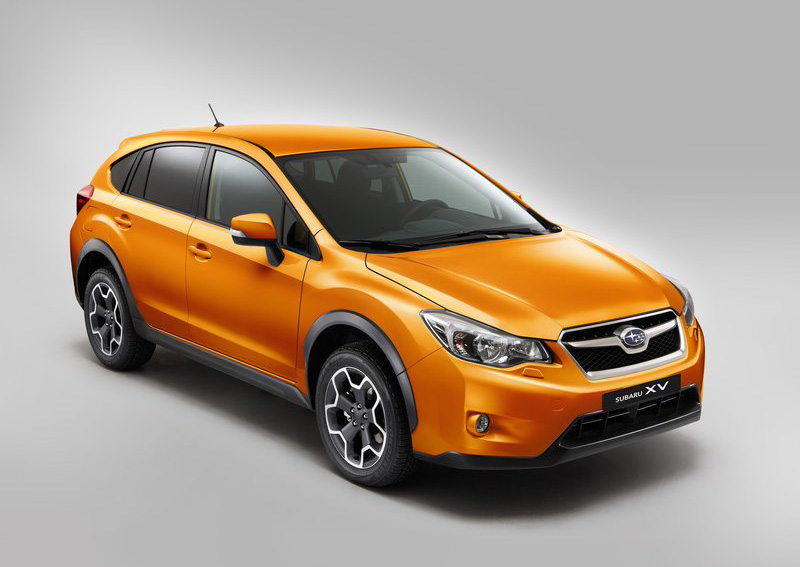
Subaru XV, 2012


  •  Subaru XV, 2012
The Subaru XV is a new type of crossover SUV that not only projects a great presence despite its compact sporty design, but also boasts a range of new features never seen before in an SUV. While the proportions of the Subaru XV convey a sense of elegance and lightness, its exterior design combines high ground clearance, large tire wheels, and all of the other features one would normally expect to find in an SUV. What's more, superior drive performance and fuel efficiency made possible by Subaru next-generation power unit are joined here with the excellent maneuverability for which Subaru is renowned and an extremely high level of functionality. Thanks to the symmetrical All-Wheel-Drive and advanced Subaru Dynamic Chassis Control Concept - two core Subaru technologies - this vehicle feels incredibly safe and secure to drive. And as such, the new XV adds unique Subaru value to the ever-growing C-segment crossover market. Not only have Subaru made it possible to truly provide "safety and pleasure" as defined in our new brand statement, "Confidence in Motion," but in this new strategic model, it has been realized a unique Subaru persona—a persona that Subaru fully intends to further enhance going forward. 

The fundamental product concept that Subaru adopted for the Subaru XV can be expressed in two simple words - "Urban Adventure." In specific terms, a vehicle that would be perfectly suited to exciting, lively use in a city landscape. Thus, Subaru strove to optimally balance enhanced basic performance factors in the form of fuel efficiency and enjoyable driving (Fun to Drive) with a stylish, highly distinctive exterior design. As the Subaru crossover family continues to grow, the stylish Subaru XV is unique in the way it can be both sporty and casual. To this end, it boasts five key strengths.

    Sleek but muscular - Smart, powerful design: Subaru has given the Subaru XV a highly distinctive design that blends a uniquely Subaru profile with a sporty, energetic overall presence.
    Achieving both nimble drive and environmental friendliness: Notwithstanding its overall height, the Subaru XV feels extremely secure to drive, and thanks to a new engine and transmission that work hand in hand to make it more environmentally friendly, this SUV delivers a highly reliable ride that is uniquely Subaru.
    Safety performance of the highest standard: In addition to providing the driver with an excellent field of view, Subaru has applied our considerable expertise in the fields of collision avoidance performance and passenger protection performance.
    Spacious, relaxing cabin: the Subaru XV features an extremely roomy passenger compartment, a cargo area that is both spacious and convenient, and excellent riding comfort.
    Performance and equipment suited to urban life: Not only is this SUV remarkably easy to get in and out of, but it boasts an advanced, highly convenient information/entertainment system that supports the driver in a great many ways.

Subaru XV: Model line-up
1.6i: When compared with the 1.5-liter engine in Subaru's current models, the newly developed 1.6-liter engine in this base model boosts output in all speed ranges while also realizing a much better balance between fuel efficiency and the thrill of rapid response to operation of the accelerator.

2.0i: In addition to being light on its feet, this model simultaneously delivers class-topping fuel efficiency and a luxurious ride. Meanwhile, it boasts a high level of torque in the low- to mid-speed range which is the most frequently used in everyday, practical situations. This base model has been equipped with a highly responsive engine capable of delivering a sensation of instant acceleration, even when the accelerator is only slightly depressed.

2.0D: Fitted with a horizontally-opposed diesel engine that is lightweight, compact, and uniquely Subaru, the 2.0D offers a high degree of torque even at low speeds and excellent response to operation of the accelerator. This base model also boasts excellent fuel efficiency with low CO2 emissions.

Spacious and comfortable interior space
An ample wheelbase was secured without having to increase the length of the vehicle. As a result of moving the A-pillars forward, the passenger compartment conveys a wonderful sense of spaciousness. The space gained from extending the wheelbase has been used to give more knee room to rear-seat occupants, who can now also place their feet inside the large open areas underneath the front seats. Thanks to these enhancements, the new Subaru XV has more rear-seat knee room than any other vehicle in its class. Naturally, this contributes to a higher level of comfort.

Improvements to the internal structure of the doors enabled to increased space in the transverse direction inside the passenger compartment. With more shoulder and elbow room, the driver and passengers benefit from best-in-class spaciousness.

The bottom edge of the A-pillars is also moved forward to accentuate the sense of space. In addition, the field of view has been made as unobstructed as possible by optimizing the cross-section of the pillar itself and providing triangular quarter glass in front of the rear-view mirrors. Meanwhile, the heater unit and ducts are also repositioned in the pursuit of a more roomy feeling interior, lowering the top of the instrument panel in the process. Gaps between the side sill and floor have also been closed. And higher seat positions that are more typical of an SUV also make it easier to get into and out of the vehicle.

Cargo Room
The floor of the cargo area and the internal structure of its roof feature a totally new design. By including a flat tire repair kit, it has been possible to secure ample distance from floor to roof.

One half of the floor can be inclined by connecting its straps to specially provided hooks. As such, the size of the step at the opening can be reduced, and it is now much easier to get heavy objects, pets, and the like in and out. A 15-litre sub-trunk is also added (in models equipped with a flat tire repair kit). Making it much more convenient to store smaller items, this helps to keep the cargo area as roomy as possible.

With level differences eliminated from the floor of the cargo area, loading and unloading has never been easier. Thanks to the adoption of this new design, Subaru XV owners will benefit from a greater level of convenience when shopping, when using the vehicle for sports and outdoor activities on holidays, and when traveling with pets.

Seat functions
In order to ensure a comfortable ride regardless of where the occupant is sitting, the seats are developed to mold themselves better and more securely to the body.

Front seats: With its higher hip point, the new front seat design makes driving much more enjoyable. What's more, the driver's seat comes with a six-way manual adjustable seat as standard. And not only can the headrests be raised and lowered, but they now also feature a tilt adjustment mechanism. Meanwhile, the back rests have been raised to provide more support at the top of the back. The adoption of flat-mat springs also contributes to a higher level of support. Tuning of the springs under the occupant has helped to improve the sensation of being securely held, and the sides have been reshaped to ensure that the seats do not feel cramped. A low resilience urethane have also been selected for the cushion sections to better hold the occupant's body and to absorb small vibrations produced while driving.

Rear seats: The rear seating area is much more spacious in the Subaru XV. Notable improvements in this regard are the concave surfaces at the back of the front seats and larger open areas underneath them, both of which make it easier for the rear-seat occupants to sit comfortably and relax. Meanwhile, the driver's field-of-view to the rear has been enhanced by the inclusion of retractable headrests. And with tether anchors for child seats built into the seat back, it is now much easier to load and unload the rear seats.

Utility
The Subaru XV has been kitted out with a great many features suited to the urban lifestyle, typical examples of which being the advanced information/entertainment system and handy storage areas for all kinds of objects within arm's reach. In designing this vehicle, a high level of convenience for a diverse array of owners was one of our prime concerns.

Superior accessibility
Thanks to a careful design approach that also took universal-design concepts into consideration, Subaru has achieved a vehicle that is extremely easy to get into and out of. Not only have Subaru made the door openings larger, but also raised the angle at the top of the front door sash, thereby providing more space between the sash top and body. Even when the doors cannot be fully opened, therefore, there is sufficient space for passage of the upper torso. In addition, the amount by which the legs must be lifted to get in and out has also been reduced for greater convenience. The distance between the floor and the top of the side sill has also been reduced, meaning that the driver and passengers do not have to stretch their legs as widely as before when getting in and out. And thanks also to the higher seat position, the overall design has been optimized to make vehicle access a much more stress-free experience for all types of user.

Front storage spaces
With a focus on convenience, Subaru have provided ample storage space for small objects at ideal locations around the driver's seat. These spaces are suitably sized to accommodate wallets, cell phones, portable music players, and other items usually kept on the person; furthermore, it has also been provided holders for pens, cards, receipts, and the like inside the center-console box for added convenience.

Advanced information/entertainment system
The compact navigation system of the Subaru XV boasts a high degree of connectability and compatibility with a range of digital media. Meanwhile, the "Multi-Function Display" (MFD) used to provide visual notification to the driver comes in both a Standard version and a High Grade version, which is equipped with a 4.3" color LCD.

Exterior Design
Coined from the terms "professional tool" and "trendy design," Subaru's "Protren" design concept symbolizes the fusion of SUV functionality and an urban persona.

Stylish form
The Subaru XV features a new type of crossover design that combines a stylish, flowing form with a high body and side cladding that enhances the sense of security. Showing off the passenger compartment in all its glory, the elegant silhouette has been provided with creatively designed wheels, cut-away cladding, and many other features that suggest a fun-loving personality. As a result, an exterior appearance that is both sporty and attractive was designed. And thanks to the inclusion of characteristic touches from our other vehicles, such as the hexagonal grille and hawk eye-style headlights, the Subaru XV gives the impression of a next-generation crossover that is classically Subaru.

The front grille features a hexagonal design - one of the hallmarks of Subaru vehicles. And thanks to its larger design and new plating, the grille not only allows the Subaru XV to look at home among the other models in our fleet, but it also gives a tangible impression of strength.

With a bold look reminiscent of the eyes of a hawk, the headlights efficiently illuminate a wide area and boast a range of other functional improvements.

The attractive design of the fog lamps allows them to blend seamlessly into the front bumper.
The Subaru XV's innovatively designed aluminum wheels convey a real sense of depth while remaining fashionably urban. Thanks to the contrast between the silver spokes and black surrounds, the vehicle portrays a different impression when moving and when stopped.

Instead of applying the distinctive side cladding all around as in the past, Subaru has made strategic omissions to enhance the sensation of dynamism and comfort of the Subaru XV. A new grain was also developed to enhance the effect of light and shadow. As a result, Subaru was able to create a sporty yet reliably safe impression, making the tires look larger than they actually are.

The corners of the front and rear bumpers have been designed with special edges that enhance the aerodynamic performance of the vehicle. Naturally, this also contributes to better fuel efficiency.
Instead of placing the turbo intercooler duct for diesel models inside an opening above the engine, it has been neatly integrated under the hood.

Interior Design
In developing the Subaru XV passenger compartment, our goals were to realize a relaxing space that conveys a comfortable sense of spaciousness and quality of material. Together with a luxurious interior that perfectly balances the different tactile and emotional qualities of leather, metal, and cloth, Subaru has adopted an instrument panel design that accentuates the horizontal in order to convey a sense of space in all four directions, thereby creating an aura of tangible quality.

Multi-Function Display (MFD) Coming in either a Standard or High-Grade version, the Multi-Function Display (MFD) is highly visible in the upper middle section of the instrument panel. Hoping to encourage Subaru XV owners to integrate better with their vehicle and take pleasure from eco-friendly driving practices, the display content was designed with the Urban Adventure concept firmly in mind.

Standard MFD (1.6i, 2.0i, and 2.0D)
The standard MFD provides the driver and passengers with information necessary for practical driving—such as outside air temperature, time, and the like—in a highly intuitive format. For example, the fuel efficiency indicator can show real-time efficiency, average efficiency, or continuous travel distance, and it can also be blanked out; furthermore, as the MFD can also notify of continuous travel time and average vehicle speed, it provides the driver with extensive support in terms of safe, economic driving. On vehicles equipped with an auto start stop system, meanwhile, the display shows engine-stopped time and cumulative stop times (both total and this trip).

High-Grade MFD (Option for 1.6i, 2.0i, and 2.0D)
Sporting a large 4.3" full-color LCD, the High-Grade MFD not only caters for practical driving situations, but also boasts a wide range of functions that support more intelligent driving.

Eco-driving display
In terms of eco-friendly driving, the High-Grade MFD goes far beyond just indicating fuel efficiency; instead, its Eco-driving display helps the driver to improve fuel efficiency using six different tools, such as the Eco-gauge and Eco-value screens. Other content for vehicles with an auto start-stop system indicates the stop times and the amount of fuel saved. In these and other ways, the Eco-driving display provides the driver with a visual representation of his or her eco-friendly driving.

Vehicle information display
Whenever necessary, the MFD provides the driver with pop-up notification of important information such as the continuous drive time, environmental factors such as outside air temperature or road surface conditions in the cold, and the status of the vehicle's various systems. Meanwhile, if a problem is identified in any of those systems, the driver is notified using both pop-up notification and warning lamps in the instrument cluster. Video from a rear view camera can also be shown on the MFD to further enhance safety and convenience.

Combination meter There are two versions: top-grade and standard models. Illumination on the top-grade model is white; on the standard model, it is red.

A relief design has been realized by using metallic ring accents; meanwhile, the use of metallic-finish rings enhances the overall air of quality.

The gauges have a sweep function in which the indicators move to the maximum position when the ignition key is turned to ON and then quickly return in order to heighten the excitement of driving.

In the center of the cluster is a large LCD monitor that provides the information most crucial to driving: current gear, fuel gauge, etc. All the most important information can be obtained with just a glance at the center of the instrument cluster while driving, which allows the driver to concentrate even more fully on driving.

Steering
The leather-wrapped steering wheel gives a feeling of opulence, and includes a decorative silver bezel. The urethane-covered wheel suggests sporty-impression with an improved tactile surface with the use of soft-feeling material. The steering wheel has switches for MFD, audio, and cruise control. In addition, the sizes and shapes of switches are reworked for greater operability. For the Lineartronic, the compact paddle shifter fixed to the steering wheel is equipped as standard. While operability during driving is enhanced and manual-shift driving can be enjoyed, parts around the steering wheel are neatly designed. Silver paint has been applied to enhance the luxurious feel.

Lineartronic
The shifter handle has a luxurious appearance thanks to the addition of leather, a decorative silver metallic panel, and a metallic cover. The design of the grip shape is easy to grab, whether gripped from the top or side. In conjunction with the handle positioning, the layout of the path that the gear shifter moves along has been optimized.

Six-speed/Five-speed manual transmission
A sporty grip is equipped for six-speed/five-speed manual transmission. For the top grade, a leather covered grip can choose.

Body colour
Including the new body colour "Tangerine Orange Pearl", ten colour selections are provided: Tangerine Orange Pearl,Ice Silver Metallic, Satin White Pearl, Dark Gray Metallic, Obsidian Black Pearl, Camellia Red Pearl, Sky Blue Metallic, Deep Cherry Pearl, Marine Blue Pearl, Sage Green Metallic.

SUBARU BOXER petrol 1.6-litre & 2.0-litre DOHC naturally-aspirated engines
For the first time in 21 years, Subaru has developed a new engine to replace the "EJ" engine currently used in all Subaru passenger vehicle lines. Developed in response to heightened demand for environmentally-friendly functionality, this new "FB" engine retains the proven benefits of the horizontally-opposed engine while "enhancing fuel efficiency," and "delivering performance better tuned to practical use, with a focus on torque in the low- and mid-speed ranges." This core engine marks the beginning of a new era for Subaru.

1.6-litre and 2.0-litre engines are available for the European market. Both engines employ nearly the same devices except for the engine blocks, which helped to succeed in balancing fuel efficiency and output performance.

SUBARU BOXER DIESEL 2.0-litre DOHC turbocharged engine
The SUBARU BOXER DIESEL, which was specially developed for the European market, received very favorable reviews. Its high rigidity, high-degree of smoothness, lightweight, compact design, excellent acceleration response with a high level of torque even at low speeds, lower CO2 emissions and better fuel efficiency are among the most frequently cited benefits. The all-new Subaru XV includes this Boxer Diesel in the line-up to meet the strong demand from customers concerned with environmental friendliness.

Symmetrical AWD (All-Wheel-Drive)
Two types of centre differential mechanisms, a core of AWD, are provided according to the transmission type.

Active torque split AWD (Lineartronic models)
Irrespective of the driver's level of expertise or skill, Subaru's unique AWD system allows the benefits of all-wheel drive to be utilized to their maximum potential and with a high level of safety. Subaru's electronically controlled all-wheel drive system integrates a MP-T (Multi-plate transfer (multi-plate clutch)) into the transfer used to distribute torque to the rear wheels. Operating based on a 60:40 (front:rear) torque distribution pattern, the transmission control unit responds to driving conditions such as acceleration, climbing, and turning in order to adjust the front-rear torque distribution in real time. Whenever slipping of the front wheels is detected, the system increases the amount of torque being distributed to the rear wheels, thus ensuring sufficient traction.

Centre differential AWD with viscous LSD (5MT and 6MT models)
The system is a combination of the bevel-gear-type centre differential with the basic torque distributions of 50:50 and the viscous coupling for limited slip differential. When the front wheel or rear wheel slips, the viscous coupling corrects the torque distributions to ensure traction. Centre differential AWD with viscous LSD is combined with the 5-speed and 6-speed manual transmission.
Read More