Monday, October 22, 2012

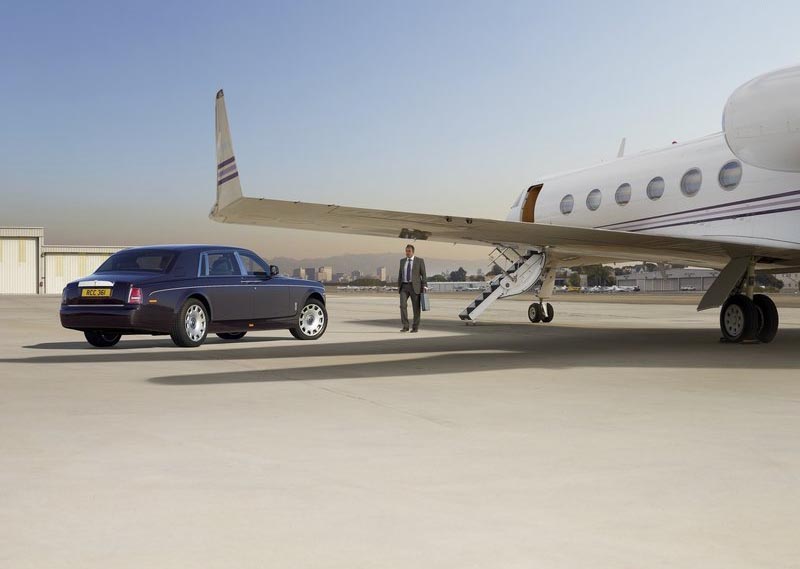
Rolls-Royce Phantom Extetnded Wheelbase, 2013


  •  Rolls-Royce Phantom Extetnded Wheelbase, 2013

The launch of the Rolls-Royce Phantom on 1 January 2003 was much more than the reveal of a new ultra-luxury car; it signalled the 21st Century renaissance of the world's most famous luxury automobile brand and the first glimpse of a masterpiece that quickly established itself at the pinnacle of automotive excellence.

For the preceding five years, under BMW Group ownership and in the absence of publicity, designers, engineers and skilled production staff had overseen the birth of a flagship Rolls-Royce motor car and state-of-the-art production facility on the Goodwood Estate in Southern England. Without parallel in the car industry, the achievement was all the more astonishing for a brand which shouldered the weight of historic ups (and occasional downs) and for which expectations for the future were rightly high.

From launch, the Rolls-Royce Phantom proved itself a worthy recipient of the famous Spirit of Ecstasy figurine. From Pantheon grille to long rear overhang, the design was clearly a Rolls-Royce. Every angle revealed a bold yet elegant car with road presence that was second to none.

For such an imposing car, Phantom surprised drivers with its agility and precision in motion while its ride was described by the company at the time as 'designed to lower the pulse'. The magnificently sublime ride, famed through model generations, had returned and waftability re-affirmed itself in the company lexicon.

At the car's core lay a ground-breaking, lightweight aluminium space-frame with power supplied by a sophisticated, direct-injection V12 engine, married to a six-speed auto gearbox. And complementing this excellence in engineering was Phantom's beautiful interior, presenting hand-stitched sumptuous leathers, fine veneers and exquisite detailing, a combination that marked the car as something uniquely special.

New Phantom variants were added, starting with Phantom Extended Wheelbase in 2005. In 2007, Phantom Drophead Coupé revealed the ultimate in luxurious open-top motoring, while Phantom Coupé, Rolls-Royce's sophisticated grand tourer, joined the family in 2008. All were warmly received.

A new world - Phantom Series II in summary
Today, Rolls-Royce presents Phantom Series II, a family of pinnacle cars that have been thoughtfully updated with the introduction of cutting-edge technology, enhancements to an already peerless drive-train and improvements in connectivity that reflect the changing world in which we live.

Rolls-Royce Phantom's striking and modern front end best encapsulates the essence of changes that lie beneath, with re-styled bumpers and rectangular light apertures that frame full-LED light clusters. These allow the integration of new technologies like curve light functionality, where headlamp beams are reflected in the direction of travel to provide greater illumination of the road ahead when cornering. And adaptive headlamps, where light patterns change automatically and - of course - effortlessly in response to different driving speeds.

Phantom's already sublime drive-train has also been enhanced. The addition of a new 8-speed automatic gearbox and rear differential perfectly complement the V12 direct injection engine, improving exemplary dynamics, as well as the famous Rolls-Royce promise of a magic carpet ride. Fuel consumption improves by 10 percent on the combined cycle and CO2 emissions fall from 385 to 347g/km as a consequence (388 to 349 for Phantom Extended Wheelbase).

Effortless is a word that perhaps best epitomises the Phantom experience, both for drivers and their passengers. So an improved user interface, as well as the addition of new driver assistance technologies, have been built on the foundation of a new electronics' platform for Phantom Series II. The satellite navigation system, for example, has been fully updated with functions that include 3D map display with landscape topography, guided tours, as well as enhanced points of interest and composite route planning.

Audio visual content, satellite navigation maps and driver information is presented on Phantom's new 8.8 inch control centre display, underlined by eight programmable bookmarks in chrome for optimum convenience in selecting key functions. Front, rear and top-view camera systems, further augment Phantom's ease of use particularly when driving in tight urban environments. When reverse parking for example, rear path prediction automatically deploys on-screen.

These significant changes add further substance to a reputation Phantom has proudly built since launch of the signature Rolls-Royce back in 2003. It is a new world. But it's a world in which the Rolls-Royce Phantom family will occupy a pinnacle position for many years to come.

Design
Like a piece of inspirational music, the Rolls-Royce Phantom continues to delight an audience. Familiar melodies - classic design cues that can be traced through the model generations - are brought to life by an orchestra of craftspeople working at the Home of Rolls-Royce in Goodwood, where attention to the finest detail delights in every car.

Familiar themes begin with the famous Spirit of Ecstasy, proudly adorning each model's Pantheon grille leaning into the wind with fluttering gown, while in side profile all Phantom family members present a long rear over-hang and classic two-to-one wheel to body height.

The thin-rimmed steering-wheel is reminiscent of elegantly engineered multifunction helms of the Phantom II and III, while further cues in the form of bulls-eye air vents and organ-stop plungers further hint at past masterpieces.

But 21st Century design cues also delight owners, as well as those for whom a glimpse of a Rolls-Royce is a rare moment to be treasured. The interlocked double-R Rolls-Royce monogram in the hubcaps, for example, which remain upright at all times. And coach doors with soft close function, which house Teflon-coated umbrellas to provide the grandest form of disembarkation from any motor car, whatever the weather.

Nearly ten years from launch, the design team responsible for creating a modern masterpiece remain at Rolls-Royce. And for Director of Design Ian Cameron, updating a 21st Century classic would start with one priority: a harmonious, timeless design to embrace state-of-the-art technological improvements.

The new, modern front-end for Phantom Series II, perhaps best exemplifies changes that are more than skin deep. Recessed behind new rectangular light apertures and re-designed front bumpers are fully LED light clusters. The signature is an elegant and dramatic bar, capturing the simple elegance of a continuously lit element, a feature complementing Rolls-Royce tail light design. For balance and proportion, this is integrated horizontally across the centre of Phantom's four-compartment headlamp.

The Rolls-Royce Phantom Coupé and Drophead Coupé now come with a single piece grille surround, presenting a smoother, more contemporary front end that arch into sculpted front wings, while Phantom saloon features a new rear bumper incorporating a polished stainless steel highlight.

Rolls-Royce Phantom Saloon and Extended Wheelbase wear a new front wing R-R badge with repeat indicator while three new wheel options, including painted, part-polished and polished, add to the range of 21" wheels, the largest fitted as standard to any production car.

Interior
Simplicity of design and the very finest materials contribute to the timeless architecture of any Phantom, where touch points are exclusively wood, chrome and leather and where feet can easily be lost in deep, lambswool rugs.

Arguably the best place to experience Phantom's luxury is from the rear seat of Phantom Saloon where passengers - elevated by 18 mm - are presented with an inspirational view down the long sweep of the bonnet and onto the Spirit of Ecstasy. A reduction in the number of seat flutes in front and rear, from five to three, gives a more modern complement to the car's sumptuous natural grain leather and flutes are also added to Drophead Coupé and Coupé seats for Phantom Series II.

An oasis of calm, Rolls-Royce interiors are the perfect environment in which to relax and unwind in welcoming silence. But they can also be a centre for entertainment. Phantom Saloon's theatre configuration adds two monitors within veneered picnic tables for rear seat passengers which are linked to a multi-media player, mounted in a compartment at the rear of the centre console. The inclusion of AV connectors, a six-DVD changer housed in the lower glove box and USB port in the centre console, means occupants can view separate content wherever they may be seated, front or rear.

The LOGIC7 surround sound system by Harman can create a truly cinematic experience on any journey. Seven individual sound signals are processed specifically for the car and its interior conditions using a combination of speakers that include subwoofers housed within resonance chambers in the space created by Phantom's double floor. A nine-channel amplifier delivers supreme clarity, clearly placing musical instruments, sound effects and dialogue at different depths giving the impression of sitting in row one or 20 of a concert.

At the touch of a button, Phantom's elegant analogue clock flips to reveal a new control centre display. The screen has increased in size from 6.5 to 8.8 inches with enhanced pixel density providing a more refined image, as well as split-menu display for more intuitive access to different functions.

A stylish new chrome controller, discreetly hidden within the centre console and rear-centre arm rests when not in use, is flanked by function keys such as menu, telephone and navigation to allow easier access to infotainment functions.

Eight functional bookmarks are now included beneath the monitor. These can be programmed to present desired information at the touch of a chrome key, for example the preferred orientation for satellite navigation maps, to present favourite television channels, pre-set radio stations or to access Phantom's telephone menu.

All Rolls-Royce Phantom family cars now benefit from improved interfaces and interaction with wireless technology. Finding a restaurant, booking a table, then being guided to its location, for example, comes courtesy of the improved functionality and inter-connectivity of Phantom's new satellite navigation system. Further enhancements to navigation functions include guided tours: at the Home of Rolls-Royce, which is situated next to the historic town of Chichester in England, drivers may choose to select a 45 minute tour taking in Roman Britain.

For Rolls-Royce Phantom Series II the telephone cradle has been replaced by a standard fit smart phone cradle which connects directly into the car antennae. The centre recess now also includes USB, Aux-in and 12V power sockets. Additionally, music can be copied directly onto the car's hard-drive, thanks to the addition of a USB port in the glove compartment.

"Lit in a different way" - new LED light technology
Rolls-Royce has a long history of technological firsts and is now the first car manufacturer to offer full LED headlamps as standard for Phantom models. As well as drawing less power from the engine, the characteristic whiter light provides a clearer view of the road ahead, helping prevent tiredness for drivers during long journeys on dark roads.

New light clusters comprise four compartments surrounded and finished with a polished, stainless steel bezel. Continuously lit, an elegant bar runs through the centre forming Phantom's LED daytime running lamps. LEDS in the top two pockets form dipped lights while full beam illuminates LEDs in the lower two. A separate, rectangular indicator strip sits below the headlamps.

LEDs present the opportunity for technologies that better manage the way light is projected, including curve light functionality and adaptive headlamps. The first uses electronically-controlled reflectors in upper and lower headlamp pockets, to improve the sweep of illumination when cornering. More of the road in the direction of travel can be seen as reflectors rotate by up to 15° in direct response to steering wheel turns.

Adaptive headlamps automatically change beam patterns according to driving conditions. Light is dispersed more widely for driving speeds below 50km/h to enable better views of cyclists and pedestrians. Between 50 and 120km/h the light cone extends and is skewed towards the near side to reveal potential hazards on a driver's side of the road, while for motorway driving at speeds in excess of 120km/h, the beam has a longer range and is more intense. Where windscreen wipers have been operating for more than two minutes in poor weather, dipped beams are automatically illuminated.

The convenient activation of headlight adaption is a further benefit, now being accessed directly via the rotary controller, rather than a switch located under the bonnet. This allows headlight settings to be switched between right-hand and left-hand drive markets, for example when driving from the UK to France, increasing comfort for those used to crossing borders.

Camera system
Everything about owning and driving Phantom models should be effortless, including manoeuvring in tight urban environments. Today, a new camera system is offered as standard for all Phantom Series II. Cameras are positioned in five locations, two in the curves of the front bumper, two on the underside of each wing mirror and one in the trunk lid.

These combine to present a fish-eye view at blind junctions or to provide ground images with obstacle recognition and reverse path prediction when parking This automatically deploys on the control centre display when reverse gear is selected and highlights the optimum reversing trajectory as well as the location of obstacles, helping prevent scuffs and alloy damage preserving the high value of a client's investment - and the inherent beauty of the car.

Additionally, all Phantom models carry six buttons that sit either side of the centre console's functional bookmarks; the button to the furthest on the right takes drivers immediately to a split image revealing objects at either side at the front of the car.

Engineering excellence
Originally conceived by the Rolls-Royce engineering team, an advanced aluminium spaceframe retains its position at Phantom's core, serving as the foundation for the car's extraordinary driving prowess. Strong, lightweight and as rigid as a Formula 1 car, the spaceframe has been further reinforced, with the addition of brace bars that enable a dynamic package to be offered as an option for Phantom Saloon for the first time.

Epitomising the Rolls-Royce marriage of cutting-edge technology with fine craftsmanship, each spaceframe is entirely hand-welded, then finished as if it were a precision instrument. Every morning, skilled welders perform a 300mm test to check for atmospheric effects on the material with which they will work. More than 200 box sections of cast aluminium extrusion are then formed to create the frame, which is checked for accuracy to within a millimetre by laser. Finally, the largest computer-guided machining platform in the auto industry sets to work on the complete structure, milling critical points with pinpoint precision.

Precision might also be the best word to describe the manner in which Phantom drivers place their cars through corners. But, of course, handling cannot come at the expense of the famous Rolls-Royce magic carpet ride. Fortunately, thanks to its double insulated floor, the spaceframe only augments inner tranquillity helping eliminate noise, vibration and harshness.

Its inherent safety benefits are also enhanced by other systems controlled by Phantom's ISIS (Intelligent Safety and Information System). This takes readings from sensors located throughout the car and, in the event of an impact, makes up to 4,000 calculations a second to establish its severity, deploying safety systems as necessary. These include intelligent braking and restraint systems such as Dynamic Stability Control, Dynamic Traction Control and seat belt pre-tensioners.

Complementing Phantom's reassuring safety features are changes to front door side pockets. These are now slightly smaller, due to the addition of a crash pad, for more even distribution of forces in a 30° side-impact test.

Drive-train and suspension
At its heart, every Phantom family car hosts a hand-assembled, naturally aspirated 6.75 litre V12 engine. This sophisticated direct-injection petrol engine develops 531lb ft of torque (720Nm) more than three quarters of which is available at 1,000 rpm. The torque curve remains largely flat between 1,000 and 3,000 rpm - an important prerequisite for effortless city driving - and moves occupants from 0 to 60 in 5.7 seconds and onto an electronically limited top speed of 149mph (155mph for Phantom Coupé) where market conditions allow.

Rolls-Royce Phantom's power reserve gauge is another of those trademark Rolls-Royce design cues that always raises a smile. In operation, it casually reveals the enormous power potential at a driver's disposal should he or she require it. But, in most circumstances, Phantom's performance is simply a matter of seamless, effortless progress.

For Rolls-Royce Phantom Series II, Rolls-Royce has improved the drive-train by incorporating a new 8-speed auto ZF-gearbox for all variants. This is electronically controlled to manage the extraordinary power delivered by the V12 power plant. The longer ratio in the new rear differential compensates shorter ratios in some gears of the new 8-speed gearbox, maintaining the same engine speed to augment 'waftability', while improving fuel economy.

The result is powerful serenity. Effortless gear changes come as a consequence of a better match of gear to engine speed, improving efficiency from power generation to where it is needed at the wheels. Fuel economy improves by 10 percent on the combined cycle and CO2 emissions fall from 385 to 347g/km as a result.

Double-wishbone front suspension complements the drive-train, featuring optimised mounts to minimise vibrations through the steering wheel, while multi-link rear suspension complete with anti-lift and anti-dive technology aids stability under heavy acceleration and braking.

Spring dampeners and anti-roll bars maintain comfort without loss of agility while self-levelling air struts compensate for different loads within the car, making continual adjustments as the weight of fuel decreases, giving drivers the ability to place the car through turns with absolute precision and passengers a ride of supreme comfort.

Craftsmanship
It takes 60 pairs of hands and more than 450 hours to design, construct and craft each Rolls-Royce motor car. At the Home of Rolls-Royce in Goodwood there are around 1,000 employees, including craftspeople working in wood and leather shops, making the world's finest cars. And just two robots in the paint shop to provide a seamless quality of finish. Only the finest materials are used and these are painstakingly prepared so their inherent beauty is displayed to best effect.

Paint
Rolls-Royce continues the grand tradition started centuries ago by the coach-building industry: at least five layers of paint and clear lacquer coating are applied to each Phantom, seven if the car is two-tone. Between each layer technicians sand the body by hand. Following application of a final coat, the body is meticulously hand polished for five hours to achieve the glassy lustre normally associated with a grand piano. Through the Bespoke programme, any chosen paint colour can be specified. Initially, this could be chosen by the client through the Phantom iPad App, capturing the colour of a favourite tie or lipstick for example and applying it to their virtual car. In keeping with Rolls-Royce traditions single or double coach-lines can also be applied - by hand of course. Each five metre line takes three hours to apply using only the finest squirrel and ox hair brushes.

Wood
Wooden features blend the skills of cabinet makers and boat builders with modern technology. Depending on specification, up to 43 wooden parts are used in every Phantom, each constructed from up to 28 layers of wood. These are interspersed with thin sheets of aluminium for strength and to prevent splintering in an impact. Multiple layers are pressed, bent and hand-finished before craftsmen cut and apply matched veneers, which are subsequently detailed, lacquered, hand polished and highlighted. All veneers come from one log and these are carefully selected and laid out so that the grain detailing is mirrored across the interior of each car.

Inspired by J-class yachts of the 1930s , the beautiful teak-decking in Phantom Drophead Coupé is a fine example of the marriage between Rolls-Royce traditions and the best in engineering. Teak is used because of its hardy properties and resistance to moisture and decay, but special techniques have been developed to preserve the appearance of a fresh, unprocessed finish, the aim being a final deck that closely resembled natural timber. Each deck, comprised of more than 30 wooden pieces, features precisely machined grooves and is protected by a specially formulated blend of oils. As with all woods and veneers used by Rolls-Royce, it is sourced by a team of specialists.

Leather
Only the finest hand-selected hides from Alpine bulls are used by Rolls-Royce. The healthy environment and open meadows without thorn or barbed wire result in far fewer natural marks. The leather is drum pigmented to allow the durable Rolls-Royce leather to retain its famous soft and supple feel, giving a rich, uniform colour while maintaining the natural feel, softness and grain. Each of the 450 leather parts that comprise an interior is cut by laser before being hand sewn by the artisans in the company's own workshop.

Bespoke
Rolls-Royce customers expect their cars to be as unique as their own fingerprint and the Bespoke service delivers on these high expectations. More than eight in ten Rolls-Royce Phantom models delivered globally to clients in 2011 included some element of bespoke design from individual paint colours, veneer inlays, tread plates and coach lines, to the most flamboyant and individual of whole vehicle designs.

In 2011 for example, Rolls-Royce designed a car for a Middle Eastern customer that incorporated an intricate and beautiful falcon motif within the headrests. Taking 40 hours of embroidery and using 11 different threads, the design featured 21,000 stitches.

Perhaps one of the most delightful and popular of Rolls-Royce bespoke features is the starlight headliner, which integrates more than 1,600 tiny fibre optic lights which are hand-woven into the leather roof lining to create a beautiful starry sky within a Rolls-Royce Phantom Saloon or Phantom Coupé.
Read More

Volkswagen Beetle, 2012


  • Volkswagen Beetle, 2012

A look back to the start: at the beginning Volkswagen built one of the most successful cars of all time and did not even give it a name. Why should it? After all, it was the Volkswagen! People loved it, and on all of the world's continents the small car was nicknamed according to precisely what it looked like: Beetle, Käfer, Vocho, Coccinelle, Fusca, Maggiolino or ???! It embodied the automotive concept itself and symbolised the democratisation of mobility. 21.5 million cars were sold. Then the New Beetle arrived in 1998. It introduced a new automotive feeling to the world and brought with it Beetle Mania. In 2010, the Final Edition completed the New Beetle series that had sold more than one million cars. And now? A look forward. The future of the most famous car in the world begins now. In a completely new generation. It's The Beetle! And because Volkswagen and the Beetle call the globe their home, the new car is celebrating a transcontinental world debut - simultaneously in Shanghai, Berlin and New York .

Technological goal: high-tech in harmony with the environment
Volkswagen Beetle is an icon. This car tells a story. Only someone who knows its history could make a new generation of this Volkswagen a reality. The task ahead for the engineers was very clear. They had to develop a high-tech car that was still affordable, did not leave any stone unturned, integrated the communication technologies of our times and of course achieved the lowest environmental impact. It also had to be a car that places driving fun at the forefront. The new generation VW Beetle would have to be a very agile, dynamic performer, and the people who developed the Golf GTI would also be able to achieve this.

No previous Beetle was this fuel efficient. High performance no longer suffices by itself: At 4.3 l/100 km (European 1.6 TDI) and 33 mpg (American 2.0 TDI), the new Volkswagen Beetle is the most fuel-efficient Beetle ever.

Design target: "Design a new original!"
The most recognisable automotive design in the world. Coke bottle, iPhone, Ray Ban Aviator, Beetle - how does one reinvent a design that is so recognisable and independent? There is a clear answer to this: It is necessary to understand the product and the brand; then it works! Volkswagen Design Chief Walter de Silva (Group) and Klaus Bischoff (Volkswagen Brand) "understand" both and therefore they set this as the objective for the Beetle: "Design a new original!"

Challenge as a thrill. The team began its task under Bischoff's guidance. The challenge of designing a new Volkswagen Beetle was inspiring. The designers knew that they wanted to develop the original Beetle profile more than on the 1998 New Beetle. They also made very dynamic proportions a high priority. An interesting aspect was that more than a few team members actually own their own air-cooled Beetles. It has also become a cult car among younger designers at Volkswagen. And that is how the final design of the 2011 Beetle came to be in Wolfsburg - a car of today as well as a design tribute to the automotive seed of an entire corporate group. And unmistakable indeed: If one were to take the first Beetle and the new Beetle and place them in a room together - shining light just over the roofs and viewing them from the side - one would see that the lines of the rear sections are nearly identical.

No standing still: "We remade every part."
Bolder, more dynamic, more masculine. A comparison to the 1998 New Beetle shows this: nothing remained as it was on the old car: "The Beetle is now characterised by a clean, self-confident and dominant sportiness. The car not only has a lower profile; it is also substantially wider, the front bonnet is longer, the front windscreen is shifted further back and has a much steeper incline. All of this creates a new dynamism," explains Klaus Bischoff. While the New Beetle was defined by three semi-circles (front wing, rear wing, domed roof above it), the new model has broken free of this geometry. The roof profile actually runs distinctly lower and can be considered a continuation of the Ragster concept car shown in Detroit in 2005 - a type of hot rod based on the New Beetle. The new Beetle is bolder, more dynamic, more masculine.

The figures confirm this: The new car is 1,808 mm wide (84 mm wider), 1,486 mm tall (12 mm lower) and 4,278 mm long (152 mm longer). This has resulted in entirely new proportions. The gain in length meant that the roof could be extended further, the front windscreen could be shifted back, and the rear section could follow the contour of the original Beetle. The new focal point is the C-pillar. In parallel, the development team increased the car's track widths and wheelbase. All of this gives the VW Beetle a powerful appearance with muscular tension.

Typical Volkswagen, typical Beetle: a new DNA
2011 styling. Despite all of its individuality, the styling follows the Volkswagen design DNA created by Walter de Silva and Klaus Bischoff. It clearly expresses itself in the horizontal image of the front bumper, front air inlet, straight lines of the bonnet edges, the precisely drawn line between the A-pillar and C-pillar and the styling of the rear lights.

Beetle, Microbus, original Golf. And yet it was possible to preserve all of the Volkswagen Beetle's typical styling characteristics. This should come as no surprise; after all, it was vehicles like the Beetle, Microbus and original Golf that had a decisive influence on Volkswagen's "design DNA." Of course, some of the Beetle's longstanding characteristics remain: these include its round headlights (optional bi-xenon headlights with LED daytime running lights are available for the first time in this model series), the flared wings, the shapes of the bonnets, sides and door sills and - more than ever - the large wheels (up to 19 inch) that can be integrated. A new feature is the rear spoiler that is homogeneously integrated in the design (standard for TSI engines with 118 kW / 160 PS and 147 kW / 200 PS); it aggressively maintains contact with the road on this Volkswagen, which has a top speed of up to 225 km/h, depending on the engine, and is available in the three equipment lines "Beetle", "Design" and "Sport". Incidentally, the top surface of the rear spoiler is always black, while its underside is painted in body colour. These colours - 12 different hues - will make everyday car driving more vibrant with names such as "Saturnyellow" and "Denim Blue".

An original interior like no other
The cockpit makes a visual impression. Is it possible for a cockpit to make an impression? Are you kidding? By its very nature! Car drivers sit in the cockpit. Sometimes for hours at a time. And yet, there are cars whose cockpits do not leave any lasting impression. They have a "look alike" appearance, as the marketing people say - one easily mistaken for another, lacking charisma. The VW Beetle's cockpit, on the other hand, is unique, unmistakable, cool, classic and designed with a passion for detail. This cockpit is perceived as something special.

Everything within reach and sight. The shape and use of colour in the painted or carbon-look front facia panel of the dashboard hark back to the design of the first VW Beetle, yet the new car does not have a retro look. In Europe, for example, this facia is styled in "Schwarz uni" (Black) on the base model ("Beetle"); in the "Design" equipment line, it is always painted in the specific exterior colour. Customers choosing the "Sport" level get the carbon look ("Carbon Fibre"). Regardless of which colours are used, Volkswagen drivers will be able to locate every interior feature with their eyes closed.

And yet everything has been redesigned. Three round instruments arranged in front of the driver (tachometer, speedometer, fuel gauge) provide all key information; integrated in the speedometer (middle position) is a multifunction display. From the "Design" equipment level, the adjustable air vents and the instruments have chrome bezels. This also applies to the audio/navigation systems optimally located in the driver's visual field on the dashboard, framed by two air vents. This also includes the controls for the climate control system. Everything is within grasp and sight.

Comeback of the glovebox. Similar to the original Beetle, the new car has an extra glovebox integrated in the front facia whose lid folds upward (the standard glovebox that is also integrated opens downward). Another classic feature: the optional auxiliary instruments above the selected audio/navigation system: oil temperature, clock with stopwatch function and boost pressure gauge. Also new: the steering wheels specially designed for the Volkswagen Beetle with optional painted accents in the spokes depending on the equipment line. Details like these clearly indicate that the occupants are in a Beetle - there's no mistaking it.

Air-cooled Beetle. New Beetle. The Beetle. A distinguishing feature of The Beetle - the third generation if you will - is that its interior ergonomics and packaging are based on completely new parameters. While drivers in the air-cooled Beetle travelled in a very low-slung seat, and drivers of the New Beetle felt as if they were chauffeured because the bonnet was so far forward, the latest Volkswagen Beetle now offers an agile, driver-oriented coupé experience. Every feature is within easy reach. In addition, Volkswagen has once again succeeded in implementing a quality of materials that goes beyond all class limits. The car's styling, ergonomics, operability and quality interact to create a new, friendly car with a highly individual nature.

The New Beetle was a cathedral inside. In front, the Beetle is now somewhat lower in profile, since the domed roof of its predecessor has been eliminated. It now offers 1,044 mm interior height instead of the previous 1,082 mm. However, the 38 mm will hardly be missed, even by very tall drivers, since the New Beetle's interior was a "cathedral" among compact cars. Meanwhile, in the rear seating area, the longer roof section results in a distinctly larger feeling of space. The bootspace is significantly larger; it now holds 310 instead of 209 litres. As usual, the car has a split, folding rear seatback, and a wide opening bootlid making it is easy to load and unload.

More optional features: individualising the VW Beetle
"Beetle", "Design" and "Sport". The new Volkswagen will be available worldwide in the three equipment lines "Beetle", "Design" and "Sport". Each of these versions has a very unique character. In addition, individual markets themselves will emphasise certain aspects. Volkswagen will announce individual parameters of these customisation levels at an international driving presentation for journalists. In addition to the three equipment lines, the Beetle can be customised with a wide choice of optional features. An overview of certain key features:

Bi-xenon headlights and LED daytime running lights. Volkswagen is offering the Beetle with bi-xenon headlights for the first time. 15 LEDs frame the xenon module on the outer perimeters of the headlights; they implement the daytime running lights and parking lights.

Panoramic roof. It is transparent, and it can be tilted or opened. Therefore, the exact name is: panoramic tilt/slide glass sunroof. Much more important: It is 80 percent larger (glass surface area) than on the previous model. Incidentally, the insulating glass blocks 99 percent of UV radiation and 92 percent of heat energy.

Radio-CD and radio-navigation systems. The New Beetle was exclusively available with radio-CD systems specially designed for this model. No navigation systems were offered. Now, Volkswagen is taking a completely different approach and is offering all of the systems available in other model series such as the Golf, Jetta or Passat on new VW Beetle as well. Standard in the Beetle is the RCD 310 with 8 loudspeakers, which is a very good audio system (includes dual tuner). The top audio system is the RCD 510 with integrated CD changer, interface for SD cards and touchscreen. An attractively priced entry-level radio-navigation system is the RNS 315 with 5-inch touchscreen (400 x 240 pixel), CD player, SD card slot and dual tuner. The top radio-navigation system model is the RNS 510. It offers refinements such as a 6.5-inch touchscreen, DVD player, voice control, SD card slot and 30 Gigabyte hard drive.

Premium sound system by Fender. Anyone knowledgeable about the world of rock music is familiar with such greats as Jimi Hendrix and Eric Clapton. The first played Fender guitars, while the latter still does. Now, the legendary producer of US musical instruments and amplifiers - in a joint venture with Panasonic - is exclusively sharing its know-how with the Volkswagen brand. The result is an optional Fender sound system that is being offered in the Volkswagen Beetle with an additional woofer and 400 Watts of output power. Those choosing this sound system also get adjustable interior ambiance lighting. Besides providing indirect illumination, it also includes two light rings around the loudspeaker boxes in the doors. In Europe, the Volkswagen Beetle is the first car to offer a Fender sound system.

Keyless Access. The Keyless Access locking and engine starting system is appearing for the first time in the Volkswagen Beetle; it operates without a door or ignition key. When one of the front door handles is touched, the system detects access authorisation from a transmitter carried in the person's jacket, trousers or hand bag; it then unlocks the Beetle and enables an engine start via the engine start button. Locking of the Volkswagen is from the outside, also activated by touching one of the two door handles; in this case, however, a specially marked surface is used.

All round safety. Let's get to the point. In The Beetle, Volkswagen is building an automobile that is one of the safest in terms of both active and passive safety. Naturally, the ESP electronic stabilisation programme is standard, as is an effective network of six airbags that protects in the passenger compartment. Naturally, the car body - much of it laser-welded and galvanised - exhibits one of the best torsional rigidity values in the segment at 26,000 Nm/º. Naturally, because safety is a fundamental quality in a Volkswagen.

Engines: top fuel economy of 40 mpg and 4.3 l/100km
US diesel with 140 PS. When it comes to engines, all signs point toward sustainability. In the USA, the VW Beetle will be offered as a turbodiesel for the first time. The Beetle 2.0 TDI (103 kW / 140 PS) meets all USA emission limits and attains 40 mpg fuel economy in the Highway cycle, 29 mpg in City driving, and 33 mpg combined. As a result, the Volkswagen Beetle is a good choice as one of the most fuel-efficient cars in its class. Incidentally, the Volkswagen not only has excellent fuel economy values in the version with a 6-speed manual gearbox, but also - and this is a technical debut in the Beetle as well - with the optional 6-speed dual clutch transmission.

US petrol engines with 170 PS and 200 PS. Fuel economy values were also improved in the 2.5-litre five cylinder petrol engine, which was already a success in the previous model. The manually shifted VW Beetle attains 22 mpg (City), 31 mpg (Highway) and 25 mpg (combined). Its counterpart with a 6-speed automatic comes in at 22 mpg (City), 29 mpg (Highway) and 25 mpg (combined) - this represents an increase of up to 10 percent in fuel economy. Pioneering: even the Beetle 2.0 TSI with 147 kW / 200 PS of power attains a combined fuel economy of 25 mpg. The large TSI is also available with an optional 6-speed DSG.

World engines with 105 PS, 140 PS, 160 PS and 200 PS. In markets such as Asia, Australia, Europe and New Zealand, the new Volkswagen Beetle will be offered exclusively with charged engines. All engine versions - all of them with four cylinders - are being used for the first time in this model series. The car exhibits significantly reduced fuel consumption and emission values compared to the previous model thanks to the switch to turbo-petrol (TSI) and common rail turbodiesel direct injection engines (TDI). The three charged petrol engines of the Beetle output 77 kW / 105 PS, 118 kW / 160 PS and 147 kW / 200 PS. The two diesel engines develop 77 kW / 105 PS and 103 kW / 140 PS (TDI engines are not offered in China). All five engines may be combined with a dual clutch transmission as an option.

Engines with 160 PS and 200 PS in detail. Even the fast moving 225 km/h VW Beetle 2.0 TSI with 200 PS of power consumes just 7.4 l/100 km (equivalent to 173 g/km CO2) with a manual transmission. Also extremely economical is the 1.4 TSI with 160 PS shifted by a 7-speed DSG; in the Beetle it consumes just 5.9 l/100 km (139 g/km CO2). Fuel economy data like this makes the Beetle 1.4 TSI DSG (top speed: 207 km/h) a pleasant surprise in the engine programme. By comparison, the previous model with 110 kW / 150 PS attained a value of 8.9 l/100 km in the automatic version. Despite 10 PS more power, fuel consumption was reduced by 3.0 l/100 km or 34 percent.

Differential lock for top petrol engine. To ensure that the power of the two strongest Volkswagen Beetle versions is applied properly to the road in quickly approached curves as well, the models with 160 PS (European version) and 200 PS (worldwide) come with a factory-installed XDS electronic differential lock. This system extends the familiar EDS functionality. XDS improves handling in fast curve driving and calibrates the car toward more "neutral" steering; it does this by using active brake intervention to prevent wheelspin of the unloaded wheel on the inside of the curve, and this improves traction.
Read More

Sunday, October 21, 2012

Jeep Wrangler Freedom Edition, 2012


  •  Jeep Wrangler Freedom Edition, 2012

More than 70 years ago, the U.S. government informed automakers that it was looking for a "light reconnaissance vehicle" for military use. Willys-Overland quickly created the Willys Quad - which became the Willys MA and MB - but the Army, and the world, came to know the vehicle that would help win a world war as the Jeep®.

As a tribute to U.S. military members past and present, the Jeep brand has created the new 2012 Jeep Wrangler Freedom edition. Available in red, white or blue, the new Jeep Wrangler Freedom edition features a military-inspired star decal on the hood and rear quarter panels, along with an "Oscar Mike" (military jargon for "on the move") fender badge.

Jeep donate $250 from each Wrangler Freedom Edition it sells to charities that benefit U.S. military members. Specifically, funds will be split between the Fisher House Foundation and the I Support Foundation. Fisher House Foundation provides a "home away from home" for military families to be close to a loved one during hospitalization for an illness, disease or injury, while the I Support Foundation provides resources to troops returning home - such as jobs and various healthcare needs - and issues grants to 40 charities that provide valuable services to U.S. veterans.

Chrysler Group LLC also offers a $500 cash allowance to military members that may be applied toward the retail purchase or lease of an eligible Chrysler, Jeep, Dodge, Ram Truck or FIAT vehicle. Eligible consumers include active military, active military reserve, retired military (honorable discharge and 20 years of service required), and retired military reserve (honorable discharge and 20 years of service required).

The new limited-edition 2012 Jeep Wrangler Freedom model is based on the best-selling Sport model, and is available as a two-door Wrangler or four-door Wrangler Unlimited model. It is offered in three colors only: Deep Cherry Red, Bright White, and new True Blue that for 2012 is exclusive to the Wrangler Freedom edition model.

Jeep Wrangler Freedom edition exterior features include unique Mineral Gray-painted 17-inch alloy wheels borrowed from the Wrangler Rubicon, Mineral Gray-painted grille and front and rear bumper inserts, body-color wheel arches and side steps, prominent "Oscar Mike" star-in-circle fender badges and decals on the hood and rear quarter panels, black sidesteps with matching black tail lamp guards and a Mopar fuel fill door, and a Sunrider soft top with deep-tint rear windows.

Interior treatments on the new 2012 Jeep Wrangler Freedom edition include black seats with rugged tectonic fabric, an "Oscar Mike" logo embroidered on the seat backs in silver stitching, French Silver accent stitching on the steering wheel, doors, seats and front arm rest, and "Quick Silver" accents on the front passenger grab handle, door pulls and dash vent rings. Finishing touches include Satin Chrome spokes on the leather-wrapped steering wheel and Mopar Slush Mats.

Other standard features include power windows and locks, remote keyless entry, a leather-wrapped steering wheel with audio controls, and UConnect® voice command and connectivity group.

The 2012 Jeep Wrangler Freedom edition is available in Jeep showrooms at a Manufacturer's Suggested Retail price of $28,165 for Wrangler two-door models and $30,670 for Wrangler Unlimited four-door models.
Read More

Ford Ranger Wildtrak, 2012


  • Ford Ranger Wildtrak, 2012

The all-new Ford Ranger Wildtrak makes its global debut at the 2011 Geneva Motor Show, a sporty compact pick-up that delivers impressive power and safety, excellent fuel efficiency and significant capability. It exudes a powerful presence bolstered by the latest in-car comfort and technologies.

The new global Ford Ranger boasts an extensive range of class-leading "smart" features that make it easier, safer and more fun to drive than ever. It also sports a unique Rear View Camera System - the camera image is displayed in the rear view mirror - which dramatically improves visibility and simplifies hooking up to a trailer.

Aiming to deliver class-leading safety, new Ranger utilises a whole suite of technologies, including Electronic Stability Program (ESP), to keep its wheels sturdily planted on the road under all conditions. Despite being an enormously capable vehicle, the Ford Ranger is also fitted with technologies such as satellite navigation and Bluetooth® voice control, more commonly found on premium or luxury cars.

Building on Ranger's long-standing heritage of capability, the all-new model extends Ford's credibility further, with selected European versions achieving a best-in-class towing capacity of 3350 kg. Ranger models fitted with the 2.2-litre Ford Duratorq TDCi diesel engine also have an outstanding payload capacity of up to 1333 kg.

New from the ground up - with everything changed except its name - new Ranger is the first commercial vehicle to be built under the One Ford strategy as part of a global product programme, bringing together the full engineering expertise of Ford around the world.

Designed and developed in Australia, Ranger will be offered as a complete family of compact pick-ups with three different cab body styles, 4x2 and 4x4 drive trains, two ride heights and up to five series choices to suit every pocket and market. It will be produced in Thailand, South Africa and Argentina for more than 180 markets worldwide.

21st century tough styling
Toned, taut and muscular, the all-new Ranger is designed to look powerful and confident, equally at home on a construction site or outside a high-class restaurant. Its front end features a short overhang with the signature three-bar grille, a global Ford commercial vehicle design cue. The windscreen has also been raked back for a sportier and more dynamic silhouette, creating a modern and aerodynamic look.

The beltline, along with the rails of the load box, were raised significantly - giving Ranger a substantive presence on the road while increasing its functionality with the deeper box. Larger headlamps, bigger mirrors and stamped-in wheel lips provide an integrated look across all series and contribute to an aggressive and sporty stance.

The Wildtrak version takes Ranger's sporty appearance even further, with a unique colour split on the front. Designers masked out the feature line on the fascia and contrasted it by highlighting the lower intake. The same accent colours were used on the side mirrors, door handles and side air vents to give the vehicle a dark sporty look.

Sitting high on 18-inch alloy wheels, the Wildtrak also comes with a roof rack and a sports hoop which enhance its profile. Exclusive Wildtrak badging and graphics help to set it apart from other lifestyle vehicles.

Car-like levels of comfort and features
The purposeful interior of the Wildtrak echoes the dark sporty look of the outside. A special hydrographic finish on the centre console around the audio is reminiscent of strong but lightweight materials like carbon fibre.

The seat trim - a combination of leather and woven cloth inspired by sportswear with ventilated sections - provides lateral support and confidence even on rough terrain. Contrast stitching and a discreet strip on the seat upper and bolster, all in distinctive Wildtrak Orange, accentuate the premium feel of the interior.

The cabin of Ranger has been stretched to provide segment-leading spaciousness and comfort. Three passengers can easily fit in the second row of the Wildtrak, for instance. It offers ample knee room and better foot clearance between the B-pillar and the seat. This means that getting in and out of the new Ranger is easier than ever for rear-seat passengers.

With 23 storage spaces in the cabin, Ranger offers more practical stowage than any competitor. A deep centre console bin will keep up to six cans of beverage cool, while the glove box is large enough to accommodate a 16-inch laptop computer. Ample storage for mobile phones and other small items can be found in the console.

Also poised to be a leader in innovation, Ford Ranger Wildtrak comes with Bluetooth® audio streaming, USB and iPod connectivity. There is voice control over the radio, CD, iPod, USB, air-conditioning and phone and the software recognises English, Spanish, French, German, Italian, Portuguese and Turkish. It also offers a five-inch colour screen with satellite navigation.

More power, more torque, more economy
European customers will have a choice of two state-of-the-art common-rail Ford Duratorq TDCi diesels and new fuel-efficient six-speed transmissions that serve up more power and torque.

The new 2.2-litre four-cylinder diesel delivers peak torque output of 375 Nm and power output of 110 kW (150 PS), whilst a highly responsive and efficient new 3.2-litre 5-cylinder diesel powers the Wildtrak and produces a powerful 470 Nm of torque is power rated at 147 kW (200PS). Both new powertrains have been developed and refined to deliver excellent fuel economy that is among the best in class. Fitted with an 80-litre fuel tank, Ranger is also expected to have one of the longest ranges in its segment.

Transmissions and final drive ratios have been carefully matched to deliver exceptional acceleration, excellent fuel efficiency and a quiet ride.

The new six-speed automatic transmission has been extensively tuned to deliver smooth, quick shifts that are almost imperceptible to the driver, reinforcing new Ranger's car-like refinement. In Normal mode, the calibration focuses on comfort and fuel economy. For sportier driving, a quick flick of the shifter changes the transmission to Performance mode, providing later shift points and giving the driver the option to select gears manually through a forward (downshift) or rearward (upshift) movement.

New Ranger also features smart Ford technologies such as Adaptive Automatic Mode, which adapts gear shifts according to driving style and Grade Control Logic, which automatically downshifts when driving downhill and the brake pedal is depressed. This feature prevents the transmission from changing to a higher gear.

For those who prefer greater involvement, the six-speed manual transmission with its short, car-like shifter, provides crisp and precise shifting matched perfectly to the generous torque output of the new diesels. An upshift indicator in the instrument panel helps coach drivers on the best gearing for optimum fuel economy.

Extensive work has gone into making the new global Ford Ranger more fuel-efficient than ever. Using the same cutting-edge simulation technology as Formula One teams, aerodynamicists performed more than 1,000 full-vehicle aerodynamic simulations to perfect the shape of the vehicle for fuel economy. Using Smart Regenerative Charging, Ranger is the first to be equipped with a battery management system, which controls the alternator so that it shuts off during acceleration and turns on during deceleration. This improves fuel economy as the alternator is not charging the battery all the time as in a typical vehicle.

Advanced safety protection
Though the Euro NCAP testing will not take place until later this year, Ford is forecasting that the new Ranger will be a leader in safety for its segment.

Like all contemporary Ford products, Ranger is engineered to provide comprehensive safety protection, starting with the highly protective body structure utilising high-strength steel throughout to protect occupants in a collision and the all-new frame that manages the brunt of crash energy. Engineers used sophisticated computer modelling to go through more than 9,000 full-vehicle crash simulations before the first prototype vehicle was subjected to a physical crash test.

Standard on all cab styles in Europe for the first time, side curtain airbags deploy from the headliner to provide a protective cushion for the head of occupants in case of a side impact. The curtain is designed to protect both rows of occupants by covering the upper side structure and glass from the A-pillar to the C-pillar. New side airbags available for the front seats also deploy from the side bolster of the seat to protect the thorax from side-impact forces, working in tandem with the front airbags for the driver and front passenger. Knee airbags are also standard across all models.

Other passive safety technologies include three-point safety belts for all seating positions, with pre-tensioners and load limiter for the front seats, as well as Ford BeltMinder technology which helps remind front-seat occupants to wear their belts.

Ranger also uses active safety technologies to help drivers avoid accidents. A key component is the ESP which comes with a full suite of features that make driving the Ranger even safer. The Trailer Sway Control system monitors the behaviour of the tow vehicle and trailer array to sense the advent of trailer sway and apply braking countermeasures to reduce its effects. Adaptive Load Control provides additional stability assurance for drivers dealing with heavy payloads. When driving downhill, Hill Descent Control ensures that the brakes will be applied to control the vehicle at a set speed. Or when stopping on a steep grade, Hill Launch Assist helps the driver to pull his full load away confidently without creeping.

An array of braking technologies work together to ensure the shortest possible stopping distance under all circumstances, such as the Anti-Lock Brake System, Emergency Brake Assist and Electronic Brake Force Distribution which maximises brake force used on the rear wheels as payload changes while maintaining optimal stability. During emergency braking, the hazard lights also come on to warn other motorists.

On top of safety technologies, the new Ranger has been engineered with pedestrian protection features. Technologies that emerged from a global Ford research project on pedestrian-friendly vehicle designs, have now been applied to a pick-up for the first time ever. This includes a "hexageneous" under-bonnet structure to reduce the potential for pedestrian head injuries, and a pedestrian-friendly front bumper design incorporating energy-absorbing materials. Other new Ranger technologies include Rear Park Assist and the Rear View Camera System.

A steadfast companion for adventure
With an all-new chassis frame, front and rear suspension and steering system, the new Ranger promises car-like comfort, reduced steering effort, more precise handling and better on-road stability. Even on narrow city streets, the pick-up's tight turning circle makes it easily manoeuvrable despite sitting on an increased wheelbase.

For those who need a dependable vehicle for off-road adventures, the Wildtrak fits the bill perfectly with a stiffer frame, ground clearance of up to 230 mm and driveline components strategically mounted above the frame rail out of harm's way. The Wildtrak can also go deeper than any other compact pickup, with the ability to wade through up to 800 mm of water - a class-leading feature.

Both automatic and manual four-wheel drive models are equipped with a proven electronically controlled transfer case that allows drivers to shift on the move from 4x2 to 4x4 any time via a switch conveniently located on the console. If extra torque at the wheels or additional downhill braking is needed, low-range gearing can also be enabled. In order to suit various customers' needs, Ranger can be ordered with a wide range of final drive ratios.

The Ranger's ESP system includes off-road logic which recognises when the pick-up is driven on rough roads and modifies the system to ensure the best balance between stability and timeliness of interventions. In 4x4 models, the ESP system can be partially switched off to disable over- and understeer control as well as engine torque reductions, while maintaining the brake intervention traction control. This setting is most suitable when driving through deep sand or extreme mud as vehicle momentum can be maintained whilst maximising available grip. The ESP can be switched to a second setting to further amend the ESP braking intervention that aids the initial pull away in snow and icy conditions.

When the terrain gets really rough and Ranger is in four-wheel drive low gearing, it provides the driver with more control through the accelerator pedal, which becomes damped and less sensitive. This prevents unintentional acceleration due to the bouncing motion of the driver's foot while moving over bumpy terrain.
Read More

Saturday, October 20, 2012

Lexus GS 350, 2013


  •  Lexus GS 350, 2013

The Lexus unveiled the new GS at the prestigious 2011 Pebble Beach Concours d'Elegance in California. The car will reach the UK market in 2012.

The new Lexus GS brings a more engaging driving experience, bolder design and a more spacious, contemporary interior, heralding a new chapter in the history of Lexus.

With the bold spindle grille - set to be a signature feature of future Lexus models - the new GS conveys an air of confidence. This is supported by a redesigned chassis with a wide, strong stance that clearly signals the new Lexus GS is designed to inspire and reward driver participation with crisp and precise handling.

Lexus engineers challenged themselves to develop a more spacious interior environment for the new Lexus GS. Leaving exterior dimensions virtually unchanged, they increased cabin and boot space to create a richly appointed interior that will transport passengers and their luggage in comfort, regardless of distance.

The new Lexus GS will be launched in early 2012, including hybrid and F-Sport versions. For the UK there will be the GS 450h full hybrid and GS 250 petrol engined derivatives.

A New Personality, An Invitation To Drive
Designing the new Lexus GS to be both strong and agile was a key focus of the engineering team. Their main objective was to provide a more engaging driving experience. To achieve this they created a new aerodynamic body, a wider stance and stiffer structure, a transmission with quicker changes and distinctive engine sound and exhaust note.

The revised platform is more rigid compared to the previous model thanks to an increased number of spot welds and adding laser welds in very specific locations. The track, wider by 40mm at the front and 50mm at the rear, works in combination with a revised suspension design to give a more assured stance and superior cornering performance.

The new suspension system is designed to guide the Lexus GS through corners with precision. In the front, aluminium upper and lower control arms employ larger bushings. The rear subframe has been completely redesigned to accommodate an all-new multi-link rear suspension, the improved geometry enhancing rear-end control. With the stiffer platform and lighter components, the shock absorbers can use lighter-viscosity oil, responding faster to small inputs.

The use of aluminium reduces unsprung weight and results in significantly improved agility, ride comfort, body control and steering precision. Ventilated disc brakes featuring four-piston aluminum front calipers are equipped with the latest electronic enhancements to provide braking balance and control.

Attention To Detail
The precisely sculpted exterior of new Lexus GS fuses distinctive style with engineering functionality, expressing a new generation of Lexus' design philosophy which will be applied to future models.

This is evident in details such as the fins incorporated into the side of the tail lamps and the design of the boot area, each helping to direct air over and past the car.

The signature spindle grille with its trapezoidal contours integrates into the aggressive front bumper to allow for efficient airflow. This distinctive Lexus design feature, combined with the deep-set, high-tech headlamps and L-shaped LED daytime running lamps, express the vehicle's confident and dynamic character. The headlamps use a projector beam design, adding a strong, chiseled appearance and excellent illumination.

From the side, the GS projects the image of a spacious performance saloon with a road-hugging stance. The tapered lower door sills and the short front overhang give the vehicle a sense of motion while width-enhancing wheel arches add an athletic stance, suggesting the vehicle's dynamic abilities.

The rear bumper features a diffuser and centered aero fins to help control underbody airflow. Combined with the L-shaped LED tail lamps, a Lexus design cue, these rear bumper features lend a high-performance appearance.

Even the paint technology has been developed to make subtle bodylines more noticeable and the surface appear finely polished. New colours will benefit from glass flakes incorporated into the coating that adds a high level of brilliance to the paint. Lexus engineers also developed a new coating technology which makes the paint appear more radiant, the additional metallic texture giving both strong shading and defined, sharp highlights.

Spacious Interior with Premium Upgrades
Painstaking attention to detail has been applied to the Lexus GS cabin to create a balance of luxury, technological amenity and emotional design. Focused around the driver and the driving experience, it also provides more space for all occupants, increasing the comfort of both front and rear passengers. The new layout of the long, sculpted dash gives the driver and front passenger a sense of roominess through its clean centre stack and large high-resolution display screen. Most of the comfort and convenience controls such as audio and climate are relocated to provide a cleaner and more sophisticated dash layout.

A redesigned seat frame and changes to the steering column give increased comfort and better forward visibility to the driver. Revised door openings offer easier entry and exit and boot access is improved with a wider, deeper opening. Luggage capacity has been increased by almost 25 per cent.

The interior includes a number of embedded premium features as standard equipment. A new energy-saving auto climate control system called S-Flow uses the occupant-detection system to focus airflow only to the front area where passengers are actually seated, a first-in-class technology. A next-generation Remote Touch with one-push confirmation is standard on all models and enables smooth, intuitive operation of climate, audio and phone controls as well as use of the navigation system and more. A standard reversing camera helps add security and convenience.

The finely crafted cabin detail is complemented by ambient lighting that unobtrusively welcomes and guides the user into the vehicle, providing a carefully designed experience. New white LED lights are sequentially lit to illuminate the areas around the doors, centre console and footwells. A new analogue clock, carved from an ingot, adds an unexpected touch.

Cabin materials include three types of wood and meticulously detailed contrast stitching is used as a visual accent around the interior to create a rich, tailored interior space.

Integrated Safety Systems
In addition to enhanced braking systems and an impact-absorbing body structure, the new GS offers significant advances in both passive and active safety systems as standard equipment.

Among the class-leading 10 airbags in the new Lexus GS, there are knee airbags for both driver and front passenger. Rear seat occupants have seat-mounted side airbags, and all four outboard occupants are equipped with side curtain airbags.

New Whiplash Injury Lessening (WIL) front seats increase the likelihood that occupants will be in the optimum position at the moment of impact, enhancing the protective effect of the seatbelt system. Standard seatbelts with pretensioners with force limiters used for front and outboard rear seats add to occupant protection.

Options include a pre-collision system, which uses the dynamic radar cruise control system to provide early warning of upcoming objects that might result in a collision. The system also uses a first-in-class infrared camera to monitor the driver's eyes. If the driver is not looking forward when a collision appears imminent, the system will sound a warning sooner than otherwise. If the driver still does not respond and make the appropriate manoeuvre, the system will initiate braking up to two seconds prior to impact, helping to lessen the severity of the collision.

Other available safety systems include a Night Vision System that enhances driver visibility in the dark; Head-Up Display (HUD); a Blind Spot Monitor that helps detect vehicles in rear/side blind spots; and Lane Keep Assist (LKA) with Lane Departure Warning (LDW). Lexus GS is the first in its segment to offer LKA with active steering torque to provide a small assistance in maintaining course, while the LDW feature alerts drivers if they begin to drift out of their lane.

Seamless Connectivity
Next-generation Lexus multimedia brings a host of standard entertainment and connectivity enhancements, including enhanced Bluetooth capability with automatic phonebook download and streaming audio.

GS drivers will get DVD audio and video compatibility, MP3 sound enhancement, 5.1 Surround Sound, and a high-resolution eight-inch central control display centrally located high up in the instrument panel.

Cars fitted with the navigation system will have an industry-first 12.3-inch high-resolution multi-media screen, large enough to support simultaneous, split-screen viewing of a large map display, plus audio, climate or other vehicle information.

For the ultimate in audio performance, an 835-watt, 17-speaker Mark Levinson audio system is available. The system provides 7.1 Surround Sound through 10 channels using a new class D Digital amplifier and efficient Green Edge™ speakers that are lighter, more energy-efficient and have less distortion. The new system produces almost three times as many watts per channel versus the previous generation.
Read More