Wednesday, October 10, 2012

Mini Baker Street, 2012


  •  Mini Baker Street, 2012

New exterior and interior design details developed exclusively for the MINI Baker Street mark out this special-edition model. The Rooftop Grey metallic exterior paint shade combines with special bonnet stripes whose basic colour black is given extra character by a subtle V-shape design. 16-inch 6-Star twin-spoke light-alloy wheels painted in high-gloss black along with matching black exterior mirror caps present an attractive contrast to the bold, contemporary appearance of the new exterior paintwork.

The MINI Baker Street can also be ordered as an option in the body shades Pepper White and Midnight Black. In MINI Cooper and MINI Cooper D trim the roof is painted black, while "Baker Street" lettering on the side scuttles framing the side indicators points to the exclusive character of this special-edition model.

In the interior a fresh interpretation of the cloth/leather seats available for the standard MINI teams up with exclusive interior surfaces to create an unmistakable ambience. In traditional British style, the surfaces of the new seat variant in Cross Check Rooftop Grey light feature a diamond pattern. Cross Check Rooftop Grey light is also used for the surfaces of the cockpit and door trim and is combined with a Rooftop Grey light Colour Line. Light grey contrast stitching for the floor mats, gearshift/selector lever as well as the handbrake gaiters and seat tags which, like the door sills, bear "Baker Street" lettering, round off the array of bespoke interior features. The Chrome Line Interior package adds further lustre.

The equipment list for the MINI Baker Street also includes the Pepper Pack, which brings with it air conditioning, an on-board computer, a leather steering wheel, the Chrome Line Exterior package, front foglamps, a lighting package and height adjustment for the front passenger seat. The range of optional equipment, meanwhile, offers a host of other items with which customers can tailor their car to their personal requirements. The range of available engine variants for the MINI Baker Street spans the MINI One (72 kW/98 hp), MINI Cooper (90 kW/122 hp), MINI One D (66 kW/90 hp) and MINI Cooper D (82 kW/112 hp). All the engines channel their power through a six-speed manual gearbox as standard or an optional six-speed automatic.

For visitors to London and locals alike, the MINI Baker Street's name will be synonymous with the address of a certain fictional hero. It is 125 years since Sherlock Holmes author Arthur Conan Doyle released his first story with the master detective in the title role. Today, the Sherlock Holmes Museum and Madame Tussauds waxworks museum can both be found just a stone's throw from Baker Street underground station.
Read More

Mitsubishi Outlander, 2013


  •  Mitsubishi Outlander, 2013

11 years after it first coined the term "crossover", Mitsubishi Motors Corporation (MMC) unveiled its third embodiment of this concept with the all-new next generation Mitsubishi Outlander at the 2012 International Geneva Motor Show.

After a total of over 950,000 sales (as of end of December 2011 - including Airtrek - the first generation Mitsubishi Outlander) for the first two generations since June 2001, this all-new mid-size crossover is meant to comply with the times - a strategic and innovative premium vehicle, developed around a versatile global platform and borne of a harmonious balancing of:
  • Low environmental impact
  • Advanced safety
  • Comfortable driving
  • Clever utility
  • Added convenience
The unveiling will confirm the start of an all-new generation of global products for Mitsubishi Motors, consistent with the ambitions set in MMC's "Jump 2013" smart business plan for a greener and more global Mitsubishi Motors.

New language
Fittingly, MMC's complete family of Passenger Vehicles / Crossovers / SUVs will also see a gradual transition to a re-focused design language, as seen with the all-new Mitsubishi Outlander. While still being formulated, it is envisaged as an open concept meant to be flexible enough to suit specific vehicle requirements whilst staging Mitsubishi's famous Three Diamond logo accordingly. This new engineering-driven look can be understood as the new expression of Mitsubishi's near century old tradition of technology tailored for today's world.

New shape
Similar in size to the current car, the 4655mm Next Generation Mitsubishi Outlander follows a clear design brief where in true Mitsubishi fashion, key directions were for an "engineer's car" with a "Solid - Safe - Simple" shape, blending substantial look with clean surfaces, as previewed in the Concept PX-MiEV and Concept PX-MiEV II show cars.

Whether its high flanks, raised beltline, uncluttered surfaces, strong shouldering or soft-contoured fenders, the all-new Outlander offers a very comforting sense of quiet protection and safety to its occupants - a quality car of substance devoid of cheap styling thrills and designed for the long-haul travelling its innovative power-train will allow.

Understated yet assertive, Mitsubishi Outlander's exterior design is further enhanced by a slim front aerodynamic grille with stylish hockey-shaped chromed strips seem to be milled directly from solid brass as if to shield the three-diamond logo, in-between the feline look of the sculptured wrap-around headlamps.

The same quality look continues inside the car with high grade premium materials (padded surfaces, soft-touch finish, silver or wood accents, gloss black appliqués) gracing a dashboard designed for better driver concentration, including ergonomic steering wheel controls as well as high-resolution and easy-to-read instrument displays.

New harmony
In keeping with Mitsubishi Outlander's forte, the all-new next generation Outlander will continue to carry five or seven people in comfort and safety, supported by a powerful electronic architecture. The new Outlander now comes with a finer blend of:

Low Impact:
  • With a development of our Mitsubishi petrol and Clean Diesel engines. In Europe, the new Outlander will be made available with a choice of two different engines:
  • MMC's "4J11" - a 110 kW (150ps) 2.0 l MIVEC petrol now fitted with an all-new valve train
  • MMC's "4N14" - a 110 kW (150ps) 2.2 Clean Diesel with many innovative features to include an ultra-low 14.9:1 compression ratio. Further improvements allow for high performance and low emissions.
  • With an all-new Automatic Stop & Go system
  • With an all-new 6-speed automatic gearbox.
  • Through weight reduction (optimisation of the body structure, further use of high-tensile strength steel pressings).
All improvements leading to a much better fuel economy and emissions, down to a minimum target of below 130 g/km.

Advanced Safety:
  • With the introduction of Adaptive Cruise Control system. This system maintains a safe distance to the vehicle in front, even at very low speeds when experiencing heavy traffic congestion.
  • With the introduction of Forward Collision Mitigation system. This system detects obstacles on the road ahead of the vehicle and automatically applies the brakes to help preventing a collision.
  • With the introduction of Lane Departure Warning system. This system warns the driver that their vehicle is about to depart from its lane through a visual warning display and a buzzer.
  • With the introduction of Super-HiD "Wide Vision" xenon headlamps. Approximately 1.4 times more powerful than conventional HID headlights, they provide a 1,350-lumen beam that shines over an extremely wide area of 80°x 2 in total, instead of the 42° x 2 of conventional HiDs.
Comfortable Driving:
  • With now a dual zone air conditioner.
  • A quieter cabin thanks to improved NVH (noise, vibration and harshness).
  • A wide and comfortable 3rd row 50/50 split seating, replacing today's jump seats.
  • High grade quality materials for a more premium D-Segment look & feel.
Clever Utility:
  • With a 1.69m long floor when the 2nd and 3rd seats are folded down (+ 335 mm versus the previous Outlander).
  • With a flat floor when all seats are folded down.
  • And the adoption of a one-piece power tail gate.
Convenience:
  • With a display audio incorporating the rear view monitor system.
  • As so often requested - a tilt & telescopic steering column.
After the Geneva unveiling, the all-new next generation Mitsubishi Outlander will be launched first in Russia in summer 2012, prior to European (late summer), Japanese, Oceania, Chinese and North American debuts.

New frontier
During the course of 2012, MMC will also take advantage of the built-in possibilities of Mitsubishi Outlander's versatile platform & powerful electronic architecture to add an EV-based plug-In hybrid power-train to the ICE Outlander range.

This will be a fully integrated solution, based on MMC's EV technology and also, making the best use of MMC's extensive 4-Wheel-Drive expertise, offering a choice of driving modes:
  •     Pure (Twin Motor 4WD EV).
  •     Series (Twin Motor 4WD EV supported by ICE generator).
  •     Parallel (Twin Motor 4WD EV supplemented by ICE at higher speed - Electric motors assist in powerful acceleration without any gear shift).

When fitted to the new Mitsubishi Outlander, the Mitsubishi Plug-in Hybrid EV system will allow for a range and very low CO2 emissions similar to that of MMC's Concept PX-MiEV II (over 800 km and a target of below 50 g/km).
Read More

Tuesday, October 9, 2012

Land Rover Range Rover, 2013


  •  Land Rover Range Rover, 2013

The all-new Range Rover is the most capable and most luxurious Land Rover yet. Lighter, stronger and with new levels of refinement, the Range Rover reinforces its position as the world's finest luxury SUV.

The fourth generation of the unique Range Rover line, the all-new model has been developed from the ground up, capturing the innovative spirit and iconic design of the original model which changed the world of motoring when it was launched over 40 years ago.

The world's first SUV with a revolutionary lightweight all-aluminium monocoque body structure is 39 per cent lighter than the steel body in the outgoing model enabling total vehicle weight savings of up to 420kg.

The lightweight aluminium platform has delivered significant enhancements in performance and agility, along with a transformation in fuel economy and CO2 emissions.

In addition to the strong and rigid lightweight body, an all-new aluminium front and rear chassis architecture has been developed with completely re-engineered four-corner air suspension. While the luxurious ride has been retained, the vehicle's handling and agility have been significantly improved. The new suspension architecture delivers flatter, more confident cornering, with natural and intuitive steering feel.

The all-new Range Rover has a clean and elegant shape which is derived from a fresh new interpretation of Range Rover design cues. While instantly recognisable as a Range Rover, the new vehicle takes a significant step forward with a bold evolution of the model's iconic design language.

With Land Rover strength at its heart, the new model has been engineered from the ground up to be the most capable, most refined Range Rover ever.

Amongst the industry-leading innovations is a ground-breaking next-generation version of Land Rover's Terrain Response® system, which analyses the current driving conditions and automatically selects the most suitable vehicle settings for the terrain.

To ensure exceptional durability and reliability, the new model has been subjected to Land Rover's punishing on- and off-road test and development regime, with a fleet of development vehicles covering millions of miles over 18 months of arduous tests in more than 20 countries with extremes of climate and road surfaces.

Within the cabin, the all-new Range Rover provides occupants with a sensation of serene isolation, meeting the highest luxury car standards for refinement.

Measures like the rigorously optimised body structure and acoustic lamination of the windscreen and side door glass have significantly reduced noise levels, while the new suspension architecture has enabled engineers to achieve even more luxurious ride comfort and refinement.

The sumptuous interior incorporates distinctive Range Rover design cues, but executed with a very contemporary treatment, and clean, elegant surfaces which are flawlessly presented using the finest leathers and veneers. With over 118mm more legroom, the rear occupants benefit from vastly increased space and comfort, with the option of a new two-seat Executive Class seating package for the ultimate in rear-seat luxury.

To deliver the model's characteristic effortless performance, customers have the choice of refined V8 petrol engines and TDV6 and SDV8 diesel engines combining responsive performance with outstanding CO2 emissions.

The all-new Range Rover has been engineered with the latest developments in vehicle technologies, from interior luxury features such as exclusive Meridian surround sound music systems and power upper and lower tailgates, to advanced chassis and driver assistance technologies.

Designed and engineered at Land Rover's development centres in the UK, the new Range Rover will be produced in a new, state-of-the-art manufacturing facility at Solihull, UK - employing the latest low-energy aluminium body construction technologies.

On sale from September 2012 [market dependent] with customer deliveries scheduled to start from early 2013, the all-new Range Rover will be a truly global car, available in over 160 markets worldwide.
Read More

Fiat Palio, 2012


  •  Fiat Palio, 2012

The successful hatchback of Fiat Automóveis with more than 2.5 million units sold in Brazil and a history of daring and innovation now conquers one more chapter: in its new generation, the Fiat Palio is totally new. It is more beautiful, robust, more comfortable, safe and larger - the Fiat Palio has grown and evolved.

Manufactured at our plant in Betim, Minas Gerais, the new Fiat Palio arrives at the Brazilian market as a natural evolution of its predecessors: improved, impressive, absolute, in perfect harmony with its customer's desires. Its attractive design, completely reworked by Centro Stile Fiat in Italy, is modern and harmonious, exquisite and sporty, and immediately shows that it is a Fiat, but also displaying its strong personality.

The evolution transforms the look of the new Fiat Palio, and leaves it longer, wider, higher and with a larger wheelbase: beneficial to all passengers who can now enjoy more internal space and comfort. Besides, the comfort is enhanced by careful reformulation of the cabin, which create an environment that is pleasant - in which all elements and volumes are in harmony in the contours, colors and textures - and functional.

Three engines power the new Fiat Palio: Fire 1.0 EVO, Fire 1.4 EVO and 1.6 16V E.torQ, all of them Flex. The 1.6 16V versions can come with mechanical or Dualogic transmission. In total, the new model hits the market with six versions to please all tastes, needs and budgets. They are: Attractive 1.0, Attractive 1.4, Essence 1.6 16V, Essence1.6 16V Dualogic, Sporting 1.6 16V and Sporting 1.6 16VDualogic.

The Fiat Palio is also very complete and brings in its equipment list various contents that serve to further enhance the comfort and safety of passengers such as lateral and frontal airbags, ABS brakes, leather steering wheel with radio controls, gear-shift butterfly-type switch on the wheel, twilight and rain sensors, cruise control, windshield heater, CD player with MP3 and iPod/USB inputs, fog lamps, rear hatch Logo push, switchblade key with remote control, among many other items.

The hatchback also comes with yet another innovation: the owner of the new Fiat Palio can choose from several items to customize the car, which can be direct from the factory or at dealerships. There are several lines of stickers, badges and liners for the consumer to choose.

The development of the new Fiat Palio required about 824,000 hours from the company's engineers. During the process, 526 prototypes, test vehicles and pre-series were built. They were submitted to 61,434 virtual tests, 61,583 physical tests, and driven for more than 1.7 million kilometers before the final product could now hit the streets. Almost 3,300 new components make up the car. In terms of quality, reliability, endurance and strength, no effort was spared to provide the Fiat customer the best.

TOTALLY NEW DESIGN FOR A WHOLE NEW CAR
The Fiat Palio that now hits the streets represents a step beyond in relation to the former hatchback - it is bigger and finer. The entirely contemporary design by Centro Stile Fiat, Italy, is completely in tune with global trends, but also refers to the identity of the Fiat brand. It shares the stage with functionality, practicality and accurate finishing, making the new Fiat Palio a reference model in its segment.

A significant change that attracts much attention to the new Fiat Palio is its size. Its dimensions are noticeably larger than those of the previous Palio. The car has grown: 31 mm in width; 60 mm in height, 28 mm in length; and 47.3 mm in wheelbase. Despite being a compact car, these larger dimensions really contribute to raise passenger comfort and more intelligent use of internal space.

The body of the new Fiat Palio was developed in accordance with the latest design criteria. The goal was to obtain a lightweight body (compared to competitors) while keeping optimal structural performance. To this end, more resistant materials were used, allowing for the reduction of thickness and hence the weight of components, without loss of structural targets. The use of strategically placed reinforcements also contributed to increase occupant protection.

Italian style in a car 100% Brazilian
Outwardly, everything is different. The new Fiat Palio brings the DNA of Italian design that combines functionality with a beautiful aesthetic quality. Its high and sloping waistline defines the model's vocation by revealing sportsmanship. In addition, the highly tilted windshield denotes dynamism. The soft curves form a profile between hatchback and minivan with modernity and sophistication. The harmonious and dynamic design of the windows in conjunction with the side crease, which rises in the front fender and ends at the rear elongates the model, determines an element of beauty and grandiosity.

The front with rounded and voluminous lines received drop-shaped, bi-parabola headlights, representing modernity and personality. The robust bumper with geometric niches for the fog lamps gives the impression of strength and gallantry. The high and majestic air intake has a horizontal strip, which receives the front number plate of the vehicle. And the Fiat logo is flanked by elegant chrome trim similar to the 500 theme. Well positioned creases "tie-in" all elements.

Smooth surfaces predominate on the side, defined by lines and subtle curves. The waistline begins from the outer corner of the headlight bordering along the windows and on the C column, and extending to the rear window. This line brings harmony to the entire body. Another stronger crease runs on the side, embedding the doorknobs and meeting with the outer corner of the headlight. The car roof makes a slight curve toward the rear, and the windows follow the curve, radiating dynamism and energy. The protruding wheel housings serve as an element of surprise, breaking the great lateral plane and merging with the bumpers.

On the rear the focus is on the lamps. Elongated vertically and with many of the original traits, they invade the region of the rear window, and call attention to their boldness and functionality, as they are easily seen by other drivers. In addition, they make the model exclusive. Bicolor lenses add to the modernity of the body.

The brake-light in LED has a long service life and offers excellent viewing for those coming behind and still gives the car a sportier look. The large rear window and gently curved trunk lid with beveled edges create an appealing visual plane, which is complemented by the robust bumper. This embeds the same black strip as the front bumper. The entire rear refers to robustness and modernity.

The optical systems in the new Palio deserve highlight. The biparabola headlight has greater high and low photometric intensity of beams, which ensure a high luminous flux. The bulbs in the headlights were designed to simulate daylight as much as possible, which allows for a more homogeneous distribution, with greater depth and realism of the scenario. The turbine shape of the tail lights, of both the parking and brake lights, make it exclusive.

The new model also comes with independent tail reflector separate from the turn lights. Positioned in the bumper, they are traditionally more visible on the highways or in city streets.

Great refinement and comfort on board
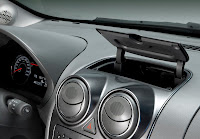
Internally, the new Fiat Palio is also full of surprises. Ample internal space especially for a car in the AB segment, exquisite finishing and many details of comfort technology increase the pleasure to drive and to travel in the vehicle. Special attention was given to the harmonization of all elements - dashboard, steering wheel, radio, speakers and fabrics - in such a way as to create a warm and refined, but always functional environment.

All functional surfaces of the car are covered by panels, giving the cabin a very polished and pleasant to the touch aspect. The storage compartments, which extend the convenience and organization, are everywhere. Depending on the version, they can be a total of 17: four on the dashboard, four in the center console, eight on the doors, and one on the trunk cover.

The wraparound seats are new and designed to be more ergonomic and more comfortable. Its structure is light and strong, and very safe. The front seats have antisubmarining system and aft adjustment via rail. The driver's seat can come with height adjustment by lever arms and supports for comfort. The rear seat offers two positions on the back to increase the volume of the trunk. It can also be folded flat, creating a larger luggage space. All head restraints of seats and arm rests have the pourinplace technology, which means "inject" the foam directly into the fabric, enabling the creation of new and more ergonomic shapes.

One of the new features that draw the most attention on the dashboard is the instruments panel - 100% designed and developed in Brazil by Magneti Marelli. It comes with White LCD, which ensures better visibility of the display, bright new graphics and pointers across the bar, where the arrangement of elements is entirely three-dimensional. It also features WelcomeMoving, which make the instrument indicators move and perform a systems check, and greeting to the driver on the turn of the key. The lighting of the dashboard turns on and off gradually, following the movement of the indicators.

In the versions Attractive and Essence, the dashboard's background is black and contains a speedometer, tachometer, clock and partial and full digital odometers, coolant thermometer, analog fuel gauge, and pilot lights. The numbers are in white with red pointers, in easy to read format, without distracting the driver.

The Sporting version received a different dashboard. It contains the same meters of the other versions, but with numbers in larger screen printing gradient and white indicators, and the "Sporting" logo in the center.

Another important point was the development of Color and Trim, when Fiat's designers sought through new technologies the best balance of colors, fabrics and textures for both the internal and external looks of the new Palio.

A highlight of this work is the insertmolding - the central strip that runs horizontally across the panel - which along with the new fabric of the seats and door panels, forms the principal item of internal customization of the new Fiat Palio. With patterns specific to each version, the assembly can be replaced with other colors and prints for customers who want to customize their car.

With the new volume of the interior of the Fiat Palio, the audio system was also configured and positioned to achieve optimal acoustic performance. The package consists of an amplified reception antenna, two front speakers MidWoofer, two rear Full Range speakers, and two front Tweeters. The CD MP3 player is part of the dashboard and adds to its sophistication. The system also features a USB/iPod connection and Bluetooth® for hands free phone. Another innovation in the model is the option of radio controls on the steering wheel.

The indoor comfort is completed with the engineering work of by Fiat in the air-conditioning system. The excellent result of the new Fiat Palio positioned it as the best the market reference among manual systems.

EXCELLENT STRUCTURAL PERFORMANCE
The structure of the new car was designed to meet the best safety requirements of the global market. In the body, the high-strength materials were used on a large scale, resulting in increased rigidity, improved safety performance and reduction in body weight by 15%.

These components with high strength materials comprise 35% of the body structure. They were also used in 30% of the moving parts of the structure and 34% of the structure of the doors. In addition the door safety has been increased against lateral collision and burglary with the use of ultraresistant materials and with the new lateral protection bars in omega profile.

All of these interventions in the new car resulted in excellent structural performance, weight reduction, improved performance and enhanced safety. In addition to all aspects that enhance passive safety, the new Fiat Palio can also be equipped with four airbags, two in the front and two on the sides. In terms of active safety, we highlight the ABS brakes with EBD.

Another strong point of the new Fiat Palio is its suspension. Featuring an entirely new and more robust structure, it is designed and calibrated to provide comfort for occupants in all driving conditions - that is, it absorbs the irregularities of the floor and the lateral and longitudinal oscillations coming from it or from maneuvers - and ensures the stability of vehicle, keeping the tire traction on the ground.

To this end, various technical solutions were adopted:
  •     Front suspension. It has lower arms in the form of rectangular triangle. The goal is to minimize the effect of the braking load in curves and ensure better balance in all operating conditions.
  •     Rear suspension. The torsion axle and semi-independent wheels result in high torsional rigidity and appropriate flexibility.
  •     Rubber cushion attached to the body. It has been optimized to improve dynamic response in curves.
  •     Dimensions of elastic cushions. They were increased to better dampen road roughness, increasing driving comfort.
  •     Dampers designed and calibrated to achieve the ideal balance between driving comfort and curve stability thresholds.

The front suspension, McPherson type, consists of lower arms in stamped plates, wheel hubs, rods, stabilizer bar, hydraulic dampers and "side-load" helical springs. Dampers and springs work as both elastic and absorbent elements and structural and cinematic elements.
Read More

Monday, October 8, 2012

Lexus GS 250, 2013


  •  Lexus GS 250, 2013

The fourth generation Lexus GS features an all-new exterior reflecting a further development of Lexus' unique, L-finesse design philosophy, making the car look bolder and more dynamic.

Though remaining the same length, the new GS has a 10mm shorter front overhang, a 10mm longer rear overhang and is 30mm higher than its predecessor. Improving high speed stability, the front track has been increased by 40mm and the rear track by 50mm. Overall vehicle width has increased by 20mm.

Key to the new design is a more aggressive frontal treatment which gives the new GS the powerful, commanding road presence appropriate to a Lexus sports sedan.

In a further evolution of a styling cue first developed on the CT 200h, the inverted trapezoid upper grille and slanted lower grille have been combined and integrated into a single element, bridging the bumper mid-section to create a prominent 'spindle' shape. The brake cooling ducts at either side of the spindle grille combine a distinctive style with engineering functionality.

This bold, elegant and highly individual grille treatment makes the GS instantly recognisable as a Lexus at first glance, and will be adopted throughout the brand to strengthen the Lexus family identity between model ranges.

The grille is flanked by headlamp clusters clearly positioned on a higher plane than the grille itself. This is a unique characteristic of Lexus models, focusing the eye at the very apex of the vehicle to give the design a resolute look and strengthen the impression of speed and agility.

The headlamps themselves are underscored by newly developed, integral LED Daytime Running Lights (DRL) which form the L-finesse arrowhead motif, further reinforcing the unique visual signature of the new GS.

Exclusive to the hybrid GS 450h, a unique three-lamp design aligns the turn signal and Lexus-first high and low beam LED lamps in a single horizontal row. The improved illumination and beam range provided by LED lamps offers significantly superior visibility even under low beam driving conditions.

Integrating sharply sculpted front foglamp housings, the deep front bumper forms a wide, trapezoid shape which anchors muscular front wings and flared wheel arches, reinforcing the new GS's wider front track, broad stance and powerful road presence.

In profile, the new GS shares its predecessor's long, elegant cabin proportions and slingshot window design highlighted by a stainless steel door frame moulding. But a new, 15mm higher roofline reflects the increase in rear passenger accommodation and boot space whilst providing optimum aerodynamic performance for a drag coefficient of Cd 0.26.

The door handle design has been changed, making it easier to grip, and the smart entry lock mechanism has been changed from a push switch to a touch sensor, improving both appearance and operability. The door mirror now incorporates both an LED side turn signal lamp and a puddle lamp. Both the door panel gaps and the gap between wheel arches and tyres have been reduced, further enhancing the appearance of the new GS model range.

To the rear, the new design narrows behind the flared wheel arches, exposing the lower portion of the rear tyre to emphasise the vehicle's wide rear track. LED lamp clusters feature aero-stabilising fins to enhance the aerodynamic efficiency and driving stability of the car. Uniquely, the rear bumper of the GS 450h covers the exhaust pipe apertures.

In addition to its new headlamp design, the new GS 450h may be further identified by hybrid-specific, front, rear and side blue badging.

F Sport Exclusive Features
The F Sport package is available across the entire GS model range. F Sport exterior design features include exclusive front grille and bumper, rear bumper and lip spoiler treatment, 19" alloys and grade-specific badging.

The F Sport front bumper design features a more three-dimensional form at the sides, incorporating enlarged side grilles. Combined with an exclusive, upper and lower grille mesh design, this reinforces the new GS's more aggressive appearance, wider track and sporting stance.

To the rear, F Sport petrol engine models feature a grey metallic paint finish to the bumper diffuser. The Lexus GS 450h F Sport diffuser combines grey metallic paint with a chrome plated moulding to the lower section of the bumper to further enhance the vehicle's road presence.

All F Sport models further benefit from a grade-specific rear spoiler and exclusive, dark premium metallic 19" alloy wheels.

Exterior Colours
The new GS is available in a choice of 11 colours, including three that are new to the Lexus colour palette: Crimson Red, Meteor Blue and Sonic Silver. Vehicles in Crimson Red benefit from glass flakes incorporated into the coating, adding a high level of brilliance to the paint.

Lexus engineers developed a new advanced coating process for the Sonic Silver finish. The new GS is the first Lexus to adopt this new coating technology. Vehicles with the Sonic Silver exterior appear more radiant as an additional metallic texture gives both strong shading and defined, sharp highlights. This metallic effect makes subtle and defined bodylines more noticeable and the surface appear finely polished.

INTERIOR DESIGN
An ergonomically designed, driver-focused cockpit enabling customers to remain alert and comfortable over long periods of time is an essential requirement of a sports sedan.

The new GS interior represents a continuation of the next generation Lexus interior design theme first seen in the CT 200h. With all functional driving components consolidated in the driver's seat surroundings, it combines outstanding ergonomics with advanced Human Machine Interface technologies.

Driver Focused Cockpit
A clean, elegant dashboard design forms a wide horizontal plane, emphasising the overall roominess of the interior, whilst the door and centre console trim support the driver and front passenger in a secure, cocooned environment.

The dashboard is divided into two distinct zones: an upper Display Zone, with the largest, ultra-wide, 12.3 inch, LCD multi-display screen yet installed in a production car, located at an ideal distance for at-a-glance viewing, and a lower Operation Zone, which allows access to system controls such as the second generation of Lexus' award winning, computer mouse-style Remote Touch Interface (RTI).

Every aspect of the driving position has been carefully considered to create the ideal placement of controls, maximise comfort and minimise driver distraction and fatigue

A new front seat features a lower hip point, placing the driver closer to the GS's centre of gravity, and combines optimum holding ability with superlative comfort. An extended seat sliding range caters for the widest possible cross-section of occupants. As well as a new mid seat back folding adjustment, multiple adjustment mechanisms include a butterfly headrest, shoulder support, side support, 4-way lumbar support, and a cushion length adjustable by 76mm .

The airflow volume of the seat ventilation system has been increased to almost twice that of the current model. And soft padded, tactile finishes to the centre console arm rest, knee pads and door arm rests further enhance the long-distance comfort of the driving position.

The steering wheel features an enlarged, 50mm telescopic reach to bring it closer to the driver, and has been set at a low angle to facilitate large steering inputs without the need for the driver to move their body unnecessarily through over-reaching. Even the cross-section has been painstakingly analysed; no longer uniform throughout the entire circumference of the wheel, its varying profile allows for a relaxing grip and smooth steering inputs.

Brake pedal operability has been optimised with a new pedal shape and surface angle, and the footrest size increased to 300mm for a better fit and greater comfort.

The driver's instrument binnacle incorporates large diameter Optitron dials. Minimising the driver's eye movement from the road ahead, a new Head-Up Display (HUD) relays essential driving information. Its visibility has now been significantly improved. By implementing a wedge-shaped glass for the windshield and the PVC film for displaying information, the clarity of projection has been increased as well as double image projection avoided. The HUD now displays a wider range of information including SPORT mode (tachometer) display and ECO bar display in addition to the speed and audio displays already implemented.

The driver's forward visibility has also been maximised - slim A pillars and a taller windscreen creating a wider field of view. And even the bonnet visibility range has been tailored to allow the driver to readily establish the vehicle extremities, making it easier to place when manoeuvring in confined spaces.

Comfort, Convenience and Contemporary Craftsmanship
Despite having an identical wheelbase length to that of its predecessor, the new GS offers increased space and comfort to all vehicle occupants. Both front and rear door openings have been designed for maximum ease of ingress and egress, with a particular focus on head clearance.

Front cabin occupants benefit from a new seat back design which is more comfortable for taller passengers. A greater seat sliding range and seat height adjustment give an increase in legroom and up to 30mm of extra headroom.

Rear seat passengers benefit from new seats with a revised seat back angle and redesigned cushion shape for greater comfort. A thin front seat design improves knee room by 20mm, and headroom has been increased by 25mm.

Allied to a new, more compact rear suspension layout, a wider opening, increased deck length and reduced deck height combine to make the new GS's luggage space more practical, and significantly increase its volume to up to 566 litres (a 31% increase over the current GS 350). The smart-packaging of the hybrid battery into a stacked format also increased the GS 450h's luggage capacity to up to 482 litres2 (a 61% increase over the current GS 450h).

Throughout the interior, high-quality materials and finishes convey a contemporary, premium look and feel, with a level of craftsmanship and attention to detail for which Lexus is globally renowned.

A new interior colour scheme replaces the traditional two-tone design with a more versatile palette. The dashboard, floor and steering wheel are uniformly black to create a sporting, luxurious feel. And the leather instrument panel features coloured stitching - available in grey and ivory depending on the interior tone- to enhance the premium quality of the cabin environment.

Matching seat and door upholstery will be available in a choice of six colours - Black, Ivory, Grey, Saddle Tan, Topaz Brown and Garnet. In addition to Ebony, Walnut and Bamboo wood finishes, newly developed Black Gloss and Aluminium bring a contemporary, artistic look and feel to the interior ornamentation.

A world first, the steering wheel of the GS 450h will be available in a real bamboo finish, symbolising the innovative spirit and environmental credentials of the vehicle's Lexus Hybrid Drive system.

The GS interior's air of sophistication and luxury is reinforced through Lexus' painstaking attention to detail throughout. It incorporates exquisitely crafted details such as satin metal trim, high quality stitching and the brushed aluminium knobs of the audio system. A new analogue clock with LED indicators, carved from an ingot, adds a unique touch.

This beautifully crafted interior is complimented by an all-white LED interior lighting system which creates an atmosphere appropriate to a premium performance sedan. Reinforcing the GS's highly refined on-board ambience, elements of the LED lighting illuminate to greet the occupants as they approach the car, even before it is unlocked, activating and fading thereafter in sequence with the vehicle starting procedure.

F Sport Exclusive Features
F Sport model interior design features include matching door and seat upholstery also available in Garnet -a grade-exclusive colour, combined with newly developed Aluminium ornamentation, 16-way electrically adjustable F Sport front seats, a black headliner and pillar finish, a dimple perforated leather steering wheel and gear knob, Aluminium pedals and dashboard trim, exclusive black logo scuff plates and F Sport badging to the steering wheel.

INNOVATIVE ON-BOARD TECHNOLOGIES
Several highly innovative technologies make a first appearance in the new GS model range, including a new, energy saving air-conditioning system with S-Flow and 'nanoe' technologies, a second generation Remote Touch Interface (RTI) linked to the world's largest on-board multi-information display screen, and a choice of audio systems offering unparalleled power and clarity.

Second Generation RTI with 12.3" Multimedia Display
The second generation Lexus Remote Touch Interface (RTI) multi-function control device has been enhanced for increased user-friendliness and ease of operation.

It now features the world's first slide haptic joystick mechanism -a planar slide-type controller that is much like a computer mouse, and the ENTER command is now accomplished by simply pushing the controller. Usability has also been improved through the addition of ambient lighting, and by minimising the difference in height between the RTI controller and the armrest.

RTI allows users to manipulate the cursor quickly and easily across the world's largest on-board multimedia display; a 12.3 inch, full colour, LED screen with an ultra-wide, 24:9 format. The screen's size allows for the permanent display of two types of information simultaneously, such as map/audio, night view/map and navigation input/incoming call.

Improved Navigation System
The new GS' navigation system has been enhanced by using also TPEG (Transport Protocol Expert Group) data including TFP (Traffic Flow and Protection) information, parking lot availability and fees which additionally allows to set a certain parking slot as destination.

S-Flow Air Conditioning with Nanoe Technology

Considerably more powerful than the previous system, the new air-conditioning features S-Flow technology to maintain optimum occupant comfort whilst significantly reducing power consumption. Using sensors it determines if the front passenger seat is occupied. If not, the system automatically closes all vents serving this seat. The same happens to the rear seats when the S-Flow button is switched on. This maximises system efficiency.

In addition the system measures the ambient air temperature, interior air temperature and insolation to determine the optimal level of air conditioning. The target airflow volume is customised for each seat through Temperature Airflow Output (TAO) control. When the thermal load is large (cooldown in summertime, warm-up in winter) air conditioning is implemented in the entire car to quickly obtain a comfortable interior temperature. Once the overall interior temperature is stabilized, the system concentrates only on occupied seats.

During the development of the centralised occupant sensing control system, intensive vehicle tests in wind tunnel facilities were performed. The system was also repeatedly tested on both test courses and actual roads to ensure it maintains comfortable driving in a range of environments.

In addition to the TAO control, upper and lower independent, multilayer air mix technology has been adopted to achieve an environment tailored for both driver, front and rear passengers. This allows for example to set the upper air mix for coolness to deal with effects of solar insolation, and at the same time the lower air mix for warmth.

The new system also introduces a 2-tier Interior / Exterior Air Control which prevents window fogging by inducing low humidity exterior air to the upper half of the cabin while maintaining excellent heating performance in the foot area by circulating interior air. This avoids ventilation losses which are characteristic to conventional control system where cold exterior air is induced into heated interior air.

The new GS is also equipped with a new deodorizing filter, which, in addition to the removal of pollen and dust, etc., also removes exhaust gas from the ambient air.

In addition, the air conditioning system incorporates a new 'nanoe' technology system. This air cleaning technology operates automatically when the air conditioning is turned on. It releases 20 to 50Nm diameter nanoe particles -negatively charged ions wrapped in water molecules- into the cabin via the driver's side dashboard air vent.

By attaching themselves to airborne particles and molecules, the nanoe ions have been said to have both an air purifying and odour eliminating effect. They also deodorise vehicle seats and ceiling to create a cleaner cabin environment.

In addition, because nanoe moisture content is approximately 1,000 times that of conventional ions, the emission of ions bonded to water molecules is said to have a moisturising effect on skin and hair, acting to enhance occupant well-being.
Read More