Tuesday, September 11, 2012

Lancia Flavia, 2013


  •  Lancia Flavia, 2013

With its free and sophisticated spirit, the new Lancia Flavia proves it is the quintessence of open air driving pleasure with 4 genuine seats. It is the ideal answer for a customer who wants the advantages of a coupé without sacrificing the unique sensations that only a convertible has to offer. That's not all. The new convertible is the most interesting option of this market segment able to win over a customer who demands not only a substantial product, but also a distinctive and unique style. Besides, whoever chooses a Lancia vehicle starts a new trend because he follows only his own personality.

It is the perfect expression of the Italian way of life, the beauty of Italian lifestyle based on taste, imagination, style and refinement. The new front wheel drive Lancia Flavia guarantees a refined driving experience unparalleled by any other in its segment, whether tackling the daily trip in town to go to the office or when taking to splendid panoramic roads out of town on weekends.

In terms of length (4.9 metres), height (1.4 m) and width (1.8 m), the new Lancia is at the top of segment D, offering the ultimate in interior room (it can perfectly accommodate up to four adults) and on-board comfort, with its generous 276-cm wheelbase.

Distinguished by an elegant and dynamic look, Lancia Flavia has a sculpturesque front end sporting the unprecedented grille with Lancia logo and the original front headlights and fog lights. Furthermore, the surface of the side panel is extremely clean, in addition to being distinguished by a sleek line, which lengthens the car and lends it dynamism, and by elegant 18" alloy wheels.

The rear LED light clusters stylistically connected by a thin chrome-plated bar that further enhances their overall look contribute to accentuating the original design. This impression is further reinforced by the unusual chrome-plated tailpipe and by the sophisticated electrically-controlled soft top enclosed inside the hood cover, harmoniously built into the body with the third brake light at its base.

So, if "elegance and dynamism" describe the exterior of the new Flavia, the guidelines inside are refinement and innovation, in perfect tune with the Italian style and the craftsmanship quality that has always distinguished Lancia cars. Aesthetic refinement that flows through the entire passenger compartment and wraps around driver and passengers in a warm "embrace" thanks to the careful selection of fine materials, the attention devoted to the smallest detail and the adoption of cutting-edge comfort, safety and driving pleasure content.

The new Lancia Flavia boasts a sophisticated environment that will without a doubt win over a customer who seeks exclusiveness, technology and Italian taste in a car. A new console has been created for him. It has elegant chrome-plated frames and a large central display; a brand new steering wheel wrapped in leather complete with built-in controls for managing radio, cruise control and phone in total safety; and newly designed seats upholstered in fine leather, complete with practical "active" headrests.

Produced at the Sterling Heights plant in Michigan (USA), in keeping with the stylistic features of the Lancia brand, the glamorous Lancia Flavia Cabrio interprets the Chrysler 200 Convertible model being launched on the European market. In Italy Lancia Flavia is offered in a single, exclusive version that is "all inclusive". As the name itself intimates, it offers a wealth of standard equipment, from the top quality leather upholstery, electronic stability control (ESC) and traction, latest-generation ABS and four airbags (front multi-stage and side) to the ISOFIX mountings for transporting children in complete safety, the innovative Uconnect® multimedia system complete with satellite navigation system, and the sophisticated "Boston Acoustic Sound System".

The new Lancia Flavia is equipped with a 2.4 litre petrol engine combined with a 6-speed automatic transmission that delivers a maximum power of 170 HP at 6000 rpm and a maximum torque of 220 Nm at 4500 rpm.

Lancia Flavia completes one of the broadest ranges on the international automotive scene
The Lancia Flavia launch completes the Lancia range in an important year, which began with the new 5-door Ypsilon marketing and continued with the debut of the flagship Thema and the best Voyager ever. These latter two cars - together with the brand-new Lancia Flavia that, in keeping with the stylistic features of the Lancia brand, interprets the Chrysler 200 Convertible model being launched on the European market - are the best demonstration of how it is possible to join two worlds so geographically distant yet so close in their essence. This perfect alchemy expertly combines typically American dimensions, personality and performance with the interior elegance, comfort and exclusivity of great Lancias.

The result is a new automotive dynasty founded on the will to excel in the future and on the values engraved in its century-old history: design and innovation. Without forgetting the Delta and Musa models that complete one of the widest ranges on the international scene that starts with segment B to reach the Large MPV segment, also including the medium, flagship and convertible segments.

Style: elegance on the outside, refinement on the inside
Superior in design, aerodynamic in forms and sinuous between the folds of the wind. The new Flavia boasts an unconventional beauty that combines elegance on the outside and innovation on the inside, in perfect tune with the Italian style and the craftsmanship quality that has always distinguished Lancia cars.

Elegant and dynamic look embellished with a next-generation soft top
Distinguished by an elegant and dynamic look, Lancia Flavia has a sculpturesque front end sporting the unprecedented grille with Lancia logo and the original front headlights and fog lights. Furthermore, the surface of the side panel is extremely clean, in addition to being distinguished by a sleek line, which lengthens the car and lends it dynamism, and by elegant 18" alloy wheels.

The rear LED light clusters stylistically connected by a thin chrome-plated bar that further enhances their overall look contribute to accentuating the original design. This impression is further reinforced by the unusual chrome-plated tailpipe and by the sophisticated electrically controlled black soft top enclosed within the soft top cover, harmoniously built into the body with the third brake light at its base.

The exterior colours available at launch are Bright White and Mineral Grey, which can be matched with two interior shades - black and two-tone black and white - and one soft top colour, black. Afterwards the colour range of Lancia Flavia will be enriched with the Deep Cherry, Silver, Black and Blackberry body colours in addition to a beige soft top.

A sophisticated passenger compartment marked by a combination of "refinement and innovation"

So, if "elegance and dynamism" describe the exterior of the new Lancia Flavia, the guidelines inside are refinement and innovation, in perfect tune with the Italian style and the craftsmanship quality that has always distinguished Lancia cars. Aesthetic refinement that flows through the entire passenger compartment and wraps around driver and passengers in a warm "embrace" thanks to the careful selection of fine materials, the attention devoted to the smallest detail and the adoption of cutting-edge comfort, safety and driving pleasure content.

The new Lancia Flavia therefore boasts a sophisticated environment that will without a doubt win over a customer who seeks exclusiveness, technology and Italian taste in a car. A new console has been created for him. It has elegant chrome-plated frames and a large central display; a brand new steering wheel wrapped in leather complete with built-in controls for managing radio, cruise control and phone in total safety; and newly designed seats upholstered in fine leather, complete with practical "active" headrests.

Generous size and comfort, making it the best in class
In terms of length (4.9 metres), height (1.4 m) and width (1.8 m), the new Lancia is at the top of the segment, offering the ultimate in interior room (it can accommodate up to four adults) and on-board comfort, with its generous 276-cm wheelbase.

In the same way, the space for the front passenger and driver is the largest in its category: 1.07 metres of legroom and 1.43 metres for the shoulders. Lastly, the new Flavia boasts a luggage compartment which heads up the segment thanks to the technological solutions adopted for closing the soft top: 377 and 198 litres, when the soft top is closed and open respectively.

Exclusive equipment for maximum comfort and safety
Lancia Flavia surrounds both driver and passengers with technology which ensures them the highest level of comfort on board, as demonstrated by the sophisticated electrically controlled soft top and the innovative UconnectTM multimedia system. In full observance of Lancia's tradition, the new model also offers the best available to date in the technological innovation field applied to both safety and protection.

Electrically controlled soft top
For savouring those unique sensations that only a convertible has to offer, Lancia Flavia adopts a sophisticated electrically controlled black soft top enclosed within the soft top cover, harmoniously built into the body with the third brake light at its base. In detail, the top has a retractable heated rear glass window that takes just 28 seconds from the time the command is given on the remote control to transform the car from a saloon into a convertible.

UconnectTM Media Center
Designed to enrich the driving experience and perfectly integrated in the design of the new Lancia Flavia, the innovative UconnectTM Media Center offers a 6.5" touch-screen and voice commands for easy control of several multimedia sources and outputs. It is also possible to customise on-board multimedia entertainment through iPod® integration and the auxiliary port for MP3 players. The Media Center also includes a modern Radio/CD/DVD/MP3/WMA system and a 40 GB hard disk where music, photos and voice messages can be stored through a USB interface. In addition to the software and navigation maps, the hard disk can contain up to about 6,700 tracks, depending on the model.

By connecting a digital device with analogue connection to the USB port located in the storage compartment, you can listen to hours and hours of digital music in MP3 and WMA formats. The audio is played by the car stereo system - a sophisticated "Boston Acoustics Sound System" with 6 speakers is standard - while the information (artist, track title, album, etc.) is displayed on the radio screen. In addition, the audio peripheral device battery recharges when connected to the USB/AUX connector. Another peculiar feature of Lancia Flavia is the "UConnectTM GPS": the satellite navigation function with 2D and 3D bird's eye view maps and progressive route guidance.

Next-generation Anti-lock Braking System (ABS)
A constant, predictable handling of the car that compensates for any mistakes by the driver, allowing critical situations to be tackled effortlessly, is a fundamental requirement for achieving high active safety. In this field Lancia Flavia comes with not only an excellent braking system, but also the most sophisticated electronic dynamic control devices available today. Starting from the next-generation Antilock Braking System (ABS) that detects and prevents the wheels from locking by acting independently on all four wheels, improving steering control in extreme braking conditions and/or on slippery surfaces.

Electronic stability control (ESC)
The system increases the driver's control of the vehicle to allow him to maintain a stable direction in all driving conditions. It is useful in critical situations, when cornering and when driving on mixed surfaces in the presence of snow, ice or gravel for example. If a difference between the driver's action on the steering wheel and the vehicle path is detected, the ESC applies selective braking and then restores the accelerator's action, returning the vehicle to the speed the driver wants.

Multistage front airbags and side bags
The front airbags of Lancia Flavia are fitted with an advanced latest generation multistage system which supplies an opening adequate for the severity of a crash, which is detected by the ECU that manages the restraint systems and the sensors located at the front of the vehicle. The inflation device for the first stage engages immediately during an impact which requires the activation of the airbag. The timing device for the second stage determines whether the supply force required is low, medium or high. If a low supply is sufficient to meet the needs of the situation, the second stage release is delayed in order to eliminate, in the case of a crash, pyrotechnic material activated by the system. To protect the passenger's pelvis and chest when the side of the car is struck, Lancia Flavia is equipped with side bags which are located inside the backrests, ensuring better protection of occupants, regardless of their stature, the position that they assume and the adjustment of the seat.

Active headrests
The Lancia Flavia's headrests are designed to reduce the risk of injury by limiting the head's movement in the case of shunt. The restraint system ECU (ORC - Occupant Restraint Controller) determines whether the severity or type of rear impact requires the activation of the front headrests. If their activation is required, the front half of both active headrests extends forward to reduce its distance to the occupant's neck.

2.4 litre engine and 6-speed automatic transmission

The new Lancia Flavia is equipped with a "WGE" family 2.4 litre 4-cylinder petrol engine. Built entirely of aluminium and equipped with dual variable valve timing 16-valve cylinder (intake and exhaust side), the engine generates power of up to 170 HP (125 kW) at 6,000 rpm and maximum torque of 220 Nm at 4,500 rpm, values able to ensure the new Lancia Flavia a lively temperament and at the same time great driving flexibility.

Another distinctive trait of this 2.4-litre engine is represented by two balancing counter-shafts that turn at twice the speed of the crankshaft to balance the second order alternating forces, ensuring an excellent acoustic and vibrational behaviour. Finally, the chain distribution is maintenance-free, ensuring maximum reliability.

To achieve maximum driving comfort, the engine is combined with a 6-speed automatic transmission with sequential Autostick® function that also allows manual gear selection. The engine and transmission are transversely mounted and the traction is on the front wheels. The top speed of the new Lancia Flavia is 195 km/h and it accelerates from 0 to 100 km/h in 10.8 seconds; fuel consumption in the homologation combined cycle is 9.4 litres/100 km with CO2 emissions equal to 221 g/km.

Technical specifications
    DIMENSIONS
        Seats: 4
        Length: 4947 mm
        Width: 1843 mm
        Height: 1479 mm
        Track
            Front: 1570 mm
            Rear: 1570 mm
        Luggage compartment capacity
            with open soft top: 377dm3
            with closed soft top: 198 dm3
    ENGINE
        No. of cylinders, layout: 4, in line
        Bore × stroke: 88 x 97 mm
        Displacement: 2360 cm3
        Compression ratio: 10.5:1
        Max power: 170 HP (125 kW) @ 6000 rpm
        Max. torque: 220 Nm @ 4500 rpm
        Fuel supply: Multipoint electronic injection
        Timing system: 2 overhead camshafts (chain), variable valve timing (intake and exhaust side), balancing counter-shafts
    TRANSMISSION
        Drive system: Front
        Transmission: Automatic 6-speed with electronic control and hydraulic torque converter
    TYRES
        Size: 215/55 R18
    STEERING
        Steering box: Rack and pinion with hydraulic servo control
        Turning circle: 11.6 m
    SUSPENSION
        Front: Independent wheel with McPherson layout and stabiliser bar
        Rear: Independent wheel with Multilink layout and stabiliser bar
    BRAKES
        Front: Self-ventilating disc brakes: 340 x 28 mm
        Rear: Solid disc brakes: 302 x 10 mm
    CAPACITIES - WEIGHTS
        Fuel tank: 64 litres
        Kerb weight: 1856 kg
    PERFORMANCE
        Top speed: 195 km/h
        Acceleration 0-100 km/h: 10.8 s
    FUEL CONSUMPTION - EMISSIONS
        Urban: 13.6 l/100km
        Extra-urban: 7.0 l/100km
        Combined: 9.4 l/100km
        CO2: 221 g/km
        Environmental classification: Euro 5+
Read More

Ford Ranger, 2012


  •  Ford Ranger, 2012

The all-new Ford Ranger - the latest in a wave of global vehicles - made its worldwide debut at the 2010 Australian International Motor Show. The all-new Ranger has a powerful presence and promises to give pickup truck owners more can-do capability and a transformed truck ownership experience.

From impressive gains in power and safety to exceptional towing capability, the next-generation Ford Ranger emerges as a clear segment leader. It not only builds on the tremendous Ranger heritage of pickup truck capability, but it also gives truck owners a spacious, comfortable, feature-filled interior and sophisticated driving experience they would expect to find only in a car.

Amongst the most high-tech in its segment, Ford Ranger is the impressive result of an all-new global compact pickup truck platform from Ford - the latest to emerge under the company's One Ford initiative - and Mazda. It replaces two previous-generation compact truck platforms currently in production to present a new face of Built Ford Tough to customers around the world.

Built on innovation, it boasts a list of technologies and features to lead the segment - including a new Rearview Camera System, Rear Park Assist, Trailer Sway Control and Adaptive Load Control. Ford plans to reveal even more new Ranger technologies in the coming months.

Destined for sale across five continents and more than 180 markets, Ford Ranger will be offered as a complete family of compact trucks - with three different cab body styles, 4x2 and 4x4 drivetrains, two ride heights and up to five series choices, depending on the market.

All-new model builds on strong heritage
For nearly 20 years, Ford Ranger has been one of Ford's most popular pickups across the globe. It has provided millions of buyers with Ford Tough Truck capabilities - hauling heavy payloads, pulling trailers and absorbing punishment on the roughest roads. The all-new Ford Ranger now has even more capability but has been transformed into a taut, toned and muscular contemporary shape exuding strength and toughness.

With an all-new chassis frame, front and rear suspension and steering system, Ranger delivers more payload and outstanding towing capability. It is powered by a choice of three new, fuel-efficient powertrains, including two state-of-the-art common-rail Ford Duratorq TDCi diesels and new fuel-efficient six-speed transmissions. Add in more chassis and safety technologies, and the story of Ford Ranger pickup truck leadership becomes as vivid as its powerful, purposeful stance.

Ranger has the flexibility to handle every chore at home or on the job.
Its transformation is perhaps most vivid in the all-new interior, which brings new levels of spaciousness to the compact pickup ownership experience. The all-new Ford Ranger offers a comfortable and quiet ride, along with a level of features and technologies that make it second-to-none.

The flagship of the new range is the Ford Ranger XLT Double Cab model unveiled in Sydney in lustrous Aurora Blue, showcasing a gutsy fuel-efficient new 2.2-litre Ford Duratorq TDCi 110 kW (150 PS) diesel engine with an impressive 375 Nm of available torque.

'21st Century Tough' styling inside and out
The all-new Ford Ranger creates a bold and purposeful presence, with a fresh, contemporary exterior design that exudes the famous Built Ford Tough personality. Designers call the look '21st Century Tough'.

Taut, toned muscularity and a bold, confident stance instantly signal the strength and capability of an ultra-modern pickup truck. Yet it also communicates a transformed, more sophisticated and refined style that appeals to a new generation of truck owners.

 Ford Ranger looks very tough but not in the more chiselled style of Ford's larger North American F-Series trucks. The contemporary design will be just as at home on city streets outside trendy restaurants in Cologne or Melbourne as it is in the Outback or on a luxury property development site.

Reflecting the diverse uses of compact pickups around the world, the all-new Ford Ranger product range will offer everything from basic work trucks with hose-out interiors to high-series models, such as the Ford Ranger Limited and Ranger Wildtrak, both yet to be revealed.

The best of Ford's design language also have been applied to the interior. Borrowing cues from ergonomically-designed power tools like DEWALT1, and encasing instruments in a protective shell like a G-Shock®2 watch, designers were inspired to blend form and function while ensuring the instruments are clearly visible for the driver.

Inside, trim panels are designed to be easily substituted. A single basic instrument panel is assembled off-line and simply installed in the vehicle. While the trim styles vary, all parts are designed to be interchangeable.

Small details received careful attention to ensure quality and craftsmanship in every model. From graining on interior panels to tonal colour choices, the execution exudes a premium feel throughout the interior.

On the instrument panel, designs were used that would easily accept modular parts - such as radios, and heating and ventilation controls - to ensure build quality was maintained to eliminate any unsightly gaps.
According to Debbie Pascoe, Ford's colour and trim design manager, the materials used throughout the cabin have to be especially durable. Seats have to be comfortable but also able to withstand commercial customer usage.

Interior materials are subjected to constant abuse and have to withstand punishing rigours not seen in a passenger car. Seating materials must be able to take a beating from tools that are flung into the cabin or forgotten in a back pocket. Door panels can't be easily scuffed or scratched by dirty boots. And truck customers increasingly want an interior that's stylish and comfortable for personal use.
Three passengers can easily fit into the second row of the new Ford Ranger Double Cab. It offers ample knee clearance and better foot clearance between the B-pillar and the seat. That means getting in and out of the new Ranger has never been easier for rear-seat passengers.

Ample storage is provided throughout the interior cabin with up to 20 storage locations. Double Cab pockets in all four doors can easily fit water bottles and, on selected models, a deep centre console keeps beverages cool. The glove box is large enough to accommodate a laptop computer. Storage for mobile phones and other small items can be found in the console.
Underneath the rear seats, a convenient hidden storage area for electronic items and small packages is provided, while on selected Ford Ranger Double Cab models, an armrest in the centre rear seatback fold includes two cup holders.

To help reduce Ranger's ownership costs, especially at the fuel pump, a wide range of design features were optimised to improve fuel efficiency. Using the same leading-edge simulation technology as Formula One teams, aerodynamicists performed more than 1000 full-vehicle aerodynamic simulations to perfect the shape of the vehicle.

Using this technology, engineers demonstrated that with a hard line at the fender top, wind flow was divided and resistance lowered. The backlight was positioned more vertically, A-pillars optimised and a small spoiler was added to the top of the tailgate. A front airdam plays a significant role in controlling the airflow underneath the vehicle, leading to a significant reduction in the drag coefficient.

More muscle under the bonnet - three new engines
With a body that is lean and taut, the muscle lies beneath the bonnet. The all-new Ranger powertrains have been engineered to give customers an uncompromised combination of power and torque.

Ford Ranger introduces three new engines to Ford's compact pickup truck range globally:
  •     A new 2.2-litre Ford Duratorq TDCi I4 diesel engine with peak torque output of 375 Nm and power output of 110 kW (150 PS).
  •     A highly responsive and efficient new 3.2-litre Ford Duratorq TDCi I5 diesel engine with a powerful 470 Nm of torque and power rated at 147 kW (200 PS).
  •     A 2.5-litre Ford Duratec I4 petrol engine with more power at 122 kW (166 PS). It can be configured for E100 flexible fuel capability or aftermarket upfitted to run on CNG or LPG.

Developed in Australia and tested and validated around the world, Ranger powerplants are designed to run on a variety of locally blended fuels with different octane ratings.

Selected Ford Ranger powertrains benefit from the advantages of lower engine rpm and reduced wear and tear, with six-speed automatic and manual transmissions available across selected models. Increased fuel economy, coupled with other advances to facilitate maintenance and serviceability, help reduce annual ownership cost.
Transmissions and final drive ratios have been carefully matched to deliver exceptional acceleration, excellent fuel efficiency and a quiet ride.

The new Ford 6R80 six-speed automatic transmission has been extensively tuned to deliver smooth, quick shifts almost imperceptibly to the driver, reinforcing the car-like refinement of the new Ranger. In Normal mode, the calibration focuses on comfort and fuel economy. For sportier driving, a quick flick of the shifter changes the transmission into Sport mode. This provides later shift points and the driver can manually select gears through a forward (downshift) or rearward (upshift) movement.

It also features another smart Ford technology - Grade Control Logic. It automatically downshifts on a downhill grade when sufficient brake pressure is sensed, adding to the all-new Ford Ranger's towing and hauling capabilities.

The 6R80 automatic transmission has been designed for both 4x2 and 4x4 versions. It is lightweight and includes strengthened internals that have been designed and tested to Ford's global commercial vehicle standards.

Ranger can also be fitted with Ford MT82 six-speed manual transmission with its short, car-like shifter - well-positioned ergonomically for the driver - that provides crisp, precise shifting matched perfectly to the generous torque output of the new diesels. An upshift indicator in the instrument panel helps coach drivers on the best gearing for fuel economy.

The 2.5-litre petrol engine is offered standard with the proven Ford MT75 five-speed manual transmission.
The all-new Ford Ranger four-wheel drive models are equipped with a well-proven electronically controlled transfer case that allow drivers to shift from 4x2 to 4x4 anytime via an electronic switch conveniently located on the console. If extra torque or additional downhill braking is needed, low-range gearing also can be enabled.

Select four-wheel-drive Rangers also can be equipped with either an electric locking differential or a limited slip differential in a wide array of final drive ratios.
While fuel economy certification will take place closer to the start of production, Ford is forecasting that the new Ford Ranger powertrain range will contribute to significant savings at the pump.
Read More

Monday, September 10, 2012

Buick Verano Turbo, 2013


  • Buick Verano Turbo, 2013

The Buick announced the 2013 Verano Turbo luxury sedan will be powered by an Ecotec 2.0L turbocharged engine with direct injection and continuously variable valve timing that produces an SAE-certified 250 horsepower (187 kW) at 5300 rpm and 260 lb.-ft. (353 Nm) of torque at 2000 rpm. Acceleration from 0-60 mph is an estimated 6.2 seconds. The Buick Verano Turbo goes on sale in late 2012.

More than 90 percent of the Buick Verano Turbo's peak torque - more than 234 lb.-ft. - is available between 1700 to 5500 rpm. Its closest competitor, the 2013 Acura ILX 2.4L, offers a peak of 170 lb.-ft. of torque.

In December 2011, Buick's 2.0L turbocharged Ecotec engine was named one of WardsAuto World's 2012 10 Best Engines for North America. At the time, the publication's editor-in-chief, Drew Winter, said: "This engine delivers a level of power and sophistication that redefines Buick."

The choice to use a small-displacement turbocharged engine for a more powerful Verano model is consistent with Buick's effort to downsize its powertrains without sacrificing performance. Verano and the Regal luxury sport sedan are available exclusively with four-cylinder engines, while the LaCrosse luxury sedan comes standard with a four-cylinder engine paired with eAssist technology, which uses an electric motor and battery to boost both performance and fuel economy. The standard 2013 Regal four-cylinder engine also is equipped with eAssist.

"Buick's engine strategy continues to be driven by intelligent performance," said Tony DiSalle, vice president of Buick Marketing. "Four-cylinder engines, turbocharging and eAssist are all the right solutions for today's market. With these advanced technologies, Buicks are more efficient without sacrificing their smooth, quiet character."

According to IHS Automotive, use of four-cylinder engines in North American vehicles will grow 74 percent from 6.9 million to 12.2 million units over the next 10 years.

The Buick Verano Turbo will be available with a choice of a six-speed automatic transmission or a six-speed manual gearbox.
Read More

Aston Martin Virage Volante, 2012


  •  Aston Martin Virage Volante, 2012

Aston Martin introduces the new Aston Martin Virage - supremely elegant and powerful, yet juxtaposed as an understated sports car. The marque can now provide customers with a class-leading range, all with different characters, yet with the same unique Aston Martin soul and luxury.

Beautiful, dynamic and prestigious, the Aston Martin Virage combines outright sports car performance with luxury, comfort and refinement. The front mid-mounted V12 engine's torque delivery provides outstanding performance, coupled with the car's inherent agility and perfect weight distribution delivering the ideal balance between outright sports car performance and trademark sporting luxury exemplified by modern Aston Martins.

The Aston Martin Virage sits between the enduringly elegant DB9 and overtly sporting DBS, providing customers with a car that remains luxurious and understated but delivers increased performance and crucially performance that is always accessible for effortless driving.

Aston Martin's revered hand-built 6.0 litre V12 engine produces 490 bhp (365 kW/497 PS) and 570 nM (420 lb. Ft) of torque and through its carbon fibre prop shaft, is mated to a six-speed Touchtronic II automatic transmission mounted on the transaxle contributing to perfect 50:50 weight balance.

The Aston Martin Virage's dynamics have been tuned to deliver an engaging yet more refined driving experience, where the driver can extract the maximum performance from the car with greater ease. A newly developed Adaptive Damping System (ADS) intelligently 'reads' the road to provide optimum road holding, adapting to different conditions. The system now selects up to five different stiffness settings within normal mode, and a further five stiffer settings within sport mode.

Aiding driver control, a 'Sport' button on the facia allows the driver to select a sharper throttle response and faster gear changes while also holding the gears without automatically shifting up at the revolution limiter.

Aston Martin Virage delivered with Carbon Ceramic Matrix (CCM) brakes as standard - bucking the trend in this market - offering progressive and tremendous stopping power. Powerful, resistant to fade and much lighter than conventional cast-iron discs, the CCM braking system means that not only is the overall vehicle weight reduced, but the weight saving at each wheel means that a better balance between ride comfort and handling can be struck. Lower rotational mass also provides improved acceleration.

Aston Martin Virage capitalises on the technology from the DBS and unites it with the comfort and refinement found in the DB9 and Rapide. Aston Martin's own bonded aluminium 'VH' architecture that forms the backbone of the marque's sports cars, takes inspiration from the aerospace industry where weight reduction is the ultimate goal. Strong yet light, the inherent properties of modular aluminium lend themselves perfectly to an extremely rigid and versatile platform which allows the production of a Aston Martin Virage coupe and Volante.

The Aston Martin Virage sits low and wide asserting the power which lies beneath; single bi-xenon headlamps follow the lines of the car's flanks to give a more crisp and modern look from the front. A new aluminium metal front grille, inspired by the One-77, features five horizontal vanes which are chamfered creating an aerofoil profile. The new front bumper is pure and relieves the car of any visual complexities, contributing to the overall simplicity of design. The front wings distinguish the Aston Martin Virage from its stable mates housing a new modern interpretation of the Aston Martin iconic side strake housing six LEDs elegantly forming the side repeater. Aston Martin Virage's side sills carry the simplicity of the front bumper through to the rear diffuser which houses a body-coloured blade accentuating the width of the car.

As drivers and passengers open the signature swan wing doors, they are greeted by the aroma of seven hides of the finest Bridge of Weir leather expertly hand stitched by craftsmen. Inspiration has been taken from luxury leather goods to produce a pinstripe welt which flows down either side of the facia and along the seat and door, drawing your eye through the car. Each Aston Martin Virage will have 70 man hours of expert craftsmanship lavished on the interior alone to create the famous sophisticated Aston Martin interior. In all, over 200 man hours will be spent handcrafting the Virage at Aston Martin's global headquarters in Gaydon, Warwickshire, England as it becomes the tenth major production car to be built there in the space of less than eight years.

Simplicity runs throughout the car with the new fully integrated Satellite Navigation system that has been developed in conjunction with Garmin. The new system simplifies operation through the existing four-way joystick mounted on the facia. A new 6.5 inch high resolution display uses the latest graphics and maps to visually and aurally guide the driver to their destination.

Standard equipment includes heated seats (Sports seats only), cruise control, satellite navigation, Bluetooth telephone preparation and the powerful 700W Aston Martin Premium Audio System with Dolby Pro Logic II and full iPod integration.

Performance
Sitting at the heart of any Aston Martin sports car is an evocative engine and no more so in the new Virage which adopts the famous hand-built 6.0 litre V12 which is assembled in Aston Martin's bespoke engine plant in Köln, Germany. Aston Martin technicians spend in excess of 20 hours building and testing every engine before sending it to Gaydon where it is mounted as far back in the Aston Martin Virage as possible to contribute to its perfect 50:50 weight balance.

The Aston Martin Virage engine produces 490 bhp (365 kW/497 PS) and 570 nM (420 lb. Ft) of torque and is identified from other V12s in the family with a black plenum. The plenum houses a new 'five pillar design' increasing the rigidity of the manifold delivering an improved sound quality. The V12 has been designed to deliver over 85% of Virage's peak torque at only 1,500 rpm providing for instant and crucially, real-world useable traction.

Aston Martin Product Development Director, Ian Minards explains: "The new Virage represents another landmark Aston Martin in the sporting GT class, combining luxury with performance. Our Engineering team has sought to balance the elements of contemporary design, strong performance credentials and driving fluidity. We have focused on the major building blocks of automotive performance and control, as well as the intricate details of operation, comfort and craftsmanship."

The Touchtronic II transmission features as standard, and contributes to Aston Martin Virage's refined power delivery making gear changes tangible yet effortless. Engineered in conjunction with ZF, the six-speed automatic has optimally placed ratios to remain quiet on motorway stretches and deliver an engaging response when driving spiritedly. Controlled through finely polished glass switches depicting P, R, N, D on the facia, the driver can engage automatic mode, and the intelligent control system will decide precisely the right time to change gear in order to achieve the smoothest ratio move and the optimum fuel economy.

In addition, the driver has the option of pulling either of the magnesium leather clad paddles to engage manual mode. Mounted on the steering column so that the driver can always easily locate either up or down, the manual mode gives the driver complete control.

Virage features a Sport button on the facia which when depressed will create a heightened driving experience through faster gear changes and the system will override the automatic change-up so the driver is able to hold the gear on the revolution limiter.

Control
The new Aston Martin Virage features a new Adaptive Damping System (ADS) which has been tuned to suit the particular character of Aston Martin's latest sporting GT. Each damper has five individual computer controlled stiffness settings. This allows the Virage to 'read' the road via strategically placed sensors around the car, constantly adjusting the ride at each corner. Using yaw, accelerometer, steering wheel, throttle and brake (ABS) sensors, the intelligent system can take into account the demands the driver is making of the car at any given time. The Adaptive Damping Electronic Control Unit (ECU) uses these measurements to determine the most appropriate damper settings required at any given time, becoming stiffer for better handling and control during dynamic driving, and becoming softer for greater ride comfort during 'normal' driving conditions.

Increasing driver control further, the glass ADS button on the facia allows the driver to override the system to push the dampers into a firmer range of settings. As the button is depressed, for the initial five seconds, all damper settings are set to their firmest providing the driver a tangible difference. After five seconds the system reverts to the optimum setting within the firmer range resulting in a more focussed but comfortable driving experience.

Virage is delivered to customers with Carbon Ceramic Matrix (CCM) brakes as standard - bucking the trend in this market. Critically acclaimed to provide the ultimate in progressive stopping power, the CCM discs take advantage of six piston callipers at the front and four at the rear. Giving the driver tangible control when braking, they are much more resistant to fade than conventional cast iron discs and at 12.5 kg lighter than a conventional system they contribute to a lower unsprung mass aiding ride comfort and handling.

The Dynamic Stability Control (DSC) system has been specifically tuned for the Aston Martin Virage. A three-stage DSC system allows the driver to tailor the level of electronic intervention according to the type of driving. In default mode, the system is set to 'on' which will limit any tyre slip in difficult conditions, and provide the maximum amount of security possible without being intrusive. Holding the DSC button for four seconds will engage 'Track Mode' which delays the electronic intervention further, creating a safe yet purer experience. Depressing the button for a further five seconds will disengage the system completely.

Using knowledge learned from the V8 Vantage Roadster and DBS Volante, the new Virage Volante features a solidly-mounted rear subframe as well as front and rear shear panels which deliver high levels of rigidity. This means that the Virage Volante retains its sporting dynamic characteristics, uncompromised by the open roof. For the first time on an Aston Martin the Virage coupe also uses a shear panel at the rear of the car, again to enhance strength and rigidity.

The fully integrated Aston Martin standard satellite navigation system has been completely revised for the Aston Martin Virage benefiting from a new system developed in conjunction with Garmin which is operated using the existing joystick and facia buttons. Features include clearer graphics, improved pictorial junction views and safety camera data. The new system maintains its integrated look, out of view beneath the real wood facia, rising seamlessly from the centre console at the touch of a button. Control through the aluminium four-way joystick prevents unattractive finger marks on the screen which impede clear vision.

Design, Refinement and Comfort
The new Virage was designed at Aston Martin's dedicated design studio at its global headquarters in Gaydon, Warwickshire, England. As an independent company, Aston Martin can take an initial sketch, through to a full size clay model, then to a prototype and ultimately into production all on one site. It allows the marque to be agile and reactive customer trends and demands.

Virage will be built in the same production facility as the DBS and DB9 and will be Aston Martin's tenth major new model to go into production at the UK site since Gaydon was opened.

New 20" wheels add to the sense of proportion with a five spoke twin-prong design as standard and a 10-spoke forged diamond turned wheel as an option. Customers are also afforded the option of coordinating their brake callipers with their exterior paint colour with black, grey, red and yellow now being offered.

The Aston Martin engineering team sought to create a sports car that offers customers the highest levels of refinement yet combined with the increased power and control desired by customers. To this ends extra sound insulation has been applied to the front and rear bulkheads to create a relaxed ambiance when cruising. The Aston Martin Virage Volante features an extra layer of Thinsulate material in the fabric hood making the Volante feel like a coupe when the hood is up. Each Virage features seven hides of the finest leather sourced from Scandinavia with each interior taking in excess of 70 man hours to hand craft. It is this attention to detail which creates one of the finest and opulent moving interiors in existence today. As the driver or passenger opens the swan wing doors - which open up and out at 12 degrees to prevent any scrapes on nearby kerbs - they are greeted to pinstriped leather seams which are hand stitched by one seamstress just to be sure of a consistency throughout the car. The 10-way adjustable sports seats are sculpted to provide maximum support and comfort while the two-stage heated seats instantly shake the chill on a frosty morning. The option of an alternative lightweight seat arrangement is available with the 2+0 layout on the coupe.

Contributing to the feeling of luxury, finely polished glass buttons adorn the facia inviting the driver to select their desired setup or control. Aston Martin's design team have stayed true to the ethos of using material honestly where facias are real hand finished and polished woods, dials are milled aluminium, and leathers retain their patina and aroma years into their life.

In coupe form, Aston Martin Virage is available as a 2+2 or a 2+0 as an option, the latter providing a rear parcel shelf ideal for soft bags, while also reducing weight.
Read More

Sunday, September 9, 2012

Peugeot 308 SW, 2012


  • Peugeot 308 SW, 2012

The new Peugeot 308 comes with a new look, features innovative e-HDi micro-hybrid technology and optimises fuel consumption and CO2 emissions, which start from just 98 g/km.

With its new lines, the Peugeot 308 subtly incorporates the Marque's latest stylistic codes. The car's body follows the contours of the mechanical assembly underneath. The appeal of the three body shapes (Saloon, CC and SW) thus acquires a more technological elegance, illustrated by the presence of LED front lights with light guide. Dynamism and emotion are present as ever in the genes of the 308, particularly with its more assertive look thanks to new Xenon headlamps with titanium coloured mask and the hatchback in its exclusive GTi finish.

Determined to consolidate its leadership in terms of road holding and driving pleasure, the Peugeot 308 seeks to become a reference in terms of environmental efficiency. Indeed, following in the footsteps of the 508, the new Peugeot 308 features innovative e-HDi micro-hybrid technology, the latest generation STOP & START, on the 1.6 litre HDi FAP 112 bhp Euro 5 engine. This offer, on the "entry level" engine, is available with a semi-automatic manual gearbox and, for the first time, with a full manual gearbox, for optimal driveability.

In addition to micro-hybrid technology, all factors impacting the level of CO2 emissions have been optimised:
    weight reduced by 25 kg on average per car;
    launch of 16" tyres with Very Low Rolling Resistance;
    optimisation of the latest generation engines (VTi, THP, HDi Euro 5);
    Cx of 0.28 for versions with a low fuel consumption - A record in the segment.

Fuel consumption sets the standard:
    98 g/km of CO2 for the 308 saloon 1.6 litre e-HDi FAP 112 bhp BMP6 - A record in the segment
    available power trains, comprising 4 petrol engines ranging from 98 bhp to 200 bhp for the exclusive GTi version and 4 diesel engines from 92 bhp to 163 bhp, have also been optimised to ensure a comprehensive range of engines guaranteeing environmental efficiency. As a result, the basic version - the 308 saloon 1.6 litre HDi FAP 92 bhp with manual gearbox - is well positioned, with CO2 emissions reduced to only 110 g/km.

The dimensions and quality of equipment on the new Peugeot 308 remain unchanged, regardless of body shape, guaranteeing a spacious and comfortable passenger compartment. The same is true of primary, secondary and tertiary safety, which remain at the highest level.

The new Peugeot 308 will receive its world premiere at the 2011 Geneva Motor Show and will go on sale from April 2011 in Europe. Its mission is to continue the success story of the 308 family, with nearly 900,000 models sold since its launch in September 2007.

ELEGANT LINES ENHANCED BY ADVANCED TECHNOLOGY
The design of the new Peugeot 308 subtly incorporates the new stylistic codes of the Peugeot Marque. While the dimensions are unchanged, the new lines marry as closely as possible the car's mechanical assembly to accentuate its athletic poise, while the front aspect gives a fresh look to the "floating" front grille concept. Greater importance accorded to unbroken surfaces marks a determination to present an elegant and luxurious style. The central protective capping, available in a black lacquer finish, has been made thinner to give greater prominence to the sheer metal. This is also true of the single air intake which is now smaller in size.

Styling elements enhance the natural elegance which emanates from the new 308. A satin chrome bead enhances the new front grille, as do horizontal bars, available in lustrous black or chrome according to body shape (saloon, CC or SW).

The bottom section of the lower front panel, which helps visually to broaden the car and "plant" it on the road, incorporates new dual-function lights (daytime and sidelights) shaped like a boomerang, available according to versions. With their meticulous finish, they blend perfectly and are harmoniously positioned on the upper surround of the fog light housing. Composed of variable intensity LEDs and a light guide, they guarantee a unique visual signature by day and by night while illustrating the high level of technology featured on the new 308.

In the upper section, the V-shaped nose of the bonnet is one of the main expressive features of the Peugeot 308. It has been redesigned to fit the car's mechanical assembly as closely as possible and provides a new link with the floating front grille, in line with Peugeot's new stylistic codes. The Marque badge, in its new dual material construction, is proudly positioned at the tip of the bonnet on a new black lacquer base set with a chrome bead, also in the shape of a V.

The outline of this nose, fluid and characteristic, is more curvaceous, particularly at the junction of the lights and the bonnet. The new smooth glass front headlamps, closely fitting the three cylinders, suggest a look that is both refined and assertive. And when the 308 is equipped with dynamic bi-directional Xenon headlamps complete with titanium coloured base, this look becomes even more profound, displaying all the strength of character of the new 308.

The dynamism of the front aspect is echoed on the sides of the car. A styling line, running from the front wheel arches, crosses the side of the body and the rear lights before dropping towards the lower rear panel and coming to an end in the lower section.

The fluidity of the style is enhanced by the lateral glazed surface which follows a plunging waistline, and also by the panoramic rear window, which overlaps the rear quarter panel pillars.

Lastly, to establish the general appearance of the Peugeot 308, a lower waistline starting from the lower front panel extends as far as the rear bumper. The car therefore seems well poised on the road, ready to exploit its dynamic qualities to the full . New diamanté effect 16 or 17 inch alloy wheels or Storm Grey 18 inch wheels for the GTi version underline this dynamic appeal. The sense of dynamism is enhanced further by the car's rear style.

On the saloon, the wraparound lower rear panel adds a note of robustness and perceived quality as well as a sporty touch thanks to the presence of a styling element in the shape of a spoiler and two inserts, which can have a chrome finish, suggesting exhaust nozzles. The new Lion takes its place in the centre of the tailgate, while a satin chrome bead emphasizes the horizontal waistline, bringing a new balance to the rear of the 308.

On the SW, the contours of the robust lower panel and the rear lights have been designed to allow a wide boot aperture. The low load sill resulting from this design promises easy loading and a large internal capacity. From an aesthetic point of view, a horizontal waistline runs around the rear tailgate in its central section to "stretch" the car. This sensation is amplified by the body-coloured number plate insert surmounted by the new Lion badge.

On the CC the strength of the rear style is repeated, with a sense of horizontality given to the rear aspect that reinforces the impression of width. Numerous details add to this overall effect: the concave movement crossing the tailgate under the spoiler, the chrome bead framing the number plate and the presence of an air diffuser in the lower section. On either side and extending over the wings, the ruby-coloured LED rear lights with light curtain effect broaden the silhouette and give the 308 CC a unique and spectacular visual signature.

A FLUID AND LUXURIOUS INTERIOR
Stylists worked hard to exploit to the full the interior volumes freed up by the semi-tall architecture of the Peugeot 308. They therefore designed a particularly inclined fascia panel, almost symmetrical to the front windscreen pillars, to offer unimpeded exterior visibility.

In addition, there was a marked determination to give the interior a very upmarket feel and an enhanced sense of perceived quality. The result is a fluid, pure and elegant fascia panel where pride of place is given to superior materials, according to finish: soft covering, leather trim, chrome, black lacquered materials... The care given to the finish and the emphasis on interior comfort are evident in every detail. According to the level in the range, new motifs decorate the door panel strips, panel trim, thumb rests on the steering wheel, etc. Similarly, the special seats on the GTi version have red visible stitching with specific marking on top of the seat back and an aluminium steering wheel ring showing the word "GTi". Dark-tinted rear windows combined with dark wheel trims (Storm Grey) and the titanium mask of the discharge lamps, give this version a sporty and assertive identity, perfectly in keeping with the dynamic potential of its 1.6 litre THP 200 bhp engine.

Inside the 308 CC, the eye is caught also by the elegance of the 4 seats with integral head restraints and the possibility of full leather trim on the fascia panel, in different shades, which convey a touring car image. This distinctive design makes for even more comfortable seats with an Airwave warm air diffuser behind the necks of the front passengers. The pleasure of open-top driving is thus enhanced.

A SPACIOUS AND BRIGHT PASSENGER CO MPARTMENT
The passenger compartment has been designed to ensure that a sense of space and brightness predominates, making occupants feel they don't want their journey to end.

The interior dimensions and efforts by the designers to free up as much space as possible for passenger comfort make the 308 one of the most spacious cars in its segment.

Elbow width at the front is 1464 mm for the saloon and SW body shapes, and rises to 1492 mm for the Coupé Cabriolet version. At the rear, these dimensions are respectively 1471 mm and 1321 mm for the CC. The feeling of space is even more noticeable on account of the many clever storage spaces available inside the Peugeot 308. Total storage capacity is 42 litres, making life inside the car easier and preserving space for the occupants.

All of the 7 passengers that can be seated in the 308 SW thanks to the optional additional 2 rear seats can benefit from these fitted spaces. They can also modulate and adjust the car's interior as necessary by opting for individual seats in row 2. Nor has the boot volume been ignored, with a capacity under the parcel shelf of 674 litres for the SW and 430 litres for the saloon. With the load potential exploited to the full, the capacities are 2149 and 1398 litres respectively.

On the CC, all four passengers can benefit from the availability of a large boot capacity (465 litres) in the coupé configuration. On the cabriolet, with the retractable roof stored in the boot, the boot still offers a capacity of 266 litres. What's more, it only takes 20 seconds to convert the 308 CC into a dynamic coupé or an elegant cabriolet.

Passengers in the Peugeot 308 saloon and SW will also be able to benefit from a "sunny" passenger compartment thanks to the panoramic roofs available for these body shapes. They increase the total glazed surface area to 4.86 m² on the saloon and 5.58 m² on the SW. The light level inside the car can be regulated by means of an electrically-operated roller blind associated with this equipment.

To make the journey even more pleasant, automatic dual-zone air conditioning is available. With its active charcoal filter, it also reduces hydrocarbon odours inside the passenger compartment.

Finally, passengers will be able to benefit from a high quality audio and telematics system: WIP Sound audio system, Bluetooth hands-free kit, WIP Nav satellite navigation and WIP Com 3D with a retractable 7" 16/9 colour display. A JBL hi-fi system is also available and may be combined with laminated side windows for optimal acoustic performance.

Regardless of body shape, the new 308 offers a high level of comfort and convenience.

REDUCTION OF CO2
The reduction of CO2 emissions was one of the main objectives of this project. This resulted in a search for environmental efficiency at all levels. All factors influencing fuel consumption were optimised:

    weight reduced by 25 kg on average per car;
    launch of 16" tyres with Very Low Rolling Resistance;
    use of a piloted oil pump on 1.6 litre HDi engines;
    optimisation of operation of the alternator on some engines;
    improvement of power steering control (electropump unit);
    Cx of 0.28 for versions with a low fuel consumption - a record in the segment;
    e-HDi micro-hybrid technology;
    98 g/km of CO2 for the 1.6 litre e-HDi FAP 112 bhp BMP6 version - a record in the segment

e-HDi MICRO-HYBRID TECHNOLOGY
After the 508, the new Peugeot 308 is the second of the Marque's cars to introduce the innovative e-HDi micro-hybrid technology, a new generation STOP & START.

This innovation is based on the combination of a 1.6 litre HDi Euro 5 diesel engine and a reversible alternator ensuring the STOP & START function. Relying on an alternator control system (Volt Control) to recover energy during deceleration and a hybrid battery to store and deliver additional energy on startup (e-booster), the HDi unit allows:
    a 15% reduction in fuel consumption in urban traffic;
    a 5 g/km reduction in CO2 emissions for approved cycle fuel consumption;
    40% faster restarting (400 ms) than with an enhanced starter STOP & START;
    activation of engine cut-out from 20 km/h with a manual gearbox (8 km/h for the electronicallycontrolled gearbox);
    increased driveability of the STOP & START (silent operation, no vibrations).

The second-generation reversible alternator used here has a power of 2.2 kW and allows up to 600,000 restarts. However the STOP & START function can be de-activated by the driver if preferred by means of a button on the fascia panel.

1.6 LITRE e-HDI FA P 112 BHP ENGINE
To deploy this technology on a large scale, the new Peugeot 308 proposes e-HDi technology with a "basic" engine, the 1.6 litre HDi FAP 112 bhp, which can be coupled with two gearboxes (manual or electronicallycontrolled). This is a first, since hitherto e-HDi technology was available only with the BVMP6 electronically-controlled gearbox. This new offer maximises driving enjoyment by increasing the phases of driving "in silence". When coupled with a manual gearbox, engine cut-out is possible from a speed of 20 km/h.

A CO MPREHENSIVE RANGE OF LATEST-GENERATION ENGINES
To reduce CO2 emissions as much as possible, the new 308 is uniquely equipped with the very latestgeneration engines for both petrol (VTi or THP engines) and diesel versions (new HDi Euro 5 engines).

On the saloon, all 8 available engines, as well as different possible gearbox combinations (manual, electronically-controlled manual or automatic),  allow every customer to find the version that suits them best.

4 Euro 5 petrol engines:
    1.4 litre VTi 98 bhp with 5-speed manual gearbox;
    1.6 litre VTi 120 bhp with 5-speed manual gearbox or automatic gearbox;
    1.6 litre THP 156 bhp with 6-speed manual gearbox or automatic gearbox;
    1.6 litre THP 200 bhp with 6-speed manual gearbox (exclusive to GTi version).

4 Euro 5 diesel engines:
    1.6 litre HDi FAP 92 bhp with 5-speed manual gearbox;
    1.6 litre e-HDi FAP 112 bhp with 6-speed manual gearbox or electronically-controlled manual gearbox;
    2.0 litre HDi FAP 150 bhp with 6-speed manual gearbox;
    2.0 litre HDi FAP 163 bhp with automatic gearbox or 6-speed manual gearbox (only on the 308 CC).

PEUGEOT KNOW-HOW
True to the Marque's values in terms of driving pleasure, the new Peugeot 308 seeks also to preserve its leadership in terms of road holding. The features that make the 308 a reference are maintained:
    rigid body structure;
    McPherson type front suspension;
    rear suspension with torsion beam;
    hydraulic dampers with valves;
    power steering with variable assistance piloted by an electro-pump unit;
    large disc brakes (ventilated at the front) - up to 302 x 26 mm;
    ABS, electronic brake force distribution, emergency brake assist and automatic switching on of hazard warning lights as standard;
    Bosch 8.1 ESP according to versions.

HIGH LEVEL SAFETY ON AL CO UNTS
Whether in terms of primary, secondary or tertiary safety, the new 308 is positioned at the highest level.

Firstly, the excellent rigidity of the structure ensures optimal operation of the wheels and suspension ensuring a high level of primary safety. In terms of secondary safety, the structure itself has been rigorously designed to withstand even the most severe impact, thanks in particular to a triple force channel at the front. The use of high-strength steel and "multilayer" reinforcements in specific areas has made it possible to raise the level of safety of occupants while reducing the overall weight of the car. In addition to the performance of the structure, efficient means of restraint are proposed:
    up to 8 air bags on the saloon and SW;
    up to 6 air bags on the CC, including 2 head air bags at the front;
    extractible safety hoops on the CC in the event of rollover;
    3-point seat belts with belt not fastened or unfastened acoustic warnings;
    Isofix fixtures.

Lastly, with regard to tertiary safety, the new Peugeot 308 benefits from Peugeot Connect services. Occupants are put through to an assistance helpline when an emergency call is made (Peugeot Connect SOS) or a breakdown service in the case of a mechanical incident (Peugeot Connect Assistance). These services are available via a Peugeot Connect unit or with the top-of-the-range WIP Com 3D telematics offer
Read More

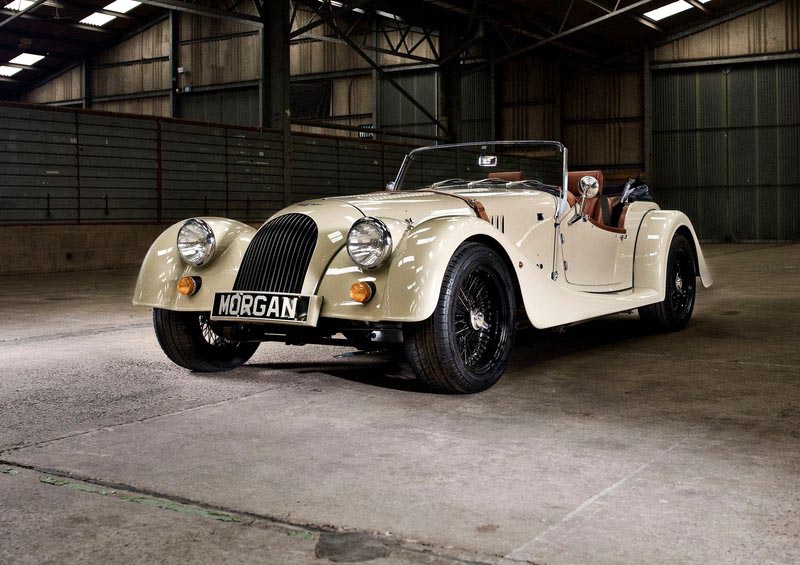
Morgan Roadster, 2012


  •  Morgan Roadster, 2012

The new Morgan Roadster 3.7 is deceptively fast with a Ford Cyclone six cylinder engine. Power delivery is smooth and consistent all the way up to the maximum engine revolutions of 6850 per minute. The overall weight of this aluminium car is only 950kg which spells a power to weight ratio of around300bhp per tonne. Power delivery is transmitted to the road through a limited slip differential with cone drive for good traction off the line. The 6 cylinder engine and 6 speed transmission provide an excellent combination of performance and economy. Carbon emissions are extremely low for a fast sports car.

The cockpit offers the perfect enthusiastic driver's environment with plenty of room combined with the luxury and special feel of real leather. The large well designed speedometer and rev counter are fitted into a completely new dashboard featuring electronic warning systems and digital and analogue displays for all engineering functions. There is even a stop watch to measure your lap time. The instruments and dials are framed in wood and the highest quality materials are used throughout this coachbuilt car.

The convertible roof is easy to fasten and provides a warm secure environment.
Read More