Sunday, September 9, 2012

Peugeot 308 SW, 2012


  • Peugeot 308 SW, 2012

The new Peugeot 308 comes with a new look, features innovative e-HDi micro-hybrid technology and optimises fuel consumption and CO2 emissions, which start from just 98 g/km.

With its new lines, the Peugeot 308 subtly incorporates the Marque's latest stylistic codes. The car's body follows the contours of the mechanical assembly underneath. The appeal of the three body shapes (Saloon, CC and SW) thus acquires a more technological elegance, illustrated by the presence of LED front lights with light guide. Dynamism and emotion are present as ever in the genes of the 308, particularly with its more assertive look thanks to new Xenon headlamps with titanium coloured mask and the hatchback in its exclusive GTi finish.

Determined to consolidate its leadership in terms of road holding and driving pleasure, the Peugeot 308 seeks to become a reference in terms of environmental efficiency. Indeed, following in the footsteps of the 508, the new Peugeot 308 features innovative e-HDi micro-hybrid technology, the latest generation STOP & START, on the 1.6 litre HDi FAP 112 bhp Euro 5 engine. This offer, on the "entry level" engine, is available with a semi-automatic manual gearbox and, for the first time, with a full manual gearbox, for optimal driveability.

In addition to micro-hybrid technology, all factors impacting the level of CO2 emissions have been optimised:
    weight reduced by 25 kg on average per car;
    launch of 16" tyres with Very Low Rolling Resistance;
    optimisation of the latest generation engines (VTi, THP, HDi Euro 5);
    Cx of 0.28 for versions with a low fuel consumption - A record in the segment.

Fuel consumption sets the standard:
    98 g/km of CO2 for the 308 saloon 1.6 litre e-HDi FAP 112 bhp BMP6 - A record in the segment
    available power trains, comprising 4 petrol engines ranging from 98 bhp to 200 bhp for the exclusive GTi version and 4 diesel engines from 92 bhp to 163 bhp, have also been optimised to ensure a comprehensive range of engines guaranteeing environmental efficiency. As a result, the basic version - the 308 saloon 1.6 litre HDi FAP 92 bhp with manual gearbox - is well positioned, with CO2 emissions reduced to only 110 g/km.

The dimensions and quality of equipment on the new Peugeot 308 remain unchanged, regardless of body shape, guaranteeing a spacious and comfortable passenger compartment. The same is true of primary, secondary and tertiary safety, which remain at the highest level.

The new Peugeot 308 will receive its world premiere at the 2011 Geneva Motor Show and will go on sale from April 2011 in Europe. Its mission is to continue the success story of the 308 family, with nearly 900,000 models sold since its launch in September 2007.

ELEGANT LINES ENHANCED BY ADVANCED TECHNOLOGY
The design of the new Peugeot 308 subtly incorporates the new stylistic codes of the Peugeot Marque. While the dimensions are unchanged, the new lines marry as closely as possible the car's mechanical assembly to accentuate its athletic poise, while the front aspect gives a fresh look to the "floating" front grille concept. Greater importance accorded to unbroken surfaces marks a determination to present an elegant and luxurious style. The central protective capping, available in a black lacquer finish, has been made thinner to give greater prominence to the sheer metal. This is also true of the single air intake which is now smaller in size.

Styling elements enhance the natural elegance which emanates from the new 308. A satin chrome bead enhances the new front grille, as do horizontal bars, available in lustrous black or chrome according to body shape (saloon, CC or SW).

The bottom section of the lower front panel, which helps visually to broaden the car and "plant" it on the road, incorporates new dual-function lights (daytime and sidelights) shaped like a boomerang, available according to versions. With their meticulous finish, they blend perfectly and are harmoniously positioned on the upper surround of the fog light housing. Composed of variable intensity LEDs and a light guide, they guarantee a unique visual signature by day and by night while illustrating the high level of technology featured on the new 308.

In the upper section, the V-shaped nose of the bonnet is one of the main expressive features of the Peugeot 308. It has been redesigned to fit the car's mechanical assembly as closely as possible and provides a new link with the floating front grille, in line with Peugeot's new stylistic codes. The Marque badge, in its new dual material construction, is proudly positioned at the tip of the bonnet on a new black lacquer base set with a chrome bead, also in the shape of a V.

The outline of this nose, fluid and characteristic, is more curvaceous, particularly at the junction of the lights and the bonnet. The new smooth glass front headlamps, closely fitting the three cylinders, suggest a look that is both refined and assertive. And when the 308 is equipped with dynamic bi-directional Xenon headlamps complete with titanium coloured base, this look becomes even more profound, displaying all the strength of character of the new 308.

The dynamism of the front aspect is echoed on the sides of the car. A styling line, running from the front wheel arches, crosses the side of the body and the rear lights before dropping towards the lower rear panel and coming to an end in the lower section.

The fluidity of the style is enhanced by the lateral glazed surface which follows a plunging waistline, and also by the panoramic rear window, which overlaps the rear quarter panel pillars.

Lastly, to establish the general appearance of the Peugeot 308, a lower waistline starting from the lower front panel extends as far as the rear bumper. The car therefore seems well poised on the road, ready to exploit its dynamic qualities to the full . New diamanté effect 16 or 17 inch alloy wheels or Storm Grey 18 inch wheels for the GTi version underline this dynamic appeal. The sense of dynamism is enhanced further by the car's rear style.

On the saloon, the wraparound lower rear panel adds a note of robustness and perceived quality as well as a sporty touch thanks to the presence of a styling element in the shape of a spoiler and two inserts, which can have a chrome finish, suggesting exhaust nozzles. The new Lion takes its place in the centre of the tailgate, while a satin chrome bead emphasizes the horizontal waistline, bringing a new balance to the rear of the 308.

On the SW, the contours of the robust lower panel and the rear lights have been designed to allow a wide boot aperture. The low load sill resulting from this design promises easy loading and a large internal capacity. From an aesthetic point of view, a horizontal waistline runs around the rear tailgate in its central section to "stretch" the car. This sensation is amplified by the body-coloured number plate insert surmounted by the new Lion badge.

On the CC the strength of the rear style is repeated, with a sense of horizontality given to the rear aspect that reinforces the impression of width. Numerous details add to this overall effect: the concave movement crossing the tailgate under the spoiler, the chrome bead framing the number plate and the presence of an air diffuser in the lower section. On either side and extending over the wings, the ruby-coloured LED rear lights with light curtain effect broaden the silhouette and give the 308 CC a unique and spectacular visual signature.

A FLUID AND LUXURIOUS INTERIOR
Stylists worked hard to exploit to the full the interior volumes freed up by the semi-tall architecture of the Peugeot 308. They therefore designed a particularly inclined fascia panel, almost symmetrical to the front windscreen pillars, to offer unimpeded exterior visibility.

In addition, there was a marked determination to give the interior a very upmarket feel and an enhanced sense of perceived quality. The result is a fluid, pure and elegant fascia panel where pride of place is given to superior materials, according to finish: soft covering, leather trim, chrome, black lacquered materials... The care given to the finish and the emphasis on interior comfort are evident in every detail. According to the level in the range, new motifs decorate the door panel strips, panel trim, thumb rests on the steering wheel, etc. Similarly, the special seats on the GTi version have red visible stitching with specific marking on top of the seat back and an aluminium steering wheel ring showing the word "GTi". Dark-tinted rear windows combined with dark wheel trims (Storm Grey) and the titanium mask of the discharge lamps, give this version a sporty and assertive identity, perfectly in keeping with the dynamic potential of its 1.6 litre THP 200 bhp engine.

Inside the 308 CC, the eye is caught also by the elegance of the 4 seats with integral head restraints and the possibility of full leather trim on the fascia panel, in different shades, which convey a touring car image. This distinctive design makes for even more comfortable seats with an Airwave warm air diffuser behind the necks of the front passengers. The pleasure of open-top driving is thus enhanced.

A SPACIOUS AND BRIGHT PASSENGER CO MPARTMENT
The passenger compartment has been designed to ensure that a sense of space and brightness predominates, making occupants feel they don't want their journey to end.

The interior dimensions and efforts by the designers to free up as much space as possible for passenger comfort make the 308 one of the most spacious cars in its segment.

Elbow width at the front is 1464 mm for the saloon and SW body shapes, and rises to 1492 mm for the Coupé Cabriolet version. At the rear, these dimensions are respectively 1471 mm and 1321 mm for the CC. The feeling of space is even more noticeable on account of the many clever storage spaces available inside the Peugeot 308. Total storage capacity is 42 litres, making life inside the car easier and preserving space for the occupants.

All of the 7 passengers that can be seated in the 308 SW thanks to the optional additional 2 rear seats can benefit from these fitted spaces. They can also modulate and adjust the car's interior as necessary by opting for individual seats in row 2. Nor has the boot volume been ignored, with a capacity under the parcel shelf of 674 litres for the SW and 430 litres for the saloon. With the load potential exploited to the full, the capacities are 2149 and 1398 litres respectively.

On the CC, all four passengers can benefit from the availability of a large boot capacity (465 litres) in the coupé configuration. On the cabriolet, with the retractable roof stored in the boot, the boot still offers a capacity of 266 litres. What's more, it only takes 20 seconds to convert the 308 CC into a dynamic coupé or an elegant cabriolet.

Passengers in the Peugeot 308 saloon and SW will also be able to benefit from a "sunny" passenger compartment thanks to the panoramic roofs available for these body shapes. They increase the total glazed surface area to 4.86 m² on the saloon and 5.58 m² on the SW. The light level inside the car can be regulated by means of an electrically-operated roller blind associated with this equipment.

To make the journey even more pleasant, automatic dual-zone air conditioning is available. With its active charcoal filter, it also reduces hydrocarbon odours inside the passenger compartment.

Finally, passengers will be able to benefit from a high quality audio and telematics system: WIP Sound audio system, Bluetooth hands-free kit, WIP Nav satellite navigation and WIP Com 3D with a retractable 7" 16/9 colour display. A JBL hi-fi system is also available and may be combined with laminated side windows for optimal acoustic performance.

Regardless of body shape, the new 308 offers a high level of comfort and convenience.

REDUCTION OF CO2
The reduction of CO2 emissions was one of the main objectives of this project. This resulted in a search for environmental efficiency at all levels. All factors influencing fuel consumption were optimised:

    weight reduced by 25 kg on average per car;
    launch of 16" tyres with Very Low Rolling Resistance;
    use of a piloted oil pump on 1.6 litre HDi engines;
    optimisation of operation of the alternator on some engines;
    improvement of power steering control (electropump unit);
    Cx of 0.28 for versions with a low fuel consumption - a record in the segment;
    e-HDi micro-hybrid technology;
    98 g/km of CO2 for the 1.6 litre e-HDi FAP 112 bhp BMP6 version - a record in the segment

e-HDi MICRO-HYBRID TECHNOLOGY
After the 508, the new Peugeot 308 is the second of the Marque's cars to introduce the innovative e-HDi micro-hybrid technology, a new generation STOP & START.

This innovation is based on the combination of a 1.6 litre HDi Euro 5 diesel engine and a reversible alternator ensuring the STOP & START function. Relying on an alternator control system (Volt Control) to recover energy during deceleration and a hybrid battery to store and deliver additional energy on startup (e-booster), the HDi unit allows:
    a 15% reduction in fuel consumption in urban traffic;
    a 5 g/km reduction in CO2 emissions for approved cycle fuel consumption;
    40% faster restarting (400 ms) than with an enhanced starter STOP & START;
    activation of engine cut-out from 20 km/h with a manual gearbox (8 km/h for the electronicallycontrolled gearbox);
    increased driveability of the STOP & START (silent operation, no vibrations).

The second-generation reversible alternator used here has a power of 2.2 kW and allows up to 600,000 restarts. However the STOP & START function can be de-activated by the driver if preferred by means of a button on the fascia panel.

1.6 LITRE e-HDI FA P 112 BHP ENGINE
To deploy this technology on a large scale, the new Peugeot 308 proposes e-HDi technology with a "basic" engine, the 1.6 litre HDi FAP 112 bhp, which can be coupled with two gearboxes (manual or electronicallycontrolled). This is a first, since hitherto e-HDi technology was available only with the BVMP6 electronically-controlled gearbox. This new offer maximises driving enjoyment by increasing the phases of driving "in silence". When coupled with a manual gearbox, engine cut-out is possible from a speed of 20 km/h.

A CO MPREHENSIVE RANGE OF LATEST-GENERATION ENGINES
To reduce CO2 emissions as much as possible, the new 308 is uniquely equipped with the very latestgeneration engines for both petrol (VTi or THP engines) and diesel versions (new HDi Euro 5 engines).

On the saloon, all 8 available engines, as well as different possible gearbox combinations (manual, electronically-controlled manual or automatic),  allow every customer to find the version that suits them best.

4 Euro 5 petrol engines:
    1.4 litre VTi 98 bhp with 5-speed manual gearbox;
    1.6 litre VTi 120 bhp with 5-speed manual gearbox or automatic gearbox;
    1.6 litre THP 156 bhp with 6-speed manual gearbox or automatic gearbox;
    1.6 litre THP 200 bhp with 6-speed manual gearbox (exclusive to GTi version).

4 Euro 5 diesel engines:
    1.6 litre HDi FAP 92 bhp with 5-speed manual gearbox;
    1.6 litre e-HDi FAP 112 bhp with 6-speed manual gearbox or electronically-controlled manual gearbox;
    2.0 litre HDi FAP 150 bhp with 6-speed manual gearbox;
    2.0 litre HDi FAP 163 bhp with automatic gearbox or 6-speed manual gearbox (only on the 308 CC).

PEUGEOT KNOW-HOW
True to the Marque's values in terms of driving pleasure, the new Peugeot 308 seeks also to preserve its leadership in terms of road holding. The features that make the 308 a reference are maintained:
    rigid body structure;
    McPherson type front suspension;
    rear suspension with torsion beam;
    hydraulic dampers with valves;
    power steering with variable assistance piloted by an electro-pump unit;
    large disc brakes (ventilated at the front) - up to 302 x 26 mm;
    ABS, electronic brake force distribution, emergency brake assist and automatic switching on of hazard warning lights as standard;
    Bosch 8.1 ESP according to versions.

HIGH LEVEL SAFETY ON AL CO UNTS
Whether in terms of primary, secondary or tertiary safety, the new 308 is positioned at the highest level.

Firstly, the excellent rigidity of the structure ensures optimal operation of the wheels and suspension ensuring a high level of primary safety. In terms of secondary safety, the structure itself has been rigorously designed to withstand even the most severe impact, thanks in particular to a triple force channel at the front. The use of high-strength steel and "multilayer" reinforcements in specific areas has made it possible to raise the level of safety of occupants while reducing the overall weight of the car. In addition to the performance of the structure, efficient means of restraint are proposed:
    up to 8 air bags on the saloon and SW;
    up to 6 air bags on the CC, including 2 head air bags at the front;
    extractible safety hoops on the CC in the event of rollover;
    3-point seat belts with belt not fastened or unfastened acoustic warnings;
    Isofix fixtures.

Lastly, with regard to tertiary safety, the new Peugeot 308 benefits from Peugeot Connect services. Occupants are put through to an assistance helpline when an emergency call is made (Peugeot Connect SOS) or a breakdown service in the case of a mechanical incident (Peugeot Connect Assistance). These services are available via a Peugeot Connect unit or with the top-of-the-range WIP Com 3D telematics offer
Read More

Morgan Roadster, 2012


  •  Morgan Roadster, 2012

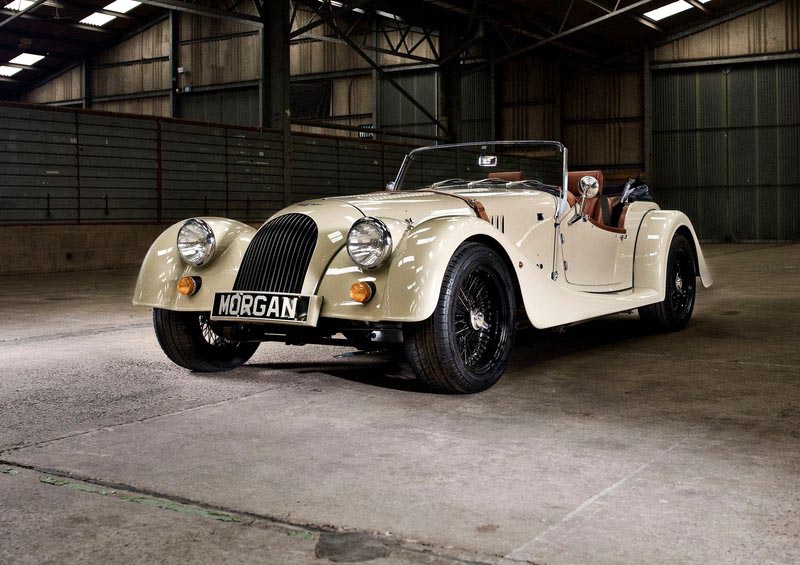
The new Morgan Roadster 3.7 is deceptively fast with a Ford Cyclone six cylinder engine. Power delivery is smooth and consistent all the way up to the maximum engine revolutions of 6850 per minute. The overall weight of this aluminium car is only 950kg which spells a power to weight ratio of around300bhp per tonne. Power delivery is transmitted to the road through a limited slip differential with cone drive for good traction off the line. The 6 cylinder engine and 6 speed transmission provide an excellent combination of performance and economy. Carbon emissions are extremely low for a fast sports car.

The cockpit offers the perfect enthusiastic driver's environment with plenty of room combined with the luxury and special feel of real leather. The large well designed speedometer and rev counter are fitted into a completely new dashboard featuring electronic warning systems and digital and analogue displays for all engineering functions. There is even a stop watch to measure your lap time. The instruments and dials are framed in wood and the highest quality materials are used throughout this coachbuilt car.

The convertible roof is easy to fasten and provides a warm secure environment.
Read More

Friday, September 7, 2012

Lancia Ypsilon, 2012


 Lancia Ypsilon, 2012

The 2011 Geneva Motor Show was the setting of the world premiere of the new Lancia Ypsilon, a "small flagship" that in just 3.84 metres packs the best of Italian style, innovation and eco-friendliness. For the first time it is proposed in a 5-door version designed to offer even greater convenience and comfort to devotees of Lancia charm, technological excellence and unique style.

At the heart of the Lancia Ypsilon's design is an original approach to the "premium" car concept that redefines the meaning of the word "luxury", fascinating those who seek originality and character, those who love technology and elegance, and those who admire quality and innovation. With Lancia Ypsilon, luxury becomes something unique that triggers an emotion, the pleasure of "owning" but without pretentious display, the search for uniqueness in any area, the statement of one's true personality without allowing himself to be swayed by the judgements of others.

The new Lancia Ypsilon, which will be on the market from June across key European markets and from September in Great Britain and Ireland with the Chrysler brand, is the fourth series of the successful model - over one and a half million vehicles currently on the road - born in 1985 when the Y10 debuted at the Geneva Motor Show. It was a miniature flagship with style and content features never seen before on an economy car of the day, marking that forerunner spirit that was to accompany the model until today. It was the Lancia Y's turn in 1996: elegant, elite, with a strong personality that reinforced the concept of "customized luxury". Hence we arrived in 2003 when the third generation, the Lancia Ypsilon, brought to the world of city-cars the technology and "class" till then exclusively reserved for models in higher segments.

Now the baton is taken up by the new Ypsilon, which confirms it is the "Fashion City-Car" par excellence that continues to charm with its personality, sophisticated style and unconventional class, but it has become more grown up and mature, with a wider appeal. And below this polished exterior bearing the prestigious "Made in Italy" label lies all the substance of a car that boasts cutting-edge technology as recently pointed out by the four awards given in occasion of the "International Engine of the Year" competition.

The innovative engine excelled over the competitors' engines in all categories in which it competed and it has been appointed as the "International Engine of the Year 2011". Together with the Twin Air, the motoring excellence of the new Lancia Ypsilon follows with the eco-friendly systems Multijet II e Start&Stop, and unique features in this category such as the brand new "Blue&Me-TomTom LIVE" and the "Smart fuel" system", in addition to the innovative second generation Magic Parking, Bi-Xenon headlights and LED tail lights.

A refined and innovative Italian "5-door" with the look typical of a "3-door", the new Ypsilon is a very compact car, so much so that it remains in segment "B" but with high standards of roominess and comfort: although just 384 cm long, 167 cm wide and 152 cm high, with a wheelbase of 239 cm, the new Lancia Ypsilon can accommodate up to five people and in relation to its size, has one of the most spacious boots in its segment and is one of the best in class in terms of passenger room. Without increasing the size of the rear passenger area, excellent accessibility and comfort have been achieved with the use of "slim seats", a technology used here for the first time by Fiat Group Automobiles.

In this way the New Ypsilon continues its domination of the key city-car category in response both to recent market trends where the "5-door" market represents two-thirds of segment B, and to the needs of a broader target than that reached until now, including young men and young families. It is precisely regarding the quality, comfort and usability of the interiors that the new car is determined to make all the difference. Hop inside and you become aware of the refined materials and colour combinations, the attention to detail and the numerous options for customization.

At the time of the launch, the range offered over 600 possible customisations created by cross-matching 3 interior trim specifications (Silver, Gold and Platinum), all designed to offer the customer high product value, 16 Elegant liveries of which 4 are two-tone, 6 different upholstery trims, 3 types of alloy wheels and 3 engines: (69 HP 1.2 Fire EVO II and 85 HP 0.9 TwinAir, the latter also with DFN semi-automatic gearbox), a turbodiesel (95 HP 1.3 MultiJet II), all equipped with Start&Stop technology as standard. Afterwards also the 1.2 Fire EVO II Bi-fuel engine (petrol and LPG) will be available. Note that a wealth of equipment in the field of safety is standard on the entire range: electronic stability control complete with ASR and Hill Holder, ABS with EBD, from 4 to 6 airbags (front, window-bags and side), in addition to the ISOFIX attachments.

Therefore, the new car represents an evolution of the Ypsilon model in terms of technology, safety, comfort and usability, but even so it preserves its positioning of "accessible luxury" as an attractive price list demonstrates. In detail, the Silver trim level provides door opening remote control, height- and reach-adjustable steering wheel, electric front windows, 50/50 split rear seat, height-adjustable driver seat, 15" steel wheels, interiors in technical fabric with fitted electro-welded seams, radio set-up and rear heated window. In terms of safety, ABS with EBD, ESP complete with ASR and Hill Holder, front and side airbags, and also the Isofix attachments are offered standard. In addition to this great quantity of equipment, the Gold version adds: manual climate control, radio with CD and MP3 player, electrically adjustable door mirrors, steering wheel and leather-trimmed gear-lever gaiter, Castiglio upholstery and Comfort Pack. Finally, the Platinum trim level offers the added rear electric windows, fog lights, 15" alloy wheels, rear seat head restraints and leather upholstery.

In addition, for those eager to customize their new Lancia Ypsilon and make it truly exclusive, an extensive range of fine, top quality accessories is available. Not only do the accessories offer great style and meticulous attention to detail, but they also go beautifully with the car, in line with the unmistakable Lancia style and in full compliance with technical, stylistic and mechanical characteristics of the new car. From exclusive 16" alloy wheels, side skirts and tinted headlights to a black kick plate with illuminated logo, a "Blue&Me-TomTom LIVE" and the Accessories Packs.

The new Lancia Ypsilon has its sights set on becoming the alternative "premium" city car in Europe, designed as it is for a demanding customer who likes to stand out from the crowd but who also, at the same time, wants a car that is enjoyable and comfortable for everyday use. Without forgetting that nowadays the product itself is not the only "premium" element for enticing a potential customer. For this reason the brand has come up with important new sales and after-sales proposals to cater to the desires, needs, tastes and aspirations of many different customers. An example? The extended warranty devised by FGA Capital, a finance company specialising in the automotive sector. What's exciting about this solution is the extended duration up to 96 months, the unlimited mileage and the contents: a complete coverage for the vehicle components. And a characteristic even more innovative on the market is the same level of coverage for the entire duration chosen for the loan.

Style: tradition meets the future
Elements that recall the past are masterfully reworked in a modern vein. This is the original style of the new Lancia Ypsilon which once again reveals its feisty, unconventional character, in which the elegance and refinement inherited from its distant forebears are reworked, embracing new cross-fertilization or consolidating solutions which are by no means obvious.

While the exterior of the vehicle exudes an intriguing style, the inside provides the perfect place for elegance and innovation to join forces: on the one hand there is meticulous attention to craftsmanship in upholstery, which has always set Lancia cars apart from the competition, then there is the use of highly advanced design solutions. This union between elegance and innovation produces the unmistakable Lancia class which, like the best Italian luxury products, combines unparalleled style with cutting-edge technology. And it is precisely the Italian stylistic features that transform a product "made in Italy" into something unique. This is as true for fashion and fashion accessories as it is for a successful car. Indeed, a car's success is the result of a winning bet, of a flash of stylistic intuition mediated by research on new trends in tastes, on emerging customer needs and on forecasts relating to market trends and rival models. Therefore, it stems from a hard recipe that is tested by the most severe judge: time.

Exteriors: personality and innovation
Although it is compact, the new Lancia Ypsilon vehicle body sports a streamlined look: this time the weight proportions and graphics "play" the volumes differently, distributing them nonetheless over very similar dimensions to the previous Ypsilon. Indeed, compared to the previous model, although the wheelbase is virtually identical, there are design differences: the windscreen is further forward while the front projection has been shortened in order to increase the rear one, providing a more spacious boot. Last but not least, the important decision was taken to have five doors. In the end, this adds almost three centimetres to the overall length and trims two centimetres off the height, achieving a sleeker look.

The volume of the front, nicely connected and pointed, shows off a new grille: as in a metamorphosis, the stem of the glass moves up, embracing the logo, and leaves room for the horizontal elements, with "spear" shaped tips. On one hand the spirit and non-conformist genes of the Lancia Ypsilon, on the other, an acknowledgment of the past with the sixties/seventies style grille.

With a unique design which is independent of other elements, the headlights made by Magneti Marelli Automotive Lighting develop horizontally, highlighting the width of the front end. These Bi-Xenon headlights have rounded elliptical modules that give the car an even more aggressive and decisive "look". In addition, the ends of the headlights define the size of the wings at the side. Above these and the grille rests the bonnet, like a lid, delineating a clear horizontal division: the design is subtly reminiscent of the lines of the Lancia Ardea.

The side sports elements that hint at the car's personality and character, and these are offset by other more discreet lines: the handle of the rear door is concealed, integrated into the structure, thus emphasising the front door handle. The final effect is that of a compact 3-door city car with all the comfort of a 5-door model. The convex section of the doors is sculpted by a delicate concave section which fades on the side, dynamically enclosing the sign produced.

Viewed from the side, lastly, you note two dynamically sweeping curves: the first departs from line of the bonnet, sweeps along the waistline and up the rear pillar. The second, climbing from the bottom of the front pillar, traces the upper arch of the glass, intersecting the first curve, rising from the pillar below, and descends to delineate the outer edge of the rear window. The effect of a clear separation between the roof and the rear pillar is a familiar reference to the Lancia Delta.

The general volume of the rear is tapered for improved aerodynamics, featuring a pronounced tailgate, hollowed in the middle: the space obtained accommodates the number plate at the bottom; above this, set like a jewel, is the rear window which is delineated laterally by the lines descending from the pillar arch and from the spoiler above.

The shoulders emerge from the side panels and generate volumes which, running down the sides of the tailgate, link up with and embrace the tail lights. Their external positioning and vertical development, typical of recent Lancias, is emphasised by the layout of the functions: long LED light-guide bars for the sidelights and, below, brake lights; laterally at the bottom, a triangular space houses the indicators.

The bottom part of the bumper has a black centre band which accommodates and protects the reverse light and the rear fog light, lightening the overall volume.

The overall design of the new Lancia Ypsilon was conceived right from the outset to separate the various parts of the car in order to favour the two-tone version in the boldest, sleekest and most attractive way possible. After all, colour has never been simply a matter of aesthetics for the Lancia Ypsilon. On the contrary, it is an integral part of a product philosophy based on elegance, glamour, personality, play, creativity, style and the widest array of customisation options. And the new Ypsilon in no exception as its range of exterior shades stands to show, the widest of the category: 2 pastels, 2 three-coat hues, 4 metallic, 4 metal-flake shades with an iridescent effect and 4 two-tone colours.

Interiors: charm decked out in practicality
The new Lancia Ypsilon confirms and expands the heritage of its predecessors, adding even more elegance and innovation. The characteristics that have always distinguished Lancia's small city-cars, such as exquisite, unique upholstery for interiors, are reworked, combining class and hi-tech content. The concepts that guided the design of the compartment are rooted in the glorious past of the brand, but with the addition of a strong technological emphasis.

Right from the drawing board stage, the inspiration for the interior was an embrace. The instrument panel is embraced by the door panels which, in the back, surround the seats perfectly.

The design of the dashboard aims to highlight the contrast between the fabric insert that extends towards the occupants, with the upper part which traces the line of the windscreen, outlining it like an amphitheatre. The constructed curves create an effect of perspective, with the vanishing points positioned at the end of the dashboard in order to accentuate its width.

The passenger space is therefore created through subtraction of volumes and is represented by hollow surfaces which combine a different functional and perceptive usability with aesthetic seduction.

Analyzing the shapes, the construction is visible in the overlapped layers. The first are upholstered, covered with soft materials to enhance the impression of comfort and tactile experience, reminding the occupants of a domestic setting, as if they were sitting comfortably on their own sofa.

Sinuous lines yield in places to more technical ones which characterise the vents and the centre console. The contrast between the elements is marked by a slender black ribbon which cuts vertically across the instrument panel and links the central instrumentation to the gearbox, giving an impression of lightness highlighted at the ends by white LEDs. The console housing the radio and climate control system is a floating element resting on the central diffuser, while the metallic vents emerge from "tears" in the fabric. Lastly, the design of the door panels is simple and enveloping while the comfortable, high containment seats lend a sporty edge.

Substance: synthesis of excellence
The Lancia Ypsilon family has always been synonymous with style and motoring enjoyment. Now the new Ypsilon has "grown", enhancing its offering with the addition of a number of important new features. The most obvious are the rear passenger doors, in addition to a range of environmentally-friendly engines and a raft of features - standard and optional - designed to improve on-board comfort.

Versatility: 5 doors but with a 3-door look
The new Lancia Ypsilon is a stylish Italian "5-door" with the typical look of a "3-door". It is a very compact car, so much so that it remains in segment "B" but with high standards of roominess and comfort: although just 384 cm long, 167 cm wide and 151 cm high, with a wheelbase of 239 cm, the new Ypsilon can accommodate up to five people and in relation to its size, has one of the most spacious boots in its segment and is one of the best in class in terms of passenger room. Without increasing the size of the rear passenger area, excellent accessibility and comfort have been achieved with the use of "slim seats", a technology used here for the first time by Fiat Group Automobiles.
Read More

Thursday, September 6, 2012

Dacia Dokker, 2013


 Dacia Dokker, 2013

The Dacia range has been expanded with the addition of two brand new models: Dacia Dokker and Dokker Van. Dacia Dokker is a five-seat crew van for mixed private and professional use. It offers one of the biggest boots and the best modularity in its class. Dacia Dokker Van is a small Light Commercial Vehicle. Its best-in-class utilitarian features will prove attractive to tradespeople and craftsmen. In keeping with the values championed by the Dacia brand, both newcomers deliver a generous list of practical features for an unrivalled low price. They will go on sale initially in Morocco this June 2012, and then in the models' other Mediterranean and European markets at the end of the summer 2012.

Dacia Dokker targets customers with mixed needs who want a vehicle that can transport bulky loads yet also accommodate their family in comfort. Indeed, in addition to its ability to carry up to five occupants, it also offers the market's biggest boot capacity. The user-friendly modularity of the rear bench seat enables up to 3m3 of extra carrying capacity to be freed up, making it ideal for professional use. It can be ordered with either one or two glazed sliding side doors which facilitate access to the cargo area or rear seats.

In addition to being reliable and robust, Dacia Dokker Van delivers the biggest carrying capacity in its segment thanks to the cleverly designed modular front passenger seat (the optional Dacia Easy Seat), while its wide sliding side door facilitates loading. To meet the needs of traders and tradespeople as closely as possible, a high number of conversions and a wide range of accessories are available for Dokker Van.

Like that of Dacia Lodgy, the interiors of Dokker and Dokker Van are comfortable, modern and particularly functional. The Media Nav multimedia system comes with a seven-inch (18cm) touchscreen and comprises navigation and radio functions, plus Bluetooth connectivity. The options catalogue includes a speed limiter and rear parking sensors.

Depending on market, Dacia Dokker and Dokker Van are available with a choice of four powerplants: the brand new 1.2 TCe 115 and existing 1.6 MPI 85 petrol engines, plus the 1.5 dCi 75hp and 90hp diesel engines. Both diesel engines qualify for the Dacia eco² signature thanks to fuel consumption of just 4.5 litres/100km and CO2 emissions of 118g/km.

Dacia's trademark reliability and build quality have long been acclaimed by customers and the media alike, but Dacia has taken these strengths further still thanks to the expertise of Renault, Europe's leading Light Commercial Vehicles brand since 1998. Many of Dokker Van's components were designed to meet the exacting briefs specified by Renault for its own vans and the model was submitted to the same punishing tests as Renault LCVs in order to take the most punishing types of use into account.

A VERY FUNCTIONAL DESIGN
The name Dokker is a play on the word 'dockworker' and expresses the high carrying capacity of the two models, as well as their modular interior layout and robustness.

The lines, proportions and generous dimensions of Dacia Dokker and Dacia Dokker Van (length: 4.36m / width: 1.75m / height: 1.81m) point to a particularly spacious interior. This sensation is reinforced by the uncluttered vertical body sides, while the apertures of the sliding side doors and asymmetric rear doors ensure easy access.

The family likeness of these two new models with the other vehicles of the Dacia range is evident in the form of their grille and large headlight units. Meanwhile, the modern, hi-tech feel of their design showcases Dacia's new styling identity as pioneered by Lodgy.

The newcomers' exterior volumes, assertive forms and frill-free lines point to the Dacia brand's trademark quality and robustness, a sensation which is further accentuated by the high waistline and big door handles. The standard black grain-effect bumpers of Dacia Dokker and Dokker Van wrap around the entire bottom part of their front end, right up to the headlights, while the rear bumpers have been positioned to protect the light clusters. Certain versions are equipped with side protective mouldings.

The optional body colour bumpers available for the higher-end crew van versions are more inline with passenger car styling cues.

The interior features a modern, functional dashboard which incorporates several stowage spaces that have been thought through for intensive use. The dash's sweeping forms heighten the impression of solidity and its two-tone colour scheme has been carried over to the door panels (depending on equipment level). The unmistakeably modern, high-tech feel of the cabin is reinforced by the new design of the instruments - inherited from Dacia Lodgy - and the incorporation of a Media Nav multimedia system.

Dacia Dokker and Dokker Van also benefit from the enhanced driver-friendly appointments that were first seen on Lodgy, including new headlight and windscreen wiper controls. The switches for the electric windows fall readily to hand on the door armrests and the controls for the climate control are more accessible than those of the Logan family of models.

The cabin of the crew van version has more of a passenger car feel about it, beginning with the different colours employed for the interior trim. The higher-end equipment levels come with a Gunmetal Grey centre console, plus the use of chrome for the front door handles, instrument, heater controls and gear lever knob.

Dacia Dokker, the versatile crew van
Dacia Dokker comfortably carries up to five people and, for their luggage, boasts the biggest boot in its segment, with a capacity of 800 litres and a maximum load length of 1.16m.

Dacia Dokker comes as standard with one glazed sliding side door and a second can be ordered as an option (standard on the high-end version). The side door frees up an aperture of 703mm to facilitate safe access to the rear seats.

Rear passengers benefit from comfortable seats and plenty of space (headroom: 1,065mm / shoulder room: 1,458mm / knee room: 177mm).

The modular 60/40-split rear bench seat is easy to convert into one of a wide choice of arrangements. Thanks to a readily accessible handle, each section of the seat back can be folded forward independently. The bench can also be tipped forward against the front seats to free up a flat floor with a load length of 1.57m and a carrying capacity of 3m3.

Dacia Dokker Van, one of the most practical vehicles in its class
Thanks to its dimensions (length: 4.36m / width: 1.75m / height: 1.81m), Dacia Dokker Van offers a generous 3.3 cubic metres of carrying capacity and a maximum load length of 1.9m.

Its carrying capacity can be extended thanks to the clever optional Dacia Easy Seat. The back of this versatile front passenger seats tips forward to form a table. Alternatively, the whole seat can be tipped forward against the glove box to free up space for loads of up to 2.42 metres in length. It can also be removed altogether to provide 3.9 cubic metres of carrying space. This arrangement permits items of three metres in length to be transported with ease (maximum load length: 3.11m). These market-best figures position Dacia Dokker Van as one of the most functional vehicles in its segment, yet comfort hasn't suffered since the Dacia Easy Seat is fore/aft adjustable and has a reclining back. Dacia Dokker Van's maximum payload is 750kg.

Depending on version and national legislation, the cabin is separated from the cargo area by two tubular protective bars, a fully glazed bulkhead or a mesh pivoting bulkhead. The latter enables carrying capacity to be increased by folding the passenger seat (optional Dacia Easy Seat) to increase carrying capacity yet still ensure the driver's protection.

Dacia Dokker Van is fitted as standard with one wide sliding side door and a second is available as an option. These doors benefit from an extremely robust design and open effortlessly to facilitate access to the cargo area thanks to their big handle.

The asymmetric rear doors swing open to 90 degrees and are held in place by a retention system which prevents the door from slamming shut in windy weather. This lock can be freed by a handle located on the inside of the door to enable the latter to be opened to 180 degrees.

Numerous stowage solutions for Dacia Dokker and Dokker Van
To simplify the day-to-day life for drivers, a number of practical stowage spaces totalling up to 44.2 litres in the crew van version are positioned around the cabin. The large non-lidded dashboard bin can accommodate a laptop computer or A4-size documents. Dacia Dokker is also equipped with a lidded 6.6-litre glove box (depending on equipment level), as well as 12 litres of easily -accessible overhead stowage (depending on equipment level). A small lidded bin to the driver's left is particularly useful for ensuring that items such as loose change are always close to hand.

A 1.5-litre bottle can be stored in the front door bins, while a double can-holder and tray on the centre console can also be specified.

In the case of the crew van version, rear passengers benefit from a 0.5-litre bottle holder on the centre console, plus small additional door bins and map pockets of the front seat backs (depending on version).

When it comes to conversions for specific business uses, Dacia benefits extensively from Renault's expertise. Indeed, the brand has worked closely with the network of Renaultapproved converters to develop a long list of conversions. Those available for Dacia Dokker Van include ambulances, TPRM solutions, the transport of refrigerated or frozen goods, mobile workshops or intervention vehicles, etc.

In order to meet the varied needs of its customers, Dacia has developed an extensive selection of accessories and interior fitments. The accessories designed to enhance comfort or carrying capacity include a central armrest, DVD player, seat back document holder, child seats, a portable ice box cooler, a roof box, a mesh grille behind rear seats (crew van version), etc.

Dacia Dokker Van comes with a range of accessories designed especially for business customers: wood linings, wheel-well protection, stowage kits, wooden cupboard kit, steel roof bars, protective bars for glazed rear doors, etc.
Vehicles can also be personalised in the colours of the customer's company.

UPGRADED CABIN EQUIPMENT
Since the launch of Dacia Lodgy, a number of features have been upgraded to be even more comfortable, modern or practical. Needless to say, Dacia Dokker and Dokker Van benefit from these improvements.

Media Nav: user-friendly technology

Dacia Dokker and Dokker Van are equipped with the Media Nav multimedia system first seen inside Dacia Lodgy. The system has been perfectly integrated into the central fascia and comprises a seven-inch (18cm) touchscreen. In addition to being very simple to use, this attractively-priced option (€430) combines navigation and audio functions, as well as Bluetooth® hands-free connectivity.

The home page enables users to scroll swiftly through the six Media Nav functions. It is also possible to connect a portable music player via the fascia-mounted USB or jack sockets. Users can select tracks using either the touchscreen display or the steering wheel-mounted remote controls.

The tactile, intuitive navigation system has both 2D and 3D (Birdview) graphics. A dedicated website enables customers to access mapping updates and upload them via the USB port.

Alternatively, two other multimedia systems are available to tailor the offering to the needs of each customer:
    Dacia Plug & Radio. This system features a radio with a large display, an MP3-compatible CD player, Bluetooth® technology, dash-mounted USB and jack sockets and steering wheel-mounted fingertip remote control.
    The smaller (1 DIN) entry level radio, Dacia Plug & Music, allows additional stowage space to be fitted. This radio comes with the same features as the Dacia Plug & Radio, with the exception of the CD player.

All the radios benefit from 3D Sound by Arkamys® which is derived from Renault's audio range. The Arkamys® process uses digital treatment software to deliver tailor-engineered sound and noticeably superior quality. The three-dimensional sound produced by the four loudspeakers has been engineered to take both the layout of the cabin and the materials it uses into account.

More comfortable and practical for the driver Drivers sit 3.5cm higher up in Dacia Dokker and Dokker Van than they do in Logan MCV, while the seat height and steering wheel can be adjusted to find the most comfortable driving position. Comfort is further enhanced by a big footrest.

Dacia Dokker and Dokker Van also feature the same new, more modern and more practical dashboard as Dacia Lodgy. The centrally positioned odometer is flanked to the left by the rev-counter and to the right by a screen which incorporates the fuel gauge and total/split distance readouts. In the case of versions equipped with a trip computer, the same display provides data concerning the quantity of fuel used, journey distance, average and real-time fuel consumption, remaining range, average speed, the distance until the next service, speed limiter selection and a clock.

Like Lodgy, the new models come with new driver aids. The speed limiter allows drivers to programme a maximum speed they do not wish to exceed, enabling journeys to be completed in stress-free safety. This function can be activated or deactivated using a button located on the central fascia. The speed setting is selected using the '+' or '-' buttons on the steering wheel. Pressing hard on the accelerator pedal permits the driver to override the system if required.

Rear parking sensors are available for Dacia Dokker and Dokker Van. They are located in the rear bumper and provide drivers with an audible indication of the distance between their vehicle and any obstacle. The function can be activated or deactivated using a switch positioned to the left of the steering wheel.

The climate control system figures among the ludospace market's best in terms of its performance. Its capacity has been engineered to match the size of the cabin and total glazed surface area. Engineers from the Renault Group took their inspiration from the climate control system used for Renault Mégane and have succeeded in uprating airflow and capacity with no additional noise. Cooling air is distributed more evenly throughout the cabin thanks to the fitment of vents at the front and rear.

Careful attention was also paid to acoustic comfort. The surface area of soundproofing materials inside the engine compartment, underneath the vehicle, in the wheel arches and at the junction between the body and windscreen has been increased by 30 percent compared to Dacia Duster. The engine runs more quietly thanks to 1.5 dCi engine's new fuel injectors. Wind noise has also been reduced thanks to work on the form of the door mirror housings and roof bars. Road noise has been further diminished through the design of the foam inserts and seals, as well as the reinforcement of certain components parts to suppress resonance.

RELIABLE, FUEL-EFFICIENT ENGINES
The Dacia Dokker and Dokker Van ranges feature a wide choice of responsive, fuel-efficient and reliable engines to match the different needs of drivers. The 1.2 TCe 115 and 1.6 MPI 85 petrol engines are joined by the 1.5 dCi diesel engine which is available in a choice of two power outputs (75hp and 90hp).

First seen under the bonnet of Collection 2012-versions of Renault Mégane and Renault Scénic, the 1.2 TCe 115 (Euro5) is the first Renault Group engine to benefit from direct injection and turbocharging, while its light weight is due to its aluminium block. This powerplant delivers a combination of driving enjoyment, frugal fuel consumption and low CO2 emissions, yet it still provides a level of performance (115hp) comparable to that of a 1.6-litre engine. Its generous peak torque of 190Nm is equivalent to that of a 2.0-litre engine, and 90 percent of this figure is available from as low as 1,500rpm, with maximum torque available between 2,000 and 4,000rpm to ensure crisp re-acceleration. This downsized powerplant drives through a five-speed manual gearbox and delivers combined-cycle fuel consumption of just 6.1 litres/100km, equivalent to CO2 emissions of 140g/km (Dokker Van: 6.2 litres/100km and 143g of CO2/km).

This low fuel consumption means that running costs are significantly lower, while the fitment of a maintenance-free timing chain (instead of the more traditional belt) also plays a part in bringing down costs, which will obviously appeal to business customers.

1.6 MPI 85 Euro 5
This 60.5kW entry level petrol engine drives through a five-speed manual gearbox. Combined cycle fuel consumption is 7.5 litres/100km, equivalent to CO2 emissions of 175g/km.

The Euro 4 version has a power output of 59kW (80hp). Its combined cycle fuel consumption is 8 litres/100km (CO2 emissions: 189g/km).

1.5 dCi 75 and 90 (Euro5)

Widely acclaimed for its reliability, performance and respect for the environment, the 1.5 dCi is available with a power output of either 75hp or 90hp. Both versions qualify for the Dacia eco² signature and are particularly fuel efficient, with NEDC combined cycle fuel consumption of 4.5 litres/100km, equivalent to CO2 emissions of 118g/km.

Both versions drive through a five-speed manual gearbox. The 90hp version delivers 200Nm of torque, 90 percent of which is available from 1,750rpm to guarantee real driving pleasure, even at low revs. The 1.5 dCi 75 version boasts maximum torque of 180Nm available from 1,750rpm.

The peak power of the Euro4 version of this engine is 63kW (85hp). It is mated to a fivespeed manual gearbox and combines flexibility, performance and low running costs. Its combined cycle fuel consumption is 4.9 litres/100km (CO2 emissions: 130g/km).
Read More

Citroen DS4 Racing Concept, 2012


  •  Citroen DS4 Racing Concept, 2012

The Citroën has sold more than 180,000 DS line models worldwide since launch. The adventure continues at the 2012 Geneva Motor Show with the reveal of the Citroën DS4 Racing Concept. As with the DS3 Racing, the engineers at Citroën Racing and the styling team have firmly stamped the DS4 with the image of the Brand's racing department.

Making its world debut at the 2012 Geneva Motor Show, the Citroën DS4 Racing Concept features "100% Racing" attributes. The chassis is 35 mm lower than the regular model and track is 55 mm wider at the front and 75 mm wider at the back. The concept car also sports an air diffuser, a front bumper panel, a lower-body belt line and wing extensions. Citroën Racing has tweaked the 1.6-litre turbo engine to develop 256 bhp, or 160 bhp per litre - a record for a series-production car. This spectacular performance comes hand in hand with controlled CO2 emissions of 155 g/km.

Citroën Racing engineers have also redeveloped the running gear with the utmost precision. The concept car is equipped with four-pot, fixed calliper brakes at the front, with special discs widened to 380 mm in diameter, and shod with larger, 19-inch wheels (235/40).

Another stand-out feature of the Citroën DS4 Racing Concept is its matte grey, textured-effect paint - a first in the automotive sector. The grain of the paint catches the light differently and further enhances the body styling, while the colour is sober, modern and robust and ideally suited to a sports car. To refine the exterior aesthetic, the concept car gets a two-tone roof and specially-designed, twotone wheel rims.
Read More