Thursday, July 12, 2012

Jeep Wrangler, 2012


  •  Jeep Wrangler, 2012

Jeep introduces the all-new 3.6-liter Pentastar V-6 petrol engine that  equipped on the 2012 Jeep Wrangler and Jeep Wrangler Unlimited. 3.6-liter V-6 powertrain provides more fuel efficiency, improved on-road driving dynamics and refinement, more power and more torque. Petrol powertrain now adds upgraded automatic transmission for refined shifting and greater performance. Dramatically improved on-road performance combines with even more off-road prowess. New petrol engine joins 2.8-liter turbo diesel engine for European lineup.

In Europe, the all-new 3.6-liter petrol powertrain introduced on Jeep Wrangler and Jeep Wrangler Unlimited Sport, Sahara and Rubicon trim levels starting November 2011.

3.6-liter Pentastar V-6 Engine
Compact and lightweight, the all-aluminum 3.6-liter Pentastar V-6 engine is more than 40 kg (90 lbs) lighter than the previous 3.8-liter V-6 engine that was constructed with a cast-iron block. The Pentastar engine is extremely quiet, constructed with a high-pressure, die-cast aluminum block fitted with cast-iron bore liners and aluminum cylinder heads. The engine also has been designed to meet all known future worldwide emission standards and is currently Euro 5 certified.

The 3.6-liter V-6 engine is manufactured at the Trenton engine plant in Michigan (USA).

Transmissions
The A580 automatic transmission benefits Jeep Wrangler as much as the new petrol engine, with more refined shifting and gear selection. By increasing the number of speeds, the transmission allows the engine to operate in a more efficient RPM range, which helps increase fuel economy. More speeds also enable the engine to remain in the torque curve, increasing acceleration. The new Wrangler (two-door) boasts a 37-percent improvement in 0 - 100 km/h time, which is now 8.1 seconds. Also, a lower first-gear ratio in the new automatic transmission gives the Wrangler more off-road capability via a lower overall crawl ratio.

Electronic Range Select is standard for all automatic-equipped Jeep Wrangler models. The electronic stability control (ESC) also has been optimized to perform effortlessly with the new 3.6-liter V-6 engine.

Along with the proven NSG 370 six-speed manual transmission, engineered for the newest Jeep Wrangler are a new clutch housing, flywheel and long-travel damper clutch. The improvements are a result of the adaptation of the transmission to the 3.6-liter V-6 engine.
The five-speed automatic transmission is produced in Kokomo, Indiana (ITP2), and the six-speed manual transmission is produced in Gaggenau, Germany.

Engineering
Jeep Wrangler delivers unmatched off-road capability with legendary four-wheel drive and is produced with more than seven decades of 4x4 engineering experience behind it. Wrangler continues to offer a body-on-frame design, front and rear five-link suspension system, live axles and electronic lockers.

Jeep Wrangler now offers a choice of two transmissions: a six-speed manual and a five-speed automatic gearbox.

Along with a new powertrain, Jeep engineers have thoroughly optimized ride and sound characteristics of the Jeep Wrangler's body-on-frame design. New motor and transmission adaptations and revised suspension calibrations contribute to overall improvements that are immediately evident both on- and off-road.

The interior sound quality is greatly improved through refinements in the powertrain mounting system, noise damping in the firewall and the inclusion of the first Jeep Wrangler engine cover to effectively isolate the cabin from noises emulating from the engine and road surfaces.

On the outside, engine noise is barely perceptible at idle. With the new 3.6-liter V-6 engine, all accessories are mounted directly to the engine with no accessory brackets. This helps ensure that all accessories, including the power steering pump, alternator and air conditioning compressor, are anchored firmly and less susceptible to vibration and noise.
Shocks have also been retuned and are designed for optimum balance between advanced on-road handling and rugged off-road capability.

Axles and Transfer Cases
The Jeep Wrangler is now available with more axle gear ratios, allowing customers to optimize fuel economy and/or vehicle capability. Wrangler is available with 3.21, 3.73 or 4.10 ratios depending on model. Also, Jeep Wrangler offers towing capability up to 2,500 kg.

The capable driveline of the Sport and Sahara models includes a Dana 30 front axle and Dana 44 rear axle. The Command-Trac® NV241 part-time, two-speed transfer case features a 2.72:1 low-range gear ratio.

The Rubicon model features heavy-duty Dana 44 front and rear axles and the Rock-Trac® NV241 two-speed transfer case with a 4.0:1 low-range gear ratio. Rubicon also includes electric front and rear locking differentials and disconnecting front sway bar, taking Jeep Wrangler to the highest level of capability.

2.8-liter CRD Engine
The all-new 3.6-liter V-6 engine joins the new 2.8-liter turbo diesel engine with fuel-saving Stop/Start technology. The diesel engine provides power of 200 hp DIN (147 kW), a 13-percent improvement over the prior 2.8-liter diesel engine. Torque for the engine comes in at 410 N•m (302 lb-ft) with its six-speed manual transmission and 460 N•m (339 lb-ft) with its five-speed automatic transmission.

Jeep Wrangler's diesel engine, when paired with the manual transmission, incorporates Stop/Start technology - the first application of this technology on a Chrysler Group vehicle. Stop/Start improves fuel efficiency and reduces CO2 emissions by managing the amount of time the engine runs. With Stop/Start, the engine is shut off when the vehicle is stopped, the shift gear is in Neutral and the clutch is released. The engine then restarts automatically when the clutch pedal is depressed. Drivers can deactivate the technology via a button on the dashboard, and an icon displays in the instrument panel to indicate the Stop/Start status.
Read More

Peugeot 308, 2012


 Peugeot 308, 2012

The new Peugeot 308 comes with a new look, features innovative e-HDi micro-hybrid technology and optimises fuel consumption and CO2 emissions, which start from just 98 g/km.

With its new lines, the Peugeot 308 subtly incorporates the Marque's latest stylistic codes. The car's body follows the contours of the mechanical assembly underneath. The appeal of the three body shapes (Saloon, CC and SW) thus acquires a more technological elegance, illustrated by the presence of LED front lights with light guide. Dynamism and emotion are present as ever in the genes of the 308, particularly with its more assertive look thanks to new Xenon headlamps with titanium coloured mask and the hatchback in its exclusive GTi finish.

Determined to consolidate its leadership in terms of road holding and driving pleasure, the Peugeot 308 seeks to become a reference in terms of environmental efficiency. Indeed, following in the footsteps of the 508, the new Peugeot 308 features innovative e-HDi micro-hybrid technology, the latest generation STOP & START, on the 1.6 litre HDi FAP 112 bhp Euro 5 engine. This offer, on the "entry level" engine, is available with a semi-automatic manual gearbox and, for the first time, with a full manual gearbox, for optimal driveability.

In addition to micro-hybrid technology, all factors impacting the level of CO2 emissions have been optimised:
  •     weight reduced by 25 kg on average per car;
  •     launch of 16" tyres with Very Low Rolling Resistance;
  •     optimisation of the latest generation engines (VTi, THP, HDi Euro 5);
  •     Cx of 0.28 for versions with a low fuel consumption - A record in the segment.

Fuel consumption sets the standard:
    98 g/km of CO2 for the 308 saloon 1.6 litre e-HDi FAP 112 bhp BMP6 - A record in the segment
    available power trains, comprising 4 petrol engines ranging from 98 bhp to 200 bhp for the exclusive GTi version and 4 diesel engines from 92 bhp to 163 bhp, have also been optimised to ensure a comprehensive range of engines guaranteeing environmental efficiency. As a result, the basic version - the 308 saloon 1.6 litre HDi FAP 92 bhp with manual gearbox - is well positioned, with CO2 emissions reduced to only 110 g/km.

The dimensions and quality of equipment on the new Peugeot 308 remain unchanged, regardless of body shape, guaranteeing a spacious and comfortable passenger compartment. The same is true of primary, secondary and tertiary safety, which remain at the highest level.

The new Peugeot 308 will receive its world premiere at the 2011 Geneva Motor Show and will go on sale from April 2011 in Europe. Its mission is to continue the success story of the 308 family, with nearly 900,000 models sold since its launch in September 2007.

ELEGANT LINES ENHANCED BY ADVANCED TECHNOLOGY
The design of the new Peugeot 308 subtly incorporates the new stylistic codes of the Peugeot Marque. While the dimensions are unchanged, the new lines marry as closely as possible the car's mechanical assembly to accentuate its athletic poise, while the front aspect gives a fresh look to the "floating" front grille concept. Greater importance accorded to unbroken surfaces marks a determination to present an elegant and luxurious style. The central protective capping, available in a black lacquer finish, has been made thinner to give greater prominence to the sheer metal. This is also true of the single air intake which is now smaller in size.

Styling elements enhance the natural elegance which emanates from the new 308. A satin chrome bead enhances the new front grille, as do horizontal bars, available in lustrous black or chrome according to body shape (saloon, CC or SW).

The bottom section of the lower front panel, which helps visually to broaden the car and "plant" it on the road, incorporates new dual-function lights (daytime and sidelights) shaped like a boomerang, available according to versions. With their meticulous finish, they blend perfectly and are harmoniously positioned on the upper surround of the fog light housing. Composed of variable intensity LEDs and a light guide, they guarantee a unique visual signature by day and by night while illustrating the high level of technology featured on the new 308.

In the upper section, the V-shaped nose of the bonnet is one of the main expressive features of the Peugeot 308. It has been redesigned to fit the car's mechanical assembly as closely as possible and provides a new link with the floating front grille, in line with Peugeot's new stylistic codes. The Marque badge, in its new dual material construction, is proudly positioned at the tip of the bonnet on a new black lacquer base set with a chrome bead, also in the shape of a V.

The outline of this nose, fluid and characteristic, is more curvaceous, particularly at the junction of the lights and the bonnet. The new smooth glass front headlamps, closely fitting the three cylinders, suggest a look that is both refined and assertive. And when the 308 is equipped with dynamic bi-directional Xenon headlamps complete with titanium coloured base, this look becomes even more profound, displaying all the strength of character of the new 308.

The dynamism of the front aspect is echoed on the sides of the car. A styling line, running from the front wheel arches, crosses the side of the body and the rear lights before dropping towards the lower rear panel and coming to an end in the lower section.

The fluidity of the style is enhanced by the lateral glazed surface which follows a plunging waistline, and also by the panoramic rear window, which overlaps the rear quarter panel pillars.

Lastly, to establish the general appearance of the Peugeot 308, a lower waistline starting from the lower front panel extends as far as the rear bumper. The car therefore seems well poised on the road, ready to exploit its dynamic qualities to the full . New diamanté effect 16 or 17 inch alloy wheels or Storm Grey 18 inch wheels for the GTi version underline this dynamic appeal. The sense of dynamism is enhanced further by the car's rear style.

On the saloon, the wraparound lower rear panel adds a note of robustness and perceived quality as well as a sporty touch thanks to the presence of a styling element in the shape of a spoiler and two inserts, which can have a chrome finish, suggesting exhaust nozzles. The new Lion takes its place in the centre of the tailgate, while a satin chrome bead emphasizes the horizontal waistline, bringing a new balance to the rear of the 308.

On the SW, the contours of the robust lower panel and the rear lights have been designed to allow a wide boot aperture. The low load sill resulting from this design promises easy loading and a large internal capacity. From an aesthetic point of view, a horizontal waistline runs around the rear tailgate in its central section to "stretch" the car. This sensation is amplified by the body-coloured number plate insert surmounted by the new Lion badge.

On the CC the strength of the rear style is repeated, with a sense of horizontality given to the rear aspect that reinforces the impression of width. Numerous details add to this overall effect: the concave movement crossing the tailgate under the spoiler, the chrome bead framing the number plate and the presence of an air diffuser in the lower section. On either side and extending over the wings, the ruby-coloured LED rear lights with light curtain effect broaden the silhouette and give the 308 CC a unique and spectacular visual signature.

A FLUID AND LUXURIOUS INTERIOR
Stylists worked hard to exploit to the full the interior volumes freed up by the semi-tall architecture of the Peugeot 308. They therefore designed a particularly inclined fascia panel, almost symmetrical to the front windscreen pillars, to offer unimpeded exterior visibility.

In addition, there was a marked determination to give the interior a very upmarket feel and an enhanced sense of perceived quality. The result is a fluid, pure and elegant fascia panel where pride of place is given to superior materials, according to finish: soft covering, leather trim, chrome, black lacquered materials... The care given to the finish and the emphasis on interior comfort are evident in every detail. According to the level in the range, new motifs decorate the door panel strips, panel trim, thumb rests on the steering wheel, etc. Similarly, the special seats on the GTi version have red visible stitching with specific marking on top of the seat back and an aluminium steering wheel ring showing the word "GTi". Dark-tinted rear windows combined with dark wheel trims (Storm Grey) and the titanium mask of the discharge lamps, give this version a sporty and assertive identity, perfectly in keeping with the dynamic potential of its 1.6 litre THP 200 bhp engine.

Inside the 308 CC, the eye is caught also by the elegance of the 4 seats with integral head restraints and the possibility of full leather trim on the fascia panel, in different shades, which convey a touring car image. This distinctive design makes for even more comfortable seats with an Airwave warm air diffuser behind the necks of the front passengers. The pleasure of open-top driving is thus enhanced.

A SPACIOUS AND BRIGHT PASSENGER CO MPARTMENT
The passenger compartment has been designed to ensure that a sense of space and brightness predominates, making occupants feel they don't want their journey to end.

The interior dimensions and efforts by the designers to free up as much space as possible for passenger comfort make the 308 one of the most spacious cars in its segment.

Elbow width at the front is 1464 mm for the saloon and SW body shapes, and rises to 1492 mm for the Coupé Cabriolet version. At the rear, these dimensions are respectively 1471 mm and 1321 mm for the CC. The feeling of space is even more noticeable on account of the many clever storage spaces available inside the Peugeot 308. Total storage capacity is 42 litres, making life inside the car easier and preserving space for the occupants.

All of the 7 passengers that can be seated in the 308 SW thanks to the optional additional 2 rear seats can benefit from these fitted spaces. They can also modulate and adjust the car's interior as necessary by opting for individual seats in row 2. Nor has the boot volume been ignored, with a capacity under the parcel shelf of 674 litres for the SW and 430 litres for the saloon. With the load potential exploited to the full, the capacities are 2149 and 1398 litres respectively.

On the CC, all four passengers can benefit from the availability of a large boot capacity (465 litres) in the coupé configuration. On the cabriolet, with the retractable roof stored in the boot, the boot still offers a capacity of 266 litres. What's more, it only takes 20 seconds to convert the 308 CC into a dynamic coupé or an elegant cabriolet.

Passengers in the Peugeot 308 saloon and SW will also be able to benefit from a "sunny" passenger compartment thanks to the panoramic roofs available for these body shapes. They increase the total glazed surface area to 4.86 m² on the saloon and 5.58 m² on the SW. The light level inside the car can be regulated by means of an electrically-operated roller blind associated with this equipment.

To make the journey even more pleasant, automatic dual-zone air conditioning is available. With its active charcoal filter, it also reduces hydrocarbon odours inside the passenger compartment.

Finally, passengers will be able to benefit from a high quality audio and telematics system: WIP Sound audio system, Bluetooth hands-free kit, WIP Nav satellite navigation and WIP Com 3D with a retractable 7" 16/9 colour display. A JBL hi-fi system is also available and may be combined with laminated side windows for optimal acoustic performance.

Regardless of body shape, the new 308 offers a high level of comfort and convenience.

REDUCTION OF CO2
The reduction of CO2 emissions was one of the main objectives of this project. This resulted in a search for environmental efficiency at all levels. All factors influencing fuel consumption were optimised:
  •     weight reduced by 25 kg on average per car;
  •     launch of 16" tyres with Very Low Rolling Resistance;
  •     use of a piloted oil pump on 1.6 litre HDi engines;
  •     optimisation of operation of the alternator on some engines;
  •     improvement of power steering control (electropump unit);
  •     Cx of 0.28 for versions with a low fuel consumption - a record in the segment;
  •     e-HDi micro-hybrid technology;
  •     98 g/km of CO2 for the 1.6 litre e-HDi FAP 112 bhp BMP6 version - a record in the segment
e-HDi MICRO-HYBRID TECHNOLOGY
After the 508, the new Peugeot 308 is the second of the Marque's cars to introduce the innovative e-HDi micro-hybrid technology, a new generation STOP & START.

This innovation is based on the combination of a 1.6 litre HDi Euro 5 diesel engine and a reversible alternator ensuring the STOP & START function. Relying on an alternator control system (Volt Control) to recover energy during deceleration and a hybrid battery to store and deliver additional energy on startup (e-booster), the HDi unit allows:
  •     a 15% reduction in fuel consumption in urban traffic;
  •     a 5 g/km reduction in CO2 emissions for approved cycle fuel consumption;
  •     40% faster restarting (400 ms) than with an enhanced starter STOP & START;
  •     activation of engine cut-out from 20 km/h with a manual gearbox (8 km/h for the electronicallycontrolled gearbox);
  •     increased driveability of the STOP & START (silent operation, no vibrations).
The second-generation reversible alternator used here has a power of 2.2 kW and allows up to 600,000 restarts. However the STOP & START function can be de-activated by the driver if preferred by means of a button on the fascia panel.

1.6 LITRE e-HDI FA P 112 BHP ENGINE
To deploy this technology on a large scale, the new Peugeot 308 proposes e-HDi technology with a "basic" engine, the 1.6 litre HDi FAP 112 bhp, which can be coupled with two gearboxes (manual or electronicallycontrolled). This is a first, since hitherto e-HDi technology was available only with the BVMP6 electronically-controlled gearbox. This new offer maximises driving enjoyment by increasing the phases of driving "in silence". When coupled with a manual gearbox, engine cut-out is possible from a speed of 20 km/h.

A CO MPREHENSIVE RANGE OF LATEST-GENERATION ENGINES
To reduce CO2 emissions as much as possible, the new 308 is uniquely equipped with the very latestgeneration engines for both petrol (VTi or THP engines) and diesel versions (new HDi Euro 5 engines).

On the saloon, all 8 available engines, as well as different possible gearbox combinations (manual, electronically-controlled manual or automatic), will allow every customer to find the version that suits them best.

4 Euro 5 petrol engines:
    1.4 litre VTi 98 bhp with 5-speed manual gearbox;
    1.6 litre VTi 120 bhp with 5-speed manual gearbox or automatic gearbox;
    1.6 litre THP 156 bhp with 6-speed manual gearbox or automatic gearbox;
    1.6 litre THP 200 bhp with 6-speed manual gearbox (exclusive to GTi version).

4 Euro 5 diesel engines:
    1.6 litre HDi FAP 92 bhp with 5-speed manual gearbox;
    1.6 litre e-HDi FAP 112 bhp with 6-speed manual gearbox or electronically-controlled manual gearbox;
    2.0 litre HDi FAP 150 bhp with 6-speed manual gearbox;
    2.0 litre HDi FAP 163 bhp with automatic gearbox or 6-speed manual gearbox (only on the 308 CC).

PEUGEOT KNOW-HOW
True to the Marque's values in terms of driving pleasure, the new Peugeot 308 seeks also to preserve its leadership in terms of road holding. The features that make the 308 a reference are maintained:
  •     rigid body structure;
  •     McPherson type front suspension;
  •     rear suspension with torsion beam;
  •     hydraulic dampers with valves;
  •     power steering with variable assistance piloted by an electro-pump unit;
  •     large disc brakes (ventilated at the front) - up to 302 x 26 mm;
  •     ABS, electronic brake force distribution, emergency brake assist and automatic switching on of hazard warning lights as standard;
  •     Bosch 8.1 ESP according to versions.

HIGH LEVEL SAFETY ON AL CO UNTS
Whether in terms of primary, secondary or tertiary safety, the new 308 is positioned at the highest level.

Firstly, the excellent rigidity of the structure ensures optimal operation of the wheels and suspension ensuring a high level of primary safety. In terms of secondary safety, the structure itself has been rigorously designed to withstand even the most severe impact, thanks in particular to a triple force channel at the front. The use of high-strength steel and "multilayer" reinforcements in specific areas has made it possible to raise the level of safety of occupants while reducing the overall weight of the car. In addition to the performance of the structure, efficient means of restraint are proposed:
  •     up to 8 air bags on the saloon and SW;
  •     up to 6 air bags on the CC, including 2 head air bags at the front;
  •     extractible safety hoops on the CC in the event of rollover;
  •     3-point seat belts with belt not fastened or unfastened acoustic warnings;
  •     Isofix fixtures.

Lastly, with regard to tertiary safety, the new Peugeot 308 benefits from Peugeot Connect services. Occupants are put through to an assistance helpline when an emergency call is made (Peugeot Connect SOS) or a breakdown service in the case of a mechanical incident (Peugeot Connect Assistance). These services are available via a Peugeot Connect unit or with the top-of-the-range WIP Com 3D telematics offer.
Read More

Wednesday, July 11, 2012

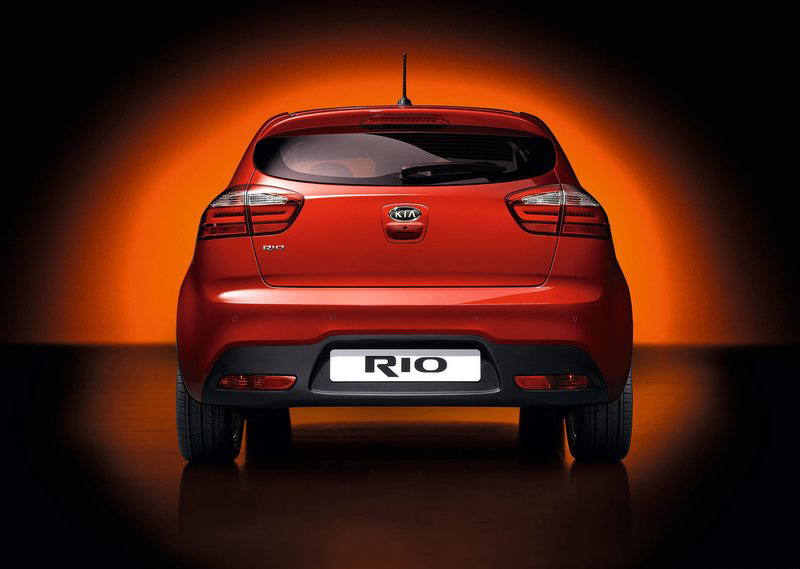
Kia Rio 3-door, 2012


  •  Kia Rio 3-door, 2012

While the all-new Kia Rio 5-door hatchback is generating positive media coverage around the world and arriving in dealer showrooms across Europe, Kia is celebrating the world premiere of its new Kia Rio 3-door model at the 2011 Frankfurt Auto Show.

Designed primarily for the European market, the new Kia Rio 3-door expand the appeal of Kia's latest B-segment model to attract a new group of consumers to the brand for the first time - boosting conquest sales after its introduction during the first quarter of 2012. Ultimately, Kia expects the Rio 3-door to account for approximately 20 to 25 per cent of total Rio sales.

Kia Rio 3-door has the same key dimensions as the 5-door model (length 4,045 mm, width 1,720 mm, height 1,455 mm and wheelbase 2,570 mm) and retains the same roofline that is one of the lowest in Kia's European product range, emphasising its purposeful, sporty stance.

In most European markets, Kia Rio 3-door available with the same range of powertrains, equipment and options as the 5-door. The new model offer customers a choice of four highly efficient three- and four-cylinder engines - with a 75 to 109 ps power range.

The fastest Kia Rio 3-door accelerate to 100 kph (62 mph) in 11.5 seconds and be able to reach a top speed of 183 kph (114 mph). Fuel consumption  as low as 3.2 litres per 100 km (88.2 mpg) for the newly-introduced EcoDynamics diesel model, which will also deliver an industry-leading CO2 rating of just 85 g/km.

To maximise the impact of the new Kia Rio 3-door´s striking appearance, Kia  offering customers a choice of up to 10 body colours - White, Black, Bright Silver, Signal Red, Fresh Beige, Electronic Blue, Deep Blue, Wendy Brown, Graphite and Caramel Yellow - which help to underline the car's refined and stylish character.

With two bodystyles for new Rio, plus the already-popular 5-door Soul and Venga B-segment models, Kia is confident of capturing an even larger share of the increasingly popular compact car market in Europe.
Read More

Chevrolet Code 130R Concept, 2012


Chevrolet Code 130R Concept, 2012

Chevrolet introduced two concept coupes at the 2012 North American International Auto Show aimed at inspiring next-generation buyers to take the wheel and suggest ideas for a car they can co-create.

According to U.S. Census data, there are 80 million American consumers approaching 30. They represent 40 percent of today's potential car-buying public and a combined $1 trillion in purchasing power.

Over the past year, Chevrolet has conversed with young consumers across the United States. Based on their feedback, the Chevrolet concepts explore the styling and functionality this group of new buyers says they are looking for in a car.

Chevrolet Code 130R, the first Chevrolet concept, is a four-seat coupe with a simple upright profile. Painted in an all-new red metallic paint with matte anodized gold wheels, Code 130R features heritage performance-inspired styling and rear-wheel drive. With an aggressive front fascia, Chevrolet fender flares, straight body side and Chevy crossflag emblem, Code 130R makes a link to Chevrolet's performance heritage.

Code 130R's designers conceived the turbocharged engine to be tuned to work in tandem with eAssist technology. By shutting off the engine at stops, recapturing braking energy, and smoothing torque during acceleration, this concept takes automotive electrification to the next level and balances turbocharged performance with fuel economy.

Chevrolet Tru 140S, the second Chevrolet concept is a front-wheel-drive, "affordable exotic" four-seat sporty coupe. The three-door hatchback was designed to be an attractive-yet-affordable sports car. Shown in an all-new matte white with Chevy performance chrome wheels featuring crossflag emblems, Tru 140S is designed to look confident, exotic, expensive and fast. Tru 140S is based off the same platform as the Chevrolet Cruze and the groundbreaking Chevrolet Volt electric vehicle with extended range.

Tru 140S designers want to demonstrate technologies typically found in more expensive cars, including direct injection and a starter-based stop-start technology, balancing internal combustion and electrification to deliver high value and improved fuel economy.

The concepts share attributes younger buyers say they value:
  •     Sedan-sized functionality in performance coupe form that seats four passengers
  •     Interior connectivity and convenience featuring innovative storage, WiFi, smart phone integration with Chevrolet MyLink and heads-up display
  •     40 MPG with a 1.4L Turbo Ecotec engine with approximately 150 horsepower
  •     Possible production price range in the low $20,000s

Inside the concepts, connectivity and personalization enable the individualization that the generation says is essential.

From Detroit, the pair of Chevrolet concepts will travel to major auto shows, key lifestyle events, one-on-one experiences and other venues such as college campuses. Chevrolet also will engage customers using the social media tools that young consumers use to talk with one another.
Read More

Tuesday, July 10, 2012

Lamborghini Gallardo LP570-4 Super Trofeo Stradale, 2012


 Lamborghini Gallardo LP570-4 Super Trofeo Stradale, 2012

Stephan Winkelmann, President and CEO of Automobili Lamborghini S.p.A., has presented at the Volkswagen Group Night in Frankfurt the most extreme Gallardo ever: the Lamborghini Gallardo LP570-4 Super Trofeo Stradale. Automobili Lamborghini is bringing motor racing excitement directly to the road. This new and most extreme top model in the Gallardo lineup is based on the successful race car from the Lamborghini Blancpain Super Trofeo, the world's fastest singlemake series.

The car will be produced in a limited run of 150 numbered units.

The Lamborghini Blancpain Super Trofeo championship brings professional racers and gentlemen drivers face-to-face in fiercely fought battles on Europe's most challenging racetracks such as Monza, Silverstone and Hockenheim. There are many similarities between the racing and road versions of this super sports car. For example, they both share the same V10 powerplant, which is used in the racing version with no modifications.

An enormous and manually variable rear spoiler for increased dynamic load

Right from first glance, these similarities are even more evident in the new Lamborghini Gallardo LP570-4 Super Trofeo Stradale. In fact, it is equipped with the same rear spoiler that offers greater aerodynamic load - reaching in the best aerodynamic condition 3 times the load of the Gallardo LP560-4 - for increased dynamic stability during tight, high-speed driving. As in the race cars, the rear spoiler can be varied manually in order to let the driver optimize the car's performance according to the track or road characteristics.

Another element taken directly from the racing version is the removable engine hood with quick-release system. Both the spoiler and the hood are of course made of carbon composite material, as are a host of other components on the SuperTrofeo Stradale. Together with aluminum, carbon fiber is the basis behind the extremely lightweight construction of Gallardo's new top model.

Lightweight construction through consistent use of carbon fiber
The Lamborghini Gallardo LP570-4 Super Trofeo Stradale boasts a maximum dry weight of 1340 kilograms. It beats the already lean Gallardo LP560-4 by 70 kilograms, which gives the Gallardo LP570-4 Super Trofeo Stradale a stunning power-toweight ratio of 2.35 kilograms per HP for breathtaking performance. It sprints from 0 to 100 km/h in a mere 3.4 seconds and reaches 200 km/h just 10.4 seconds later. Its forward thrust finally tops out at 320 km/h.

"Rosso Mars" stands for Italy's racing tradition
The Gallardo Super Trofeo Stradale sports a brand new "Rosso Mars" finish that underscores the special connection between ultimate race track performance and Lamborghini's "Italianness". The "Rosso Mars" color symbolizes Italy's traditional racing red, as established at the beginning of last century in motor racing, when the home nations of the competitors were indicated by the color of the paint on the vehicles. Dark green stood for Great Britain, blue was for France, white (and silver later on) represented Germany, white and blu stripes for USA, and red was the color of all race cars from Italy.

Red, black and carbon fiber characterize the exterior
The exterior appearance of the Lamborghini Gallardo LP570-4 Super Trofeo Stradale is perfectly accentuated by a matte black finish on the large rear spoiler, the engine hood and the front air intakes, which contrasts with the "Rosso Mars" paint. The forged wheels are painted in high-gloss black, a color that is also available on the roof as an option. The rocker panel covers, impressive rear diffuser and outside mirror housings are made of carbon fiber polished to a high gloss, while the brake calipers are accented in red for the first time on a Lamborghini. It's a perfect match with the exterior color and racing concept of this new super sports car. And besides the historically suggestive "Rosso Mars", the new Gallardo Super Trofeo Stradale is also available upon request in "Grigio Telesto" or "Bianco Monocerus" with the roof available in gloss black as an option, as mentioned above.

Minimalist sporty interior
Black and red, the perfect combination of sporty minimalism, are the dominant shades inside the Super Trofeo Stradale. The most broadly used materials are Alcantara - in "Rosso Mars" on the underside of the dashboard, the central part of the seat cushion and the backrest - and extremely lightweight carbon fiber. Black Alcantara with contrasting red top-stitching is used to finish the other parts of the interior. The steering wheel is upholstered in black suede and also features red top-stitching. The door panels, the monocoque racing seats and the center console cover are made of carbon fiber, the construction of which Lamborghini has achieved a world-leading expertise. Discreet sporty accents are provided by dark chrome visible metal parts.

Upon request, an interior layout including elements made of carbon fiber, such as the handbrake frame, the middle of the center console, the lower rim of the steering wheel, the decorative frames around the main and secondary instrument panels, the door handles, and the handle for opening the glove box (also available upon request), can be ordered.

Phenomenal powerplant
Like the Super Trofeo competition version, the new Super Trofeo Stradale is based on the Gallardo Superleggera technical approach. The V10 powerplant generates 570 HP, equivalent to 419 kW, which is fully available at 8000 RPM. The maximum torque is equally impressive, with the torque curve peaking at 540 Nm at 6500 RPM. The V10's unique firing order delivers the striking sound you hear in motor racing.

Transmission "race tested" in the Lamborghini Blancpain Super Trofeo championship series
Like the race car, the Gallardo Super Trofeo Stradale offers the robotized egear six-speed transmission controlled by steering wheel paddles as standard equipment. This electronically controlled system shifts through its six gears smoothly and much faster than any human being could. And for maximum acceleration from a standing start, the transmission can be set to the "Thrust Mode" - a program that allows to reach the best performance possible executing a racing start with minimal tire slippage at an initial engine speed of approximately 5000 rpm.

Permanent all-wheel drive for maximum traction in any situation
Every kilometer in the Lamborghini Gallardo LP570-4 Super Trofeo Stradale is packed with sheer excitement, in part due to its unrelenting grip in virtually all situations thanks to all-wheel drive. At the end of the day, the Lamborghini Super Trofeo is the only single-brand racing series in the world that features all-wheel drive race cars. The Gallardo Super Trofeo Stradale is a highly concentrated driving machine offering a truly stunning driving experience with breathtaking cornering speeds and fast, immediate response. Its road manners are always precise, stable and completely safe.

Suspension with unmatched precision
The layout of the suspension is directly derived from motor racing, with a double aluminum wishbone guiding the wheels. Precise rack-and-pinion steering gives the driver a very close connection to the road. As is true for the Gallardo Superleggera, the vehicle is specially set up to take full advantage of its dynamic potential. No other model in the Gallardo line is as close to being a true race car. Another great feature is the ultra-lightweight 19-inch wheels, which alone save some 13 kilograms. The lightweight and sturdy wheel bearings and bolts are made from titanium and high performance Pirelli P Zero Corsa tires are fitted.

Brakes with unmatched stopping power
Behind the massive wheels are brakes designed for unmatched stopping power, as controlled by the ESP stability control system, which is standard equipment. The front axle is equipped with aluminum calipers with eight pistons each, and the calipers on the rear axle have four pistons each. The ventilated discs on the front and rear measure 365 and 356 millimeters, respectively. Upon request, Lamborghini will install a carbon-ceramic brake system. The carbon-ceramic discs measure 380 mm for the front wheels and 356 mm for the rear wheels.

Racing-type options
The optional equipment designed with racing in mind includes not only the carbon-fiber ceramic brake discs, but also a tubular interior roll cage, 4-point safety belts and fire extinguisher. On the other hand, those who want comfort can equip their Super Trofeo Stradale with a satellite navigation, with Bluetooth connection for mobile phones, an anti-theft system, and a lifting system that raises the front axle.

Lamborghini Gallardo LP570-4 Super Trofeo Stradale - 

Technical Data
    CHASSIS AND BODY
        Frame: Structural aluminium space frame, based on aluminium extruded parts welded to cast aluminium joint elements
        Body: Aluminium with thermoplastic "hang-on" parts and diffuse use of Carbon Fiber
        Suspension: Double-wishbone front and rear suspension system, anti-roll bar, anti-dive and anti-squat
        ESP: Full ESP system with ABS, ASR and ABD
        Steel brakes: Power vacuum, aluminium alloy callipers: 8 cylinder front callipers and 4 cylinder rear callipers
        Ventilated discs
            EU: Ø 365 x 34 mm front - Ø 356 x 32 mm rear
            US : Ø 14.37 x 1.34 front - Ø 14 x 1.26 rear
        Steering: Power-assisted rack and pinion
        Tires (front - rear): Pirelli P ZERO CORSA 235/35 ZR 19 - 295/30 ZR 19
        Wheels (front - rear): Aluminium alloy: 8.5" x Ø 19" - 11" x Ø 19"
        Kerb-to-kerb turning circle: 11.5 m (37,7 ft)
        Mirrors: External mirror manually foldable
        Rear spoiler: Manually variable wing set up
        Airbags: Front "dual-stage" driver and passenger airbags
    ENGINE
        Type: 10 cylinders V 90°, DOHC 4 valves, common-pin crankshaft
        Displacement: 5204 cc (317,6 cu in)
        Bore and stroke: Ø 84.5 mm x 92.8 mm (Ø 3,33 in x 3,65 in)
        Valve gear: Chain-driven, intake and exhaust continuously variable valve timing, electronically controlled
        Compression ratio: 12,5:1
        Maximum power: 419 kW (570 CV) at 8000 rpm
        Maximum torque: 540 Nm at 6500 rpm (398,3 ft lbs at 6500 rpm)
        Emission class: EURO 5 - LEV 2
        Emission control system: Catalytic converters with lambda sensors
        Cooling system: Two water radiators + oil-to-water cooler, engine and gearbox radiator
        Engine management system: Bosch MED 9
        Lubrication system: Dry sump
    DRIVETRAIN
        Type of transmission: Permanent 4-wheel drive with viscous traction system
        Gearbox: 6-speed + reverse; Standard robotised sequential e-gear system with actuation by paddles on the steering column
        Clutch: Double plate, Ø 215 mm (Ø 8,46 in)
    PERFORMANCE
        Top speed: 320 km/h (198.8 mph)
        Acceleration
        0-100 km/h [0-62 mph]: 3.4 sec.
        0-200 km/h [0-124 mph]: 10.4 sec
    DIMENSIONS
        Wheelbase: 2560 mm (100,8 in)
        Overall length: 4386 mm (172,7 in)
        Overall width (excluding mirrors): 1900 mm (74,8 in)
        Overall height: 1165 mm (45,9 in)
        Track (front - rear): 1632 mm - 1597 mm (64,3 in - 62,9 in)
        Dry weight: 1340 kg (2954 lb)
        Weight distribution (front - rear): 43% - 57%
    TANK CAPACITIES
        Fuel tank: 90 litres (23,8 US gal)
        Engine oil: 10 litres (2,6 US gal)
        Engine coolant: 20 litres (5,3 US gal)
    CONSUMPTION
        Urban cycle: 20,4 l/100 km (13 mpg)
        Extra urban cycle: 9,4 l/100 km (20 mpg)
        Combined: 13,5 l/100 km (16 mpg)
        CO2 emission: 319 g/km
Read More