Monday, July 2, 2012

Hummer H3 Open Top, 2007


  • Hummer H3 Open Top, 2007

The 2007 HUMMER H3 has an available oversized power sunroof for an open-air feel, but the H3 Open Top concept goes a step further with ASC's unique sliding fabric "Infinivu" roof system. The expanded opening provides a nostalgic, safari-style experience in a thoroughly modern midsize SUV. The look and fun factor are classic, but the ease of operation, durability and weather resistance are strictly contemporary. Black chrome finish on the numerous H3 Chrome Appearance Package items available from HUMMER Accessories offsets the sparkling silver paint. Inside, the primary upholstery material is Townsend lambskin leather with Gatsby Green accent stitching.

Vehicle highlights
    * Unique, uni-directional sliding fabric "Infinivu" roof system from ASC
    * Fixed header, back glass and door
    * 20 x 9-inch Rozzi EGO chrome wheels
    * Mickey Thompson Baja Claw 325/50R20 tires
    * Custom Townsend lambskin leather upholstery with Gatsby Green accent stitching, Opal Gray trim and Ebony carpet
    * Black chrome door panel trim
    * OnStar Turn-by-Turn Navigation system
Read More

Brabus Mercedes-Benz SLS AMG Roadster, 2012


  • Brabus Mercedes-Benz SLS AMG Roadster, 2012

Style & Performance: that's the guiding principle for Brabus to refine the new Mercedes SLS AMG Roadster now as well. The exclusive program comprises an aerodynamic-enhancement kit made from clear-coated carbon fiber, extremely lightweight Brabus forged wheels with a comfortable sport suspension, engine tuning that produces a maximum power output of 611 hp (600 bhp) / 448 kW, a titanium high-performance exhaust system with electronic sound management, and a fully customiz interior tailored to the owner's individual preferences in every last detail.

The Brabus designers have adapted the aerodynamic-enhancement program originally developed for the coupe version of the SLS to the new roadster. Just like in top-flight motorsports the various components are manufactured from extremely lightweight carbon fiber. Customers can choose between aerodynamic-enhancement components with a high-gloss finish or with a matte finish for undiluted racing looks. Upon request the components can also be painted in body or contrasting color.

The Brabus front spoiler attaches to the underside of the production bumper. It lends the two-seat car a more striking front end and reduces lift on the front axle at high speeds. The two Brabus carbon-fiber covers for the upper air ducts in the front fascia add further thrilling highlights.

On the sides the Brabus side skirts create an optimal aerodynamic transition between the front and rear wheel wells. But that's not all: together with the air vents in the front fenders that were newly designed by Brabus they lend the sports car an even more dynamic profile. A special feature of these components stands out particularly in the dark: pushing the unlock button on the keyless remote or pulling on a door handle activates the blue-backlit Brabus lettering in the new air vents and the LED entrance lights, which facilitate safe entering and exiting the vehicle in low-light conditions.

The rear end of the SLS Roadster adds even more sporty character as well: the modifications include the understated Brabus rear spoiler, the side air vents for the rear fascia and the Brabus diffuser with custom-tailored cutouts for the four distinctive tailpipes of the Brabus quad sport exhaust.

The more exclusive appearance is to no small extent also the merit of the Brabus forged wheels, which were custom-developed for the SLS. To add even more emphasis to the wedge shape of the car the wheels are mounted in a staggered combination with diameters of 21 inches on the front axle and 22 inches in the rear. The Brabus Monoblock F "Platinum Edition" cross-spoke wheels are manufactured using a high-tech forging process, making them more than just stunning eye-catchers. Their low weight also contributes to even sportier handling. Compared to the production SLS wheels they represent weight savings of up to 12 percent. The wheels in size 9.5Jx20 in front and in size 11Jx21 on the rear axle are available either with a high-gloss, ceramic polished or with a brushed finish. The suitable high-performance tires in sizes 275/30 ZR 20 and 295/25 ZR 21 are supplied by technology partners Continental, Pirelli or Yokohama.

Also contributing to even more agile handling is the Brabus Ride Control smooth-ride suspension that was developed in cooperation with Bilstein. It can lower the ride height by up to 40 millimeters (1.6 inches). At the push of a button on the center console the driver can choose between damper settings that offer a more comfortable or sportier ride than the production car.

The sport suspension and the production suspension can be upgraded with the Brabus Front Lift System for added convenience. At the push of a button, a hydraulics system raises the front end of the roadster by 50 millimeters (2.0 inches) in just a couple of seconds. This makes it possible to safely navigate past speed bumps or parking garage ramps without any unwanted contact of the front end with the obstacle. The suspension reverts to its original position at a second push of the button or automatically upon reaching a speed of 30 km/h (19 mph).

The sportier handling offers the perfect basis for more power. The Brabus engine specialists have developed the Brabus B63 S tuning kit for the 6.3-liter fast-revving V8 engine. The performance kit consists of newly calibrated engine electronics with special Brabus mapping for ignition and injection, and the Brabus high-performance exhaust system. This exhaust system, which can also be combined with the non-tuned production engine, features four tailpipes with a diameter of 84 millimeters (3.3 inches) and enhances power output. But that's not all: the sport exhaust is manufactured from titanium, making it 12 kilograms (26.5 lbs.) or 40 percent lighter than the production exhaust. In addition, an integrated butterfly valve provides a sound management option controlled by the driver from the cockpit: apart from the 'Sport' setting, which lends the eight-cylinder an even more thrilling exhaust note, there is also a discreet, deliberately soft 'Coming Home' mode. Brabus B63 S tuning bumps maximum power output from standard 571 hp (563 bhp) / 420 kW to 611 hp (600 bhp) / 448 kW, making the SLS even more dynamic.

The Brabus interior design studio gives the SLS cockpit an equally sporty and exclusive ambiance. Among the upgrades are striking accessories such as a speedometer with 400-km/h (250-mph) dial, an ergonomically shaped sport steering wheel, stainless-steel scuff plates with backlit Brabus logo and matte-anodized pedals.

The Brabus upholstery shop can fulfill requests for custom interiors in any color and design. The artisans meticulously transform leather and Alcantara by hand into interior appointments custom-tailored to the customer's individual preferences. Carbon-fiber and exotic-wood trim sets in any desired color and with every type of surface finish are yet another particular Brabus specialty.
Read More

Sunday, July 1, 2012

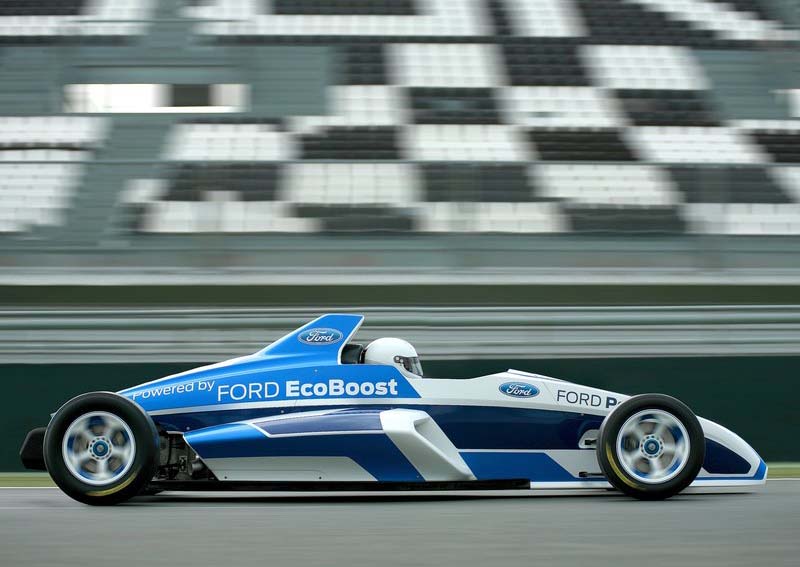
Ford Formula, 2012


  •  Ford Formula, 2012

Ford unveiled a bold new 2012-specification Formula Ford car to visitors at the 2011 Frankfurt Motor Show. It's the formula that has been an essential step in the professional racing driver's career for more than 40 years and the all-new car for next season will have talented young drivers around the world eager to get behind the wheel to prove their mettle.

The new-generation Formula Ford cars use a production-based 1.6-litre Ford EcoBoost direct injection, turbocharged engine, limited to producing around 165PS and 220Nm, and mated to a 6-speed sequential transmission with mechanical shift mechanism. The 2012 specification car represents another advance in technology and performance for the formula.

Freedom of chassis design, engine build and numerous technical items of specification have always been standout features of Formula Ford and this continues with the 2012 specification car. With only Formula 1 and Formula 3 offering this same level of freedom, it helps drive technical standards to exceptionally high levels from car manufacturers, teams and drivers alike. The different implications of car set-up and each individual chassis variation, create a steep learning curve for drivers in particular, helping to accelerate the development of their abilities to take the next step in motorsport.

Ford's global kinetic design philosophy is also echoed in the new-generation car, giving fans of the championship a style they can easily recognise. Car manufacturers will still be able to add that crucial individual touch to their cars though, with only the requirement to keep specific parts developed for aerodynamic equivalence mandated in the regulations.

Creating a safe environment is a key concern for Formula Ford, and the new car boasts increased levels of safety including a tubular chassis - the first in a single seat racer to comply with the latest, stringent FIA safety standards - front and rear carbon crash structures, side intrusion panels, FIA specification head restraint system, wheel tethers and an FIA removable seat.

FIA compliance allow the 2012 specification car to be applicable for Formula Ford championships around the globe, especially in emerging markets where alignment to FIA regulations is commonplace.

For race teams and car manufactures Formula Ford represents a fantastic opportunity to prove their abilities and highlights Ford's dedication to continuing its support of motorsport. From World Rally Championship to single seat racing, Ford's motorsport heritage is one of the longest and strongest of any manufacturer. The 2012 specification Formula Ford car will carry that torch into the future with some style.
Read More

Chevrolet Camaro ZL1, 2012


  •  Chevrolet Camaro ZL1, 2012

The 2012 Chevrolet Camaro ZL1 debuted at the 2011 Chicago Auto Show. It is the highest-performing Camaro and the most technically advanced car ever developed in its class. The new ZL1 continues the momentum of Camaro, propelling it into an entirely new realm of leading-edge performance technology. It is planned to launch at the beginning of 2012.

Motivated by a supercharged V-8 engine producing an estimated 550 horsepower (410 kW), the Chevrolet Camaro ZL1 will be the fastest Camaro ever offered by Chevrolet. And more than just power, the ZL1 features technologically advanced and highly developed chassis and suspension systems that help it deliver balanced, track-ready handling and braking power to complement its high engine output. Rigorous development of the Chevrolet Camaro ZL1 is ongoing, and official estimates of the car's capabilities will be released later in 2011, as testing nears completion.

The ZL1 name is derived from the all-aluminum racing engine of the same name, which was developed in the late 1960s and installed into a handful of regular-production 1969 Camaros. Only 69 were built with the engine, but they've achieved mythical status among enthusiasts, as they represented the pinnacle in Camaro performance - until now. The 2012 Chevrolet Camaro ZL1 model is designed to be a major leap forward for the Camaro, bringing a new level of performance capability to the segment.

The central goal of the car's development was creating something new - a Camaro intended to reach optimal lap times on top road-racing circuits and excellent driving dynamics on the street. To achieve that goal, engineers evolved many of the existing Camaro's systems, as well as incorporated new technologies such as electric power steering and Magnetic Ride Control, the world's fastest-reacting suspension system.

Camaro ZL1's design communicates and supports its performance mission. Rather than using decorative elements, Chevrolet Camaro ZL1 is visually differentiated from other current Camaro models with elements vital to the car's elevated capabilities.

Major elements of the ZL1's design are a new front fascia and hood with air extractors, designed in tandem to create aerodynamic downforce to aid handling. The car's hood includes a signature center section constructed of carbon fiber and rendered in satin black finish. New rocker panels, wide tires, 20-inch wheels and exhaust tips portray the car's handling and power.
The Chevrolet Camaro ZL1 badge appears on the grille, hood and the brake calipers, all key areas portraying the technology within.

Tech overview
Supporting the dynamic track and street performance of the ZL1 is the LSA 6.2L supercharged engine, which will produce an estimated 550 horsepower (410kW) and 550 lb.-ft. of torque (677 Nm), with specific features for the Camaro. Built on GM's legendary all-aluminum, small-block V-8 architecture, the LSA features an intercooled supercharger system, premium heat-resistant aluminum-alloy cylinder heads and other details designed to ensure its exceptional performance is delivered with smoothness and refinement. Components and design elements that contribute to the LSA's performance:
    * Balanced, lightweight reciprocating assembly
    * High-strength hypereutectic pistons
    * Sixth-generation Eaton supercharger with four-lobe rotors
    * Piston oil squirters.

Because the Chevrolet Camaro ZL1 uses electric power steering, the engine does not incorporate a conventional hydraulic power steering pump on its accessory drive system. This enhances performance, because no engine power is used to turn a steering pump pulley.

Chevrolet Camaro ZL1 is a complete high-performance car, not just a Camaro with more power. Key technical highlights include:

Transmission - The high-performance Tremec TR-6060 six-speed manual is matched with the LSA engine. It is the "MG9" version of the transmission, with a higher torque capacity. It is used with a dual-mass flywheel and twin-disc clutch for easy operation and shift smoothness. A new, shorter-throw shifter actuates the gear changes.

Exhaust - Chevrolet Camaro ZL1 is equipped with a dual-mode exhaust system, which alters the sound level and character in response to engine rpm. First used on the legendary Corvette, and specifically tuned for Chevrolet Camaro ZL1, the dual-mode exhaust will give the car a signature sound.

Drivetrain - It is revised with a stronger driveshaft and rear axle system, featuring a larger and stronger cast iron differential housing, stronger axles and heavy-duty limited-slip differential. This patent-pending system is designed to ensure that ZL1's tremendous power is delivered smoothly to the ground.

Suspension - The suspension features completely revised tuning and the inclusion of segment-exclusive Magnetic Ride Control. Chevrolet Camaro ZL1's Magnetic Ride system will include driver selectable modes (Tour and Sport) tailored for the preferred style of driving. It uses advanced magneto-rheological science to produce shock damping with the highest level of precision, enabling body control optimized for excellent performance in everyday driving as well as track situations. This technology appears on only a small roster of some of the world's finest performance cars. Other chassis elements are redesigned to support the car's high-performance limits. Rear stabilizer bars have drop links repositioned outboard of the control arms. This makes the bars more effective in controlling body roll in turns, with crisp response to driver commands.

Brakes and Steering - Camaro ZL1 features an advanced track-capable braking system, developed in conjunction with experts from Brembo. The large 14.6-inch (370 mm) two-piece front rotors have six-piston calipers; the 14.4-inch (365 mm) rear rotors have four-piston calipers. Chevrolet Camaro ZL1 marks the entry of a new electric power steering system to Camaro. It is being developed to ensure precise control and feedback to the driver, with greater variability of effort for high-performance driving.

Exterior - ZL1's signature from the front is the redesigned fascia and aluminum hood with a raised, carbon fiber insert. The fascia includes a front splitter and new vertical fog lamps. The fog lamp area includes air intakes designed for brake cooling. The hood features front-mounted air extractors that direct air precisely over the car. Visually, this center section, in satin black carbon fiber, communicates the car's high-performance intent as a visual contrast to the car's exterior color. Functionally, the air extractor is a key in connecting airflow closely to the bodywork, creating aerodynamic downforce. The carbon fiber center section reduces the mass of the hood. High-intensity discharge (HID) headlamps and fog lamps are standard. The rear of the car includes a diffuser and spoiler, also functional elements that enhance the car's aerodynamics.

Wheels and Tires - New-design, 20-inch forged aluminum wheels, which are lighter than the 20-inch wheels used on the Camaro SS, are used with new Goodyear Supercar F2 ties developed specifically for the Chevrolet Camaro ZL1.

Interior - ZL1 is tailored for high-performance driving. The front seats feature microfiber suede inserts. Other enhancements include a redesigned steering wheel, alloy pedals, Head-Up Display with unique performance readouts and the "four-pack" auxiliary gauge system featuring a boost readout.

Production details
All of the Camaro exterior colors will be offered with the ZL1, but black is the only interior color. The unique exterior features are complemented with a black center section on the hood. Inside, the Chevrolet Camaro ZL1 has heated leather seats with microfiber inserts and ZL1 logos embroidered on the front headrests. Microfiber suede is repeated as an accent on the instrument panel, adding a richer look to the interior. The Chevrolet Camaro ZL1 will include the same content as the current 2SS package and include the following new or unique features:

    * Six-way power driver and passenger seats
    * Unique instrument panel and door panel inserts; and ZL1-logo sill plates
    * Steering wheel audio controls with Bluetooth capability
    * Wireless PDIM and USB-port
    * Boston Acoustics premium audio system
    * Rear parking assist
    * Rear camera system (displayed in the inside rearview mirror).
Read More

Friday, June 29, 2012

Mazda 3 MPS, 2012


  •  Mazda 3 MPS, 2012

When the very first Mazda 3 was launched in 2003 it was more than a continuation of Mazda's long compact history, it was a revelation. The new compact looked sportier than most compacts at the time and was exciting to drive. People took notice and Mazda 3 quickly led the way in a rebirth of the Mazda brand around the world, reaching the 1-million production mark sooner than any Mazda model before it. The current second-generation model followed in 2008 and introduced an aggressive front end design. It remains the company's most popular car with almost 3 million sold globally.

Europe is the car's second-largest market worldwide with total sales of 613,000 units, nearly 100,000 of these from the current model achieved in less than two years. With almost 60,000 units sold in 2010, the Mazda 3 is the best-selling vehicle for Mazda in Europe. Mazda 3 has accumulated 125 global accolades since originally launched, including several Car of the Year awards. The first-generation won 99 of these over a 5-year period, while the current model has already taken home 26 awards.

The current second-generation Mazda 3 has built a strong reputation as one of Europe's sportiest compacts. It comes in two body styles, each with its own distinct character: the smooth, sporty elegance of the four-door sedan, and the muscular strength of the five-door hatchback. For even sportier tastes there's the Mazda 3 MPS, which is one of the most powerful frontwheel drive compacts. Besides this strong emotional appeal, state-of-the-art technology and a long list of equipment make Mazda 3 frugal, fun-to-drive and easy to use. It has a powertrain line-up of five petrols (including two DISI direct injection petrol engines), three common-rail diesels, five and six-speed manual transmissions, and four and five-speed automatic transmissions. A long list of standard equipment and options - like a premium ten-speaker BOSE® stereo system and Bluetooth® MP3 capability - make the ride an enjoyable one. Park assist make city parking easier, and adaptive front xenon headlights, tyre-pressure monitoring, rear vehicle monitoring (according to grade/option) and ESS (Emergency Stop Signal) - along with standard front, side and curtain airbags- deliver superior safety

Design Refinement
When it comes to head-turning good looks, Mazda 3 is already one of the market's most appealing compact line-ups with an aggressive hatchback and a sporty yet elegant sedan. This was confirmed less than two years ago, when a poll of 200,000 AutoBild readers across Europe voted Mazda 3 Europe's best-looking compact. For the facelift version, designers focused on updates that would continue the car's emotional appeal. They redesigned the front end to be more aggressive and aerodynamic, and reduced rear bumper thickness. These changes give the exterior a well-toned muscular appearance that underscores the car's solid build quality. This focus was carried through to the inside as well, where new materials and colours enhance quality feel, while the optimized ergonomics make the Mazda 3 facelift easier to use.

EXTERIOR
The current Mazda 3 introduced a new front end that gave the car a unique sporty edge that is immediately recognizable as Zoom-Zoom. This continues with the Mazda 3 facelift. The friendly yet sporty front face with large 5-point grille is updated to create a richer and more stylish impression. The corners of the front bumper now have a larger fascia around the air inlets, new round fog lights embedded in their lower sections, and a lower front lip that protrudes outwards more than before. These changes not only give the Mazda 3 facelift a more aggressive and emotionally appealing look, they function to improve aerodynamic performance as well.

Hatchback Rear End Design - Less Means More
Changes were also made at the back of the Mazda 3 facelift five-door version. The rear bumper is not as thick as before (it protrudes 30 mm less than the outgoing sports-grade hatchback) and the reflectors are placed closer to side panels. As a result, the facelift hatchback looks even wider and more solidly built when seen from the back. The shortened rear bumper allows easier loading and unloading of the Hatchback's luggage compartment, and the overall length of the car has been reduced by 30 mm (compared to sports grade).

New Wheel Designs and Colours
The sporty silhouette of the Mazda 3 gets new 16 and 17-inch wheel designs with more spokes that are twisted slightly backwards to give a dynamic, lighter look even when the car is standing still. Customers can choose between 8 exterior colours: an all-new Autumn Bronze Mica to go along with Indigo Blue Mica, Velocity Red Mica, Crystal White Pearl, Arctic White, Aluminium Metallic, Graphite Mica and Black Mica.

Cockpit - Now Easier to Use
The insightful combination of design and functionality continues on the inside of the Mazda 3 facelift with updates intended to create a more stylish interior that is also functional and easier to use. The current Mazda 3 already delivers superior cockpit ergonomics with a driver-orientated sporty dashboard, great all-round view of the road, telescopic and height adjustable steering wheel, height and front-toaft seat adjustment, and a high-mount shift level backed by a centre console that allows easy shifting with a flick of the wrist.

Leaving this unchanged, designers focused on lowering the amount of eye-movement it takes to use the car's onboard systems from behind the wheel. To realize this, they replaced the previous silver of the lower section of the dashboard middle console with black colour, and ringed dials and controls that are used most by the driver in brighter satinpolish silver that's easier to see.

They  replaced the red graphics of the current model's multiinformation display and LCD (under the instrument panel hood) to a crisp white, which makes them easier to see as well. The twin-metre driver cluster is also optimized in the facelift model to be easier to read, especially during the day. The previous blackout meters are replaced by continuously lit white graphics. These graphics are placed on either a grey background colour (standard and high grade models) or a sporty red gradation for the Mazda 3 MPS.

Colours and Materials
The facelift interior now has leather park-brake handle for all models. Designers introduced new design patterns in the seat-centre that are of higher quality. Standard grades have a centre fabric in black or beige with a three-dimensional pattern using wavy cross-threads for a strong sense of quality. High grades also use this wavy pattern in black and beige, but with shiny threading that changes according to how the light hits it.

Optimised Ride Comfort and Handling Stability

The 2011 facelift carries forth the Mazda 3 reputation for agility and easy handling by introducing new features that improve ride quality and handling stability. The result is a facelift model that is even more fun and predictable to drive on a daily basis.

Toitsu-kan - a Higher Quality Driving Experience
Mazda 3 is a driver's car. For the facelift version, engineers optimized handling and ride comfort even further to deliver a higher quality driving experience. To achieve this, the pilot must experience a "consistent and linear feel" while driving. Engineers gave this composite attribute a name, Toitsu-kan, and applied it to steering, suspension and body characteristics, along with engines and transmissions.

It delivers smooth transitions between acceleration, lateral and deceleration G forces in response to the basic aspects of driving, turning and stopping for a more linear and consistent driving feel.

Updates to Body Shell, Suspension and Steering
A new single brace bar that is made of stronger and more rigid reinforcement material is added to the front of the body, instead of the current two reinforcing bars, which is better at suppressing foreaft deformation, it delivers not only more rigidity, but a more refined handling stability (except for MZR-CD 2.2-litre diesel version).

To increase ride comfort, changes were made to Mazda 3's front MacPherson strut and rear multi-link suspension system, and its electric-hydraulic power assisted (EHPAS) system. Mazda 3's EHPAS system was updated with new pump-flow settings and stiffer wheels were introduced. When combined with the more rigid body and optimized dampers, these contribute to better steering feedback and road feel, especially at mid and high speeds.

Improved Aerodynamics
A major contributor to handling stability of the Mazda 3 facelift is its new, aerodynamically-optimized front bumper. Its lower side sections protrude further forward, and the fins beneath it are larger. This streamlines the air hitting the front of the vehicle more effectively and lowers turbulence where air enters the front of the engine compartment.

It also improves the effectiveness of the new front tyre deflectors and suppresses air swirling at the sides of the body. The updated front grille allows more gloss painting at the upper part of the grille (for high-grade) and less grille mesh is needed, which has the advantage of reducing the chance of mud or rocks entering the grille.

The front tyre deflectors are now 50 percent more rigid than before, which helps prevent deformation at high speeds. The floor undercover was also redesigned to contribute to better aerodynamics. It now covers 10 percent more area than before and the vertical grooves of the outgoing model are replaced in favour of a flatter surface. At the back, the undercover is curved and closer to the ground, which is better for controlling air-flow rearwards. How much these measures affect air-flow can be seen in the Mazda 3 facelift's improved coefficient of drag - for the sedan Cd is just 0.27 (0.28 for the current model) and 0.29 for the hatchback (0.30 for the current model). The Mazda 3 MPS coefficient of drag is unchanged at 0.32.

Taken together, these updates help the Mazda 3 facelift to respond perfectly to driver input, support Mazda's trademark one-with-the-car feel, improve handling stability at higher speeds, and make the ride even more comfortable.
Read More

Wednesday, June 27, 2012

Ferrari 458 Italia Grand Am, 2012


Ferrari 458 Italia Grand Am, 2012

After making its track debut at home in Fiorano, the Ferrari 458 Italia Grand Am back in action on 26 and 27 July, 2011 for a private test session at Florida's Daytona International Speedway. Taking turns at the wheel will be the tried and tested duo of Jaime Melo and Toni Vilander who can pride themselves of having an extensive list of wins to their name in Ferraris. They will continue development work on the Ferrari 458 Italia Grand Am in preparation for its participation in the 2012 American championship.

The Ferrari 458 Grand Am is built to match the American regulations and is therefore different to the European car, especially in that it develops 500 horsepower and has less efficient aerodynamics than the GT version. It is also fitted with a 48 mm restrictor and maximum revs are 8000. Significant modifications have been made to the braking system, as the car has neither ABS nor traction control. Other differences to the GT3 include the roll-over bar which gives greater lateral protection to increase safety in a series in which collisions are rather more frequent. The car is fitted with tyres from Continental, the sole supplier to the series, featuring a very hard compound, again to conform with the series regulations. On its shakedown today, it completed a good number of trouble-free laps, 45 to be precise in the hands of Maurizio Mediani and Jaime Melo, as they took turns at the wheel.

Daytona recalls many memories of past Ferrari victories in the famous 24 Hour race, the company having close links with this important event. In fact, Ferrari has taken part in 47 of these endurance races, winning five of them outright as well as taking 15 class wins.

Standing out in that list was an amazing clean sweep of the podium in 1967 for the two Ferrari 330 P4 and a 412 N.A.R.T., while back in 1962, Phil Hill and Ricardo Rodriguez won in a Dino 246 SP. That year, no less than four Ferraris finished in the top ten while in 1972, Mario Andretti and Jacky Ickx won in a 312 PB.
Read More