Sunday, May 20, 2012

Lincoln MKT Concept, 2008


  •  Lincoln MKT Concept, 2008

Lincoln pulls the wraps off a new premium utility concept vehicle - unsurpassed in its balance of spaciousness, comfort and fuel efficiency - that shows customers a new way to tour in style.

The Lincoln MKT concept features a 3.5-liter V-6 EcoBoost engine with turbocharging and direct injection that produces the power and torque of a V-8 engine with the fuel efficiency of a V-6. EcoBoost - combined with advanced transmissions, electric power steering, weight reductions and aerodynamic improvements - is a key part of Ford Motor Company's vehicle sustainability strategy.

The company is introducing EcoBoost engines that will deliver up to 20 percent better fuel economy on half a million Ford, Lincoln and Mercury vehicles annually in North America within the next five years. Ford will first introduce EcoBoost in the Lincoln MKS next year. The luxury sedan will feature a 3.5-liter twin-turbocharged V-6, delivering an estimated 340-horsepower and more than 340 lb.-ft. of torque on regular gas.

Premium Efficiency
The Lincoln MKT concept features an EcoBoost engine that's flex-fuel capable, providing the driver with the flexibility to switch back and forth between premium gasoline and E85 ethanol-gas blend. Burning these high-octane fuels, the MKT concept's V-6 engine delivers 415 horsepower and 400 pound-feet of torque - an impressive 118 horsepower per liter.

The concept's engine is mated to a six-speed transmission for greater fuel efficiency. Fuel efficiency also is helped by weight-saving, eco-friendly "upcycled" materials from SABIC Innovative Plastics.

Two upcycled plastic materials, Valox iQ and Xenoy iQ, were used in making the Lincoln MKT body panels, energy absorbers, wire bundles andglazing. The resins are made from discarded soft-drink bottles and other polyester waste, keeping them out of landfills, reducing energy consumption and shrinking the vehicle's overall carbon footprint.

Some applications of the resin help the vehicle resist heat and chemicals and also improve overall noise and vibration.

Spacious Elegance
Drivers and passengers alike will appreciate the Lincoln MKT concept's spaciousness - right down to the seats that mirror those found in first-class aircraft cabins. Four executive-sized chairs offer comfort and unprecedented leg room. As an added pleasure, second-row heated and cooled thigh supports deploy from under the seats, while footrests deploy rearward from the front seats, allowing passengers to fully recline.

The vehicle's symmetrical interior design divides the cabin thoughtfully, providing all four passengers equal access to the vehicle's appointments.
Through the use of soothing tone-on-colors, eco-friendly materials, ambient lighting and flexible storage, the MKT concept offers customers a unique combination of serenity and connectivity.

Environmentally friendly details include the plush, hand-knotted rug made from banana silk that covers the floor and complements the contrasting Creamy Pearl chromium-free leather seats.

Elsewhere in the interior, chrome accents - including a one-piece sculpted door handle featuring a baroque-influenced graphic - mirror the elegant lines on the concept's exterior.

For the center stack, designers invented and patented a solid-state lighting technology that allows them to project onto a contoured surface in 3-D. Until now, all projection was limited to flat surfaces with square or rectangular boundaries like a flat-screen television.
This new technology allowed designers to use non-traditional shapes and spaces for information displays as well as unique storage spaces in the center stack.

The expansive instrument panel and twin-level center console, finished in a reconstituted oak veneer, houses an assortment of technologies, including an instrument cluster inspired by Swarovski crystals. It uses Light Emitting Diodes (LEDs) strategically positioned so light appears to emanate from the center of three circular dials and radiate to the outer edge of the dials.

The MKT concept's center console, which runs the entire length of the vehicle to create a feeling of continuity between the upper and lower portion of the cabin, contains individual air vents, audio and climate controls, and personal storage.

In addition, a flat screen deploys from a floating overhead console which also hides two small cameras, each aimed at one of rear seats to provide on-screen "conference calling."
In the rear cargo area, a smart space behind the second-row seats provides additional storage. Designers also included a power lift system that raises and lowers a series of rails behind the rear seats to allow flat-load or compartmentalized storage.

Lincoln's timeless design on a whole new package
The Lincoln MKT concept features Lincoln's signature double-wing chrome grille, encapsulating LED headlamps that wrap around into the sculptured hood, lending the luxury utility a powerful presence.

Its elegant body side chamfer runs along the shoulder, with dynamic haunches over the rear wheel arches. Inset into each front fender and traveling through the door panels are chrome Lincoln stars with spears that add visual length to the car. Meanwhile, winged, curb-clearing doors give the car a dramatic sense of direction, agility and forward movement.

A substantial C-pillar creates an aura of privacy for the rear occupants. Like limousines, the MKT cuts an interesting profile - long, low and comfortably wide. The signature roofline runs the entire length of the greenhouse and remains uninterrupted. The roof itself is glass, allowing in natural light.

As an unconventional surprise, designers incorporated a bustle-back design into the concept.
The classic look provides massive storage capacity, crucial for any trip.
From the rear, the concept is instantly recognizable as a Lincoln, thanks to full-width LED taillamps stretching from side to side.

The exterior is bathed in a rich Liquid Bronze Metallic paint that compliments the chrome brightwork. The intricate 21-inch, 14-spoke interlocking chrome aluminum wheels have body color accents.

Specifications

    * Powertrain
          o Engine: 3.5-liter V-6 EcoBoost
          o Horsepower: 415 hp @ 5,750 RPM
          o Torque: 400 lb.-ft. from 2,000 to 5,000 RPM
          o Transmission: 6-speed select-shift AWD
    * Chassis
          o Length: 208.4 in
          o Wheelbase: 120.7 in
          o Width: 78.7 in
          o Height: 63.9 in
    * Track Width
          o Front: 67.1 in
          o Rear: 67.0 in
    * Suspension: Independent Rear Suspension
    * Headroom:
          o Front: 41.5 in
          o Second Row: 39.4 in
    * Legroom
          o Front: 42.0 in
          o Second Row: 44.0 in
    * Tire size: 285/35/ZR2
Read More

Lancia Ypsilon Versus, 2009


Lancia Ypsilon Versus, 2009

Lancia Ypsilon Versus introduced at the 2008 International Paris Motor Show, a Lancia Ypsilon Versus show car produced with the Versace Group brand that  dress the models on the stand with garments chosen to suit the expressive motifs of the exhibition space. All the confirms the strong bond between Lancia and the world of Fashion. Together with Design and Cinema, Fashion is one of the brand's languages of reference, as is borne out by the choice of Lancia cars as official vehicles for the Milan fashion week.

The Lancia Ypsilon continues to cause a stir, confirming its place as a true icon of Italian design. This time, it is the turn of the Lancia Ypsilon Versus, an original version created as a result of collaboration between Lancia and Versus, a Versace Group brand that has always been a byword for exquisite styling innovation. With its pronounced tendency for a young, dynamic style, Versus reflects the taste of an audience that is very aware of fashion trends and full of vitality. Attention to detail, care over proportions and top-quality workmanship and materials are the strengths of the brand collections. So it seemed quite natural to combine the Versus brand with Lancia Ypsilon, the model directed at the same young and sophisticated audience.

The show car is the forerunner of a special series that  produced in a limited edition (500 cars) and marketed from March 2009. The car confirms Lancia's interest in the world of fashion. Despite the apparent differences between motoring and fashion, the two worlds actually share important qualities such as talent, creativity and innovation. The winning ingredients of world-renowned Italian style, in other words.

The Lancia Ypsilon Versus show car features certain exterior features of great visual impact. Beginning with the special Bronzino Bronze body colour that bears a screen-printed 'Versus' logo on the roof. The exterior also boasts bronze 16" alloy rims. The original bronze chrome finish is also repeated on the grille, handles, moulding on the doors and rear bumpers and tailgate handle, sporting the Versus logo.

The same strong personality is evident inside, as borne out by special upholstery produced with a band in a cloth that recalls the world of fashion - and a central area in brown leather with a 'Versus' logo heat-printed in relief, just as on the accessories produced by the fashion brand.

The same craftsmanship has been lavished on the pearl-effect leather of the head restraint, adorned with an embossed Versus logo, on the dashboard and on the door panels. Everything has been made even more elegant and exclusive by detailing on the instrument panel, sill plate and gearbox that also have the same bronze chrome finish as the exterior features.
Read More

Renault Megane Coupe-Cabriolet, 2011


Renault Megane Coupe-Cabriolet, 2011

New Renault Mégane Coupé-Cabriolet rounds off the renewal of the Renault Mégane family in style with introduction of the line-up's sixth body type. The newcomer's striking looks combine the elegance of a coupé with the promise of the thrills that go hand-in-hand with driving a cabriolet.

The Renault Mégane Coupé-Cabriolet builds on the strengths that forged the success of its predecessor - including a large, folding glass roof and a raft of user-friendly equipment - yet it goes further still by offering customers:
  •     * unruffled open-top motoring thanks to the forward position of the windscreen and a fixed glass wind deflector situated behind the rear head restraints,
  •     * outstanding handling performance thanks to a stiffer chassis and a new electric power steering system,
  •     * a broad choice of engines, including one which can be ordered with the all-new automatic EDC (Efficient Dual Clutch) transmission.
  •     * careful attention to quality, including high-gloss black and satin-effect chrome exterior features.
Renault Mégane Coupé-Cabriolet is manufactured alongside Scénic and Grand Scénic at Renault's Douai plant in France. It consequently benefits from the experience gained since the beginning of the Mégane programme, including the assembly of the former-generation Renault Mégane Coupé-Cabriolet.
Renault Mégane Coupé-Cabriolet is an open invitation to enjoy an alternative way to go motoring, and is an elegant illustration of Renault's new brand signature, 'Drive the Change'.

ARRESTING LOOKS FROM EVERY ANGLE
Renault Mégane Coupé-Cabriolet completes the renewal of the Mégane family in style with a car whose intrinsic appeal is sure to turn heads.

Its looks exude a distinguished elegance that is underpinned by the large glass roof which tells you that this is unmistakably a cabriolet, even in its coupé configuration. This high-gloss finish black glass roof contrasts with the satin-effect chrome windscreen frame, while the sweep of the waistline adds an unmistakably high-end feel that more than does justice to its cabriolet persona. The dark red taillights feature a linear lighting pattern and LED brake lights to provide a distinctive rear lighting signature.

The interior layout carries over the same prevailing elegance and refinement, thanks not only to the quality of the materials employed and to the high standard of finish, but also to the three choices of trim, which range from dark charcoal and light beige to the charcoal and red two-tone finish with leather seats.

Though the floating dashboard is identical to that of Renault Mégane Hatchback, the seats offer additional lateral support, while the 'butterfly wing' door trim panel is specific to Renault Mégane Coupé-Cabriolet and adds to the newcomer's inherent elegance.

CHIC AND PRACTICAL
Renault Mégane Coupé-Cabriolet's occupants benefit from the thrills of unruffled open-top motoring in all conditions.

The standard folding glass hard roof boasts a transparent glazed area of 0.47 sq. metres (a segment best) to ensure a brightly lit cabin and a sensation of space and freedom. It also guarantees outstanding acoustic and thermal comfort, as well as the reassurance of greater protection from vandalism. The fully-automatic, electro-hydraulic opening mechanism of the two-part roof enables the driver to lower the top in just 21 seconds at the press of a button.

With the top down, the driver and passengers alike enjoy a real sense of freedom. Entry and exit is made easier by the more forward position of the windscreen header-rail which has been advanced by 6cm compared with Renault Mégane II Coupé-Cabriolet.

To make sure that all occupants are able to benefit from the pleasure of riding al fresco without the drawbacks, Renault Mégane Coupé-Cabriolet is equipped with a fixed glass wind deflector (unique in the segment) positioned behind the back seat headrests. This arrangement enables four people to enjoy draft-free driving at speeds of up to 90kph and, when used in conjunction with the removable mesh deflector screen located behind the front seats, allows two occupants to travel free from buffeting whatever the speed.

New Renault Mégane Coupé-Cabriolet's length of 4,485mm ensures that the driver and the three passengers benefit from a standard of comfort expected of a family car.

The driver is treated to a carefully thought-through environment and conveniently positioned controls which carry over solutions previously employed for Renault Mégane Hatchback and Mégane Coupé:
  •     * controls clustered either around the steering wheel or on the centre console,
  •     * height- and fore/aft-adjustable driver's seat (through 70mm and 240mm respectively),
  •     * position memory for front seats, after being tipped forward,
  •     * reach and height-adjustable steering wheel (through 45mm and five degrees respectively).
In addition to Renault Mégane Coupé-Cabriolet's carefully-honed lines, special attention has gone into ensuring that it is a practical package, too, and that includes the boot:
    * automatic closing for simple, secure locking,
    * large capacity (417 litres with the roof up, and 211 litres with the roof down),
    * easy to access, with a segment-best sill height (590mm from the ground) and aperture (258mm) with the roof down, enabling three cabin cases to be carried side by side.

A RAFT OF PRACTICAL, USER-FRIENDLY HIGH-TECH FEATURES
Like all the models that make up the Mégane family, Renault Mégane Coupé-Cabriolet is available with a long list of high-tech features, most of which are more readily associated with the next segment up:
  •     * hands-free starting, and hands-free locking as the card-holder walks away from the car,
  •     * electric parking brake,
  •     * automatic dual-zone three-mode (soft-auto-fast) climate control,
  •     * directional bi-Xenon headlamps,
  •     * combined digital/analogue instrument display,
  •     * new, colour-coded cruise control/speed limiter interface,
  •     * 3D sound by Arkamys audio with Plug&Music connectivity (USB, mini-jack plug),
  •     * Carminat TomTom navigation, the market's most competitively priced built-in sat-nav system,
  •     * customized settings and activation/deactivation of certain functions (daytime running lights, volume of audible parking proximity warning).
A PERFECTLY SMOOTH RIDE
New Renault Mégane Coupé-Cabriolet delivers the same high standard of driving precision as Mégane Hatchback and Mégane Coupé to provide an enjoyable, responsive ride:
  •     * The MacPherson-type front suspension is attached to a so-called 'horned' subframe, an arrangement that ensures a level of lateral rigidity that is three-times superior to that of the former-generation Megan Coupé-Cabriolet.
  •     * The rear suspension's torsion beam features a lighter, closed-profile beam that delivers enhanced torsional stiffness.
  •     * The new electric power steering system is more responsive and refined, and gives even more accurate feedback of information from the road.
The torsional rigidity of the bodyshell has been uprated by 80 per cent compared with Renault Mégane II Coupé-Cabriolet in order to match the increased stiffness of the suspension and for even greater handling precision, whether the roof is up or down.

New Renault Mégane Coupé-Cabriolet is available with a choice of seven efficient and eco-friendly petrol and diesel powertrain configurations.

Petrol engines:
  •     * The 1.6 16V 110hp engine mated to a six-speed manual gearbox.
  •     * The TCe 130 (Turbo Control efficiency) driving through a six-speed manual gearbox.
  •     * The 2.0 16V 140hp engine available with the new continuously variable transmission (CVT) for even greater driving comfort thanks to smooth, step-less gearshifts.
The diesel engine range comprises the following Euro5-homologated powerplants:
  •     * The dCi 110 DPF, mated either to the brand new six-speed EDC (Efficient Dual Clutch) dualclutch automatic transmission or to a manual six-speed gearbox.
  •     * The dCi 130 DPF which drives through a six-speed manual gearbox.
  •     * The dCi 160 DPF also with a six-speed manual gearbox.
EDC (Efficient Dual Clutch) dual-clutch automatic transmission
The six-speed EDC (Efficient Dual Clutch) dual-clutch automatic transmission fits perfectly with Renault's bid to combine ride comfort, driving pleasure and respect for the environment. Based on DCT (Dual Clutch Transmission) technology, it stands out as a genuine clean-break solution compared with conventional automatic transmissions:
  •     * CO2 emissions and fuel consumption comparable to those of a vehicle equipped with a manual gearbox,
  •     * fast, smooth, automatic gearshifts,
  •     * instant response to the driver's demands.
THE PLEASURE OF OPEN-TOP MOTORING IN TOTAL SAFETY
When it comes to safety, new Renault Mégane Coupé-Cabriolet reaps the benefits of the brand's extensive expertise in this field. Like all the models that make up the Mégane range, it has been engineered to boast exemplary passive and active safety performance.

An extensive range of equipment is available to help drivers anticipate risk situations:
  •     * front seatbelt warning lights,
  •     * tyre pressure monitoring system,
  •     * directional bi-Xenon headlamps with cornering dipped beams,
  •     * automatic headlamp activation,
  •     * automatic windscreen wiper activation,
  •     * cruise control with speed limiter.
New Renault Mégane Coupé-Cabriolet comes with a comprehensive range of driving aids, too:
  •  ABS with electronic brakeforce distribution,
  •  Emergency brake assist,
  •  ESC with understeer control.
New Renault Mégane Coupé-Cabriolet's chief passive safety features are:
  •     * programmed structural deformation designed to protect the cabin - and therefore occupants - in the case of a rollover, thanks to reinforcement of the windscreen pillars, body sides, sills and floor,
  •     * automatic pyrotechnic deployment of the rollover hoops should dedicated sensors detect that a rollover is imminent,
  •     * seatbelt pretensioners and load limiters,
  •     * adaptive frontal airbags,
  •     * dual-volume head/thorax/pelvis lateral airbags,
  •     * anti-submarining airbags incorporated in the front seat cushions,
  •     * side impact sensors,
  •     * anti-whiplash head restraints,
  •     * Isofix child seat anchorage for rear seats.
Read More

Volvo S60, 2011


Volvo S60, 2011

The all-new Volvo S60 makes its international debut at the Geneva Motor Show on Tuesday 2 March 2010. It launches into one of the automotive world's most competitive segments backed by an elegant new coupé-like design, dynamic driving characteristics and ground-breaking Pedestrian Detection safety technology.

In its overall shape, the all-new Volvo S60 is a coupé; sportier and more distinct than any previous Volvo. In its design, it promises excellent driving characteristics, even before you get behind the wheel. To deliver the highest levels of driving enjoyment, the chassis team have refined every single detail that influences a car's driving properties and fine-tuned the driving experience to offer the most dynamic ride ever seen before on a Volvo.

The all-new S60 range  available from launch with a choice of two diesels and one petrol engine, including an uprated high-performance 3.0-litre T6 petrol version with 304bhp, a 2.4-litre 205bhp D5 and a 2.0-litre 163bhp D3 powerplant. A DRIVe version powered by a 1.6-litre diesel engine with CO2 emissions of approximately 115g/km and fuel economy of up to 65.7mpg (combined cycle, preliminary figure) will join the range later in 2011.

DESIGN
In its overall shape, the all-new Volvo S60 is a four-door coupé - sportier and more distinct than any previous Volvo.

The C-pillar of the all-new Volvo S60 stretches all the way to the tail lamps - and the slim coupé -like roof line is accompanied by a new contour on the shoulders on either side of the lower body. This creates a gentle double wave in the line from the headlamps at the front to the tail lamps at the rear.
Volvo S60

The Volvo S60's athletic stance is accentuated by a sculpted bonnet and short overhangs front and rear, plus what Volvo's design team calls the "racetrack" design. The car's lines do not end abruptly but instead continue to flow organically, echoing the smooth shapes of the racetrack.

The sporty appearance can be further enhanced with an exterior styling kit that incorporates front and rear skid plates, two frames in the lower valence, side scuff plates, exhaust tailpipe finishers and 18-inch alloy wheels.

Volvo's designers have also used LED (Light Emitting Diode) technology to create distinctive, signature lights at the front and rear that make the car clearly identifiable as an Volvo S60, even in the dark.
The all-new Volvo S60 is being introduced with a range of exterior colours including two new shades: Vibrant Copper and Electrum Gold.

NEW DYNAMIC CHASSIS
The new Volvo S60 is the most sporting Volvo ever built and during the development process, the chassis team refined every single detail to fine tune the driving experience. The result of their labours is a newly-developed Dynamic chassis, standard on every new Volvo S60.

The steering gear ratio is 10 per cent faster than in previous models to give enhanced steering feel and sharper response. The steering column's thicker tubing and stiffer bushes have increased torsional rigidity by 100 per cent. This also contributes to the increased feeling of direct contact with the wheels and the road.

The front spring struts have thicker pistons compared with the sports chassis in the Volvo S80. The resultant 47 per cent increase of stiffness means that the body structure is better able to absorb lateral loads. The springs themselves are shorter and stiffer than before and the Eigen frequency has increased by 10 per cent. At the front, spring strut mounting stiffness has increased by 50 per cent. The front and rear subframe bushes are up to twice as stiff compared with previous models. The link arm bushings have also been optimised for sporty driving and full control.

The damper mountings at the rear are made of PUR (polyurethane) instead of rubber to provide better balance between comfort and dynamic control.

Advanced Stability Control
The Dynamic Stability and Traction Control (DSTC) in the all-new Volvo S60 has a number of sophisticated features to improve driving pleasure and safety. The Volvo S60 is the first saloon on the market with Volvo's Advanced Stability Control. With a new roll sensor, it's possible to identify any skidding tendency at a very early stage. This means that the anti-skid system can step in earlier and with greater precision. Advanced Stability Control is a great asset in dynamic driving that involves considerable lateral forces.

New Corner Traction Control for smoother curves
The dynamic new chassis is backed up by a range of electronic systems that further sharpen the sporty driving experience. Corner Traction Control is a new feature that uses torque vectoring so the car takes corners more smoothly. This technology is a further refinement of the DSTC system. When taking a curve, the car's inner driven wheel is braked at the same time as more power is transmitted to the outer driven wheel. This allows the driver to take the corner more tightly while reducing any tendency to understeer.

Advanced, integrated braking functions
A highly advanced braking system is an important part of the dynamic driving properties of the all-new Volvo S60. A number of features interact to provide the shortest possible stopping distance in all scenarios. Technology includes:

Ready Alert Brakes can predict when emergency braking is needed. The brake calipers are applied lightly to the brake discs even before the driver presses the brake pedal.
Hydraulic Brake Assist helps the driver brake in the shortest possible distance. In an emergency situation where the driver does not press the brake pedal fast or hard enough, Hydraulic Brake Assist can help utilise the ABS system optimally and thus shorten the overall braking distance.

Optimised Hydraulic Brakes is a system that amplifies braking ability during firm braking by using hydraulics to compensate for low vacuum pressure in the brake servo.
Fading Brake Support uses the hydraulic system to gradually build up brake pressure during long, hard braking. This helps reduce the risk of brake fade and maintains pedal feel.

FOUR-C as an option
All variants of the new Volvo S60 can be specified with the FOUR-C active chassis, which has been modified and refined for better control and comfort. This is an advanced, self-adjusting chassis system that uses a number of sensors to continuously monitor the car's behaviour. In mere fractions of a second, the dampers are adjusted to suit the current driving situation.
With three alternative chassis settings, all it takes is for the driver to press a button to alter the car's character: Comfort, Sport or Advanced.

ENGINE RANGE
At launch, the Volvo S60 range will be available with a choice of two diesels and one petrol engine. All the engines have been developed to meet the highest demands on sporty, dynamic driving with competitive fuel consumption.

Two five-cylinder turbo diesels
The high-performance twin turbo D5 produces 205 horsepower and 420Nm of torque. Acceleration from 0-62mph takes 7.8 seconds (manual and automatic) and top speed is 146mph (manual) and 143mph (automatic). In the most recent D5 version, introduced in spring 2009, the performance and driveability requirements have been met by fitting two turbochargers of different sizes, one taking over from the other and providing added power within a broader rev range. The result is alert response and rapid acceleration at all speeds, with seamless transfers in the turbo rev range between the two turbochargers. The complementary properties of the two turbos combine high performance with lower fuel consumption of 47.9mpg (EU Combined, preliminary figure).

Smaller displacement lowers fuel consumption
In addition there is the newly-developed 2.0-litre D3 engine producing 163hp and 400Nm of torque. Acceleration from 0-62mph takes 9.2 seconds (manual and automatic) and top speed is 137mph (manual) and 134 mph (automatic).
The new five-cylinder 2.0D is, in principle, the same engine as the present 2.4D, but cylinder capacity has been reduced with a shorter stroke to optimise fuel consumption. With a manual gearbox fuel consumption is now up to 54.3mpg (EU Combined, preliminary figure).

The engine has been optimised to offer reduced fuel consumption and the injection system has a different type of piezoelectrical fuel valve compared with the D5 engine. These valves keep fuel consumption to a minimum thanks to exceptionally fast and precise injection pulses under high pressure. This results in far more efficient combustion.

In order to give the car better driving properties, the turbocharger has been fine-tuned for high torque from low revs.
Both turbodiesels are available with six-speed manual gearbox as standard or an optional six-speed automatic transmission. A maintenance-free particulate filter that traps about 95 percent of the soot particles is fitted as standard in both engines.

High-performance T6 petrol engine

The 3.0-litre T6 petrol engine generates 304 hp and 440 Nm of torque, enhancing acceleration and smooth progress on the road. Acceleration from 0-62 mph takes 6.5 seconds and top speed is 155 mph. Volvo Cars' engine specialists have succeeded in cutting fuel consumption by about 10 per cent to 27.7 mpg (EU Combined, preliminary figure).
The engine's power is delivered to the wheels via Volvo's second-generation six-speed automatic Geartronic transmission. New valves and lower friction mean faster gear changes than before. AWD (All Wheel Drive) is standard on the T6.

DRIVe diesel below 115 g/km
During the first year of production a DRIVe version of the all-new Volvo S60 will be introduced, featuring a new 1.6-litre diesel engine. Fuel consumption will be an impressive 65.7mpg (EU Combined, preliminary figure), corresponding to CO2 emissions approximately below 115 g/km. The uprated engine produces 115 hp and 270 Nm of torque, and will only be available with a six-speed manual gearbox.

Later during the first year of production, the all-new Volvo S60 will also become available with a 2.0 GTDi variant (T5) producing 240 hp and torque of 320 Nm. Furthermore, there will be a 1.6-litre GTDi engine available in two versions: 180 hp (T4) and 150 hp (T3) with torque of 240 Nm.

All the GTDi engines will be available in combination with Volvo's optional automatic six-speed Powershift transmission or a six-speed manual gearbox as standard. The Powershift concept works like two parallel manual gearboxes with separate clutches, giving quick and fuel-saving gearchanges.

PEDESTRIAN DETECTION WITH FULL AUTO BRAKE
The all-new Volvo S60 features the ground breaking Pedestrian Detection with Full Auto Brake system. Pedestrian Detection consists of a newly developed radar unit integrated into the car's grille, a camera fitted in front of the interior rear-view mirror, and a central control unit. The radar's task is to detect any object in front of the car and to determine the distance to it. The camera determines what type of object it is.

The full auto brake part of the technology also responds to vehicles in front that are at a standstill or that are moving in the same direction as the car fitted with the system.

The newly developed dual-mode radar's much wider field of vision ensures that pedestrians about to step into the roadway can be detected early on. The camera has higher resolution than the previous-generation auto brake which makes it possible to detect the pedestrian's pattern of movement.

New technology permits full braking force
In an emergency situation the driver first receives an audible warning combined with a flashing light in the windscreen's head-up display. In order to generate an immediate, intuitive reaction, this warning resembles a brake light. At the same time, the car's brakes are pre-charged. If the driver does not react to the warning and an accident is imminent, full braking power is automatically applied.

The technology has the same limitations as the human eye, and just like us it "sees" less well in the dark and in poor weather.
Pedestrian Detection with Full Auto Brake can avoid a collision with a pedestrian at speeds of up to 21mph if the driver does not react in time. At higher speeds, the focus is on reducing the car's speed as much as possible prior to the impact. The speed reduction is up to 21mph.

Statistics reveal that the car's speed has considerable importance for the outcome of the accident. A lower speed of impact means that the risk of serious injury is significantly reduced. For instance, if speed is cut from 30mph to 15mph, Pedestrian Detection with full auto brake is expected to reduce the fatality risk by as much as 20 per cent and in certain cases by up to 85 per cent.

City Safety
The all-new Volvo S60 also features City Safety as standard, as seen on its bigger brother - the XC60. The system can reduce or even entirely avoid low-speed rear-end impacts at speeds up to 18mph.

Additional safety systems:
  •  Driver Alert Control (DAC). A unique technology to alert tired and distracted drivers. This function monitors the car's progress between the lane markers and warns the driver if his or her driving pattern changes in a random or uncontrolled way.
  •  Blind Spot Information System (BLIS) helps detect vehicles in the rear blind spot on both sides of the car. A warning lamp beside the relevant door mirror comes on to alert the driver to the danger.
  •  Active Bi-Xenon Lights are articulated headlights that follow the curve of the road. For best possibility illumination when driving in the dark on twisting roads.
  •  Lane Departure Warning alerts the driver if the car runs across the lane markers without the turn indicator being used.
  •  Advanced Side Impact Protection System
  •  Seat-mounted side airbags
  •  Improved Inflatable Curtains
  •  Whiplash Protection System

INSIDE THE CABIN
Drivers and passengers can experience the agile new chassis in complete comfort thanks to the spacious and refined cabin. The interior of the new Volvo S60 has been designed with driver-oriented details, but is still a five-seater car offering comfortable space for all its occupants. The sculpted outer rear seats give the passenger in the middle welcome side support. Knee space in the rear seat has increased by 30 mm compared with the previous-generation Volvo S60.

The designers also took the exterior's racetrack inspiration into the interior of the car. "Every detail looks like it's in motion. All the lines 'embrace' the driver's cockpit. The instruments and centre stack are angled towards the driver to create a sensation of focus and control. The new dynamic three-spoke steering wheel and the new sports seats with extra side supports are standard. There isn't any compromise anywhere in the dynamic approach we adopted from the very beginning," says Jonathan Disley, head of interior design in the all-new Volvo S60.

Easily accessible storage space is another important part of interior comfort and convenience. The all-new Volvo S60 has a storage compartment behind the centre stack and another in the centre console armrest, while in the door pockets there is space for books, maps, soft-drink bottles and cans. Both the front and rear seat occupants have seat pockets within easy reach. The rear seat splits 40/60 and the boot opening has been made 100 mm wider than in the previous-generation Volvo S60.
Beige and black are the main colours of the upholstery range, which is spiced up with the new highlight shade of Beechwood Brown - a tan leather upholstery that traces its proud roots back to classic Volvo models such as the P1800 ES and 164.

Clean Zone Interior gives enhanced comfort
The Electronic Climate Control system, (ECC), offers automatic control of both temperature and ventilation. The all-new Volvo S60 can be equipped with IAQS (Interior Air Quality System) which prevents particles and unpleasant odours from entering the cabin. To offer highly-sensitive passengers even better climate comfort, the system has also been equipped with Clean Zone Interior, a system based on ECC and IAQS. When the car is unlocked using the remote control, the passenger compartment is automatically ventilated if the outdoor temperature exceeds 10 degrees Celsius.

The all-new Volvo S60 features:
  •  Optional Adaptive Cruise Control (ACC) with Queue Assist, automatically maintains a set gap to the vehicle in front and operates at speeds below 18mph, all the way down to standstill.
  •  Optional front and rear parking sensors and a rear Park Assist camera.
  •  Optional camera in the front grille with a 180-degree field of vision that can 'see around the corner' to help drivers negotiate blind exits and park with greater safety.
New Infotainment system
The all-new Volvo S60 also gets a new Infotainment system that integrates information from the audio unit, navigation system, mobile phone and other functions into a five- or seven-inch colour screen in the upper part of the centre console. The screen is in a high position to make it easy for the driver to keep their eyes on the road.

All the functions can be controlled from the steering wheel or via controls located directly below the colour screen. In addition there is a separate remote control for passengers to use. Integrated navigation with voice control is available as an option, as is the possibility of using Bluetooth to connect the driver's own mobile phone to the car's infotainment system.

One of the first cars with MultEQ from Audyssey Laboratories
The all-new Volvo S60 is one of the first cars in the world to use Audyssey Laboratories MultEQ technology, the standard for room equalization in the home and professional theatre markets.
MultEQ removes distortion caused by the cabin's acoustics enabling crisp, clear sound for everyone in the car.

In addition to the top-of-the line Premium Sound, which comes with a seven-inch screen, the all-new Volvo S60 is available with a choice of three other audio systems:
  • Performance - with a 4x20 W amplifier, six loudspeakers and a five-inch screen.
  • High Performance - with a 4x40 W amplifier and eight loudspeakers. The system also comes with a five-inch screen.
  • High Performance Multimedia - with a 4x40 W amplifier and eight loudspeakers. This level is combined with the optional navigation system and the larger seven-inch screen.
GLOBAL SALES
The first-generation Volvo S60 was launched in 2000. It soon became Volvo Cars' most popular model, enjoying worldwide acclaim and peak sales of 110,000 cars in 2002. In total, there are about one million S60s on roads the world over today.

The initial annual global target for the all-new Volvo S60 is 90,000 cars and the car's customer base is spread unusually uniformly throughout the world. Europe (including Russia), North America, and the rest of the world will each account for about one-third of total sales. The five largest single markets will be the UK, USA, China, Russia and Sweden. The all-new Volvo S60 will be built at the Volvo Cars factory in Ghent, Belgium and first cars will be delivered to customers in early summer 2010.
Read More

Saturday, May 19, 2012

Kia Picanto 3-door, 2012


  • Kia Picanto 3-door, 2012
The recent launch of the all-new Picanto city car Kia is introducing a 3-door version to the line-up for the first time since the model appeared in 2004. The distinctively styled Kia Picanto 3-door, with a new range of trim levels, will go on sale in the UK from 1st September 2011.

The Kia Picanto 3-door has a unique, sporty character while still managing to deliver the same, seemingly contradictory, upgrades as the more family-focused five-door: stronger performance with lower fuel consumption and CO2 emissions, the safety and luxury features of a large car without an outrageous price tag, and practicality within a compact package. If the five-door Picanto is 'the small car, grown up', then the 3-door is the same but with a twinkle in its eye.

Why created the 3-door
City-car sales - referred to as the A-segment in Europe - are increasing all over the world as the costs of buying and owning cars gets more prohibitive and many people are downsizing.

The market for Picanto-sized cars in 2014 will be around 2.4 million. By 2015 - well within the second-generation Picanto's life cycle - that will have grown to 3.3 million. Around a million of these will be 3-door cars. Without a 3-door model, Kia would have nothing to offer 30% of buyers in one of the most dynamic sectors of the market.

In the UK, the importance of the 3-door car is even more pronounced: the sales split between body styles in the A-segment is a slender 55:45 in favour of five-door models.

Two unique cars from one central concept
The dimensions of the three- and five-door Picanto are identical in order to ensure they enjoy the same levels of interior space and crash safety. However, that simple statement does not do justice to the wealth of detailed work undertaken by Chief Design Officer Peter Schreyer and his creative teams to ensure the 3-door has its own, unique character.

The changes are most obvious in profile, where new doors, rear panels and glass aft of the A-pillar give the Kia Picanto 3-door a fresh, dynamic appearance, accentuated by the rising belt line that slices through the door handle on each side, and the aerodynamically shaped side sill mouldings. Unique alloy wheels on the upper two trim versions are other distinguishing features of the Kia Picanto 3-door.

At the front and rear the Kia Picanto 3-door reveals its own personality, too. The main grille opening is larger than that on the five-door and is available with silver or red trim surrounds. The front bumper has been re-profiled to make the car appear wider and lower. It contains a slim, full-width lower grille, housing large black-bezelled foglamps with the two upper trim grades.

The rear bumper has a rectangular black central section in place of body colour, a relatively simple measure that makes the Kia Picanto 3-door instantly appear sportier. The finishing touch is created by exposed twin chromed exhaust outlets in place of the hidden single tailpipe of the five-door car.

Changes inside

The Kia Picanto 3-door is a practical small car with five seats and a big boot within an overall length of less than 3.6 metres, just like the five-door. And while its primary role might not be as a family runabout, Kia has done everything to make access to the back easy for those occasions when owners might want to give a lift to friends or relatives. Sliding and tilting front seats provide a wide 'walk-in' to the split rear bench.

The Kia Picanto 3-door has its own colour schemes and trim structure that reflect its role as the sportier model in the range. The entry-level model - badged Picanto 1 or, with air conditioning, Picanto 1 Air - comes with all-black upholstery. Above that, the models are called Halo and Equinox rather than 2 and 3. Halo has premium black and grey interior trim, while Equinox is finished in premium 'Chilli' red.

Depending on engine and trim combination, there is a choice of four exterior colours, and alloy wheels are standard on all but '1' and '1 Air' grade cars.

Efficiency across the range
The Kia Picanto 3-door offers brand-new 1.0- and 1.25-litre Kappa-family petrol engines, which deliver fuel economy of up to 67.3mpg with CO2 emissions as low as 99g/km. The larger engine is available with Kia's EcoDynamics fuel-saving technology - an Intelligent Stop & Go engine stop/start system - or, alternatively, with automatic transmission.

The three-cylinder 1.0-litre unit develops 68bhp and 95Nm of torque. The 1.25-litre four-cylinder engine is offered in three guises, all developing 84bhp and 121Nm of torque. In standard form it averages 60.1mpg. With a four-speed automatic transmission fuel consumption is an impressive 53.3mpg. Finally, there is the EcoDynamics version with fuel consumption at 65.7mpg.

The same new running gear developed for the five-door Picanto also appears on the 3-door. It features MacPherson struts at the front and a coupled torsion beam axle at the rear, a layout which gives the best combination of ride and handling while minimising intrusions into passenger and luggage space.

The new set-up ensures the Picanto is stable in a straight linear speed and supple over typical British bumps. A stiff rear axle aids agility while also contributing to the car's impressive stability and comfort.

Four trim grades
Whilst the five-door Picanto follows Kia's simple trim naming structure of '1' for the entry model, '2' for the mid-spec and '3' for the top-of-the-range version a different approach has been taken with the three door.

Picanto 3-door is offered in four trim specifications: 1, 1 Air, Halo and Equinox. The 1 and 1 Air carry over from the five-door and offer buyers a great value specification whilst the Halo and Equinox are new to the range.

Halo and Equinox are similar in concept to the popular 'Originals Collection' versions of the Kia Soul, such as the Soul Echo, Burner and Searcher, and each offer a very high level of specification. By offering both entry level and characterful, more luxurious specifications Picanto 3-door appeals to a broad customer audience within the growing A-segment.

The standard features on all versions include a trip computer, height-adjustable seat, a tilt-adjustable steering column and Motor Driven Power Steering. In-car entertainment is provided by a RDS radio and CD player with MP3 compatibility. Picanto 1, 1 Air, and Halo have four speakers and Picanto Equinox has six. Picanto Halo and Picanto Equinox also have USB and AUX ports, an iPod cable and steering wheel-mounted audio controls. On the outside body-coloured mirrors and bumpers and twin chromed exhaust outlets are all standard.

The Picanto 1 Air is for those customers who want air conditioning, and the fantastic value of the 1 specification, but without upgrading to the even more highly specified Halo or Equinox versions.

Whilst the Halo and Equinox versions have differing equipment levels they share certain items such as Bluetooth connectivity with voice recognition, automatic lights, LED front daytime running lights and LED rear lights, body-coloured side sill mouldings and a red front grille surround.

The Halo version adds to this with unique 14" alloys, heated front seats, heated steering wheel, reverse parking sensors, alloy pedals and a Supervision Cluster - Kia's comprehensive electronic instrument binnacle. Inside the black and grey upholstery is complemented with a high gloss white centre fascia and steering wheel arm, on the outside the Halo is finished in Lunar Glow metallic paint.

The Equinox spec changes the interior to premium red 'Chilli' upholstery with a contrasting high gloss black fascia and gearknob. Distinctive 15" telephone-dial style alloy wheels lend a more sporting look to the exterior which is finished in Galaxy Black metallic paint. Automatic air conditioning and a smart key with a start/stop button are on top of the shared level of specification.

All versions have electronic stability control (ESC), anti-lock brakes (ABS), electronic brake-force distribution (EBD) to apportion stopping effort to the wheels with most traction, and emergency brake assist system (BAS), ensuring maximum stopping power regardless of the pressure applied to the pedal by the driver.

Should the worst happen every Picanto has front, side and curtain airbags to cushion heads and torsos against impacts from any angle. Front seat-belt pre-tensioners and load limiters brace occupants against a crash impact while reducing the risk of chest injury.

Picanto, in line with every other Kia, comes with the best warranty in the business - seven years or 100,000 miles on all non-wear and tear parts, including labour, subject to terms and conditions. The warranty is fully transferable to the next owner if the car is sold before the time or mileage limit expires.
Read More

Jaguar XJ Sport Pack, 2012


  •  Jaguar XJ Sport Pack, 2012

The award-winning Jaguar XJ flagship - which combines elegance, drama and sporting prowess - is now available with optional Sport and Speed Packs to further emphasise the performance aspect of its character.

With the XJ, Jaguar has created an entirely new template for the luxury performance saloon. The XJ seamlessly blends sporting potential, dynamic driving abilities and luxurious appointments; a class-leading combination that has gathered plaudits worldwide. The Sport and Speed packs further unlock the performance potential of the XJ both aesthetically and dynamically.

The Sport Pack - available throughout the XJ range - comprises a number of exterior and interior design options that clearly underline the assertive side of the car's personality. Externally the appearance of the XJ has been made even more dramatic with the addition of aerodynamically optimised changes to the bodywork and an alloy wheel design specific to the Sport Pack.

The functional aerodynamic changes of the Sport Pack allow supercharged XJ models to be additionally offered with the Speed Pack, which raises the limited top speed from 155mph (250km/h) to 174mph (280km/h).

Design
The elegantly integrated design changes that comprise the Sport Pack are not simply cosmetic, they allow Jaguar to offer the Speed Pack option, transforming the supercharged XJ models into the fastest saloons the company has ever built.

The result of extensive research in the wind tunnel and on track, the front of the car gains an aerodynamic splitter beneath the bumper to direct air beneath the car to reduce lift, and at the rear the bootlid lip has been extended to ensure a clean separation of air from the trailing edge of the bodywork. While ensuring optimal stability at high-speed, the Sport Pack maintains the standard XJ's sleek 0.29Cd aerodynamic figure.

The changes have been reinforced with a number of cosmetic additions that clearly distinguish the Sport Pack-equipped cars from other models. The bold Jaguar radiator grille, a key feature in the XJ's assertive face with its strong 'rear view mirror recognition' factor gains a gloss black mesh finish with the same treatment applied to the lower air opening and side vents.

Red painted brake calipers emblazoned with the Jaguar name are mounted behind new 20-inch 'Venom' alloy wheels with a diamond-turned sparkle silver finish to their eye-catching five split-spoke design. Newly designed split twin tailpipes (not available from launch) will leave other drivers in no doubt as to what car has just passed them.

The Interior

Reflecting the exterior styling changes and befitting its performance oriented remit, the Jaguar XJ Sport Pack offers interior changes that give driver and passengers a heightened sense of occasion and an indication of the dynamic abilities available.

The front seats are Jaguar's Performance version, which offer superb support for spirited driving. Trimmed in softgrain leather these offer a huge range of adjustment - including the enlarged side bolsters - to create a perfectly tailored driving position. Active ventilation supplies heated or chilled air as required to each individual front seats. At the driver's feet sit purposeful machined stainless steel pedals engraved with the Jaguar name.

The rear seats have been trimmed to match the front pair and the Sport specification will be offered in two purposeful colourways of Jet over Jet or Jet over Ivory. The eye-catching Piano Black trim that highlights certain touch surfaces in the XJ is contrasted in the Sport specification by subtly applied carbon-fibre highlights.

Performance
"A car capable of 174mph must have certain basic attributes - stability, aerodynamics, prodigious power and as little weight as possible. The XJ is blessed with all these qualities in abundance and with the addition of the Speed Pack it becomes an ever more impressive performance saloon." Mike Cross, Chief Engineer, Vehicle Integrity

The XJ benefits from superb aerodynamics and Jaguar's innovative lightweight aluminium architecture to offer weight savings of up to 150kg over its competitors. This offers tangible benefits in terms of economy, emissions, driving dynamics, agility and, of course, performance.

The Sport Pack is available on nearly all engine variants, including the muscular twin-turbo diesel, market-specific 3.0 V6 petrol and naturally-aspirated 5.0-litre AJ-V8 where it serves to emphasise the sporting character and driver involvement that are core strengths of every XJ model.

On supercharged AJ-V8 models, the Sport pack can be combined with the Speed Pack, which raises the electronically limited maximum speed from 155mph (250km/h) to 174mph (280km/h).

The supercharged petrol engines, no increase was necessary to achieve the higher top speed. The only changes necessary were a recalibrated engine management system, reworked software for the innovative virtual instrument display and adjustment to the tyre pressure monitoring system to take into account the heat generated by sustained high-speed motoring.
Read More

Hyundai Hexa Space Concept, 2012


  • Hyundai Hexa Space Concept, 2012

Hyundai Motor Company held the world premiere of its newest concept, a multi-purpose vehicle called the Hyundai Hexa Space Concept at the Auto Expo 2012 in New Delhi. The new concept revolutionizes the use of interior space, another example of Hyundai's "New Thinking. New Possibilities."

The Hyundai Hexa Space Concept, codenamed HND-7, carries Hyundai's characteristic "Fluidic Sculpture" design language, including the bold character lines on the side panels. Inside, Hexa Space incorporates other elements of family design, such as Hyundai's distinctive hexagonal grille, which is applied to the seat designs.

The vehicle features eight slim, hexagonally shaped seats that fit together like puzzle pieces, maximizing internal space while minimizing vehicle width. From honeycombs to architecture, the hexagon is known as an optimum shape for space efficiency.

Hyundai Hexa Space Concept is targeted at young urban families in their 30s and 40s; customers who live a practical and demanding lifestyle in the bustling and exciting cities of the world's emerging economies. These customers need their vehicles to serve many roles and Hexa Space satisfies those needs with its unique seat design.

The seats offer multiple configurations for seating - center seats fold flat for greater comfort, the second row folds flat to create a limousine function, the back row folds flat for light-cargo use. In addition, seven seats fold flat for heavy hauling and all eight fold flat for camping. The center seat in the first two rows of Hyundai Hexa Space Concept is positioned slightly behind the seats on either side, allowing passengers to sit three-abreast without feeling cramped.

Getting in and out of Hexa Space is easy, thanks to its innovative door design. The rear doors lift out and slide back, creating wide-open entry on each side.

Hyundai Hexa Space Concept's interior is completed with high-tech features, including a touch-screen center console, a push-button shifter and a cluster ionizer air purifier. Several storage spaces are tucked throughout the interior.

Despite the roomy interior, Hexa Space maintains a narrow overall width, key for maneuvering the crowded urban streets of India and the world's emerging nations. Hexa Space shares a platform with Hyundai's compact ix20 and is only slightly wider.

Externally, Hyundai Hexa Space Concept is 4,300 mm long, 1,820 mm wide and 1,647 mm high, giving it substantial headroom. The wheelbase is 2,750 mm and runs on 19-inch tires. Hexa Space is powered by Hyundai's Kappa 1.2-liter turbo GDI engine, which is mated to a six-speed automatic transmission.
Read More

Friday, May 18, 2012

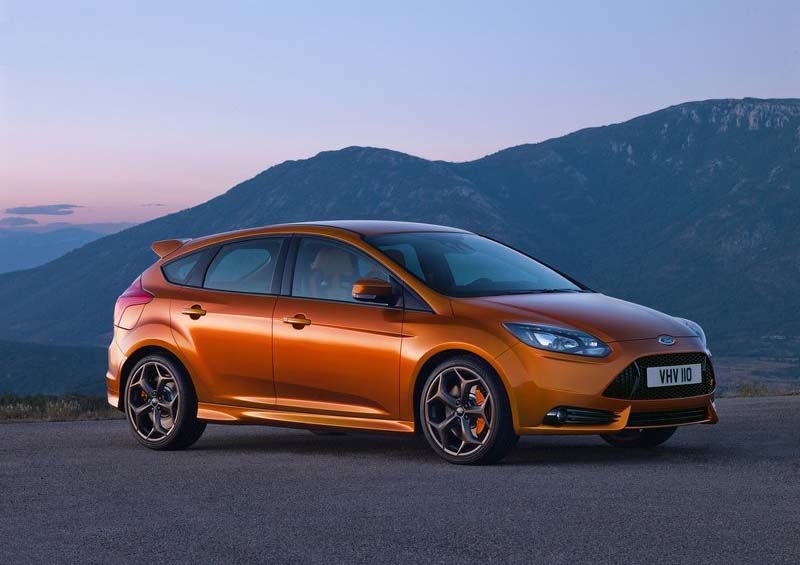
Ford Focus ST, 2012


Ford Focus ST, 2012

The exciting next-generation Ford Focus ST makes its global debut at the 2010 Paris Motor Show, providing an early preview of the new high-performance model which will be introduced around the world in 2012.

The Ford's first global high performance model and a star attraction for Ford in Paris, the powerful new Focus ST show car was revealed today by Alan Mulally, Ford's President and CEO, and Stephen Odell, Chairman and CEO, Ford of Europe.

The range-topping Focus will be completely true to Ford's ST model heritage, offering driving enthusiasts an intoxicating cocktail of exhilarating performance and handling, an addictive sound and muscular sports design.

Global Performance Model
One common Ford Focus ST model is being developed for all global markets, with the vehicle targeted for launch during 2012. This will be the first time that Ford has produced one of its highly regarded high-performance models for a global audience.

The Ford Focus ST development programme is being undertaken by Ford's global Performance Vehicles group, which comprises Team RS (Europe) and SVT (USA) engineers, who are dedicated to developing and tuning products like the formidable Focus RS, Shelby GT500 and F-150 SVT Raptor.
 
Ford Focus ST the development is being led by Team RS performance specialists based in Europe, building on their extensive experience in engineering sought-after cars like the previous ST models and legendary RS series.

More Performance - and More Economy - from Ford EcoBoost Power
At the heart of the appeal of the next-generation Focus ST is a high-output 250 PS derivative of the efficient and advanced new 2.0-litre Ford EcoBoost four-cylinder petrol engine.

Succeeding the turbocharged 2.5-litre five-cylinder unit of the current European model, this unique 250 PS Ford EcoBoost engine is being specially developed for the new Focus ST to ensure that the car gets the muscular performance - and the inspirational sound - which it deserves. It also marks the first application of the four-cylinder Ford EcoBoost engine in a high performance model.

Compared to the 2.0-litre Ford EcoBoost engine used in other Ford vehicles, the 250 PS unit features re-designed intake and exhaust systems and a unique engine calibration to deliver the desired level of power and responsiveness. The engine retains the strong torque delivery which is a feature of Ford EcoBoost designs, with a broad, flat torque curve offering a maximum output of 360 Nm.

One of a completely new generation of downsized, high-efficiency, low-CO2 petrol engines from Ford, the 2.0-litre Ford EcoBoost is a lightweight, all-aluminium design which combines three technologies - high-pressure direct injection, low-inertia turbocharging and twin independent variable cam timing - to create an advanced combustion system which brings new levels of performance and fuel efficiency to petrol engines in this power range.

Genuine Performance and Handling
Ford Team RS performance vehicle specialists have a mission: to ensure that the new Ford Focus ST delivers the pure performance and handling everyone expects from a genuine Ford ST model.

Compared to the standard Focus, the ST model will feature a comprehensive range of enhancements including a chassis lowered by 10mm, a substantially different variable ratio steering system, high performance brakes and unique suspension tuning, that will enable the vehicle to deliver the acclaimed ST handling agility and poise.

Naturally, the ST will also benefit from the performance improvements being delivered by the next-generation Focus vehicle architecture. Features like a stronger, stiffer body structure, optimised front and rear suspension system designs, and a new electric power assisted steering (EPAS) system all contribute to superior vehicle dynamics and improved refinement.

Unprecedented Level of Smart Technologies
Ford Focus ST drivers will also be able to take advantage of the unprecedented level of smart new technologies incorporated in Ford's latest global C-car platform, including advanced new driver assistance, powertrain, chassis and active safety features.

Many of these features, such as the advanced new Torque Vectoring Control system - which acts like a torque vectoring differential to enhance cornering stability and agility - have a direct impact on improving driving quality to an even higher level.

Unique High-Performance Exterior
The new Focus ST features a highly distinctive sports exterior, providing significant functional and aerodynamic benefits and clearly differentiating the ST derivative from other models in the new Focus family.

While sharing the already sleek and dynamic profile of the new Focus five-door, the ST features unique front- and rear-end designs, together with muscular extended rocker panels and striking new alloy wheels based on the classic Y-spoke ST pattern.

The front spoiler has a completely new configuration, with a deep central splitter framed by small motorsport-inspired spoiler blades on either side, which sweep round and encompass the fog lamps. The spoiler blades are linked to the rest of the body lines through the grille structure, which is reminiscent of the similar treatment in the current Focus RS model.

The more assertive, sporting character of the front end is completed by details like the gloss black finish to the headlamp bezels, and the bold red ST badge on the one-piece grille.
From the side, muscular extended rocker panels emphasise the lowered chassis, and the bold wheel arches are filled with 19-inch alloy wheels which are the latest evolution of the classic Y-spoke ST wheel.

Dynamic Rear End Treatment
The rear bumper and lower fascia is also completely new, with prominent diffuser-style vents on either side which mirror the form of the front spoiler blades. Rear lamps with a dark smoked tint enhance the sporty feel.

The new Ford Focus ST has a high-performance exhaust system, which exits the vehicle through a central dual-pipe outlet. The exhaust outlet has been given a highly-distinctive design treatment with a strong kinetic form which emulates the design themes on the rest of the car.

The car's aerodynamic package is completed by a highly effective integrated roof spoiler, which has been optimised to deliver improved high-speed stability and reduced drag. With a larger, more exaggerated design than the spoiler on the current Ford Focus ST, it incorporates ducting to the rear screen and has been carefully integrated with the vehicle tailgate and roof.

Dramatic New Body Colour

The Paris preview car is finished in a dramatic new 'Tangerine Scream' body colour, which reflects the exciting and energetic new character of the Ford Focus ST.

A spiritual successor to the signature Electric Orange finish of the current Ford Focus ST, Tangerine Scream is a very intense and vibrant high-saturation metallic yellow-gold tone created using an experimental process with multiple layers of tinted lacquer.

Bold High-Contrast Sports Cockpit
The performance theme from the exterior is echoed inside the car, with a very bold high-contrast sports cockpit featuring Recaro seats, unique instrumentation and modern, highly technical finishes.

Dramatically-bolstered and rally-inspired Recaro leather and fabric front seats provide an ideal balance between sporting support and long-distance comfort, and form the centrepiece of the cabin.

The seats are finished in high-quality Charcoal Black leather, offset by bold orange gold panels in a neoprene fabric and vibrant yellow-gold contrast stitching. The central Charcoal Black fabric seat panels feature a rugged embossed design in the style of a performance tyre tread pattern. The rear Recaro seats are finished in the same distinctive style.

Throughout the cabin, unique details ensure that the Ford Focus ST clearly signals its sporting intent. Three additional gauges for turbo boost, oil pressure and oil temperature are housed in a dedicated binnacle on the upper instrument panel; the instrument cluster features unique ST sports graphics with red needle pointers; and the centre console has a technical carbon-effect finish.

The interior has the signature ST treatment of a dark interior environment, with black headlining, bespoke steering wheel and a gear knob featuring the ST logo, plus metal racing pedals.
Read More