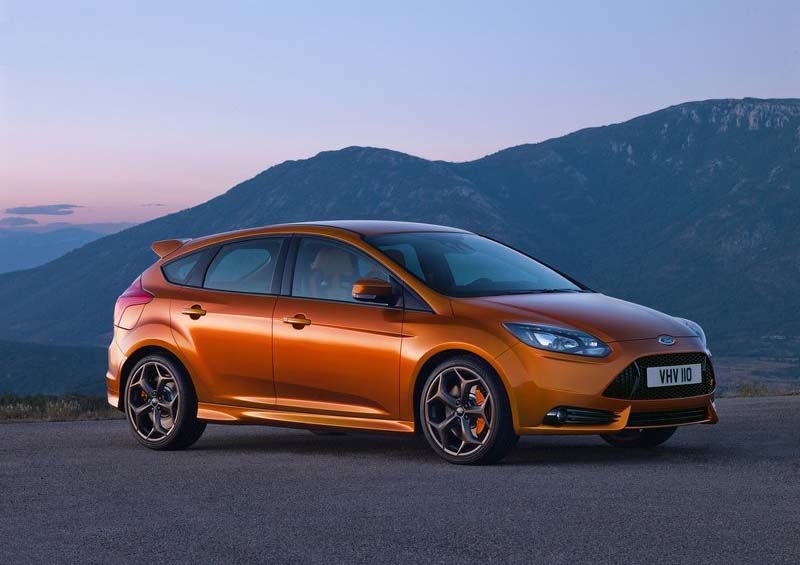


Ford Focus ST, 2012
The exciting next-generation Ford Focus ST makes its global debut at the 2010 Paris Motor Show, providing an early preview of the new high-performance model which will be introduced around the world in 2012.
The Ford's first global high performance model and a star attraction for Ford in Paris, the powerful new Focus ST show car was revealed today by Alan Mulally, Ford's President and CEO, and Stephen Odell, Chairman and CEO, Ford of Europe.
The range-topping Focus will be completely true to Ford's ST model heritage, offering driving enthusiasts an intoxicating cocktail of exhilarating performance and handling, an addictive sound and muscular sports design.
Global Performance Model
One common Ford Focus ST model is being developed for all global markets, with the vehicle targeted for launch during 2012. This will be the first time that Ford has produced one of its highly regarded high-performance models for a global audience.
The Ford Focus ST development programme is being undertaken by Ford's global Performance Vehicles group, which comprises Team RS (Europe) and SVT (USA) engineers, who are dedicated to developing and tuning products like the formidable Focus RS, Shelby GT500 and F-150 SVT Raptor.
Ford Focus ST the development is being led by Team RS performance specialists based in Europe, building on their extensive experience in engineering sought-after cars like the previous ST models and legendary RS series.
More Performance - and More Economy - from Ford EcoBoost Power
At the heart of the appeal of the next-generation Focus ST is a high-output 250 PS derivative of the efficient and advanced new 2.0-litre Ford EcoBoost four-cylinder petrol engine.
Succeeding the turbocharged 2.5-litre five-cylinder unit of the current European model, this unique 250 PS Ford EcoBoost engine is being specially developed for the new Focus ST to ensure that the car gets the muscular performance - and the inspirational sound - which it deserves. It also marks the first application of the four-cylinder Ford EcoBoost engine in a high performance model.
Compared to the 2.0-litre Ford EcoBoost engine used in other Ford vehicles, the 250 PS unit features re-designed intake and exhaust systems and a unique engine calibration to deliver the desired level of power and responsiveness. The engine retains the strong torque delivery which is a feature of Ford EcoBoost designs, with a broad, flat torque curve offering a maximum output of 360 Nm.
One of a completely new generation of downsized, high-efficiency, low-CO2 petrol engines from Ford, the 2.0-litre Ford EcoBoost is a lightweight, all-aluminium design which combines three technologies - high-pressure direct injection, low-inertia turbocharging and twin independent variable cam timing - to create an advanced combustion system which brings new levels of performance and fuel efficiency to petrol engines in this power range.
Genuine Performance and Handling
Ford Team RS performance vehicle specialists have a mission: to ensure that the new Ford Focus ST delivers the pure performance and handling everyone expects from a genuine Ford ST model.
Compared to the standard Focus, the ST model will feature a comprehensive range of enhancements including a chassis lowered by 10mm, a substantially different variable ratio steering system, high performance brakes and unique suspension tuning, that will enable the vehicle to deliver the acclaimed ST handling agility and poise.
Naturally, the ST will also benefit from the performance improvements being delivered by the next-generation Focus vehicle architecture. Features like a stronger, stiffer body structure, optimised front and rear suspension system designs, and a new electric power assisted steering (EPAS) system all contribute to superior vehicle dynamics and improved refinement.
Unprecedented Level of Smart Technologies
Ford Focus ST drivers will also be able to take advantage of the unprecedented level of smart new technologies incorporated in Ford's latest global C-car platform, including advanced new driver assistance, powertrain, chassis and active safety features.
Many of these features, such as the advanced new Torque Vectoring Control system - which acts like a torque vectoring differential to enhance cornering stability and agility - have a direct impact on improving driving quality to an even higher level.
Unique High-Performance Exterior
The new Focus ST features a highly distinctive sports exterior, providing significant functional and aerodynamic benefits and clearly differentiating the ST derivative from other models in the new Focus family.
While sharing the already sleek and dynamic profile of the new Focus five-door, the ST features unique front- and rear-end designs, together with muscular extended rocker panels and striking new alloy wheels based on the classic Y-spoke ST pattern.
The front spoiler has a completely new configuration, with a deep central splitter framed by small motorsport-inspired spoiler blades on either side, which sweep round and encompass the fog lamps. The spoiler blades are linked to the rest of the body lines through the grille structure, which is reminiscent of the similar treatment in the current Focus RS model.
The more assertive, sporting character of the front end is completed by details like the gloss black finish to the headlamp bezels, and the bold red ST badge on the one-piece grille.
From the side, muscular extended rocker panels emphasise the lowered chassis, and the bold wheel arches are filled with 19-inch alloy wheels which are the latest evolution of the classic Y-spoke ST wheel.
Dynamic Rear End Treatment
The rear bumper and lower fascia is also completely new, with prominent diffuser-style vents on either side which mirror the form of the front spoiler blades. Rear lamps with a dark smoked tint enhance the sporty feel.
The new Ford Focus ST has a high-performance exhaust system, which exits the vehicle through a central dual-pipe outlet. The exhaust outlet has been given a highly-distinctive design treatment with a strong kinetic form which emulates the design themes on the rest of the car.
The car's aerodynamic package is completed by a highly effective integrated roof spoiler, which has been optimised to deliver improved high-speed stability and reduced drag. With a larger, more exaggerated design than the spoiler on the current Ford Focus ST, it incorporates ducting to the rear screen and has been carefully integrated with the vehicle tailgate and roof.
Dramatic New Body Colour
The Paris preview car is finished in a dramatic new 'Tangerine Scream' body colour, which reflects the exciting and energetic new character of the Ford Focus ST.
A spiritual successor to the signature Electric Orange finish of the current Ford Focus ST, Tangerine Scream is a very intense and vibrant high-saturation metallic yellow-gold tone created using an experimental process with multiple layers of tinted lacquer.
Bold High-Contrast Sports Cockpit
The performance theme from the exterior is echoed inside the car, with a very bold high-contrast sports cockpit featuring Recaro seats, unique instrumentation and modern, highly technical finishes.
Dramatically-bolstered and rally-inspired Recaro leather and fabric front seats provide an ideal balance between sporting support and long-distance comfort, and form the centrepiece of the cabin.
The seats are finished in high-quality Charcoal Black leather, offset by bold orange gold panels in a neoprene fabric and vibrant yellow-gold contrast stitching. The central Charcoal Black fabric seat panels feature a rugged embossed design in the style of a performance tyre tread pattern. The rear Recaro seats are finished in the same distinctive style.
Throughout the cabin, unique details ensure that the Ford Focus ST clearly signals its sporting intent. Three additional gauges for turbo boost, oil pressure and oil temperature are housed in a dedicated binnacle on the upper instrument panel; the instrument cluster features unique ST sports graphics with red needle pointers; and the centre console has a technical carbon-effect finish.
The interior has the signature ST treatment of a dark interior environment, with black headlining, bespoke steering wheel and a gear knob featuring the ST logo, plus metal racing pedals.
More Performance - and More Economy - from Ford EcoBoost Power
At the heart of the appeal of the next-generation Focus ST is a high-output 250 PS derivative of the efficient and advanced new 2.0-litre Ford EcoBoost four-cylinder petrol engine.
Succeeding the turbocharged 2.5-litre five-cylinder unit of the current European model, this unique 250 PS Ford EcoBoost engine is being specially developed for the new Focus ST to ensure that the car gets the muscular performance - and the inspirational sound - which it deserves. It also marks the first application of the four-cylinder Ford EcoBoost engine in a high performance model.
Compared to the 2.0-litre Ford EcoBoost engine used in other Ford vehicles, the 250 PS unit features re-designed intake and exhaust systems and a unique engine calibration to deliver the desired level of power and responsiveness. The engine retains the strong torque delivery which is a feature of Ford EcoBoost designs, with a broad, flat torque curve offering a maximum output of 360 Nm.
One of a completely new generation of downsized, high-efficiency, low-CO2 petrol engines from Ford, the 2.0-litre Ford EcoBoost is a lightweight, all-aluminium design which combines three technologies - high-pressure direct injection, low-inertia turbocharging and twin independent variable cam timing - to create an advanced combustion system which brings new levels of performance and fuel efficiency to petrol engines in this power range.
Genuine Performance and Handling
Ford Team RS performance vehicle specialists have a mission: to ensure that the new Ford Focus ST delivers the pure performance and handling everyone expects from a genuine Ford ST model.
Compared to the standard Focus, the ST model will feature a comprehensive range of enhancements including a chassis lowered by 10mm, a substantially different variable ratio steering system, high performance brakes and unique suspension tuning, that will enable the vehicle to deliver the acclaimed ST handling agility and poise.
Naturally, the ST will also benefit from the performance improvements being delivered by the next-generation Focus vehicle architecture. Features like a stronger, stiffer body structure, optimised front and rear suspension system designs, and a new electric power assisted steering (EPAS) system all contribute to superior vehicle dynamics and improved refinement.
Unprecedented Level of Smart Technologies
Ford Focus ST drivers will also be able to take advantage of the unprecedented level of smart new technologies incorporated in Ford's latest global C-car platform, including advanced new driver assistance, powertrain, chassis and active safety features.
Many of these features, such as the advanced new Torque Vectoring Control system - which acts like a torque vectoring differential to enhance cornering stability and agility - have a direct impact on improving driving quality to an even higher level.
Unique High-Performance Exterior
The new Focus ST features a highly distinctive sports exterior, providing significant functional and aerodynamic benefits and clearly differentiating the ST derivative from other models in the new Focus family.
While sharing the already sleek and dynamic profile of the new Focus five-door, the ST features unique front- and rear-end designs, together with muscular extended rocker panels and striking new alloy wheels based on the classic Y-spoke ST pattern.
The front spoiler has a completely new configuration, with a deep central splitter framed by small motorsport-inspired spoiler blades on either side, which sweep round and encompass the fog lamps. The spoiler blades are linked to the rest of the body lines through the grille structure, which is reminiscent of the similar treatment in the current Focus RS model.
The more assertive, sporting character of the front end is completed by details like the gloss black finish to the headlamp bezels, and the bold red ST badge on the one-piece grille.
From the side, muscular extended rocker panels emphasise the lowered chassis, and the bold wheel arches are filled with 19-inch alloy wheels which are the latest evolution of the classic Y-spoke ST wheel.
Dynamic Rear End Treatment
The rear bumper and lower fascia is also completely new, with prominent diffuser-style vents on either side which mirror the form of the front spoiler blades. Rear lamps with a dark smoked tint enhance the sporty feel.
The new Ford Focus ST has a high-performance exhaust system, which exits the vehicle through a central dual-pipe outlet. The exhaust outlet has been given a highly-distinctive design treatment with a strong kinetic form which emulates the design themes on the rest of the car.
The car's aerodynamic package is completed by a highly effective integrated roof spoiler, which has been optimised to deliver improved high-speed stability and reduced drag. With a larger, more exaggerated design than the spoiler on the current Ford Focus ST, it incorporates ducting to the rear screen and has been carefully integrated with the vehicle tailgate and roof.
Dramatic New Body Colour
The Paris preview car is finished in a dramatic new 'Tangerine Scream' body colour, which reflects the exciting and energetic new character of the Ford Focus ST.
A spiritual successor to the signature Electric Orange finish of the current Ford Focus ST, Tangerine Scream is a very intense and vibrant high-saturation metallic yellow-gold tone created using an experimental process with multiple layers of tinted lacquer.
Bold High-Contrast Sports Cockpit
The performance theme from the exterior is echoed inside the car, with a very bold high-contrast sports cockpit featuring Recaro seats, unique instrumentation and modern, highly technical finishes.
Dramatically-bolstered and rally-inspired Recaro leather and fabric front seats provide an ideal balance between sporting support and long-distance comfort, and form the centrepiece of the cabin.
The seats are finished in high-quality Charcoal Black leather, offset by bold orange gold panels in a neoprene fabric and vibrant yellow-gold contrast stitching. The central Charcoal Black fabric seat panels feature a rugged embossed design in the style of a performance tyre tread pattern. The rear Recaro seats are finished in the same distinctive style.
Throughout the cabin, unique details ensure that the Ford Focus ST clearly signals its sporting intent. Three additional gauges for turbo boost, oil pressure and oil temperature are housed in a dedicated binnacle on the upper instrument panel; the instrument cluster features unique ST sports graphics with red needle pointers; and the centre console has a technical carbon-effect finish.
The interior has the signature ST treatment of a dark interior environment, with black headlining, bespoke steering wheel and a gear knob featuring the ST logo, plus metal racing pedals.


