Sunday, April 22, 2012

Lincoln MKT, 2010

  • Lincoln MKT, 2010

The Lincoln is offering full-size luxury crossover customers a fresh new choice with the 2010 Lincoln MKT, a three-row tourer that delivers the optimal blend of fuel economy, performance, technology and spaciousness.

The all-new 2010 Lincoln MKT is larger than the two-row Lincoln MKX mid-size premium crossover and joins the sumptuous and sporty Lincoln MKS luxury sedan launched in 2008 and the new Lincoln MKZ sedan that hits the market in spring.

Standard on every Lincoln MKT is the brand's signature design - complete with a split waterfall grille, a beveled chamfer along the vehicle's shoulder line, a flowing cantrail that frames the greenhouse and full-width horizontal taillamps that span the subtly curved weight-saving magnesium liftgate that adds visual character while protecting generous rear cargo space.

Precision Lincoln MKT craftsmanship is reflected in world-class panel margins, and in the high tactile quality of interior surfaces and trim.
Lincoln MKT

Inside, high-quality materials and precision-stitched craftsmanship are evident on every surface - from the leather-trimmed seating surfaces and floating armrests to the optional flow-through second- row center console and jewel-like acrylic instrument cluster with LED white lighting.

Beyond that, customers can choose how to best specify Lincoln MKT, which offers:
  •  Customers' choice of a standard fixed glass Panoramic Vista Roof with power-assisted front and rear sunshades - or the available Power Panoramic VistaTM roof
  •  Either six- or seven-passenger variations with two different second-row seating configurations. A standard 60/ 40 split folding rear bench seat features heated outboard seating positions. Power "fold and tumble" bucket seats, with heating, cooling and power-assisted lumbar adjustment are also available. A rear console-mounted five-quart-capacity refrigerator is available in the individual bucket seating configuration
  •  Second-row footrests and an available dual headrest Family Entertainment System with twin 7-inch DVD playback screens offering individual or simultaneous programming
  •  A litany of exterior paint colors, including Ingot Silver Clearcoat Metallic, Tuxedo Black Clearcoat Metallic, Red Candy Tint Clearcoat Metallic, Cinnamon Clearcoat Metallic, Steel Blue Clearcoat Metallic, Gold Leaf Clearcoat Metallic, Sterling Grey Clearcoat Metallic and White Platinum Tri-Coat

Balancing power and efficiency
Fuel-efficiency also comes standard on the Lincoln MKT - and customers have a choice of two powerful yet practical V-6 engines.

A 3.7-liter, 24-valve variation of the award-winning Duratec engine family is standard. Delivering an expected 268 horsepower at 6,500 RPM and 267 ft.-lb. of torque at 4,250 RPM, this engine has been tuned to provide brisk acceleration and smooth power delivery.

Significant engineering and development time were invested in the 3.7-liter Duratec V-6 to deliver best-in-class noise, vibration and harshness (NVH) control. Lincoln MKT was benchmarked for interior quietness to allow normal conversation within the vehicle, using an articulation index.

A two-speed fuel pump and Aggressive Deceleration Fuel Shut-Off (ADFSO), combined with optimized transmission and final drive gearing, are designed to allow this engine to deliver segment-leading fuel economy for Lincoln MKT.

For even more performance driving feel, Lincoln MKT also offers a 3.5-liter twin-turbocharged Eco Boost V-6. This engine provides the power of a normally-aspirated V-8 with V-6 fuel economy. This advanced engine delivers a class-leading estimated 355 horsepower at 5,700 RPM, while generating 350 ft.-lb. of torque at 3,500 RPM.

Eco Boost is a global Ford strategy to deliver the power that customers want, combined with the fuel economy that they need. Combining gasoline direct injection with twin turbochargers and a smaller-displacement engine, Eco Boost can match the power output of larger, naturally aspirated engines while yielding torque and fuel economy gains.

Pressurized direct injection helps eliminate the "turbo lag" associated with earlier turbocharged engines. And even with the additional horsepower, fuel economy is optimized by an increased compression ratio, enabled by air-charged cooling and sophisticated knock controls.

The Lincoln MKT is equipped with a six-speed SelectShift automatic transmission. This advanced gearbox offers the driver a choice between fully automatic operation and manual control.

In addition, paddle shifters are integrated into the steering wheel spokes. Intuitive to operate, a squeeze back on either paddle will deliver an upshift, while a gentle push forward on either paddle will induce a "matched-rev" downshift.

This capability makes the Lincoln MKT driving experience sporty, yet smooth. Unlike other competitive transmissions, SelectShift won't "second guess" the driver with an override shift. With SelectShift, manual control is truly manually controlled.

All-wheel-drive is optional in the Lincoln MKT with the standard 3.7-liter V-6. The AWD option enhances the vehicle's capability in a variety of weather conditions. The sophisticated AWD system is fully automatic, using an advanced array of internal electro-mechanical clutches to efficiently distribute torque between front and rear wheels as needed. AWD is standard in the Lincoln MKT with the EcoBoost 3.5-liter V-6.

Quiet, confident motoring
Key elements of Lincoln MKT suspension development and tuning included minimizing front end lift on acceleration, offering stable and engaging steering and handling characteristics that provide confidence to all drivers, all while delivering a luxurious ride quality consistent with Lincoln brand character.

A new rear suspension system features a "one for one" shock absorber ratio. The resulting linear response gave the engineering team a stable base line for suspension tuning, allowing the team to deliver a better balance between responsive handling and control as well as a smooth ride. It also improves rear suspension isolation and enables the use of 20-inch wheels.

Lincoln MKT delivers a new level of quiet confidence that delivers best-in-class levels of NVH control. Virtual modeling and wind tunnel tests helped engineers optimize the vehicle, influencing everything from side view mirror placement and special sound deadening in the bulkhead to extensive exhaust system isolation and the inclusion of both an acoustic windshield and dual-layer front side glass to specifically reduce A-pillar wind noise.

On the 3.5 EcoBoost V-6 equipped versions, engineers directed additional effort to minimizing induction noise, while still providing a rewarding aural cadence to Lincoln MKT acceleration.

Premium innovations
Lincoln MKT delivers abundant technologies aimed at making life luxurious for both the driver and three rows of passengers. A holistic approach was used to develop these amenities, where ease of use and intuitive operation were key objectives. Nowhere is this focus more apparent than with Active Park Assist.

Lincoln MKT with EcoBoost features advanced Electronic Power Assisted Steering (EPAS), which enables the optional Active Park Assist. This innovative Lincoln-exclusive technology employs an ultrasonic-based sensing system, as opposed to video camera-reliant competitive offerings, making hands-free parallel parking a breeze.

Active Park Assist works at the touch of a button, requiring less driver programming, reducing the risk of selecting an inappropriately sized parking space, detecting edges of adjacent objects to calculate optimized trajectory and "steering" the Lincoln MKT while coaching the driver through conventional throttle and braking inputs.

In addition to completing a parking maneuver quickly, Active Park Assist also works in uphill parking situations unlike competitive systems on the market.

Additional Lincoln MKT customer convenience features:
  •  Adaptive Cruise Control (ACC) allows the driver to set and maintain vehicle speed, while radar monitors traffic ahead of the Lincoln MKT. This optional system automatically adjusts speed and slows the vehicle to maintain the set distance behind traffic ahead.
  •  Intelligent Access with Push Button Start allows the driver to enter the Lincoln MKT and start the engine without using the key. Entry is made easier as drivers simply carry the special fob as they approach the vehicle and start the engine by pushing a button.
  •  SecuriCode Keyless Entry Keypad allows access to Lincoln MKT by unlocking the driver's door by entering a pre-set five-digit code in the flush-mounted, backlit keypad integrated into the B-pillar.
  •  Adaptive Headlamps with Standard High-Intensity Discharge (HID) Lamps enhance nighttime visibility. Sensors monitor Lincoln MKT speed and steering wheel input to engage headlamp movement to increase the driver's field of vision.
  •  Auto High Beams coupled with Adaptive Headlamps enhance nighttime visibility by switching to high intensity when no other vehicles are in range.
  •  Rain-Sensing Wipers use an optical sensing system to gauge precipitation and automatically activate and adjust the wipers.
  •  EasyFuel Capless Fuel-Filler System self seals when refueling is complete.
  •  MyKey allows parent or other concerned owners to restrict certain Lincoln MKT features when in the hands of a MyKey driver. MyKey encourages safety belt usage, provides earlier low fuel warnings, engages applicable driver aid systems and sounds speed chimes at preset levels while limiting audio system volume and top vehicle speed.
  •  Blind Spot Information System (BLIS) comes into play when a turn signal is activated. A radar sensor on the outboard rear quarter panel monitors the traditional blind spot area and can notify the driver with a warning indicator light in the corresponding side view mirror if the sensors in this optional system detect a vehicle in the blind spot.
  •  Cross Traffic Alert uses BLIS sensors to help detect traffic when backing out of a parking space. When the vehicle is in reverse and it senses traffic, mirror warning lights illuminate and audible signals sound.
  •  Spotter Mirrors add secondary convex spotter mirror panels in the top outer corner of the side view mirrors, specifically oriented to reflect objects often lost in a driver's blind spot.
  •  Reverse Camera System, a standard Lincoln MKT feature, uses the centerstack-mounted touch/ navigation screen for projection and activates upon reverse gear engagement.
  •  Lincoln SYNC is standard on Lincoln MKT. This award-winning voice activated communications and entertainment system developed by Ford and Microsoft fully integrates Bluetooth-enabled mobile phones and digital media players into the vehicle.
SYNC incorporates 911 Assist, which can notify a local 911 emergency operator in the event of an air bag deployment incident. SYNC Vehicle Health Report feature can keep the driver notified of scheduled maintenance, service intervals and vehicle system health information.

Lincoln MKT is offered with two audio technology choices. Standard is an AM/FM In-Dash Single CD/DVD/MP3 capable unit with 10 speakers, SIRIUS Satellite Radio with six-month prepaid subscription, an auxiliary input jack and a USB port.

The available Navigation Package includes an internal hard-drive for map and point-of-interest information storage, THX II Certified 5.1 Surround Audio System with 14 strategically aimed Premium Audio speakers.

Neural Surround provides the Lincoln MKT audio upgrade a unique new technology for improving the surround sound experience from compressed digital music formats. In addition, a SIRIUS Travel Link prepaid subscription is included with the Navigation Package providing coast-to-coast weather data, forecasts, fuel prices, sports scores, movie listings and more.

The available Navigation Package also enables the driver to display personal photos on the centerstack-mounted touchscreen. The system can store and display up to 32 photos, sized 1.5MB or less. The home screen can be personalized, by display or desired information or photos in one, tow or three panel views.

Both systems feature an internal Jukebox hard drive for storage of up to 150 hours of recorded audio entertainment. Users can browse the Jukebox via touch screen or voice control. Gracenote technology will display the CD cover when a selected track is playing.

Technology under the skin
The Lincoln MKT features a new technology aimed at helping make driving safer.
Collision Warning with Brake Support, enabled by Adaptive Cruise Control, provides the driver with a "heads-up" display that flashes on the windshield when the system senses slower moving traffic ahead. If the driver doesn't respond, the system will pre-charge the brakes to prepare the vehicle for a more aggressive stop.

The Lincoln MKT also features an advanced structural safety system that combines octagonal front frame rails, tunnel rails, and support members that are designed to absorb and redirect crash forces away from the passenger compartment.

Lincoln MKT also features Side Protection And Cabin Enhancement (SPACE) Architecture incorporated to optimize side-impact occupant protection.

The SPACE system integrates a hydroformed high strength steel tube embedded in the floor that runs the width of the vehicle from B-pillar to B-pillar and along the rocker panels to form a safety cage to help protect passengers in side impact incidents.

Lincoln MKT also features Ford's enhanced Personal Safety System, combining multiple technologies to tailor the air bag package and safety belt functions to the individual passenger and the accident circumstances. The system can identify variables, such as severity of the crash, weight of the individual passenger and safety belt usage to adjust air bag deployment force.

Additional Lincoln MKT safety technologies:
  •  Safety Canopy is Ford's exclusive side impact protection system employing side curtain air bags to help protect front and outboard rear passengers in both rollover and side impact crashes.
  •  Beltminder reminder technology for driver and front seat passenger, persistently taking over after the initial safety belt signal stops chiming.
  •  SOS Post-Crash Alert System automatically flashes the turn signal lamps and sounds the horn following deployment of an air bag or activation of a safety belt pretensioner.
Read More

Lexus CT 200h, 2011


Lexus CT 200h, 2011

The new Lexus CT 200h is the first full hybrid vehicle to be launched in the premium compact segment. Entering production in late 2010 and set for sale worldwide, the full hybrid model will provide a new gateway to the Lexus range and attract new, younger customers to the brand.

The Lexus CT 200h was designed and developed with the European market in mind. Lexus's first five-door compact car, its size, packaging, full hybrid technology and low emissions fully address the requirements of discerning, environment-conscious customers in a key market sector. At the same time, it does not compromise the quality, refinement and driving pleasure that are the hallmarks of every Lexus.

The exterior and interior design
The production-ready Lexus CT 200h retains strong visual links to the LF-Ch Concept unveiled at the 2009 Frankfurt motor show. Its styling marks a powerful evolution of Lexus's L-finesse design philosophy with a distinctive, sharp-edged look that sets it apart from its premium compact rivals.
The exterior is styled for maximum aerodynamic efficiency and minimum wind noise. The strong front grille, directly referencing the LF-Ch concept sits over a full-width bumper and air dam. The headlamp units, positioned higher than the grille (a signature feature of L-finesse design), incorporate LED daytime running lights.
At the rear, the trailing edge of the roof overhangs a wide, wraparound rear window to create a seamless, integrated spoiler. A pronounced step in the tailgate section flows from the shoulders of the rear wheelarches and is anchored by a tail lamp design that displays the L-shaped motif that Lexus first introduced on the current LS model.

The interior combines superior ergonomics with extensive use of metallic finishes and dark, soft-touch surfaces.
Lexus has retained the asymmetrical dashboard design seen in the LF-Ch show car. Based on the Future Lexus Interior concept, the dashboard is split into an upper Display Zone, with an eight-inch LCD multi-display screen; and a lower Operation Zone, with the shift lever and other controls such as Lexus's Remote Touch multi-function controller.
In keeping with the car's performance, the driving position is set low, with a highly supportive driver's seat. The instrument binnacle houses large, twin dials; in SPORT mode, the hybrid indicator in the binnacle functions as a tachometer and the ambient lighting turns from blue to red. The two-mode switch ring and a spotlight in the centre cluster also light up in red, changing the whole atmosphere of the cabin.

Lexus Hybrid Drive
The Lexus Hybrid Drive system in the Lexus CT 200h combines a 1.8-litre VVT-i petrol engine with a powerful electric motor. Drivers have the choice of four selectable drive modes: ECO and NORMAL place the emphasis on efficiency and comfort, while SPORT focuses on dynamic performance.
Unlike mild hybrid systems used by other manufacturers, the Lexus CT 200h also has an EV (electric vehicle) mode that allows for ultra-quiet running on the electric motor alone, resulting in zero fuel consumption and CO2, NOx and particulate emissions. The car is capable of running in EV mode for up to 1.2 miles at speeds up to 28mph.

Chassis and suspension
The Lexus CT 200h is built on a new platform with a dedicated double wishbone and trailing arm rear suspension system. It has been developed specifically to combine the ride comfort expected of a Lexus with superior driving involvement and handling agility.
Several elements in the MacPherson strut design have been exclusively developed for the mode, including the coil springs and shock absorbers, and a new front anti-roll bar has been designed to deliver improved roll rigidity.
The double wishbone rear suspension is exclusive to the Lexus CT 200h and incorporates a lightweight trailing arm. The springs and shocks are positioned separately to minimise intrusion into the loadspace floor.

Technical Specifications
    * ENGINE
          o Number of cylinders: 4, in-line
          o Displacement: 1,800 cc
    * MOTOR GENERATOR
          o Motor type: Permanent magnet synchronous motor
    * HIGH-VOLTAGE BATTERY
          o Battery type: Nickel-metal hydride (NiMh)
    * TRANSMISSION
          o Type: Front-wheel drive
          o Gearbox type: Electrically controlled continuously variable transmission (E-CVT)
    * SUSPENSION
          o Front: MacPherson strut with anti-roll bar, coil springs and shock absorbers
          o Rear: Double wishbone with coil springs and shock absorbers
    * STEERING
          o Type: Electric power-assisted rack and pinion
    * EXTERIOR DIMENSIONS
          o Overall length: 4,320 mm
          o Overall width: 1,765 mm
          o Overall height: 1,430 mm
          o Wheelbase: 2,600 mm
          o Front track: 1,525 mm
          o Rear track: 1,525 mm
          o Front overhang: 915 mm
          o Rear overhang: 805 mm
    * WHEELS
          o Type/size: Alloy, 17"
    * LUGGAGE CAPACITY
          o Rear seat up: 345 l
          o Rear seat down: 700 l
Read More

Lexus ES 350, 2010

 
Lexus ES 350, 2010

The Lexus ES 350 debuts revised styling, new luxury amenities and the all-new telematics system, Lexus Enform and Safety Connect, for 2010. Newly standard rear seat-mounted side airbags bring the number of airbags in the Lexus ES 350 to 10.

In its fifth generation, the Lexus ES 350 continues to blur the line between "entry luxury" and "prestige luxury." Revised headlamps, a new grille, new grille surround, chrome body side molding and new front bumper with revised lower intake and integrated fog lamps underscore the car's refined character. Side mirrors now feature integrated turn signals, and the tail lamps are redesigned. Elegant new exterior colors accentuate the distinctive design in the 2010 ES 350.

For 2010, renowned Lexus luxury is enhanced by revised steering wheel controls, as well as new wood trim choices. A revised center console offers more storage than before. An array of new user technologies expands navigation capability and music playing options. The updated optional navigation system features improved Voice Command casual-language voice recognition to enhance owner convenience.

The new standard Lexus Memory System controls and stores settings for the driver's seat (except lumbar), outside mirrors and steering wheel. Rain-sensing windshield wipers, previously optional, are now standard.
Two all-new telematics products are available with a complimentary one-year trial subscription. Safety Connect is standard on non-navigation equipped vehicles. Lexus Enform, which automatically comes with Safety Connect, is only available with navigation-equipped vehicles.

Engine, Transmission, Drivetrain, and Performance

The Lexus ES 350's aluminum 3.5-liter V6 produces 272 horsepower at 6,200 rpm and 254 lb.-ft. peak torque at 4,700 rpm. The chain-driven camshafts employ Dual Variable Valve Timing with intelligence (Dual VVT-i) for optimal performance and efficiency at all engine speeds.
The six-speed automatic Electronically Controlled Transmission with intelligence (ECT-i) provides a sequential manual shift feature for a more involved driving experience when desired. Shifting strategy adapts to driver input, with rapid kick-down response.

Chassis, Body, Suspension, Tires, and Brakes
The Lexus ES 350 owes its smooth, quiet ride in large part to a rigid unibody structure that allows the four-wheel independent suspension to be tuned to provide responsive handling agility and ultra-smooth ride quality. The low 0.28 coefficient of drag (Cd) helps minimize wind noise while also helping to maximize highway fuel efficiency. Standard 17 x 7-inch aluminum alloy wheels with a new split five-spoke design carry 215/55R17 all-season tires. A full-size spare wheel/tire is available.

Standard Vehicle Stability Control (VSC) with traction control system integrates the Anti-lock Braking System (ABS), Electronic Brake-force Distribution (EBD) and the Brake Assist (BA) safety feature. A new VSC cut-off switch for 2010 is useful if it becomes necessary to extricate the car from deep snow or other difficult conditions, such as mud or sand.

Safety/Security Features
A reinforced front- and rear-structure passenger compartment forms the foundation for passive safety in the Lexus ES 350. In addition to advanced dual-stage front airbags and front seat-mounted side airbags, the Lexus Supplemental Restraint System includes rear seat-mounted side air bags (previously optional, now standard), side-curtain airbags that extend from the A-pillar to C-pillar and a knee airbag for both the driver and front passenger, for a total of 10 airbags throughout the cabin.

The optional Pre-Collision System (PCS) can help reduce collision damage. The package includes Dynamic Radar Cruise Control, which uses millimeter-wave radar to measure and help maintain a pre-set distance from a vehicle traveling ahead. The multi-information display within the combination meter will show a car icon with the selected following distance.

If, based on a variety of inputs, PCS determines that a collision is unavoidable, the system preemptively retracts the front seat belts and pre-initializes BA so that increased braking will be applied the instant the driver depresses the pedal. Active Braking can automatically apply the brakes up to a deceleration rate of 0.3 g if the driver fails to react to system warnings.

The optional dual-swivel Lexus Adaptive Front Lighting System (AFS) helps illuminate a turn or curve as the driver steers into it. A medium-to-high speed mode (over 19 mph) allows both the right and left front headlamp bulbs to swivel toward the direction of the turn at the same time.

Luxury,Comfort and Convenience
Lexus' craftsmanship and attention to detail provide true luxury by design in the Lexus ES 350. Standard leather-trimmed seating is available in three colors. For 2010, the Ultra Luxury Package adds double-contrast stitching for the seats, console and door trim, a feature seen in prestige-luxury models, and perforated, semi-aniline leather.

A one-touch tilt/slide power glass moonroof is standard, as well as a dual-zone automatic climate control system, 10-way power front seats (with standard driver memory) and a power tilt-and-telescoping steering wheel.

The standard multi-information display, located in the combination meter, is easy to operate. Its main feature is a trip computer that provides outside temperature, driving range, fuel consumption and average speed readouts. A new Eco Driving indicator helps encourage economical driving. The display also includes an oil maintenance reminder and system warnings.
The standard leather-trimmed steering wheel integrates easy-to-use controls for the audio system, trip computer, and multi-information display, as well as voice control for the available navigation system when so equipped. The standard auto-dimming rearview mirror features an integrated digital compass. Heated exterior mirrors help melt away morning fog or frost, and an illuminated entry system lights the interior foot wells and the exterior with puddle lamps.

The SmartAccess keyless entry and push-to-start ignition system allows the driver to enter and start the car without needing to remove the access fob from pocket or purse. The standard Home Link transmitter can control compatible garage-door openers and home-security devices.

Convenience details abound throughout the Lexus ES 350, including illuminated front cup holders and an interior lighting system. Using the new Lexus Memory System feature, the driver can now tailor numerous vehicle preferences, including lighting, power windows and moonroof, steering wheel, and door lock control.
The standard Lexus Premium Audio system includes an in-dash, six-disc CD changer, Automatic Sound Levelizer and an integrated satellite radio receiver (complimentary 90-day trial subscription included). New for 2010, the system adds iPod®/USB connectivity, Bluetooth® hands free phone capability and music streaming.

Luxury Options
The customer can "layer" luxury in the Lexus ES 350 by adding the Ultra-Luxury Package, or by selecting from a number of standalone options which include heated and ventilated front seats, HID with AFS, and Intuitive Park Assist (IPA). The IPA system uses ultrasonic sensors to detect objects close to the car's front and rear bumpers, alerting the driver and showing distance to objects in the multi-information display.

The available touch-screen Lexus Navigation System with rear back-up camera, revised for 2010, allows the driver to enter a destination using the updated Voice Command casual-language voice recognition. The system integrates control for the Lexus Personalized Settings feature and adds Bluetooth phonebook download. Voice command, a casual-language-based voice recognition feature, is standard on navigation-equipped vehicles. This new technology allows the driver to give fewer and more flexible, conversational commands in a specific order for easier access to audio, climate, and navigation system functions to help drivers focus more on the road ahead.

The optional Mark Levinson Premium Audio System is available in conjunction with the navigation system. This leading-edge design uses 10 channels of amplification with 300 watts total output at only 0.1 percent Total Harmonic Distortion (THD). The system plays through 14 speakers in a 7.1-channel surround sound speaker architecture. The Mark Levinson system can play conventional CDs and DVDs, and MP3-formatted CDs. DVD movies can be viewed on the navigation system's color seven-inch touch screen when the car is in park and the parking brake is engaged.

The Ultra-Luxury Package includes a panorama glass roof; perforated semi-aniline leather-trimmed seating (new Black/Saddle color combination for 2010); power rear sunshade; passenger memory; the HID/AFS lighting system; and a wood- and leather-trimmed steering wheel and shift knob. Exclusive Liquid Graphite-finish 17-inch 10-spoke alloy wheels add a distinctive touch.

Interior Design
Built on a 109.3-inch wheelbase, the midsize Lexus ES 350 provides a roomy and inviting interior. The driver and passengers are treated to intelligent, elegant luxury, with touch points that convey quality and controls that respond fluidly.

The high level of Lexus craftsmanship is immediately evident in the Lexus ES 350, with bright, clear Optitron® gauges, premium wood, as well as polished metal and leather accents that echo prestige-luxury models. For 2010, Parchment leather replaces Cashmere; new Walnut trim replaces Medium Brown Walnut, and Dark Brown Bird's Eye Maple trim is added.

Lexus Enform with Safety Connect
The Lexus ES 350 offers an all-new telematics system, Lexus Enform with Safety Connect, available by subscription. Complimentary one-year trial subscriptions are included on all purchases of new Lexus vehicles equipped with these features. Both the Lexus Enform and the Safety Connect response center operate 24 hours a day, 7 days a week—every day of the year.

Safety Connect, the cornerstone of the services, is available on both non-navigation and navigation-equipped Lexus ES 350 and offers four safety and security features: Automatic Collision Notification, Stolen Vehicle Location, Emergency Assistance Button (SOS), and Enhanced Roadside Assistance, which adds GPS data to the already included warranty-based Lexus roadside service.

Lexus Enform, available only on navigation-equipped vehicles, includes all of the Safety Connect features and builds upon them with the premium services of Destination Assist and eDestination. Destination Assist agents are available via the on-board cellular equipment and can help drivers find a specific address, a business by name, or a type of business (e.g., gas station, movie theater, etc.), and even Zagat®-rated restaurants, and then send the coordinates to the navigation system for routing. With eDestination, drivers can go online via LexusDrivers.com to save and sort destinations in up to 20 folders, each holding as many as 10 destinations. Then drivers can send the locations—up to 200 at a time—to their vehicle, where they will be available for download into the navigation system.

XM - Beyond Radio
Lexus Enform vehicles are factory ready for subscriptions to a variety of innovative XM services. Integrated XM® satellite radio is standard. Additionally, Lexus Enform vehicles feature XM NavTraffic® and XM NavWeather services. XM NavTraffic informs the driver of current traffic conditions with real-time traffic displays. When traffic problems are detected the navigation system alerts the driver so that the route can be adjusted. XM NavWeather provides near real-time weather conditions as well as spoken and nav-screen forecasts, both based on official National Weather Service data.

Lexus Enform also provides the platform for XM® Sports and Stocks, which features in-vehicle updates on sports and stocks so drivers can stay connected to their favorite teams and investment data while on the road. XM Sports provides game results and schedules for up to five personally selected national league sports teams while XM Stocks supplies data for up to 10 personally selected stocks. After inputting their selections, drivers can access the reports either by the navigation system, or by using the voice command system, adding a new level of flexibility.

XM services require separate XM subscriptions. The XM Sports and Stocks service is included with an XM® radio subscription. All XM services offer complimentary 90-day trial subscriptions.
Read More

Land Rover Range Rover, 2012


Land Rover Range Rover, 2012

The 2012 Range Rover consolidates its position as the world's most luxurious SUV with a host of style changes and feature upgrades, including new option packs for the Vogue and Autobiography models.

The Land Rover Range Rover exterior has been enhanced for 2012 with detail styling changes. Headlamp and tail lamp back plates are now finished in gloss black, while the front grille surround is finished in Narvik Black. Door handles and side vents match the body colour to create a modern, integrated look and new 20" V spoke alloy wheels finished in mid silver sporting a Range Rover branded centre cap, round off the changes to the exterior.

The Grand Black wood veneers on the 2012 Range Rover now have a crisp inlay which reads 'Range Rover'. Autobiography veneers are available in a choice of Burr Maple Prussian Blue, Anthracite Lined Oak or Ash Burl.

The Land Rover Range Rover Vogue model offers a highly distinctive new look with unique tailgate badging, reflecting the customer's choice of either the Vogue Silver Pack or Vogue Black Pack. Both derivatives include the widely acclaimed Logic 7, 1200W Harman Kardon High Dynamics Audio System, heated and cooled seats for each passenger, and an 8-inch Dual View infotainment screen - allowing the driver to view the navigation display whilst the passenger can relax watching a video.

Additionally, the Vogue Silver Pack offers a Supercharged Design Pack comprising of a bright noble finish to the front grille and side vents.

Customers opting for the Vogue Black Pack will sport the Exterior Design Pack. This includes revised front bumper with fog lamp surrounds, front grille and side vents in Titan finish, revised side sills, rear bumper and stainless steel exhaust finishers.

The Range Rover Autobiography now comes with three new option packs - Prestige, Dynamic and Technology - which can be ordered individually or in combination to offer customers the ultimate in Range Rover luxury.

The Prestige Pack includes extended Autobiography colourways, Grand Black veneers and reclining rear seats; the Dynamic Pack includes the exterior Design Pack with the addition of 20" Shadow Chrome alloy wheels; whilst the Technology Pack comprises Vision Assist, 4-zone air conditioning, the Harmon Kardon Logic 7 1200W audio system and rear seat entertainment.

The Range Rover engine line-up remains unchanged for 2012.
The powerful 4.4 LR-TDV8 - specifically designed for the Range Rover - develops 313PS at 4,000rpm and 700Nm torque at between 1,500rpm and 3,000rpm. With combined fuel consumption of 30.1mpg, this made it one of the most powerful and economical diesels in the world at its introduction in 2011. Combined with the super-efficient ZF 8HP70 8-speed automatic transmission it returns CO2 emissions of just 253g/km.

The Supercharged LR-V8 remains one of the most uncompromisingly powerful and efficient petrol engines in its class, producing 510PS at between 6,000rpm and 6,500rpm with torque of 625Nm from 2500rpm-5500rpm. This immense performance, allows the Supercharged Range Rover to accelerate from 0-60mph in a mere 5.9 seconds.

The naturally aspirated LR-V8 is one of the most refined engines of its type, combining a silky smooth power delivery with unparalleled efficiency. Power output is 375PS at 6,500rpm with torque of 510Nm at 3,500rpm, reaching 60mph from rest in just 7.2 seconds.
Read More

Land Rover Discovery 4, 2010


Land Rover Discovery 4, 2010

The new, fourth generation of Land Rover's supremely versatile seven-seat vehicle gains a new name - Land Rover Discovery 4 - to go with its powerful and highly efficient new TDV6 diesel engine, fresh exterior identity and more premium cabin. The class-leading breadth of capability is extended even further with dynamic improvements for both road and off-road driving, and Land Rover has added a battery of user-friendly new technologies and features.

Star billing on the Land Rover Discovery 4 goes to the highly efficient and refined new LR-TDV6 3.0 twin turbo diesel engine. This delivers a 9 percent fuel economy improvement (EU combined cycle) and ten percent less CO2 emissions, at the same time as increasing power by 29%, all compared with the existing 2.7-litre engine. Torque increases even more, up 36% to 600Nm - believed to be the highest torque output of any 6-cylinder, production diesel, passenger vehicle engine in the world.

The power and torque are both accessible across the entire rev range, to deliver immediate throttle response and effortless cruising ability. The results include a 0-60mph time of 9.0 seconds, (0-100 km/h in 9.6 seconds), a 24 percent improvement over the 2.7-litre.
Land Rover's engineers have also transformed the on-road ride and handling for the new generation Land Rover Discovery 4, and even improved on the near-legendary off-road capabilities of its predecessor. The comprehensive changes include new suspension components, revised steering, larger brakes, improved traction control, and enhancements to the award winning Terrain ResponseTM system, which helps optimise the vehicle for virtually all on-road or off-road driving situations.

The iconic exterior design has been updated, most obviously with smoother and simpler surfaces at the front, including a new, more aerodynamic bumper. The sportier new lights help give the vehicle new character, and include LED technology front and rear. The sophisticated new front headlights include High Beam Assist, switching on or off, as conditions require.

The interior is completely redesigned, with a transformed dash and centre console, new seats and an array of new, user friendly features.

New features available for the Land Rover Discovery 4 include a Portable Audio Interface, DAB radio, a new five-camera 'surround' system, for easier parking and towing, and a new key system which offers Keyless Entry and Push Button Start.

e-Terrain technologies boost economy and lower CO2 emissions
The new Discovery is packed with features aimed at reducing fuel consumption and reducing CO2 emissions. The new LR-TDV6 3.0 Sequential Turbo Diesel engine was designed from the outset to deliver class-leading fuel economy and improved low-end torque.

The parallel sequential turbocharging system of the 3.0-litre diesel makes use of its larger, primary turbo most of the time. The smaller secondary turbo remains dormant when higher power is not required, reducing pumping losses and consequently, fuel consumption. A highly efficient, third generation common rail injection system with piezo injectors and fuel metering, also makes a substantial contribution to fuel economy.

The new engine has been also been optimised for low-end torque as well as economy, making it possible to activate the lock-up clutch of the ZF HP-28 automatic transmission at lower speed. This reduces 'slip' in the hydraulic torque converter improving both fuel consumption and CO2 emissions. The higher torque at lower rpm also enables longer gearing for more economical cruising.

The Discovery incorporates several other energy saving features too. At standstill, the idle speed of the V6 has been reduced from 750rpm to 710rpm, giving a fuel saving without compromising refinement. An Intelligent Power Management System includes Smart Regenerative Charging, so whenever possible the alternator charges the battery when it is most economical to do so, such as when the car is coasting rather than accelerating.

Aerodynamic changes to the front end, with the revised front lower chin spoiler and new front wheel deflectors, help to reduce drag by increasing underfloor airflow.
The new air conditioning pump is driven through a clutch which disengages when the air conditioning is not in use reducing parasitic losses and delivering improvements in fuel consumption and CO2 emissions.

At the heart of the improvements introduced with Land Rover Discovery 4 is an exceptional and highly efficient new diesel engine. The LR-TDV6 3.0 sequential turbodiesel is based on the existing LR-TDV6 2.7-litre engine, but radically redesigned to deliver substantially higher performance, lower emissions and better fuel economy.

The 2.7-litre has won many admirers as one of the most refined diesels ever made. The new, twin turbocharger LR-TDV6 3.0 boasts substantial increases in both power - up 29 percent to 245PS - and torque, up 36 percent to 600Nm. The ability to deliver maximum torque at just 2,000rpm, combined with unparalleled throttle response, substantially enhances the Discovery's already acclaimed ability both on and off-road.

The new 3.0-litre diesel can significantly out perform its rivals by delivering 500Nm in only 500 milliseconds from idle. From the driver's perspective this means instantaneous access to 83 percent of maximum torque.

But despite this extra performance, engine emissions are dramatically reduced. When fitted with DPF, the new LR-TDV6 3.0 meets EU5 emissions requirements (not due to come into force until 2011) and with a CO2 figure of 244g/km, it undercuts the existing 2.7-litre automatic by ten percent. Fuel economy is also improved by 9 percent, delivering 30.4mpg (9.3 l/100km) on the EU Combined cycle.

The new 3.0-litre engine has been developed by a joint Jaguar Land Rover team, with base characteristics designed from the outset with the requirements of both brands in mind. High levels of torque and fast response from low revs perfectly suits both Jaguar and Land Rover DNA. The Jaguar version, the AJ-V6D Gen III S, was recently launched in the new Jaguar XF.

The LR-TDV6 engine has a deeper sump than its Jaguar sibling, to ensure the efficiency of the lubrication system is not compromised when venturing off-road. The oil scavenge system of the turbochargers has been enhanced for a similar reason, ensuring no oil collects in the turbochargers at extreme angles in off-road conditions.

For the Land Rover version, belt drives are waterproofed, as are the alternator, air conditioning compressor, power steering pump and starter motor. The engine is also tuned specifically to allow for the greater demands made on the Land Rover Discovery 4, particularly for towing and all-terrain driving.

Twin-turbos - immensely efficient, highly responsive
A key feature of the new LR-TDV6 3.0 is the unique, parallel sequential turbocharger system, the first of its type to be fitted to a V-engine anywhere in the world. Delivering high torque throughout the entire engine-rev range, improved throttle response and low CO2 emissions, the twin-turbochargers work sequentially to provide unrivalled response and best-in-class torque at low engine speeds, while also packing a huge punch at higher speeds.

Driving a turbocharger requires pressure from the exhaust, creating pumping losses in the engine and increasing fuel consumption. Under the control of the engine management system, valves isolate the secondary turbocharger both from the exhaust stream and the engine inlet tract when it is not required. A balance pipe connecting the two manifolds allows the gas from both manifolds to feed through the primary turbocharger.

The new 3.0-litre diesel can significantly out perform its rivals by delivering 500Nm in only 500 milliseconds from idle, unlike many diesels which can suffer turbo-lag at very low revs. From the driver's perspective this means instantaneous access to 84 percent of maximum torque.

Third generation common rail
A new common rail fuel-injection system delivers up to five injections on each cycle at a pressure of 2000bar. Each injector tip is perforated by seven holes through which finely atomised fuel is sprayed into the cylinders. The high-pressure injection increases power, improves economy and reduces both CO2 and particulate emissions. New, high-speed piezo injectors are designed to keep injection noise to a minimum.

Piezo crystal 'packs' operate each injector by expanding when an electric current is passed through them. They react virtually instantaneously but make a distinctive click when fired, which can add to diesel engine noise at idle. The crystals in Land Rover's new injectors are fitted nearer the tip meaning they are mounted deeper inside the engine providing better sound insulation and quieter operation.

Also new to the third-generation fuel-injection system is 'metering mode'. Traditional diesel common rail fuel pumps oversupply the injectors, with the surplus being returned to the fuel tank. During this process, fuel temperature increases and cooling it again consumes considerable amounts of energy. In metering mode, the pump delivers fuel to the injectors only at the rate required. Consequentially, there is no rise in fuel temperature and no wasted energy.

Rugged yet lightweight
The two cylinder heads, with four valves per cylinder, are made from aluminium and the cylinder block is made from compact graphite iron (CGI) as before. The higher tensile strength of CGI makes it possible to cast a smaller block some 80mm shorter than a conventional 'grey' cast iron equivalent.

The new, water-cooled, exhaust gas recirculation system (EGR), important for reducing pumping losses and emissions of NOX in a diesel engine, is more efficient and consumes less power than its predecessor, with the valves allowing exhaust gas into the system being located on the 'hot side' of the engine nearest the exhaust manifolds. These valves never cool while the engine is running, so there is no condensation of combustion deposits which occurs on engines fitted with 'cold side' valves, hence the EGR system always works at maximum efficiency. Since the EGR cooling is so effective, exhaust gasses can bypass the system and return to the exhaust pipes, allowing faster engine warm-up from start-up and reducing emissions still further.

EU 5 emissions regulations have been achieved using conventional diesel oxidation catalysts and diesel particulate filters (DPFs). NOX levels are reduced sufficiently at source through the combustion system design, the addition of the new common rail injection system and the new EGR system with by-pass. As a result, specialised NOX exhaust after-treatment is unnecessary, avoiding a potential cost and the need to use additional precious metals in the exhaust system.

Increased refinement
The CGI cylinder block and new piezo injector design reduce combustion noise in the new engine. Multiple, precise injections of fuel on the combustion stroke also reduce combustion noise and all engine covers including camshaft covers, front covers and the sump have been optimised to subdue radiated noise.

The new diesel underwent analysis using the latest computer aided engineering techniques, followed by exhaustive rig testing. All the engine enclosures have been ribbed to minimise radiated noise.

Internal friction, a major contributor to unnecessary fuel consumption, has been addressed by careful optimisation of the crankshaft, valves and pistons. All these features combine to make the new LR-TDV6 3.0 Sequential Turbo Diesel one of the quietest premium diesels on the market today with increased service intervals of 16,000 miles.

Levels of refinement on the new LR-TDV6 engine are such that Land Rover's patented device for the diesel fuel filler neck, to reduce the risk of inadvertent fuelling with petrol, is fitted to the new Land Rover Discovery 4.

Responsive new transmission
The LR-TDV6 3.0 is mated to the revised and super-smooth ZF HP28 6-speed automatic transmission. Its characteristics have been optimised by Land Rover engineers to provide class-leading response, with rapid and refined shifts. The dramatic enhancement of both power and torque low down the rev range on the new engine have made it possible to actuate the transmission's lock-up clutches much earlier in each gear, reducing slip through the hydraulic torque converter, so helping with the improvements in both fuel consumption and CO2 emissions.

Dynamics transformed
Major dynamic advances introduced for the Land Rover Discovery 4 include revised suspension architecture, improved steering, larger brakes and enhanced versions of Land Rover's award-winning Terrain ResponseTM and Hill Descent Control systems.

The list of changes starts with new suspension knuckles, designed to reduce the separation between the suspension roll centre and the vehicle's centre of gravity (reduction of 42mm at the front and 62mm at the rear). This dramatically reduces the vehicle's natural body movements when cornering. These roll rates are further controlled by a stiffer and larger anti-roll bar.

In addition, new bushes and new front and rear dampers enhance ride quality.
The variable ratio steering rack is revised, complementing the improved ride quality by reducing 'twitchiness' around the centre line at high speed cruising and slightly increasing sensitivity at higher lock angles. This enhances the sense of driver involvement in high-speed manoeuvres, and also increases precision for low speed control and off-roading.
The redesigned front bumper also helps improve steering feel, as its new anti-drag lips help reduce aerodynamic lift at the front of the vehicle by up to 50% at higher speeds.

Increased stopping power
A new, larger brake system has been introduced along with the new engines, to cater for the Land Rover Discovery 4's enhanced performance and to improve braking feel.

This new system is derived from the four-piston, opposed-calliper performance system used on the Land Rover Range Rover Sport. It employs a 360mm ventilated front disc with a new, cast iron twin-piston sliding calliper - which serves to reduce the size of the front brake package while preserving its stiffness, which in turn helps achieve excellent pedal feel.

At the rear, a single piston sliding calliper operates on a 350mm ventilated disc, now manufactured in aluminium to help reduce vehicle weight.
An additional advance to the braking system is the new emergency brake light function. When the vehicle undertakes severe or emergency braking, the brake lights flash, to reduce the risk of rear end collisions.
Read More

Friday, April 20, 2012

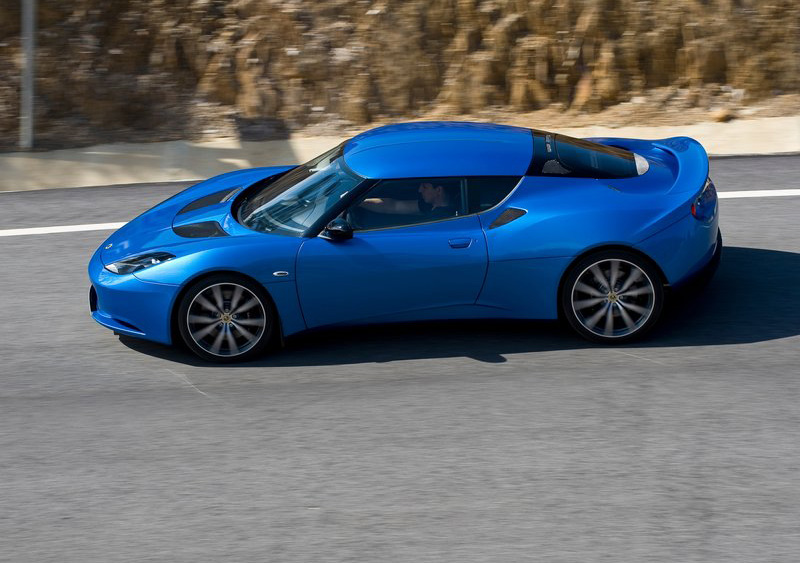
Lotus Evora S, 2011


Lotus Evora S, 2011

The Lotus Evora S comes with a sport pack as standard featuring a 'sport' button which allows the driver to control throttle response and activate the exhaust by-pass valve. The sport button also raises the instantaneous rev limit and changes the dynamic stability control settings resulting in a total experience change. There are cross-drilled brakes for improved cooling. And here's a heads up for those who buy into the old adage 'you can tell the men from the boys by the size of their toys': the external emotion of the Lotus Evora S has been improved with a completely new active exhaust which means that at the push of a button the car sounds just as dramatic as it feels.

Commenting on the Lotus Evora S, Lotus Chief Commercial Officer Andreas Prillmann said: "The Evora S is a natural progression for us but more than that, it's a taste of what people can come to expect from the next generation of Lotus cars. It retains core Lotus values such as performance through lightweight but it also gives more than that. It's the perfect combination of top performance, style and comfort. Form doesn't sacrifice function in the case of the Lotus Evora S."

Technical Specification

Engine: Mid mounted, transverse 3.5 litre DOHC V6 VVT-I
Transmission: 6 speed manual
Chassis: Modular lightweight bonded aluminium structure
Steering: Lotus tuned hydraulically-assisted power steering
    
Suspension
        Forged aluminium double wishbone suspension
        Bilstein high performance gas dampers
        Eibach coaxial coil springs
    
Fuel consumption (Standard wheel option)
        urban: 14.5 l/100km
        extra urban: 7.4 l/100km
        combined: 10.0l/100km
        CO2 Emissions: 235 g/km
    
Fuel consumption (19/20" wheel option)
        urban: 14.6 I/100km
        extra urban: 7.6 I/100km
        combined: 10.2 I/100km
        CO2 Emissions: 239 g/km
    
Max power: 350 PS / 257.5 kW @ 7000 rpm
Max torque: 400 Nm / 295 lb ft @ 4500 rpm
0-60 mph: 4.6s
0-100 km/h: 4.8s
Maximum speed: 172mph
Vehicle mass (unladen): 1437kg
Read More

Jaguar XFR, 2012


Jaguar XFR, 2012

A saloon with the soul of a Jaguar sports car, the XF has won accolades and enthusiastic fans across the globe for its dynamic abilities and dramatic looks. Advances in lighting technology have allowed the new 2012 Jaguar XF model range to adopt the bold Jaguar design language introduced on the flagship XJ saloon.

Sheet metal revisions to the grille, bonnet and front wings incorporating new triangular side vents give the car a more muscular, purposeful appearance. The range-topping Jaguar XFR receives its own unique, overtly assertive design to underline its performance potential while an alternative 'Aerodynamic' option is available on all other derivatives for a total of three dramatically different styling options.

The headlamps now incorporate bi-function HID xenon technology that allows them to be much slimmer and more compact while still providing outstanding beam resolution. They also incorporate LED daytime running lights arranged in a distinctive Jaguar 'J-Blade' signature pattern for instant recognition.

The tail lamps have been entirely renewed and now extend onto the central portion of the boot lid. These new units are now full-LED for stop, light and indicator functions and give the Jaguar XF a distinctive night-time rear signature. Separating them is a revised boot lid finisher with a gloss black lower edge for a cleaner appearance. The boot also features power closure on all models.
Three new paint colours and an expanded alloy wheel selection ranging from 17 to 20-inch provide the finishing touches to the revised styling.

The Powertrain and Dynamics
Key among the enhancements to Jaguar XF is the introduction of the 2.2-litre AJ-i4D turbodiesel engine. The unit features low-friction pistons and a water-cooled turbocharger to increase efficiency plus active engine mounts and modifications to the sump and block to reduce NVH levels. The result is not only Jaguar's most fuel-efficient engine ever, but one which offers levels of refinement on a par with the previously-fitted 2.7-litre V6 diesel and all the performance expected of a Jaguar sports saloon. Further refinement is assured on all models by the use of additional acoustic shielding and the use of computational fluid dynamics to smooth exterior airflow.

Power output is 190PS with an impressive torque figure of 450Nm to provide the muscular performance expected of a Jaguar. Reaching 60mph in 8.0 seconds, the car will go on to achieve a top speed of 140mph. Nevertheless the unit still manages 52.3mpg on the EU combined cycle - making it the most economical Jaguar ever - and emits just 149g/km of CO2 and is Euro Stage V compliant.

The New 8-speed automatic
The engine is perfectly complemented by the all-new 8-speed ZF automatic gearbox. Specifically adapted by our engineers for its first-time application in a Jaguar, the transmission offers a host of benefits including both improved acceleration and economy. Gearchanges are completed in just 200 milliseconds - four times faster than the average human resting heartbeat - while driver control is enhanced by the ability to perform multiple downshifts using the paddleshift technology. The use of lightweight materials ensures the overall weight remains the same as the previous six-speed transmission, while improved pump design and gear control elements increase efficiency. Standard on all Jaguar XF diesel models, it reduces the CO2 emissions of the 3.0-litre V6 to 169g/km and improves fuel consumption to 44.8mpg.

The Intelligent Stop/Start
Also making its debut with the 2.2-litre diesel engine is Jaguar's new Intelligent Stop/Start system, the first time this technology has been seen in a premium diesel saloon. This automatically shuts down the engine in just 300 milliseconds when the car comes to rest, in order to improve fuel economy and CO2 emissions by between five and seven percent.

No driver intervention is necessary, with the engine management software analysing a host of complex factors in order to decide when the engine can safely be stopped. A Tandem Solenoid Starter with a dedicated secondary battery instantly restarts the engine as soon as the driver's foot leaves the brake pedal, ensuring it is running optimally by the time the accelerator is pressed. In order to facilitate this process, the gearbox features Hydraulic Impulse Storage, which supplies oil pressure to actuate the shift elements.

For the first time, all diesel variants are also available with Jaguar's Adaptive Dynamics system, allowing the enthusiastic driver to enjoy the car's outstanding chassis control and discover the Jaguar XF's sporting soul.

The Interior
Whether experienced from the driver or passenger seat, the cabin of the Jaguar XF is a uniquely welcoming and stylish place in which to spend time, using high-end materials in a truly contemporary manner.

Continuing to feature such dramatic 'surprise and delight' elements as the Jaguar Drive Selector that rises from the centre console and air vents that rotate to their open position when the starter button is pressed, the Jaguar XF interior has also received a comprehensive update.

New seats and instruments
Revised front and rear seats incorporate a 'hoop' feature on both squab and backrest that improves not only their appearance but also the support it offers by increasing the seat's profile. New hide colour combinations, veneers and headlining choices increase the personalisation options available to buyers. All models benefit from a revision to the colour scheme on the centre console, fascia and steering wheel where the 'Tungsten' finish is replaced by a more contemporary 'Aurora' theme.

The Jaguar XF incorporates a formidable amount of technology but in true Jaguar fashion it is integrated seamlessly into the function of the car and controlled through a central seven-inch Touch-screen with a new polarising filter for better contrast viewing.
In order to reduce driver workload, additional switches have been added below the Touch-screen to instantly switch between different functions while new graphics are based on those in Jaguar's flagship XJ. The main driver instrument cluster is now a full-colour TFT unit for greater resolution and clarity.

Cutting-edge technology
Three new audio systems are offered on the Jaguar XF, all of which represent a significant upgrade on those previously available. Heading this up is a 1200W, 17-speaker premium set-up, from British audio experts Bowers & Wilkins, which offers concert hall-like sound reproduction.

All audio systems can be specified with a hard-drive based satellite navigation system that incorporates a 'virtual' CD multichanger allowing the owner to 'rip' 10 CDs at a time into the car's memory storage and play them as if they were a physical music medium. The system also now offers a number of different options for connecting MP3 players; two USB ports, one of which is iPod specific and Bluetooth connectivity that allows music to be streamed from a smartphone.

The majority of the car's functions can also be controlled from the driver's seat by Jaguar's Interactive Voice functionality, which provides an intuitive interface for safe, hands-free operation.
Read More