Tuesday, April 10, 2012

Volkswagen Buggy Up Concept, 2011


Volkswagen Buggy Up Concept, 2011

A buggy is more than just a car; it is an automotive lifestyle feeling. It was born in California in the 1960s and was based on the Beetle, which provided the engine and the chassis. The rest was created by buggy pioneers such as American Bruce Meyers: out of GRP, or glass-reinforced plastics. Buggies have had a cult following that continues to today. That is reason enough for Volkswagen to now present a 21st century buggy concept based on the new up!: the buggy up!. This buggy is not made of GRP, but instead of strong, high-tech, lightweight construction steels. Yet, the conceptual approach for developing the two-seater, as original as it is, still follows the lead of historic models from California.

Openness. The (reinforced) underbody, running gear and drive technology of the up! were kept, while the roof-less exterior skin of the body was completely redesigned, and the ride height was lowered by 20 mm. Nonetheless, the design of the buggy up! with its headlights, the position of the VW badge - and signature trait of the front bumper that appears to smile - all tie the car to the two-door up!. Yet, everything is different: the bonnet is built much flatter, the bumpers show an independent character, the roof is not just clipped off, rather it takes its idea from small convertible sports cars. The rear section was also completely redesigned. This is logical, because the buggy up! does not have a boot like the "normal" up!, nor does it have any C-pillars. However, it is immediately recognisable as an up! by its rear lights, which are like a reflection of the headlights. Practical: the bootlid is constructed of two pieces; the main part of the lid lifts upward like a classic bootlid, but the section above the bumper folds down, like the tailgate on a pick-up. And this makes it extremely easy to stow even heavy and bulky items. On top of the lid, there are also tie-down straps for a set of luggage.

Safe
The designers also made this up! a purebred buggy in its side profile. Of course, it has no doors, but in their place it has extensive body reinforcements and a sturdy roll bar behind the two seats. Especially cool: the open side sills. This makes the experience of open-air driving even more exciting than in a conventional convertible.

Snappy
At 3,584 mm, the buggy up! is somewhat longer than the production up! with a hard top (+44 mm), and its width of 1,672 mm is somewhat wider (+31 mm). As might be expected, the height of the buggy up! comes in significantly lower at 1,288 mm (-190 mm). The minimalistic overhangs, front and rear, show sharp styling. Filling the wheel housings are 18-inch alloy wheels - enormous for a vehicle of this size - which have 205/40 tyres.

Colourful
The area above the bumper and the open side sills are in the colour "hot orange", which was specially created for this vehicle; those who think back to the buggies of the 1960s when they hear this colour name are right on track. The bumpers and side sills are designed in a matt and rugged "metallic grey" colour. The same colour schemes dominate in the interior.

Waterproof
As is proper for a beach vehicle, the new interior styling is completely waterproof. Drains in the vehicle floor and the open side sills prevent flooding. Even the neoprene coated shell seats have water drains, so that no water accumulates in the vehicle after a swim in the ocean. If it should rain for a longer period of time, it is possible to stretch a sail between the window frames and the roll bar.

Sound
The controls for the infotainment system also sport a waterproof design. Among its features, the system has an iPod/iPhone dock. The entire module can be removed - including the integrated active loudspeakers - so that it can be used as a sound system for parties on the beach.

Go-kart
Compared to the two-door up! the buggy up! has a lower seat position - in keeping with the lower vehicle height. The specially designed seats were lowered by 58 mm compared to the production model. To ensure that everything makes ergonomic sense for the driver, engineers reduced the basic angle of the height-adjustable steering wheel by 4 degrees to an angle of 21 degrees. The result is a go-kart feeling. A sturdy handle is installed on the dash panel for the front passenger - just as it once was in the Beetle - because one never knows what lies over the next dune. In essence, the buggy up! is pure emotion, but it is easy to drive and very safe. A car that would not only be good to drive in California. One thing should be made up!solutely clear at this point: the New Small Family is just beginning to grow.
Read More

Lamborghini Gallardo LP560-4 Bicolore, 2011


 Lamborghini Gallardo LP560-4 Bicolore, 2011

A month before the world debut of its V12 replacement for the MurciƩlago at 2011 Geneva Motor Show, Automobili Lamborghini has presented at the 2011 Qatar Motor Show a highly exclusive and appealing vehicle making its world premiere: the Lamborghini Gallardo LP560-4 Bicolore, a Special Edition supersports car which will be produced for the European and Asian-Pacific markets, while for the American market it will be only available in the version LP550-2. As its name implies, this special series features an exclusive two-tone finish with matching interior, and offers a full range of standard equipment. A refined contrast between the black roof and the color of the rest of the body (available in a choice of five shades) further emphasizes the sharp, dynamic lines of the Gallardo LP560-4, while simultaneously enhancing its sportiness and adding a touch of elegance to an extremely prestigious model in the field of automotive design.

The most successful super sports car in Lamborghini's history captures the imagination with the brutal power of its 560 hp V10 engine, the absolute grip of its permanent all-wheel drive and the razor-sharp precision of its chassis. Every kilometer in the Lamborghini Gallardo is an intense experience of explosive dynamics and absolute control. Its breathtaking performance is indicated by the 3.7 seconds it takes to reach 100 km/h and its top speed of 325 km/h.

The Unique design DNA
The success of Lamborghini's unequalled design DNA lies in the beauty of highly-concentrated power and precise function. The Gallardo is the sheer essence of form with a purist approach, so the body shell is crisply sculpted and completely free from decoration. A timeless piece of design and an uncompromising driving machine - the Lamborghini Gallardo is both.

Even more extreme, thanks to a personalized appearance
With its new Bicolore model, Lamborghini is now setting a further design highlight in the ten-cylinder model series. The colored exterior finish matched with the black on the upper area of the body gives the Gallardo a new, more aggressive personality that looks even wider, even more extreme and innately adhered to the road.

From the window-line upwards (including pillars, roof, engine hood and rear spoiler), the vehicle is decorated in Noctis Black - a pastel black that contrasts perfectly with the lower area of the body, available in a choice of five colors: Giallo Midas, Arancio Borealis, Grigio Telesto, Bianco Monocerus and Blu Caelum.

The exterior appearance is enhanced by Skorpius aluminum-alloy rims with 15 thin spokes that are forged to minimize unsprung weight and are finished in titanium gray enamel. And, the air intakes and front spoiler have a high-gloss black finish, as does the upper section of the rear diffuser.

Top-quality and highly individual interior
The contrast between black and color is repeated in an understated, elegant manner in the interior of the Lamborghini Gallardo LP560-4 Bicolore. The instrument panel, seats, door panels and other elements in the passenger compartment are upholstered in the finest "Nero Persus" leather, with a refined contrast provided by precise stitching that is colored to match the exterior paintwork: yellow, orange, blue and gray (also used on the Bianco Monocerus version).

The bezel of the e-gear transmission on the center console is in Nero Noctis, just like the upper area of the vehicle. Obviously, the interior is finished in the Lamborghini tradition using only the materials of the very highest quality, which are crafted with undisputed professionalism and fine Italian workmanship.

V10 like a work of art in a glass display
The complete range of standard equipment includes the fast e-gear automated transmission controlled by paddles on the steering column. A lifting system enables the front axle to be raised for safer travel onto ramps and over humps in the road, and the engine hood in tempered glass provides a stunning view of the heart of the vehicle: a 5.2 liter, 90° V-10 engine with stratified direct injection.

From a satellite navigation system to a rear-view camera, from a brake system with carbon-ceramic discs to heated power seats, a long list of optional equipment and accessories allows the vehicle to be adapted to the personal requirements of any client.

The unique success for a super sports car
Well over 10,000 Gallardos have left the production facility at company headquarters in Sant'Agata Bolognese - a unique success story in the world of super sports cars. The Bicolore Special Edition is particularly intended for the enthusiast who desires a supercar with an exclusive appearance and remarkable design. In any event, he or she will own a Lamborghini that is altogether distinguished by an extremely dynamic character, maximum driving excitement, yet an ability to be driven daily.

Individual characters in one model range
The Lamborghini Gallardo LP560-4 Bicolore completes Lamborghini's ten-cylinder model range, which is enjoying enormous resonance worldwide with its broad spectrum of individual characters. While the Gallardo LP560-4 is already a highly trained, extreme athlete, the Gallardo LP570-4 Superleggera takes the notion of thoroughbred high performance even further. Thanks to its extensive experience in carbon-fiber lightweight engineering, Lamborghini succeeded in reducing its weight by a further 70 kilograms. At 2.35 kilograms per hp, the power-to-weight ratio of the Superleggera is the best in its class, with breathtaking performance guaranteed.

The Gallardo LP560-4 Spyder, on the other hand, offers a very different kind of extreme driving pleasure - every trip with the roof down is a journey with a hurricane, yet with maximum protection. This can only be bettered - in true Lamborghini style - by the Gallardo LP570-4 Spyder Performante. Its purist carbon-fiber lightweight engineering, according to Lamborghini's tradition, adds an even sharper edge to the dynamics.
Read More

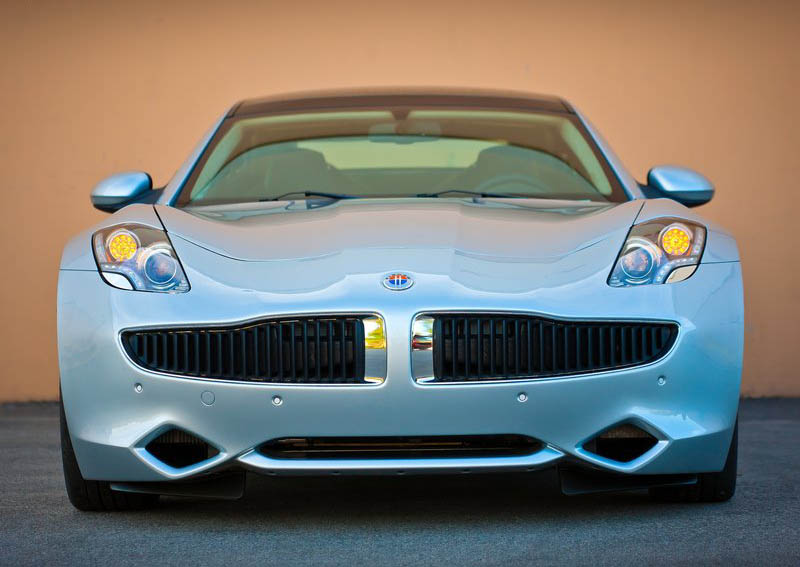
Fisker Karma, 2012


Fisker Karma, 2012

From the California automaker Fisker Automotive comes the Fisker Karma, the world's first true Electric Vehicle with extended range (EVer™) and a radical expression of what is possible in the automotive world.

Loosely translating from Hindi, Karma implies good deeds are rewarded. The Fisker Karma allows drivers who appreciate style and performance to own and enjoy a car that is also environmentally conscious, one that achieves fuel consumption and emissions performance that is simply beyond the capability of today's conventional luxury automobiles.
Combining striking, elegant design with high performance, ultra-low fuel consumption and zero emissions on demand, the four-door, four-seat Fisker Karma embodies the brand's commitment to creating Uncompromised Responsible Luxury vehicles that deliver Pure Driving Passion.

The Fisker Karma - an all-new car with all-new technology from an all-new company - arrives in showrooms this summer, setting a new benchmark for time-to-market after being unveiled as a concept in 2008 and creating the Premium Luxury EV segment.
The Fisker Karma can run purely on electric power supplied by a rechargeable lithium-ion battery for up to 50 miles (80 km); after that, a 175 kW generator driven by an efficient, 2.0 liter, direct-injection, turbocharged gasoline engine extends the range an additional 250 miles (403 km). The Fisker Karma's total range between recharge/refuel can reach 300 miles.

With a U.S. Manufacturer's Suggested Retail Price (MSRP) of $95,900 before federal tax incentives of $7,500, and a €85,500 suggested retail price in Europe, the world-class Fisker Karma will be competitive with more conventional luxury sedans such as the BMW 750i AcitveHybrid, Mercedes-Benz S400 Hybrid, Porsche Panamera S and Audi A8 TDI. Fisker Karma also offers a tremendous value over such super sedans as the $120,000 Maserati Quattroporte and $200,000 Aston Martin Rapide.

With incredible economy, and the ability to drive tailpipe-emission free, the Fisker Karma is the only truly responsible choice for luxury car buyers.
The Karma is Fisker Automotive's first car. It is built according to the company's Sustainable and Accountable Design philosophy, which represents a dramatic leap forward for the entire auto industry.
Fisker understands that developing, building, marketing and disposing of cars is an incredibly energy- and resource-intensive proposition. As a new company starting with a clean slate, Fisker sees great opportunity to improve this process and reimagine what the world can expect of its automakers.

By adamantly pursuing ways to raise efficiency and reduce environmental impact - including its carbon footprint - across the entire value chain, Fisker Automotive is striving to be the automaker most dedicated to sustainability and accountability.
The Fisker Karma and all future Fisker vehicles will be sold and serviced through a global network of established, reputable, independent retailers. In the U.S., 45 locations have been identified, with a similar number planned for European markets.

Fisker's European retail network is being developed and will be managed by importers like the Emil Frey Group in Zurich, Switzerland, and Nellemann in Copenhagen, Denmark. Fisker Italia in Merano, Italy, and BD Otomotive in Istanbul, Turkey, round out the company's presence on the continent. Fisker also entered into a non-exclusive distribution agreement with China Grand Automotive in Shanghai in December, 2010.
Significantly, the Fisker Karma is the first American-designed and engineered luxury vehicle specifically developed to appeal to world markets. It is the only luxury sedan in the world that meets future fuel consumption and emission requirements, making it suitable for any international city.

Other variants of the Fisker Karma, including a convertible, are planned, and Fisker is preparing to build a second, lower-priced model line in a 3.2 million square foot (297,000 m2) assembly plant the company is refitting in Wilmington, Delaware.
Fisker's approach to Uncompromised Responsible Luxury goes well beyond minimizing fuel consumption and tailpipe emissions. At every stage of engineering, production and marketing - even in the furnishing of company facilities - Fisker employs reused or renewable materials and the lowest-impact technologies available.

As one example, the three types of interior wood trim available in the Fisker Karma are sourced from timber reclaimed from California forest fires and windstorms and raised off Michigan lake bottoms. No live growth is ever harvested for this purpose. Also, 'Bridge of Weir Low Carbon Leather™' interior trim is made with a uniquely low-impact process in an energy self-sustaining facility.

True EVer
The Fisker Karma is the first and only true production Electric Vehicle with extended range (EVer™). Simply put, that means the Karma is driven solely and at all times by electric traction motors. An on-board range-extending gasoline engine drives a generator to power the motors as needed; there is no mechanical link between the internal-combustion engine and the drive wheels.
This exclusive EVer powertrain was inspired by a high-performance stealth vehicle created for U.S. Military special operations. At its heart is a 20 kWh rechargeable lithium-ion battery developed by Fisker Automotive's strategic partner A123 Systems of Watertown, Massachusetts. State-of-the-art Nanophosphate technology maximizes energy, power, reliability and safety.

Running on the battery alone - which can be charged in about six hours using Fisker's available 220V wall charger - the Fisker Karma can cover 50 miles (80 km); after that, the range extender - a front/mid-mounted gasoline engine/generator set - provides another 250 miles of range by supplying supplemental power to dual rear-mounted electric motors, for a total range of 300 miles (483 km).
The Fisker Karma contributes to sustainability even when parked, with the world's largest and most powerful automotive solar panel integrated into its roof, as standard. It is the only solar installation on a production vehicle that collects energy to be stored. Enough energy can be collected by the roof over the course of a year to power the Fisker Karma for nearly 200 cost- and emission-free miles.

2 Driving Modes
The Fisker Karma is also the first and only car that allows the driver to manually select all-electric or hybrid-electric drive modes on demand. The default Stealth mode maximizes efficiency, giving the car its greatest range on battery power before activating the gas engine-driven generator to sustain battery charge. In Stealth mode, the Fisker Karma can accelerate from zero to 60 mph in 7.9 seconds and achieve a top speed of 95 mph (153 km/h).

More telling of the Fisker Karma's acceleration capability and feel, however, is the massive 981 lb.-ft. (1,330 Nm) of peak torque available instantaneously (from zero rpm). By comparison, most conventionally-powered luxury sedans develop less than half of that torque and at a much higher rpm. Because the Karma is always driven by its electric motors and a single-ratio transmission/differential combination, the driver can always feel and enjoy powerful, seamless, linear acceleration.
A single pull on the Fisker Karma's left-hand steering wheel paddle engages Sport mode. Now the gasoline engine drives the generator to provide additional current that supplements that from the battery. This is enough electricity for 403 total system horsepower, allowing the Karma to accelerate from zero to 60 mph in just 5.9 seconds and achieve a top speed of 125 mph (201 km/h).

The electric motors' torque characteristics, the Fisker Karma will feel even quicker.
Sport mode conserves, and in certain circumstances replenishes, battery charge. The driver can switch back to Stealth mode at any time; this can be useful when arriving in low-emission zones, which are being designated in many cities around the world.
The Fisker Karma also features a fully-blended regenerative braking system. Regenerative braking captures kinetic energy that would otherwise be wasted as brake-rotor heat, and feeds it back into the battery. Using the right-hand steering wheel paddle, the driver can operate Hill Mode to vary regenerative braking effect in three steps; this unique function provides an effect similar to downshifting a conventional car's transmission to offer varied levels of speed control. Hill Mode is ideal for downhill grades and can be used to shorten braking distances.

World Class Ride and Handling
In all aspects of performance, the Fisker Karma is designed to be a true driver's car, one dedicated to the concept of Pure Driving Passion. Its proprietary, advanced aluminum space frame incorporates new levels of rigidity and strength that give the Karma world-class ride and handling characteristics.
Fisker Automotive's engineering team designed the Karma's space frame around the car's unique EVer™ powertrain, filing for multiple patents in the process.
Housing the car's battery pack in a structural tunnel running down the car's centerline helps endow the Fisker Karma with a very low center of gravity, and also contributes to the car's ideal weight distribution.
As a result, the Fisker Karma drives more like a midsize sport sedan than a full-size luxury sedan. In addition, the Karma does not need expensive, complex and power-robbing suspension aids to deliver flat cornering.

The four-wheel independent SLA suspension, also employing aluminum components, has been specially tuned to work with the first standard 22-inch aluminum wheels on a production car.
The Fisker-designed Circuit Blade wheels first appeared on the original concept vehicle in 2008. Electro-hydraulic, variable-ratio and variable-assist power steering is tuned for optimum control and feel.
The Fisker Karma's space frame also forms the foundation of occupant safety - and protection for the sealed batteries - helping the luxury sedan to exceed global crash protection standards.
Eight advanced airbags, Antilock Brakes (ABS), traction control (TCS), Electronic Stability Control (ESC) and Panic Brake Assist (PBA) are all part of the package.
Brembo 6-piston monoblock front brakes and 4-piston rear brakes provide incredible stopping power, bolstered by the regenerative braking.

Timeless Styling, Revolutionary Design
Fisker Automotive is a new company, without entrenched attitudes, where designers and engineers have the liberty to pursue uncompromised solutions to previously unsolved problems. The sculptural quality of the Karma's body shape is one result of that liberty.
The Fisker Karma's elegant and striking exterior design incorporates the dramatic proportion that is signature Fisker style. In his previous career positions, company CEO Henrik Fisker designed some of the most iconic automobiles of the modern era, including the BMW Z8 roadster and the Aston Martin DB9 and V8 Vantage.

True to Fisker Automotive's goal of bringing the Karma concept to reality in its original form, the production car retains, and even adds to, all of the original concept's elegant design, powerful stance and unique detailing.
A sedan with coupe-like appearance, the Fisker Karma exudes a distinctly athletic presence highlighted by a long hood and short deck, a low roofline, wide stance, pronounced fenders and standard 22-inch wheels.
The Fisker Karma is built on a long 124-inch (3,160mm) wheelbase, yet short overhangs keep overall length to 196.7 inches (4,996mm). The car's 53.4-inch (1,330mm) height is as low as some sports cars, though interior room is comfortable for four. These dimensions are nearly identical to those of the original Fisker Karma concept car.

Sustainability is Beautiful
Fisker Automotive's Sustainable and Accountable Design philosophy is apparent throughout the Fisker Karma's cabin, exemplified by the use of reclaimed, recycled and reusable materials.

Fisker leads the luxury category by offering the most sustainability-conscious interior in its top-line EcoChic™ package. The exclusive EcoChic™ series replaces leather with a high-grade textile and Premium EcoSuede™ trim.

Leather for the mid-line EcoSport™ model is sourced from the world's first energy-self-sufficient, closed-loop leather manufacturing plant; both gas and electricity are generated on-site from by-products of the leather making.

Hides are purchased exclusively from suppliers that adopt the Five Freedoms set of principles for humane animal treatment. The processing is low-pigmentation and chrome-free, greatly reducing environmental impact. Yield is the highest in the industry, which means fewer hides are used. Each Karma EcoSport interior has its own unique texture and appearance; no two are the same.

Optional Diamond Dust paint - another world first - contains a 35 to 55 percent recycled glass flake mixture, and the water-based paint process releases no volatile organic compounds (VOC). This luxurious paint option leads the industry in reflectivity, shine and gloss.

As in the original concept car, the production Fisker Karma has a four-seat cockpit with a large center console running from the dashboard to the rear seatback. Fisker designers took inspiration from both nature and classic sports cars to craft the Karma's interior. The lines of shifting desert sand dunes inspired interior shapes; metal and glass-inspired materials add depth and clarity. The Fisker Karma's chrome-bezel digital instrumentation, reminiscent of the finest Swiss timepieces and classic sports car instrumentation, focuses on ease of use.

Easy-to-Use Technology
The centerpiece of the Karma's cabin is the Fisker Command Center, which uses an industry-first 10.2-inch (250 mm) haptic force-feedback touch-screen that consolidates controls for climate, audio, standard navigation, telephone and other vehicle systems.

It nearly eliminates the engineering, tooling, assembly and user complexity associated with the dozens of buttons found on traditional dashboards, and greatly reduces associated waste at the end of the vehicle's service life. Inputs are met with instantaneous tactile, audio and visual feedback that enables the driver to confidently confirm system commands.

The full-featured Fisker Command Center also offers iPod integration and Bluetooth phone pairing. In addition, the Fisker Command Center can display vehicle power flow from the battery pack, engine-driven generator and regenerative brakes, as well as energy gain from the integrated solar roof panel.

Operational modes are accessed via fixed icons; individual controls within each mode instantly appear on the touch screen. There is no computer paradigm to learn, nor menus to navigate.

Quality Build
Assembly for the first-generation Fisker Karma has been contracted to Valmet Automotive in Finland, and reputable Tier 1 OEM suppliers. Valmet has built more than one million quality cars for various automotive brands since 1969. It currently builds the Porsche Boxster and Cayman sports cars.

The Fisker Karma comes standard with a New Vehicle Limited Bumper to Bumper Warranty for 50 months or 50,000 miles (100,000 kilometers), whichever comes first.

Technical Specifications
  •     Motors: Two rear-mounted electric traction motors, mid-mounted lithium ion battery pack and front/mid-mounted range-extending gasoline engine/generator set
  •     Battery: 20 kWh, 180 kW lithium ion w/Nanophosphate technology (A123 Systems)
  •     Range-extending gasoline Engine/Generator set: 2.0-liter, 260hp, low-emission, four-cylinder direct fuel-injection w/ turbocharger (GM Ecotec) and 175 kW generator
  •     Traction motors: 403 hp (300 kW) total [2 x 201.5 hp (150 kW)]
  •     Torque: 981 lb.-ft (1300 Nm)
  •     Transmission: Single-ratio gearbox/Limited Slip Differential combination

=    Dimensions
        Overall Length: 196.7 in. (4996mm)
        Overall Width: 78.1 in. (1984mm)
        Overall Height: 52.4 in. (1330mm)
        Overhang [f/r]: 35.9 in. (913mm) / 36.3 in. (923mm)
        Wheelbase: 124.4 in (3160mm)
        Track [f/r]: 66.6 in. (1692mm) / 67.0 in (1701mm)
        Cargo Capacity: 6.9 cu. ft. (195 l)
        Curb Weight: 5600 lbs. (2539 kg)
        Fuel Capacity: 9.5 US Gal. (36 l)
        Turning Radius: 40.4 ft. (12.3m)
 
=    Performance
        Stealth Mode
            Lithium-ion battery power only
            0-60mph (97 km/h): 7.9 sec
            Top Speed: 5mph (153 km/h)
        Sport Mode
            Lithium-ion power with Engine/Generator
            0-60mph (97km/h): 5.9 sec
            Top Speed: 125mph (201 km/h) electronically limited
        Range
            Total Range: 300 miles (483 km)
            Electric only: 50 miles (80km)
            Extended range: 250 miles (403 km)
Read More

Monday, April 9, 2012

Jaguar XJ Sentinel, 2011

 Jaguar XJ Sentinel, 2011

The new Jaguar XJ Sentinel offers the ultimate in discreet protection, being virtually indistinguishable from the standard Jaguar XJ model, yet featuring a state-of-the-art armouring package which provides occupants with up to B7 levels of ballistic protection.
Benefiting from Jaguar Land Rover's extensive experience in the armoured vehicle market, the Jaguar XJ Sentinel is supplied with a full three-year 50,000 mile factory warranty, along with comprehensive after-sales support from specialised technicians.

The Jaguar XJ's aerospace-inspired lightweight aluminium body structure also makes it possible to offer a very generous 500kg payload for passengers and luggage without compromising vehicle performance.

Comprehensive Armouring System
The Jaguar XJ Sentinel is equipped with a purpose-built armouring system which has been specially developed to ensure that the vehicle offers outstanding occupant protection, while being almost impossible to detect from outside the car.

Constructed from specialised high strength steels with Kevlar backing, the armoured inner cell was engineered in partnership with Centigon, a leading global specialist in vehicle armouring. The Jaguar XJ Sentinel offers ballistic protection up to B7 level (BS EN 1522 level FB7 and BS EN 1063 BR7-), blast protection against 15kg TNT equivalent detonated within close proximity of the vehicle, and substantial under floor grenade protection.

To ensure that the armouring meets the latest national and international standards, the protection offered was certified by QinetiQ, a globally recognised independent blast and ballistic testing organisation.

The Engineered Without Compromise
Just like the other models in the highly-acclaimed XJ range, the Sentinel has been engineered without compromise to deliver sophisticated performance, peerless vehicle dynamics and reassuring levels of active and passive safety.

The Sentinel is based on the long wheelbase Jaguar XJ saloon powered by the refined and responsive 5.0-litre 385PS AJ-V8 Gen III naturally aspirated direct-injection V8 petrol engine, which is paired with a six-speed automatic transmission.

This powerful and sophisticated powertrain ensures that the Jaguar XJ Sentinel is capable of swift and agile performance, accelerating from 0-100 km/h in 9.7 seconds and achieving a top speed of 195km/h.

The Sentinel's chassis, which features the advanced Adaptive Dynamics system with continuously variable dampers, has been comprehensively uprated to cope with its increased body weight. Jaguar's dynamics specialists have tuned the suspension and steering to ensure that the armoured model offers the same qualities of poise and agility found in the standard XJ.

Impressive stopping power is provided by a new high performance braking system which has been sourced from the formidable 510PS Supercharged non-armoured XJ model, while active safety is further improved by the XJ's full array of advanced traction and stability systems.

To enhance passive safety, the Sentinel retains full functionality of the standard XJ restraint system, including dual-stage driver and front passenger airbags, side thorax airbags and side curtain airbags.

Total Luxury and Real-World Usability
The comprehensive occupant protection offered by the Jaguar XJ Sentinel has not been achieved at the expense of comfort or practicality. Jaguar engineers have ensured that the armoured model retains the supreme luxury and real-world usability which are core features of the standard car.

The design of the armoured inner cell has been optimised to maintain the extremely spacious interior package of the long wheelbase XJ, which provides rear seat passengers with a full metre of legroom.
With its elegant and contemporary style, the cabin surrounds occupants with beautifully-crafted leather and veneer surfaces, creating a supremely relaxing, comfortable and luxurious environment.

A generous 500kg payload - maximised by the XJ's lightweight aluminium body structure - means that the Sentinel is comfortably able to accommodate four occupants along with their luggage and additional security equipment.
This day-to-day practicality provides government organisations, security forces, businesses or high net worth individuals with a discreet yet highly desirable form of armoured transportation.

Complete Support Package
Jaguar XJ Sentinel customers benefit from a comprehensive support programme, both before and after purchase.
A dedicated security consultant works closely with the customer during the sales process, to ensure their full requirements are met. A wide range of specialised optional security and vehicle features are available and can be tailored to meet individual requirements.

Once the vehicle is in service, the customer has access to a full support package including driver training and on-site servicing from dedicated specialists when required.
The Jaguar XJ Sentinel has been carefully developed to allow regular servicing and repair to be carried out at Jaguar dealers, using standard diagnostic equipment, and is covered by a full three-year 50,000 mile factory warranty.

Specifications

=    ENGINE
        5.0-litre V8 Petrol AJ-V8 GEN III
        Maximum power: 385 PS (283 kW)
        Maximum torque: 515 Nm (380 lb ft)
        Transmission: 6-speed automatic
 
=    PERFORMANCE
        Acceleration 0-100km/h: 9.7 sec
        Top Speed: 195 km/h

=    WEIGHT
        Weight: 3,300 kg
        Gross vehicle weight: 3,800 kg

=    DRIVING DYNAMICS
        Up-rated suspension with active dampers front and rear.
        Jaguar High Performance Braking System.
        Strengthened 19" Aleutian Alloy Wheels with 245/45 19" Dunlop Self Supporting Technology.
        Run on Flat tyres (RoF).

=    PERSONALISATION
        An extensive range of exterior paint colours, interior colours themes and optional equipment is available.
Read More

Honda Accord Coupe Concept, 2012


Honda Accord Coupe Concept, 2012

The Honda unveiled the dynamic Honda Accord Coupe Concept at the 2012 North American International Auto Show, providing the first official glimpse of the athletic styling direction, as well as revealing a host of new technologies for the all-new, ninth-generation 2013 model, set to go on-sale in the fall of 2012.

The 2013 Accord feature three all-new powertrains, including the first U.S. application of both a 2.4-liter direct-injected engine and two-motor plug-in hybrid system from Honda's suite of next-generation Earth Dreams powertrain technologies. In addition, the V6 Accord will be the first Honda sedan to feature a new 6-speed automatic transmission. Both the Accord Sedan and the Accord Coupe models are expected to achieve class-leading fuel economy ratings and will be available with a number of innovative new safety and technological features.

The Design and Packaging
The Honda Accord Coupe Concept features an athletic styling direction for Honda's best-selling model. The front bumper's dynamic lines are highlighted by a revised four-sided honeycomb grille and deeply set multi-reflector headlights. Lower fog-light spoilers are accented by crystallized chrome inlays.

The Honda Accord Coupe Concept's 20-inch, machine-finished, 5-spoke wheels contribute to its solid stance. The rear taillights aggressively sweep into the body, while a trunk -lid spoiler and large exhaust finishers integrated into the bumper underscore the Honda Accord Coupe Concept's muscular exterior.

While the Accord Coupe  remain similarly sized, the Accord Sedan will feature a more compact exterior footprint, adding to its sportier appearance. A shortened length and reduced weight will also give the 2013 Accord Sedan more responsive handling and improved driving dynamics. Both the 2013 Accord Sedan and Accord Coupe will retain the current model's generous cabin space.

Advanced and Efficient Powertrains
The Accord offer three all-new powertrains for the 2013 model year. The Accord Sedan and Accord Coupe will be the first models in the U.S. to receive the new Earth Dreams 2.4-liter, 16-valve DOHC i-VTEC four-cylinder engine featuring direct- injection (DI). The engine will be paired to a 6-speed manual transmission or a new Continuously Variable Transmission (CVT), which utilizes an innovative cooperative control system for excellent acceleration and responsive shifting. The all-new 2.4-liter DI engine generates significant performance improvements compared to the 2.4-liter 4-cylinder engine it replaces, producing more than 181 horsepower and 177 lb-ft of torque. In addition to an overall improvement in fuel economy compared to the 2012 model, the new four-cylinder-equipped 2013 Accord models are targeted to deliver class-leading fuel economy.

The 2013 Accord Sedan and Accord Coupe will also be offered with a re-engineered 3.5-liter, 24-valve, SOHC, i-VTEC V6 engine, paired to a new 6-speed automatic transmission or an available 6-speed manual transmission. The new V6 engine generates an increase in horsepower and torque over the current model. The 2013 Accord Sedan and Accord Coupe models equipped with the 6-speed automatic transmission will utilize Honda Variable Cylinder Management (VCM) technology and are targeted to achieve class-leading fuel economy along with an overall improvement in fuel economy compared to the outgoing model.

The 2013 Accord lineup will also feature the first application of a new two-motor plug-in hybrid system to the Accord Sedan. The Honda two-motor hybrid system moves continuously through three modes - all-electric, gasoline-electric and direct-drive - to maximize driving efficiency and fuel economy.

In all-electric mode, the 2013 Accord Plug-In Hybrid will use a 6 kilowatt-hour lithium-ion battery and a powerful 120 kW electric motor to achieve an all-electric range of approximately 10-15 miles in city driving scenarios and a top speed of 62 mph. Fully recharging the battery will take less than four hours using a 120-volt, outlet and less than 1.5 hours using a 240-volt charger.

In the gasoline-electric hybrid mode, the Accord is powered by its fuel-efficient 2.0-liter, i-VTEC inline four-cylinder, Atkinson cycle engine, paired with an electric Continuously Variable Transmission (E-CVT). For more efficient high-speed cruising, the Accord Plug-In Hybrid can engage in a direct-drive mode, in which only the engine drives the front wheels. The Accord Plug-In Hybrid launch next winter.

All 2013 Accord models incorporate the Honda ECO Assist system, an innovative technology that can enhance efficient vehicle operation at the touch of a button, while also providing visual feedback to the driver to promote and confirm a more efficient driving style.

Safety and Technological Innovations
The 2013 Accord will introduce numerous new features for enhanced driver safety, visibility and security. The new Accord will be available with Honda's first application of Lane Departure Warning (LDW) and Forward Collision Warning (FCW) technology. Both systems use a camera mounted behind the windshield to alert drivers if the car is moving out of its lane or to warn drivers of a potential collision in front of them.

The 2013 Accord is targeted to earn top scores in both the federal government's New Car Assessment Program (NCAP) and the Insurance Institute for Highway Safety (IIHS) vehicle evaluations.

Additionally, the Accord will be equipped with several new technologies to help improve the driver's visibility around the vehicle. The Accord will be the first model to receive the Honda-exclusive LaneWatch blind-spot display, which uses a camera system mounted on the passenger mirror for an enhanced view of the passenger-side roadway. The Accord will also receive a rearview back-up camera and an Expanded View Driver's Mirror as standard equipment.

The Accord has always been an exceptional value and the 2013 model will offer more standard equipment compared to the current model, including new advanced technology features. High-tech features that will be found on all 2013 Accord models include Bluetooth Hands Free Link phone interface, a full-color intelligent Multi-Information Display (i-MID) and an SMS text messaging function, which can read received texts from compatible cell phones aloud over the audio system. Another standard feature and first for the Accord is the introduction of a Pandora Internet Radio interface, compatible with the Apple® iPhone®, which works with the vehicle's audio controls and i-MID.
Read More

Honda AC-X Concept, 2011


Honda AC-X Concept, 2011

The Honda AC-X Concept, on display at the 2011 Tokyo Motor Show, is a next-generation plug-in hybrid vehicle which offers a more comfortable and enjoyable time in the vehicle during all driving situations, from urban to long-distance driving. 

With the choices of an "engine drive mode" for more aggressive driving or an "automatic drive mode" for more relaxed driving, the vehicle broadens the joy of mobility.

Read More