Tuesday, April 3, 2012

Subaru Impreza R205, 2010

 
 Subaru Impreza R205, 2010

The Subaru Tecnica International Inc. (STI) is pleased to announce the launch of the Subaru Impreza R205, a special performance version. The model will go on sale today through Subaru dealerships in Japan.

Based on the Subaru Impreza WRX STI, the R205 enhanced the sheer driving performance it shares with former special performance models, such as the "S203" and the "S204", developed by STI. The Subaru Impreza R205 is the top performance model of the WRX STI. It features new and exclusive equipment and makes full use of specially designed features and performance parts of the "WRX STI spec C" model, the sporty performance model launched 2009. The "R" of R205 stands for "Road Sport".

Most efforts focused on refining handling performance by adopting STI tuned dampers, coil springs, flexible type strut tower bar, flexible type lower arm stiffener of front suspension, and Bridgestone's specially designed RE070 tyres. Thus the Subaru Impreza R205 ideally balances agile driving and confident driveability by enhancing a linear steering response and excellent road-holding capability. This is exactly the distinctive ride quality that STI is pursuing as its vehicle development theme, "strength and nimbleness" driving. The Subaru Impreza R205 offers enhanced total driving control not only in city driving on the road or winding road but also in sporty driving at the circuit.

In addition, STI carried out verification tests of selected performance parts of the Subaru Impreza R205 through the participation of the 2009 Nurburgring 24-hour race with an Impreza WRX STI. Making full use of this precious race-track experience at Nurburgring - in which any road condition is condensed - STI successfully completed the model in order to offer sheer excitement and unique driving feeling as a distinctive "Road Sport Model".

The Subaru Impreza R205 delivers an increased 235kW (320PS) of maximum output, and 431N.m (44.0kg.m) by adopting the exclusively designed turbocharger with ball bearings for the turbine axle bearing, specially tuned ECU (Engine Control Unit), and the sport muffler with lowered back pressure exhaust. SI-DRIVE (SUBARU Intelligent Drive) is also available to neatly suit driving style in any driving situation at driver's command.

The front under spoiler, newly developed rear under spoiler, and the black rear spoiler improve aerodynamics. Exclusively designed 18-inch alloy wheels, specially colored front grille and side STI garnish accentuate its uniqueness.
Read More

Subaru Legacy Concept, 2009


 Subaru Legacy Concept, 2009

The Subaru of America, Inc. revealed the 2009 Subaru Legacy Concept at the 2009 North American International Auto Show. The new Subaru Legacy Concept is a hint at the future of Legacy design. The design showcases the sport sedan heritage of the Subaru Legacy, but in more modern and purposeful package.

Marking the 20th anniversary of the Subaru Legacy, the Subaru Legacy Concept has been developed to showcase the Legacy's sporting capabilities and features Subaru's Symmetrical All-Wheel Drive system mated to a Horizontally-Opposed Boxer engine. The design concept is based on a larger 108.3 in. wheelbase designed to maximize interior space and provide comfortable accommodations for four adults.

The theme of concept design is "Presence", represented by the aggressive front facia and solid yet expressive body. Four powerful and defined wheel arches emphasize the dynamism of Symmetrical AWD. Sharp design lines carve out a substantial mass as they flow from the hood, across the roof to the trunk, while the sharp body lines project a sense of strength. Wedge-shaped Side Rear Vision Cameras are featured and provide a sense of flow from the momentum of the A-pillar lines. A character line runs from just before the A-pillar and sweeps up to the tail just above the taillamps.

The grille design incorporates a central wing motif that defines the Legacy's Subaru brand identity. The Subaru logo separates a deep central grille shape that is accented by sharp headlamps with a dual vertical-row layout of multiple LED lamps. In addition, the slim, vertical fog lamps set in a large front valance with angular air intakes add a jewel-like touch to the front design. The Subaru Legacy Concept is finished in a special High-luster "Ultimate Silver" paint to accentuate the design's angular shapes.

The interior design features a striking four-seat layout that showcases the "High Definition" design theme. Comfort and style are achieved with a mix of touch-screens, cameras and modern surface coverings. The high-tech look blends with comfort through four separate seating areas, a high roofline and generous legroom for all passengers. The center console features a large touch-panel display that concentrates various functions for simplified use, while the flowing shape extends vertically to emphasize the feeling of strength and solidity in union with the exterior. A steering wheel and shift lever have been adapted to accentuate the sporty nature elemental in the Legacy's DNA.

In-car entertainment is featured through monitors with multiple functions that are located in the center console, as well as in the rear of the front seat headrests to provide comfortable functionality as well a calm design that creates a relaxed ambiance for passengers. The monitor for the Side Rear Vision Camera has been situated toward the front of the roof to maximize rear visibility. The design is capped off with seats covered in pearl white leather that give off a blue sheen, while black metallic leather has been used for the door trim to create contrast with the instrument panel.

The Legacy was introduced globally in 1989, produced in Japan and Lafayette, Indiana. Since that date until November 2008, the total global production has exceeded 3.6 million vehicles making it Subaru's core model. During that period, Subaru's core technologies of a Horizontally-Opposed engine and Symmetrical AWD have served to further the basic elements of automotive performance while continuously evolving for unparalleled handling, stability, and safety. This Subaru Legacy Concept incorporates the Legacy heritage while also serving as a concept model that provides an image of the new driving comfort and reliability that will continue to serve as a touchstone for Subaru.

Specifications:
  • Body size (Overall: Length x Width x Height): 188.8 x 71.7 x 59.0 inches
  • Wheelbase: 108.3 inches
  • Engine: 3.6-liter six-cylinder Horizontally-Opposed engine
  • Tire size: 225/45R19
Read More

Suzuki Kizashi EcoCharge Concept, 2011


Suzuki Kizashi EcoCharge Concept, 2011

The American Suzuki Motor Corporation (ASMC) unveiled a gas-electric concept variant of its Kizashi sedan at the New York International Auto Show (NYIAS). With the moniker Suzuki Kizashi EcoCharge Concept, this innovative and eye-catching four-door further illustrates Suzuki's global eco-mobility story, and accentuates the company's effort in socially-conscious motoring.

Kizashi Powertrain Electrification
The Suzuki Kizashi EcoCharge Concept derives power from a 2.0-liter inline-four gasoline engine, working in tandem with an advanced electric propulsion system, which consists of a liquid-cooled 15-kW motor/generator unit tied to a 115-volt air-cooled lithium-ion battery. The combination optimizes fuel economy and delivers an electric power boost during acceleration for a more spirited driving experience. The Suzuki Kizashi EcoCharge Concept delivers a 25 percent lift to highway fuel economy over today's Kizashi.

To help maximize efficiency, the Suzuki Kizashi EcoCharge Concept also utilizes numerous fuel-conserving technologies, including regenerative braking, automatic engine shut-off when the car comes to a stop, fuel cut-off during deceleration events and low-rolling resistance tires.

The power management is provided via an advanced six-speed automatic transmission designed for smooth operation and a seamless flow of power when called upon by the driver.

Simple, But Striking Exterior Styling
The exterior of the Suzuki Kizashi EcoCharge Concept is highlighted by a unique luminescent white satin paint design with a subtle blue undercoat. To further set the concept apart from its production Kizashi sibling, it has been given a specialized headlight treatment, as well as LED foglight illumination integrated into the front fascia. The lightweight aluminum wheels communicate a futuristic feel, and are wrapped in low-rolling resistance tires."

Eco-friendly Interior
Within, the Suzuki Kizashi EcoCharge Concept utilizes advanced seat materials. These materials require 84 percent less energy to produce, and create 80 percent fewer emissions than virgin material production.

Suzuki Kizashi EcoCharge Concept Specifications
  • Engine: J20B DOHC I-4
  • Displacement: 1,998 cc
  • Valvetrain: Intake-VVT
  • Horsepower: 144 hp (106 kW) @ 6500 rpm
  • Torque: 127 lb-ft (173 Nm) @ 4500 rpm
  • Fuel economy target (Hwy): 25 percent improvement over production Kizashi
  • Transmission: 6-speed automatic
  • Electric Drive System
  • Type: Belt-driven, liquid-cooled induction motor/generator unit and lithium-ion battery system; air-cooled power electronics and battery pack
  • Maximum electric generating power: 15 kW @ 1,570-3,180 rpm
  • Maximum electric motor power (electric assist): 15 hp / 11.2kW @ 1000-2200 rpm
  • Lithium-ion battery: 115V, 0.5 kWh, 15 kW peak power
Read More

Suzuki SX4, 2010


 Suzuki SX4, 2010

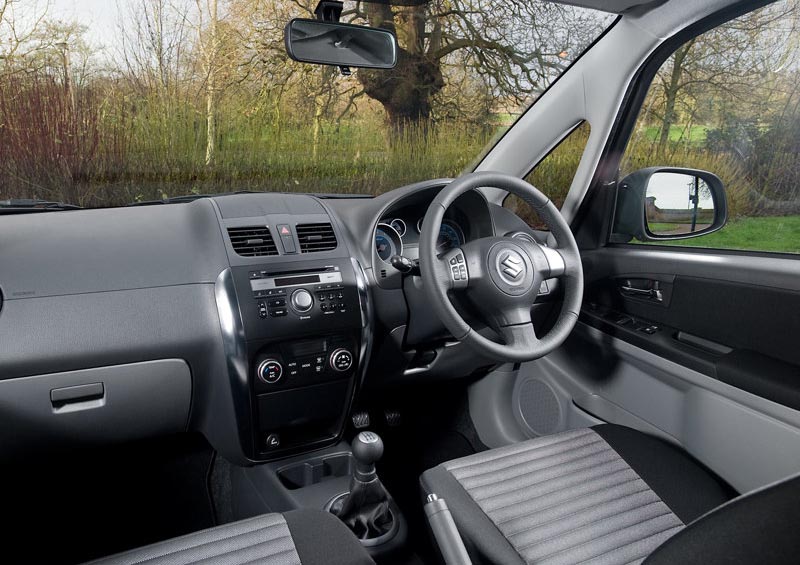
The Suzuki SX4 is a distinctive five-door hatchback that blends the characteristics of sporty compacts exemplified by the Swift, with those of lightweight SUVs such as the Grand Vitara, to create an exciting small car alternative.
The resulting 'sport X-over' combines responsive driving dynamics, 4x4 capability, high levels of practicality and styling that suggests a freestyle approach to life.

The UK line-up offers two engine options - one diesel and one petrol. The revised 120PS 1.6 litre VVT petrol engine is available in either SZ3 or SZ4 2WD (front-wheel drive) format or as a 4x4 SZ5 model with selectable/automatic four-wheel drive. The 1.6-litre DDiS will be available in SZ4 trim from April 2010, together with the SZ5 4X4 petrol.

Suzuki SX4 is the result of a joint development agreement between Suzuki and Fiat Auto, in which Suzuki was responsible for project management from concept to mass production. Suzuki SX4 models sold in Europe are built at Magyar Suzuki Corporation in Hungary.

Expressive, confident exterior
The Suzuki SX4 is styled to look good in any setting. Fusing the dynamism of SUVs with the elegance of passenger cars gives poise and presence beyond the model's compact size. The 2010 model features a redesigned front bumper and grill together with new design 16-inch alloy wheels for SZ4 and SZ5 models. A low, rising waistline and large, triangular glazing forward of the front doors give the vehicle a strong, sporty wedge shape expressing dynamic performance, while the pronounced wheelarches and wide front and rear track broadcast stability and good traction. The design suggests a potential that is not found in conventional hatchbacks and that is pure Suzuki in nature: exciting, multi-dimensional and visually appealing.

3 model grades are available: SZ3; SZ4 and SZ5 which is available for the 4x4 petrol model. All models have a bold SUV appearance with wheel arch extensions, side protection mouldings (not SZ3 model), side under protection mouldings and front and rear skid plates.

Bold and refined interior
The "X-over" design continues inside the vehicle, with curving wraparound forms and trim materials and fabrics that have high visual and tactile quality. Circular motifs and a flowing centre panel - also used to critical acclaim in other Suzuki models - express the car's dynamic performance and add to its active lifestyle appeal.

The two-tone interior is predominantly black, highlighted with metallic-coloured accents and wedge-shaped motifs, for a look that is both bold and refined. The instrument panel's ergonomic design ensures the key meters and controls are intuitive and simple to use. A new style, LED back lit three-dial cluster provides important information at a glance and neatly echoes the metallic, circular motifs of the side air outlets and other controls. Important driver information on average and instantaneous fuel consumption as well as driving fuel range and outside temperature have now been relocated from the top centre of the dashboard to directly ahead of the driver in the instrument cluster.

The lower centre dashboard panel has also been revised for the 2010 model and incorporates a new display; housing the audio, air conditioning and other controls. On SZ4 and SZ5 models the large dials of the fully automatic air conditioning have ring lights, which make them easier to see and use, while adding to the overall refined quality. Steering wheel audio controls are now illuminated for added convenience.

Balance of form and function

The Suzuki SX4 comfortably accommodates up to five people and their luggage needs, while retaining a sleek and stylish look. The 4WD models have exterior length-width-height dimensions of 4,150mm x 1,755mm x 1,620mm (2WD models:1,605mm) These efficient proportions and a minimum turning circle of 10.6 metres make Suzuki SX4 easy to navigate around narrow urban streets and easier to park in spaces that would be out-of-bounds to large SUVs.

The spacious interior offers plenty of leg and shoulder room, even for rear seat passengers. Space is not the only factor in ensuring plenty of on-board comfort: the shape and position of the seats are designed to support a natural posture, a key factor in comfortable long-distance travel. Additionally, ideal seat heights, large door openings, and high ground clearance make access easy for all on board. The rear seats are set slightly higher, which means even those in the back get a good all-round view.

The rear seats divide 60:40, which means long items can be carried while still seating one or two rear passengers. They can also be tumbled forward to create an almost fully flat load floor, increasing boot capacity from 270 to 625 litres (VDA measurement).

A number of handy storage compartments are provided throughout the cabin, including large pockets on all doors with bottle holders.
On board refinement and comfort is enhanced in the latest model with the fitment of cushioned armrests in the doors; additional sound insulation throughout the cabin together with new design carpets; all helping lower NVH levels.

On the outside; a larger engine under shield cover together with improved transmission damping and increased rigidity of body parts have also been incorporated.

Specification
Suzuki SX4 is well equipped as standard with the SZ3 model offering six airbags; remote central locking with deadlocks, air conditioning, MP3 / WMA compatible CD tuner with eight speakers, four electric windows, driver information display and illuminated steering wheel mounted audio controls.

The SZ4 model adds fog lamps; 16-inch alloy wheels, side body protection and heated door mirrors. Petrol engine SZ4 models have an even higher specification with keyless entry and start; dashboard centre speaker and automatic air conditioning.
On sale in April, the top of the range SZ5 model adds i-AWD (intelligent All Wheel Drive), MP3 / WMA compatible six CD changer and rear privacy glass.

Pure driving exhilaration
The Suzuki SX4 was engineered from the outset to offer all-wheel drive capability, yet still deliver sharp, dynamic performance. The inherent qualities of sporty hatchbacks are evident in the car's responsiveness and comfortable long-distance travel, while Suzuki's extensive experience in 4WD technology delivers all-wheel traction that is more than adequate for everyday situations.

The revised 1.6-litre petrol engine features drive by wire throttle control, a new variable valve timing and variable intake system for enhanced driveability and response. It powers the 2WD models with manual transmission from nought to 62 mph in 10.7 seconds - 11.5 seconds for the 4x4 model. In combined cycle driving, the 2WD manual models return 45.6mpg, a 10 per cent improvement over the previous engine, while the 4x4 is only slightly behind, returning 43.5mpg, a very respectable figure for a petrol-powered 4x4.

Power and torque
The 1.6-litre petrol engine has been improved to comply with Euro 5 emissions with a new cylinder head and block which offer improved cooling performance and improved 'knock' or detonation control limits; the higher power output (120PS vs 107PS) over the previous engine has been achieved by extending the intake and exhaust valve lift with variable valve timing and utilising a variable inlet manifold.

The variable intake system is similar to that used in the Grand Vitara 2.4-litre engine in which rotary valves in the intake manifold change the length of the intake ports according to engine speed. The result is improved intake efficiency throughout the rev range.

The variable intake system adjusts intake port length in three stages, Low, Mid and High engine speeds; thus gaining the maximum potential from the intake manifold. Optimising intake efficiency in this way means the engine delivers higher torque at the right time and subsequently delivers lower emissions across the engine speed range.

The engine also utilises a thin walled exhaust catalyst to also help achieve higher fuel efficiency and lower emissions; this is particularly relevant after start up from cold as the exhaust catalyst is able to reach it's correct operating temperature in less time.

The 1.6-litre DDiS engine, sourced from Peugeot, delivers 90PS and 215Nm of torque at just 1,750rpm to ensure lively, flexible performance and strong fuel economy. Mated to a five-speed manual gearbox and driving through the front wheels, it achieves an impressive 57.6 mpg (combined cycle) and CO2 emissions of just 129 g/km. Nought to 62 mph acceleration is achieved in 12.2 seconds, with a top speed (where permitted) of 109mph.

i-AWD (intelligent All Wheel Drive)
The signature feature of the Suzuki SX4 4x4 is it's i-AWD switchable three-mode all-wheel drive system. An Electric Control Coupling Device allows the driver to select 4WD-Auto, 4WD-Lock, and 2WD modes to suit driving conditions, giving excellent traction on low grip surfaces.

In 4WD-Auto mode in normal driving conditions there is no torque transfer to the rear wheels, so the Suzuki SX4 effectively operates as a front-wheel drive vehicle. As soon as any pronounced front wheel slip is detected, torque is automatically apportioned to the rear wheels to give all-wheel traction and improve vehicle stability.

4WD-Lock mode maintains full traction up to around 40mph, before automatically switching to 4WD-Auto mode for smooth cruising. Selecting 2WD (drive through the front wheels) optimises fuel economy.

The Chassis
The Suzuki SX4 provides crisp, predictable handling designed to satisfy European driving tastes. This has been achieved by carefully matching the suspension characteristics to the highly rigid platform. Extensive fine-tuning of the chassis was conducted in Europe to ensure ride and handling performance meet European market preferences.

The body is an evolution fundamental design that helped carry the Suzuki SX4 to numerous awards throughout the world, including Car magazine's Car of the Year in 2006 when the model was first launched. Its high levels of bending and torsional rigidity and reinforced suspension mounts allow the front MacPherson struts and rear torsion beam suspension to perform to their full potential. Wide 1,500/1,495 mm front and rear tracks (1,495/1,495 mm for 4x4 models) and 205/60R16 tyres further contribute to the stable ride quality.

Reassuring safety
The Suzuki SX4 inspires confidence with its extensive array of safety features. Active safety elements include ABS with electronic brake-force distribution (EBD), standard on all models together with rear disc brakes for enhanced braking performance.

Overall Suzuki SX4 has an outstandingly crashworthy structure, which helped it gain four Stars for adult occupant in Euro NCAP testing. Extensive use is made of high tensile steel and tailored blanks in the car's construction to achieve strength without the penalty of added weight. Front and rear crush zones absorb impact energy, while the frame design directs much of the impact energy away from the highly reinforced cabin.

In the cabin the driver enjoys a commanding position at the wheel with a wide field of vision. Front, side and curtain airbags are provided on all models, together with front pre tensioners and force-limiters for front seatbelts; three-point belts with emergency locking retractors are provided on all rear seats and ISOFIX child seat anchor points with top tether mountings.

Suzuki SX4 also offers high levels of specific protection for pedestrians and child passengers, measures which, at launch, secured the model three-star Euro NCAP ratings in both categories, a particularly impressive result for a compact car.
Service intervals are every 9,000 miles and all Suzuki SX4's have a three year, 60,000 miles warranty in line with other Suzuki models.
Read More

Suzuki Alto, 2009


 Suzuki Alto, 2009

At the 2008 Paris Motor Show, Suzuki has unveiled the all-new Suzuki Alto — the fifth and smallest member of its acclaimed lineup of world strategic models. The new Suzuki Alto combines eye-catching style and easy urban mobility with great performance in terms of fuel efficiency and CO2 emissions, thereby meeting the lifestyle needs of today's motorists and the pressing global need for environmental compatibility. Plus, it is one of the most fun-to-drive city cars available — a great new example of Suzuki's "Way of Life!" philosophy.

As the second model in the second phase of Suzuki's world strategy (a phase that's focused on user-friendliness and delivering expanded possibilities for family members), the new Suzuki Alto offers good levels of comfort and convenience within a modest overall length.

A design that combines sporty, European-inspired looks with great aerodynamics means the new Suzuki Alto is the most stylish car of its size.

The new Suzuki Alto reflects the unparalleled knowledge of small-cars that has made Suzuki so successful with minivehicles in Japan and compact cars like the Swift all over the world. Suzuki Alto is a definitive response to the need for enjoyable, eco-friendly motoring. Suzuki aims to achieve annual sales of 60,000 units in Europe following a sales launch in spring 2009.

The new Alto is aimed mainly at urban people who want a small car that offers style and enjoyment together with great environmental credentials, and it reflects the ideals of the second phase of Suzuki's world strategy. At the heart of the concept for the new Suzuki Alto is Suzuki's belief that people should be able to enjoy economical, eco-friendly motoring without sacrificing style, comfort, practicality, or performance. Compact dimensions (the new Suzuki Alto is the smallest of Suzuki's world strategic models) play a large part in realising outstanding environmental credentials by keeping weight to a minimum, but without detracting from user-friendliness.

The Design, Comfort and Practicality
The new Suzuki Alto has a sporty, solid look that exudes urban energy despite the body's compact dimensions. The design is elegant and beautiful thanks to aerodynamically efficient contours that combine tautness with evocative curviness. It is ideally matched to European tastes and with a drag coefficient of just 0.30 promotes fuel efficiency and low CO2 emissions.

The cabin layout apportions most of the space to the front seats but still provides ample space for four adults. Handy storage spaces for small items are located all around the cabin. Notwithstanding the new Alto's compact exterior dimensions, there's a usable amount of luggage space behind the rear seats, and folding down the rear seatback expands the space into a roomy luggage area suited to daily use.

Performance and Environmental Compatibility
The new Suzuki Alto is powered by a three cylinder 1.0-litre petrol engine successfully launched as an engine of the Suzuki Splash. This unit is light and compact with low friction characteristics. Maximum power output is 68PS (50kW) with maximum torque of 90Nm. Fuel consumption is low at 62.7 mpg on the combined cycle and CO2 emissions are just 103g/km. Standard transmission is a five-speed manual and a four-speed automatic transmission (uncommon among one-litre cars) with gate-type shifter is available as an option.

The Suspension
The front suspension is of MacPherson strut type and the large, high-rigidity suspension frame is complemented by further strengthening in the strut mounting areas for superior handling. The rear suspension has Suzuki's proprietary 3-link rigid axle design, and incorporates numerous refinements for the new car. The coil springs and dampers were tuned for optimum handling stability through extensive testing on roads in Europe.

Suzuki targeted handling that makes driving enjoyable on urban roads, so drivers enjoy linear response, gentle roll movements, light steering feel, and good absorption of shock and vibration. These benefits reflect the experience Suzuki has gained in motorsport around the world.

The new Suzuki Alto has a minimum turning radius of just 4.5m making it easy to manoeuvre and park in tight spaces.

Safety
To help the driver avoid hazards on the road, the new Suzuki Alto is available with Electronic Stability Program (ESP®), which modulates the engine performance and applies the brakes during cornering and under aceleration.

In the unfortunate event of an accident, the new Suzuki Alto's body reflects Suzuki's Total Effective Control Technology (TECT) concept in the form of crushable structures that absorb impact energy, frame members that disperse impact energy away from occupants and a strong cabin structure. Use of high-tensile steel for major body parts means the resulting high level of occupant safety does not add excessive weight to the body.

SRS front, side, and curtain airbags are available to reduce the severity of impacts suffered by occupants in the event of a collision. Energy-absorbing trim materials provide further head protection.

Technical Specifications
  • Engine: Petrol 1.0l
  • Drive system: 2WD
  • Transmission: 5MT/4AT
  • Steering: LHD/RHD
  • Number of doors: 5
 DIMENSIONS
    o Overall length: 3,500 mm
    o Overall width: 1,600 mm
    o Overall height: 1,470 mm
    o Wheelbase: 2,360 mm
    o Tread
         + Front: 1,405 mm
         + Rear: 1,400 mm
    
CAPACITIES
          o Seating capacity: 4
          o Luggage capacity
                + Max. Volume: 774 l
                + Rear seatback folded (VDA method): 367 l
                + Rear seatback raised (VDA method): 129 l
          o Fuel tank capacity: 35 l
    
ENGINE
          o Type: K10B
          o Number of cylinders: 3
          o Number of valves: 12
          o Piston displacement: 996 cm3
          o Bore x stroke: 73.0 x 79.4 mm
          o Compression ratio: 11.0
          o Maximum output: 68PS (50kW) @ 6,000 rpm
          o Maximum torque: 90 Nm @ 4,800 rpm
          o Fuel distribution: Multipoint injection
    
PERFORMANCE
          o Maximum speed: 155 km/h
          o 0-100 km/h: 14 s
          o Fuel consumption (Combined): 4,5 l/100 km
          o CO2 emissions (Combined): 103 g/km
Read More

Monday, April 2, 2012

Toyota Prius C, 2012


 Toyota Prius C, 2012

The letter "c" represents "city" in the Prius c name. Designed to function as an urban-friendly vehicle with an engaging driving experience, hatchback utility, and a city fuel economy rating of 53 mpg, Toyota Prius c offers the highest city mpg rating of any vehicle without a plug. The all-new Prius c joins the Prius Family, which includes the third generation Prius Liftback, the versatile new Prius v and the Prius Plug-in Hybrid, which will debut in early 2012.

Beginning with the first generation fourteen years ago, over two million Prius units have been sold worldwide. Prius remains the world's premier eco-vehicle brand, and has made great strides establishing consumer trust in hybrid technology. With Prius c, Toyota will make the market's most proven hybrid technology available to subcompact car shoppers with a starting MSRP below $19,000.

Unique Place in the Prius Family
A gateway product into the Prius Family, the new Prius c will find favor with younger shoppers seeking a smartly designed, fuel-efficient subcompact car packing advanced drivetrain and in-car technology. The Toyota Prius c will offer engaging driving dynamics with superior urban maneuverability. When the 2012 Prius c arrives in showrooms this spring, the all-new hatchback offer:
  • The highest rated city fuel economy estimate of any vehicle without a plug
  • The most accessible Prius will feature a starting MSRP below $19,000 with proven hybrid powertrain and premium technology
  • A premium subcompact car experience thanks to a wide array of available convenience and advanced in-car electronics features, including a standard 3.5-in. full color TFT multi-information display, hands-free phone capability, USB port with iPod connectivity, and available Display Audio system with Navigation and Entune
The scale of the all-new Toyota Prius c becomes apparentwhen compared to the familiar proportions of the midsize Prius Liftback. The Prius c is smaller and lighter than its midsize Prius stable mate with 19.1 inches less length (157.3 vs. 176.4 inches OAL) and 542 lbs. less weight than the Prius Liftback (2,500 vs. 3,042 lbs.). In adapting the Hybrid Synergy Drive to the smaller Toyota Prius c platform, each of the system's major components were re-designed to reduce weight, scale, and improve efficiency.

Four Grades with Generous Standard Equipment
The Prius c will be available in four trim levels offering desirable features, equipment, and enhanced capability giving consumers a compelling value proposition. Toyota Prius c provides many standard features such as automatic climate control, tilt-telescopic steering wheel with audio, climate, Multi-Information Display and Bluetooth hands-free controls, and remote keyless entry with illuminated entry among a long list of standard equipment.

Efficient Packaging
The Prius c's effective packaging design strategically locates key drivetrain components within the chassis to help optimize interior space and handling. The compact gasoline engine, transaxle and power-control unit are optimally placed within the vehicle to help enhance weight distribution and lower the center of gravity. In addition, the hybrid battery and fuel tank are positioned together beneath the rear seat, ideally distributing their mass within the wheelbase to improve weight distribution to help enhance handling. By locating the battery and fuel tank below the rear seat, the Toyota Prius c is able to offer 104 cu. ft. of interior volume (87.4 cu. ft. passenger volume, 17.1 cu. ft. cargo volume).

Prius c Hybrid Synergy Drive Propulsion
The Toyota Prius c's Hybrid Synergy Drive system integrates the operation of components that include a gasoline engine, an electric motor within a Continuously Variable Transaxle, a nickel-metal hydride battery, a power control unit (inverter), a DC-DC converter, a step-up converter and a hybrid control computer. The hybrid control computer governs the seamless application of gasoline engine and electric power depending on driving demands and selected drive mode.

The Toyota Prius c relies on a SULEV (Tier 2 Bin 3) rated 1.5-liter in-line, four-cylinder gasoline engine that utilizes an Atkinson cycle to increase efficiency. This engineproduces 73 horsepower and 82 lb.-ft. of torque, contributing to a total hybrid system output of 99 hp.

The Toyota Prius c's hybrid system utilizes a 144-volt nickel-metal hydride battery pack that has been located under the rear passenger seat, near the center of the vehicle, and low in the chassis to help improve the center of gravity.

Toyota Prius c offers three distinct drive modes: Normal, Eco, and EV mode. Eco mode reduces overall energy consumption by governing climate control and throttle to improve vehicle efficiency. Under certain conditions, the EV mode allows the Prius c to be driven solely by electric power for a short distance (under 1 mile) while remaining below 25 mph.

Vehicle Structure - Improved Handling and Safety
The Toyota Prius c's body structure makes extensive use of lightweight, high-strength steel to help reduce vehicle mass and improve fuel economy. The strategic use of high-tensile-strength steel contributes to the vehicle's ability to absorb and disperse impact energies helping enhance occupant safety. The high level of torsional rigidity afforded by the Prius c body structure allows the suspension to be more optimally tuned for ride and handling.

Suspension and Steering for Enhanced Handling
The front suspension uses a Macpherson strut design, and the rear rides on a tuned torsion beam. The coil-spring and shock-absorber characteristics of the Toyota Prius c have been tuned to enhance handling, flat turning, and smooth ride comfort. Prius c is available with 15- or 16-inch wheel-and-tire combinations. The 15-inch wheels are available in steel with wheel cover for base model or in aluminum alloy for elevated trim levels. Toyota Prius c models equipped with the available 16-inch aluminum alloy wheels enjoy enhanced handling thanks to a faster steering ratio (2.28 turns lock to lock), which helps quicken the vehicle's dynamic response.

Youthful Exterior and Interior Design

The Prius c exterior design helps project a fun, youthful attitude for this all-new addition to the Prius family, while offering excellent aerodynamic performance. Extensive aerodynamic features were engineered into the Toyota Prius c to help achieve a 0.28 coefficient of drag. Adding character to this subcompact, the Prius c's lower-body styling is wider below the beltline, featuring sculpted rear flares to help express a sturdy, athletic stance that communicates a more agile driving experience.

The Toyota Prius c interior design seeks to create a space that is futuristic yet passenger friendly. Using black as a basic interior color, the door trim, seat surfaces, and instrument panel feature treatments in lighter colors to help create contrast.

Display Audio and Connectivity with Entune
The 2012 Toyota Prius c will offer three audio system configurations. A base audio system features either four or six speakers, depending on the model, and includes AM/FM CD player with MP3/WMA playback capability, auxiliary audio jack, USB port with iPod connectivity, hands-free phone capability, phone book access, and music streaming via Bluetooth wireless technology.

The Display Audio with Navigation and Entune has six speakers and augments capability with a 6.1-inch touchscreen, SiriusXM Satellite Radio capability (with 3-month trial subscription to XM Select package), HD Radio with iTunes tagging, and advanced voice recognition. Toyota's Entune multi-media system functions through select smart phones' interface that brings applications such as Bing and Pandora to the vehicle audio display. It also features real time information such as traffic, weather, fuel prices, sports, and stocks.

Standard Safety Features
The Toyota Prius c is equipped with nine airbags strategically located to help protect the driver and passengers in the event of certain types of accidents. The new 2012 Prius c, like allToyota models, is equipped with the standard Star Safety System, which includes Vehicle Stability Control (VSC), Traction Control (TRAC), Anti-lock Brake System (ABS), Electronic Brake Force Distribution (EBD), Brake Assist (BA), and Smart Stop Technology (SST).
Read More

Toyota Avalon, 2011


Toyota Avalon, 2011

Toyota introduced the boldly redesigned 2011 Toyota Avalon at the 2010 Chicago Auto Show. Evoking a time when travel was sophisticated, elegant and comfortable, the new Toyota Avalon possesses a distinctive new exterior style while offering a restyled interior rich with premium touch points and practical new technologies.
Even with numerous refinements inside and out, the Toyota Avalon remains true to the idea that comfort is honest and uncomplicated, and "Traveling Avalon Class" is rich in simple, familiar pleasures.

The new Toyota Avalon has dynamic and expressive lines, and an infusion of comfort, safety and technology advancements that enrich the driving experience. Upgraded equipment and technology features, such as a touch-screen navigation system with real-time traffic, and Bluetooth® hands-free phone capability with music streaming to the audio system are among the improvements that enhance the 2011 Avalon's excellent blend of spaciousness, comfort and technology.
Restyled at Calty Design Research in Newport Beach, Calif., the Toyota Avalon is assembled at Toyota Motor Manufacturing Kentucky (TMMK), a "zero landfill" facility that also assembles the Camry, Camry Hybrid, and Venza. It was also developed at the Toyota Technical Center (TTC) in Ann Arbor, Mich.

Dynamic New Exterior
For 2011, Calty restyled Toyota Avalon to project an elegant, outgoing presence. A wider, more substantial grille ties into state-of-the-art projector headlamps, working with a broad, undisturbed front hood to suggest a lowered center of gravity and emphasize the Toyota Avalon's wide stance.

The new headlamps, which combine multi-reflector halogen high beams with halogen or HID low beams, utilize light pipes to create a signature, night-time appearance. The front fog lamps, now integrated into a trapezoidal front bumper, provide a wider angle of illumination.
Viewed from the side, the 2011 Avalon is enhanced by additional use of chrome trim, redesigned rocker panels, and glare-resistant outer mirrors with integrated turn signals. New 17-inch wheels on the Limited grade feature a 10-spoke design with a mirror finish.

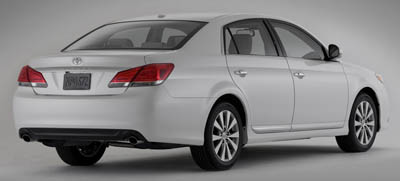
At the rear of the car, identification is cleanly defined by a single Avalon logo located above the license plate. Dual-exhaust pipes are integrated into the cutaway trapezoid shape of the lower bumper for a modern image. Taillights have been reshaped to reduce turbulence at the rear, helping to create a lower coefficient of drag. The new lights integrate stop, turn and side marker lighting functions in one combined lamp. Unique LED light pipes with dark aluminized sides and both clear and red lenses project a modern appearance.

Spacious Interior Built For Comfort
For 2011, a new interior has been designed with a contemporary style. The new interior remains generously spacious and elegant, fitted with comfortable seating and thoughtfully integrated amenities. Coordinated colors and rich wood-grain materials were carefully chosen to convey an optimistic attitude and modern essence.

Standard leather-trimmed front seats and seatbacks on the Limited are fitted with ventilation systems and an enlarged perforation area to help keep them cool. Interior seats feature thicker stitching, which provides an elegant accent to the interior design. Active front headrests are also standard.
The rear seating area is configured to seat three passengers comfortably, with ample legroom and reclining rear seats, unique in the segment. The rear headrests have also been reshaped and enlarged for better support, and a convenient flip-down center armrest provides storage when the middle seat is not in use.

A power rear sunshade, deployable via a one-touch lever, filters direct sunlight coming through the rear window. The sunshade, which helps to protect rear seat passengers from unwanted light and heat, automatically detracts when the driver selects reverse gear.
A new instrument panel incorporates visually attractive and highly readable Optitron gauges that use graduated white illumination with white pointers. They are set inside smoked lenses and deep chrome rings that add depth and a sense of luxury.
The steering wheel includes controls for Bluetooth hands-free phones, the audio system, climate system, and the information center.

Technology-Enriched Environment
A comprehensive infusion of technology was designed into the new interior to ensure an enriched environment, with enhanced function and connectivity.
New standard equipment includes Bluetooth hands-free phone and music streaming to the audio system from a compatible device, XM satellite radio (subscription required), and both USB and 1/8-inch auxiliary connections for iPod and other audio devices. Each of the three available audio systems can control iPods seamlessly using switches located on the steering wheel and display track information stored in the device.

Toyota's latest DVD Navigation system has a newly adopted database and now has easier search and address input functionality. The Navigation system also offers new displays for road icons and points of interest, and a keyboard screen arranged in the same way as a personal computer.

The Toyota Avalon grade's standard nine-speaker system offers exceptional sound quality, while the Limited grade features a standard 12-speaker, 660-watt JBL Premium Synthesis audio system with enhanced two-coil sub-woofer. The system uses 12 speakers and a 12-channel digital amplifier to deliver profoundly rich, full sound to all seats of the vehicle.
A rear-view monitor function is standard in the rear-view mirror or with the navigation system. The rear-view-mirror image includes on-screen back-up guides that help drivers to back into parking spots or driveways.

Performance and Efficiency Combined
Toyota Avalon's exceptional combination of ample horsepower and excellent fuel economy offers one of the best overall dynamic performances in the large sedan segment.
The 2011 Avalon is powered by a 24-valve, dual-overhead cam 3.5-liter V6 engine that produces 268 horsepower at 6,200 rpm. The engine is equipped with the latest dual VVT-i electronic valve-control mechanism that provides a broader powerband, while requiring less fuel and generating fewer emissions. It is mated to a multi-mode six-speed automatic transmission.

The 2011 Toyota Avalon is an Ultra Low Emission Vehicle (ULEV), EPA-estimated to deliver 20 mpg in the city, 29 highway, and 23 combined, as good as or better than any V6 model in the segment.
A roadworthy mix of fine ride quality and accurate driving control is delivered by the Toyota Avalon's MacPherson strut suspension, which uses coil springs at all four corners. Rack-and-pinion steering combines with front-wheel-drive and optimized steering gear for a natural handling feel.

Simple Comforts Throughout
A dual-zone climate control system has nine air-flow modes for more precise control of interior climate, and a clean-air filter removes dust and pollen. Doors use three stop positions instead of two for easier entrance and exit. A lockable glove box has a pneumatic-door damper and inner box illumination. The front-console box has a sliding armrest that moves 4.7 inches front to rear, able to accommodate a wide range of driver positions. The elegantly stitched top is padded with a double density cushion material for softness. Inside, there is a 12-volt outlet in addition to the USB and auxiliary audio terminals.

Safety is Standard
The new Toyota Avalon's occupant-safety strategy includes use of extensively tested energy absorbing structures, protective side impact beams and overhead structure, advanced belt systems and active front headrests as standard equipment. Toyota Avalon will also have a redesigned accelerator pedal assembly and a brake override system.

Seven airbags, including a front knee bag for the driver, and front side curtain airbags for both rows, are also standard. Toyota's standard Star Safety System includes Vehicle Stability Control (VSC), anti-lock braking system (ABS) with Electronic Brake force Distribution (EBD), Brake Assist, and TRAC traction control system. TRAC and VSC functions can be disengaged if the driver needs to free the vehicle if stuck in mud or snow.

A full-size spare and alloy wheel is standard. Each wheel has its own pressure sensor to warn if tire pressure drops, providing the driver with an early warning to find a safe place to change a tire.

Simplified Packaging
The 2011 Toyota Avalon will be available in two grades when it arrives in showrooms in the spring of 2010, Avalon and Limited. Both grades will be well equipped with standard equipment like eight-way leather-trimmed power driver's seats, back-up camera, dual zone automatic climate control with air filtration, moonroof and 17-inch alloy wheels. Limited will have additional standard equipment, such as an eight-way passenger's seat with lumbar support, driver's seat cushion extension, rain-sensing wipers, Smart Key and cooled leather seats. Toyota Avalon grade can be upgraded with features like a JBL Synthesis sound system and heated front seats, while Navigation is optional for both grades.
Read More

Venturi Eclectic, 2007

 
Venturi Eclectic, 2007

Eclectic: Broad-mindedness enabling one to address all new ideas with understanding, taking the best offered by each different system.

THE 1st ENERGY-AUTONOMOUS VEHICLE
Soaring gas prices, economic crises, wars, omnipresent pollution, irreversible changes in the climate… Our world is going through a period when the stakes in terms of energy form the very basis for worldwide chaos. While admitting that no solution for energy production can be perfect, we must become fully aware of the imperative need to limit our own personal consumption of energy.

Venturi Eclectic, the first autonomous vehicle in the history of the automobile, opens up a new era in the field of mobility: reserved for daily driving in urban areas, its low energy consumption makes it the most economical environmental vehicle ever built.

Innovative and astonishing, Venturi Eclectic is much more than a simple vehicle ; it is a production and storage plant for renewable energies, either solar or wind based. Charging of these energies, which is intermittent in certain regions, can also be complemented by electrical recharging.

FUNCTION DICTATES THE DESIGN
Of decidedly original design, this is a vehicle that has no desire to look like other cars which depend on "black gold": priority has been given to integration of the photovoltaic cells which compose its translucid roof.

Venturi Eclectic thus does not pass unnoticed in traffic: its elevated central driving position offers exceptional panoramic vision and considerable space, for both driver and passengers.

The Venturi Eclectic's message is loud and clear: this is not an ordinary car, but an avant-garde way of getting around. Owning an Venturi Eclectic is also a personal commitment: it means changing one's way of getting from one place to another by exchanging one's role as a "consumer" for that of a "producer" and this, in the general interest.

Its designer Sacha Lakic describes Venturi Eclectic as: "a modern, autonomous and intelligent automobile. The energy that drives it exists all around it: it simply has to deploy its wind turbine, expose its solar cells or, if necessary, find a simple electric plug.

It is usual practice to "stylise" a car. In the case of Venturi Eclectic, its contours were born of an approach to design. Its appearance reflects its function.

Its silhouette pays homage to certain icon-cars such as the Lunar Rover, Mini-Moke and Méhari. Though its technology positions it clearly in the present and, above all, the future.

TECHNOLOGICAL AND ENVIRONMENTAL ADVANCES
Venturi marks a new era in technological history by launching the production of Venturi Eclectic, an urban 3-seater electro-solar vehicle which goes well beyond anything offered so far by car manufacturers of today:
  • 1 st vehicle powered by renewable energies;
  • 1 st solar production vehicle (2.5 sqm of photovoltaic cells);
  • 1 st vehicle that can be directly recharged with a personal wind turbine;
The Venturi Eclectic is thus the vehicle with the least possible impact on the environment.

Unlike other vehicles which are not used for over 90% of the time, Venturi Eclectic takes advantage of moments of immobilisation to store energy in its batteries ; contrary to a petrol tank, this energy reserve remains available for other uses. It's well worth betting that one day, and at national level, this could comprise a considerable reserve of energy which could compensate for breakdowns in the production of electricity as already seen, for example, in California.

With last-generation NiMH (NIV-7) batteries (liquid cooled), Venturi Eclectic offers a range up to 50 km at a speed of 50 km/h (electronically restricted), which suffices largely to cover daily movements in urban areas.

The share of solar recharging is approximately 7 km per day of exposure
When using electricity, a full recharge requires 5 hrs using a standard connection (16 A).
Finally, as an option, Venturi Eclectic can be recharged with one or more wind turbines, fixed either on the roof of the vehicle when it is stationary, or to the ground with a specific mast. In this case, the share of recharging is approximately 15 km per day in windy areas.
Read More