Wednesday, March 21, 2012

Hyundai Accent, 2012


 Hyundai Accent, 2012

The Hyundai Motor America introduced the all-new 2012 Hyundai Accent with best-in-class standard fuel economy and power at the 2011 New York International Auto Show. This marks the U.S. debut of the latest version of the popular subcompact sedan and the new top-of-the line, more functional Hyundai Accent five-door.

The Hyundai Accent redefines expectations in the subcompact category by offering the company's distinctive and upscale "Fluidic Sculpture" design, best-in-class standard fuel economy, exceptional roominess and a full complement of standard safety features. Despite surprising technology and a significant increase in safety features, Hyundai will hold the line on pricing from the prior generation to continue delivering unmistakable value to customers.

"The 2012 Hyundai Accent reinvigorates the subcompact segment, similar to what the game-changing Sonata and Elantra have done in their categories," said Mike O'Brien, vice president, Product and Corporate Planning, Hyundai Motor America. "Accent's class-leading standard fuel economy is another showcase of Hyundai's dedication to improving fuel efficiency with advancements to traditional gasoline powered vehicles and is the fourth nameplate in Hyundai's lineup delivering 40 mpg on the highway."

ADVANCED TECHNOLOGY FOR SUPERIOR FUEL ECONOMY
The 2012 Hyundai Accent's all-aluminum 1.6-liter Gamma four-cylinder engine utilizes the latest engine technology to deliver a class-leading 138 horsepower and 123 lb-ft of torque and a best-in-class standard 30 mpg city and 40 mpg highway fuel economy rating.

The engine's most notable feature is its use of GDI, a first for the subcompact category. By precisely controlling the injection of fuel, GDI allows for better fuel economy, increased power and reduced emissions. The application of Dual Continuously Variable Valve Timing (D-CVVT) on both intake and exhaust camshafts allows for increased efficiency, improved fuel economy and reduced emissions. Other elements resulting in reduced fuel consumption include an Alternator Management System, an offset crankshaft design, variable induction system and electronic throttle control. To reduce lifetime operation costs and increase reliability, the Gamma features a maintenance-free silent roller timing chain. The Gamma also uses innovative anti-friction coatings such as CrN Physical Vapor Deposition (PVD) coating and Diamond Like Carbon (DLC) coating.

Several other systems have been improved over the outgoing model, each contributing to increased fuel efficiency. The 2012 Hyundai Accent can be equipped with a six-speed manual or automatic transaxle with SHIFTRONIC manual control, delivering smooth and efficient power delivery. Low-rolling resistance silica tires and a slippery shape (0.30 cd) reduce friction with the road and the air. This aerodynamic shape also includes a kicked up trunk edge, wheel arches which shield the tires and an optimized engine undercover. Finally, the ActiveECO function modifies engine and transmission control to smooth out throttle response. By turning on the ActiveECO function, drivers can realize up to a seven percent increase in real-world fuel economy.

Despite the additional content, safety features and technology packed into the all-new Hyundai Accent, Hyundai has avoided the typically associated penalty of increased weight. A low curb weight corresponds to an improvement not only in fuel economy but all other dynamic areas. In fact, Hyundai Accent offers the best power-to-weight ratio in its class by far, providing drivers with both low fuel consumption and responsive performance. Highlights which contribute to a low curb weight include the 1.6-liter Gamma GDI engine with aluminum block that is more powerful and 40 lbs lighter than the outgoing 1.6-liter Alpha engine, monotube shock absorbers, integrated parking brake and a super flat torque converter.

40 MPG - AN 18 PERCENT IMPROVEMENT IN FUEL ECONOMY
The 2012 Hyundai Accent's highway fuel economy of 40 mpg is an 18 percent improvement over its predecessor's 34 mpg highway manual transmission fuel economy rating.

The Hyundai Accent's fuel economy is 30 mpg city and 40 mpg highway, with the six-speed automatic transmission or manual transmission. These figures give Hyundai Accent a highway-only driving range of up to 456 miles.

SAFETY
The Hyundai doesn't believe consumers should have to pay a premium for safety, so a long list of safety features is included as standard equipment on all 2012 Accent models. A total of six airbags protect occupants in the event of a collision, including two front impact airbags, two front seat-mounted side impact airbags, and curtain side-impact airbags for front and rear passengers. Hyundai Accent's new standard front-seat active head restraints help prevent whiplash by automatically reducing the space between a front occupant's head and the head restraint during certain rear collisions and are highly recommended by safety organizations such as the Insurance Institute for Highway Safety (IIHS). Active front head restraints are not available on Fiesta, Yaris, Aveo or Mazda2.

The Hyundai Accent's underlying structure is engineered to protect occupants using a Collision Load Dispersion mechanism and the rear doors have internal beams. The vehicle's structure distributes the force of an impact in three ways to minimize floor deformation and maintain the integrity of the cabin.

Electronic Stability Control (ESC) and Traction Control work together to help deliver confident handling in all conditions. Vehicle Stability Management (VSM) integrates control of the ESC and motor-driven power steering (MDPS) to provide handling assistance in slippery conditions or in sudden cornering scenarios. The system can deliver up to eight Newton-meters of counter-steering effort when required to assist the driver in maintaining control of the vehicle.

A key safety element for any vehicle is its braking system. Hyundai Accent is the only car in the subcompact segment to offer four wheel disc brakes as standard equipment. An Anti-lock Braking System (ABS) featuring Electronic Brake Force Distribution (EBD) and Brake Assist (BA) is also included. EBD examines the effect of vehicle load on weight distribution and apportions the braking force between front and rear axles to maximize stopping ability. In the event of a panic stop, BA ensures that maximum braking force is applied.

SMALL ON THE OUTSIDE, BIG ON THE INSIDE
All Accents ride on a 101.2 inch wheelbase, 2.8-inches longer than the previous generation. The 66.9-inch width on all 2011 models increased by 0.2 inches for 2012. The Hyundai Accent 4-door's overall length has increased by 3.5 inches to 172 inches. Total length of the new five-door version is 162 inches. As a result, Accent enjoys superior interior volume and passenger space. While the car's exterior dimensions are consistent with those of traditional subcompacts, Hyundai Accent is classified by the EPA as a compact sedan thanks to its interior volume. Toyota Yaris and Ford Fiesta are classified as subcompact cars. In addition the Hyundai Accent five-door has best-in-class cargo volume and more cargo capacity than the Nissan Juke and Infiniti EX 35 crossover. The Accent has best-in-class front and rear shoulder room and the five-door also has more cargo volume than many of its compact five-door competitors.

CONFIDENT DRIVING DYNAMICS
The first step toward confident driving dynamics is a rigid structure. To this end, the 2012 Hyundai Accent employs high-tensile strength steel to deliver a strong, light and stiff body which is 22 percent stiffer than the previous generation. Increasing the stiffness of the structure allowed Hyundai engineers more flexibility in terms of suspension tuning. The end result is a better balance between handling precision and ride comfort. Accent employs a MacPherson strut front suspension with coil springs and twin-tube gas shock absorbers. The rear suspension is a torsion axle setup with coil springs and monotube shock absorbers.

All Accents have column-mounted, motor-driven electric power steering that adjusts instantly to changing driving conditions while improving fuel economy over a conventional steering system. Hyundai Accent's turning diameter of 34.1 feet is better than Versa, Fiesta and Fit. The SE five-door model has a unique steering calibration for a sportier feel.

FLUIDIC SCULPTURE DESIGN
The 2012 Hyundai Accent joins the Hyundai line-up sporting the company's increasingly popular "Fluidic Sculpture" design. The vehicle's exterior lines are intended to be futuristic, dynamic, and sleek. In a segment typically associated with staid designs, Accent stands out from the crowd. While the styling provides an attractive form, it's also functional, featuring a slippery 0.30 coefficient of drag for Hyundai Accent sedan and .31 for Accent five-door. Hyundai's signature hexagonal front grille and detailed swept-back headlights give Accent a compact athletic face. Five-door SE models include a sporty roof-mounted spoiler and vertical taillights. For an assertive stance, 16-inch alloy wheels are available on GLS and standard on SE.

COLOR PALETTE
The 2012 Hyundai Accent GLS is available with gray or beige two-tone interior. The five-door GS and SE trims are available with a gray interior or a monotone black interior. All Accents have cloth-like pillar trim made of fibrous tissue and volcanic rock for a premium look and feel.

The Hyundai Accent features a bold exterior color palette with both light and dark colors including Century White, Ironman Silver, Cyclone Gray, Ultra Black, Boston Red, Mocha Bronze, Marathon Blue, Clearwater Blue and Electrolyte Green.

FEATURES AND AMENITIES WORTHY OF MORE EXPENSIVE CARS
Choosing a subcompact sedan no longer means foregoing comfort and convenience features. The 2012 Accent will be offered in three trim levels. The affordable four-door GLS, the versatile, well equipped five-door GS and the sporty five-door SE. The entry level Hyundai Accent three-door has been discontinued for the 2012 model year.
Read More

Honda Civic HF, 2012


Honda Civic HF, 2012

The all-new 2012 Honda Civic represents the ninth generation of one of the company's most popular and globally recognized products. Having earned a reputation for being a fun-to-drive compact that is simultaneously fuel efficient, sporty, stylish and durable, the Honda Civic has become a beloved and relied-upon member of the worldwide transportation family. Cumulatively, the Civic has reached 8.8 million customers in the United States through 2010 since its launch as a 1973 model.

Each generation of Honda Civic has improved with a specific development theme in mind. The 2012 Civic embraces the fundamental concept of a "futuristic and distinctive compact," a direction that introduces new values that reach ahead of present-day needs and elevates the experience that Honda Civic represents. Major strides include improvements to refinement throughout, increased fuel economy on all models, the further addition of interactive technologies for personalization and convenience, along with enhancements to performance, ride and interior packaging.

Civic customers span the entire public spectrum of automotive drivers. They are high school graduates and college students just beginning their adult lives; they are families with young children; they are schoolteachers, soccer parents and professionals, environmentalists and performance enthusiasts; and they are Generation Y, baby boomers and retirees. And they live in Snow Belt states, Sunbelt states, in the Midwest and in Hawaii and Alaska. But regardless of their demographic and psychographic makeup, Honda Civic customers are tied together by one thing - they are young at heart. Because at the end of the day, beyond its myriad attributes (including safety, economy, durability, comfort and style), the Civic is fun to drive.

The Honda Civic Model Lineup
The automotive landscape has rapidly evolved in the last decade with increased interest in fuel economy, low emissions and overall affordability. All of these traits are among the Civic's strongest advantages. The new 2012 Civic lineup further embraces these concepts with six different variants that span from ultra efficient to high performance, with specific models designed to better meet individual needs and preferences. For 2012, a highly affordable and highly efficient Honda Civic HF has been added to the lineup. The aero-enhanced Civic HF achieves an estimated highway fuel economy rating of 41 miles per gallon, two more mpg than the regular Civic Sedan, and the highest highway fuel economy rating in America for any gasoline-only compact sedan equipped with an automatic transmission.

The Honda Civic model lineup is comprised of:
  • Civic Sedan (Civic DX, Civic LX, Civic EX and Civic EX-L)
  • Civic Coupe (Civic DX, Civic LX, Civic EX and Civic EX-L)
  • High-efficiency and value-oriented Civic HF (new)
  • High-performance Civic Si Sedan and Civic Si Coupe
  • Ultra-efficient Civic Hybrid (with new Lithium-Ion batteries)
  • Ultra-clean Civic Natural Gas, previously known as Civic GX (available at qualified dealers nationwide)
The Foundation of Civic
Beneath the aerodynamic skin of every 2012 Civic is Honda's commitment to its foundational pillars of safety, fun-to-drive performance, style, comfort, convenience, durability, quality and refinement. The end result is a vehicle that's not only a smart decision when new, but can also provide long-term joy of ownership unique to this class of vehicle.

Safety - Advanced safety systems include Honda-exclusive Advanced Compatibility Engineering (ACE) body structure for frontal collision energy management and vehicle-to-vehicle crash compatibility, and a long list of standard safety equipment including two-row side curtain airbags, dual-stage, multiple-threshold driver's and front passenger's airbags, driver's and front passenger's side airbags, Vehicle Stability Assist™ (VSA®), an anti-lock braking system (ABS) with Brake Assist, and a new Motion Adaptive Electric Power Steering system that helps the driver steer in the ideal direction to mitigate oversteer or understeer situations. Internal crash test information indicates that the new Honda Civic should achieve top marks in both the federal government's National Highway Traffic Safety Administration (NHTSA) New Car Assessment Program and the independent Insurance Institute for Highway Safety (IIHS) designation as a "TOP SAFETY PICK."

Fun to Drive - Every Honda Civic model is designed to be fun to drive, with a MacPherson strut front suspension, a multi-link rear suspension, and front and rear stabilizer bars. Motion-Adaptive Electric Power Steering (EPS) improves steering response at low speeds while rewarding the driver with outstanding feel at higher speeds. In addition, with EPS there is no parasitic power loss to the engine as is common with a traditional hydraulically boosted steering system - which benefits both power output and fuel economy. Standard 15-inch diameter wheels with all-season tires, 16-inch wheels on Civic EX and Civic EX-L models, and 17-inch wheels on Civic Si models (with performance-oriented summer tires available) provide a satisfying blend of ride comfort and all-weather grip. The Civic Si Sedan and Civic Si Coupe further expand the driving fun with a new, larger displacement (201 horsepower) engine and specially tuned suspension.

Distinctive, Aerodynamic Styling - As a new interpretation of the Honda Civic's iconic "one-motion" mono-form shape, the 2012 Civic is designed to convey an even more substantial, high-energy appearance. The exterior styling of both Civic Sedan and Coupe models showcases the clean-yet-powerful body lines with sleekly angled windshields, wide stances and pronounced character lines along the profile. The look of the Civic Coupe conveys an aggressive attitude with a more angular front fascia, mesh grille and a tapered rear roofline that flows smoothly into the trunk. Hidden aerodynamic features such as flat-bottom unit-body construction, precisely placed aero strakes, and other features work together to help the Honda Civic achieve excellent fuel-economy.

Comfort, Convenience and Personalization - Crisp, smart and driver focused, the new Civic's 5-passenger interior is a careful blend of form and function, with an advanced instrument layout that is unique in its class. A "smart interface" approach divides the interior into different areas, with key instrument displays located above the steering wheel. Secondary information is located lower in the area, while a third area to the driver's right groups controls that are not essential to driving. New for 2012, the intelligent Multi-Information Display (i-MID) on all models (except Civic DX) provides a 5-inch color monitor for the display of vehicle information and audio information including album artwork (if available). Along with customizable vehicle settings, the i-MID includes the ability to upload personal wallpaper backgrounds. The Civic can be further personalized for driving with Eco Assist on all models (except Civic Si), the first time this feature has been included on any non-hybrid Honda model in America. The performance-oriented Civic Si exclusively features a new Sequential Rev-limit Indicator and a Power Monitor screen that can be displayed on the new i-MID.

Durability, Quality and Reliability - For many customers the Durability, Quality and Reliability (DQR) of the Honda Civic is what keeps them returning year after year. These fine qualities - and the resale or trade-in value they engender for the Civic - become a powerful purchase incentive. Virtually every major study of vehicle residual value has shown that the Honda Civic typically has one of the highest residual values in the industry. As an end result, a high residual or resale value makes the Civic's true cost of ownership less than many lower-priced competitors.

The Powertrain
The Honda has long been known for its world-class engine technology and a continuous process of innovation and improvement. At the core of Honda's powertrain engineering is the ongoing pursuit of greater performance, enhanced fuel economy and low emissions. The 2012 Civic model range embodies Honda's ongoing effort to offer a wide range of powertrain choices including gasoline, hybrid and Compressed Natural Gas (CNG) that offer unique solutions for different buyers.

An advanced 140-horsepower, 1.8-liter i-VTEC engine is standard in the Civic Sedan, Civic Coupe and Civic HF, with a choice of a 5-speed manual or 5-speed automatic transmission (automatic only for Civic EX-L Coupe, Civic EX and EX-L Sedans, and Civic HF). A variant of the same 1.8-liter engine develops 110 horsepower in the compressed natural gas (CNG) powered Honda Civic Natural Gas, which comes standard with a 5-speed automatic transmission. The performance-oriented Si model has a 201-horsepower, 2.4-liter i-VTEC engine, matched with a close-ratio 6-speed manual transmission. And finally, the Civic Hybrid is powered by an ultra-efficient 1.5-liter i-VTEC® engine with Integrated Motor Assist® producing 110-horsepower. This is coupled to a Continuously Variable Transmission (CVT).

Civic Sedan, Civic Coupe, Civic HF and Civic Natural Gas Powertrain
The Honda Civic Sedan, Civic Coupe, Civic HF and Civic Natural Gas benefit from an updated and refined version of the 1.8-liter I-4 engine that powered the previous generation Civic. The new engine has extensive changes that reduce friction, improve emissions performance and increase fuel economy.

The engine is a Single Overhead Cam (SOHC) 1.8-liter inline 4-cylinder design with 16 valves, i-VTEC, and a dual-stage intake manifold. In the Civic Sedan, Civic Coupe and Civic HF, the engine produces 140 horsepower at 6300 rpm, and 128 lb-ft. of torque at 4300 rpm. In the Civic Sedan and Coupe, the 1.8-liter engine has an estimated EPA city/highway fuel economy rating of 28/39 miles per gallon when equipped with automatic transmission.

Honda Civic Si Powertrain
The 2012 Civic Si is powered by a new 2.4-liter inline 4-cylinder engine that is the largest and most powerful of any Civic introduced in the United States. The dual overhead cam (DOHC) engine is an all-aluminum design that uses four valves per cylinder (16 valves total), a high-performance version of the i-VTEC® system and a specially tuned high-volume intake manifold. The Civic Si produces 201 horsepower - up four horsepower from the 2.0-liter engine it replaces. The i-VTEC "intelligent" valve-control system, new friction-reducing technologies and extensive weight control measures helps the Civic Si deliver exhilarating acceleration, improved fuel economy and low exhaust emissions.

The new larger displacement engine in the Civic Si delivers peak power at a more accessible 7000 rpm compared to the previous Si engine's 7800 rpm power peak. The engine's increased displacement results in a substantial 22-percent increase in peak torque. The new 170 lb-ft rating occurs at just 4400 rpm, 1700 rpm lower than the previous engine's 139 lb-ft at 6100 rpm. Even with its increase in displacement, horsepower and torque, the 2012 Civic Si has an estimated EPA city rating of 22 mpg (up 1 mpg compared to the 2011 Civic Si) and increases highway fuel economy with a rating of 31 mpg (up 2 mpg compared to the 2011 Civic Si). In addition, the Civic Si engine meets strict Ultra-Low Emission Vehicle (ULEV-2) emissions standards.

Honda Civic Hybrid Powertrain
The newest-generation Integrated Motor Assist (IMA) system fitted to the Civic Hybrid uses a gasoline engine as the primary source of power while an electric motor provides additional power and electricity regeneration capability. The new IMA system consists of a larger 1.5-liter i-VTEC 4-cylinder engine connected to a larger, more powerful electric motor and a Continuously Variable Transmission (CVT). A new Lithium-Ion (Li-Ion) battery pack is used to capture and store electricity for the upgraded 23-horsepower electric motor. The new Lithium-Ion battery is more powerful, lighter and more compact than the nickel-metal hydride (NiMH) battery it replaces.

Together, the gasoline engine and electric motor team to produce 110 horsepower at 5500 rpm and 127 lb-ft of torque at 1000-3500 rpm. Compared to the previous generation Civic Hybrid, the new Civic Hybrid has the same peak horsepower, but achieves it at 500 fewer rpm. The new Hybrid has gained 4 lb-ft of torque, and it is spread over a wider rpm range (between 1000 rpm to 3500 rpm) for improved performance during normal city driving.

During acceleration, the engine or the engine and electric motor propel the vehicle. During sustained cruising, the gasoline engine and/or the electric motor can individually propel the vehicle. During braking, the gasoline engine deactivates and the electric motor acts as generator to replenish the Li-Ion battery pack. When the vehicle is at a stop, the engine can enter an idle-stop mode to conserve fuel and reduce emissions - and the engine remains off until the brake pedal is released.

Compared to the previous Honda Civic Hybrid, the fifth-generation Honda IMA powertrain provides improved acceleration at highway speeds, while simultaneously delivering a combined city/highway EPA-estimated fuel economy rating of 44 mpg - an increase of 3 mpg from the previous model.
Read More

Tuesday, March 20, 2012

Aston Martin V8 Vantage N420, 2011


Aston Martin V8 Vantage N420, 2011

The Aston Martin has unveiled a new motorsport-inspired special edition; the Aston Martin V8 Vantage N420 which brings a new dimension of sporting prowess and dynamic ability to the V8 Vantage range.

Successor to the special edition V8 Vantage N400 of 2007, the Aston Martin V8 Vantage N420 is based upon the standard 4.7-litre, 420bhp, 180mph V8 Vantage and is available as a Coupe or Roadster, and with a six-speed manual or optional Sportshift automated manual transmission.

The Vantage N420 draws inspiration from the company's experiences at the Nürburgring 24-hour race. In the 2006 running of the annual Nürburgring endurance classic amongst a field of mostly motorsport homologated cars, Aston Martin entered a near-standard, road-registered V8 Vantage. Driven by a team of employees, including Aston Martin's CEO, Dr Ulrich Bez, the Aston Martin V8 Vantage - named 'Rose' by the team - finished 4th in class and 24th overall from a field of more than 200 specialised racing cars.

Since then Aston Martin has returned every year to compete in this gruelling endurance race, scoring a string of class victories and podiums with road-registered V8 and V12 Vantages and most recently the new four-door Rapide. Not only has this racing success spawned a burgeoning V8 Vantage GT4 customer programme run by Aston Martin Racing, but lessons learned in racing at the Nürburgring has led to aerodynamic and other performance developments being fed back into Aston Martin's road cars.
   
A generous standard specification and some unique options ensure the special edition Vantage N420 is both exclusive and distinctive, while also offering a 27kg weight saving - achieved through the application of carbon fibre - over the standard Aston Martin V8 Vantage.

On the outside, wider sills combine perfectly with a carbon fibre splitter, side strakes and diffuser, while bold 10-spoke diamond turned alloy wheels complete with gloss black finish, black mesh vents and 'Graphitic' tailpipe finishers complete the co-ordinated look.

The Inside, the Vantage N420 offers an Iridium interior package, with graphite instruments, leather or Alcantara steering wheel, special N420 sill plaques and lightweight carbon fibre seats, complete with 'Race Track' stitching as in the Aston Martin V12 Vantage. Bluetooth connectivity, cruise control and Park Distance Control are also standard.

Cementing the Vantage N420's credentials as a special edition Aston Martin V8 Vantage tailored for the most discerning and enthusiastic drivers, it is fitted with the normally optional Sports Pack. This package combines revised springs, dampers and anti-roll bars for even more responsive and dynamic handling, while retaining the V8 Vantage's renowned poise, balance and long distance ability. Finally, a new sports exhaust system delivers a suitably rousing soundtrack.

A further distinctive feature is the availability of a new range of optional Aston Martin 'Race Collection' paint schemes. Pairing bold body colours with contrasting hues for the cant rails and radiator grille surround, they celebrate the marque's racing heritage. All of the company's successful N24 Vantage racers are celebrated, with 'Rose' yellow, 'Kermit' green and 'Elwood' blue all featuring in the collection along with traditional Aston Martin Racing green. The white and black car shown in the accompanying images wears the equally striking 'Asia Cup' livery.

The Aston Martin V8 Vantage N420 prices start from £96,995.

Read More

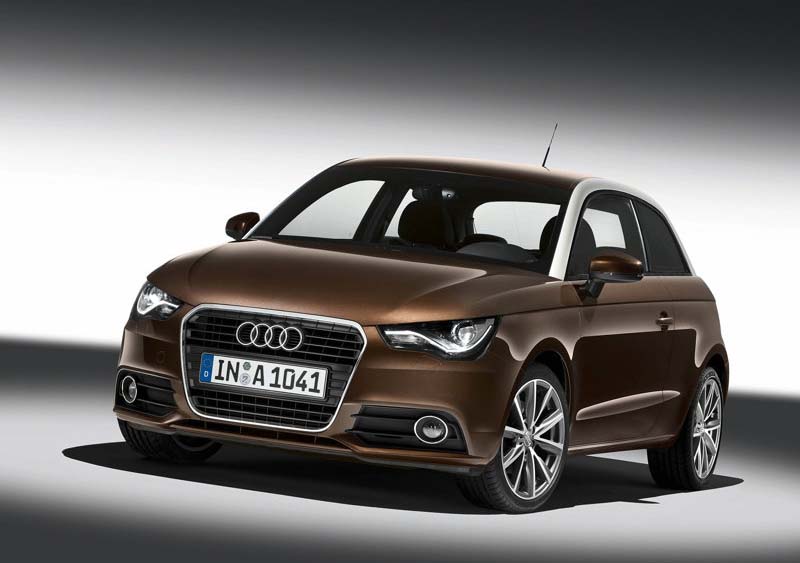
Audi A1, 2011


Audi A1, 2011

The Audi is introducing a whole new dimension to the compact class with the all-new Audi A1. It is dynamic and high quality, emotional and individual. It condenses all of the virtues of the brand down to less than four meters - a design full of character, uncompromising quality and pioneering efficiency technologies. The agile chassis and powerful engines make the Audi A1 the sportiest car in the segment.

The interior of the Audi A1 is also sporty and of high quality. Customers can customize numerous details to tailor the car to their personal tastes. Audi's latest model has a broad portfolio of advanced technologies on board; its infotainment system sets new standards in the segment. The Audi A1 is the first premium automobile in the small compacts class - a true, fully-fledged Audi.

The Audi brand stands for automotive passion. With its agile chassis and powerful engines, the Audi A1 is the sportiest car in its class, and this is readily apparent at first glance. The design is unique and modern. Styling cues placing the Audi A1 in the Audi family include the side line with the distinctive roof arch, the coupe-like C-pillars, the large wheel wells and, of course, the front end with the typical single-frame grille. The hood and rear hatch encompass the body; the tail lights are three-dimensionally molded and present an unmistakable design, day or night.

The interior: airy and dynamic
The interior of the Audi A1 is spacious and airy. The instrument panel is suggestive of an airplane wing; its four round air nozzles are reminiscent of the turbines of a jet. The clear ergonomics and the uncompromisingly high fit and finish typify the Audi brand's high standards. Many lovingly designed details in the interior document the premium character of the Audi A1.

In addition to the Attraction and Ambition trim lines, Audi also offers a media style package focused on infotainment and the interior design. The innovative materials and modern colors underscore the character of the Audi A1. Whether colored air nozzles, LED interior lights or seat covers in expressive colors - customization is an important catchword. The equipment program offers countless opportunities for matching the Audi A1 to the driver's own personal style. There are even a variety of paint finishes from which to choose for the roof arch. Customers can order many of these features after the initial sale to follow a trend or a whim.

The available infotainment and multimedia systems available come directly from the luxury class. The top of the line is MMI navigation plus, a media center that sets new standards in the compact segment. From the monitor that rises up out of the instrument panel to the control unit that follows the MMI logic, it is oriented on the systems found in Audi models in the higher segments. Based on the concert radio, the connectivity package offers the option of retrofitting an Audi map-based navigation system - a novelty in the automotive sector. The 465 watt Bose surround sound system is just one example of the complementary modules available.

Concentrated driving pleasure: the sportiest car in its class
The sporty, agile chassis of the Audi A1 places it at the head of its class. Whether in the city, on an interurban road or on the highway - the Audi A1 is great fun to drive anywhere thanks to its sporty setup, the optimized weight distribution and the very direct steering. The standard ESP stabilization system with electronic axle-differential lock makes the handling of the Audi A1 even more sporty and precise, while driving safety is increased even further.

The new Audi A1 also sets new efficiency standards. Audi is sending the new model line into the fray with four four-cylinder engines, with the two TDI and two TFSI gasoline engines producing between 63 kW (86 hp) and 90 kW (122 hp). All of the engines follow the downsizing principle - they substitute turbocharging for displacement and draw their fuel through direct injection units.

All versions of the Audi A1 impress with good fuel economy, with standard cycle values between 3.8 and 5.4 liters per 100 kilometers (43.56 - 61.90 US mpg) (provisional values). The 1.6 TDI with 66 kW (90 hp) and manual transmission emits only 99 g of CO2 per kilometer (159.33 g/mile). All of the engines are equipped with a recuperation system that allows them to recover energy during braking, and are coupled with an automatic start-stop system. A new temperature management system with switched water pump contributes to the low fuel consumption of the 1.2 TFSI.

High-tech and efficiency: the seven-speed S tronic
At Audi, efficiency is always high-tech. The Audi A1 is available with the seven-speed S tronic transmission. The dual-clutch transmission changes gears extremely quickly, comfortably and without detectable interruptions in pulling power. It offers both automatic and manual modes, with paddles on the steering wheel available as an option. It provides for tremendously fun driving and also further reduces fuel consumption - typical Audi.

The Audi A1 is sporty, powerful and attractive. As a newcomer in the compact segment, it appeals to a modern customer group - a young, urban, lifestyle-oriented public. Audi A1 customers - many of whom are expected to be women - are interested in design, music, fashion and sports. The entry-level model will be priced at around 16,000 euros.

Design
It has a confident road stance - powerful, distinctive and full of character: The Audi A1 is both the premium option and the athlete in its class. The pronounced encompassing shoulder line, the color-contrasted roof arch and the unusually sharply sloping C-pillars give the three-door an unmistakable silhouette. The dimensions also document the dynamic lines: 3.95 meters (12.96 feet) long, the latest model from Audi is an impressive 1.74 meters (5.71 feet) wide but only 1.42 meters (4.66 feet) tall. The wheelbase measures 2.47 meters (8.10 feet); the overhangs are correspondingly short.

The design of the Audi A1 is tightly integrated into the brand's design language and unique in the compact segment - emotional, bold and progressive. Audi has a reputation for taking a lot of ideas and innovations from its concept cars into series production, and the Audi A1 continues this tradition. Many of the features and innovative ideas from the 2007 Audi A1 project quattro showcar have already made it to series production in the Audi A1.

The front end bears an unmistakable family resemblance, but features unique accents and innovations in the details. The single-frame grille, for example, is harmoniously integrated into the front end and with its angled top corners represents a new evolutionary stage. Its braces are arranged horizontally to emphasize the width of the front. The large, plastically modeled air intakes with their horizontal bars also contribute to the sporty appearance of the Audi A1. The fog lights are located in their outer corners.

The three-dimensionally styled headlights also have their own special look. The Audi A1 looks determined and concentrated to the road. A strongly curved wing structures the interior of the headlights. As with every Audi, the daytime running lights are standard. With the optional xenon plus units, the daytime running lights are implemented using LEDs and a light guide. They appear as a homogenous strip that traces the wing.

Powerful design element: the tornado line
The most striking impression when viewed from the side is the straight, slightly upward course of the lines, which visually stretch and accelerate the Audi A1. The upper edge of the hood extends below the side windows to the rear end. As with the Audi TT sports car, the point where the encompassing hood meets the fenders is the point of origin for a typical Audi design element - the tornado line. It continues in the door and the rear flank. The line runs closely and precisely above the wheel wells, giving the Audi A1 a powerful road stance.

The heavy shaded edge beneath the tornado line, the powerfully arched sheet metal surfaces on the flanks and the rising dynamic line above the sills are also characteristic of the brand's design language. The same is true of the expressively shaped wheel wells, which provide shelter to wheels measuring up to 18 inches, and for the ratio of sheet metal surfaces to the greenhouse, which is two-thirds to one-third. The side mirrors are mounted on the doors like with a sports car; the door handles are distinctly bow-shaped.

Another Audi feature is the sportily flowing roof arch, which is optionally available in one of four contrasting colors. The arch flows into a C-pillar that is flatter than on a coupe, giving the rear end a dynamic outline that is further emphasized by the roof spoiler.

When viewed from the rear, an encompassing luggage compartment hatch emphasizes the width - an exclusive feature new to the compact class. The hatch is distinctively shaped. The wedge-shaped single-piece tail lights also underline wideness and are plastically integrated into the design. In combination with xenon plus, the tail lights use LED technology. Because they cannot be seen when the luggage compartment hatch is open, the Audi A1 has additional LED lamps in its side flanks. This solution is another example of the loving attention to detail and enthusiasm for technology of the Audi engineers.

The tail lights have a sporty red frame, with a curved bar dividing their chambers. Audi optionally equips them with light-emitting diodes and light guides - the tail light then appears as a continuous strip. A sporty black diffuser in the skirt forms the bottom of the rear end and visually places the vehicle firmly on the road. Depending on the engine, the exhaust system ends in one or two tailpipes on the left side.

Body
An Audi truism also applies to the Audi A1: The body establishes the foundation for the quality, for the precise, sporty handling and for safety. Two-thirds of the body comprises high- and ultra high-strength steels of different strength classes.

The strongest of these are the hot-shaped steels. The blanks are heated in a furnace to extreme temperatures then immediately shaped in a water-cooled pressing die. This rapid change in temperature imparts them with extreme tensile strength. Hot-shaped steels make up a good 11 percent of the body. They are used for the lower crossmember in the footwell, in the rear sections of the longitudinal members, in the B-pillars and in the roof frame - anywhere extreme strength combined with low weight is particularly important.

The high- and ultra high-strength steels are a significant factor for the high torsional rigidity of the body and its low weight of only 221 kilograms (487.22 lb). These two values and the dimensions are used to compute the high lightweight quality of the superstructure while also providing the basis for a high level of occupant protection.

The Audi A1 comes standard with two front airbags, side airbags in the backrests of the front seats and two curtain head airbags. Belt tensioners and belt force limiters plus the Audi integral headrest system round out the package of retention systems. Isofix child seat anchor points in the rear are standard. Belt buckle sensors at all seats are another increased safety feature. And when it comes to pedestrian protection, the Audi A1 is also equipped with cutting edge technology.

Low-speed collisions - light bumps in parking lots and the so-called typical claim crash so important for the insurance rating - do not result in any major damage. The layout of the bumpers, the crossmember behind them and the longitudinal members protect cost-intensive components such as the radiator and air conditioners.

Aerodynamically optimized: from the front skirt to the rear spoiler
With 0.32 coefficient of drag for the base model, the newest Audi is among the most aerodynamic cars in its class. This is the result of extensive fine-tuning at the Ingolstadt Wind Tunnel Center. The entire body has been optimized - from the rear spoiler, including the spoiler edges, to the underbody and the wheels. The aerodynamic underbody largely covers the underbody, protecting it and creating favorable aerodynamic air flow.

The corners and other edge regions of the skirts feature a sophisticated design that not only sinks the coefficient of drag, but also improves driving stability at high speeds. The area around the grille is completely sealed so that the inflowing air reaches the radiator with virtually no losses instead of becoming turbulent. Even such subtleties as the flow of air through the engine compartment have been optimized to the finest detail with respect to thermo- and aerodynamics.

Interior
Sportiness, precision and youthful freshness - these themes characterize the interior of the Audi A1. The designers looked to airplane wings for inspiration for the elegantly curving instrument panel. The four round, far-protruding air nozzles are reminiscent of the turbines of a jet.

The center console, with its integrated strip of secondary switches, resembles the stern of a yacht and appears to float above the center tunnel. The control unit for the climate control system and the three cylindrical rotary dials of the optional automatic climate control system are another optical and haptic highlight on board the Audi A1. The instrument panel is also home to the head unit for the radio or the optional MMI control and infotainment system. The display, which is standard with the concert radio or higher, is retracted into the instrument panel and extends upward at the push of a button. This installation position, ideal for quick reading, is a unique selling point in this vehicle class.

The instrument cluster in chronographic design with the large round dials - black faces, red needles, and white scales and numbers - is laid out clearly and elegantly. As always with Audi, operation via the steering column stalks is logical and ergonomically perfect. At night the instruments are lit in white, the buttons red.

With the LED interior lighting package, the Audi A1 brings 100 percent LED technology to an interior in the premium compact class for the first time. Not only is the ambient lighting in the doors and roof module realized with LED technology, so, too, are the interior lights, reading lights, footwell lights and makeup lights.

Another design highlight was created with the help of LED light guide technology. If desired, a white corona shines indirectly from the contours of the Bose woofer bezel to visually underscore the high-tech character of the sound system.

The optional driver information system integrates a display between the instruments. As in the large Audi models, the system can be controlled using buttons, rocker switches and roller switches in the optional multifunction steering wheel.

The system bundles information from the audio sources and the optional navigation system. A modern tabs concept in the display and a freely-programmable favorites button make operation easy and intuitive. The driver information system is monochrome and comes standard with MMI navigation plus.

Helpful: the on-board computer with efficiency program
The on-board computer with efficiency program is linked to the driver information system. It displays data relevant to fuel consumption and gives recommendations for efficient driving. An enlarged view of the gear-change indicator signals to the driver when he or she should change gears. Another function provides information on which on-board consumers, such as the climate control system or the rear window defogger, are active and how much fuel they are consuming.

The seats in the Audi A1 offer great hold, guidance and support and seat persons of all sizes extremely comfortably. A height-adjustable driver's seat is standard. The Ambition trim line includes sport seats with lumbar support, and the passenger seat also comes height-adjustable as standard. The easy-entry function for comfortable access to the back is also standard with the Ambition package.

Plenty of storage is available at every seat - two cup holders on the console of the center tunnel, pockets in the doors and the rear side trim as well as a power outlet. On the base model, there is a fold-up compartment on the instrument panel instead of the on-board monitor. Audi also offers an optional storage package with additional stowage options.

The premium character of the Audi A1 is expressed in every last detail of the interior - in the selection of the materials, in their fit and finish and in the tight, even gaps. The surface of the instrument panel is softly backed with foam; all buttons and controls move precisely; even the pull handle that unlatches the hood release does so crisply and precisely.

Standard with the Ambition trim line and optional with Attraction are numerous aluminum-look control elements, including the entry strips, the dials for the automatic climate control system and the light dials. Furthermore, the ring of the three-spoke sport steering wheel, the parking brake handle and the gear shift lever are wrapped in leather and adorned with subtle aluminum clips.

Youthful and new: colors and materials
The materials in the interior vary between the two lines. Attraction features black or titanium gray cloth upholstery with the center console, armrest, map pocket and speaker grills also being titanium gray. The sport seats in the Ambition line have a two-color design featuring titanium gray or wasabi green as a contrasting color to black. The interior is also available in black. The media style package offers velvet beige as an alternative. The optional leather seats available with the Ambition line and the media style package are offered in a choice of three colors and three combinations.

Everything about colors and trim is novel, youthful and lifestyle-oriented. The air nozzle housings are available in a wide range of colors - with matt or high-gloss black standard depending on the trim line. They are also optionally available in high-gloss white, titanium gray, wasabi green, red or velvet beige to match the color of the trim. Audi also offers a range of attractive colors for the door armrests and the console on the center tunnel for all trim lines.

The luggage compartment of the Audi A1 has plane walls; the loading edge is low for easy loading and unloading. It has a base volume of 267 liters (9.43 cubic feet). A double cargo floor is standard.

The split rear seat can be folded down quickly and easily to increase luggage capacity to roughly 920 liters (32.49 cubic feet) if loaded to the roof. Two small latches secure the cargo floor when it is folded up. Audi also offers an optional luggage compartment package with practical storage boxes under the cargo floor, a multi-fixing point with folding hooks, a stretch net, a power outlet, a second light and a strap retainer.

Audi does not compromise quality in the luggage compartment, either. The latch unlocks electronically, including via the remote key fob. It swings up and falls securely into the latch. Its clasp has a separate spring-loaded cover that keeps it from getting dirty - another typical Audi detail.
Read More

Monday, March 19, 2012

Bentley Continental GT, 2012


 Bentley Continental GT, 2012

For Crewe's design and engineering teams, the new Bentley Continental GT coupe is an opportunity to set a bold and exciting direction for one of Bentley's most revered names - the Continental. The seminal and highly successful Bentley Continental GT introduced in 2003 represented the first step in Bentley's renaissance and defined a whole new market segment. It was a luxury GT offering excellent usability that remained true to the Bentley grand touring spirit.

A beautifully sculptured new body gives the Bentley Continental GT coupe an even crisper, more defined appearance. The contemporary interior offers new levels of cabin design, comfort and hand-crafted luxury. The seats, for example, provide even greater support and rear leg-room; a sweeping dashboard even more style and modernity. The new touchscreen infotainment system features state-of-the-art navigation, Google Maps and entertainment while the latest Balanced Mode Radiator speaker technology and Dirac Dimensions™ digital sound processing deliver enhanced audio quality.

Bentley's acclaimed 6-litre, 12-cylinder, twin-turbocharged powertrain now has a raised power output of 575PS (567bhp/423kW) and 700Nm (516lb ft) of torque and this is mated to a new Quickshift transmission which enables double downshifts. Thanks to advanced FlexFuel technology it can also run on both standard unleaded petrol (gasoline) and sustainable bioethanol (up to E85) or any mix of the two.

SCULPTURED EXTERIOR EXUDES QUALITY AND DESIGN INTEGRITY
Inspired by the iconic Bentleys of the past, Bentley's design team under the leadership of Director of Design, Dirk van Braeckel, has created a thoroughly modern, sculptured body, built with advanced production technologies to ensure the highest standards of quality and body integrity.

Aluminium Super Forming technology is employed to create the front wings and the boot lid. This process heats the aluminium panels to nearly 500 degrees Celsius before shaping them by air pressure. By using a single sheet of aluminium, no seams or welding are required.

The latest body construction techniques deliver crisp, highly defined feature lines and form to every area of the exterior design. The familiar power lines and rear haunches - echoes of the original 1950s R-Type Continental - now have even sharper radii to create highly distinct surfaces, bringing the feel of a truly coachbuilt car to the new coupe.

The GT coupe's new look is bolder than ever. The classic Bentley matrix radiator grille is more upright, while the new headlamp design, in traditional four-lamp format, has exquisite jewel-like detailing including eye-catching, LED daylight-running lamps.

At the rear, Bentley signature 'floating' LED lamps extend around the corners of the wings, emphasising the new coupe's width and purposeful stance. The track is wider by 41mm at the front and 48mm at the rear than the previous model. The bootlid design has a powerful 'double horse-shoe' motif, reminiscent of the new Bentley Mulsanne, while flared elliptical exhaust tailpipes reinforce the new Bentley Continental GT's sporting credentials.

The shape of the new Bentley Continental GT coupe's body is also more aerodynamic following extensive wind tunnel analysis. In conjunction with a range of extensive underbody refinements (including wheel arch and exhaust aerodynamic aids) the GT's coefficient of drag has been reduced to 0.33Cd and the lift at the front and rear axles has also been reduced to create greater stability at higher speeds.

The new Bentley Continental GT is specified with 20-inch alloy wheels as standard, with, for the first time on the Continental family, the option to upgrade to 21-inch designs. Three styles of wheel are offered - a 20-inch five-spoke version and two 21-inch Elegant and split-rim Sports variations, which come in a variety of chromed and painted finishes.

CONTEMPORARY, HAND-CRAFTED CABIN WITH BENTLEY'S RENOWNED REFINEMENT
With an entirely hand-crafted interior, the Bentley Continental GT's cabin sets new standards in refinement and luxury to create a stylish space in which up to four people can relax in total comfort.

The instrument panel and dashboard subtly echo the flying wings of the Bentley motif and are fashioned from the highest quality soft-touch leathers. New touchscreen technology and chrome-bezelled dials are housed within this dynamic cockpit area, which rises from the centre console in the form of dramatically surfaced 'wing' buttresses.

The striking and unique 'Cobra' design seats are supremely comfortable thanks to the introduction of the latest body-supporting materials which use complex foams to provide softness at first touch but with excellent support over longer journeys.

The seats can be specified with front-seat ventilation as well as a state-of-the-art massage system with 10 individual massage cells and individual side airbags are provided as standard for all passengers. Front seatbelts feature a new electrically-operated automatic presenter, making buckling-up effortless. Driver knee airbags are standard fitment.

The new Bentley Continental GT offers superb everyday usability. The new slim-line front seats with scalloped backs also provide a further 46mm of legroom for back-seat passengers and easy access to the rear cabin.

The cabin is trimmed with soft-touch leathers, a full range of wood veneers, cool-touch metals and deep-pile carpets - all hand-crafted in Bentley's unrivalled workshops at the factory in Crewe, England. The attention to detail even extends to applying a UV stabilizer to the wood veneers to protect from bleaching, thus ensuring they can be enjoyed as new for decades to come.

CLASS-LEADING INFOTAINMENT SYSTEMS
Complementing its contemporary cabin, the new Continental GT also features advanced new touchscreen technology with rich map imagery and a 30GB on board hard drive.

The 8-inch screen displays the car's audio system, telephone, ride and comfort settings and the very latest navigation system, which uses both an in-car hard-disc drive and a DVD player to access route data. It also employs dynamic navigation to guide you around areas of heavy traffic, finds destinations using geo-tagged photos from an SD memory card and is Google Maps-compatible (market specific).

The infotainment system, with 7 digit postcode entry, uses a combination of touchscreen controls and classic knurled rotary switches to offer instant usability and crystal-clear feedback. The graphic interface of the screen is engineered in-house to ensure its visuals are completely in keeping with the style of the interior. Look closely and you will see that the knurled switches on the screen are 'virtual' echoes of the knurled switches below.

The Bentley Continental GT's new infotainment system also provides the ultimate in in-car audio entertainment. An eight-speaker sound system is offered as standard employing the latest Balanced Mode Radiator technology. These unique compact, flat-panel speakers provide exceptional clarity with a very wide frequency range.

An 11-speaker Naim for Bentley system - created exclusively for the Bentley Continental GT by British audiophiles Naim - employs revolutionary Dirac Dimensions ™ digital signal processing. This industry-first technology creates a virtual 'sound field' independent of speaker layout to deliver concert hall-quality sound reproduction for every occupant wherever they may be sitting.

The Bentley Continental GT coupe also benefits from telephone and music player connectivity, digital television (where available) and DVD movie playback. Music can be played and controlled directly from an iPod® as well as from a six-disc CD changer, SD card reader or directly from the car's hard-disc drive, which can store up to 15GB of music.
Read More